 Tiếng
Việt
 Tiếng
Anh
 Tiếng
Nhật



 Tiếng Anh

Key metrics for evaluating the efficiency of an electric motorcycle testing line

In recent years, the electric motorcycle industry has experienced rapid growth, driven by the increasing demand for green vehicles and policies encouraging the transition toward sustainable transportation. This has also placed higher demands on manufacturers to ensure product quality before vehicles are released to the market. In addition to investing in modern assembly lines, many manufacturers have focused on developing electric motorcycle testing lines to control quality, detect technical faults, and evaluate the operating performance of each vehicle before shipment.
However, having a modern electric motorcycle testing line does not necessarily mean that the line is operating efficiently. In practice, electric vehicle manufacturers may encounter various issues, such as inspection output falling below targets, prolonged testing times, unstable equipment operation, or high product retest rates. If efficiency is evaluated solely based on the number of vehicles inspected each day, manufacturers will find it difficult to identify the causes of reduced productivity and quality. Therefore, monitoring operational performance indicators is essential for managers to gain a comprehensive understanding of the testing line's condition and implement appropriate improvement measures. So, which indicators should be prioritized? Let's explore them with CNC VINA in the following sections.
1. Why is it necessary to monitor the efficiency of an electric motorcycle testing line?
In a modern factory, every improvement decision should be based on data. Without measurable performance indicators, manufacturers will find it difficult to identify the causes of declining productivity, inconsistent product quality, or increasing operating costs.
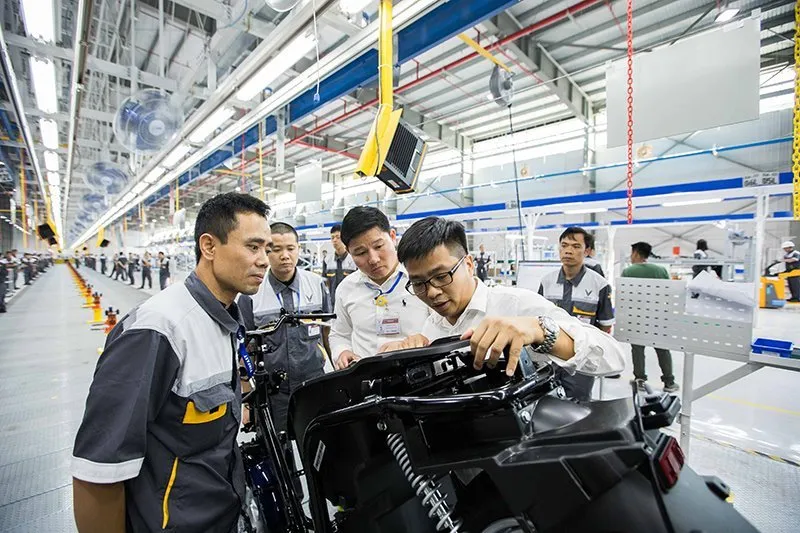
Monitoring performance indicators for an electric motorcycle testing line brings several practical benefits:
-
Accurately evaluating the inspection capacity of each testing stage.
-
Early detection of bottlenecks that affect production schedules.
-
Reducing the rate of vehicles requiring retesting or repairs.
-
Optimizing equipment maintenance plans.
-
Supporting data integration with MES, ERP, and traceability systems.
-
Providing a foundation for continuous improvement and smart factory development.
More importantly, KPIs not only reflect the current operating condition of the testing line but also help manufacturers forecast trends, allowing them to proactively adjust production plans and investment strategies.
2. The importance of performance indicators for evaluating an electric motorcycle testing line
To evaluate the efficiency of an electric motorcycle testing line, manufacturers cannot rely solely on the number of products completed each day. Instead, they need to monitor multiple indicators that reflect the productivity, quality, and stability of the entire system. By regularly monitoring and analyzing these indicators, manufacturers can easily identify process bottlenecks, implement appropriate improvement measures, and enhance production efficiency. Below are the key indicators that electric motorcycle manufacturers should consider when evaluating the performance of an electric motorcycle testing line.
2.1. Evaluating the line's ability to meet production targets
To determine whether an electric motorcycle quality testing line can meet planned production targets, manufacturers need to monitor the number of vehicles that complete inspection during each shift, day, or week and compare the results with established production targets. This indicator directly reflects the line's operational capacity and its ability to meet delivery schedules.
When actual output falls below the target, manufacturers need to quickly identify the underlying causes. These may include longer-than-expected inspection times, equipment failures, overloaded workstations, labor shortages, or an increased rate of products requiring retesting. Conversely, if output consistently meets or exceeds targets while maintaining product quality, this indicates that the line is operating stably and the inspection process has been optimized.
2.2. Measuring inspection time to optimize productivity
For an electric motorcycle testing line, the inspection time required for each product is one of the key factors determining the productivity of the entire factory. Each vehicle must undergo multiple inspection procedures, including checks of the electrical system, motor, battery, brakes, lighting, operating performance, and control functions before shipment. These procedures are performed in a specific sequence. Therefore, if even one testing station takes longer than planned, subsequent stations will have to wait, reducing the operating speed of the entire line.
To evaluate operational efficiency, manufacturers should monitor the following time-related indicators:
-
Average inspection time per vehicle.
-
Processing time at each testing station.
-
Waiting time between inspection stages.
By analyzing these data, manufacturers can quickly identify the causes of reduced line efficiency. This measurement helps shorten inspection time, increase output, reduce waiting time, and improve the overall operational efficiency of the testing line.
2.3. Evaluating the stability of testing equipment
To ensure that an electric motorcycle assembly line operates reliably, not only must the inspection process be properly organized, but the entire equipment system must also operate continuously and in synchronization. A modern production line typically integrates various types of equipment, such as industrial robots, PLCs, machine vision camera systems, electrical testing machines, battery testing equipment, and specialized sensors. These devices are closely interconnected, meaning that a failure in even one component can disrupt the entire inspection process.
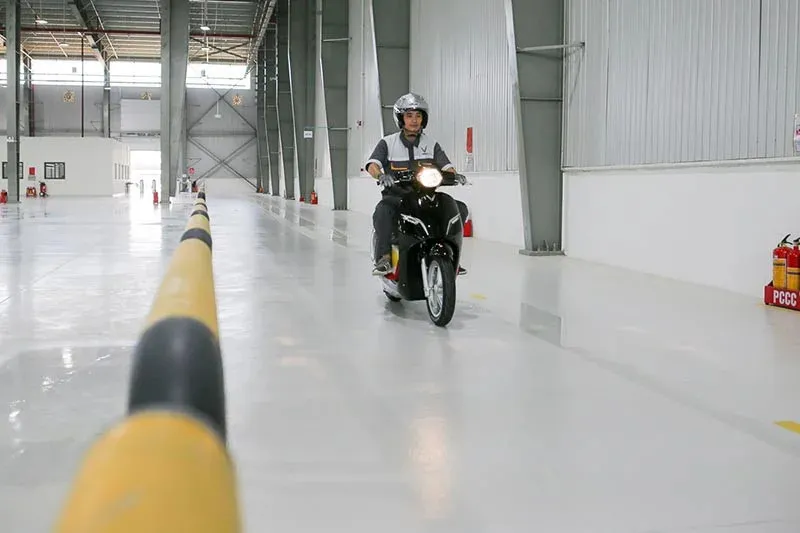
To evaluate equipment stability, manufacturers should monitor the following indicators:
-
OEE (Overall Equipment Effectiveness): This indicator reflects the overall effectiveness of equipment and is calculated based on three factors: Availability, Performance, and Quality. OEE helps manufacturers determine how effectively their equipment is being utilized while identifying different forms of waste, such as machine downtime, reduced operating speed, or defective products.
-
Continuous operating time: Indicates how long equipment can operate reliably without experiencing failures. The higher this indicator, the better the production line can maintain productivity and reduce the risk of interruptions.
-
Machine downtime: Reflects the total amount of time equipment remains out of operation due to breakdowns, maintenance, or other causes.
In addition to monitoring downtime, manufacturers should also maintain detailed records of the causes of each incident. Issues such as PLC communication failures, unstable sensor operation, emergency robot stops, incorrect detection by machine vision cameras, or loss of measurement accuracy must all be recorded and analyzed. With comprehensive data, the technical department can more easily identify root causes, develop appropriate maintenance plans, and prioritize the replacement of equipment with a high risk of failure.
2.4. Evaluating the line's fault detection capability
The goal of an electric motorcycle testing line is not simply to complete inspections within a short period of time, but also to ensure that all technical defects are detected before products are shipped. This is a decisive factor in product quality, company reputation, and customer experience.
To evaluate fault detection capability, manufacturers should monitor several key indicators, including:
-
Product failure rate after inspection: Reflects the number of products identified as defective during the inspection process.
-
Product retest rate: Indicates how many products cannot receive a definitive inspection result during the initial test.
-
Recurring defect rate at each inspection stage: Helps identify defects that repeatedly occur at the same workstation or stage of the production line.
-
First-pass defect detection rate: Indicates how effectively the inspection system identifies technical defects accurately without requiring additional inspections.
In addition to monitoring overall indicators, manufacturers should analyze data for each inspection category, such as the electrical system, battery, motor, brakes, lighting, traceability checks, and control functions.
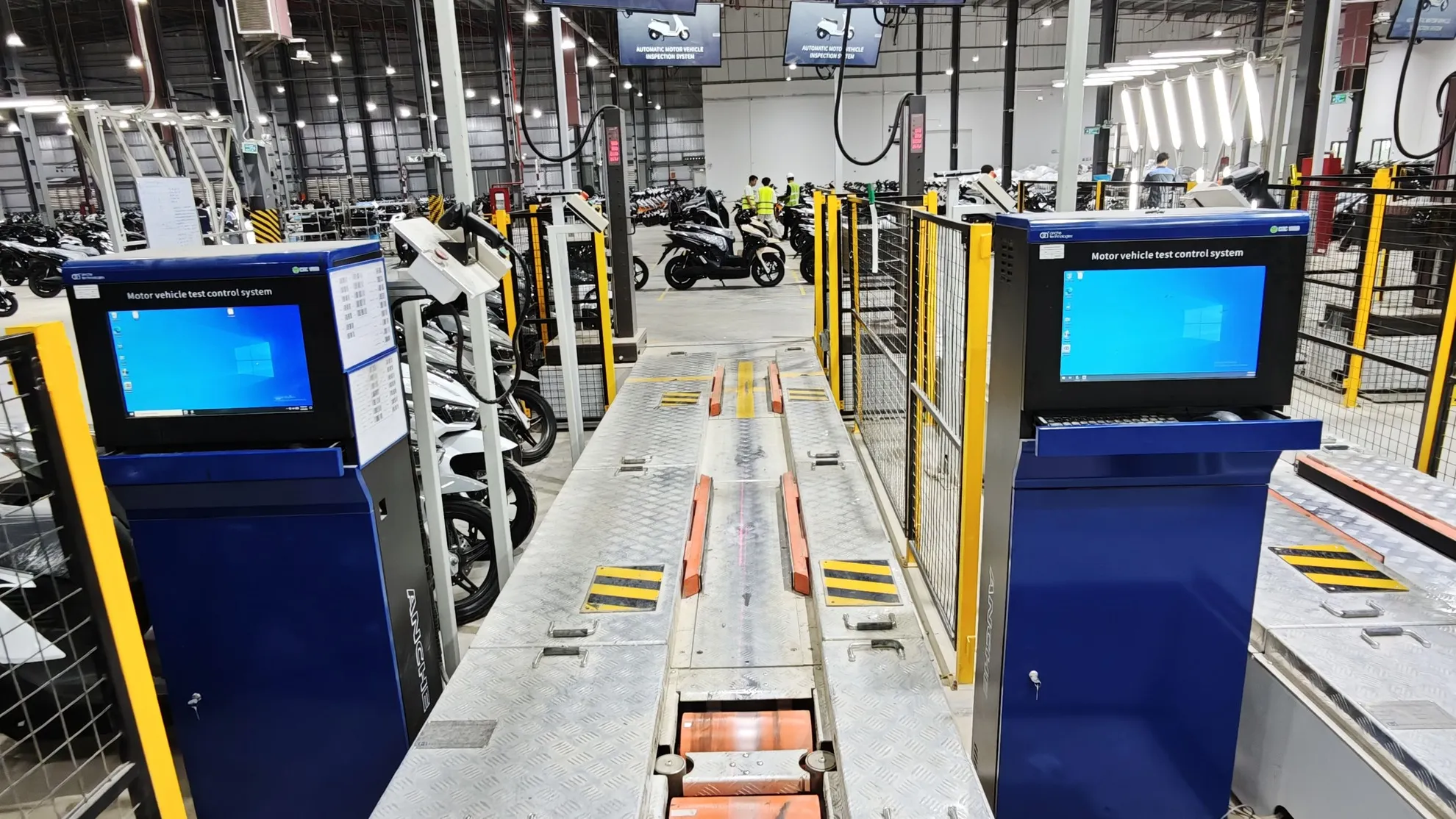
Evaluating fault detection capability not only helps improve the efficiency of an electric motorcycle testing line but also provides a foundation for continuous quality improvement. When all defects are detected and addressed during the production process, manufacturers can significantly reduce repair costs, minimize after-sales risks, and establish a stable and sustainable quality control process.
2.5. Monitoring the inspection performance of batteries and electrical systems
In an electric motorcycle testing line, batteries and electrical systems require strict inspection because they directly affect vehicle performance, safety, and service life. Even a minor defect in the battery pack or control system can reduce the driving range, cause operational instability, or lead to failures during use. To accurately assess battery pack conditions, manufacturers should monitor several important parameters, including:
-
Battery pack voltage: Determines whether the battery operates within its designed voltage range.
-
Cell balancing level: Checks voltage consistency between individual battery cells. Excessive voltage differences can reduce battery pack performance and affect its service life.
-
Charging and discharging capability: Evaluates the battery pack's ability to store and supply energy under actual operating conditions.
-
Battery management system (BMS) status: Checks the BMS's ability to monitor, protect, and balance battery cells to ensure safe battery operation.
-
Operating temperature: Monitors battery pack temperature during testing to detect overheating risks or abnormal conditions.
Comprehensive monitoring of these parameters helps manufacturers identify defective battery packs, batteries showing signs of performance degradation, or those with potential safety risks at an early stage. As a result, non-compliant products can be rejected or addressed before moving to the final assembly stage, helping improve product quality and reduce after-sales warranty costs.
In addition to battery packs, other important components, such as controllers, electric motors, speed controllers, wiring systems, and sensors, also need to undergo synchronized testing. This process helps verify that all components operate reliably and communicate accurately with one another, ensuring that the vehicle performs according to its designed specifications.
All inspection results should be stored and linked to the frame number or QR code of each vehicle. This enables manufacturers to build an individual quality record for every product, support traceability, analyze root causes when problems arise, and improve warranty management throughout the product lifecycle.
Key indicators for evaluating the efficiency of an electric motorcycle testing line provide an important basis for measuring operational performance and making improvement decisions based on actual production data. Rather than evaluating performance solely through output volume, monitoring indicators such as inspection output, cycle time, product pass rate, and equipment operating conditions gives managers a more comprehensive view of the testing line's efficiency. When these indicators are regularly monitored and analyzed, manufacturers can quickly identify process bottlenecks, determine the causes of reduced productivity or increased defect rates, and implement appropriate corrective measures. In addition, establishing a performance monitoring system helps manufacturers gradually digitalize production activities, connect data across different stages, and improve overall management efficiency. As the electric motorcycle industry continues to grow and quality requirements become increasingly demanding, data-driven production line management enables manufacturers to take a more proactive approach to process improvement, strengthen competitiveness, and better meet market demands. With experience in industrial automation, CNC VINA provides design and integration solutions for electric motorcycle testing lines, along with production data management solutions tailored to each manufacturer's needs. Our goal is to develop stable, synchronized testing systems that can be easily integrated into existing production processes, helping manufacturers improve operational efficiency and achieve sustainable quality management.