 Tiếng
Việt
 Tiếng
Anh
 Tiếng
Nhật




 Tiếng Anh

What are the main processes in a wiring harness production line?

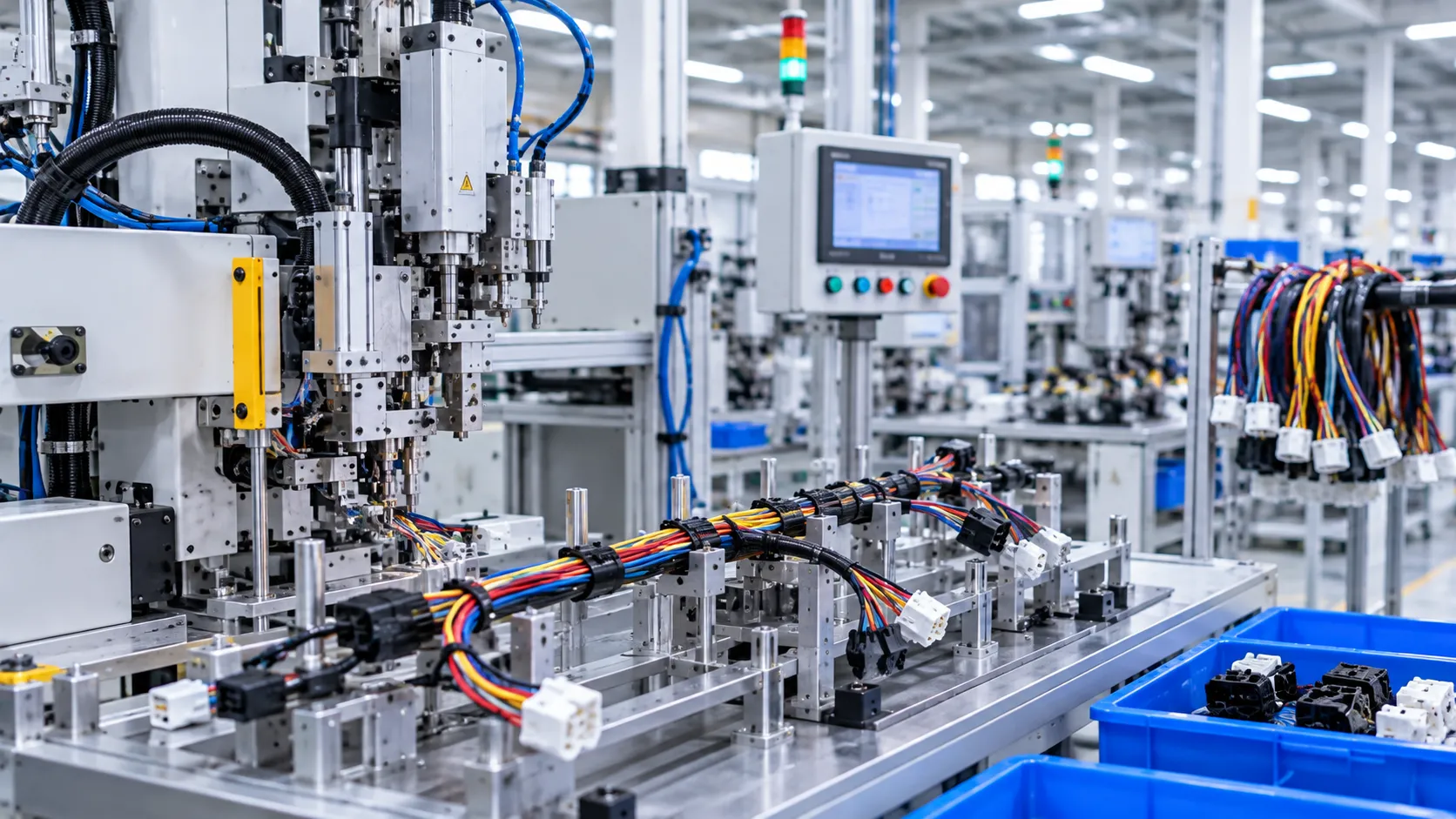
Wire harness production line is a series of processes designed to process, connect, and assemble electrical wires into complete wire harnesses for use in the automotive, electric motorcycle, home appliance, and electronics industries. The process involves multiple stages, including wire cutting and stripping, terminal crimping, connector assembly, wire bundling, and electrical continuity testing. Each stage directly affects connection accuracy, finished product quality, and the operating reliability of the equipment.
As production volumes increase, establishing an efficient wire harness manufacturing process and implementing automation equipment can help manufacturers reduce manual operations, control defects, and maintain consistent productivity. So, what is a wire harness, what are the main stages of a wire harness production line, and which processes should be prioritized for automation? Let’s explore these topics with CNC VINA in this article.
1. What is a wire harness? Applications in industrial manufacturing
A wire harness production line is an integrated system of equipment and processes designed to process, connect, assemble, and inspect multiple electrical wires into a complete harness according to specific design requirements. Instead of using individual wires separately, manufacturers group them into harnesses, arrange them according to the electrical wiring diagram, and integrate connectors to simplify installation.
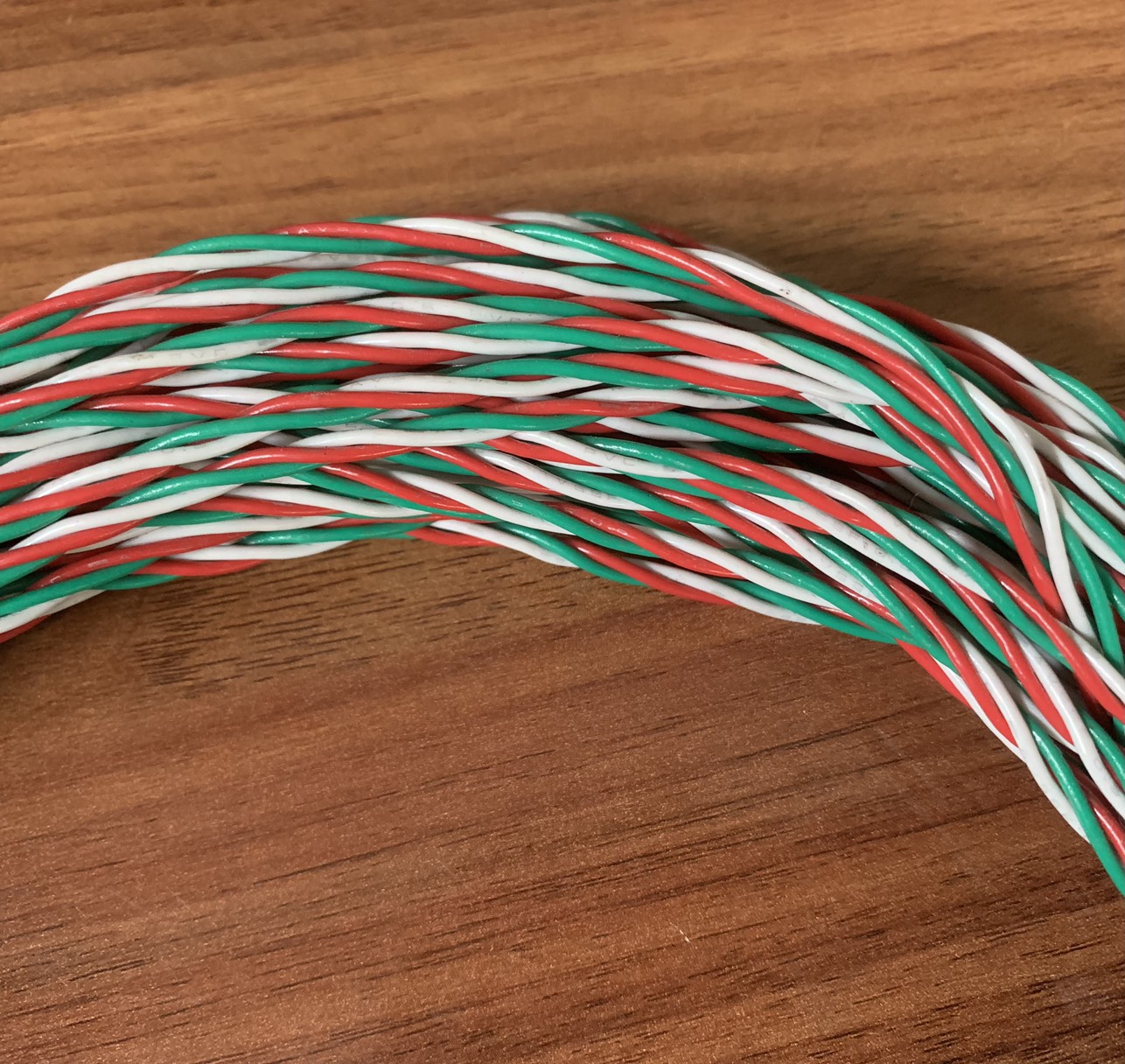
In industrial manufacturing, wire harnesses play an essential role in transmitting power and signals between different components of equipment. Their quality directly affects product performance, operational safety, and system stability. Therefore, every stage of the manufacturing process must be carefully controlled, from wire cutting and end processing to assembly and final inspection.
1.1. What is a wire harness?
A wire harness typically consists of the following components:
-
Electrical wires: Transmit electrical power or signals between different components.
-
Terminals and connectors: Provide electrical contact points and connect the wire harness to the equipment.
-
Protective materials: Include electrical tape, heat-shrink tubing, corrugated tubing, and other wire protection materials.
-
Positioning accessories: Include cable clips, retaining locks, and mounting brackets designed to secure and position the wires.
Unlike a single electrical cable, a wire harness is an assembled unit consisting of multiple wires arranged and connected according to an electrical wiring diagram.
1.2. Which industries use wire harnesses?
Wire harnesses are widely used in the automotive, transportation, and electronics manufacturing industries. Each sector has specific requirements for wire configuration, heat resistance, mechanical durability, and connection reliability.
|
Industry |
Wire harness applications |
|---|---|
|
Automotive |
Connecting engine systems, lighting, dashboards, sensors, safety systems, and in-vehicle electronic components. |
|
Electric motorcycles |
Connecting batteries, controllers, electric motors, displays, lighting systems, and sensors. |
|
Home appliances |
Used in washing machines, refrigerators, air conditioners, microwave ovens, and other household electrical appliances. |
|
Industrial electronics |
Connecting power supplies, signal lines, and control modules in machinery and automation equipment. |
2. What are the main stages of a wire harness production process?
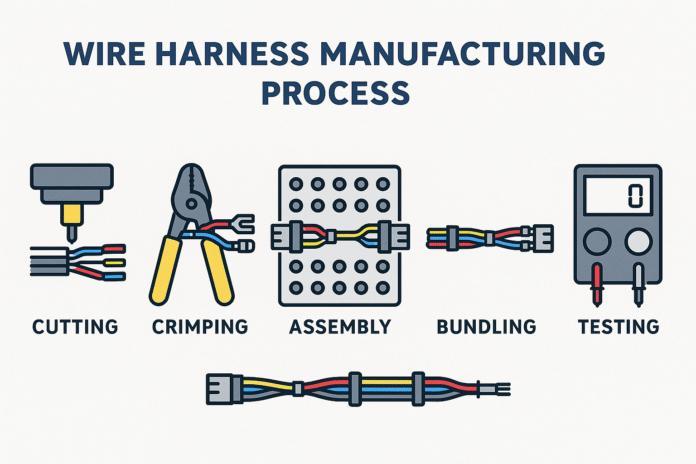
The wire harness manufacturing process typically consists of five main stages, covering wire processing, connection formation, connector assembly, wire bundling, and final product inspection. Depending on the product design, manufacturers may add specialized processing and inspection steps to meet specific requirements.
2.1. Wire cutting and stripping
This is the first stage of wiring harness manufacturing. Wires are fed from reels, cut to the specified lengths, and stripped at one or both ends to expose the conductors.
Equipment: Automatic wire cutting machines, wire stripping machines, and automatic wire cutting and stripping machines.
Technical requirements:
-
Maintain accurate cutting and stripping lengths according to technical drawings.
-
Prevent conductor breakage and damage to copper strands.
-
Ensure clean insulation removal without leaving residue or stripping too much insulation.
Automatic wire cutting and stripping machines help maintain consistent dimensions, reduce manual operations, and improve production efficiency.
2.2. Terminal crimping or wire soldering
After stripping, wire ends are processed to establish reliable electrical connections with terminals or electronic components. The two common methods are terminal crimping and wire soldering.
Terminal crimping
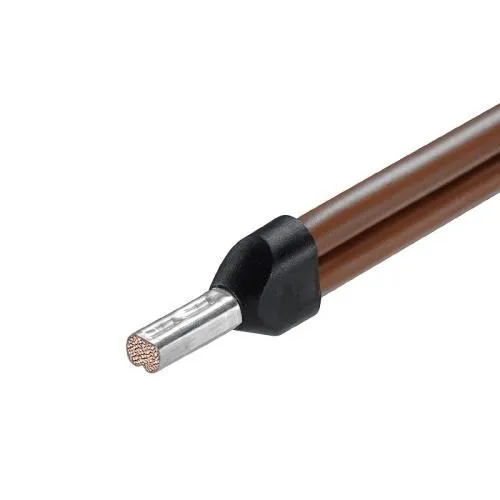
Terminal crimping uses mechanical force to secure a terminal onto the exposed conductor, creating a reliable electrical and mechanical connection. Key parameters include crimp height, conductor position, terminal deformation, and pull-out force.
Suitable equipment includes semi-automatic crimping machines, automatic wire crimping machines, and crimp force monitoring systems.
Wire soldering
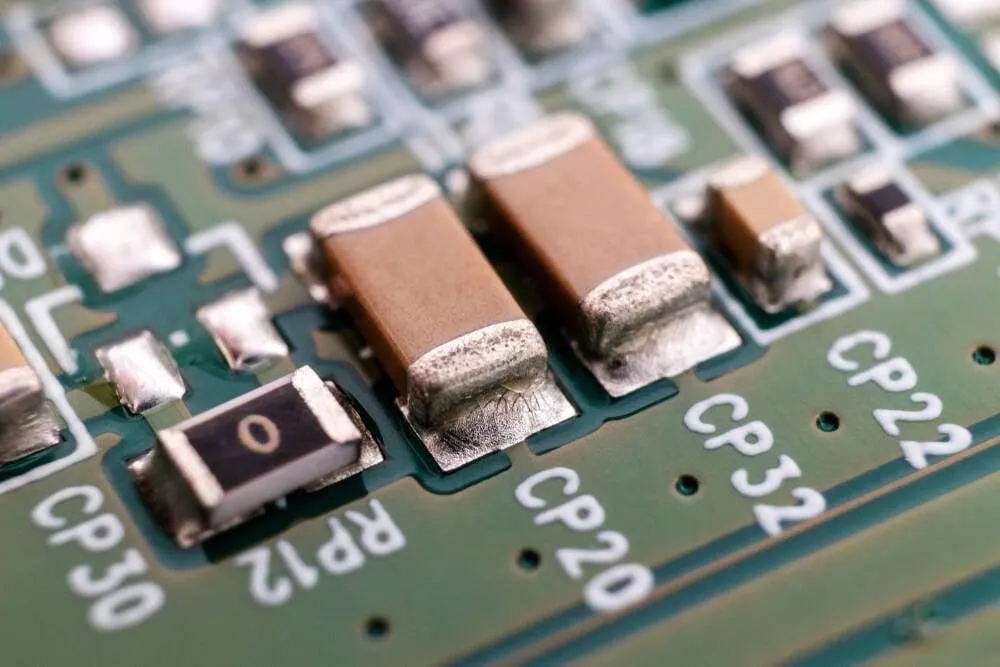
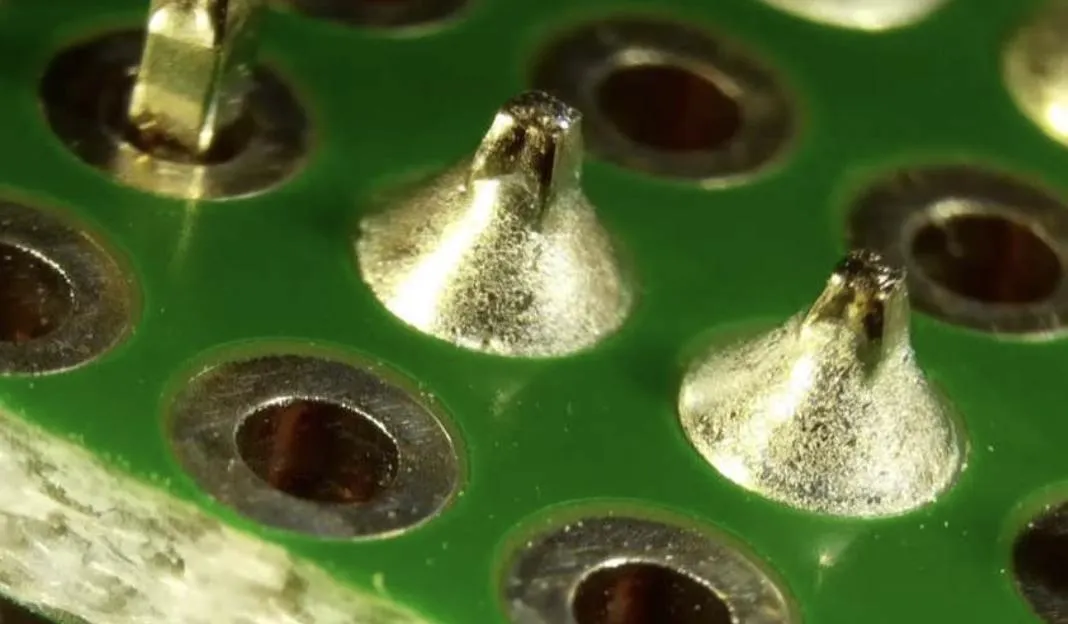
Wire soldering uses molten solder to establish electrical connections at locations specified by the product design. This method is used in certain wire connections, PCB assemblies, and electronic components. Key parameters include soldering temperature, heating time, solder volume, and joint quality. Solder joints must provide reliable electrical conductivity without defects such as cold joints, insufficient solder, or insulation damage. Crimping and soldering are not interchangeable. The appropriate method must be selected according to product design requirements and applicable technical standards. For automotive wiring harnesses, the manufacturer's specifications must be strictly followed.
2.3. Connector and housing assembly
After wire-end processing, terminals are inserted into the designated cavities of connector housings according to the wiring diagram. This process involves positioning the wires, inserting the terminals, and verifying that the locking mechanisms are properly engaged. For multi-pin connectors, accurate terminal placement is essential to prevent incorrect wiring and connection errors during assembly. Common defects include incorrectly positioned terminals, incomplete locking, bent or deformed contacts, missing terminals, and incorrect connector types. To improve assembly accuracy and consistency, manufacturers can use positioning fixtures, automatic feeding systems, and semi-automatic terminal insertion machines.
2.4. Harness routing, taping, and heat shrink tubing
After connector assembly, wires are arranged according to the design layout to form a complete wiring harness. This process is typically performed on dedicated assembly boards equipped with positioning pins and routing guides to maintain the specified wire lengths, harness shapes, and branch positions. The wire branches are then secured using electrical tape, cable ties, or retaining clips, depending on the design requirements. Heat shrink tubing is applied at joints and branch points where additional insulation or mechanical protection is required. For complex wiring harnesses, dedicated assembly boards help maintain consistent product geometry, minimize assembly variations, and improve overall production quality.
2.5. Continuity testing and final quality inspection
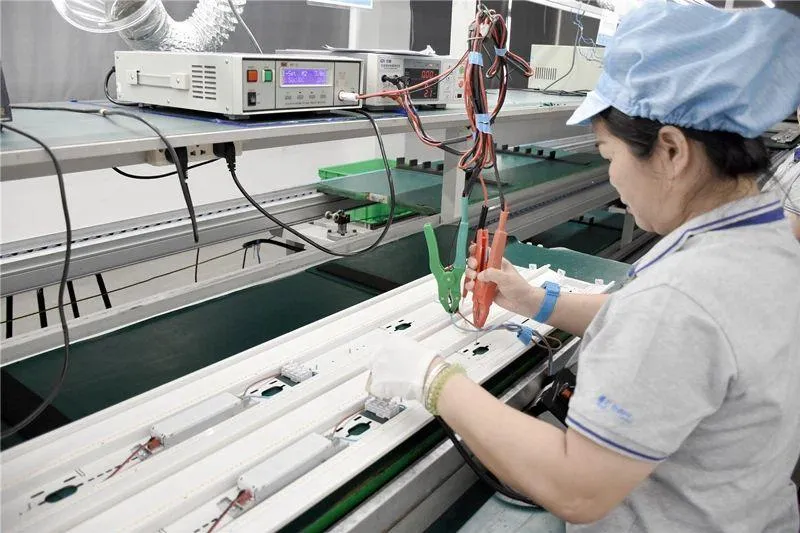
Continuity testing is the final inspection stage before packaging or transfer to the next assembly process. It verifies electrical connections and detects defects such as broken wires, open circuits, incorrect terminal assignments, short circuits, and missing connections compared with the wiring diagram. Depending on product design and applicable technical standards, additional inspections may include insulation resistance testing, dielectric withstand testing (Hipot), crimp pull-out testing, and visual inspection. Automated continuity testing systems can inspect multiple connection points against predefined wiring configurations. This helps shorten inspection time, improve testing accuracy, and reduce the risk of defective products reaching customers.
3. Which wiring harness manufacturing processes should be automated first?
Not every process in a wiring harness production line needs to be automated immediately. Manufacturers should prioritize operations involving high production volumes, repetitive tasks, strict accuracy requirements, or frequent defects caused by manual handling. The table below summarizes the key manufacturing processes, signs that automation may be necessary, and suitable equipment.
|
Process |
When to automate |
Suitable equipment |
|---|---|---|
|
Wire cutting and stripping |
High volume; inconsistent wire lengths |
Automatic cutting and stripping machines |
|
Terminal crimping |
Repetitive operations; inconsistent crimps |
Automatic crimping machines; crimp force monitoring systems |
|
Wire soldering |
Consistent solder joint quality required |
Automatic soldering machines; robotic soldering systems |
|
Connector assembly |
Multi-pin connectors; terminal insertion errors |
Terminal insertion machines; positioning fixtures |
|
Harness assembly and taping |
Repetitive operations; precise shape control |
Assembly boards; automatic taping machines |
|
Final inspection |
Multiple connection points; 100% inspection required |
Automated continuity and electrical testing systems |
3.1. Automation investment priorities
3.1. Automation investment priorities
Priority 1: Automatic wire cutting and stripping
Ensures accurate control of wire length and stripping length while minimizing dimensional variations at the initial processing stage.
Priority 2: Terminal crimping and wire-end processing
Maintains consistent connection quality, reduces defects caused by manual operations, and improves control over processing parameters.
Priority 3: Automated continuity testing
Detects broken wires, incorrect terminal assignments, and short circuits before finished products are shipped.
Priority 4: Automated assembly and harness bundling
Should be implemented based on product design, production volume, and the complexity of each wiring harness. Equipment selection should be based on production capacity, defect rates, cycle time, and investment costs. Manufacturers should prioritize bottleneck operations rather than implementing automation across all processes without a clear strategy.
4. Quality requirements and traceability in automotive and electric motorcycle wiring harness manufacturing
In the automotive and electric motorcycle industries, wiring harnesses must do more than transmit electrical power and signals. They must also meet requirements for durability, safety, and reliable operation under actual working conditions. Even a minor defect in a connector, crimp joint, or branch point can affect the operation of the entire electrical system. Therefore, manufacturers must maintain quality control throughout the production process, from incoming materials to finished products.
4.1. Quality control at each manufacturing stage
|
Process |
Key quality requirements |
|---|---|
|
Incoming materials |
Correct wire type, cross-section, insulation, terminals, and connectors |
|
Cutting and stripping |
Accurate lengths; no conductor or insulation damage |
|
Terminal crimping |
Correct crimp parameters, pull-out strength, and electrical contact |
|
Wire soldering |
Reliable joints; no cold soldering or material damage |
|
Connector assembly |
Correct pin positions; secure terminal locking |
|
Harness assembly |
Correct layout, dimensions, branch positions, and protective materials |
|
Final inspection |
Compliance with continuity, insulation, and specified testing requirements |
4.2. Product traceability
Product traceability enables manufacturers to identify when a product was manufactured, which materials were used, which production processes it passed through, and what inspection results were recorded.
For wiring harness manufacturing, a traceability system can manage the following information:
-
Product codes and drawing revisions.
-
Material batch numbers for wires, terminals, and connectors.
-
Production dates and batch numbers.
-
Machines and equipment used at each manufacturing stage.
-
Process parameters monitored at critical stages.
-
Continuity test results and final quality inspection records.
-
Operator information or production shifts, where required.
Manufacturers can use QR codes, barcodes, or Manufacturing Execution Systems (MES) to link production records with inspection data. When a defect is detected, the quality control department can identify affected products and isolate the relevant production batches for further inspection.
4.3. Standards and customer requirements
Depending on the target market and manufacturer, wiring harness production lines may need to comply with quality management and product standards such as:
-
IATF 16949: Quality management system requirements for the automotive industry.
-
ISO 9001: Quality management system standard.
-
IPC/WHMA-A-620: Requirements and acceptance criteria for cable and wire harness assemblies.
-
OEM-specific standards: Technical requirements, testing methods, and quality limits specified by automotive, motorcycle, and electrical equipment manufacturers.
It is important to note that applicable standards depend on the customer, product type, and scope of the factory's certification. Not every wiring harness is automatically required to comply with all the standards listed above. For electric motorcycles and electric vehicles, particular attention should be paid to heat resistance, vibration resistance, moisture protection, abrasion resistance, and connection reliability under actual operating conditions.
5. Wiring harness production line and automation solutions by CNC VINA
In industrial manufacturing, designing a wiring harness production line requires coordinated planning of equipment, fixtures, material feeding methods, assembly sequences, and quality inspection systems. CNC VINA specializes in machine design, manufacturing, and industrial automation solutions. With experience in implementing automation solutions for factories, CNC VINA focuses on developing equipment systems tailored to each customer's product characteristics, production scale, and operational requirements. For wiring harness manufacturing, automation solutions can be developed around the following equipment and production stages:
1. Automated wire processing
Integrating wire cutting, stripping, and feeding equipment with programmable length settings. This solution reduces manual operations, maintains consistent incoming material dimensions, and facilitates integration with downstream processes.
2. Automated terminal crimping and wire-end processing
Applying terminal crimping machines, terminal feeding equipment, and processing parameter monitoring systems. Each process must be designed according to the wire type, conductor cross-section, terminal specifications, and product connection requirements.
3. Fixture design and assembly systems
Positioning fixtures, assembly boards, and supporting mechanisms are designed according to the geometry of each wiring harness. These solutions are suitable for products with multiple wire branches or strict assembly dimensional requirements.
4. Automated inspection system integration
Continuity testing equipment and electrical inspection systems can be integrated into the production process to detect defects before finished products move to packaging. Depending on production volume and the required level of automation, CNC VINA can study and develop solutions for individual production stages or integrated systems combining multiple machines. Rather than investing in automation across all processes at once, manufacturers should first analyze their existing production workflows and identify operations with high defect rates, long processing times, or heavy dependence on manual labor. This provides a basis for equipment selection, production capacity planning, and investment optimization.
A wiring harness production line consists of interconnected processes, from wire processing and electrical connection to assembly and final inspection. Each stage directly affects product quality, operational reliability, and installation compatibility in the finished product. For the automotive, electric motorcycle, and electronics industries, standardized manufacturing processes, connection quality control, and product traceability are essential requirements. Automating the right processes helps manufacturers reduce dependence on manual operations, maintain production efficiency, and minimize manufacturing defects. With experience in machine design, manufacturing, and industrial automation, CNC VINA provides customized equipment design and manufacturing solutions to optimize production processes and improve factory operational efficiency. Contact CNC VINA for consultation on suitable automation solutions for wiring harness production lines and wire processing and assembly operations.
Customers interested in the design and manufacture of airtightness testing jigs, inspection fixtures, and automated testing machines are welcome to contact us:
CNC VIETNAM TECHNOLOGY APPLICATION AND CNC JOINT STOCK COMPANY
Factory: Song Cung Industrial Point, Dong Thap Commune, Dan Phuong District, Hanoi, Vietnam.
Office: Rox Tower (Rox Center Goldmark City), 136 Ho Tung Mau Street, Phu Dien Ward, Hanoi, Vietnam.
Tel: +84 916 639 355 / +84 915 744 664