 Tiếng
Việt
 Tiếng
Anh
 Tiếng
Nhật




 Tiếng Anh

What is an ultrasonic cleaning machine? Industrial applications of ultrasonic cleaning machines

An ultrasonic cleaning machine is a device designed to clean component surfaces, removing oil, grease, dust, metal chips, and other contaminants generated during machining processes. For products with complex structures, numerous small holes, narrow gaps, or hard-to-reach surfaces, conventional cleaning methods often fail to meet the required cleaning standards. Ultrasonic cleaning machines provide an effective solution by using ultrasonic waves in a liquid medium to remove contaminants from component surfaces. This technology can reach areas that are difficult to clean using conventional mechanical scrubbing methods. Depending on the material, product shape, and type of contaminants, the system can be combined with specialized cleaning solutions to improve cleaning efficiency. Today, ultrasonic cleaning machines are widely used in various industries, including precision engineering, automotive manufacturing, electronics, medical equipment, and industrial machinery production. Selecting the appropriate machine configuration helps businesses improve product cleanliness and optimize their manufacturing processes. So, how does an industrial ultrasonic cleaning machine work, and what benefits does it offer businesses? In this article, let's explore the features of this equipment in detail with CNC VINA.
1. What is an ultrasonic cleaning machine?
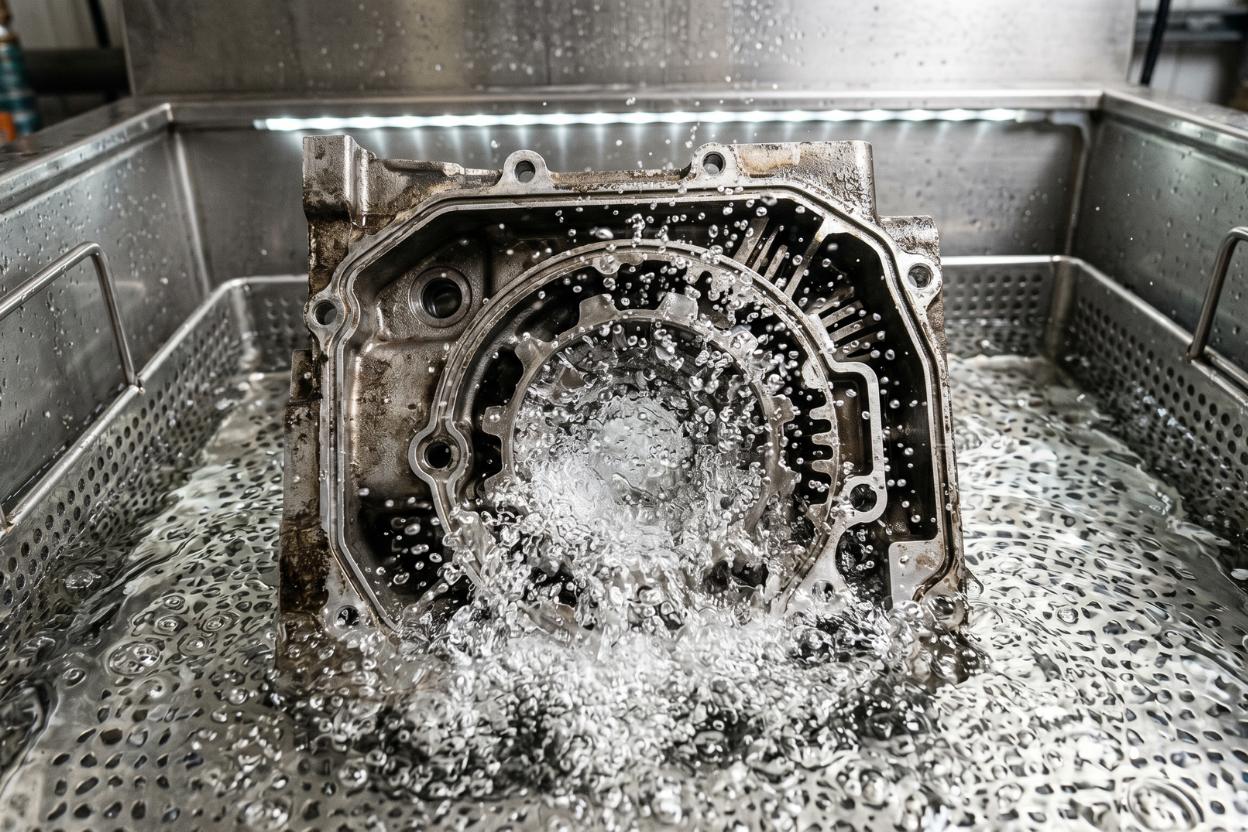
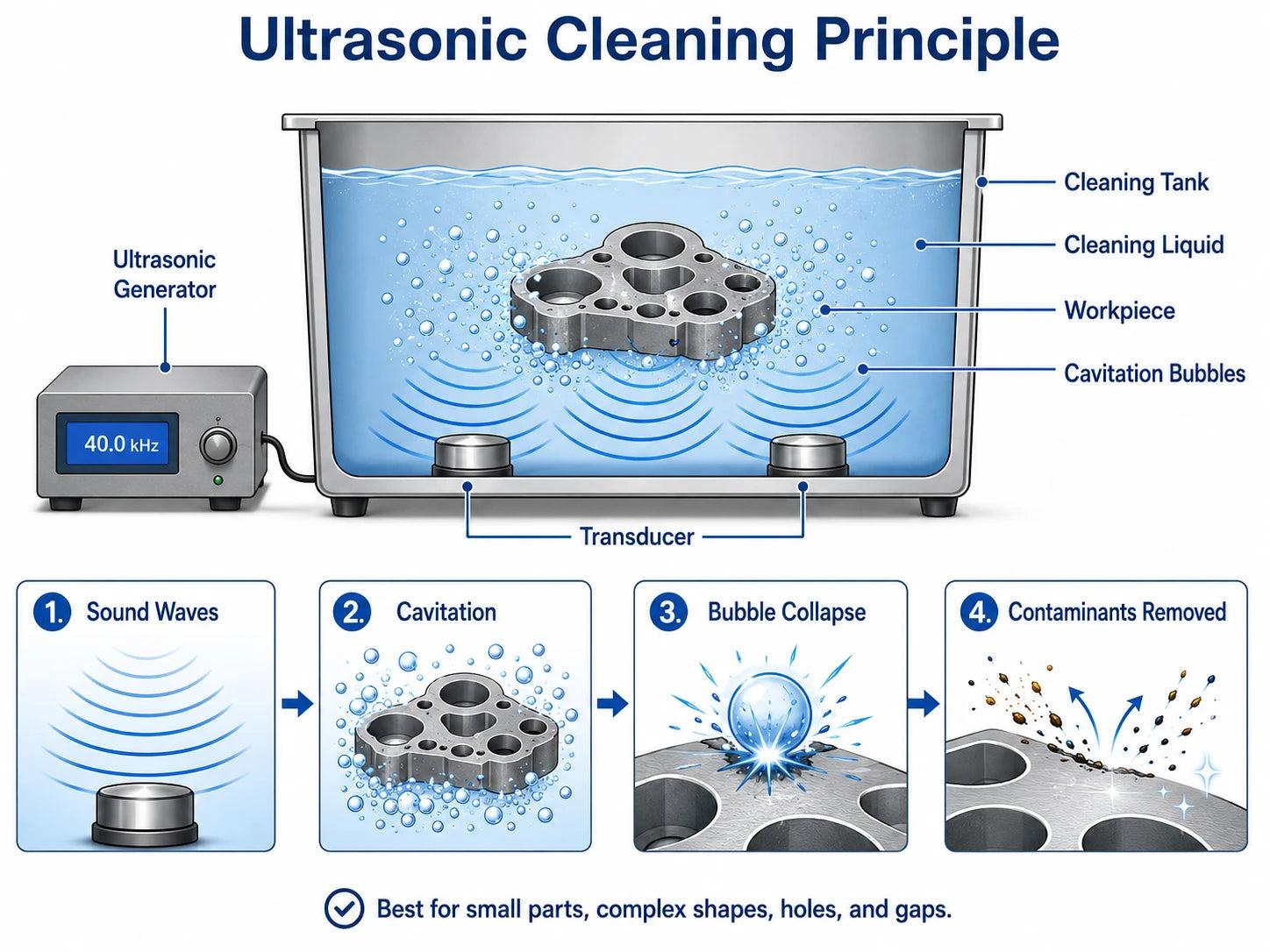
An ultrasonic cleaning machine is a cleaning device that uses high-frequency sound waves, typically above 20 kHz, transmitted through a liquid cleaning solution to generate a phenomenon known as cavitation. As ultrasonic waves propagate through the liquid, the pressure within the solution continuously fluctuates, forming microscopic gas bubbles. These bubbles grow and rapidly collapse under pressure, generating high-intensity microjets and shock waves in the surrounding areas.

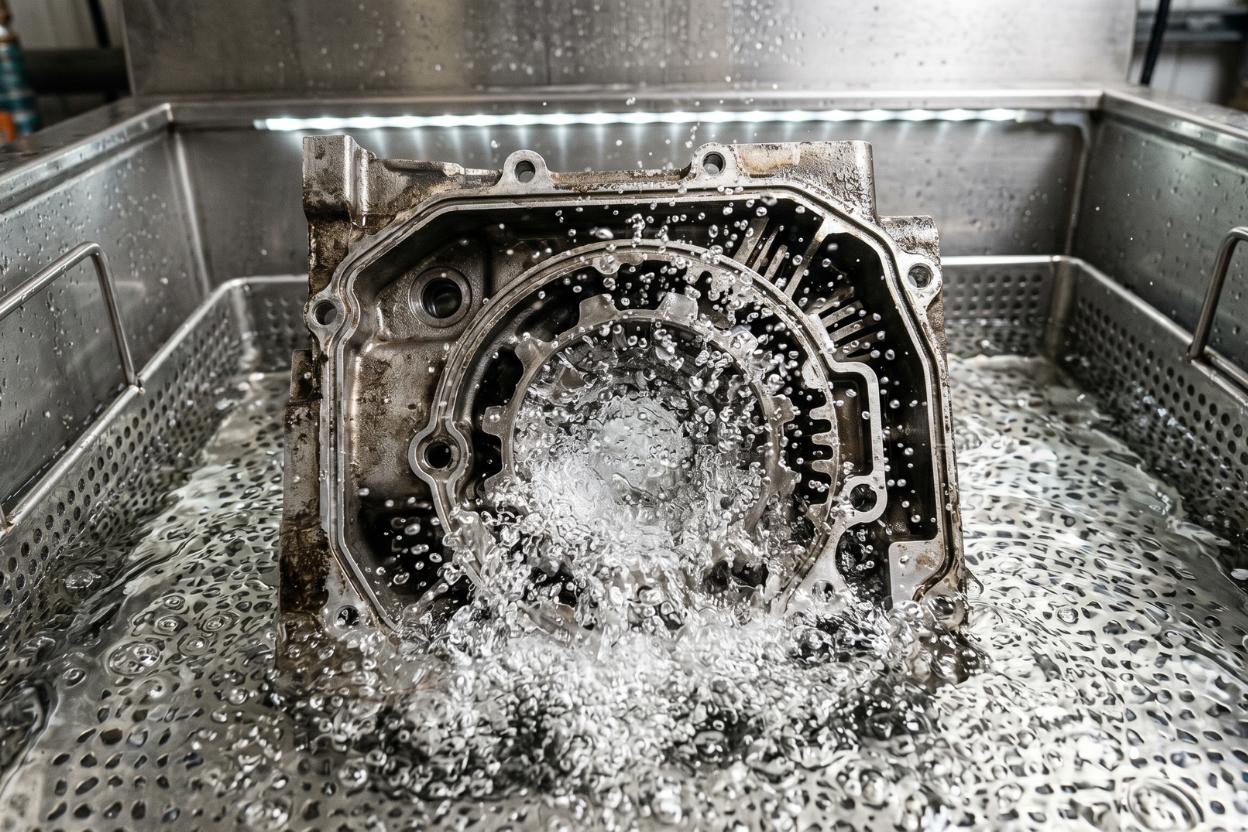
The cavitation process helps break down and dislodge contaminants adhering to component surfaces, including oil, grease, dust, metal chips, and various other types of deposits. As a result, the cleaning solution can reach hard-to-clean areas such as drilled holes, narrow grooves, tight gaps, threaded holes, and surfaces with complex geometries.
Industrial ultrasonic cleaning machines are typically configured with different power levels, frequencies, and tank capacities to meet specific application requirements. Cleaning efficiency depends on the system design, component characteristics, cleaning solution, temperature, and treatment time.
2. Operating principle of an ultrasonic cleaning machine
Industrial ultrasonic cleaning machines operate based on the phenomenon of cavitation in a liquid medium. This phenomenon involves the formation, growth, and collapse of microscopic gas bubbles under the influence of ultrasonic waves.
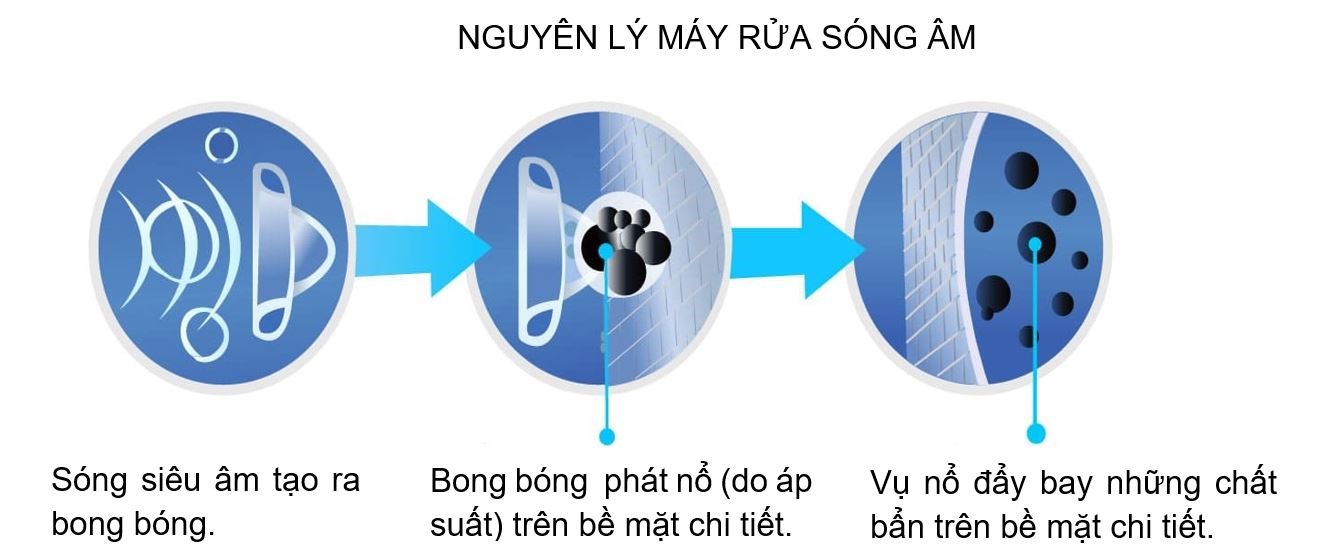
The cleaning process takes place through the following steps:
-
Ultrasonic wave generation: The ultrasonic generator converts the electrical power supply into electrical signals at the appropriate frequency and then delivers them to the ultrasonic transducers.
-
Mechanical vibration generation: The transducers convert electrical signals into mechanical vibrations and transmit them to the tank walls or directly into the cleaning solution.
-
Bubble formation: Ultrasonic waves create continuously fluctuating pressure zones within the liquid. When the pressure drops to an appropriate level, microscopic gas bubbles begin to form and grow.
-
Cavitation occurrence: As the pressure increases again, the bubbles rapidly collapse, generating localized liquid microjets and shock waves.
-
Contaminant removal: The effects of cavitation help dislodge and remove contaminants adhering to the component surfaces.
-
Completion of the cleaning process: After the preset cleaning time, the components are removed from the tank and can proceed to subsequent processes such as rinsing, drying, or quality inspection.
Thanks to this mechanism, the machine can clean areas that are difficult to reach using brushes, spray nozzles, or manual cleaning methods. However, actual cleaning performance also depends on the ultrasonic frequency, power, transducer positioning, material characteristics, and the degree of contamination.
3. What are the main components of an industrial ultrasonic cleaning machine?
A basic ultrasonic cleaning system consists of three main components: an ultrasonic generator, ultrasonic transducers, and a cleaning solution tank. In addition, depending on specific application requirements, the equipment can be integrated with supplementary systems such as heating, circulation filtration, control systems, and automation mechanisms.
3.1. Ultrasonic generator
The ultrasonic generator is the component that receives the electrical power supply and converts it into high-frequency electrical signals to power the transducers.
The input power supply typically operates at a frequency of 50 or 60 Hz. The generator converts this signal into an operating frequency suitable for the transducers and cleaning requirements, usually ranging from 20 to 80 kHz or higher, depending on the system design.
The generator's power output affects the vibration intensity and the ability to produce cavitation in the cleaning solution. The appropriate power rating should be selected based on the tank volume, number of components, material, and degree of contamination.
3.2. Ultrasonic transducer
The ultrasonic transducer is responsible for converting electrical energy into mechanical vibrational energy.
Most modern ultrasonic transducers use piezoelectric materials. When supplied with an alternating electrical signal at the appropriate frequency, these materials continuously expand and contract, generating mechanical vibrations.
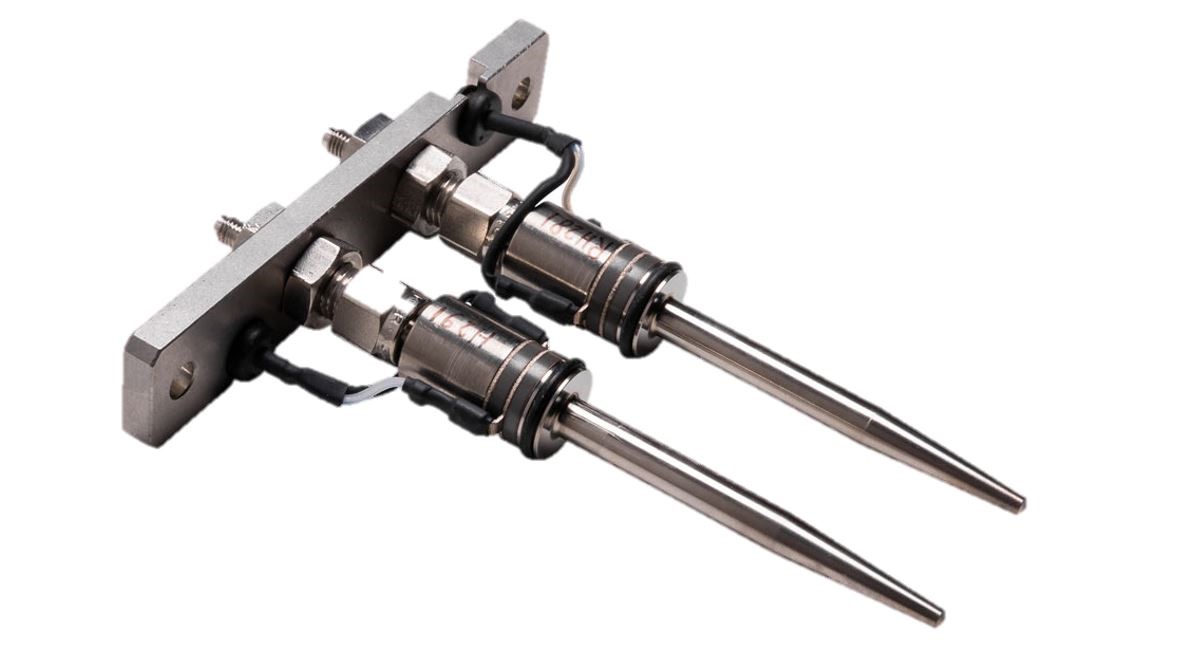
The vibrations are transmitted to the tank walls or directly into the liquid medium, facilitating the generation of ultrasonic waves and cavitation.
The transducers are typically installed at the bottom or along the walls of the tank to distribute ultrasonic waves throughout the cleaning area. The number, position, and power of the transducers should be appropriately calculated based on the tank dimensions to minimize uneven distribution of ultrasonic activity.
3.3. Cleaning solution tank
The tank is typically made of stainless steel to ensure durability, heat resistance, and corrosion resistance. Depending on the cleaning solution and operating environment, different materials can be selected for its construction.
The tank dimensions depend on the product size, the number of components to be cleaned in each cycle, and the product arrangement method.
For industrial machines, the tank can be equipped with additional components such as:
-
Component baskets or trays.
-
Cleaning solution heating system.
-
Temperature and liquid level sensors.
-
Cleaning solution filtration and circulation system.
-
Bottom drain valves and solution supply and discharge pipes.
-
A cover to reduce chemical vapor emissions and heat loss.
3.4. Heating and temperature control system
The cleaning solution temperature affects the ability to dissolve contaminants and overall cleaning efficiency. Therefore, many industrial ultrasonic cleaning machines are equipped with electric heating elements or dedicated heating units.
Operators can set the appropriate temperature according to the cleaning solution and product material. The sensor system monitors the actual temperature and controls the heating process.
Not all applications require heating. The temperature should be selected according to the chemical manufacturer's recommendations and the cleaning requirements of the components.
3.5. Control system of an industrial ultrasonic cleaning machine
The control system manages the machine's operating parameters, including cleaning time, temperature, ultrasonic power, and the status of various mechanisms.
For semi-automatic or fully automatic equipment, the system can use a PLC, HMI touchscreen, sensors, and control buttons to manage the operating sequence.
Integrating a control system allows operators to easily configure programs, monitor the cleaning process, and track the equipment's operating status.
4. Quy trình làm việc và các yếu tố ảnh hưởng đến hiệu quả làm sạch của máy rửa siêu âm
4.1. Operating process of an industrial ultrasonic cleaning machine
Depending on the equipment configuration and production requirements, the operating procedure may vary. A basic process typically includes the following steps:
Step 1: Prepare the machine and cleaning solution
Check the condition of the tank, transducers, electrical system, control unit, and auxiliary equipment. Fill the tank with the appropriate cleaning solution, ensuring the correct type, concentration, and liquid level according to the manufacturer's instructions.
Step 2: Set the cleaning parameters
Configure the cleaning time, temperature, and ultrasonic operating mode according to the product requirements. For new types of components, preliminary testing is recommended to determine suitable parameters before mass production.
Step 3: Load the products into the tank
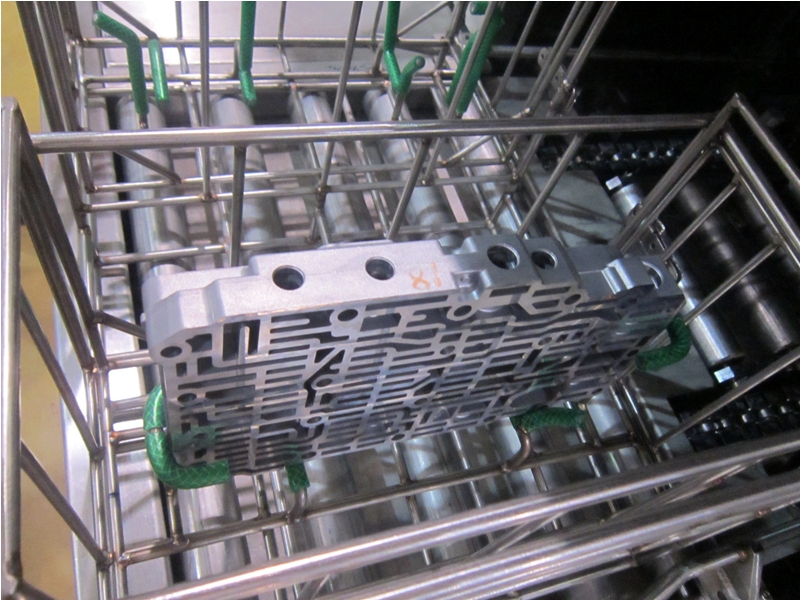
Arrange the products in baskets or trays, then place them inside the cleaning tank. Ensure that all components are fully immersed in the cleaning solution and avoid overcrowding.
Step 4: Start the cleaning process
Activate the ultrasonic cleaning mode and the heating system, if equipped. During operation, the control system follows the preset parameters.
Step 5: Rinse the products
After the ultrasonic cleaning cycle is complete, remove the products and transfer them to a rinsing tank or the next cleaning stage, if required by the process.
Step 6: Dry and inspect the products
Use compressed air, blowers, or a drying system to remove any remaining cleaning solution from the products. Then inspect the surface quality before transferring them to the next production stage.
For high-volume production lines, the above steps can be integrated into an automated system to reduce manual operations and ensure consistent control of cleaning cycles.
4.2. Factors affecting product cleaning efficiency
To ensure effective machine operation and meet production requirements, several technical parameters must be considered together.
4.2.1. Ultrasonic frequency
Frequency determines the characteristics of bubble formation and collapse within the cleaning solution.
-
Lower frequencies generally produce larger bubbles with stronger cavitation effects, making them suitable for certain applications involving the removal of oil, grease, and relatively stubborn contaminants.
-
Higher frequencies produce smaller, more densely distributed bubbles and are generally suitable for small components and precision cleaning applications.
Frequency selection should be based on material strength, product geometry, and the degree of contamination.
4.2.2. Ultrasonic power
Power affects vibration intensity and the level of cavitation within the tank. If the power is too low, cleaning performance may not meet the required standards. Conversely, excessively high power may affect certain materials or sensitive surfaces.
Therefore, the power rating should be selected according to the cleaning solution volume and the total weight of products processed in each batch.
4.2.3. Cleaning solution temperature
Temperature can affect the ability of the solution to dissolve oil and grease, its viscosity, and its cavitation characteristics.
In many applications, heating helps improve cleaning efficiency. However, excessively high temperatures may reduce cavitation effectiveness or adversely affect the products and cleaning chemicals.
4.2.4. Cleaning time
The treatment time should be determined based on the component type, degree of contamination, and required cleanliness after processing.
Insufficient cleaning time may leave some contaminants behind. Excessively long treatment times do not necessarily improve cleaning performance and may affect certain sensitive materials.
4.2.5. Product positioning and arrangement
The arrangement of components inside the tank affects ultrasonic wave propagation and contact with the cleaning solution.
Products should not be packed too tightly or stacked in a way that obstructs access to their surfaces. For small components, specialized baskets can be used to facilitate loading and unloading.
4.2.6. Cleaning solution quality
The cleaning solution should be maintained at the appropriate concentration, temperature, and cleanliness level. When excessive oil, grease, residues, or contaminants accumulate in the solution, cleaning efficiency may decrease. Therefore, a regular schedule for inspecting, filtering, or replacing the cleaning solution should be established.
5. Benefits of industrial ultrasonic cleaning machines in manufacturing
Ultrasonic cleaning technology offers numerous benefits in manufacturing processes that require strict control over component cleanliness and surface quality.
- Precise and uniform cleaning: Ultrasonic waves propagate through the cleaning solution, generating cavitation that acts on surfaces in contact with the liquid. As a result, the machine can clean hidden areas, small holes, deep grooves, and components with complex geometries. This method reduces dependence on direct manual scrubbing and minimizes the risk of leaving contaminants behind. It is particularly suitable for precision mechanical components and electronic parts.
- Reduced cleaning time: The cavitation process occurs continuously throughout the cleaning solution, helping remove contaminants without requiring manual scrubbing of individual areas. Treatment time can be adjusted according to the product type and degree of contamination. In some applications, a cleaning cycle may take approximately 10–15 minutes; however, the actual processing time should be determined through testing for each type of component.
- Removal of various types of contaminants: When combined with a suitable cleaning solution, ultrasonic cleaning machines can help remove oil, grease, lubricants, dust, metal chips, machining debris, mineral deposits, chemical residues, carbon deposits, and organic films from product surfaces. Cleaning performance depends on the characteristics of the contaminants, component material, cleaning solution, and operating conditions.
- Reduced mechanical impact on products: Unlike cleaning methods involving brushes or direct scrubbing, ultrasonic cleaning does not require mechanical tools to come into direct contact with the entire component surface. This helps minimize the risk of scratches or deformation caused by improper cleaning operations. However, for soft materials, thin coatings, welded joints, or components with sensitive structures, appropriate ultrasonic frequency and power levels must be selected to avoid damaging the products.
- Optimized energy consumption and operating costs: The machine uses electrical energy to generate mechanical vibrations within the cleaning solution, reducing the need for manual scrubbing of individual components. Depending on the system configuration, the equipment can help reduce labor requirements and shorten cleaning time. In addition, controlling temperature, power, operating time, and cleaning solution conditions helps improve energy efficiency and optimize operating costs.
- Compact design and space efficiency: A basic ultrasonic cleaning system typically consists of a cleaning solution tank, an ultrasonic generator, and transducers. These components can be integrated into a single machine or arranged into separate units depending on production scale. For industrial production lines, businesses can add rinsing tanks, drying units, and product handling systems to establish a continuous cleaning process.
- Easy operation and automation: Ultrasonic cleaning machines can be equipped with push-button controls, timer settings, temperature controllers, or PLC systems depending on production requirements. Operators simply select the appropriate program, load the products into the cleaning position, and start the machine. In automated systems, product feeding, basket lifting and lowering, cleaning, rinsing, and drying can be controlled according to a preset sequence, reducing manual operations and maintaining process consistency.
6. Considerations when selecting and operating an ultrasonic cleaning machine
Selecting an ultrasonic cleaning machine for small components should not be based solely on tank capacity or ultrasonic power. Businesses need to consider overall production requirements and the specific characteristics of the products to be cleaned.
Some important selection criteria include:
-
Component dimensions and geometry: Determine the length, width, height, and specific areas that require cleaning.
-
Product material: Evaluate its resistance to ultrasonic waves, temperature, and chemical cleaning solutions.
-
Type of contaminants: Identify the oil, grease, metal dust, mineral deposits, or other substances that need to be removed.
-
Processing volume: Calculate the number of components per batch and the required cleaning time to determine the appropriate tank capacity.
-
Frequency and power: Select suitable operating parameters based on the degree of contamination and required cleaning quality.
-
Level of automation: Consider the need to integrate lifting and lowering mechanisms, workpiece feeding systems, conveyors, rinsing, and drying units.
-
Installation conditions: Assess the available floor space, electrical supply, water supply, solution drainage system, and chemical safety requirements.
During operation, the cleaning solution level should be checked before starting the machine. The ultrasonic system should not be activated when the tank is empty or does not contain the required amount of solution specified by the equipment design. Regularly clean the tank and inspect the transducers, heating system, and electrical components. For high-value products or components made from sensitive materials, testing on actual samples is recommended to determine material compatibility before applying the process to an entire production batch.
Ultrasonic cleaning machines are among the equipment solutions used to meet product cleaning requirements in industrial manufacturing operations. The development of cleaning technology has introduced various new solutions, helping businesses gradually improve their factory cleaning processes. Depending on their production characteristics, businesses can select equipment configurations that suit their actual needs. Investing in a cleaning system should not only address current requirements but also be considered as part of a long-term production planning strategy. Therefore, thoroughly understanding the equipment and its implementation options is an important basis for making an informed investment decision. A suitable solution can help businesses improve their production processes and enhance operational efficiency. CNC VINA specializes in designing and manufacturing ultrasonic cleaning machines according to customer requirements, supporting businesses in developing solutions that align with their production objectives.