 Tiếng
Việt
 Tiếng
Anh
 Tiếng
Nhật




 Tiếng Anh

What is cable end ferrule crimping? Why is it necessary and how to choose the right machine?

Cable end ferrule crimping machine is equipment used to secure ferrules or end sleeves at cable ends, ensuring mechanical fastening, accurate positioning, and proper product assembly. In cable manufacturing, the ferrule crimping process must ensure precise positioning, appropriate crimping force, and consistent quality across products. When performed manually, cable end quality may depend heavily on operator technique, particularly when production volumes increase or products involve multiple size specifications. Using specialized equipment helps control the crimping process and minimize production variations. So, what is the function of cable end ferrule crimping, how does it differ from terminal crimping, and what criteria should manufacturers consider when selecting a suitable machine?
1. What is cable end ferrule crimping?
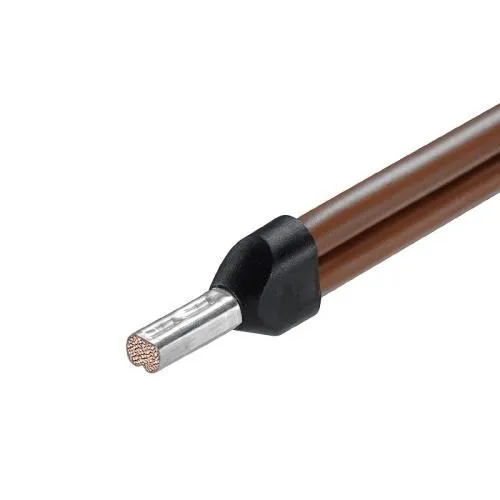
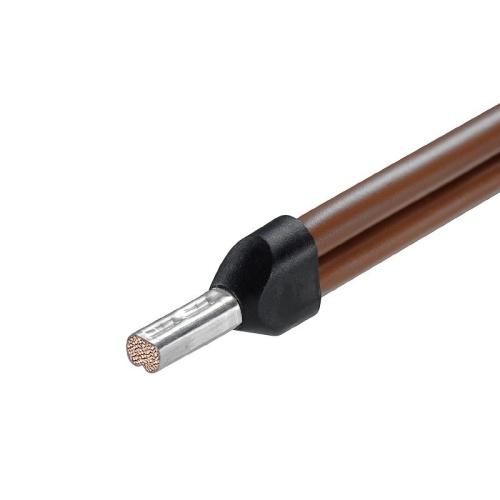
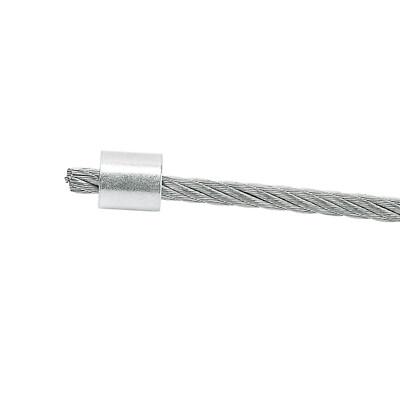
Cable end ferrule crimping is a process that uses applied pressure to secure a ferrule, sleeve, or reinforcing component at the end of a cable according to design requirements. This process helps ensure secure positioning, maintain the cable end's shape, and meet the product's assembly and connection requirements.
Depending on the product design, the ferrule is positioned at the designated location and crimped using either manual tools or specialized equipment. The crimping force, stroke, and die configuration must be appropriate for the cable dimensions and the characteristics of the component being crimped.
In industrial manufacturing, a cable end ferrule crimping machine is used to control the crimping process, reduce dependence on manual operations, and maintain consistent quality across products.
2. Why do cable ends need ferrule crimping?
Depending on the construction and technical requirements of each cable type, adding and crimping a ferrule at the cable end can serve several purposes. This process involves more than simply securing a component; it also affects assembly compatibility and the overall stability of the product assembly.
2.1. Secure components at the cable end
The ferrule or end sleeve is crimped into its designated position to secure the components at the cable end. When properly positioned and crimped with adequate fastening strength, it helps prevent displacement during transportation, assembly, and operation.
2.2. Meeting tensile strength requirements
For cable assemblies that require secure end retention, the crimped joint must meet the mechanical fastening requirements specified in the design. Improper crimping force may cause the component to loosen, slip, or deform, reducing the holding strength of the cable end assembly. Therefore, both crimping force and the final shape of the crimped component must be controlled, particularly for products subjected to loads or tensile forces during operation.
2.3. Protecting and covering cable ends
In designs that require protective coverage, ferrules or sleeves partially enclose the cable end, helping limit direct exposure of the covered area to external environmental factors. The level of protection depends on the ferrule structure, assembly method, and product technical requirements. Not all cable end ferrules provide dust protection, water resistance, or electrical insulation.
2.4. Positioning cable ends during assembly
A properly crimped ferrule helps maintain the shape and dimensions of the cable end according to design specifications. This is particularly important when the cable end must be fitted into other components, especially in assembly processes with strict positioning and dimensional requirements. Inconsistent crimping positions may cause assembly difficulties or require adjustments during subsequent production stages.
3. How does cable end ferrule crimping differ from terminal crimping?
Both cable end ferrule crimping and terminal crimping use mechanical force to create a connection at the end of a wire or cable. However, these processes are not necessarily the same in terms of purpose, component structure, or technical requirements.
| Criteria | Cable end ferrule crimping | Terminal crimping |
|---|---|---|
| Component processed | Ferrules, sleeves, or similar components specified by the design | Cable terminals or lugs |
| Purpose | Positioning, securing, or reinforcing cable ends according to product design | Establishing a connection between a conductor and a terminal |
| Applications | Depending on cable type and product construction | Electrical wires, conductors, and compatible terminals |
| Key control requirements | Positioning, crimping force, stroke, and final crimp shape | Compression level, crimping force, electrical contact, and connection quality |
| Equipment | Manual crimping tools or specialized crimping machines | Terminal crimping pliers, semi-automatic, or automatic terminal crimping machines |
The key difference lies in the component being processed and the function of the resulting connection. The same crimping method or die should not be used for both processes without first evaluating the component structure and technical requirements.
4. Cable end ferrule crimping methods in manufacturing
Depending on production volume, product variety, and quality control requirements, manufacturers can choose between manual crimping, semi-automatic press machines, and fully automatic crimping machines.
4.1. Manual cable end ferrule crimping
This method uses hand-operated crimping tools or simple supporting equipment. Operators manually insert the ferrule onto the cable end, adjust its position, and perform the crimping operation.
Advantages:
- Low initial investment cost.
- Easy to implement for simple products.
- Flexible for small production volumes or frequent product changes.
Limitations:
- Product quality depends heavily on operator skill.
- Crimping force and positioning may vary between products.
- Production output is difficult to control as volumes increase.
- Positioning inaccuracies can lead to processing defects.
This method is suitable for small-batch production, product trials, or manufacturing operations that do not yet require automation.
4.2. Semi-automatic press machine crimping
A semi-automatic press machine uses a mechanical drive system to generate crimping force, while operators remain responsible for certain tasks such as cable feeding, ferrule positioning, and product unloading. The machine can be designed with dedicated fixtures and crimping dies to match specific product geometries. Compared with manual crimping, this equipment provides better control over the crimping stroke and operating conditions while reducing direct manual labor.
Advantages:
- More consistent crimping force and stroke when operating conditions are properly configured.
- Supports accurate product positioning through dedicated fixtures.
- Reduces dependence on operators for manually applying crimping force.
- Generally requires lower investment than a fully automated system.
Limitations:
- Operators are still required to load materials and handle products.
- Production output depends on feeding and unloading speeds.
- Overall process control remains limited without integrated monitoring sensors.
4.3. Automatic cable end ferrule crimping machine
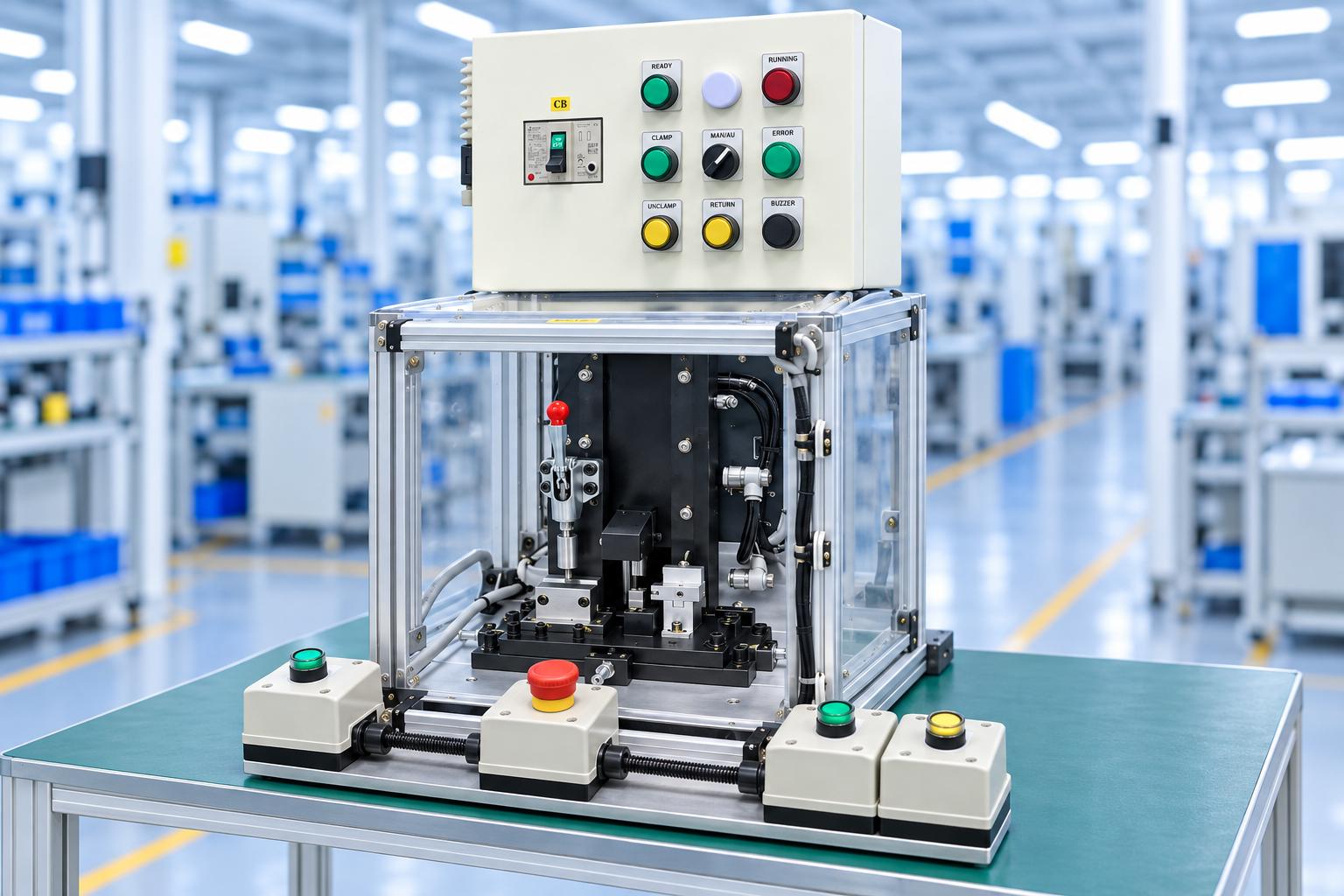
An automatic cable end ferrule crimping machine integrates feeding, positioning, crimping, and product handling mechanisms into a programmed operating sequence. Depending on production requirements, the machine can be equipped with an automatic ferrule feeding mechanism, positioning fixtures, pneumatic cylinders, or suitable drive mechanisms to perform the crimping operation.
Advantages:
- Reduces manual operations and dependence on operator skill.
- Maintains a consistent sequence of feeding, positioning, and crimping.
- Can integrate sensors to monitor material feeding status and operating conditions.
- Suitable for high-volume production or applications requiring a high degree of consistency.
- Can be connected to upstream and downstream processes within a production line.
Limitations:
- Higher initial investment than manual and semi-automatic equipment.
- Requires design customization based on the actual cable type, ferrule, and crimping requirements.
- Requires time for trial runs, adjustments, and maintenance procedure development.
4.4. Comparison of three cable end ferrule crimping methods
| Criteria | Manual crimping | Semi-automatic press machine | Automatic crimping machine |
|---|---|---|---|
| Crimping force generation | Operator | Machine mechanism | Automatically controlled machine mechanism |
| Consistency | Depends on operator skill | More consistent when properly configured | Provides better process control when properly designed |
| Crimping force control | Limited | Based on equipment configuration | Can integrate crimping force monitoring |
| Ferrule feeding | Manual | Usually manual | Can be automated |
| Productivity | Low | Medium | Suitable for high-volume production |
| Labor requirements | Extensive manual operations | Operators still load and unload products | Reduces direct manual operations |
| Investment cost | Low | Medium | Higher |
Using an automatic machine does not necessarily guarantee better product quality. Actual performance also depends on fixture accuracy, crimping die design, force control capabilities, and the compatibility between the equipment and product structure.
5. Criteria for selecting a cable end ferrule crimping machine
To select the right equipment, manufacturers need to clearly identify product characteristics and the technical requirements of the crimping process. A machine with high crimping force or operating speed is not necessarily suitable if it is incompatible with the dimensions and structure of the ferrule.
5.1. Cable and ferrule dimensions
These are the most important input parameters when designing a machine. Manufacturers should provide the following information:
- Cable dimensions and cross-sectional area.
- Ferrule diameter or external dimensions.
- Ferrule length and insertion depth.
- Required ferrule crimping position at the cable end.
- Dimensional tolerances before and after crimping.
These specifications provide the basis for designing fixtures, positioning mechanisms, and crimping dies. If multiple cable or ferrule types are involved, the machine design should also consider interchangeable fixtures and dies.
5.2. Crimping force suitable for the product structure
The crimping force must be sufficient to establish the required mechanical connection without causing deformation beyond the permitted limits. Insufficient crimping force may result in inadequate ferrule retention. Conversely, excessive force can deform the ferrule, affect the cable structure, or cause the product to fall outside dimensional tolerances after crimping. Therefore, the required crimping force should be determined through testing on actual product samples, in combination with technical specifications and product inspection standards.
5.3. Automatic ferrule feeding capability
For high-volume production, automatic ferrule feeding helps reduce handling time and minimize missing or incorrectly oriented components. Depending on ferrule shape and dimensions, the feeding system can be designed using vibratory feeders, guide rails, component separation mechanisms, or other suitable solutions.
When selecting a machine, manufacturers should evaluate:
- Continuous ferrule feeding capability.
- Stability when separating and positioning individual components.
- Ability to detect missing ferrules or incorrect feeding conditions.
- Adjustment capability when changing product models.
Not all ferrule types are suitable for vibratory feeding. The feeding method must be selected based on the actual shape and characteristics of the components.
5.4. Crimping force monitoring and product inspection capabilities
For products with high quality requirements, the machine can be integrated with sensors or monitoring systems to track operating conditions.
Functions to consider include:
- Detecting whether a ferrule is present before crimping.
- Checking product positioning within the fixture.
- Monitoring the crimping stroke.
- Monitoring crimping force when equipped with suitable force sensors.
- Providing alarms when abnormal operating conditions are detected.
Crimping force monitoring helps identify process deviations during operation. However, determining whether a product meets quality requirements still requires appropriate inspection criteria and testing methods for each cable type.
5.5. Die changeover and production expansion capabilities
For manufacturers producing multiple product models, the machine should support interchangeable fixtures and crimping dies.
Recommended design features include:
- Easily removable and replaceable fixtures.
- Interchangeable crimping dies for different ferrule types.
- Adjustable positioning within the designed operating range.
- A control program capable of storing operating parameters for different product models.
Interchangeable dies give manufacturers greater flexibility when expanding their product range while avoiding the need to invest in an entirely new machine for every cable type.
6. Frequently asked questions about cable end ferrule crimping machines
Can a cable end ferrule crimping machine process different cable types?
Yes, provided that the machine is designed with suitable fixtures, crimping dies, and positioning mechanisms. For production involving multiple cable types, manufacturers should evaluate die changeover capabilities and the machine's dimensional adjustment range.
Does a cable end ferrule crimping machine use pneumatic or hydraulic systems?
The choice depends on the required crimping force and product characteristics. Pneumatic mechanisms may be suitable for applications where the required force falls within the system's operating capacity. For applications requiring higher force or specific force control characteristics, other drive mechanisms may be considered. The final solution should be determined through engineering calculations and practical testing.
Can automatic ferrule feeding be integrated into a crimping machine?
Yes. The machine can integrate an automatic ferrule feeding system, component separation mechanisms, and guide systems to deliver individual components to the crimping position. However, the feeding solution must be selected based on ferrule shape, dimensions, and feeding stability.
What information is required to design a cable end ferrule crimping machine?
Manufacturers should prepare cable samples, ferrule samples, technical drawings, product dimensions, post-crimping requirements, and expected production volume. This information provides the basis for evaluating feeding solutions, selecting drive mechanisms, designing crimping dies, and determining the appropriate level of automation.
Can a cable end ferrule crimping machine be integrated into an automated production line?
Yes. The machine can be integrated into a production line through product feeding and transfer mechanisms, control systems, and signal connections between processes. Integration feasibility depends on factory layout, production speed, and the overall manufacturing process.
Cable end ferrule crimping is a manufacturing process that must be controlled according to the structure and technical requirements of each product type. The choice between manual, semi-automatic, and automatic crimping methods should be based on cable dimensions, ferrule characteristics, crimping force, production volume, and output quality requirements.
For manufacturers with high production volumes, an automatic cable end ferrule crimping machine is a solution worth considering to reduce manual operations, maintain process consistency, and improve production efficiency. However, the equipment must be designed to match the actual cable type, ferrule specifications, and operating conditions to prevent crimping deviations.
With experience in the design and manufacture of industrial automation equipment, CNC VINA can develop customized equipment solutions based on each customer's product requirements and manufacturing processes. Manufacturers looking to automate cable end ferrule crimping operations can contact CNC VINA for consultation and suitable technical proposals.
For inquiries about the design and manufacture of leak testing jigs, inspection fixtures, and automatic inspection machines, please contact:
CNC VIET NAM TECHNOLOGY APPLICATION JOINT STOCK COMPANY
Factory: Song Cung Industrial Cluster, Dong Thap Commune, Dan Phuong District, Hanoi, Vietnam.
Office: Rox Tower (Rox Center Goldmark City), No. 136 Ho Tung Mau Street, Phu Dien Ward, Hanoi, Vietnam.
Phone: +84 916 639 355 / +84 915 744 664