 Tiếng
Việt
Tiếng
Việt
 Tiếng
Anh
Tiếng
Anh
 Tiếng
Nhật
Tiếng
Nhật




 Tiếng Anh

Common causes of End-of-line (EOL) inspection failures in electric motorcycle production

End-of-line (EOL) inspection is a critical stage in the electric motorcycle production process, ensuring that every vehicle meets quality, performance, and safety requirements before leaving the factory. During this final inspection, key systems—including the battery, motor, controller, braking system, lighting, instrument cluster, and other safety functions - are tested according to standardized procedures to verify compliance with technical specifications.
However, not every electric motorcycle passes the EOL inspection on the first attempt. Many products are classified as NG (Non-good or Non-conforming) due to defective components, assembly errors, incorrect software configuration, improperly calibrated testing equipment, or insufficient process control. If these issues are not identified and resolved promptly, they can increase manufacturing costs, delay product delivery, and negatively impact overall product quality. In this article, CNC VINA explains what End-of-Line (EOL) inspection is and explores the most common reasons why electric motorcycles fail the final production inspection.
1. What is electric motorcycle end-of-line (EOL) inspection?
End-of-line (EOL) inspection is the final quality verification process performed after an electric motorcycle has completed the entire assembly process. The primary objective is to ensure that every vehicle system functions according to design specifications and satisfies all quality, performance, and safety requirements before shipment.
Unlike in-process inspections that evaluate individual components or manufacturing steps, EOL inspection assesses the motorcycle as a complete product. Test results are recorded and linked to the vehicle's Vehicle identification number (VIN), QR code, or data matrix code, enabling manufacturers to achieve full product traceability, improve quality management, and support after - sales service and warranty management.
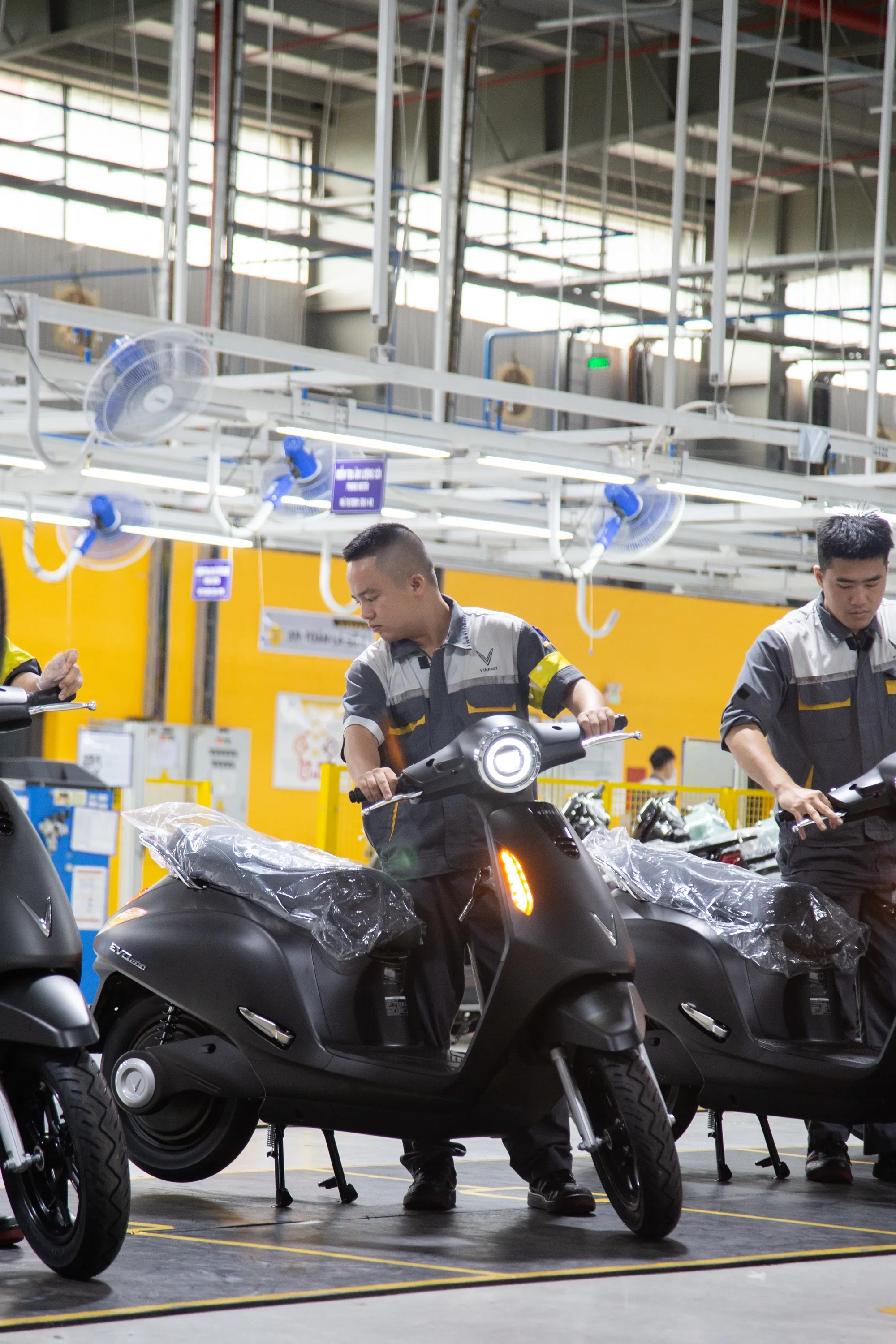
If any inspection item fails to meet the required standards, the EOL system automatically records the fault, stores the inspection data in the manufacturing database, and routes the vehicle to the repair station. There, technicians perform root cause analysis, correct the problem, and return the vehicle for re-inspection. Only motorcycles that successfully pass every End-of-Line test are approved for packaging and shipment.
In modern manufacturing facilities, end-of-line (EOL) inspection systems are commonly integrated with manufacturing execution systems (MES) or enterprise resource planning (ERP) platforms. This integration enables automatic recording of inspection results while providing real-time alerts whenever a product fails to meet quality requirements.
2. Common reasons why electric motorcycles fail EOL inspection
Various factors can prevent an electric motorcycle from passing end-of-line inspection. These range from measurement inaccuracies and electrical system failures to assembly mistakes, poor incoming component quality, and traceability issues. Accurately identifying the root cause of each failure not only helps manufacturers reduce the NG (Non - conforming) rate but also improves quality control efficiency, lowers production costs, and enhances product reliability before shipment.
2.1. Measurement errors and equipment calibration issues
The accuracy of measuring instruments plays a crucial role in determining the reliability of end-of-line inspection results. Even a slight deviation in a sensor or measuring device can lead to incorrect quality assessments. After prolonged operation, equipment such as sensors, industrial cameras, measuring instruments, force testers and positioning fixtures may gradually lose accuracy due to mechanical wear, vibration, environmental temperature changes, or electronic component aging. As a result, measurement values may drift away from their original calibration standards.
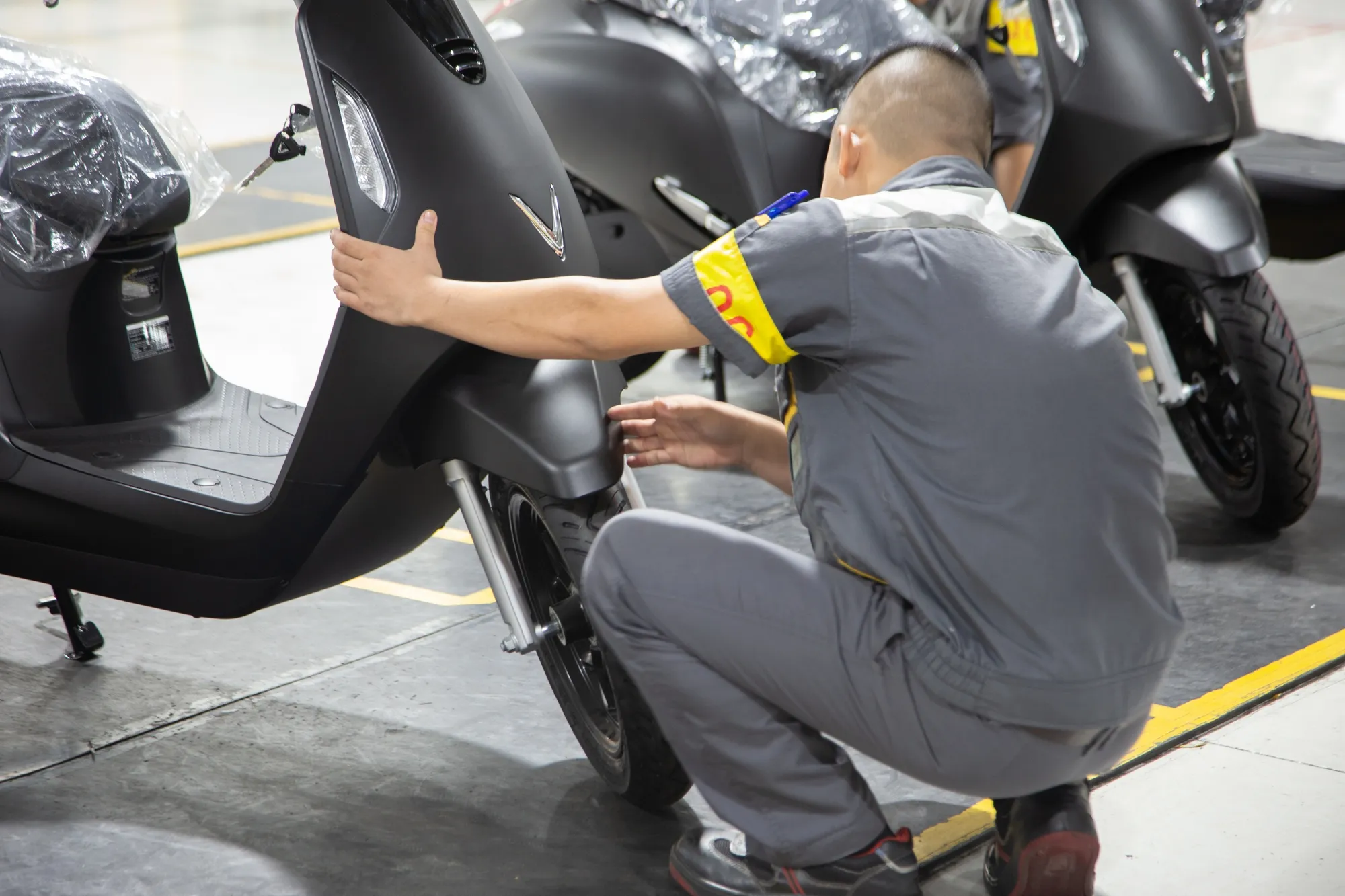
When an inspection system incorrectly identifies a qualified product as defective (a false rejection), manufacturers must spend additional time on unnecessary rework and repeated inspections, reducing overall production efficiency. Even more critical is the opposite scenario - when a defective product is mistakenly approved. Such errors may allow faulty motorcycles to reach customers, increasing warranty costs, product recalls, and potential damage to the manufacturer's reputation.
To maintain inspection accuracy, manufacturers should establish a regular calibration schedule, perform preventive maintenance on testing equipment, and periodically verify measurement accuracy using certified reference standards. These practices help ensure reliable EOL inspection results and minimize false pass or false fail conditions.
2.2. Electrical system and sensor failures
In electric motorcycle quality inspection, the electrical system represents the inspection category with the largest number of checkpoints and is also the most common source of defects during the End-of-Line (EOL) inspection process. A modern electric motorcycle may contain dozens of electronic control units (ECUs), hundreds of connectors, and thousands of meters of wiring interconnected throughout the vehicle. A single connection that does not meet specifications can affect the operation of the entire system.
Unlike mechanical components, electrical faults are often difficult to detect through visual inspection. Many defects only become apparent when the system is powered on and operated under actual working conditions. Therefore, the EOL stage plays a critical role in verifying the integrity of the electrical system before the motorcycle leaves the factory.
2.3. Human errors during production
Although electric motorcycle assembly plants are increasingly investing in automated production lines, industrial robots, and advanced End-of-line (EOL) inspection systems, human operators still play an essential role in many processes, including assembly, inspection, calibration, and product quality verification. As a result, operator errors remain one of the most common causes of product failures during final electric motorcycle production line inspection.
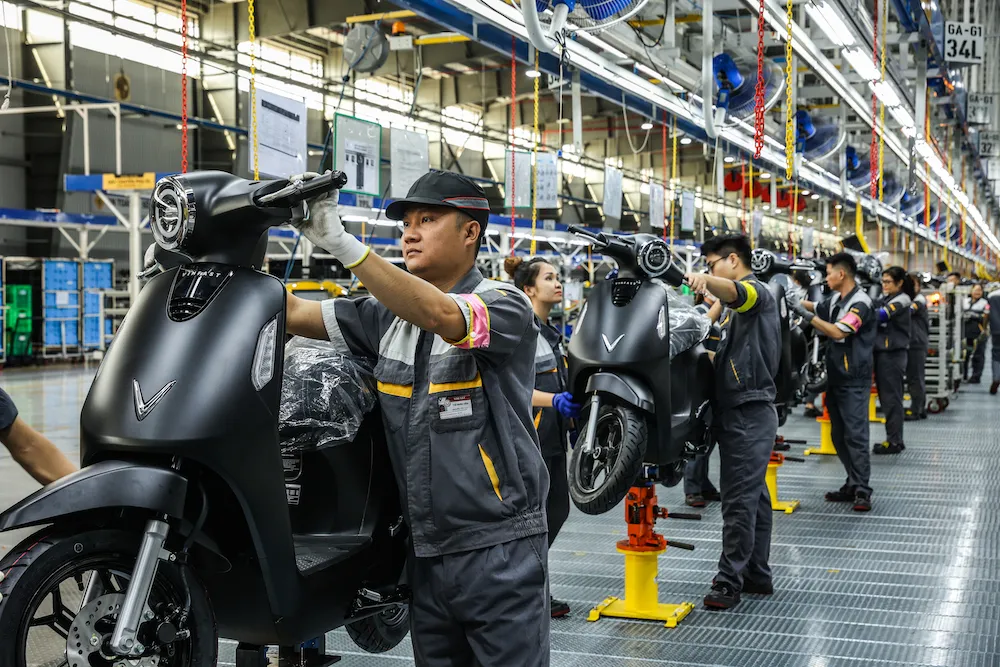
Unlike equipment failures or component defects, human errors typically result from improper operating procedures, lack of concentration, or failure to fully comply with manufacturing standards. If not effectively controlled, these seemingly minor mistakes can affect the quality of an entire production batch and significantly increase repair and warranty costs.
2.4. Worn fixtures and inspection equipment
During electric motorcycle End-of-Line inspection, the accuracy of inspection results depends not only on sensors and software but also heavily on the inspection fixtures. Fixtures are responsible for locating, positioning, and securely holding the product in the correct position throughout the inspection process, enabling measuring instruments, industrial cameras, and sensors to collect highly accurate data.
If the fixtures fail to maintain the required precision, even the most advanced End-of-Line (EOL) inspection system may produce inaccurate results. Therefore, fixtures are regarded as the foundation for ensuring the stability and reliability of the entire quality inspection process.
2.5. Inadequate incoming quality control
In an electric motorcycle production line, the quality of each vehicle is determined by hundreds or even thousands of different components, including the battery, motor, controller, electrical system, sensors, frame, and numerous mechanical parts. Since most of these components are supplied by multiple vendors, incoming quality control plays an especially critical role.
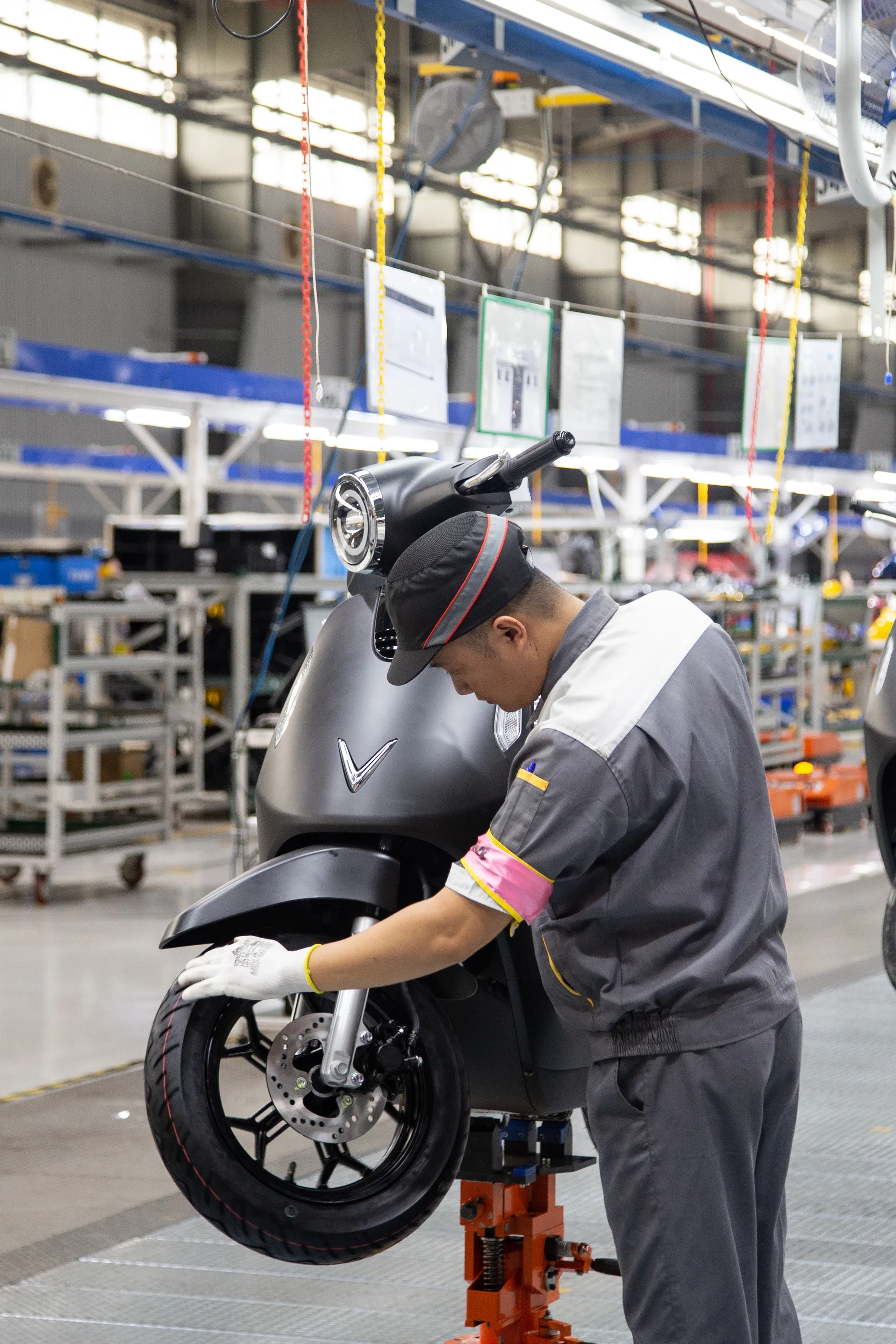
If even a single nonconforming component enters the production line, the defect can propagate through multiple downstream processes and may only be detected during the final electric motorcycle End-of-Line inspection. This not only increases the Non-Good (NG) rate but also requires manufacturers to spend significant time and cost on disassembly, repair, or component replacement. Moreover, many incoming component defects cannot be identified through visual inspection alone and only become evident when the motorcycle is operated or subjected to functional tests during EOL inspection.
2.6. Labeling and traceability errors
Each electric motorcycle is assigned a unique identification code engraved on the frame using a frame number marking machine. This identification is used for production management, quality control, and product traceability throughout the product lifecycle. Typically, each motorcycle is managed using several types of identification codes, including:
- VIN/Frame number: A unique identification number assigned to each motorcycle for production management, vehicle registration, warranty management, and product history traceability.
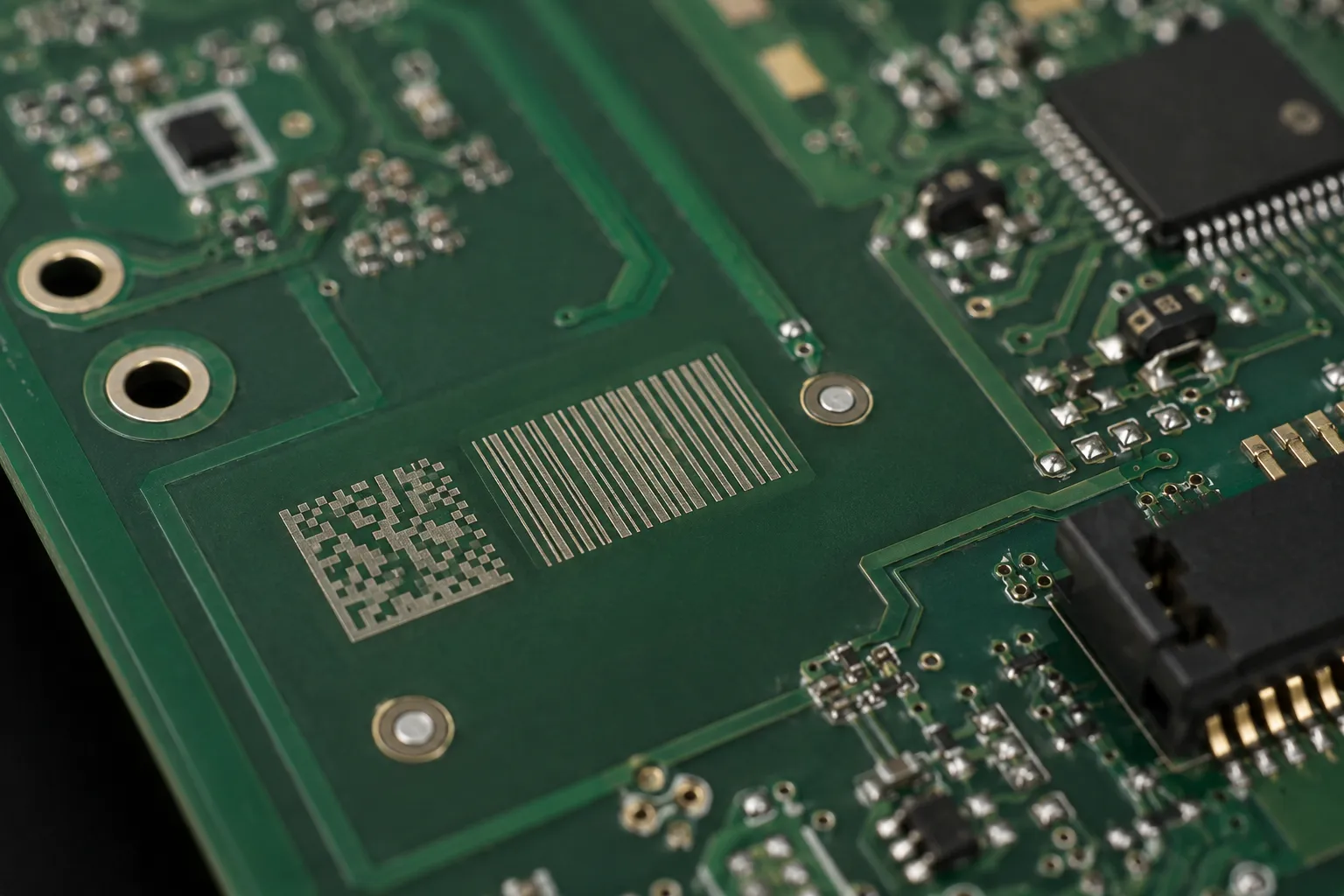
- QR code: Stores information such as the product code, model version, batch number, production date, or links to the complete manufacturing data stored in the system.
- Barcode: Commonly used during warehousing, assembly, inspection, and logistics operations to automate product identification.
- Serial number: Assigned to critical components such as the battery, motor, ECU, or battery management system (BMS) to enable individual component tracking and warranty management.
These identification codes not only enable product identification but also connect to the complete production records stored in the Manufacturing Execution System (MES) or Enterprise Resource Planning (ERP) system. As a result, manufacturers can accurately determine when a motorcycle was assembled, which components were used, who assembled it, which inspection procedures it underwent, and the results of each inspection.
Electric motorcycle End-of-line inspection is not only the final stage of product quality evaluation but also a key factor in ensuring product safety, reliability, and customer satisfaction. Identifying the root causes of EOL inspection failures enables manufacturers to implement effective improvement measures, thereby reducing the NG rate and enhancing production efficiency. In addition to investing in advanced inspection systems, manufacturers should focus on strengthening incoming component quality control, performing regular equipment maintenance and calibration, standardizing production processes, and continuously improving operator competency. Furthermore, adopting technologies such as machine vision, artificial intelligence (AI), product traceability systems, and MES/ERP data integration can significantly improve inspection accuracy and optimize quality management. When an End-of-line (EOL) inspection system is designed as a fully integrated solution and operated efficiently, manufacturers can not only reduce repair, warranty, and product recall costs but also strengthen brand reputation and enhance competitiveness in the electric motorcycle market. With extensive experience in implementing electric motorcycle assembly lines, End-of-line (EOL) inspection systems, and customized standalone machines for electric motorcycle production lines, CNC VINA is ready to support manufacturers in improving product quality and optimizing production processes. We provide tailor-made solutions designed to meet the specific requirements of each factory, helping manufacturers increase productivity, reduce defect rates, and progressively achieve their smart factory objectives.