 Tiếng
Việt
 Tiếng
Anh
 Tiếng
Nhật




 Tiếng Anh

What are the main stages of an LED lighting production line?

An LED lighting production line consists of multiple stages, from PCB preparation, component assembly, and power supply connection to housing assembly, quality inspection, and packaging. Depending on the product type, factory scale, and level of automation, manufacturers can organize these processes into independent production stations or integrate them into a complete production line. In practice, not every production stage requires immediate investment in automated equipment. Equipment selection should be based on production volume, cycle time, defect rates, and product specifications.
In this article, CNC VINA provides an overview of the LED lighting manufacturing process, identifies the stages most suitable for automation, and explains how to select equipment to improve productivity, maintain consistent quality, and optimize operating costs.
1. What is an LED lighting production line?
An LED lighting production line is a system of equipment and manufacturing processes used to assemble, connect, inspect, and complete LED lighting products. Depending on the product design, the production line may include SMT machines, PCB cutting machines, automated dispensing machines, screw fastening machines, electrical testing equipment, and packaging systems. The production line can operate manually, semi-automatically, or with varying levels of automation. In high-volume manufacturing facilities, production stations are often interconnected through conveyors, automatic feeding mechanisms, and control systems to minimize manual handling between processes. However, the manufacturing process for residential LED bulbs differs from that of LED tube lights, LED panel lights, and industrial LED lighting fixtures. Each product category has its own mechanical structure, assembly methods, and inspection requirements.
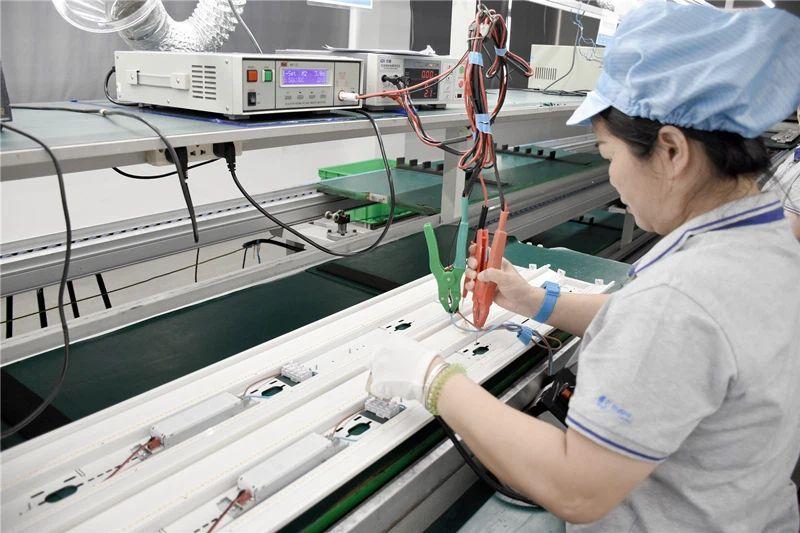
Therefore, before selecting equipment, manufacturers need to clearly identify the type of LED lighting products to be manufactured, the assembly status of incoming components, and the target production capacity of the line.
2. Basic components of an LED lighting fixture
To design a suitable production line, it is essential to understand the structure and functions of the main components of an LED lighting product.
|
Component |
Function |
|---|---|
|
LED chips or LED components |
Emit light when supplied with an appropriate electrical current. |
|
LED circuit board (PCB/MCPCB) |
Mounts LED components, provides electrical connections, and facilitates heat transfer. |
|
LED driver |
Supplies and regulates electrical power to meet the operating requirements of the LED module. |
|
Heat sink |
Conducts and dissipates heat generated during operation. |
|
Housing |
Protects and secures internal components while providing structural support. |
|
Diffuser or optical lens |
Distributes, directs, or diffuses light. |
|
Wires, connectors, and fastening components |
Provide electrical connections, enable assembly, and secure components in their designated positions. |
Not all LED lighting products incorporate every component listed above. Some designs integrate the power supply circuit directly onto the PCB, while others use a separate LED driver. Similarly, the heat sink may be integrated into the housing rather than manufactured as a separate component. These design differences directly affect the number of assembly stations, component feeding methods, and types of automated equipment required.
3. What are the main stages of the LED lighting manufacturing process?
A typical LED lighting manufacturing process can be divided into seven main stages. However, the actual production sequence varies depending on whether the manufacturer produces PCBs and LED drivers in-house or purchases pre-assembled modules for final assembly.
3.1. Mounting LED components onto the circuit board
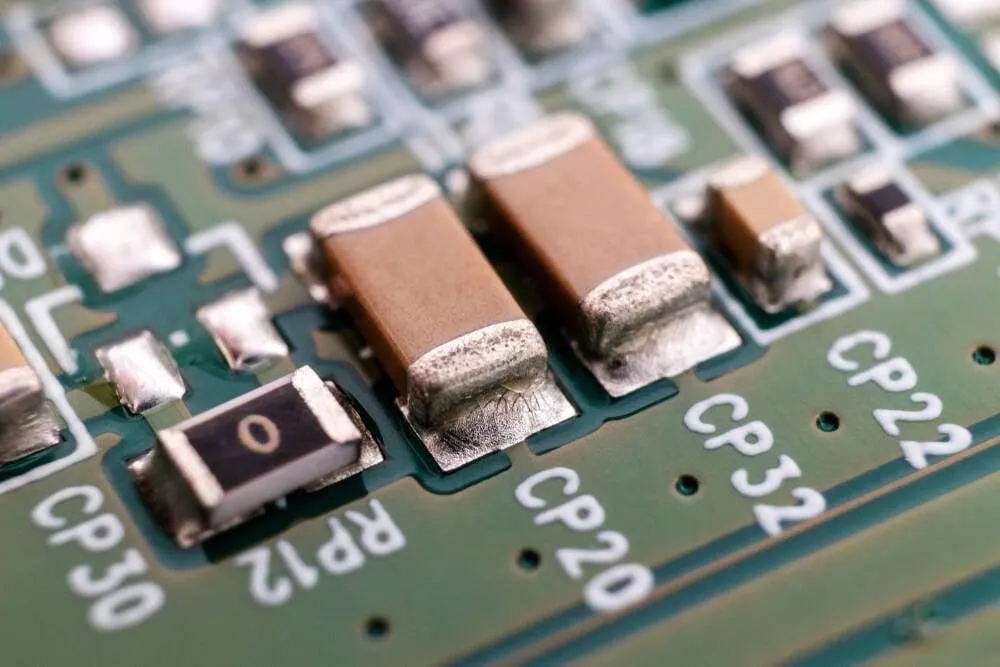
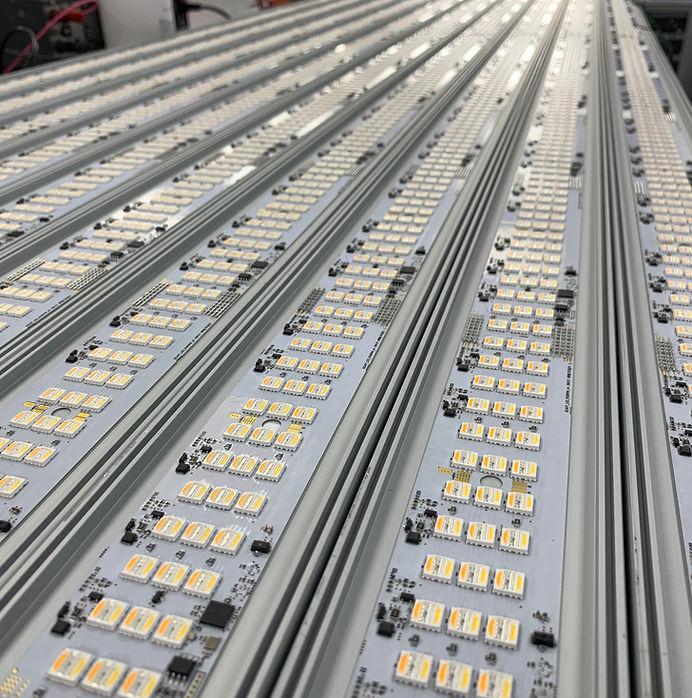
This stage involves manufacturing the light-emitting PCB assembly, typically using surface-mount technology (SMT) for surface-mount LED components.
The basic SMT process includes:
-
Solder paste printing: Solder paste is deposited onto the designated PCB pads using a stencil.
-
Component placement: An SMT pick-and-place machine positions LED components and other electronic components according to the PCB design.
-
Reflow soldering: The PCB passes through a reflow oven, where solder joints are formed between component terminals and PCB pads.
-
Inspection: The assembled board is inspected for component placement accuracy, solder joint quality, and potential manufacturing defects.
At this stage, component placement accuracy and soldering temperature control directly affect PCB assembly quality. Common defects include component misalignment, missing components, solder bridging, and unacceptable solder joints. Automated Optical Inspection (AOI) systems can help detect various visible defects after assembly. It is important to distinguish SMT assembly from direct LED die bonding, as these are different manufacturing technologies requiring specialized equipment. For manufacturers that purchase fully assembled LED circuit boards, the SMT process may not be included in the final LED lighting assembly line.
3.2. LED PCB cutting and depaneling
In the production of LED tube lights, linear LED fixtures, and certain lighting products manufactured using PCB panels, circuit boards may need to be separated or cut to the required dimensions. This process requires accurate cutting, minimal mechanical stress on mounted components, and protection of conductive traces from damage. Depending on the PCB structure, manufacturers may choose:
-
Rotary blade PCB cutting machines for boards with suitable straight cutting lines.
-
PCB routing machines for products requiring complex cutting profiles.
-
Specialized cutting equipment designed for specific PCB dimensions and materials.
For aluminum-based PCBs, commonly used in LED lighting products, particular attention must be paid to the cutting method, board clamping, and material properties. Manual cutting may result in uneven edges, dimensional inaccuracies, or mechanical stress that can damage components. Automated PCB cutting machines help control cutting positions and improve consistency between products. However, equipment selection should be based on PCB thickness, material, geometry, and required edge quality.
3.3. LED driver assembly and connection
The LED driver supplies the electrical power required for stable operation of the LED module. Depending on the manufacturer's production model, this stage can be organized in two ways. For manufacturers producing LED drivers in-house:
The production process includes electronic component assembly, soldering, electrical testing, and final driver assembly. Equipment may include automated soldering machines, component feeding systems, and electrical testing equipment.
For manufacturers using pre-assembled LED drivers:
The main operations involve positioning the driver, connecting wires or connectors, securing the assembly, and verifying electrical connections.
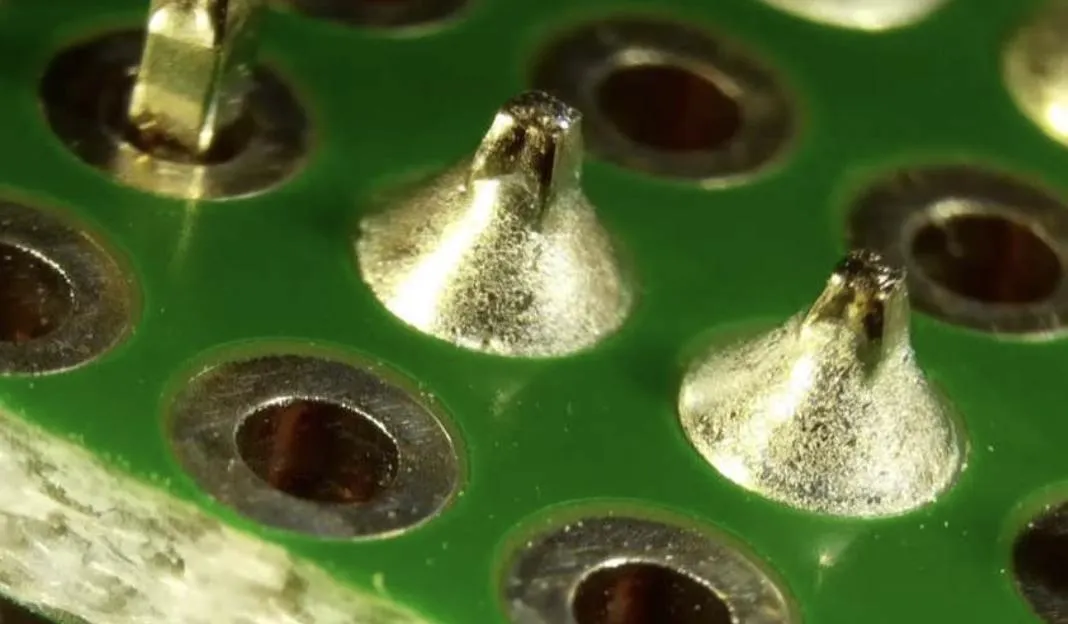
For products requiring wire soldering, solder joints must meet the specified electrical and mechanical requirements. When plug-in connectors or quick-connect terminals are used, correct positioning and secure engagement must be ensured. High-volume, repetitive operations can be supported by dedicated fixtures, automated soldering equipment, or component feeding mechanisms.
3.4. Thermal interface material and adhesive dispensing
LED components generate heat during operation. If this heat is not effectively transferred and dissipated, increased operating temperatures may negatively affect product performance and service life. Therefore, many LED lighting designs use thermal interface materials between the circuit board and the heat sink. Depending on the design, these materials may include thermally conductive adhesives, thermal grease, or other specialized thermal interface materials. Some products also require adhesive dispensing to secure diffusers, seal joints, or bond structural components. When performed manually, dispensing may result in inconsistent material quantities, inaccurate application positions, or excess material spreading beyond the designated areas.
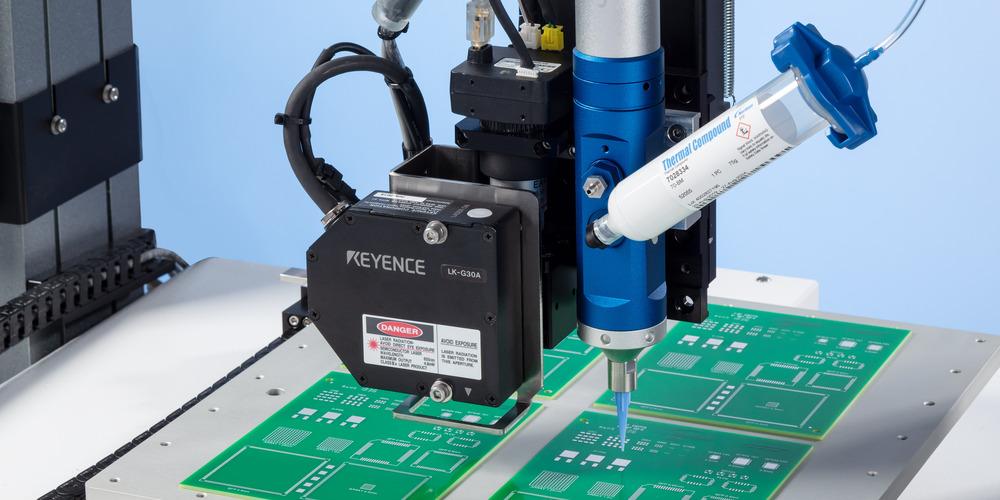
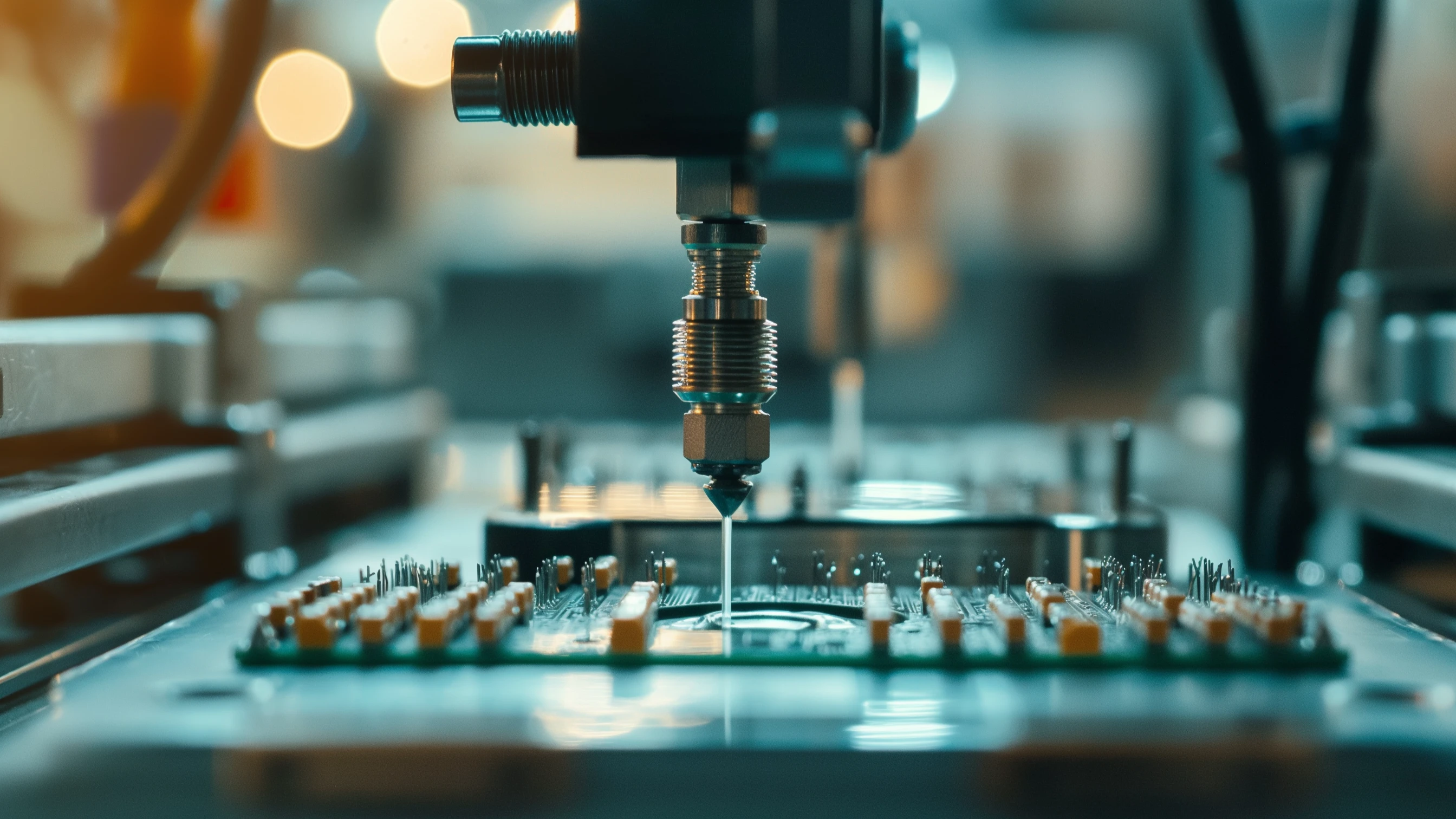
Automated dispensing machines help control:
-
The amount of material dispensed at each designated position.
-
The dispensing head's movement speed and travel path.
-
The starting and ending positions, as well as the shape of the dispensing pattern.
-
Process repeatability across production cycles.
In systems equipped with an XYZ motion platform, the dispensing head can follow programmed paths to apply material in dots, straight lines, or other specified patterns. However, dispensing parameters and material delivery methods must be selected according to material viscosity, physical properties, and actual process requirements.
3.5. Housing assembly, diffuser installation, and screw fastening
Once the main component assemblies are completed, the product moves to the mechanical assembly stage. Typical operations include installing the PCB into the lamp housing, securing the LED driver, attaching the diffuser, connecting structural components, and fastening screws.
Common defects associated with manual assembly include:
-
Incorrect component positioning or orientation.
-
Missing screws or insufficient screw tightening.
-
Improper tightening torque, resulting in damaged threads or component deformation.
-
Misaligned diffusers or improper component fit.
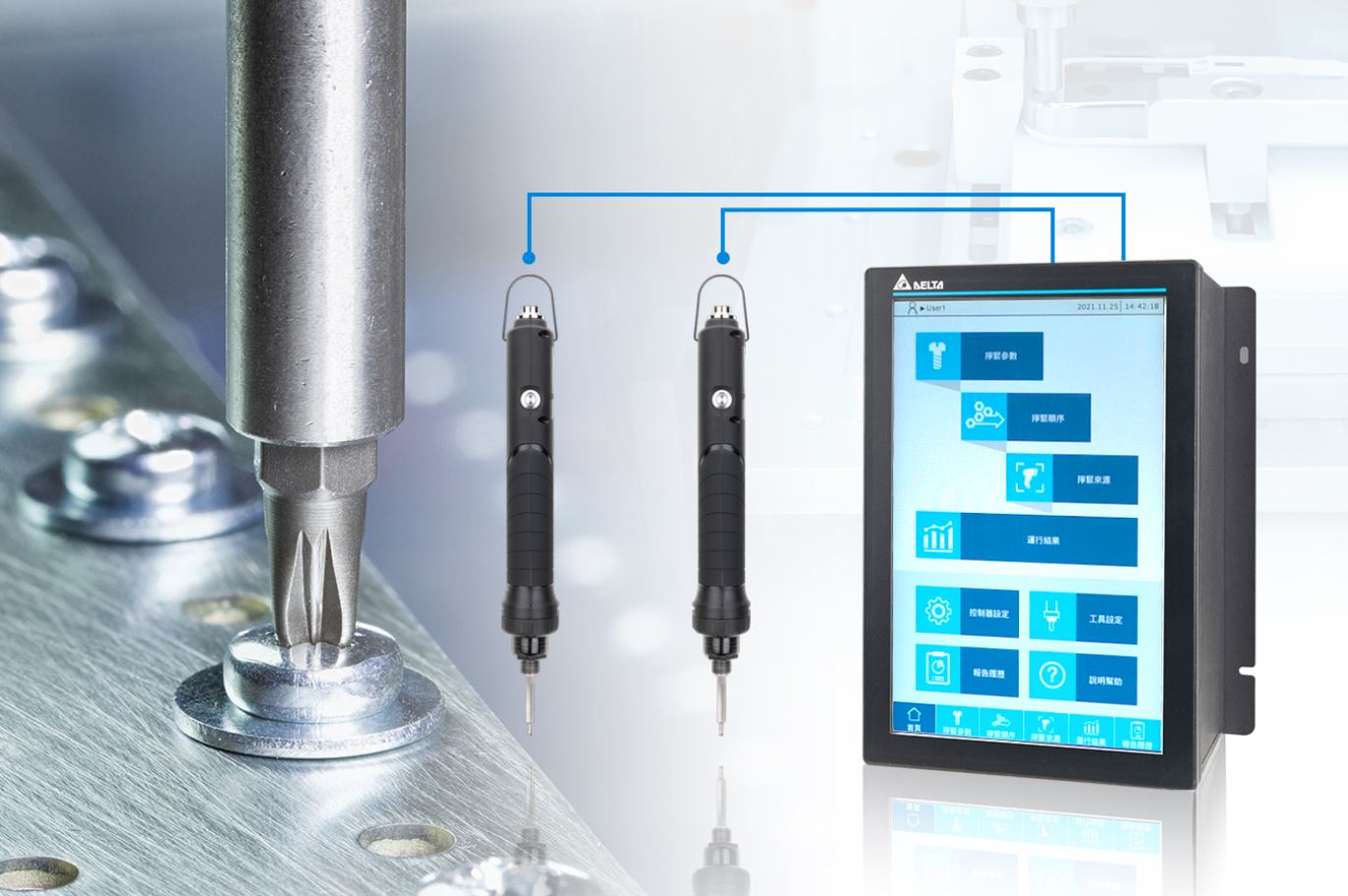
For high-volume production, automatic screw feeding and fastening machines are worth considering. These machines can integrate screw feeders, fastening heads, positioning fixtures, and control systems to perform assembly operations in a predefined sequence. Depending on the equipment configuration, some systems also support monitoring of tightening torque, tightening angle, or cycle completion status. In addition to automatic screw fastening machines, manufacturers may use press-fitting mechanisms, pneumatic fixtures, or robotic pick-and-place systems for suitable assembly operations.
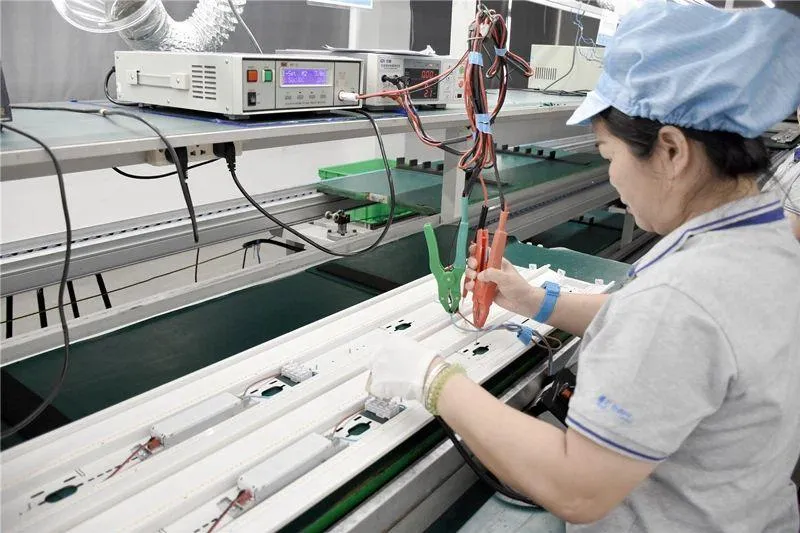
3.6. Lighting performance testing, electrical testing, and burn-in testing
This is a critical stage before LED lighting products are released to the market. Its purpose is to detect defects related to electrical connections, lighting performance, and product operation under specified testing conditions.
Electrical testing
Test parameters may include voltage, current, power consumption, and electrical safety characteristics according to product requirements.
Optical testing
Depending on the specifications, manufacturers may measure luminous flux, correlated color temperature (CCT), chromaticity coordinates, and other optical parameters using appropriate testing equipment.
Functional testing
This verifies that the lamp turns on, operates in the intended modes, and does not exhibit abnormal flickering or other functional defects.
Burn-in testing
Products are operated for a specified period under defined conditions to help identify early-life failures. Burn-in systems may incorporate multi-position test racks, power supply units, monitoring mechanisms, and equipment for recording operating conditions. However, burn-in testing does not replace comprehensive reliability testing or directly establish a product's long-term service life. For high-volume production lines, automated testing stations can reduce manual connection operations, standardize testing procedures, and record inspection results for individual products.
3.7. Final inspection and packaging
After passing the required testing stages, LED lighting products proceed to final finishing and packaging.
Typical operations include:
-
Inspecting the product's external appearance.
-
Cleaning surfaces and removing excess materials.
-
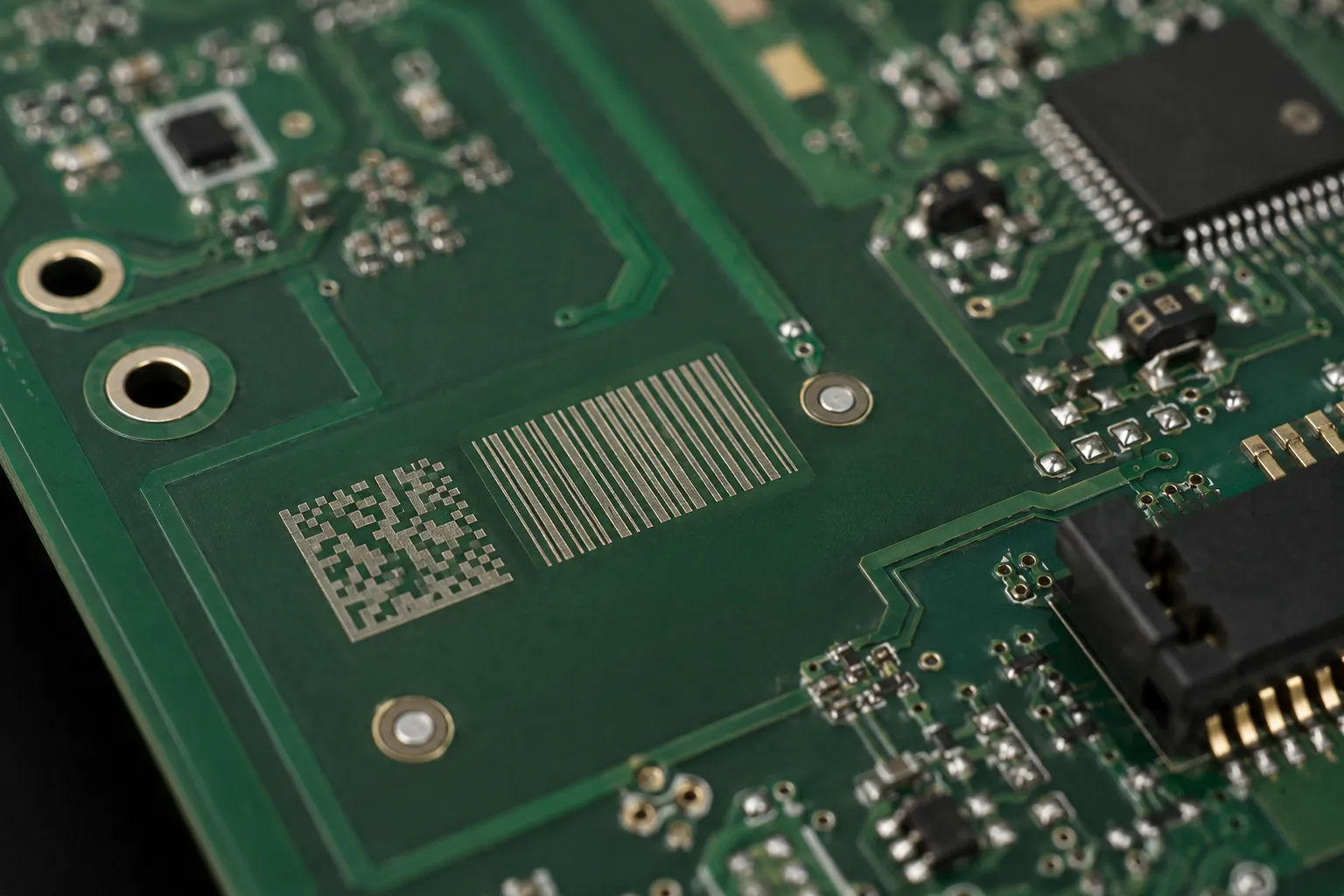
Applying product labels, identification codes, or traceability labels.
-
Placing products into trays, cartons, or other packaging materials.
-
Including accessories and instruction manuals as required.
-
Packing products into shipping cartons and preparing them for dispatch.
For low-volume production, manual packaging may be sufficient. As production volumes increase, manufacturers can introduce conveyors, carton feeding mechanisms, labeling equipment, or automated packaging machines to reduce repetitive manual operations. For products supplied with multiple accessories, code verification or component presence detection systems can also be integrated to minimize missing items.
4. Which stages of LED bulb manufacturing should be automated?
Not every stage of an LED lighting production line delivers the same return on investment when automated. Processes involving long manual handling times, highly repetitive operations, strict accuracy requirements, or high manual defect rates are generally the first candidates for automation.
4.1. Comparison of manual processes and suitable automated equipment
|
Production stage |
Common defects in manual operations |
Suitable automated equipment |
|---|---|---|
|
LED component assembly |
Incorrect positioning, missing components, assembly defects |
SMT machines, AOI systems |
|
PCB cutting and depaneling |
Dimensional inaccuracies, chipped edges, mechanical stress on components |
PCB cutting machines |
|
LED driver soldering and connection |
Defective solder joints, incorrect connections |
Automated soldering machines, testing stations |
|
Thermal interface material dispensing |
Inconsistent dispensing quantities, incorrect application positions |
Automated dispensing machines |
|
Housing assembly and screw fastening |
Missing screws, incorrect tightening torque |
Automatic screw feeding and fastening machines |
|
Electrical and optical testing |
Undetected defects, inconsistent test results |
Automated testing stations |
|
Burn-in testing |
Difficulty monitoring large quantities of products |
Burn-in testing systems |
|
Packaging |
Missing accessories, incorrect labels |
Automated packaging and code verification systems |
The table above provides general recommendations for equipment selection based on the characteristics of each production stage. The most suitable solution should be determined after evaluating the actual products and existing manufacturing processes.
4.2. Production stages to prioritize for automation
Adhesive and material dispensing
This process requires high repeatability in both dispensing volume and application position. In high-volume production, manual dispensing may result in variations between products, increasing material consumption or affecting assembly quality. Automated dispensing machines are suitable for products with relatively consistent dispensing positions and requirements for precise material quantity control.
Automatic screw feeding and fastening
Screw fastening operations are often repeated multiple times during each production cycle. Automated equipment reduces manual screw handling, positioning, and tightening operations while supporting consistent control of fastening parameters.
Electrical and functional testing
In high-volume manufacturing facilities, manually testing individual products can be time-consuming. Automated testing stations can execute predefined test sequences, record results, and classify products as pass or fail when equipped with appropriate sorting mechanisms.
PCB cutting and depaneling
When manufacturing large quantities of PCBs with identical dimensions, dedicated cutting machines help standardize operations and reduce dependence on operator skills. However, the order in which processes should be automated must ultimately be determined based on actual production data.
5. Selecting LED lighting manufacturing equipment based on factory scale
Investing in an LED lighting production line does not necessarily require implementing a fully automated system from the beginning. Manufacturers can adopt a phased approach to manage investment costs and evaluate operational efficiency.
5.1. Small-scale production: Prioritizing fixtures and semi-automated equipment
For factories producing multiple product models or operating with fluctuating production volumes, semi-automated systems often offer greater flexibility than fixed production lines. Manufacturers can prioritize positioning fixtures, torque-controlled screwdrivers, dispensing equipment, and electrical testing stations. The objective is to reduce operational errors, standardize product quality, and support operators without requiring an immediate investment in a fully integrated production line.
5.2. Medium-scale production: Automating repetitive operations
As production volumes increase and product designs become more standardized, manufacturers can invest in dedicated equipment for time-consuming operations. Equipment worth considering includes PCB cutting machines, automated dispensing machines, screw fastening machines, and testing stations. At this stage, particular attention should be paid to program adjustment, fixture replacement, and changeovers between different product models. Machines designed with suitable adjustment capabilities can help manufacturers minimize modification costs when product specifications change.
5.3. Large-scale production: Integrating a fully coordinated production line
For factories with high production volumes and continuous operation requirements, individual production stations can be interconnected to form an integrated production line.
The system may include:
-
Product transfer conveyors.
-
Automatic feeding and positioning mechanisms.
-
Robots or pick-and-place mechanisms.
-
Dispensing, screw fastening, and assembly machines.
-
Automated inspection and testing stations.
-
Data collection and product sorting systems.
When integrating multiple machines, manufacturers must evaluate the cycle time of each station to prevent production bottlenecks. For example, a station with a cycle time of 12 seconds per product has a theoretical production capacity of:
3,600 / 12 = 300 products/hour.
This represents the theoretical output under continuous operating conditions. Actual production capacity also depends on material feeding time, machine downtime, product changeovers, and the percentage of products meeting quality requirements. If one station has a longer cycle time than the others, it may limit the overall production capacity of the entire line. Therefore, manufacturers should balance production capacity across all stages before finalizing the line configuration.
5.4. Key factors to evaluate before investing
To select suitable LED lighting manufacturing equipment, manufacturers should consider:
-
Target production capacity: The number of products to be completed per hour, shift, or day.
-
Cycle time: The time required to complete one product at each production station.
-
Product variety: Differences in dimensions, structures, and assembly processes across product models.
-
Current defect rate: Production stages with frequent quality issues.
-
Operating costs: Labor, materials, maintenance, and costs associated with defective products.
-
Scalability: Future requirements for increased production capacity or additional manufacturing processes.
An effective automation system should not only deliver high production speed but also ensure consistent product quality, ease of operation, and compatibility with actual manufacturing conditions.
6. Frequently asked questions about LED lighting production lines
What machines are required for an LED lighting production line?
Depending on the manufacturing scope, an LED lighting production line may include SMT machines, PCB cutting machines, soldering machines, dispensing machines, screw fastening machines, electrical testing equipment, burn-in testing systems, and packaging machines. If manufacturers purchase pre-assembled PCBs and LED drivers, the number of required processes and machines can be significantly reduced.
Which production stages should be automated first?
Priority should be given to processes involving long manual operation times, highly repetitive tasks, high defect rates, or strict accuracy requirements. Dispensing, screw fastening, PCB cutting, and electrical testing are worth evaluating, but the investment priority depends on each factory's actual production data.
Do small LED lighting factories need automated production lines?
Not necessarily. Small-scale manufacturers can begin with fixtures, semi-automated equipment, and dedicated testing stations. As production volumes increase and product designs become more stable, automated machines can be added to suitable production stages.
Can an existing LED lighting production line be automated?
Yes. Manufacturers can consider upgrading individual production stages or integrating additional automated equipment. However, factory layout, cycle times, product feeding methods, and compatibility with existing systems must be assessed to determine a feasible solution.
How can manufacturers select suitable LED lighting production equipment?
Manufacturers should provide product drawings or samples, target production volumes, technical specifications, and details of their existing production processes. Based on this information, machine manufacturers can evaluate suitable automation solutions, equipment configurations, and future expansion capabilities.
An LED lighting production line consists of multiple stages involving circuit boards, power supplies, mechanical assembly, testing, and packaging. Depending on the product type, manufacturers can organize production using manual, semi-automated, or fully integrated automated systems. PCB cutting, material dispensing, screw fastening, and electrical testing are among the processes worth considering for dedicated automation equipment. However, the effectiveness of automation must be evaluated based on actual production volumes, cycle times, product quality requirements, and operating costs.
CNC VIETNAM TECHNOLOGY APPLICATION AND CNC JOINT STOCK COMPANY
Factory: Song Cung Industrial Cluster, Dong Thap Commune, Dan Phuong District, Hanoi, Vietnam.
Office: Rox Tower Goldmark City, 136 Ho Tung Mau Street, Phu Dien Ward, Hanoi, Vietnam.
Phone: +84 916 639 355 / +84 915 744 664.
Website: www.cncvina.com.vn ; www.cncvina.net
Email: sale01@cncvina.com.vn ; sales03@cncvina.com.vn