 Tiếng
Việt
Tiếng
Việt
 Tiếng
Anh
Tiếng
Anh
 Tiếng
Nhật
Tiếng
Nhật




 Tiếng Anh

What is an electric motorcycle assembly line? Structure and working process

An electric motorcycle assembly line is an industrial production system designed to assemble individual motorcycle components into a complete electric motorcycle product. The creation of a finished product integrated with advanced technologies helps optimize the entire manufacturing process, ensure consistent quality, and generate significant profits for businesses. In addition to improving production efficiency, an electric motorcycle assembly line also helps enterprises reduce labor costs, shorten production time, and enhance market competitiveness. In particular, with the rapid growth of green transportation trends and increasing demand for energy-saving vehicles, electric motorcycles are becoming a popular choice in many countries around the world.
Investing in a modern electric motorcycle production line is an effective solution for improving product quality while enabling businesses to stay ahead of the sustainable development trend in the future transportation industry. In the article below, let’s explore the most comprehensive overview of electric motorcycle assembly lines with CNC VINA!
1. What is an electric motorcycle assembly line?
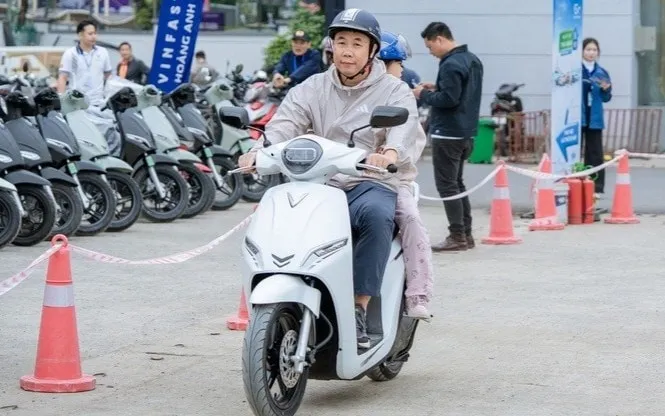
In recent years, the electric motorcycle industry has been growing rapidly worldwide, driven by trends in energy saving, CO₂ emission reduction, and the promotion of green transportation. As a result, vehicle manufacturers are increasingly focusing on this sector and investing in modern electric motorcycle production lines that meet strict safety standards.
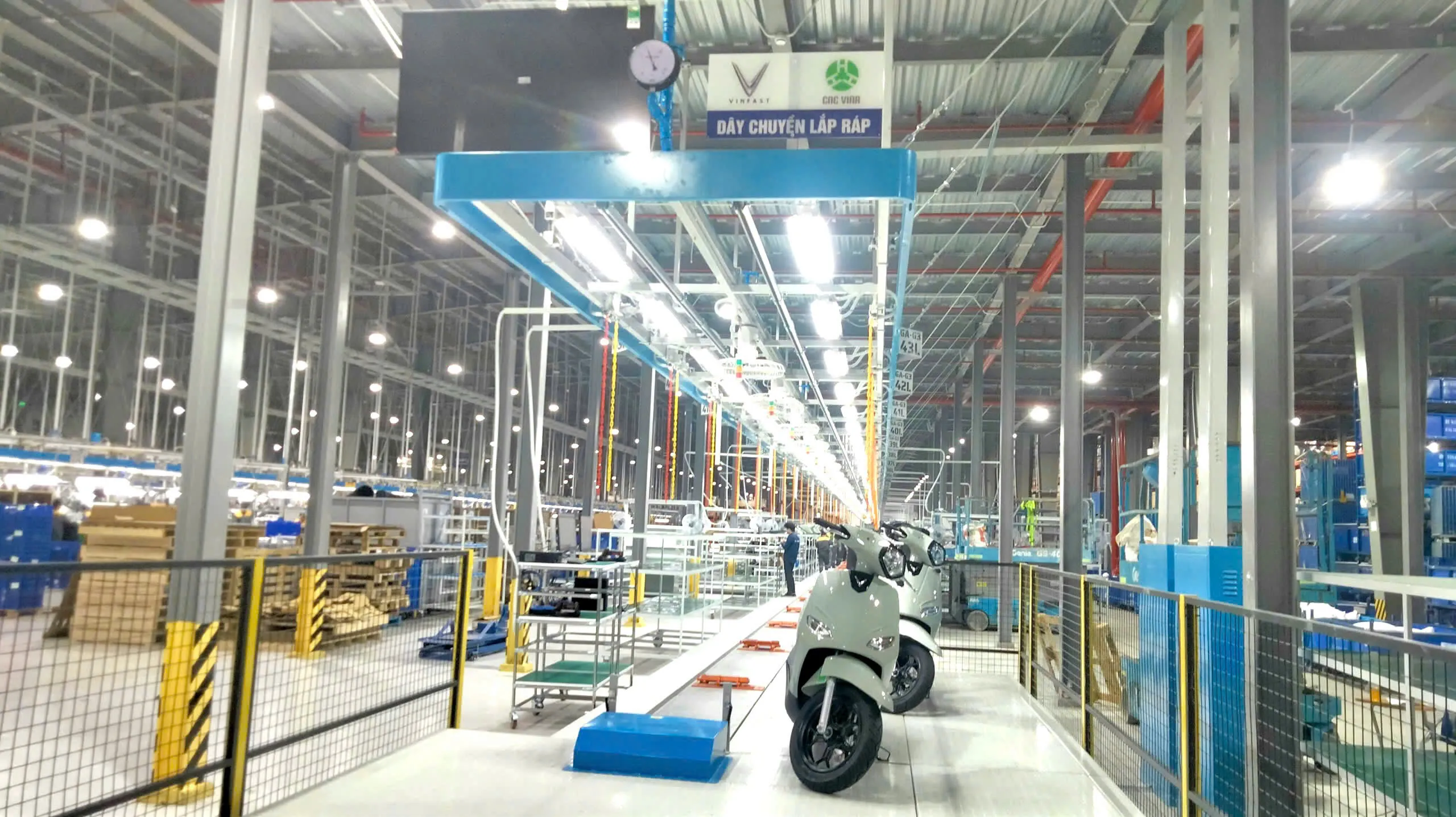
An electric motorcycle assembly line is an industrial production system organized into sequential stages, from product design to final assembly and operational deployment.
Unlike traditional motorcycle production lines, electric motorcycle manufacturing lines place greater emphasis on battery systems, electric motors, control software, and smart connectivity features.
2. Main stages in an electric motorcycle assembly line
An electric motorcycle production line typically operates through five main stages/systems, including:
- Frame welding and stamping workshop: This stage forms the foundational structure of the motorcycle frame system. To ensure durability and improve load-bearing capacity, all components are welded using high-precision technology while maintaining product consistency.
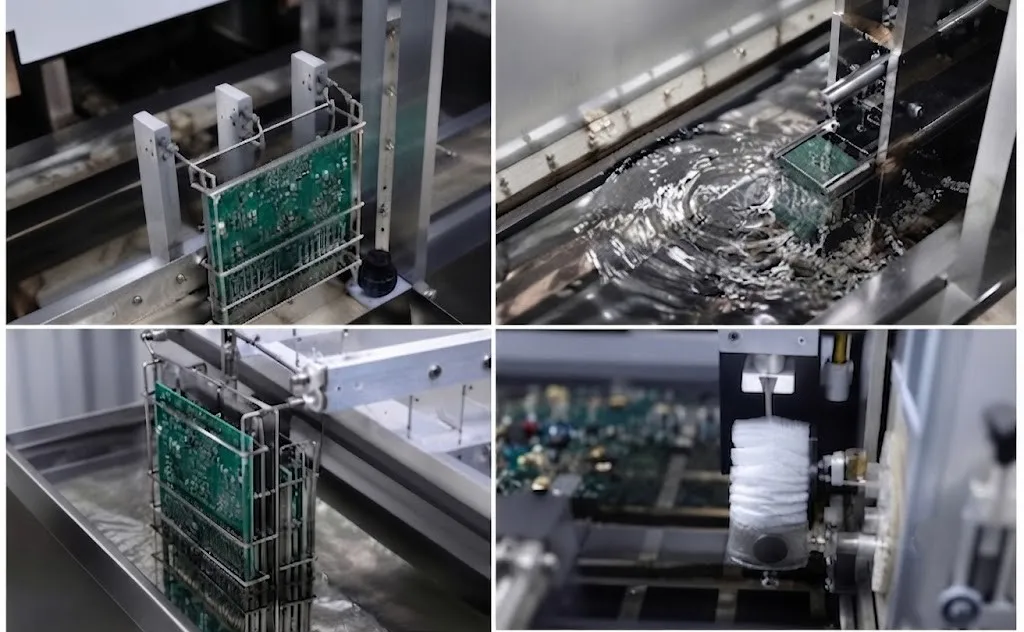
- Painting workshop: The painting workshop applies a high level of automation for coating the frame and outer body parts.
- Motor assembly workshop: This stage involves assembling electric motors or manufacturing them in-house, including the installation of Hall sensors and rotors.
- Assembly line system: This system includes the installation of suspension systems, transmission systems, controllers, and electrical systems, all integrated synchronously on the production line.
- Inspection line: Before leaving the factory, every motorcycle undergoes safety checks, power testing, brake system inspection, and sensor calibration to ensure that each vehicle meets technical standards and safety requirements for customers.
3. Working process of an electric motorcycle assembly line
The operating process of an electric motorcycle assembly line is typically carried out through four main stages to ensure product precision, safety, and synchronization before factory release.
3.1. Assembly of individual component modules
After machining and technical accuracy inspection, individual parts are assembled into important functional modules of the motorcycle. Components such as the frame, electric motor, transmission system, and control unit are completed separately in modular form to optimize production speed and maintain consistency throughout the overall assembly process.
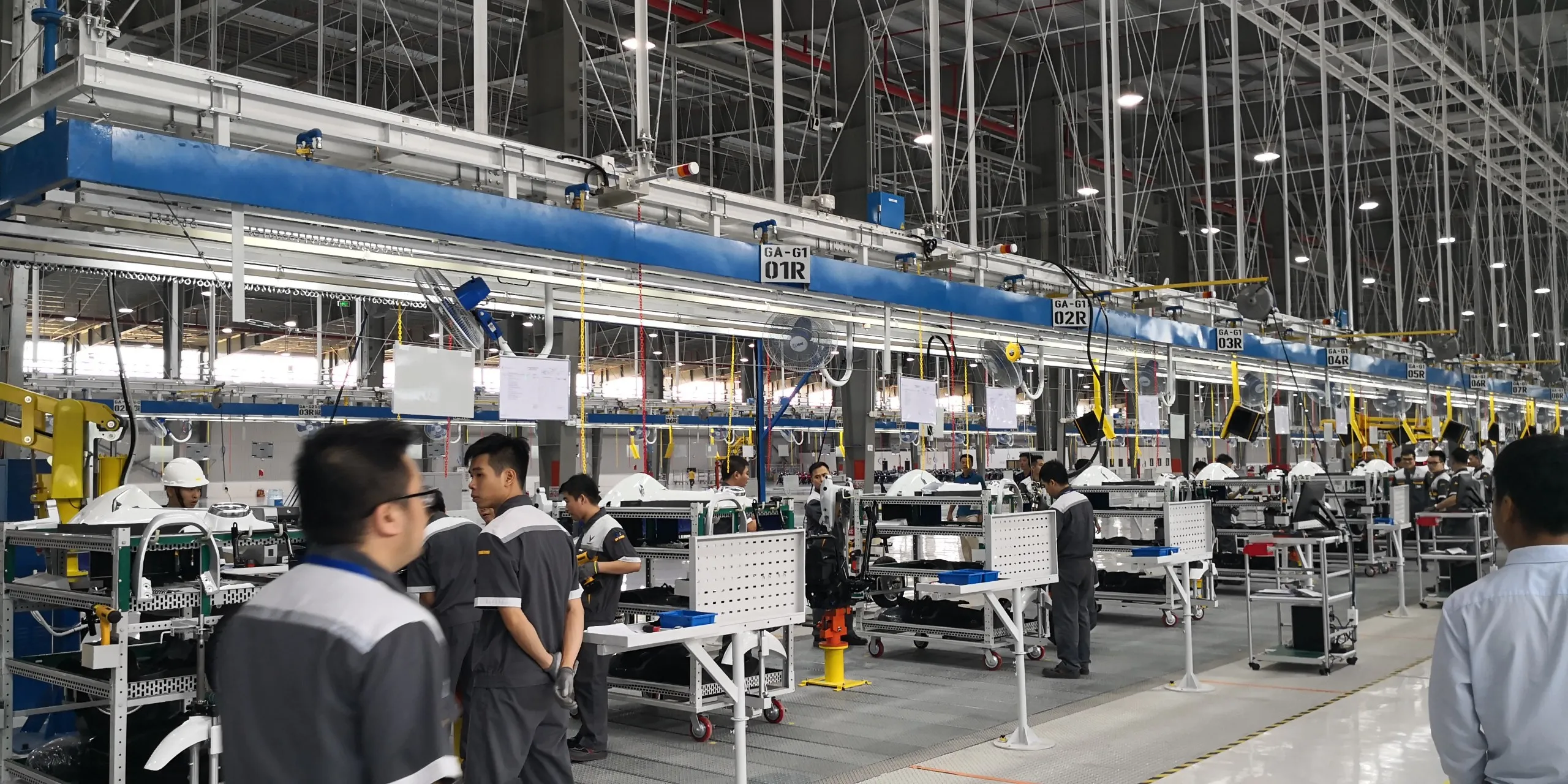
3.2. Transportation of motorcycle frames on the conveyor system
The conveyor system in an electric motorcycle assembly line plays a crucial role in transporting frames, components, and semi-finished products continuously and synchronously between production stages. Thanks to its high level of automation, the system helps optimize production time, reduce dependence on manual labor, and improve the operational efficiency of the entire production line.
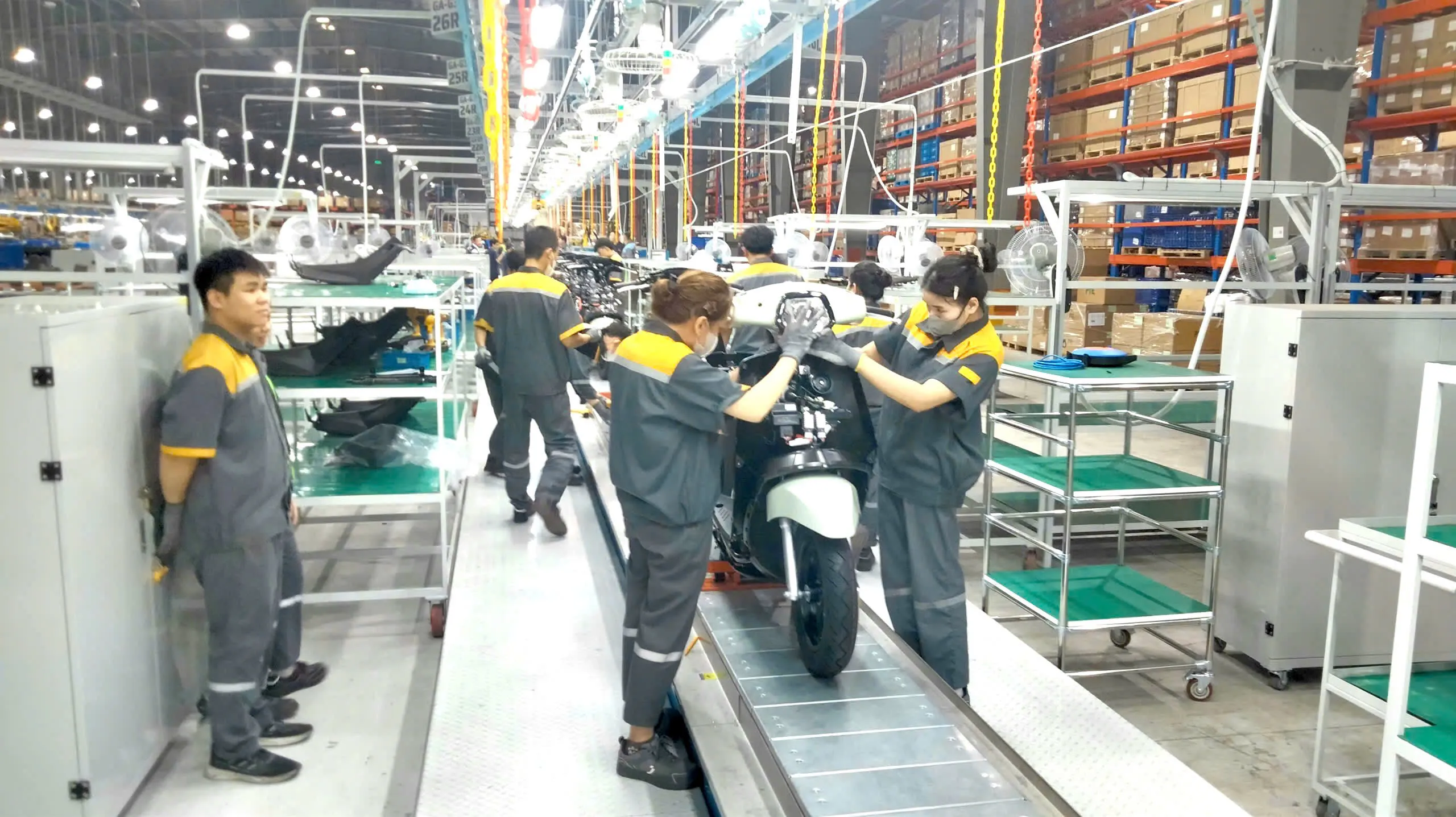
3.3. Final assembly of components onto the motorcycle body
After the main functional modules are completed, workers proceed to install exterior components and protective parts onto the motorcycle frame, including:
- Battery protection covers
- Protective body guard systems
- Lighting assemblies
- Plastic covers and exterior components
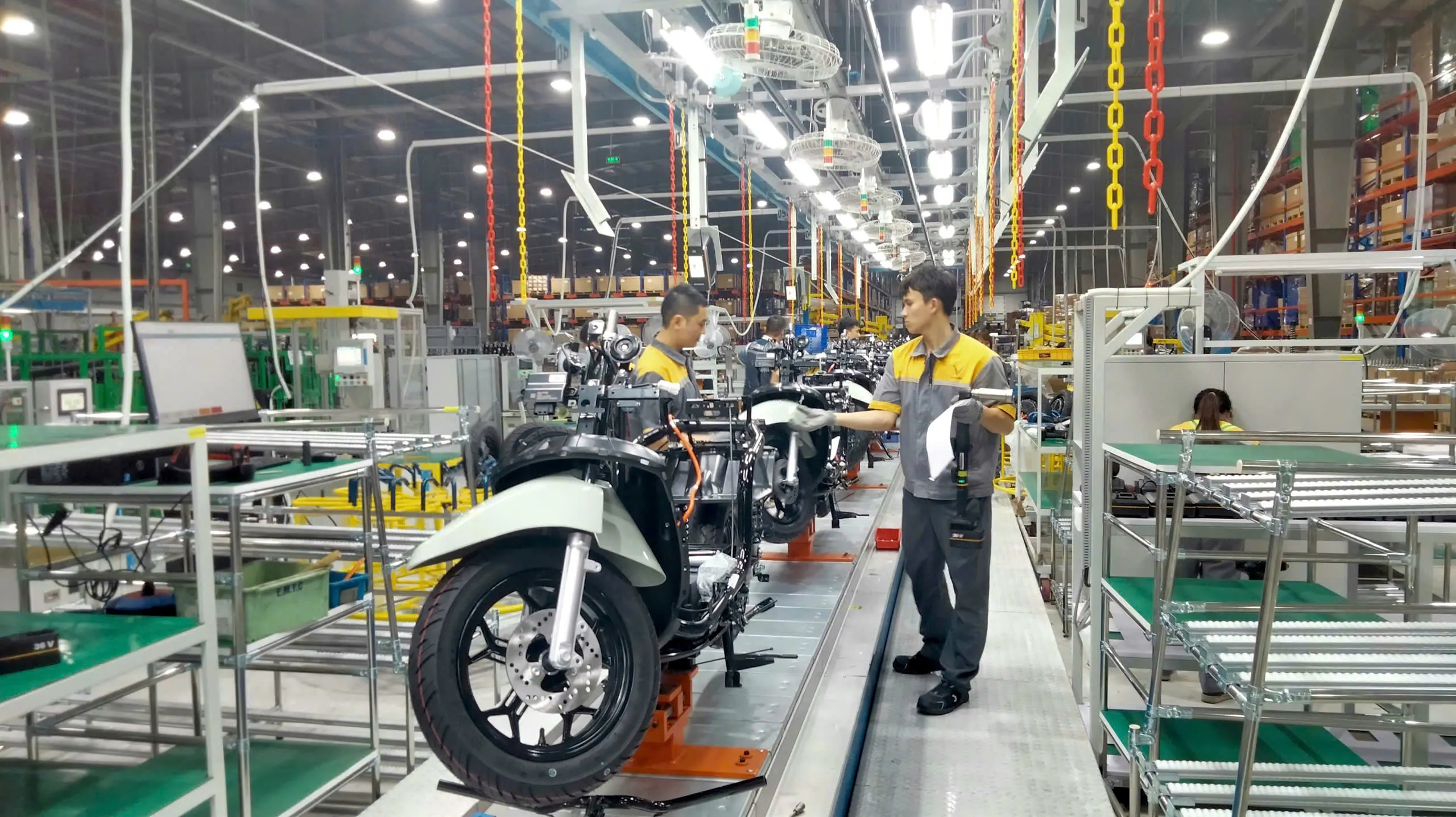
These parts not only enhance aesthetics but also protect internal components from dust, water, impacts, and environmental influences during operation.
3.4. Product inspection and quality evaluation
This is the final stage before the motorcycle is shipped from the factory. All products undergo a strict inspection process to evaluate:
- The firmness of assembly joints
- Motor operating capability
- Electrical and lighting systems
- Operational stability
- Vehicle performance efficiency
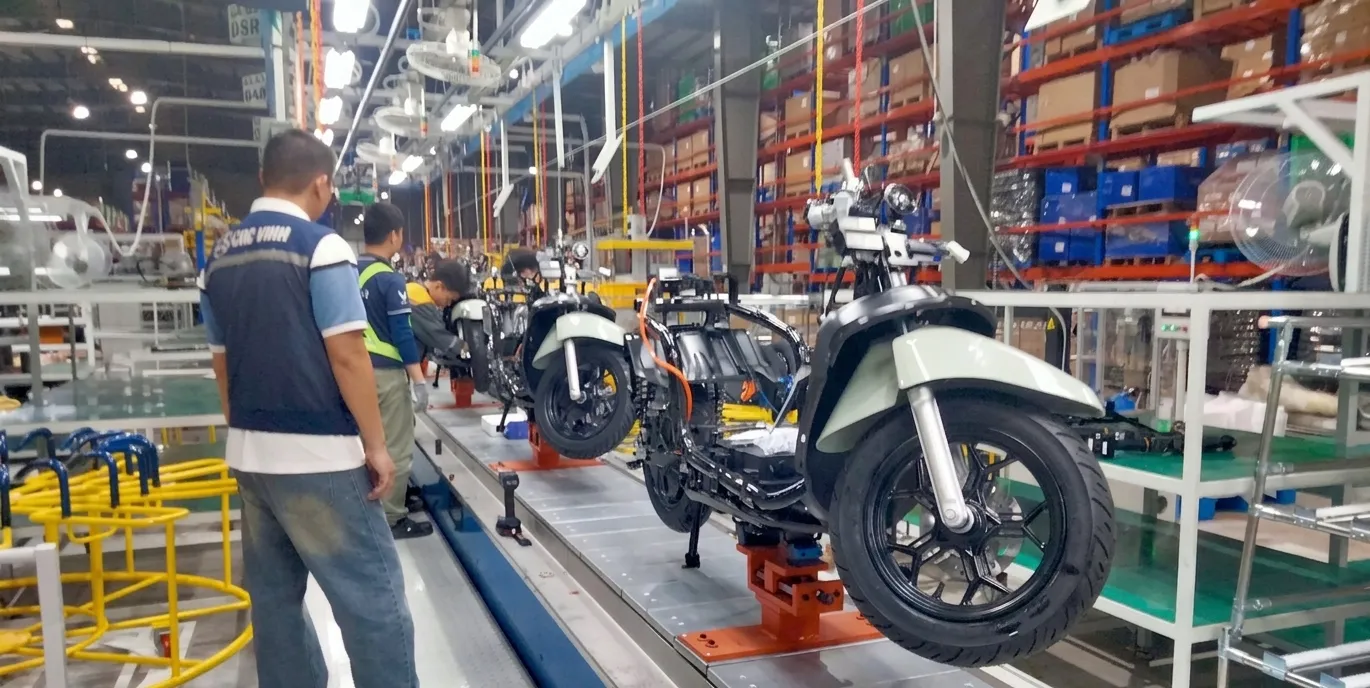
If any defects or technical deviations are detected, technicians immediately make adjustments and corrections directly on the production line. Only products that fully meet technical standards, safety requirements, and stable operating conditions are approved for shipment and market distribution.
An electric motorcycle assembly line is a modern manufacturing solution that helps optimize operational processes, improve productivity, and ensure consistent product quality. Every stage of the production line requires high precision and strict compliance with technical and safety standards. These are the key factors that ensure electric motorcycles operate stably and durably while enhancing a company’s brand reputation in the market. If you are interested in electric motorcycle assembly lines or machinery and equipment used in manufacturing systems, please contact CNC VINA for consultation on suitable solutions and quick quotations.