 Tiếng
Việt
 Tiếng
Anh
 Tiếng
Nhật




 Tiếng Anh

What role does inspection data play in electric motorcycle inspection lines?

Inspection data in electric motorcycle inspection lines is not merely a collection of measurement results or quality assessments recorded at each production stage. It also serves as the foundation for manufacturers to manage the entire production process of each product. As the electric motorcycle industry continues to grow and requirements for quality, safety, and electric motorcycle traceability become increasingly stringent, the collection and management of inspection data have become indispensable in modern manufacturing facilities.
Every technical parameter, measurement result, and piece of data collected from sensors is recorded and linked to each individual vehicle throughout the production process. This information forms a comprehensive "digital record" that enables manufacturers to track production history, control product quality, and quickly retrieve information whenever necessary.
In addition to supporting traceability, inspection data also helps manufacturers analyze the root causes of defects, optimize production processes, reduce the rate of non-conforming products, and establish a continuous quality improvement system. At the same time, it provides a foundation for integrating technologies such as MES, ERP, Industrial IoT, and Smart Factory solutions, thereby improving production efficiency and business competitiveness. So, what role does inspection data play in electric motorcycle inspection lines? Let's explore this topic in detail with CNC VINA in the following article.
1. What is inspection data?
Inspection data refers to all information recorded during the quality inspection of products, components, or semi-finished products at each stage of the manufacturing process. This data accurately reflects the condition of a product at the time of inspection and serves as a basis for manufacturers to evaluate quality and make production-related decisions.
A set of inspection data typically includes:
-
Pass/Fail results
-
Dimensional measurement values
-
Tolerances
-
Images captured by inspection cameras
-
QR codes or Data Matrix codes
-
Serial numbers
-
Lot or batch numbers
-
Inspection timestamps
-
Operator IDs
-
Inspection equipment IDs
-
Currently used inspection programs
-
Sensor or measuring instrument parameters
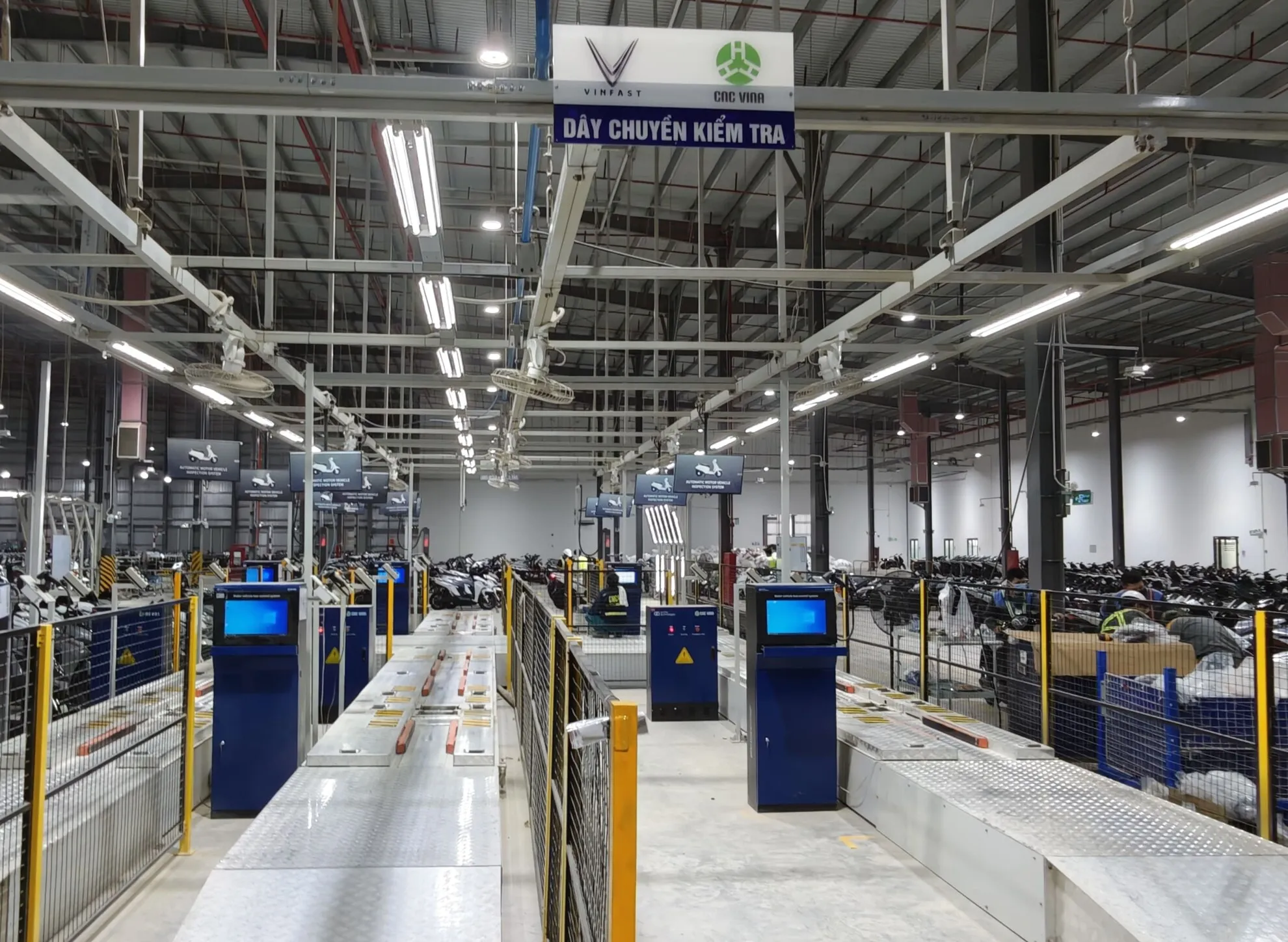
In electric motorcycle assembly lines, most inspection data is collected directly from equipment such as:
-
Vision cameras
-
Automatic dimensional measuring machines
-
Inspection robots
-
Electrical testing equipment
-
Force measuring devices
-
Leak testing machines
-
AI-powered visual inspection machines
After being collected, the data is synchronized with MES, ERP, or SCADA systems to create an electronic record for each product.
2. Why does inspection data determine traceability capabilities?
For many years, traceability relied primarily on paper records or Excel files. However, when production volumes increase to thousands or even tens of thousands of products per day, this approach is no longer practical.
For this reason, inspection data has become a core element in helping manufacturers build automated traceability systems.
2.1. Tracking the complete history of each product
One of the most important benefits of inspection data is its ability to create an "electronic record" for each electric motorcycle. Whenever a product passes through a production stage, the system automatically collects and stores all relevant information. This data is linked to the product's Serial Number, frame number (VIN), or QR code, forming a continuous information trail throughout the entire manufacturing process.
Before being shipped, each product is transferred to the electric motorcycle inspection line for a final comprehensive inspection. Whenever an issue arises or the production history needs to be reviewed, manufacturers simply enter the Serial Number or scan the QR code to retrieve the complete information. The system can display:
-
Product manufacturing date and time.
-
Factory, production line, and workstation where assembly was performed.
-
Robots or automated equipment involved in each production stage.
-
Operators or technicians directly responsible for the operations.
-
Quality inspection machines used to inspect the product.
-
Inspection results at each production stage (Pass/Fail).
-
Recorded technical parameters such as tightening force, voltage, current, torque, temperature, dimensions, leak tightness, vibration, and more.
-
Raw material lot numbers, suppliers, and warehouse receiving dates for each component.
-
Repair, adjustment, or re-inspection operations performed during production.
-
All this information is centrally stored in the MES system and connected to the ERP system and traceability database, enabling manufacturers to accurately track the entire lifecycle of each product.
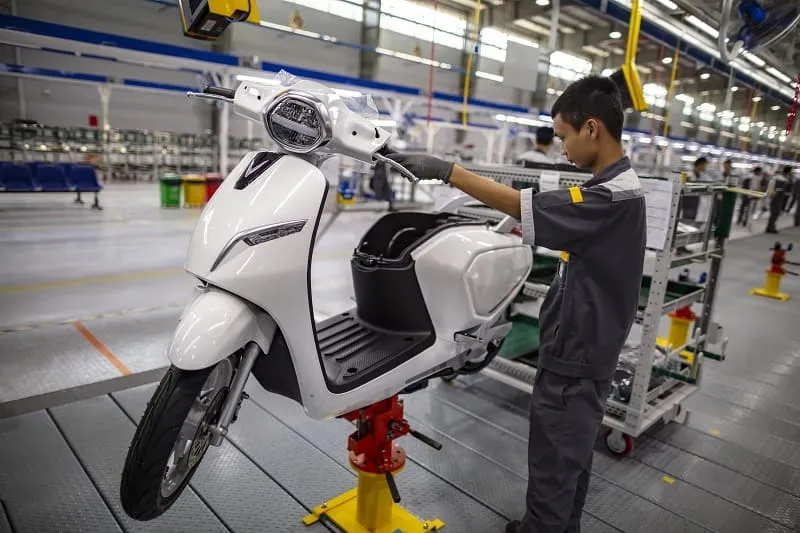
As a result, when a defect occurs, manufacturers no longer need to conduct manual inspections or search through paper records. Instead, they can quickly identify the production stage, equipment, material, or supplier responsible for the issue. This not only shortens troubleshooting time but also improves warranty management, reduces product recall costs, and establishes a foundation for continuous quality improvement.
2.2. Quickly identifying and isolating defective products
One of the greatest benefits of traceability is the ability to quickly and accurately identify affected products when a defect is detected during production or after products have entered the market.
In an electric motorcycle production line, each vehicle is assembled from hundreds of components supplied by different manufacturers. If a component or production stage develops a defect, manufacturers need to identify exactly which products contain the affected component so that appropriate corrective actions can be taken promptly.
This is where inspection data plays an important role. All information regarding component origins, inspection results, production lot codes, and assembly processes has already been recorded and linked to the Serial Number or frame number of each motorcycle.
When a defect is detected, manufacturers simply search by component code, lot number, or production date. The system will automatically identify:
-
Which motorcycles contain defective components or raw materials.
-
Which production line was used to assemble the affected components.
-
When the defect occurred during the manufacturing process.
-
Which products passed or failed the quality inspection stages.
-
Which products have already been shipped and which are still in inventory.
This enables manufacturers to accurately isolate the scope of affected products instead of having to inspect or recall all products manufactured during the same period.
Conversely, without inspection data and a traceability system, manufacturers would find it extremely difficult to determine exactly which products are affected. In many cases, they would be forced to conduct manual inspections or recall entire batches to ensure product safety.
Therefore, establishing an inspection data system integrated with traceability not only helps manufacturers respond quickly to quality issues but also minimizes risks, optimizes costs, and strengthens customer confidence in their products.
3. How does inspection data support quality improvement?
Inspection data from electric motorcycle production lines serves not only traceability purposes but also provides an important source of information that enables manufacturers to continuously improve product quality.

3.1. Faster root cause analysis
In electric motorcycle manufacturing, product defects rarely occur randomly. Most defects result from one or more factors accumulating throughout the production process. By analyzing data collected at each production stage, manufacturers can accurately identify where a defect originated instead of relying solely on experience or manual inspection.
Common causes that can be identified through data include:
-
Machinery wear, resulting in machining or assembly deviations.
-
Measuring equipment that has not been calibrated periodically, leading to inaccurate inspection results.
-
Inconsistent component quality from a particular supplier.
-
Workers failing to follow operating procedures correctly or skipping an inspection step.
-
Environmental conditions such as temperature, humidity, or dust exceeding permissible limits and affecting product quality.
-
Machine settings being changed after maintenance or product model changes.
It is clear that inspection data not only helps detect defects but also provides evidence for manufacturers to identify their root causes, enabling them to implement effective corrective and preventive measures.
3.2. Inspection data provides a foundation for continuous quality improvement
For modern manufacturing facilities, the goal of quality inspection is not simply to eliminate non-conforming products but also to continuously improve the quality of the entire production process. By storing and analyzing inspection data over an extended period, manufacturers can identify changing trends that would be extremely difficult to detect through visual observation alone.
In addition, this data helps evaluate the effectiveness of improvement initiatives. After modifying a design, replacing equipment, or optimizing a process, manufacturers can compare data collected before and after the changes to determine how effective the solutions have been.
3.3. Establishing a feedback loop
In a smart factory model, each quality inspection is not the endpoint of a production stage but rather the starting point of the next improvement cycle.
Every inspection result is recorded and sent to the central management system for real-time analysis. If a parameter exceeds its permissible limit or the defect rate increases abnormally, the system can immediately send alerts to technicians or managers.
Based on this data, manufacturers can:
-
Adjust machine operating parameters during production.
-
Recalibrate measuring equipment or robots.
-
Request additional inspections at production stages where defects are likely to occur.
-
Reassess supplier quality.
-
Update inspection standards or operating procedures.
Thanks to this continuous feedback mechanism, manufacturers can shift from a "detect and correct defects" approach to a "predict and prevent defects" strategy. This helps reduce the rate of non-conforming products, minimize raw material waste, and improve the stability of the entire production line.
3.4. MES and ERP systems
To effectively manage the large volumes of inspection data generated every day, electric motorcycle manufacturers often implement a Manufacturing Execution System (MES) in combination with an Enterprise Resource Planning (ERP) system.
MES acts as the central platform for coordinating and managing all activities across the production line. It continuously collects data from machinery, robots, measuring equipment, and quality inspection stations, then stores and links this information to each individual product.
MES helps manufacturers:
-
Collect data from all machinery and inspection equipment across the production line.
-
Link inspection data to the Serial Number, frame number, or QR code of each product.
-
Track the production and inspection history of each motorcycle.
-
Monitor equipment status in real time.
-
Generate alerts when parameters exceed permissible limits or defect rates increase abnormally.
-
Support traceability and enable rapid defect root cause analysis.
Meanwhile, the ERP system connects data from MES with departments such as procurement, warehousing, production planning, warranty management, and after-sales service. Through this integration, manufacturers can manage the entire product lifecycle, from incoming raw materials to vehicle handover to customers.
The combination of MES, ERP, and inspection data creates a centralized management platform that helps digitize the entire production process, enhance electric motorcycle traceability, and establish a foundation for developing smart factories in line with Industry 4.0.
4. Benefits of inspection data for manufacturing businesses
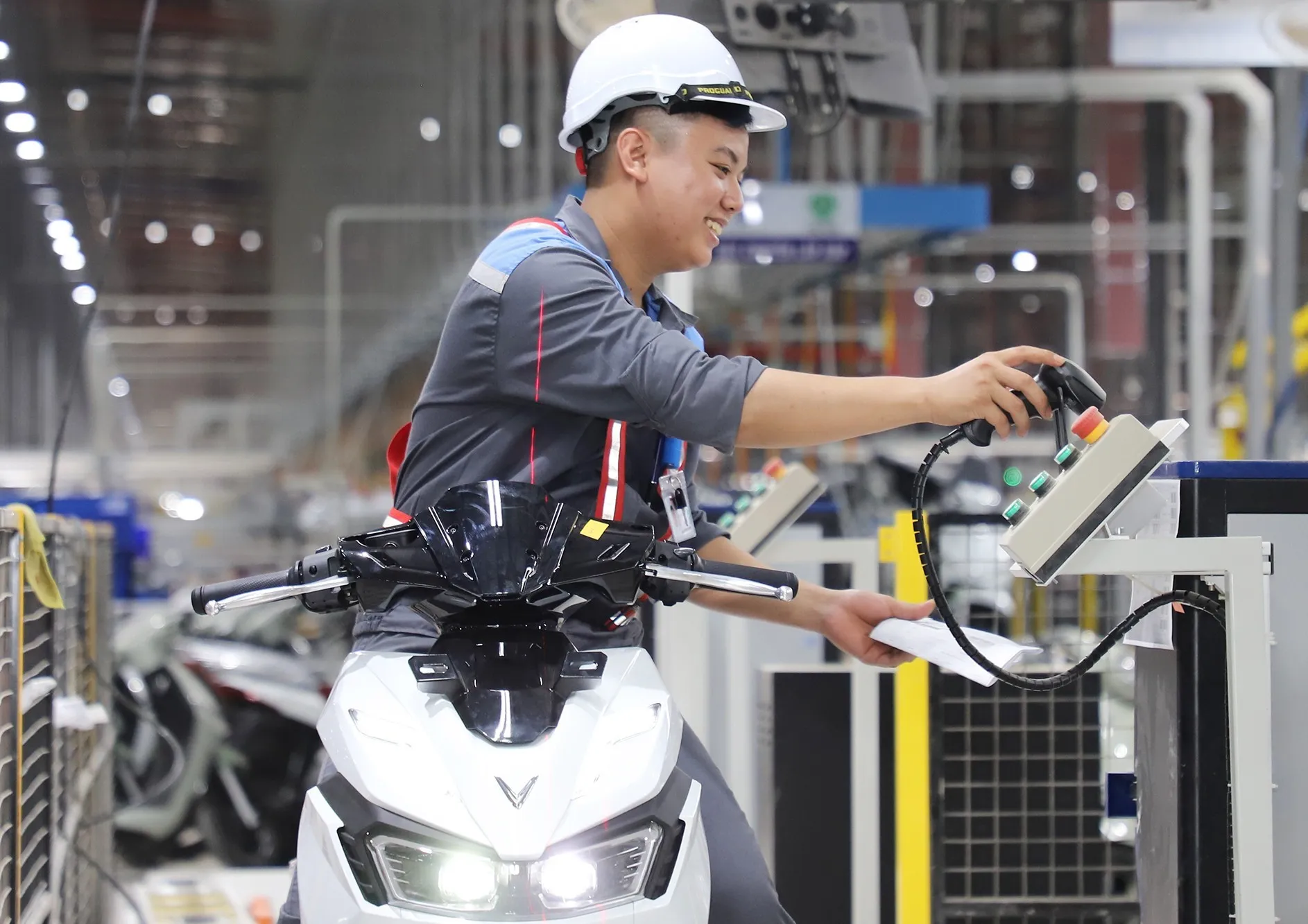
Investing in an inspection data management system not only helps manufacturers improve quality control but also establishes a foundation for electric motorcycle traceability, production process optimization, and reduced operating costs. When all data is collected, stored, and analyzed in a synchronized manner, manufacturers can make decisions based on actual figures rather than experience or assumptions.
4.1. Enhancing traceability capabilities
When each product is linked to complete inspection data, manufacturers can quickly retrieve its entire production history using only the Serial Number, frame number (VIN), or QR code. The system makes it possible to identify the production date and time, assembly line, robots or equipment involved, inspection results at each production stage, technical parameters, as well as the origins of components and raw materials.
4.2. Shortening troubleshooting time
When a defect occurs, manufacturers no longer need to spend considerable time conducting manual inspections or cross-checking paper records. By simply searching the inspection data, the system can quickly identify the production stage where the defect occurred, the machinery or robots involved, the time of occurrence, the operator responsible, the raw material lot used, and previous inspection results.
4.3. Reducing the defect rate
By analyzing statistical data, trend charts, and quality indicators, manufacturers can detect early signs of abnormalities in the production process. The data helps identify production stages with high defect rates, evaluate machinery performance, and monitor the quality of each supplier. Based on these insights, manufacturers can adjust processes, recalibrate equipment, or change materials before defects spread, thereby improving overall product quality.
4.4. Reducing operating costs
Detecting and addressing defects at the production stage helps manufacturers significantly reduce costs associated with repairs, rework, product recalls, warranty claims, and re-inspections. At the same time, data also supports equipment maintenance planning, improves machinery utilization, and reduces production downtime.
5. Challenges in managing inspection data
Although inspection data offers numerous benefits for electric motorcycle traceability and quality management, building and operating a synchronized data management system remains a considerable challenge. Many manufacturers still encounter difficulties in collecting, managing, and utilizing data due to differences in systems, processes, and technologies.
5.1. Data fragmentation
One of the most common challenges is that data is stored across multiple platforms, such as Excel files, standalone software, PLCs, separate MES systems, or even paper records. The lack of a centralized database means manufacturers have to spend considerable time consolidating, cross-checking, and retrieving information whenever they need to analyze quality or resolve issues.
To address this situation, manufacturers need to establish a centralized data management system that connects inspection equipment, production lines, and management software. This ensures that all inspection data is updated in real time and can be easily accessed and utilized.
5.2. Lack of data standardization
When each production line, factory, or supplier uses a different data format, sharing and analyzing information becomes more complicated. Inconsistent data also reduces the effectiveness of the traceability system and creates difficulties when integrating with management software such as MES or ERP.
5.3. Increasing data volumes
As factory automation levels continue to rise, the amount of inspection data generated each day can reach millions of records. Without suitable storage and analysis systems, manufacturers will struggle to extract valuable insights and identify abnormal trends.
Integrating technologies such as Big Data, AI, and Machine Learning helps manufacturers process large volumes of data, automatically detect abnormal patterns, and make faster, more accurate decisions.
5.4. Ensuring data safety and security
Production data and inspection data are important assets for any manufacturing business. Without proper protection, this information may be lost, modified, or accessed without authorization, potentially affecting production operations and the company's reputation.
To ensure data security, manufacturers need to implement measures such as access control, data encryption, regular backups, change logs, and appropriate security policies.
Inspection data in modern electric motorcycle inspection lines is not merely the result of measurements or quality tests but also serves as an important foundation for building a comprehensive electric motorcycle traceability system. Every parameter recorded during production contributes to the electronic record of each product, enabling manufacturers to easily monitor, control, and manage quality throughout the vehicle's entire lifecycle. When collected, stored, and analyzed systematically, inspection data helps manufacturers quickly identify the root causes of defects, isolate the scope of affected products, and implement effective corrective measures. To maximize the value of this data, manufacturers need to establish an integrated management system and combine it with security measures such as access control, data encryption, regular backups, and change logs to ensure information accuracy, integrity, and security. This also provides a foundation for integrating technologies such as MES, ERP, AI, and IoT, moving toward smart manufacturing and real-time management. CNC VINA supports electric motorcycle manufacturers in implementing inspection data management systems to meet quality and traceability requirements while creating competitive advantages, improving production efficiency, and promoting sustainable development in the era of Industry 4.0.