 Tiếng
Việt
Tiếng
Việt
 Tiếng
Anh
Tiếng
Anh
 Tiếng
Nhật
Tiếng
Nhật




 Tiếng Anh

How does CNC VINA ensure quality control through a cleanroom?

How does CNC VINA ensure quality control through a cleanroom? This is a question frequently asked by businesses seeking a partner capable of designing and manufacturing high-precision automation systems. At CNC VINA, the cleanroom is not merely an assembly area - it is an integral part of our quality control system, enabling strict control over dust, temperature, humidity, and other environmental factors that may affect machine performance. Through a rigorous workflow, from incoming component inspection, assembly, calibration, and testing before shipment, every machine is carefully controlled to ensure precision, stability, and reliability in actual production.
In this article, let's explore CNC VINA's cleanroom quality control process and discover the value that a controlled assembly environment brings to industrial automation systems.
1. Why does CNC VINA invest in a cleanroom for automated machine assembly?
When investing in an automation system, customers are concerned not only about whether the machine meets technical requirements but also about its ability to operate reliably over the long term. Even a well-designed machine can develop hidden defects if it is assembled in an uncontrolled environment, leading to reduced production efficiency and increased maintenance costs.
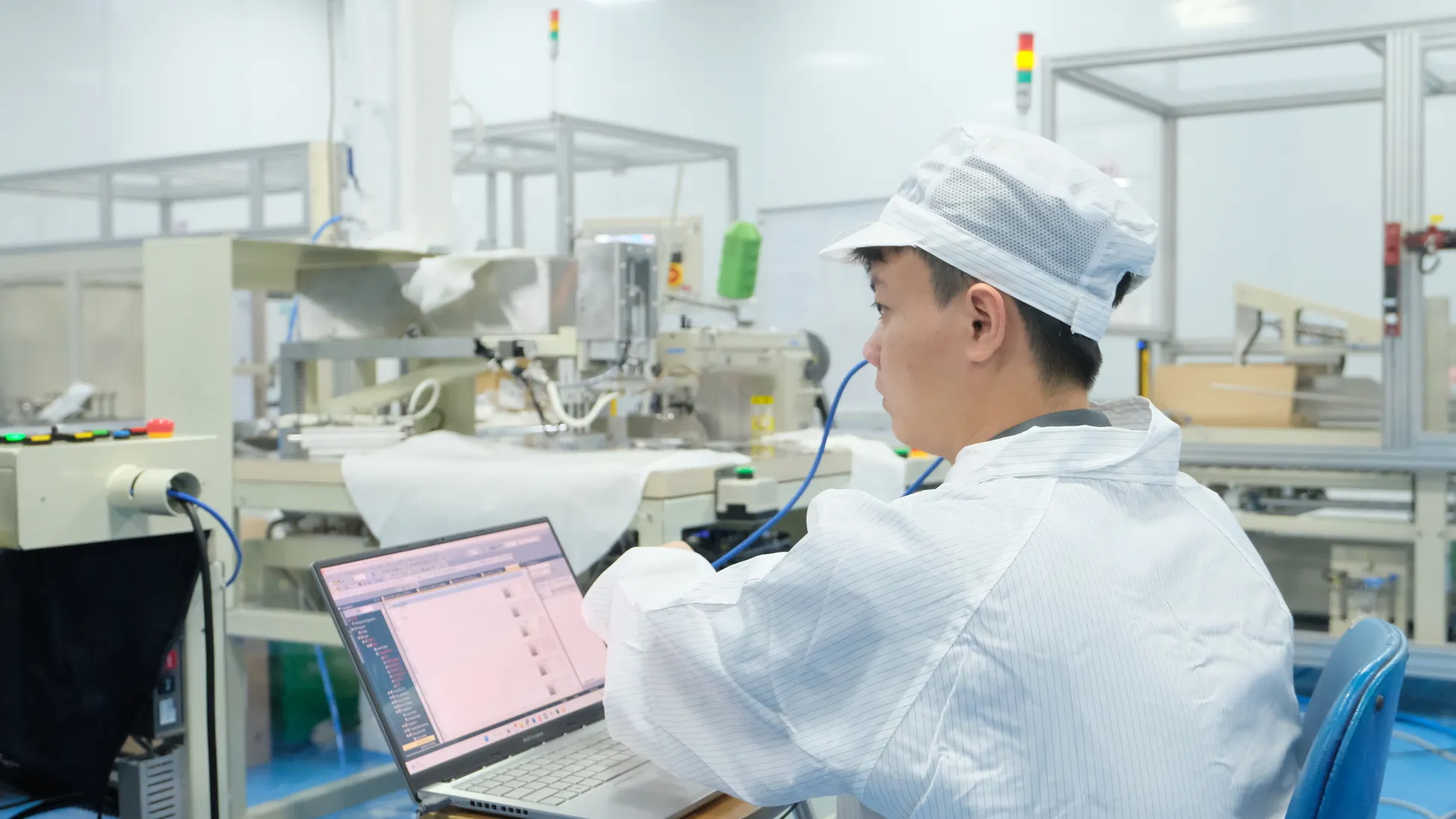
This is why CNC VINA has invested in an industrial cleanroom for assembling high-precision automation equipment. The cleanroom controls dust, temperature, humidity, and other environmental factors that may affect precision mechanical components, electrical systems, and control modules.
This is particularly important for machines integrating industrial robots, machine vision cameras, sensors, servo systems, and sophisticated electronic assemblies. Assembling these systems in a controlled environment helps minimize assembly errors, protect sensitive components, and maintain equipment stability from the very beginning of the manufacturing process.
Rather than performing quality inspection only at the final stage, CNC VINA emphasizes quality control throughout the entire assembly process. This proactive approach minimizes risks, reduces defects, and gives customers greater confidence in the long-term performance of their equipment.
2. How is the CNC VINA cleanroom controlled?
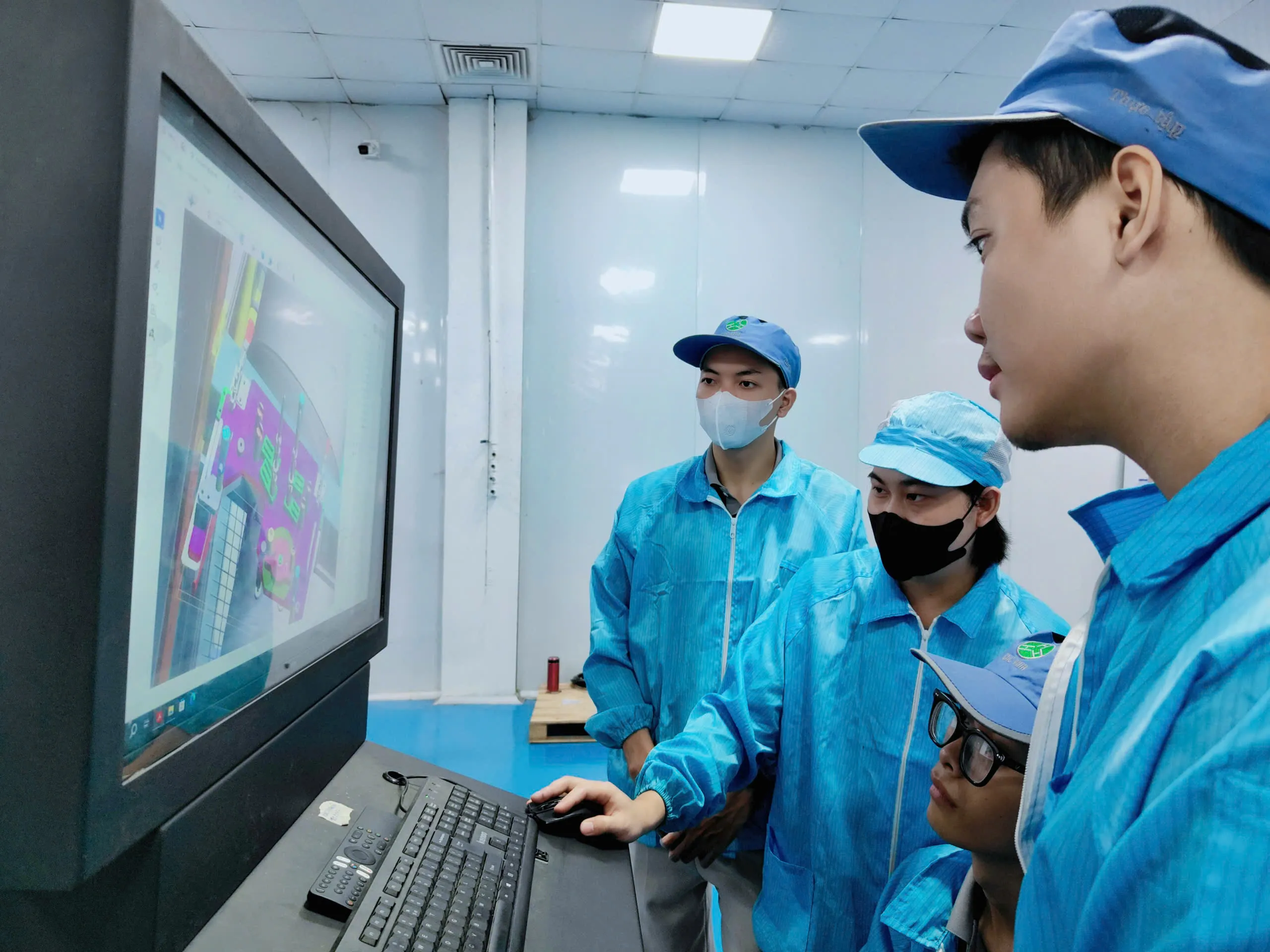
Before entering the cleanroom, every operator must complete a series of preparation procedures, including changing into cleanroom garments, wearing masks, gloves, and other required protective equipment. Depending on the work area, personnel may also pass through an Air Shower system to remove dust particles from their clothing before entering the assembly zone.
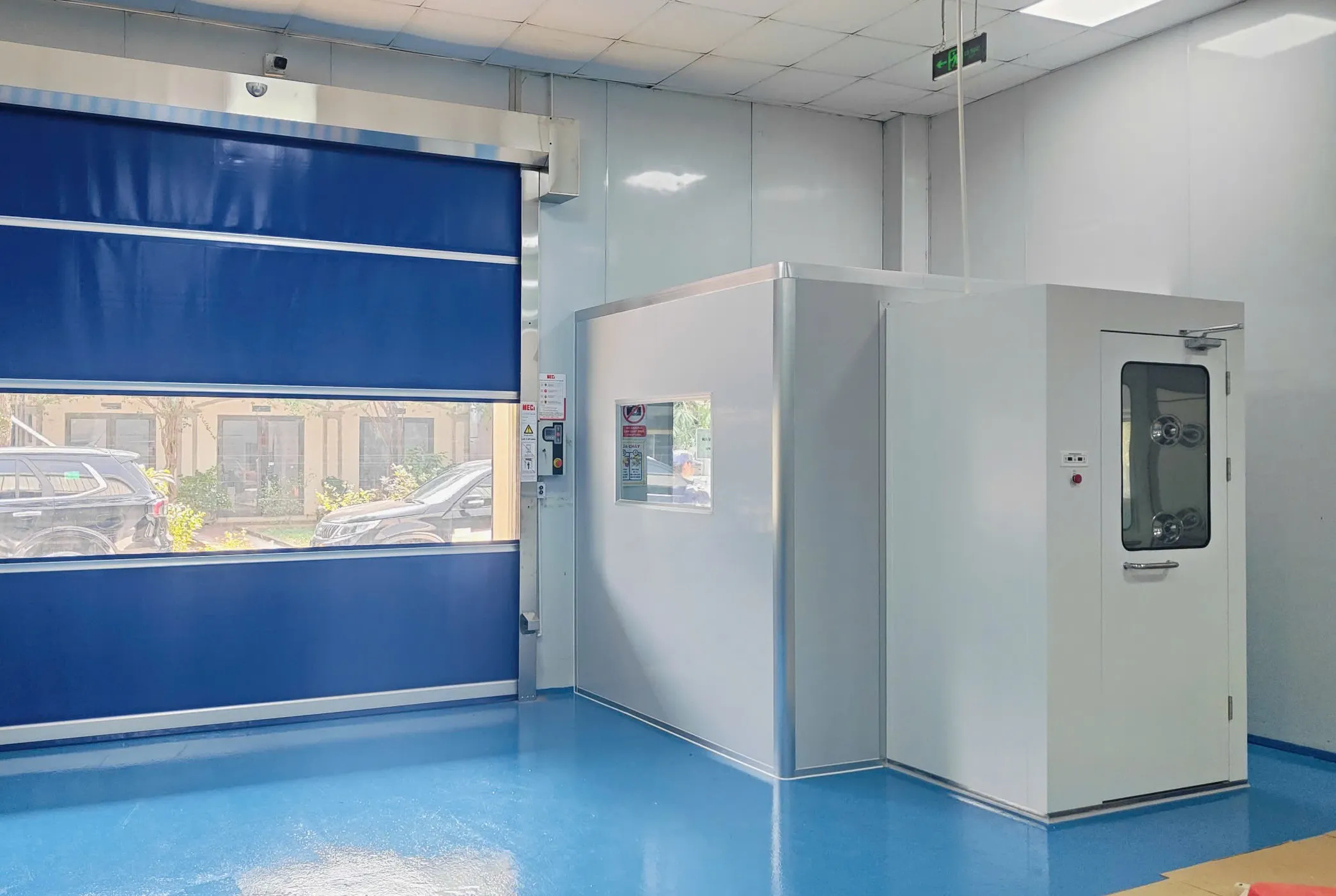
Inside the cleanroom, environmental conditions - including airborne particle concentration, temperature, humidity, and airflow - are continuously maintained at stable levels. This significantly reduces the risk of dust or contaminants adhering to components while creating an ideal environment for assembly, alignment, calibration and quality inspection. For high - precision automation systems, maintaining a stable working environment is essential to ensuring the accuracy of every assembly, ultimately improving the overall quality and performance of the finished machine.
3. How CNC VINA's cleanroom control system operates
One of the key characteristics of a cleanroom is its ability to maintain a stable environment throughout the production process. To achieve this, CNC VINA utilizes a dedicated air conditioning and air treatment system capable of controlling multiple environmental parameters simultaneously. The CNC VINA cleanroom is controlled through the following systems:
3.1. Air quality control
The air inside the cleanroom is continuously circulated and filtered to remove fine dust and microscopic particles that could interfere with the assembly process.
Through a dedicated cleanroom HVAC system, clean air is constantly supplied while used air is collected, treated, and recirculated. This process maintains a stable environment and minimizes the risk of contamination from external sources.
3.2. The role of HEPA filters
A critical component of the cleanroom is the HEPA filter, which captures the vast majority of microscopic airborne particles before clean air enters the assembly area.
By significantly reducing airborne dust, HEPA filtration protects precision mechanical assemblies, electronic circuit boards, and highly sensitive measuring equipment.
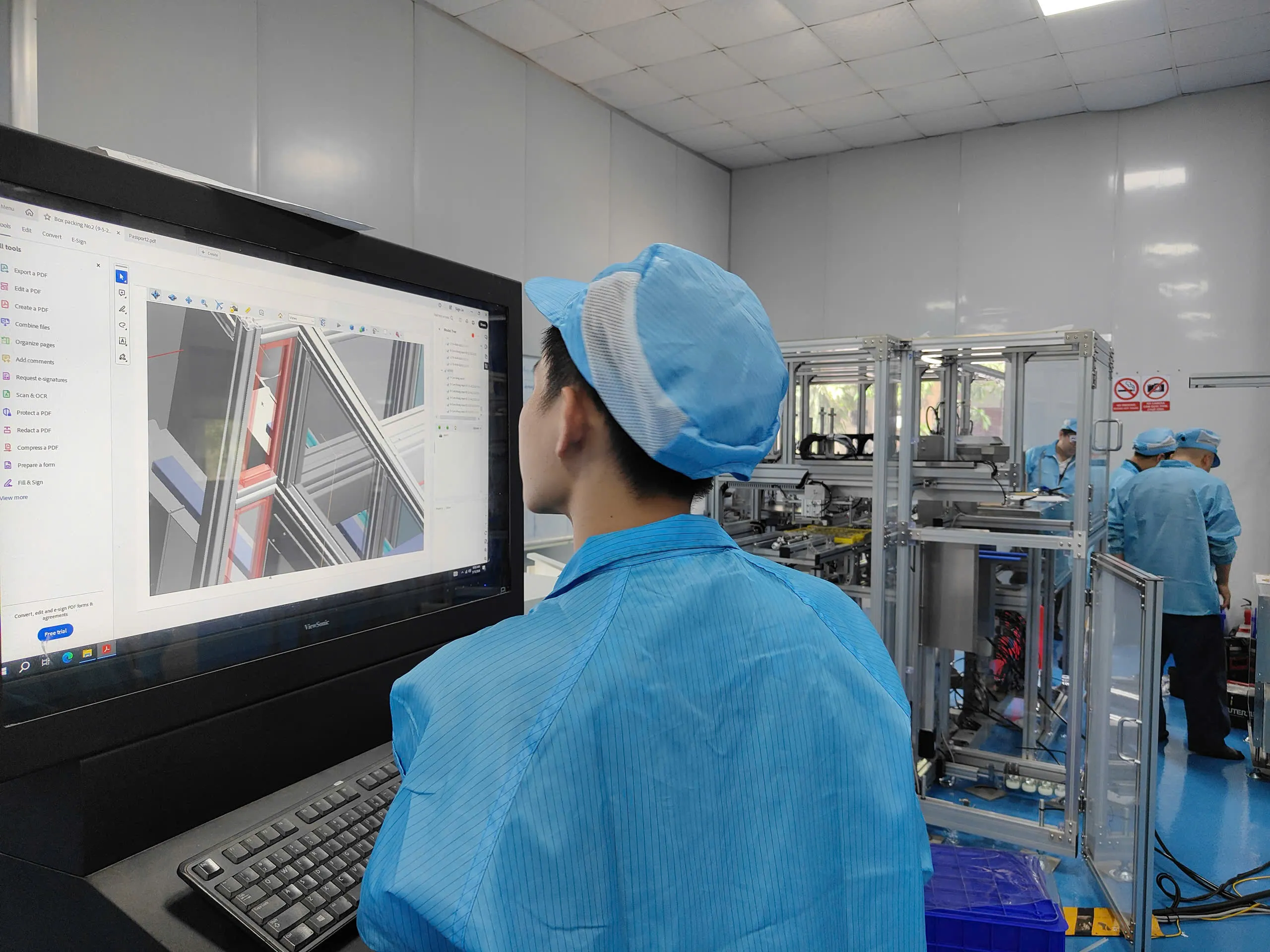
For automation systems equipped with industrial cameras, sensors, or robotic systems, maintaining a low-particle environment contributes to more stable calibration and higher inspection accuracy.
3.3. Temperature and humidity control
In addition to dust, temperature and humidity have a direct impact on assembly quality.
Frequent temperature fluctuations can cause certain metal materials to expand or contract, affecting alignment accuracy. Meanwhile, excessively low humidity increases the risk of electrostatic discharge, whereas excessive humidity may negatively affect electronic components.
For this reason, CNC VINA maintains its clean manufacturing environment within carefully controlled conditions to support stable assembly and inspection processes.
3.4. Electrostatic discharge (ESD) control
Many modern automation systems incorporate control boards, sensors, and electronic components that are vulnerable to electrostatic discharge.
To minimize this risk, CNC VINA implements comprehensive ESD protection measures throughout the cleanroom, including specialized garments, ESD-safe materials, and standardized operating procedures to prevent damage to sensitive electronic components during assembly.
4. Why does cleanroom assembly improve equipment quality?
Investing in a cleanroom for automated machine assembly not only enables CNC VINA to maintain tighter control over the manufacturing process but also provides significant benefits for customers. Equipment assembled in a controlled environment offers more consistent quality, reduced operational risks, and lower lifecycle costs.
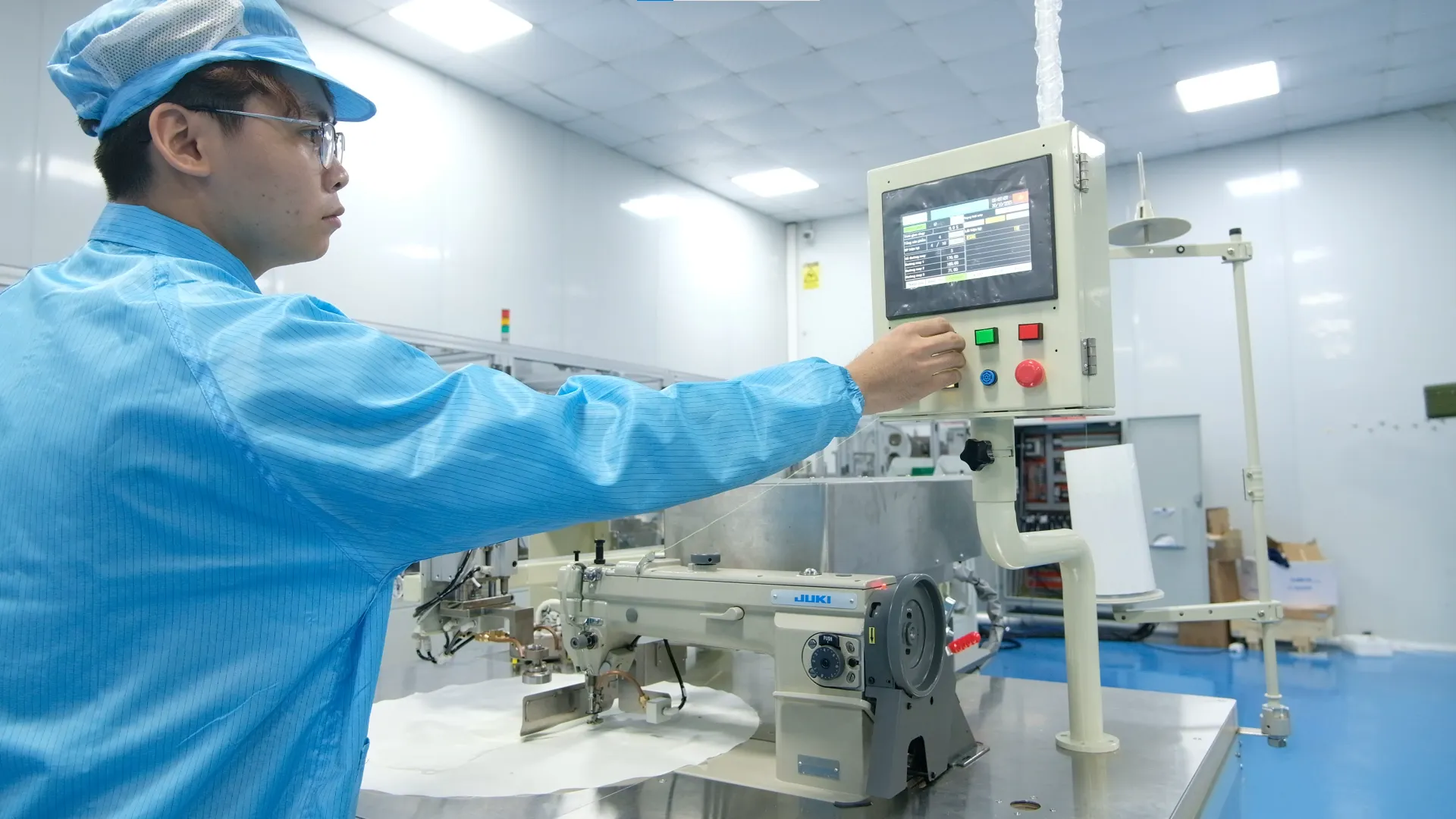
4.1. Improved equipment accuracy
The accuracy of an automated system depends not only on the quality of its components and machining precision but also on the environment in which it is assembled.
Within the cleanroom, environmental factors such as airborne particle levels, temperature, humidity, and electrostatic discharge are maintained within strict limits. This minimizes dust contamination, reduces alignment errors during assembly and calibration, and ensures the precision of mechanical assemblies, machine vision cameras, sensors, and industrial robots.
As a result, the finished equipment achieves higher positioning and measurement accuracy, making it particularly suitable for applications that require extremely tight tolerances.
4.2. Greater operational stability
Automation systems are typically designed to operate continuously for many hours each day. Even minor assembly deviations or contamination by dust and foreign particles can increase the likelihood of failures during operation.
Assembling equipment in a clean manufacturing environment provides better protection for both precision mechanical components and electronic assemblies while ensuring that alignment and calibration are performed under stable conditions. This contributes to smoother machine operation, reduced vibration, and consistent long-term performance.
4.3. Reduced risk of post - installation defects
Rather than relying solely on final inspections, CNC VINA performs quality control throughout every stage of the assembly process. Each assembly module is thoroughly inspected and approved before proceeding to the next production stage.
This approach enables potential mechanical, electrical, or control - related issues to be identified and corrected at the factory instead of after installation at the customer's site.
For customers, this means a lower risk of unexpected downtime during the early stages of production and a smoother commissioning process.
4.4. Lower maintenance costs
Equipment that is carefully assembled and comprehensively tested before shipment is far less likely to require adjustments or repairs during operation.
Furthermore, minimizing dust contamination within precision mechanical assemblies, sensors, and electronic components helps extend the equipment's service life. This reduces maintenance costs, minimizes replacement of critical parts, and decreases unplanned production downtime.
These advantages are particularly valuable for continuous production lines, where every hour of machine downtime can significantly impact productivity and operating costs.
4.5. Shorter installation and commissioning time
Before delivery, every automation system manufactured by CNC VINA is fully assembled, calibrated, and thoroughly tested at the factory. This allows the engineering team to verify that every function performs according to the original design specifications while resolving any technical issues before shipment. As a result, installation and commissioning at the customer's facility can be completed more quickly, allowing the equipment to enter production sooner. This helps manufacturers stabilize operations faster and minimize startup delays. The quality of an automated machine is determined not only by its design and technology but also by the manufacturing process and assembly environment in which it is built.
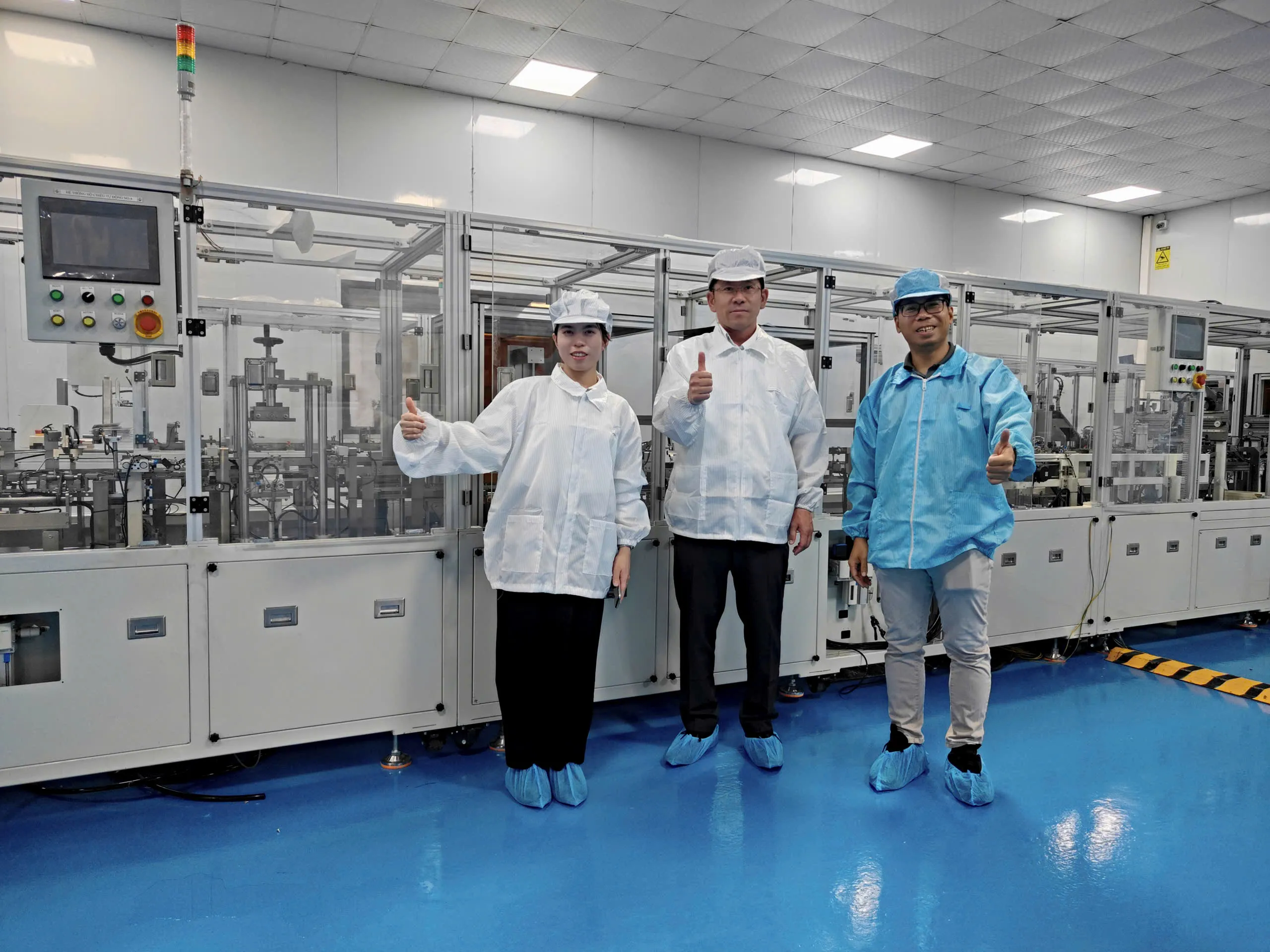
How does CNC VINA ensure quality control through a cleanroom? The answer lies in a comprehensive quality management process that combines a controlled cleanroom environment with rigorous technical standards throughout every stage of assembly. From incoming component inspection and precision assembly to calibration and final factory acceptance testing, every step follows standardized procedures designed to minimize errors and ensure consistent product quality. The cleanroom environment significantly reduces the effects of dust, temperature fluctuations, humidity, and other environmental factors that could compromise equipment accuracy. As a result, CNC VINA delivers highly reliable automation systems capable of stable operation across a wide range of manufacturing industries. In addition to investing in advanced production infrastructure, CNC VINA continuously develops its engineering team and refines its quality control procedures to meet the increasingly demanding requirements of modern manufacturing. With extensive experience in the design, manufacturing, and assembly of automated machinery, CNC VINA is committed to providing customized automation solutions tailored to each customer's production needs. If your business is looking for a manufacturing partner with a professional production process and an uncompromising commitment to quality, CNC VINA is ready to work with you to develop automation systems that are efficient, reliable, and built for long-term performance.