 Tiếng
Việt
 Tiếng
Anh
 Tiếng
Nhật




 Tiếng Anh

The role of electric motorcycle inspection lines in the electric vehicle industry

Electric motorcycle inspection lines play an important role as a “quality control checkpoint” before products are delivered to end users. The rapid growth of the electric motorcycle market is driving significant changes in the vehicle manufacturing industry. More than just an alternative to internal combustion engine vehicles, electric motorcycles have become an increasingly preferred choice thanks to their energy efficiency, reduced emissions, and alignment with sustainable development goals.
However, alongside market growth comes increasingly stringent requirements for product quality, safety, and operational reliability. So, what role do electric motorcycle inspection lines play in modern manufacturing systems, and why are they considered an indispensable solution for the electric vehicle industry? Join CNC VINA as we explore these questions in more detail in the following article.
1. What is an electric motorcycle inspection line?
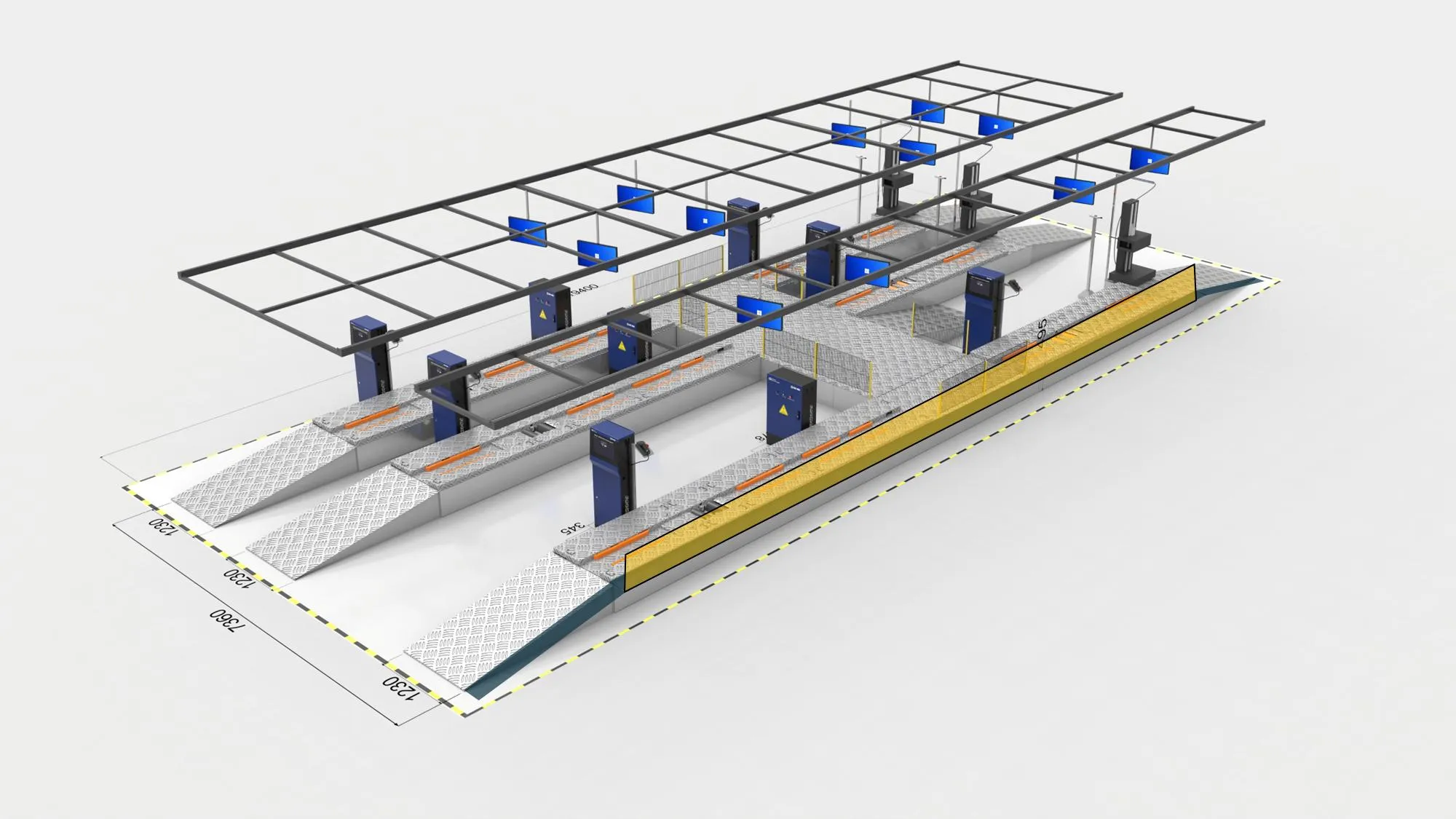
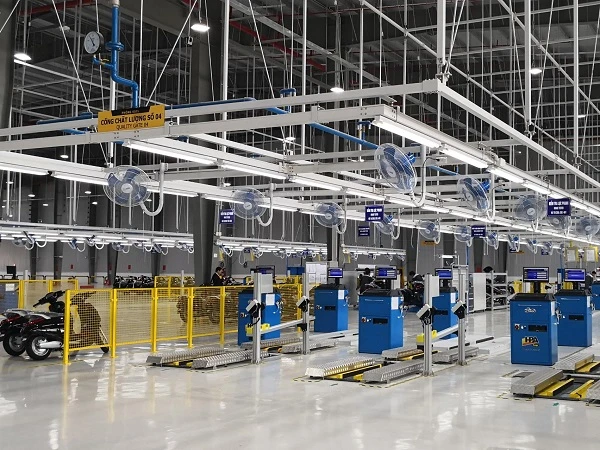
An electric motorcycle inspection line is a system of equipment and technologies designed to comprehensively evaluate a vehicle's quality, performance, and safety before it leaves the factory. The entire process operates according to standardized inspection procedures, helping minimize human error and ensure consistency across all products.
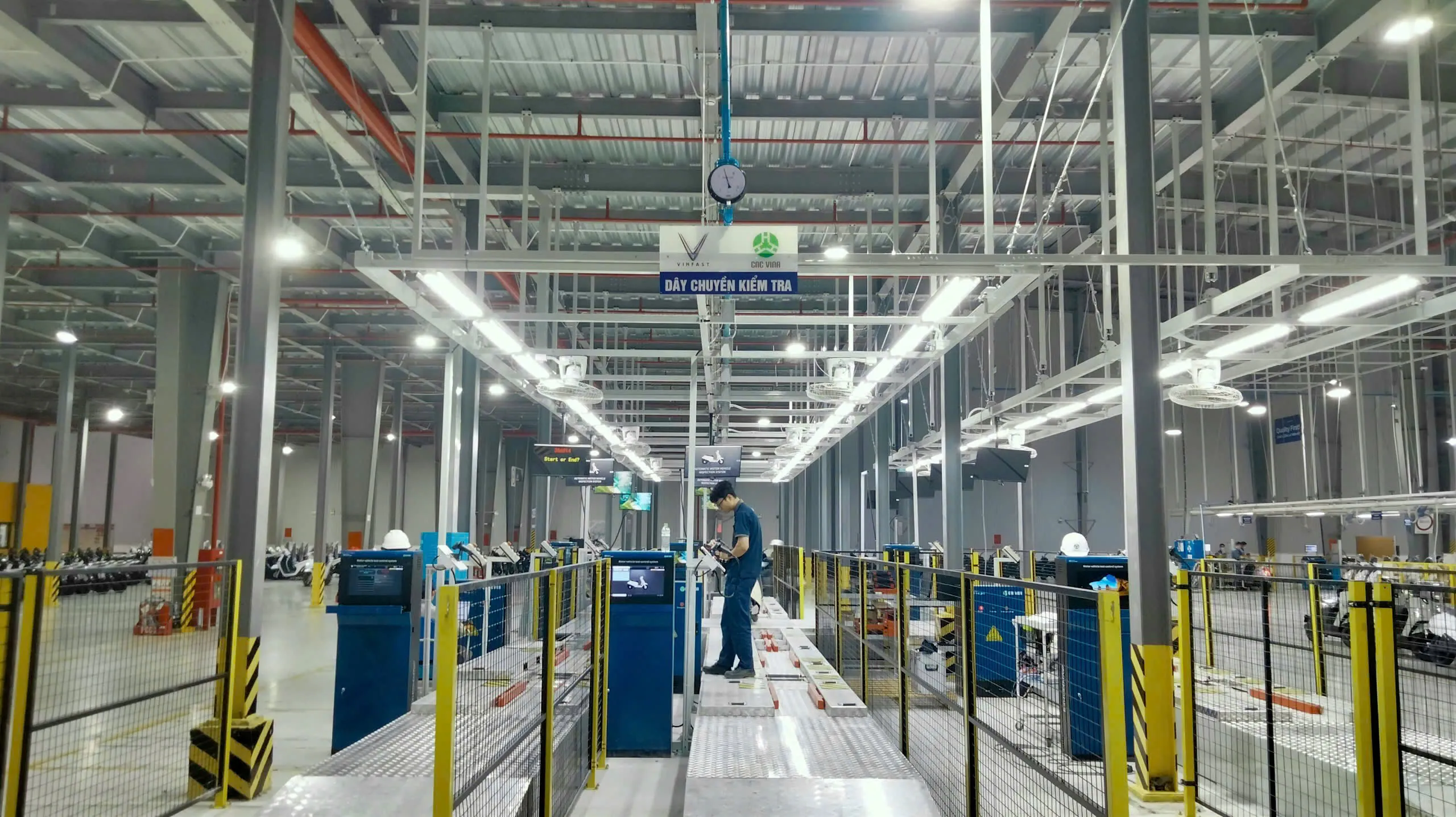
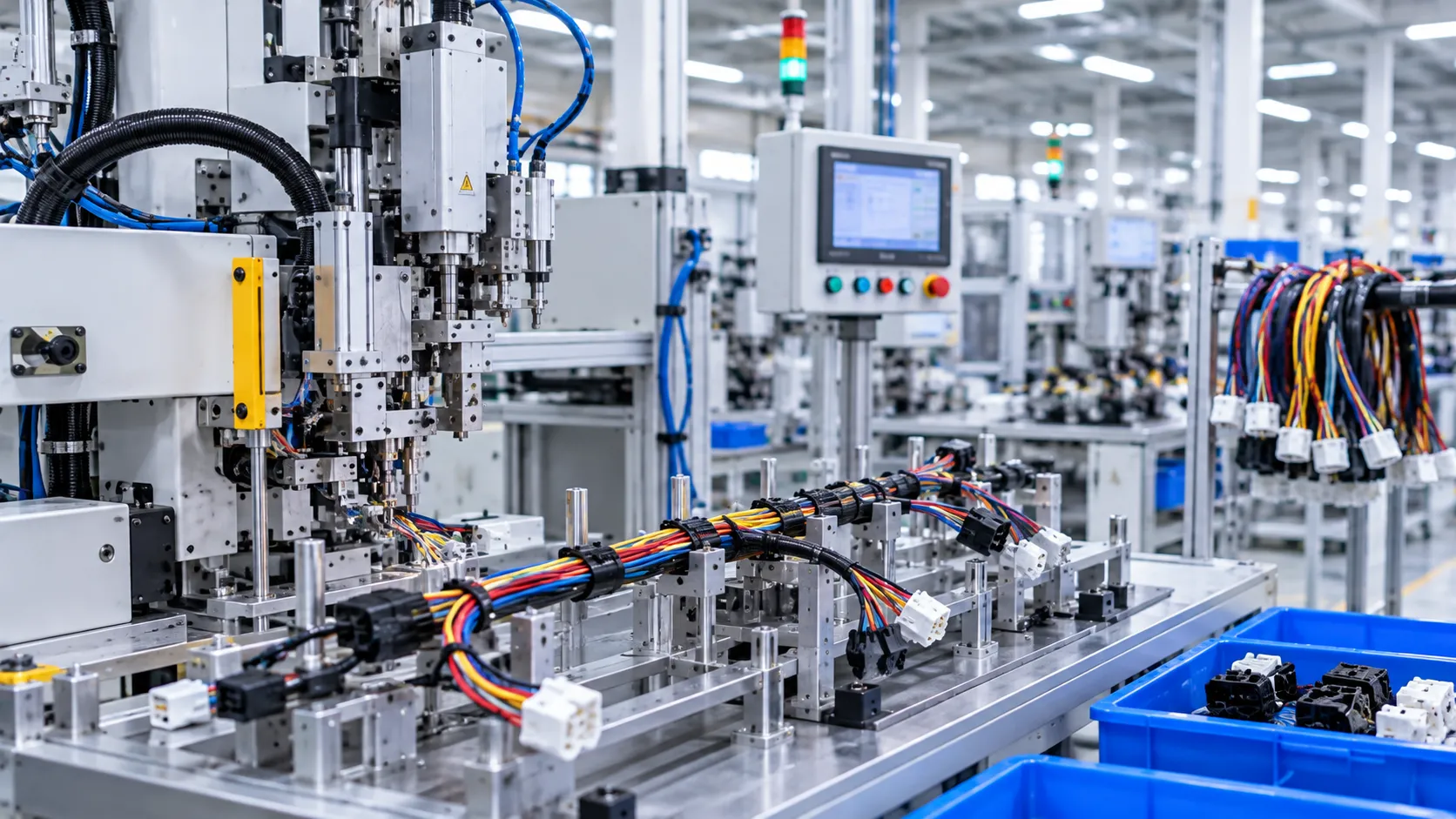
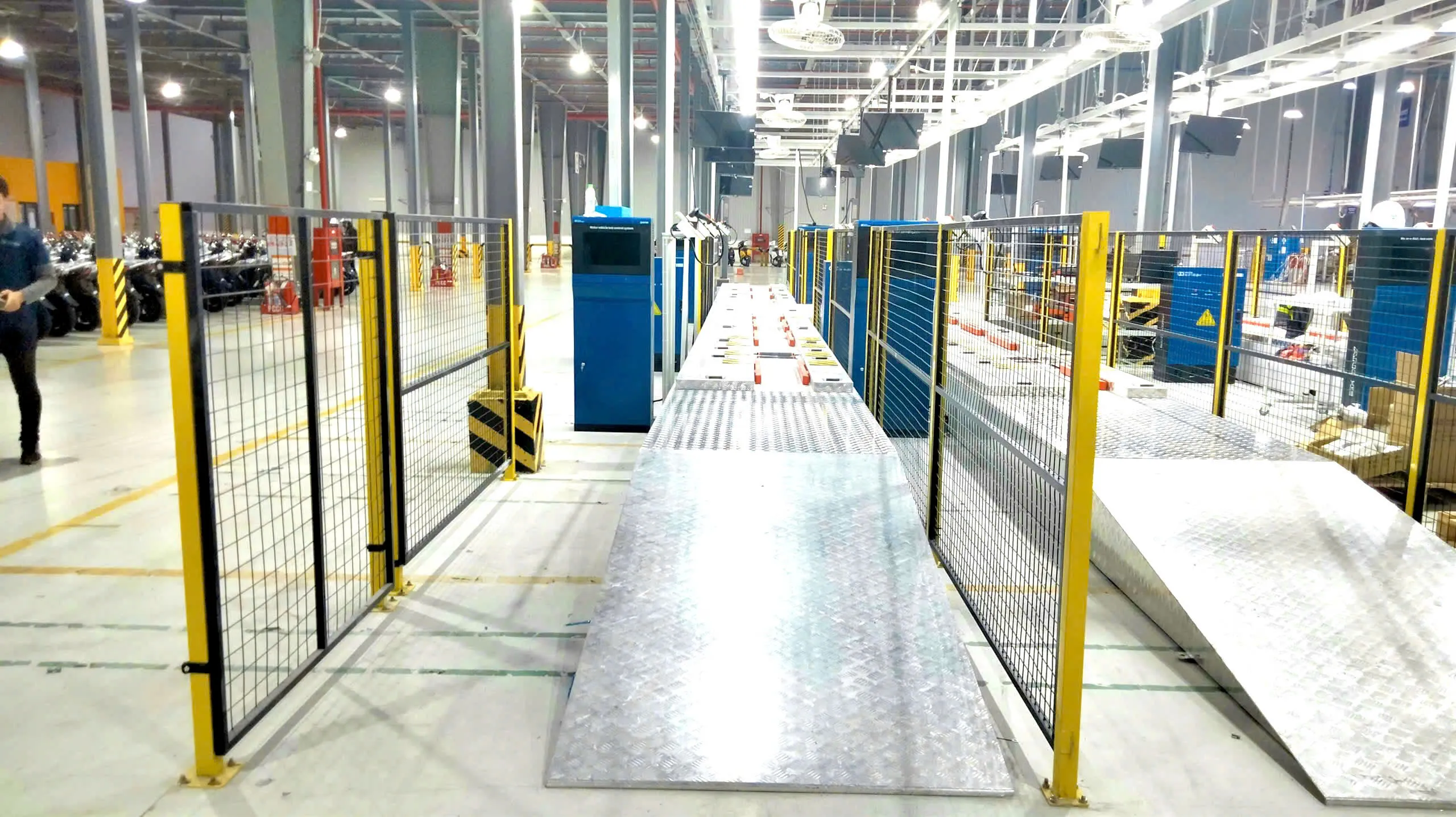
A complete inspection line typically consists of multiple consecutive stages, integrated with sensor systems, measuring devices, and automated monitoring software. During the inspection process, data is collected from each vehicle in real time to evaluate its operational performance and detect potential technical faults at an early stage.
Beyond finished-product quality inspection, the system also supports manufacturers in retrieving production data, managing defects, and optimizing operational processes over the long term.
2. Inspection items in an electric motorcycle inspection line
To ensure that electric motorcycles meet all technical and safety requirements, an inspection line typically includes various inspection procedures.
2.1. Battery and high-voltage system inspection
The battery is considered the “heart” of an electric motorcycle, making it one of the most strictly monitored components throughout the entire inspection process. The system evaluates battery condition, energy storage capacity, voltage stability, and the risk of overheating during operation.
Technologies such as thermal imaging cameras, battery impedance testing, and temperature sensors are used to detect early signs of abnormalities without the need for destructive testing.
2.2. Motor and controller inspection
The electric motor and central controller directly determine the vehicle's operating performance. At this stage, the system checks operating efficiency, acceleration capability, power stability, and the controller's responsiveness.
Automated inspection enables more accurate measurement and data collection compared to traditional manual methods.
2.3. Brake system and operational safety inspection
One of the most important requirements for electric motorcycles is the ability to operate safely under various conditions. The inspection line evaluates braking performance, operational stability, and the functionality of the regenerative braking system.
In addition, the lighting system, horn, and warning signals are also inspected to ensure that the vehicle fully complies with road safety standards.
2.4. Other inspection items
In addition to the main inspection systems mentioned above, the electric motorcycle inspection line also evaluates electromagnetic compatibility and noise levels, checks the signal lighting system, and inspects the control software, among other aspects. If a vehicle fails to meet the required standards, it will undergo further inspection and rechecking of the relevant stages before being released from the factory.
3. Applications of technology in electric motorcycle inspection lines
Today's electric motorcycle inspection lines integrate various advanced technologies to improve inspection accuracy and minimize dependence on manual labor.
Automated inspection stations can perform continuous measurements with a high degree of stability, while thermal imaging camera systems help detect early signs of overheating in batteries and electronic components. AI technology is also applied to identify visual defects, analyze operational data, and detect abnormalities during the inspection process.
In addition, these systems can evaluate regenerative braking performance, perform software security checks, and analyze battery thermal management capabilities without requiring complex destructive testing.
The combination of automation and digital data not only helps optimize inspection speed but also contributes to building a transparent, standardized, and scalable manufacturing process for future expansion.
4. Benefits for manufacturers and consumers
For manufacturers, electric motorcycle inspection lines help improve quality control, reduce warranty costs, and shorten time to market. Standardized inspection procedures also make it easier for businesses to meet domestic and international inspection requirements.
For consumers, comprehensive product inspections before vehicles leave the factory provide greater peace of mind during use, particularly regarding components related to the battery and high-voltage systems. At the same time, transparent technical specifications allow consumers to more easily evaluate the quality and safety of their vehicles.
Electric motorcycle inspection lines are increasingly demonstrating their essential role in ensuring product quality and improving user safety as the electric vehicle industry continues to develop. Beyond helping manufacturers optimize production processes, automated inspection systems also contribute to establishing standardized operating procedures, minimizing technical risks, and strengthening competitiveness in the market. Investing in modern inspection lines is not simply a solution to support manufacturing operations but also a strategic step toward smart manufacturing and sustainable development. If you are interested in electric motorcycle inspection lines or other solutions for the automotive and motorcycle industry, contact CNC VINA today for consultation and solutions tailored to your company's products and requirements.