 Tiếng
Việt
 Tiếng
Anh
 Tiếng
Nhật




 Tiếng Anh

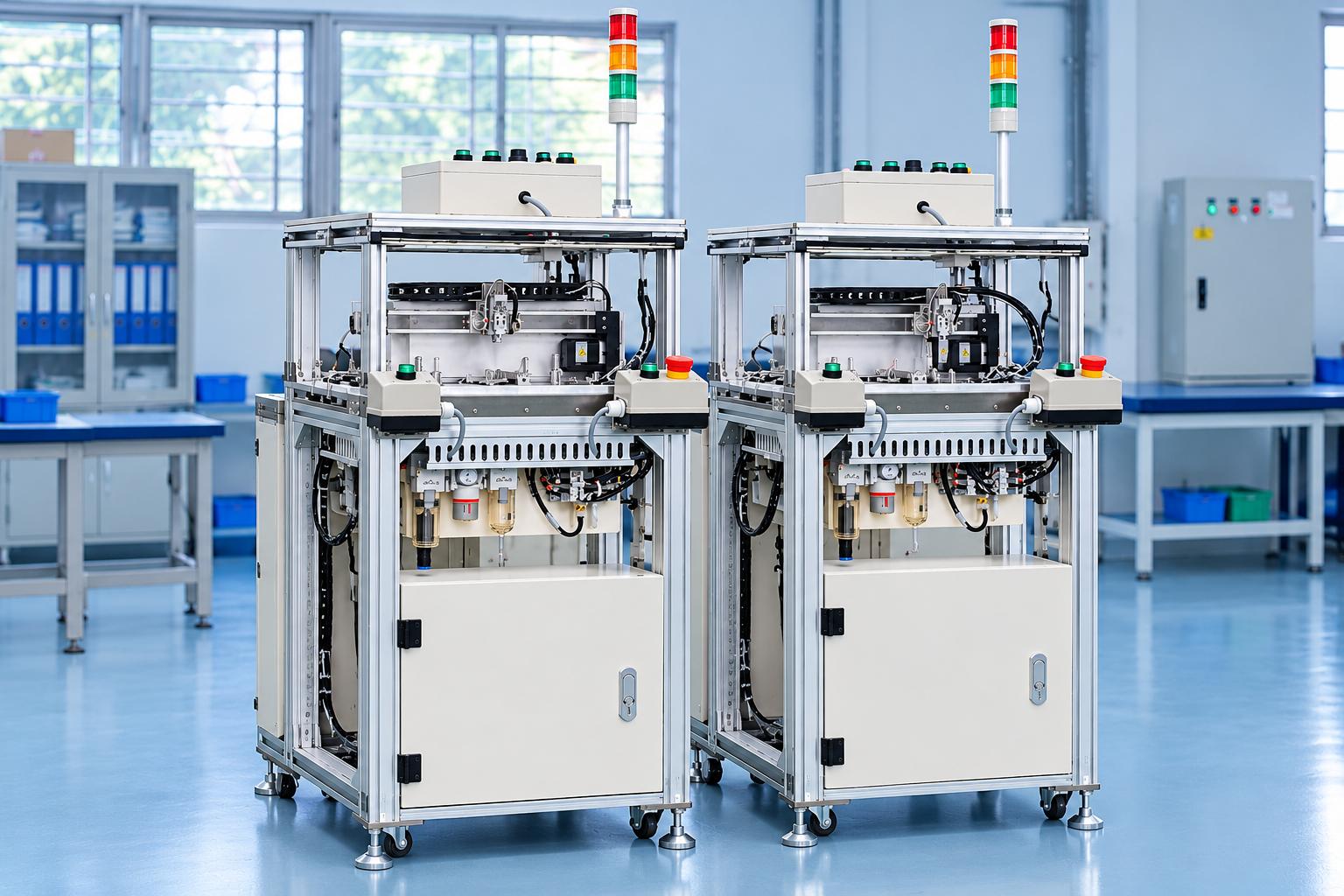
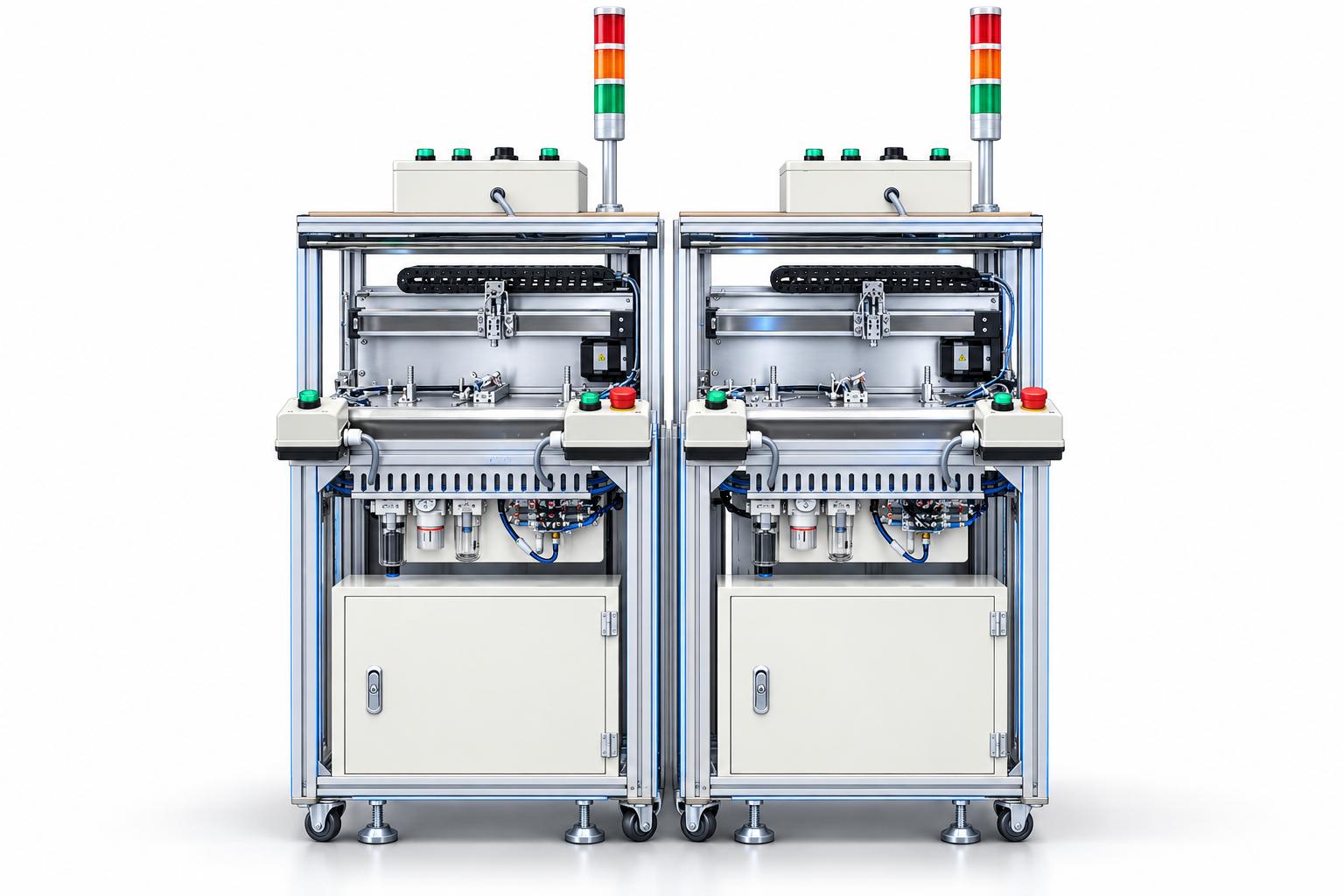
Semi-automatic sheet metal pressing machine
CNC VINA’s semi-automatic sheet pressing machine performs pressing operations on sheets mounted within an assembly using a linear robot and a dedicated fixture. The operator selects the configuration, places the product in the fixture, and starts the cycle. The machine then moves the product into the working position, carries out the programmed pressing path, and returns the product to the loading position for removal.
This solution is suitable for assembly processes that require repetitive pressing operations at specific positions. Instead of performing the entire movement manually, the operator focuses on correctly positioning the components and inspecting the finished product. CNC VINA can customize the fixture, pressing head, and operating sequence based on the product samples and the requirements of each production line.
VIETNAM CNC & TECHNOLOGY APPLICATION JOINT STOCK COMPANY
Hotline: +84.916 63 9355 / +84.915 74 4664
Email: Sales01@cncvina.com.vn / Sales03@cncvina.com.vn
Product description

The semi-automatic sheet pressing machine is designed to automate pressing operations in industrial assembly lines, particularly for products that require repetitive operations at specific positions. The machine combines a linear robot, a pressing head, and a dedicated fixture to execute movements according to a preset program. The working process involves coordination between the operator and the automated system, with product loading, unloading, and configuration selection performed manually at the machine. The control system, together with sensors, monitors operating conditions and detects abnormal situations during the cycle. The semi-automatic configuration allows the machine to operate as a standalone station or be integrated into a production line, depending on the available space and workflow requirements. Its actual performance depends on the material properties, product geometry, surface requirements, and selected fixturing method. With a customer-oriented design approach, CNC VINA can assess actual product samples to develop a suitable pressing head, fixture, and operating sequence for each application. In this article, let’s explore the structure and industrial applications of the semi-automatic sheet pressing machine using a linear robot with CNC VINA.
Technical specifications of The semi-automatic sheet pressing machine
| Item | Specification |
| Operating method | Semi-automatic, manual product loading and unloading |
| Pressing mechanism | Linear robot combined with a pressing head |
| Product selection | 3 configurations selected via a switch |
| Operating modes | Manual and automatic |
| Control voltage | 24V DC |
| Air supply pressure | 0.4 - 0.6 MPa |
| Operating interface | Push buttons, switches, indicator lights, and buzzer |
When ordering a custom-built machine, parameters such as the working area, travel distance, pressing head, and cycle time must be determined based on the product and production line layout. Actual productivity must account for the operator’s tasks as well.
The role of the pressing machine in the assembly process
With manual pressing operations, the starting position, movement direction, and method of holding the component may vary between cycles. The machine combines positioning fixtures with programmed movements to standardize these operations. The fixture holds the product assembly in the specified position, while the robot guides the pressing head through the predefined working positions.
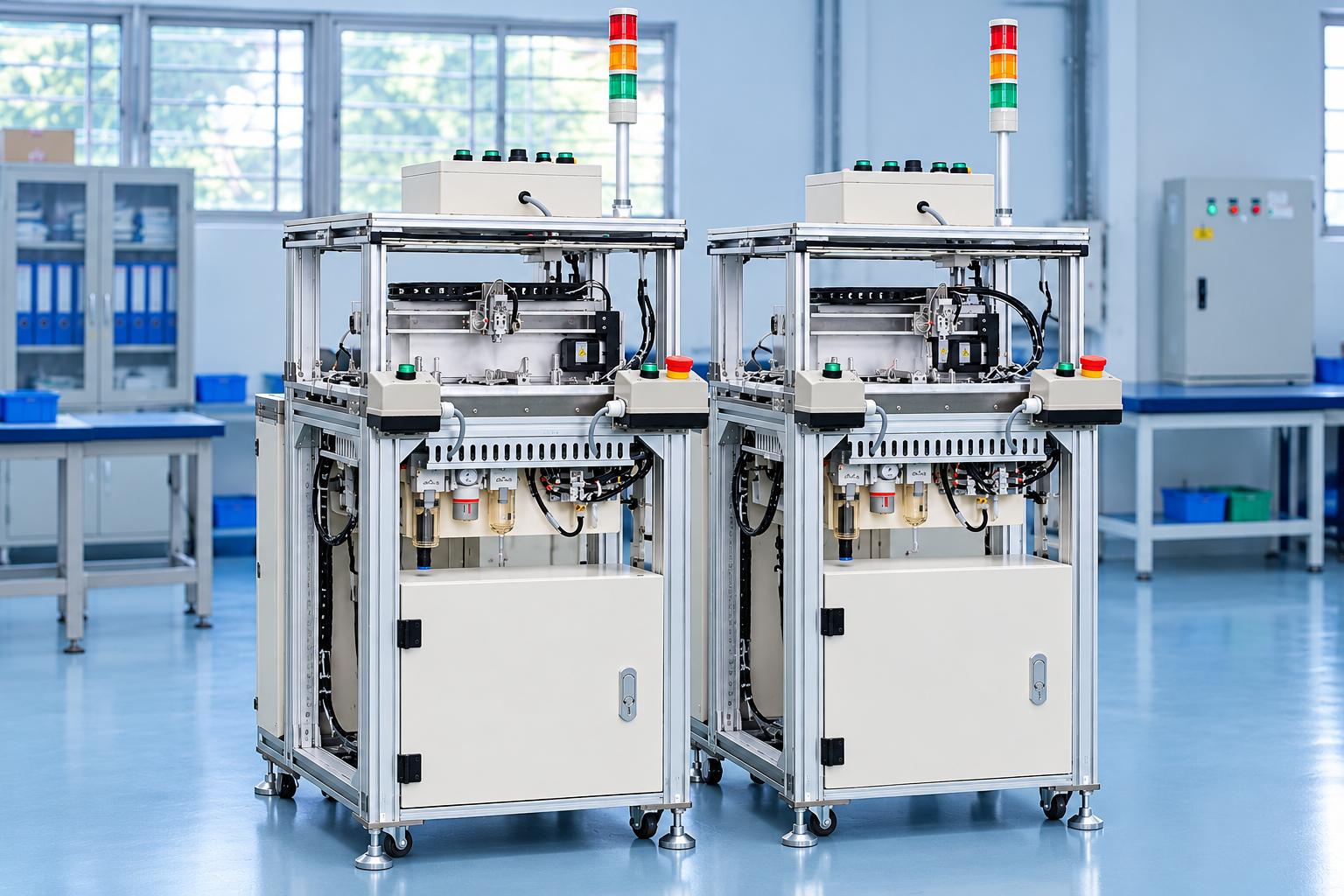
The value of the pressing station lies in the coordination between the mechanical system and the operating sequence. The pressing head must reach the correct area to be processed, the workpiece must be adequately supported, and the program must correspond to the product positioned in the fixture. Simply replacing manual operations with machine movements is not enough to ensure consistent results if the positioning method or contact surface is unsuitable.
The semi-automatic configuration allows the machine to be installed as a station within an assembly line. When evaluating whether the machine can meet production targets, businesses should account for product loading, the pressing cycle, unloading, and inspection, rather than considering only the robot's movement time.
Key features of the linear robot pressing machine
-
Programmed pressing using a linear robot: The working head moves according to a predefined sequence and preset positions.
-
Dedicated fixture combined with pneumatic mechanisms: Helps secure the product assembly and move it into the processing position.
-
Selection of three product configurations: The operator selects the corresponding program on the control panel.
-
Condition checks before and during the cycle: Sensors and control logic monitor conditions related to the product and operating sequence.
-
Push-button and switch controls: Includes manual, automatic, homing, and adjustment functions.
Structure and programmed pressing technology
The semi-automatic sheet pressing machine consists of mechanical assemblies, a drive system, a pressing head, and a controller that work together according to a preset program. Each component performs a specific function, from positioning the product and carrying out pressing movements to monitoring operating conditions. The appropriate configuration should be selected based on product characteristics, surface treatment requirements, and the ability to accommodate product variations during production.
Linear robot and pressing head
The robot axis performs linear motion, carrying the pressing head through the working area. This technology is suitable for operations that follow a defined movement path and must be repeated on product assemblies held in a stable fixture.
When designing the machine for a new product, the working head and its movement path must be selected together. The shape of the contact surface, clearance around the workpiece, and area to be pressed determine how the pressing head approaches the product. The sheet material, its resistance to applied forces, and the required surface finish must be verified through sample testing before finalizing the design.
Fixture and pneumatic mechanisms
The fixture provides a defined position for placing and securing the product assembly during operation. Pneumatic cylinders perform clamping, pulling, and lifting movements according to the control sequence. Guide rails support the movement of the mechanical assembly.
For buyers, the fixture is an important component to evaluate when multiple product variants are involved. It must maintain the required positioning references, provide appropriate support points, and allow convenient product loading and unloading. If the product shape or pressing location changes, the fixture and related components may need to be adjusted or redesigned.
The pneumatic supply unit includes a filter, a pressure regulator, and pneumatic control components. The supplied air pressure is an operating condition for the system; the actual force applied to the sheet also depends on the mechanism and working head. Therefore, the machine configuration should be selected based on testing with the specific product.
Sensors and sequence control
Sensors help detect the presence of a product and check whether the selected configuration matches the product placed in the fixture. The operator selects the program, and the sensor mounting positions must be adjusted accordingly.
The machine provides alarms for situations such as starting without a product in place, selecting an incompatible configuration, restarting before the previously pressed product has been removed, or removing a product before pressing has been completed. The system also provides alerts for issues such as a jammed cylinder or loss of air supply. These functions help detect deviations in the operating sequence and working conditions.
The pressing result must still be evaluated against the product's quality criteria. Sensors that monitor the operating cycle do not replace inspection of the surface, sheet position, or other process-specific requirements after pressing.
Control panel and equipment at the operating station
The operator uses push buttons, mode selection switches, and product selection switches. Manual mode allows individual mechanisms to be controlled, the robot to be moved in small increments, and the robot to be moved to preset positions for adjustment in accordance with the operating instructions.
The machine is equipped with a safety area sensor, an emergency stop button, a stack light, and an audible alarm. The stack light indicates fault, homing, and automatic operation statuses, helping the operator identify the station's operating condition.
Operating principle and precautions for the semi-automatic sheet pressing machine
The semi-automatic sheet pressing machine using a linear robot operates through coordination between the fixture assembly, control system, and robot, which performs the pressing operation according to a preset program. Depending on the equipment configuration, operation may combine direct operator intervention with automated movements. To ensure stable operation, the prescribed working procedure must be followed, along with regular inspection and maintenance.
Operating procedure for the semi-automatic sheet pressing machine
The cycle combines operator actions with the machine's automated movements:
Step 1: Prepare the machine and select the configuration. Bring the equipment to a ready state and select the program suitable for the product to be processed.
Step 2: Place the product in the fixture. The operator positions the product assembly correctly so that the sensors can check the operating conditions.
Step 3: Start the cycle. Press the two start buttons simultaneously when the machine meets the conditions required for operation.
Step 4: Move the product into position and perform pressing. The mechanism moves the product into the processing area, and the robot performs the operation according to the selected program.
Step 5: Return and remove the product. Once the operation is complete, the product assembly returns to its original position for the operator to remove and inspect.
The machine checks product-related conditions to determine whether the cycle can start or an alarm should be triggered. If a fault occurs, the operator must identify and address the cause according to the prescribed procedure before restoring operation.
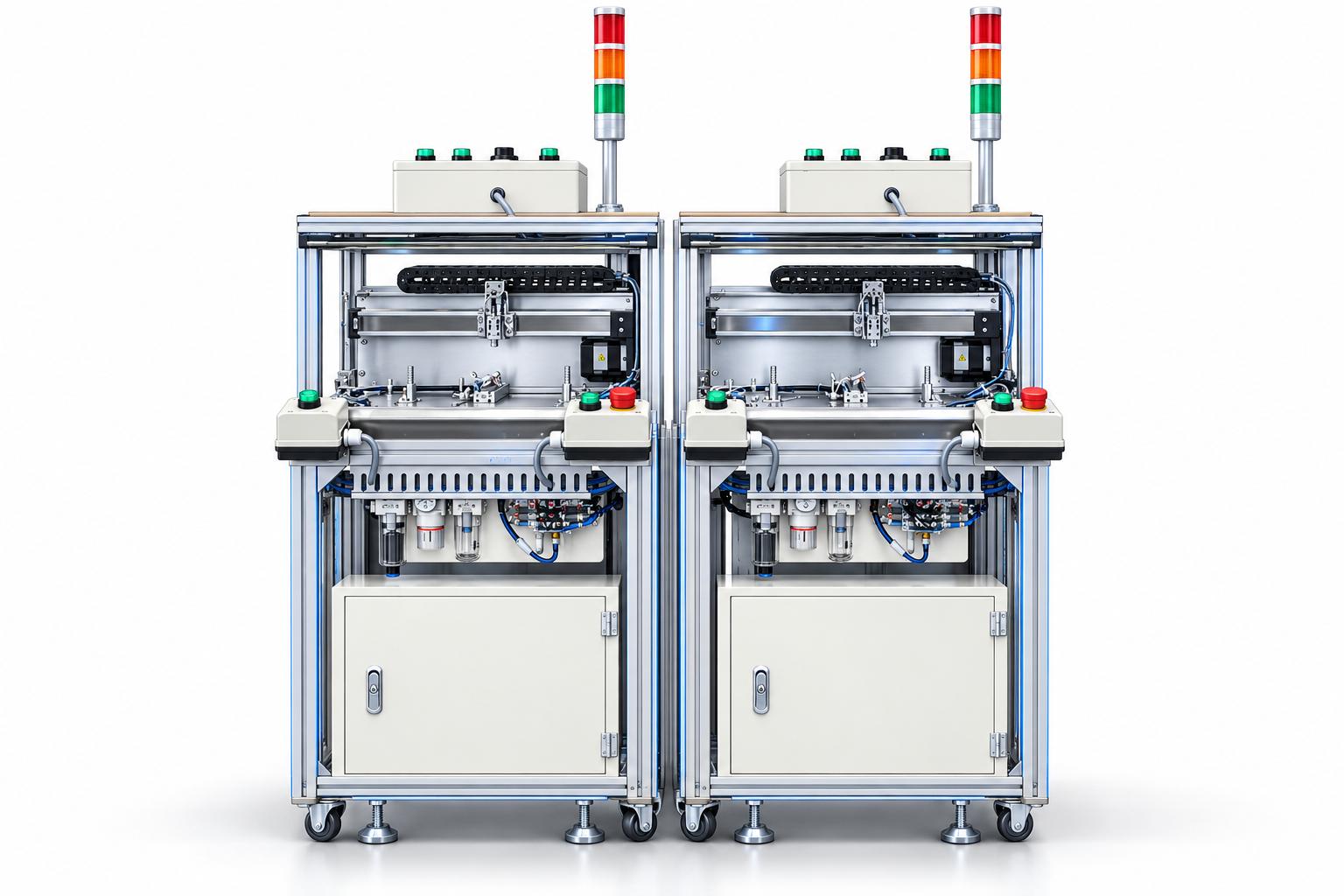
Operation and maintenance of the dedicated sheet pressing machine
Before each shift, the operator checks the cleanliness of the fixture and working head, the condition of the air lines, the supplied air pressure, and the equipment in the operating area. The product must be positioned correctly, and the appropriate configuration must be selected before starting the machine.
Periodically inspect the tightness of mechanical connections, the condition of the guide rails, pneumatic mechanisms, moving cables and hoses, and the robot. Sensors must be kept clean, and their positions should be checked after each adjustment. The pressing head must also be monitored for contact conditions to detect wear, contamination, or signs that could affect the product.
Cleaning, fixture replacement, and jam removal must be performed only after the machine has stopped and the relevant energy sources have been isolated in accordance with the prescribed procedure. After maintenance or a product changeover, a verification run should be performed before production resumes.
Applications of the linear robot pressing machine in industrial manufacturing
- In assembly operations involving product assemblies with sheets that require pressing, the machine performs the pressing path after the operator places the assembly in the fixture. This application is suitable for a configuration consisting of a linear robot, a positioning fixture, and pneumatic mechanisms. The working area must be accessible to the working head, and the product assembly must remain stable throughout the cycle.
- In batch production involving several product variants, program selection helps organize operations according to predefined configurations. With three available selections on the machine, the user can establish corresponding instructions for product placement and mode selection. When introducing a new product shape, the fixture, sensor positions, and pressing path must be reassessed before production begins.
- In assembly lines for equipment and component assemblies, the programmed pressing principle can be evaluated for operations currently performed manually. Any expansion of the application should be based on sheet samples, product assemblies, and the output criteria of the process. CNC VINA can conduct an assessment to determine the suitability of a linear mechanism and design a corresponding pressing head and fixture.
- For projects aimed at improving an individual process, a semi-automatic station may be considered when a business wants to mechanize pressing operations while retaining manual product loading and unloading. Its effectiveness should be evaluated through product testing, actual operating cycle times, and compatibility with the preceding and subsequent processes.
Factors to determine before selecting a machine
Product characteristics and post-pressing requirements
Businesses should prepare product assembly samples, sheet material information, the dimensions of the area to be processed, and a sample that meets the required quality standards. Areas susceptible to scratches, deformation, or displacement should be clearly identified to help determine suitable contact surfaces and support methods.
Output criteria should be defined in measurable, verifiable terms: the required sheet position, the areas to be pressed, whether contact marks are acceptable on the surface, and the inspection method to be used. This information helps translate subjective operating requirements into a basis for design and acceptance testing.
Number of product variants and changeover method
Three programs represent the number of configuration options available on this machine, not a universal limit for all custom-designed machines. When adding a new product, the business must consider whether the same fixture can be reused, whether fixture components need to be replaced, whether sensors require adjustment, and whether the robot's movement path must be modified.
Program selection and fixture changeover should be coordinated. After adjustment, a verification run should be performed for each product variant, including checks to confirm that an incorrect configuration can be detected. Product changeover time should also be included in production planning when batches change frequently.
Operating cycle time and floor space
To determine whether the machine can meet the requirements of the production line, the entire operating cycle should be measured, from product placement until the station is ready for the next product. Testing should use the planned infeed and outfeed tray arrangements and the inspection method intended for actual production.
The installation location must allow convenient front-side operation, maintenance access, and the supply of electrical power and compressed air. The table height and operator reach distance must also be suitable for the operator. These requirements should be agreed upon when approving the machine layout drawing.
Product testing and evaluation before handover
Testing should cover all product variants intended for production, including samples with dimensional deviations within the permitted tolerance range. The evaluation should cover pressing results, workpiece retention, and coordination between the operator and the machine.
-
Process results: Inspect the pressed area, sheet position, and surface condition against the approved reference sample or agreed criteria.
-
Fixture and movement: Check product placement, holding stability, working-head clearance, and whether the product returns to the unloading position.
-
Configuration selection: Test each program, along with scenarios involving incorrect configuration selection, starting without a product, and restarting before the previously pressed product has been removed.
-
Operating cycle time: Record the full cycle time, including actual loading, unloading, and inspection operations.
-
Operating equipment: Verify the emergency stop, safety area sensor, indicator lights, and the recovery procedure following a fault, in accordance with the agreed plan.
The test results provide the basis for finalizing the machine configuration and operating instructions. If the output requirements change, the pressing head, fixture, and program must be reassessed before the machine is used for mass production.
Frequently asked questions
Does the machine automatically load and unload products?
This configuration requires an operator to load and unload the product assembly. Product positioning, pressing, and return movements are performed according to the machine cycle. If automatic loading and unloading are required, CNC VINA can assess a separate solution based on the product transfer method.
Can the machine be used for different types of sheet materials?
Suitability depends on the material, shape, surface sensitivity, and support method for the product assembly. Samples must be tested to select an appropriate pressing head and movement path. The number of available programs does not mean that the machine can be used immediately with every type of sheet.
Does the machine automatically inspect pressing quality?
The configuration checks operating conditions and the sequence of operations related to the product. If equipment is required to assess sheet positioning or surface quality, the inspection requirements must be defined separately so that an appropriate solution can be selected and integrated.
What needs to be changed when introducing a new product?
The positioning references, pressing area, and product assembly dimensions must be reviewed. Depending on the differences, the fixture may need to be replaced, sensors readjusted, the working head changed, or the program modified. The final solution is determined after checking accessibility and conducting sample tests.
The semi-automatic sheet pressing machine using a linear robot is a solution for mechanizing pressing operations in assembly lines, helping standardize work procedures and improve production process consistency. The combination of a linear robot, pressing head, and dedicated fixture enables the machine to perform programmed movements tailored to different product configurations. Coordination between the operator and the control system allows operations to follow a defined sequence while helping detect abnormal conditions during the cycle. However, actual performance still depends on product characteristics, positioning methods, surface requirements, and the way operations are organized on the production line. Businesses should therefore evaluate actual product samples and conduct testing before selecting a configuration to ensure that the equipment meets process requirements. By designing fixtures, pressing heads, and operating sequences according to specific needs, CNC VINA aims to develop solutions suited to the requirements of each production process. Contact CNC VINA for consultation on designing and integrating a semi-automatic sheet pressing machine tailored to your company's actual production requirements.
VIETNAM CNC & TECHNOLOGY APPLICATION JOINT STOCK COMPANY
Factory: Song Cung Industrial Cluster, Dong Thap Commune, Dan Phuong District, Hanoi, Vietnam
Phone: +84.916 63 9355 / +84.915 74 4664
Website: https://cncvina.com.vn; https://cncvina.net; https://cncviname.com.vn
Email: Sales01@cncvina.com.vn | Sales03@cncvina.com.vn