 Tiếng
Việt
 Tiếng
Anh
 Tiếng
Nhật




 Tiếng Anh

Rubber heating and vulcanizing machine
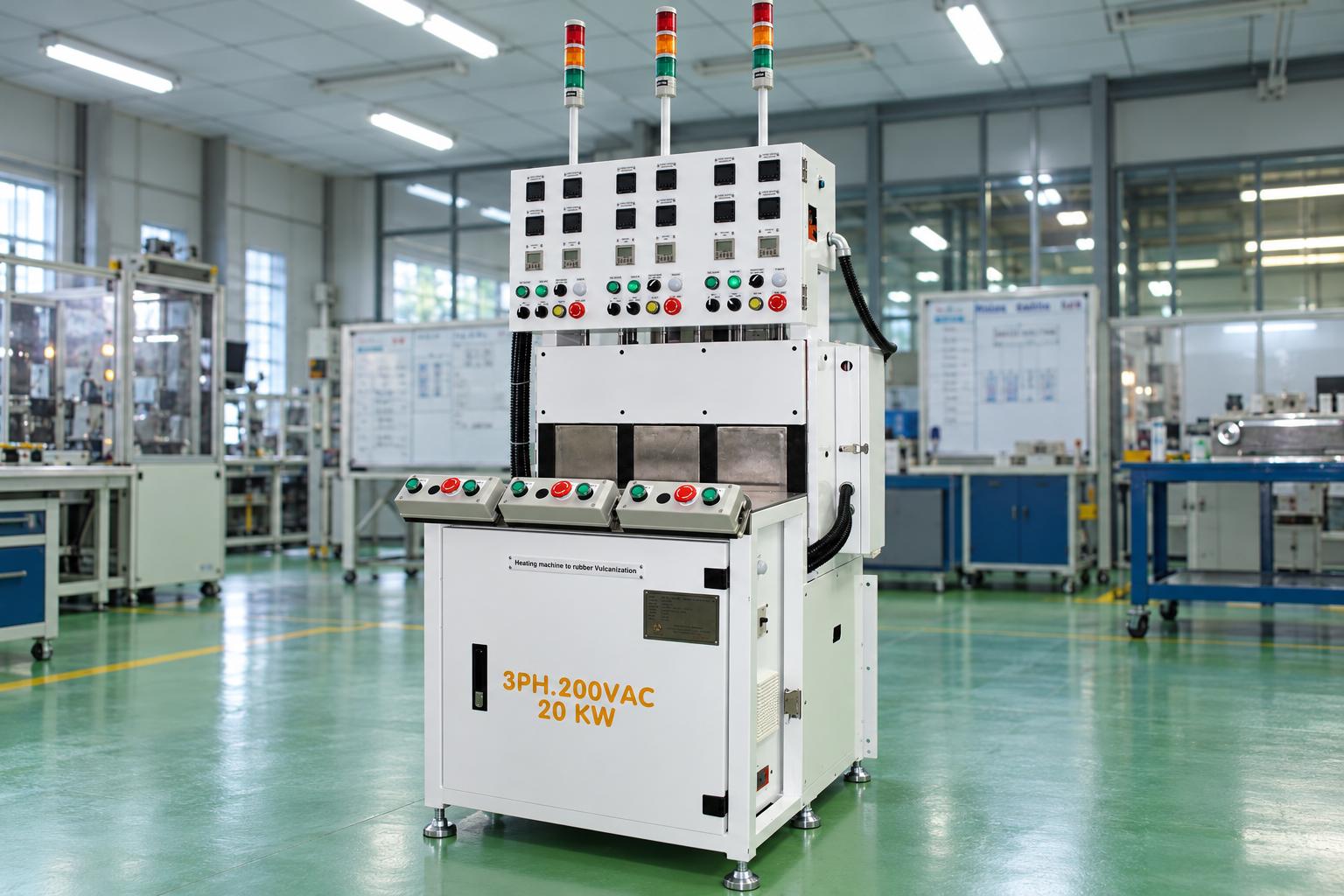
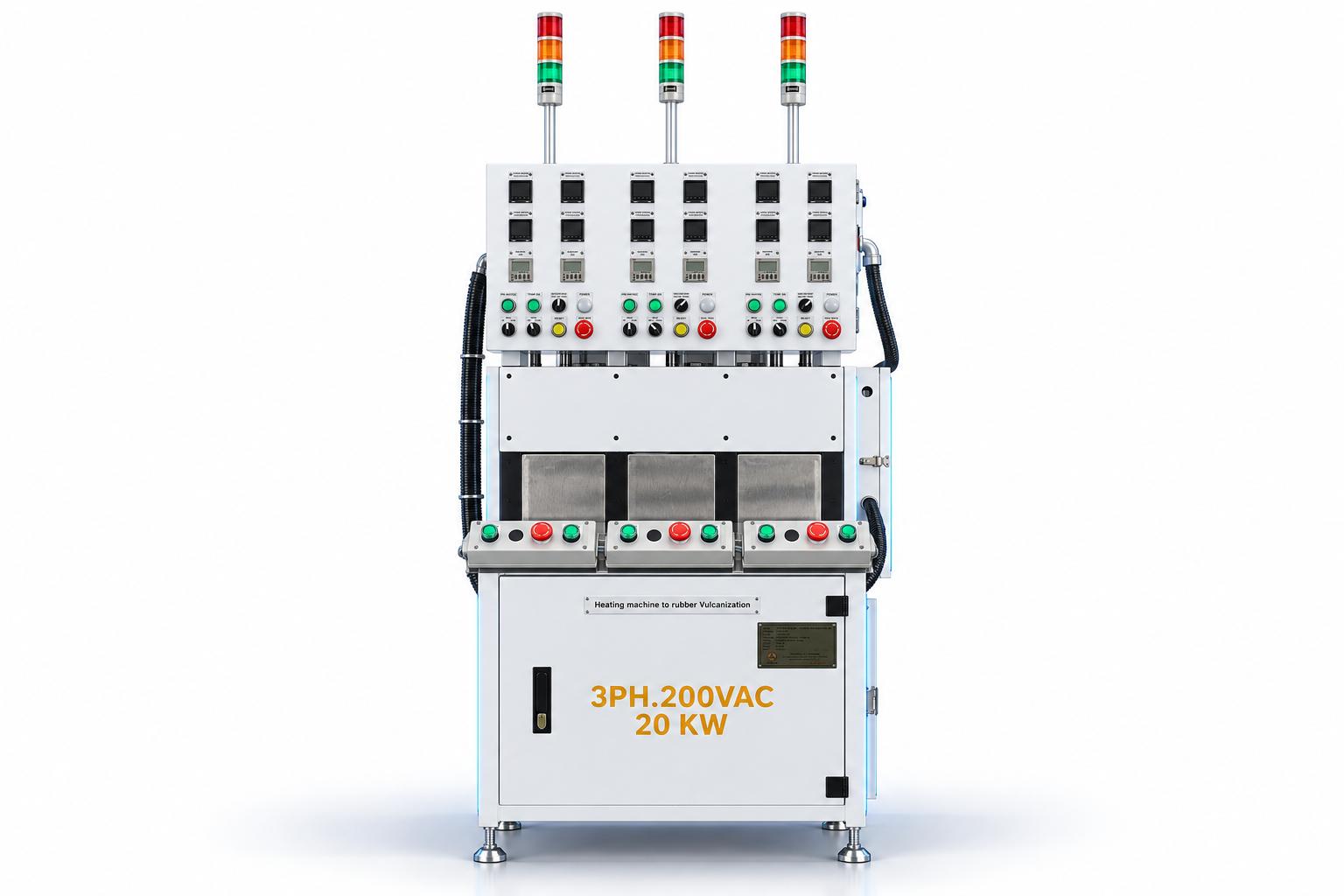
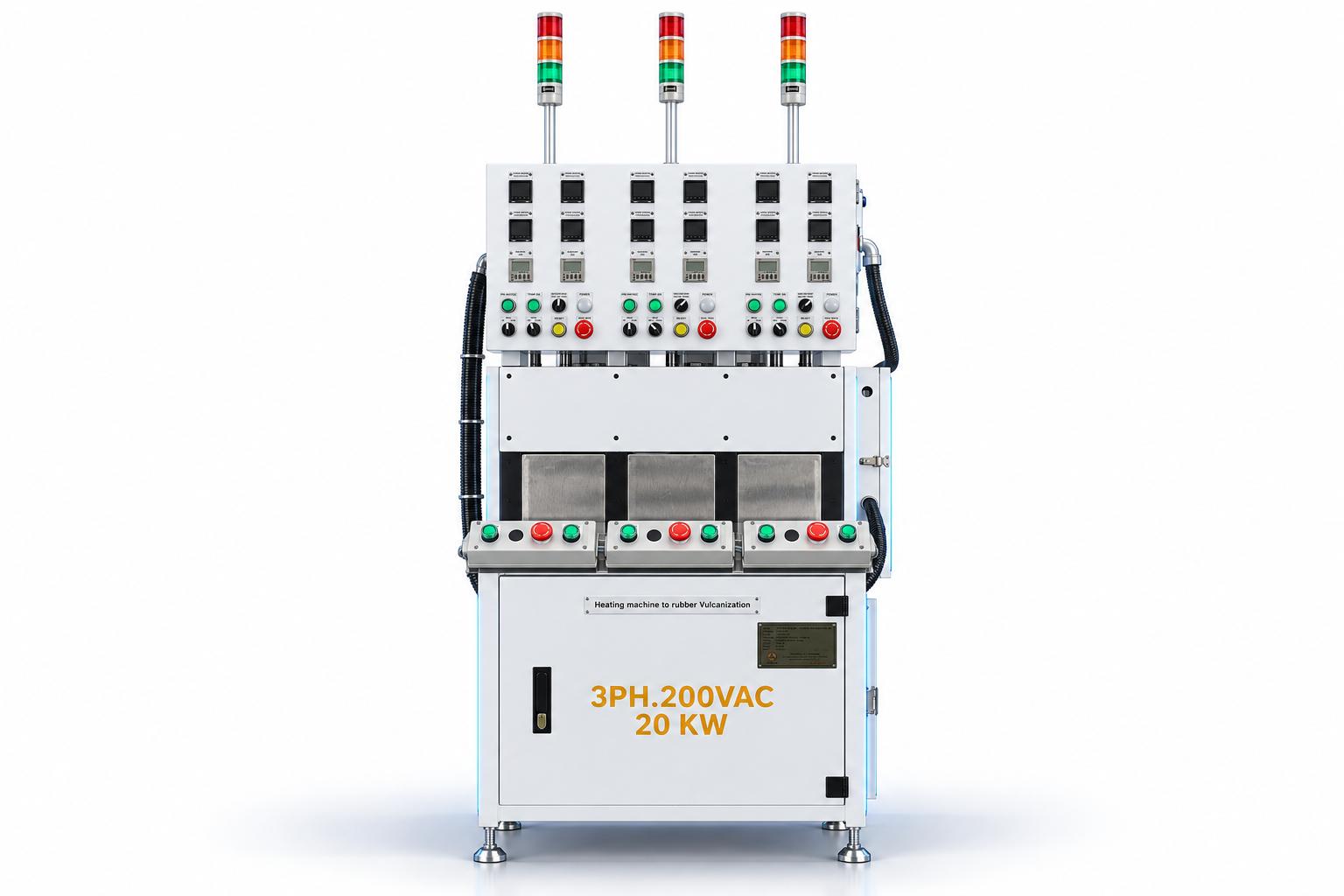
Rubber heating and vulcanizing machine processes products placed in molds using upper and lower heating blocks. The machine uses electric heating elements, temperature controllers, a pneumatic mold lifting mechanism, and a PLC to coordinate the door-closing process, mold lifting, timed holding, and return to the product unloading position.
The operator prepares the mold, loads the product, and removes it after the cycle is completed. The reference configuration features three working stations, each with corresponding temperature controllers and timers. CNC VINA can design machines according to the molds, heating conditions, and production requirements of different rubber components.
VIETNAM CNC & TECHNOLOGY APPLICATION JOINT STOCK COMPANY
Hotline: +84.916 63 9355 / +84.915 74 4664
Email: Sales01@cncvina.com.vn / Sales03@cncvina.com.vn
Product description

Rubber heating and vulcanizing machine is industrial equipment used to heat and process rubber products in molds according to appropriate process parameters. The machine combines a heating system with a mold lifting mechanism and an automatic control system to ensure that the process follows a predefined sequence. Controlling the temperature and mold holding time plays an important role in ensuring finished product quality. In addition, the mechanical design allows the mold position to be adjusted to meet production requirements. The control system coordinates movements, monitors operating status, and detects abnormalities during operation. The equipment can be considered for various types of rubber components, depending on material properties, mold design, and technical requirements. So, what is the structure of a rubber vulcanizing machine using molds, and in which industries is it applied? In this article, let’s explore the details with CNC VINA.
Technical specifications of the rubber heating and vulcanizing machine
| Item | Specification |
| Main power supply | 3-phase, AC 200V |
| Required power capacity | 20 kW |
| Control voltage | DC 24V |
| Number of working stations | 3 mold stations |
| Heating method | Electric heating elements inside the upper and lower heating blocks |
| Temperature control | Operating temperature controllers and over-temperature protection controllers |
| Lifting and door mechanisms | Pneumatic, with position feedback |
| Mold gap adjustment | Handwheel, lead screw, and shaft lock |
| Cycle control | PLC, push buttons, switches, and timers |
| Product loading and unloading | Performed by the operator |
The operating temperature, holding time, mold dimensions, and number of products per cycle must be selected according to the specific process requirements. The 20 kW power capacity is used for electrical supply planning; actual power consumption should be evaluated based on the heating mode and operating conditions.
The role of mold-based rubber vulcanizing machines in rubber product manufacturing
For products requiring heat vulcanization in molds, manufacturers must control heat transfer, holding time, and mold contact conditions. When the rubber type, dimensions, or component structure changes, the appropriate processing parameters must also be validated using actual products.
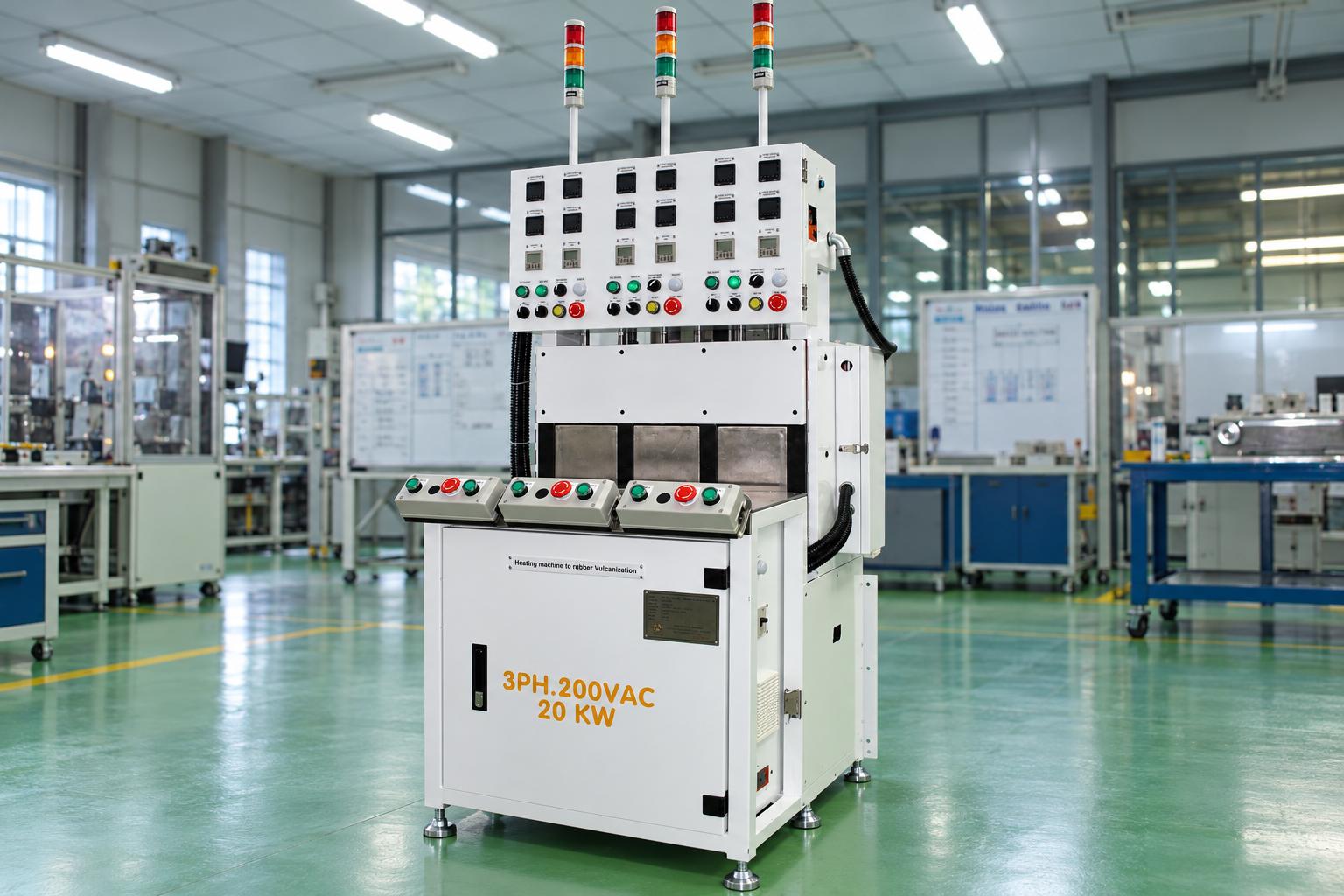
Rubber mold heating machines provide heating blocks, a mechanism for moving molds into the working position, and a timed holding cycle. These components help organize the production process according to predefined conditions, reducing reliance on manual time monitoring.
The results should be evaluated based on the quality of the processed products, including shape, dimensions, surface finish, and other required technical properties. The temperature displayed on the controller indicates the reading at the measurement point; the actual mold temperature and the degree of vulcanization of the product must be verified when establishing the process.
Main features of the rubber mold heating machine
-
Two-sided heating: The upper and lower heating blocks transfer heat to the mold through their contact surfaces.
-
Three mold stations: The reference configuration includes three working units, each with corresponding temperature controllers and timers.
-
Mechanical mold gap adjustment: A handwheel, lead screw, and shaft lock help adjust the position of the upper heating block according to the mold.
-
PLC-controlled cycle: The system coordinates door closing, mold lifting and lowering, and holding time based on mechanism position feedback.
-
Separate temperature control and protection: Operating temperature controllers and temperature protection controllers are provided for the upper and lower heating blocks.
Structure and related technologies
The rubber mold heating machine consists of mechanical components, a heating system, and automatic controls that work together to ensure the mold processing cycle meets the required conditions. Each assembly performs a specific function, from heat transfer and mold positioning to motion control and operating time management. The integrated design helps ensure that the equipment meets the requirements of the mold, processing technology, and actual production conditions.
Upper and lower heating blocks
Rod-type electric heating elements are installed inside the heating blocks. Heat from the upper and lower blocks is transferred to the mold when the mechanism moves it into the contact position. These components must be designed to match the mold dimensions, contact areas, and product processing requirements.
Heat transfer performance depends on the arrangement of the heating elements, the heating blocks, and the mold contact surfaces. When selecting a configuration, it is necessary to evaluate heating time, heat recovery after loading, and temperature distribution at the positions requiring control. These values must be measured under conditions involving the actual mold and product.
Temperature sensors and controllers
Thermocouples, which are temperature sensors, provide signals to the controllers. The machine has separate operating temperature controllers and temperature protection controllers for the upper and lower heating blocks. Operators set the values according to the processing parameters and operating requirements of each configuration.
Separating these two functions allows operating temperature and protection limits to be monitored according to the system design. During machine testing, sensor signals, displayed values, and control circuit responses must be checked. Temperature status indicators help operators identify system conditions; however, the required mold and product temperatures must be evaluated through appropriate measurements.
Mold height and gap adjustment
The upper block is equipped with a handwheel and lead screw for position adjustment, together with a shaft lock to maintain the setting. This mechanical position must match the mold height, the travel of the lower assembly, and the required contact conditions during operation. A position scale helps control the alignment process.
When changing molds, the opening clearance for mold insertion, the contact surfaces during lifting, and the space required for mold removal must be checked. Verification must also consider the mold's travel path and surrounding components to prevent collisions or misaligned contact.
Pneumatic lifting and door opening and closing
Pneumatic cylinders raise the lower assembly to the working position, while guide shafts and guide bushings support its movement. A separate cylinder operates the door, opening and closing it according to the cycle. Position feedback signals are sent to the controller to coordinate the operating steps.
When selecting a machine, the mold load, stroke, and required operating forces must be determined. The air supply pressure is only one of the conditions required by the mechanism; the mold holding force also depends on the cylinder and mechanical structure. Any requirements concerning the force or pressure applied to the product must be confirmed during design and testing.
Machine frame and mold handling area
The frame supports the heating assemblies, lifting mechanism, and control cabinet. Insulation panels are installed within the assembly to limit heat transfer to related structural components. The front area includes an operating space and guide rollers to assist mold movement.
When installing the machine in a factory, sufficient space must be provided for mold insertion, removal, and transfer to the next production stage. The working height, mold handling method, and procedures for handling hot molds must suit actual production conditions.
PLC and time settings
The PLC processes signals from push buttons, selector switches, cylinder position feedback, and timers. The control panel includes buttons, switches, temperature controllers, and digital timers. Manual mode is available for operating the mechanisms, while automatic mode runs the configured cycle.
The machine has separate time settings for mold holding and for product removal and replacement operations. These time periods serve different purposes: one governs the processing stage, while the other monitors the transition to the next cycle. Productivity must be evaluated based on the entire process, including loading, processing, and unloading.
Operating principles, operating procedures, and maintenance of the rubber heating and vulcanizing machine
The rubber mold heating and vulcanizing machine operates through the coordination of mechanical movements, the control system, and appropriately configured heating parameters. To ensure stable operation, consistent product quality, and safe use, the prescribed operating procedures must be followed, along with regular inspection and maintenance.
Operating procedure for the mold heating machine
A cycle at each mold station follows the sequence below:
Step 1: Preparation. Check the mold, mechanism positions, temperature settings, and processing time. Initialize the machine to the ready state according to the operating instructions.
Step 2: Product loading. The operator places the product into the mold according to the agreed handling procedure. Before starting, the mold's process conditions and working area must be verified.
Step 3: Cycle initiation. When the mold is in the lowered position, the door is open, and the machine meets all operating conditions, the operator presses the two start buttons according to the operating instructions.
Step 4: Door closing and mold lifting. The controller closes the door. After receiving confirmation that the door is closed, the mechanism raises the mold. Once the upper-position signal is received, the holding timer starts.
Step 5: Timed holding. The machine maintains the processing state for the preset duration. The heating conditions are regulated by the corresponding controllers.
Step 6: Cycle completion and subsequent handling. When the holding time expires, the machine lowers the mold and opens the door. After the mechanism positions are confirmed, the system enters the time period allocated for product removal and preparation for the next cycle.
The operator removes the product or mold according to the approved procedure. If a positioning error occurs or the handling time is exceeded, indicator lights and an audible alarm help identify the condition for inspection. The required temperature conditions before operation and the criteria for completing the process must be established for each product.
Notes on operating and maintaining the mold-based rubber vulcanizing machine
Before operation, ensure that the correct mold is installed and that the mold gap position, heating settings, and processing time have been approved. Contact surfaces, mold travel paths, and support rollers must be kept clean to prevent misalignment, interference, or difficulties during operation.
Maintenance focuses on the lead screw, shaft lock, guide shafts and bushings, cylinders, pneumatic lines, heating elements, and temperature sensors. Monitor abnormal movements, air leaks, loose connections, and signs of unstable heating. The alarm functions should also be checked according to the machine's maintenance schedule.
Before cleaning, adjustment, or repair, stop the machine and isolate the electrical and pneumatic supplies. Any residual heat must also be managed according to the maintenance instructions. After a fault has been corrected, the responsible personnel must verify that the machine is safe to restart before initiating a new cycle.
Applications in industrial manufacturing
-
Heating and vulcanizing rubber products in molds. This application follows the machine's operating principle: the mold receives heat from the upper and lower heating blocks and remains in the working position for the preset duration. Suitability must be confirmed by evaluating the compatibility between the mold, mechanism, and material processing conditions to meet product requirements.
-
Developing solutions for rubber shafts and rollers. For products requiring heat treatment along the length of a mold, manufacturers can consider designing suitable heating blocks and mold positioning arrangements. Testing should evaluate temperature distribution along the mold, contact conditions, and product quality after processing. The suitability of each component must be confirmed through design evaluation and sample testing.
-
Designing solutions for other technical rubber components. Products such as rings, seals, and molded rubber components can be evaluated according to their specific molds and processing requirements. Material properties, holding force, dimensions, and product removal methods determine the design scope. Each configuration must be assessed for the intended production process before implementation.
-
Organizing processing operations across multiple mold stations. The three working stations provide a basis for arranging loading, holding, and unloading operations within the same area. The factory must determine operator allocation, mold transfer times, and inspection criteria between cycles. Output must be measured based on the mold configuration, processing time, and actual workflow.
Criteria customers should define
Material and product requirements
The rubber type, condition of the product before processing, and required properties after vulcanization must be clearly defined. Requirements such as dimensions, surface finish, hardness, or adhesion, where applicable, must be linked to the product's technical specifications and corresponding inspection methods.
Heating conditions and processing time must be selected based on the material formulation, component structure, and test results. When the material or product variant changes, the processing conditions must be reassessed before the same settings are applied.
Mold and contact conditions
External dimensions, weight, height, contact positions, and removal methods all affect the machine configuration. For molds containing multiple product cavities, temperature distribution and results across different positions must be checked.
Customers should provide the mold or its drawings to evaluate the required travel, clearance, and support arrangements. Holding force requirements should also be agreed upon rather than selecting a machine based solely on its external dimensions.
Temperature and heat recovery performance
In addition to the setpoint, the acceptable temperature range across the mold, heating time, and heat recovery after each loading operation must be determined. If the product is sensitive to temperature variations, measurements must represent the areas that affect product quality.
Testing under loaded conditions helps establish the relationship between displayed readings, actual mold temperature, and product results. This provides a basis for agreeing on operating parameters and protection limits.
Cycle time and installation conditions
The complete cycle includes preparation, loading, mechanism movement, holding time, and unloading. Mold transfer or any subsequent processing must also be considered when required by the production process. The appropriate level of automation should be selected based on these operations.
The factory must provide a suitable electrical supply, a pneumatic supply according to the design, and sufficient space for handling hot molds. The layout should accommodate product flow, inspection points, and maintenance access.
Sample testing and acceptance
Machine testing should be conducted using molds, materials, and product quantities representative of the intended operating conditions. The following items should be agreed upon:
-
Measure temperatures at the required control points on the mold and compare them with the displayed readings.
-
Evaluate heating time, heat recovery, and repeatability between cycles.
-
Inspect product shape, dimensions, surface finish, and other required properties.
-
Verify mold contact, lifting and lowering movements, and door position feedback.
-
Measure the complete cycle time, product removal time, mold changeover time, and coordination with subsequent production operations.
-
Check alarms, stopping functions, temperature protection, and machine initialization according to the operating procedures.
The test results should clearly record the sample, mold, heating settings, processing time, and inspection methods. Acceptance criteria must be agreed upon before handover so that the factory has a clear basis for operating the machine and evaluating product quality.
Frequently asked questions
Which steps does the machine perform automatically?
In automatic mode, the machine coordinates door closing, mold lifting and lowering, and the holding time. The operator prepares the mold, loads the product, and removes it after processing. Any additional automation requirements for these operations should be evaluated based on the specific product.
How are vulcanization temperature and processing time selected?
These parameters must be based on the material, mold, component structure, and quality requirements. Sample testing with appropriate temperature measurements helps verify the settings before production. The temperature displayed on the machine should be compared with the actual mold temperature.
Can one machine be used with multiple molds?
This may be possible when the molds are compatible with the contact area, travel range, load capacity, and loading and unloading arrangements. The gap adjustment mechanism supports mechanical alignment. However, the temperature settings, processing time, and product results must still be verified for each mold.
Do three mold stations determine production capacity?
Production capacity also depends on the number of products per mold, holding time, and loading and unloading operations. The complete cycle time and workflow must be measured to determine the achievable output.
Can CNC VINA customize the machine configuration?
CNC VINA can develop designs tailored to customer requirements, including heating blocks, mold dimensions, the number of working stations, and operating sequences. Changes to power capacity, mechanical structures, or automation levels must be evaluated alongside process requirements and sample testing.
The rubber heating and vulcanizing machine from CNC VINA is used in the mechanical engineering industry to process products placed in molds using upper and lower heating blocks. Electric heating elements work in combination with sensors, operating temperature controllers, and temperature protection controllers. The PLC coordinates door closing, mold lifting and lowering, and holding time based on mechanism position feedback. The operator prepares the mold, loads the product, and removes it after the cycle. The reference configuration features three working stations, uses pneumatic mechanisms, and includes a handwheel mechanism for adjusting the mold gap. When selecting a machine, material properties, mold dimensions, contact areas, heating requirements, and post-processing quality must be considered. Sample testing should evaluate mold temperature, heat recovery, repeatability, and the complete cycle time. Other technical rubber components can also be assessed according to their specific designs and processing requirements. CNC VINA can design heating blocks, mechanical mechanisms, and control sequences to meet customer requirements, combining these designs with actual product testing to establish the machine configuration and acceptance criteria.
VIETNAM CNC TECHNOLOGY APPLICATION JOINT STOCK COMPANY
Factory: Song Cung Industrial Cluster, Dong Thap Commune, Dan Phuong District, Hanoi, Vietnam
Phone: +84.916 63 9355 / +84.915 74 4664
Websites: https://cncvina.com.vn; https://cncvina.net; https://cncviname.com.vn
Email: Sales01@cncvina.com.vn | Sales03@cncvina.com.vn