 Tiếng
Việt
 Tiếng
Anh
 Tiếng
Nhật




 Tiếng Anh

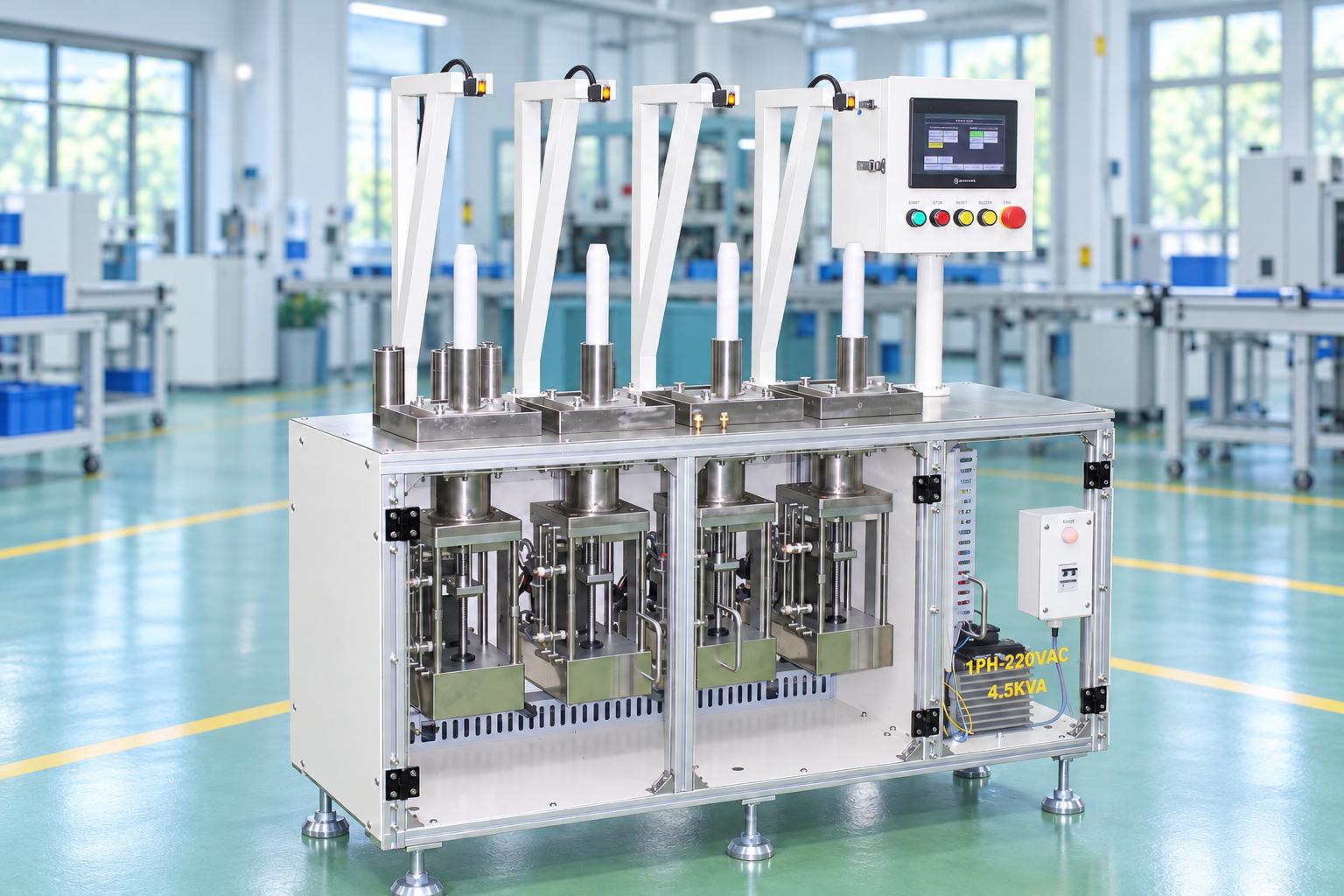
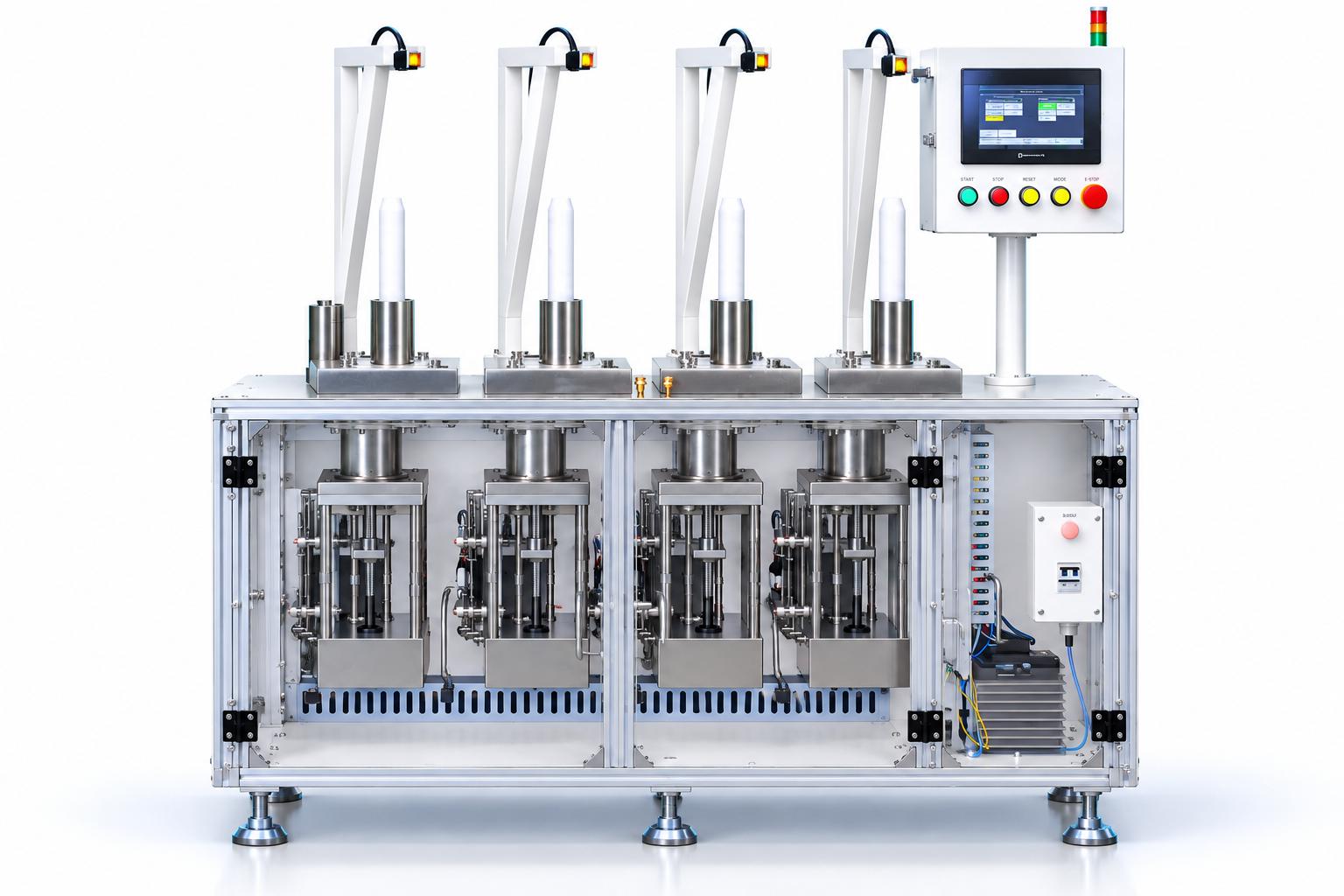
Four-head piston-type paint dispensing machine
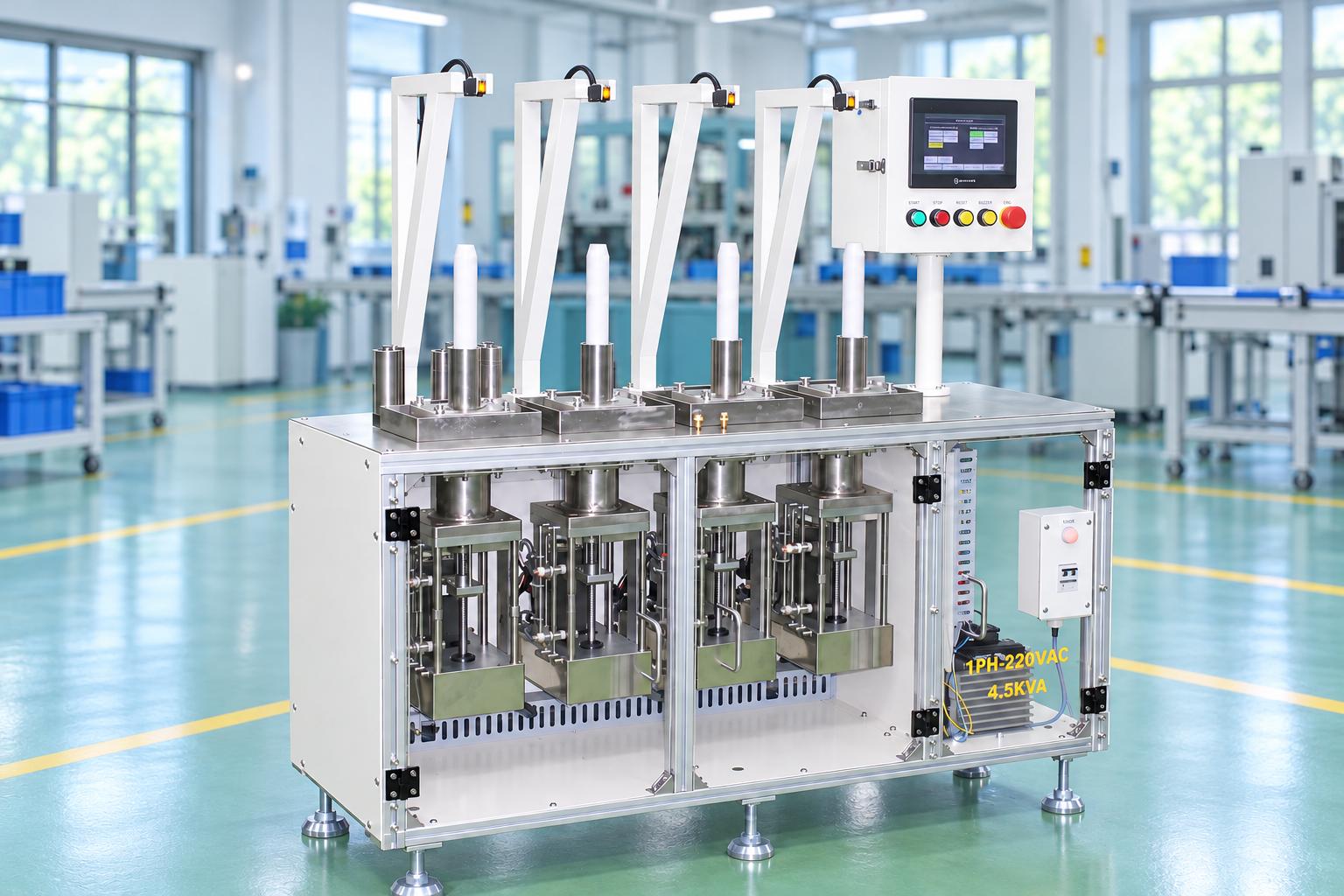
CNC VINA’s four-head paint dispensing machine applies paint to parts using a piston mechanism, then lowers the piston to draw the paint back down. Four working positions are arranged on the same machine table, each equipped with its own pump unit and motor. The operator places the product, installs the auxiliary component on top, and starts the machine. The machine then performs the paint dispensing and withdrawal movements according to the programmed sequence.
This configuration is suitable for vertically positioned tubular parts with a paint intake path compatible with the pump unit below. In automatic mode, all four motors start with a single START button. Manual mode allows each motor to be controlled individually for inspection and adjustment. This is a workstation where the operator directly loads and unloads products and prepares the materials.
VIETNAM CNC & TECHNOLOGY APPLICATION JOINT STOCK COMPANY
Hotline: +84.916 63 9355 / +84.915 74 4664
Email: Sales01@cncvina.com.vn / Sales03@cncvina.com.vn
Product description

The four-head piston-type paint coating machine is a solution designed to automate the paint coating process for industrial parts with suitable structures and processing requirements. The machine uses a piston mechanism to deliver paint from below onto the product, then draws the paint back down according to the operating cycle. With four working heads arranged on a single machine table, the system enables batch processing and helps optimize production layout. The drive mechanism, combined with a sensor system, helps control movement and coordinate the paint dispensing and withdrawal steps. In addition to automatic operation, the machine supports manual control for convenient inspection and adjustment when necessary. Developed with practical industrial applications in mind, CNC VINA focuses on providing equipment solutions tailored to the characteristics of each product and the operating requirements of individual factories. This machine is a suitable option for manufacturers seeking to improve the stability and efficiency of their industrial paint coating processes.
Technical specifications of the multi-head paint dispensing machine
| Item | Specification |
| Machine dimensions | L1251 x W436 x H1263 mm |
| Number of working positions | 4 paint dispensing heads |
| Paint dispensing and withdrawal mechanism | Piston inside a cylinder, moving up and down |
| Drive system | 4 motors, driven through belts and ball screws |
| Rated motor power | 750 W per motor |
| Number of ball screws | 4 |
| Paint level sensors | 4 |
| Stroke sensors | 8 |
| Automatic mode | One START button activates all 4 motors |
| Manual mode | Individual control of each motor |
| Product loading and unloading | Performed by the operator |
| Number of operators | 1 person |
| Power supply | Single-phase, 220 V |
| Control interface and buttons | Control screen, START button, emergency stop |
Role in the paint coating process
For products that require paint to be introduced into an internal cavity or passage, the method of dispensing and withdrawing the liquid affects the area being treated and the amount of paint retained. The piston mechanism pushes paint upward from below and then moves downward according to the operating cycle. The paint level sensors provide signals to control the next movement step.
The four-head configuration allows the process to be organized in batches at a single workstation, eliminating the need to set up multiple separate workstations. The practical benefits depend on the ability to load all products correctly, the stability of each pump unit, and coordination with upstream and downstream processes. When evaluating productivity, the time required for part replacement, paint replenishment, and machine cleaning must also be taken into account.
The coating results must be verified using actual products. The coated area, amount of paint retained, and coating requirements after drying or subsequent treatment can be used as criteria to validate the process. Correct movement according to the operating cycle is one process requirement; product quality must be evaluated using separate inspection methods.
Key features of the four-head piston-type paint dispensing machine
-
Four working units on a single machine table: suitable for organizing product loading in batches.
-
Each unit has its own motor and ball screw: drives the piston to push paint upward and withdraw it downward.
-
Common startup in automatic mode: pressing the START button once activates all four motors.
-
Individual motor control in manual mode: supports mechanism inspection and machine setup before production.
-
Paint level and stroke sensors: provide signals for the paint dispensing and withdrawal sequence and low-paint warnings.
-
Pump units with cleaning features: include an overflow prevention structure, a perforated plate to support paint mixing, and features designed to facilitate cleaning of areas where paint may accumulate.
Structure and related technologies
Four piston pump units
Each working position has a paint cylinder and a piston that moves up and down. When the piston moves upward, paint is pushed toward the product. When the mechanism reverses direction, the piston moves downward and draws the paint back. The product is positioned vertically and connected to the supply path from the pump unit. The auxiliary component on top must be installed correctly before operation.
Product geometry, the connection between the product and the working head, and the sealing method are important factors when selecting the machine. Parts with different lengths or cross-sections may require changes to the fixture, connection head, and paint dispensing conditions. Any new configuration must be tested using actual samples before approval for use.
Motor drive through belts and ball screws
The machine is equipped with four motors, four belt drive assemblies, and four ball screws. Rotary motion is transmitted through pulleys and ball screws, working in conjunction with two guide shafts in each unit to produce linear piston movement. Each motor has a rated power of 750 W. This is the motor rating, not the total power consumption of the entire machine.
When evaluating the mechanism, the stability of movement, belt condition, ball screws, and pump unit seals must be inspected. Since the four heads have independent drives, test results must be verified at each working position. Successful operation of one head alone is not sufficient to confirm the coating performance of the entire group.
Paint level and stroke sensors
Each head is equipped with a paint level sensor. During the upward stroke, the lifting movement stops when the paint level sensor is triggered. The mechanism then reverses direction, lowering the piston. When the lower stroke sensor confirms the position, the motor stops and the cycle ends. The upper stroke signal also contributes to the low-paint warning function.
These sensors support control of the paint dispensing process. If the factory requires verification of dispensing volume, coating thickness, or coating quality, suitable additional measurement methods must be defined. Before production, the sensor positions and feedback signals should be checked using the actual product, paint level, and operating conditions.
Pump unit with paint mixing and cleaning features
A perforated plate is installed above the cylinder to support paint mixing and agitation. The pump unit also includes an overflow prevention structure, access grooves for disassembly, and covers for recesses around bolt locations to facilitate cleaning. These features improve access to areas requiring cleaning and help reduce paint accumulation in recessed sections of the assembly.
The pump cylinder in the reference configuration is resistant to acetone solution. When selecting a new paint type or cleaning solvent, compatibility must be confirmed for every component in contact with the liquid, including sealing materials. Cleaning and storage procedures should be established according to the materials used and the machine's operating instructions.
Machine table and control system
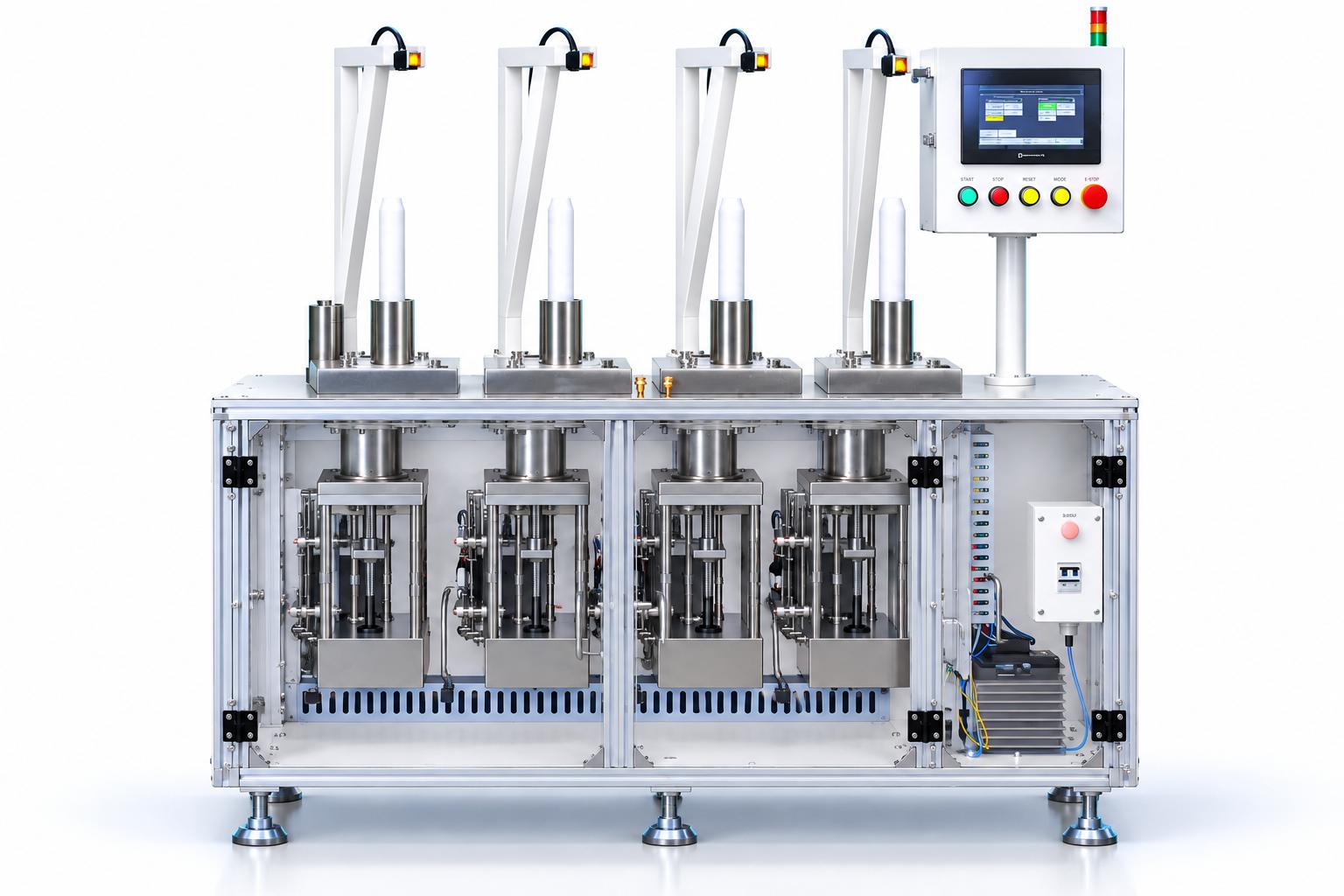
The four working positions are mounted on an aluminum extrusion frame, with mechanical components and electrical equipment housed in the lower compartments. The control screen and START button are used for machine operation. The machine is also equipped with an emergency stop button, door switches, drive guards, and leveling feet.
The workstation layout must allow the operator to access all four positions, correctly position products, and monitor the process. Installation space must also account for door opening, material replacement, cleaning, and maintenance. Before working on the mechanism or inside the electrical cabinet, the machine must be stopped and the power supply isolated in accordance with the applicable procedure.
Operating principle and process of the four-head piston-type paint dispensing machine
The four-head piston-type paint dispensing machine operates by moving the pistons up and down to deliver paint to the required processing area and withdraw it after the operation is complete. The process is coordinated through the motors, ball screws, and sensors, allowing the working heads to follow the configured control sequence.
Operating procedure for the piston-type paint coating machine
Step 1: Prepare materials and the workstation. Check the paint, pump units, seals, connection heads, and sensor condition.
Step 2: Position the products. The operator places the parts in the designated positions, installs the auxiliary components on top, and confirms that the products are positioned correctly.
Step 3: Start automatic operation. Once the machine is ready, press START to activate all four motors. The belts and ball screws drive the pistons upward.
Step 4: Dispense paint upward. The pistons push paint toward the products. The paint level sensors trigger the stopping of the upward movement according to the control sequence.
Step 5: Withdraw the paint. The motors reverse direction and the pistons move downward. When the lower stroke sensors confirm the positions, the motors stop and the cycle ends.
Step 6: Replace the products. Once the mechanism has stopped in an appropriate state, the operator removes the parts, inspects them according to the process requirements, and prepares the next batch.
Manual mode allows each motor to be controlled individually for movement inspection and adjustment. Before introducing a new configuration into production, the operating sequence at all four heads, startup permissive conditions, and low-paint alarm handling must be verified. Product replacement must only be carried out after the machine has stopped.
Operation and maintenance
Before production, check the condition of the paint, the cleanliness of the pump assemblies, the connection interfaces, and the sensor signals. If a low-paint warning or abnormal paint delivery occurs, stop the machine according to the operating procedure and inspect the system before resuming operation. Operators should only load, unload, or adjust products when the mechanism has stopped in an appropriate state.
Maintenance should focus on sealing components, areas where paint may accumulate, drive belts, ball screws, guide systems, and sensor wiring. Cleaning features must remain functional after disassembly and reassembly. Before opening the machine compartments or working on the drive system, isolate the power supply according to the applicable procedure. After maintenance, inspect each working head and conduct sample testing before resuming production.
Applications in industrial manufacturing
Coating vertically positioned tubular components is a suitable application for this machine configuration. Paint is delivered upward from the pump assembly below the workpiece and withdrawn as the piston moves downward. The application requires a product with a compatible paint intake path, connection interface, and fixturing method. The coated area and amount of paint retained must be verified using actual samples.
Batch production using four working positions can take advantage of the machine's common startup function. The operator prepares the products, monitors the operating cycle, and replaces the batch after the cycle is complete. This approach is suitable when product loading, unloading, and inspection are organized according to the workstation cycle time. Each working head must be evaluated to confirm consistent processing results across all positions.
Finishing operations for mechanical components, electrical components, or industrial spare parts may also use a similar mechanism if the products require paint to be introduced into a cavity and can receive paint from below. This is a potential application that must be evaluated for each specific product. The workpiece material, paint type, areas that must remain free of paint, and coating requirements provide the basis for CNC VINA to design a suitable working head, fixture, and operating sequence.
When integrating the coating station into a production line, its layout must be coordinated with surface preparation and post-coating processes. If products need to wait, dry, or undergo another processing step, an appropriate method for storing and transferring them after removal from the machine should be defined. Automatic loading and unloading or integration with other equipment can also be considered according to the design requirements.
Criteria for selecting equipment for coating tubular components
Product geometry and paint intake method
Start with the product drawing or sample, the paint supply path, and the area to be coated. Check whether the product can be positioned vertically, whether its connection to the pump assembly is compatible, what sealing requirements apply, and which areas must be protected from paint. If the product length, cross-section, or internal structure changes, the machine's ability to deliver and withdraw the liquid, along with the sensor positions, must be reassessed.
Paint type and quality requirements
Paint viscosity, settling tendency, behavior during operation, and compatibility with the pump assembly all affect the choice of machine configuration. Requirements should be defined using measurable criteria, such as the coated area, the amount of paint retained, or coating characteristics after the subsequent process. Testing with the actual materials helps establish the suitable operating range.
Operating cycle of the entire workstation
Four working heads allow products to be processed in batches, but productivity depends on both machine cycle time and operator handling time. Measurements should be taken using representative samples, including product loading, installation of auxiliary components, unloading, and inspection. The frequency of paint replenishment and cleaning time must also be included in production planning.
Product changeover and automation expansion
When changing product types, check the connection head, fixture, sealing components, sensor positions, and paint delivery and withdrawal sequence. If the application requires automatic operation of selected heads, product configuration storage, data recording, or production line integration, these functions must be specified separately in the design requirements and verified through testing.
Sample testing and acceptance
Testing should be performed using the actual paint on all four working positions, with multiple consecutive cycles and additional tests after replenishing the paint. The evaluation should monitor upward paint delivery, downward withdrawal, overflow or leakage at the connection interface, and the results on each product. When changing product samples, the fixture and process conditions must be revalidated.
Operational acceptance should include verification of common startup, individual motor control in manual mode, sensor feedback, low-paint warnings, and machine stopping procedures. Safety-related conditions involving doors, restart behavior, and product replacement must be verified against the control program and operating requirements agreed upon at handover. Coating quality and cycle time must be assessed against the agreed acceptance criteria.
Frequently asked questions
Can the four working heads operate independently?
Manual mode allows each motor to be controlled individually. In the reference configuration, automatic mode starts all four motors with a single START button. If automatic operation of selected heads or bypassing positions that have not been loaded is required, these functions must be specified in the control system design.
What types of products are suitable for this machine?
The configuration is suitable for vertically positioned tubular components with a paint intake path compatible with the pump assembly. For new products, the geometry, sealing method, paint type, and coating results must be evaluated. CNC VINA can design fixtures and connection heads to suit specific products.
Do the sensors verify paint coating quality?
The paint level and stroke sensors provide signals for controlling the operating cycle. Coating coverage, the amount of paint retained, and coating thickness must be inspected using separate criteria and appropriate measurement methods.
Does using four working heads increase productivity fourfold?
Productivity must be measured across the entire workstation, including machine cycle time and product handling. The number of working heads is one factor in the machine configuration. Actual performance also depends on loading, unloading, inspection, paint replenishment, and cleaning.
Can the machine use different types of paint?
Compatibility with the pump assembly, sealing components, and paint delivery and withdrawal conditions must be confirmed. Paint characteristics and sample test results provide the basis for selecting a suitable configuration. When changing materials, the preparation and cleaning procedures must also be reviewed and agreed upon.
The four-head piston-type paint dispensing machine is a suitable solution for industrial component coating processes that require paint to be supplied from below. With four working heads, a drive system, and sensors, the machine supports cycle-based processing and helps maintain operational consistency. The combination of automatic and manual control modes also makes operation, inspection, and machine adjustment more convenient. However, actual performance depends on product characteristics, paint properties, and production line layout. Testing with actual samples is therefore necessary to determine the appropriate configuration and evaluate coating quality at each working head. With a focus on developing automation solutions tailored to business requirements, CNC VINA can support the design of fixtures, connection heads, and operating solutions suited to specific products. This provides a basis for businesses to select and apply the equipment more effectively, helping improve process consistency and optimize production workflows.
VIETNAM CNC TECHNOLOGY APPLICATION JOINT STOCK COMPANY
Factory: Song Cung Industrial Point, Dong Thap Commune, Dan Phuong District, Hanoi, Vietnam
Telephone: +84.916 63 9355 / +84.915 74 4664
Websites: https://cncvina.com.vn; https://cncvina.net; https://cncviname.com.vn
Email: Sales01@cncvina.com.vn | Sales03@cncvina.com.vn