 Tiếng
Việt
Tiếng
Việt
 Tiếng
Anh
Tiếng
Anh
 Tiếng
Nhật
Tiếng
Nhật




 Tiếng Anh


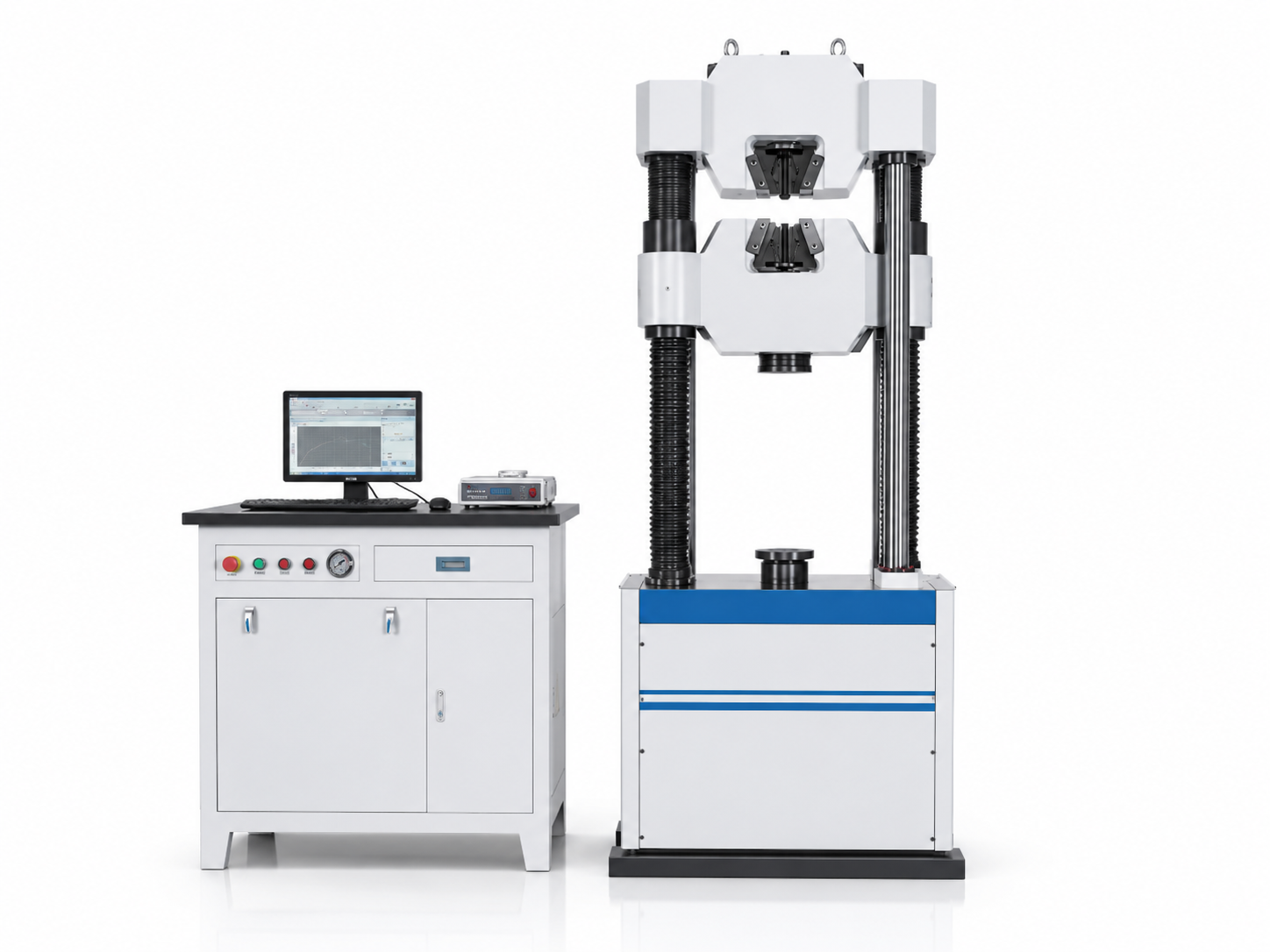
Tensile testing machine
A tensile testing machine, which can also be called a tensile testing machine or a universal testing machine (UTM), is a testing system that applies tensile force to a sample material to evaluate its physical properties. It.
Customers who need automatic lines for the production and assembly of electronic and mechanical components and automation solutions, please contact us for advice and support.
VIETNAM CNC & TECHNOLOGY APPLICATION JOINT STOCK COMPANY
Hotline: +84.916 63 9355 / +84.915 74 4664
Email: Sales01@cncvina.com.vn / Sales03@cncvina.com.vn
Product description

Tensile testing machine plays an important role in evaluating the load-bearing capacity and mechanical properties of materials, providing businesses with more accurate data for quality control processes. Through a controlled force application process, the machine can record and analyze parameters such as tensile force, elongation, deformation, and the failure condition of test specimens. The test results enable businesses to inspect the quality of incoming raw materials, evaluate products after processing, and detect abnormal changes in individual production batches. Depending on specific requirements, businesses can choose between electromechanical and hydraulic testing machines with suitable force ranges, stroke lengths, testing speeds, and gripping fixtures. Selecting the right machine configuration not only improves the reliability of test results but also optimizes operational efficiency in QC departments, laboratories, and production lines. CNC VINA is capable of designing and manufacturing Tensile testing machines according to specific requirements for materials, products, testing forces, test methods, and actual operating procedures. This solution is suitable for businesses looking for specialized testing equipment that offers high customization and can meet quality control requirements in manufacturing processes.
What is a tensile testing machine?
A Tensile Strength Testing Machine, also known as a tensile testing machine or Universal Testing Machine (UTM), is equipment used to determine the load-bearing capacity of a material or product when subjected to tensile force. During the testing process, the specimen is securely fixed in the machine's grips, after which the drive mechanism applies a gradually increasing tensile force at a preset speed.
Throughout the test, the load cell and measuring components continuously record the test data. The control system can display the applied force, displacement, deformation, and other relevant parameters in numerical or graphical form. The test results allow users to evaluate the mechanical properties of materials, compare the quality of different specimens, and monitor product consistency throughout the manufacturing process.
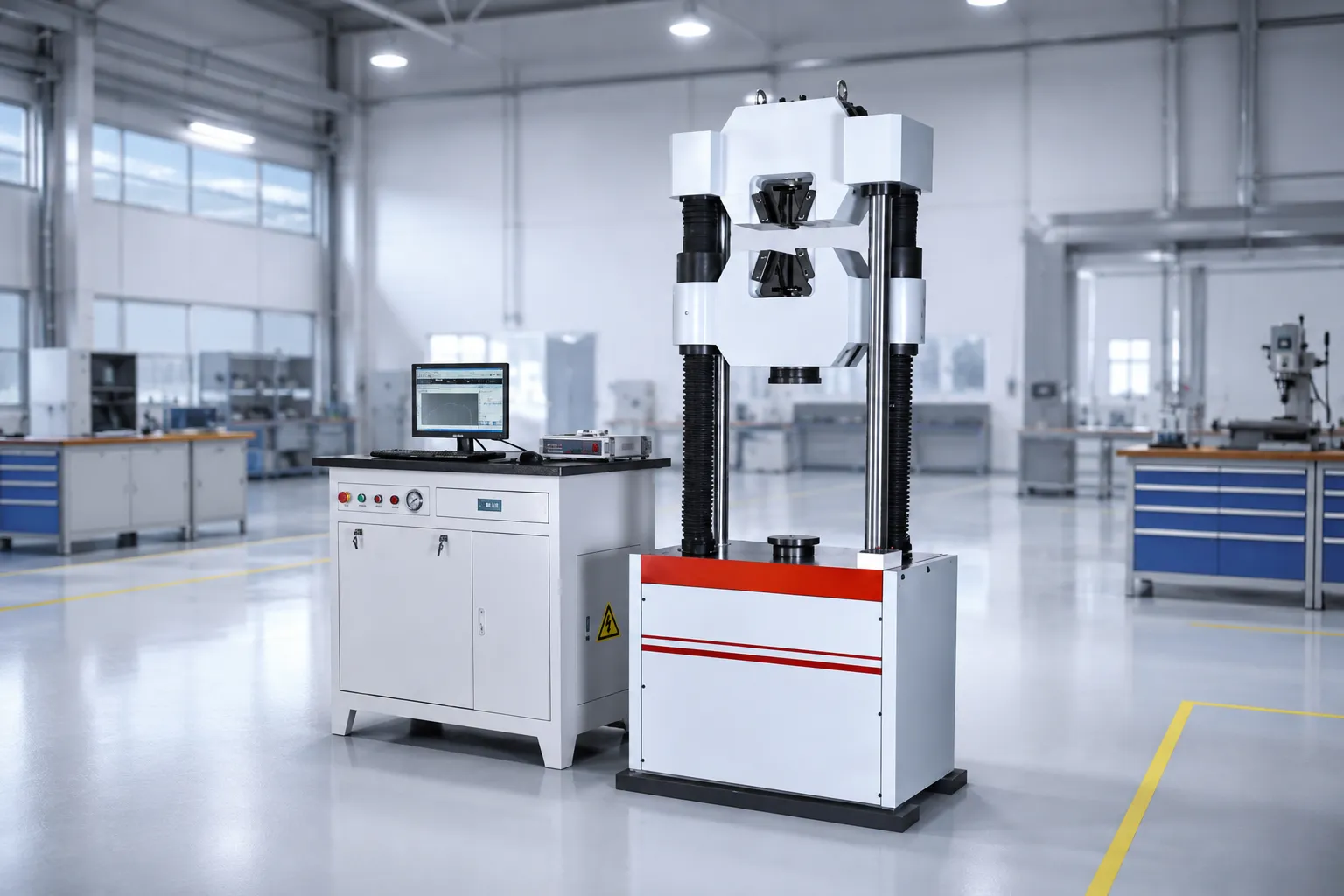
What is a tensile testing machine Used For?
A tensile testing machine is primarily used to evaluate the load-bearing capacity of materials and products when subjected to tensile force.
Depending on the machine configuration, gripping fixtures, and measurement system, the equipment can be used for various tests, including:
- Measuring the maximum tensile force of a specimen.
- Determining the tensile strength of materials.
- Evaluating the elongation and deformation of specimens.
- Determining the force at the point of specimen failure.
- Evaluating the deformation characteristics of materials under applied force.
- Comparing the quality of different test specimens.
- Inspecting the quality of incoming raw materials.
- Controlling product quality during the manufacturing process.
- Conducting research and development of new materials and products.
Using a tensile testing machine enables the evaluation process to be carried out under controlled conditions while reducing reliance on manual testing methods.
Types of tensile testing machines
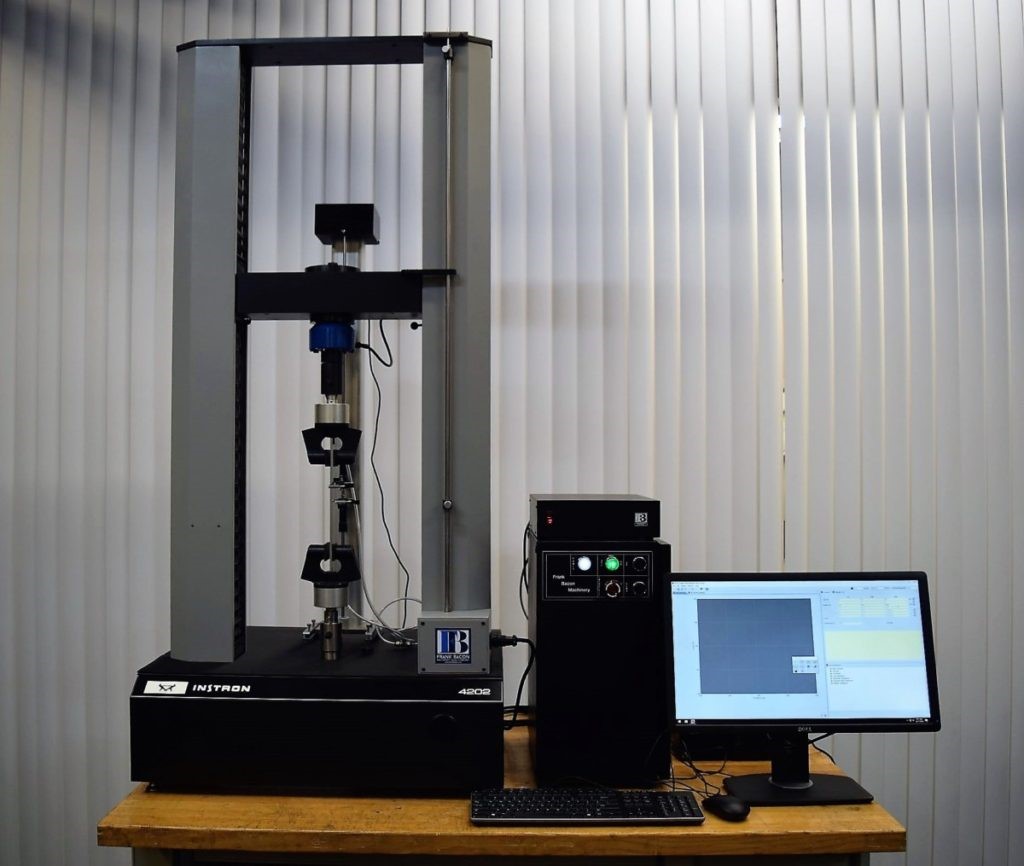
Based on the force-generating mechanism, tensile strength testing machines can generally be divided into two common types: electromechanical tensile testing machines and hydraulic tensile testing machines.
Electromechanical tensile testing machine
Electromechanical machines use a motor combined with a transmission mechanism to generate the tensile movement applied to the specimen.
The main advantage of this type of machine is its relatively flexible control of movement speed, making it suitable for tests that require precise control of displacement and testing speed.
Electromechanical machines are generally suitable for specimens requiring low to medium testing forces, depending on the specific machine design.
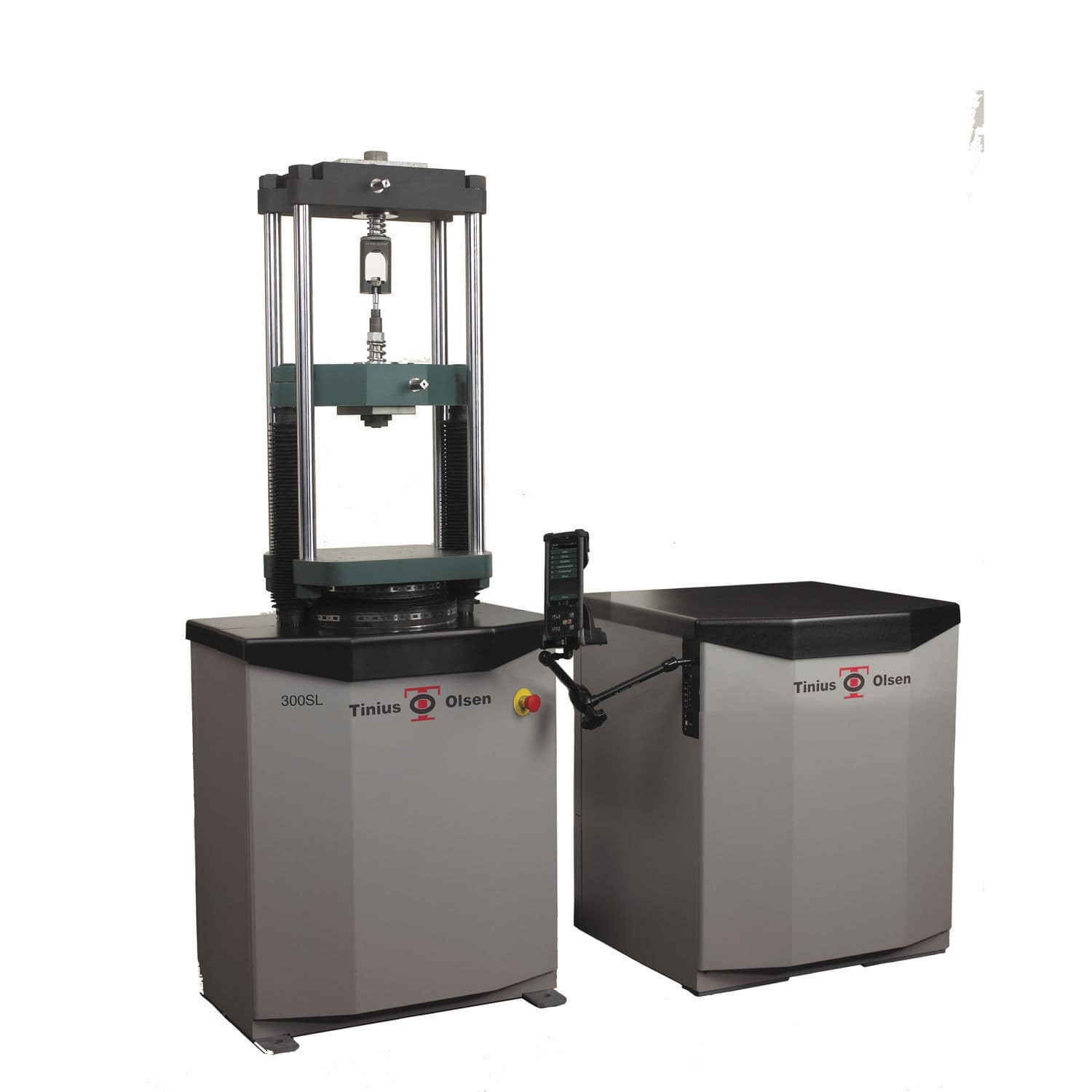
Hydraulic tensile testing machine
Hydraulic machines use a hydraulic system to generate tensile force. This configuration can meet testing requirements involving high forces and specimens with large dimensions or high load-bearing capacity.
The hydraulic system can be designed with different force capacities depending on the customer's specific requirements.
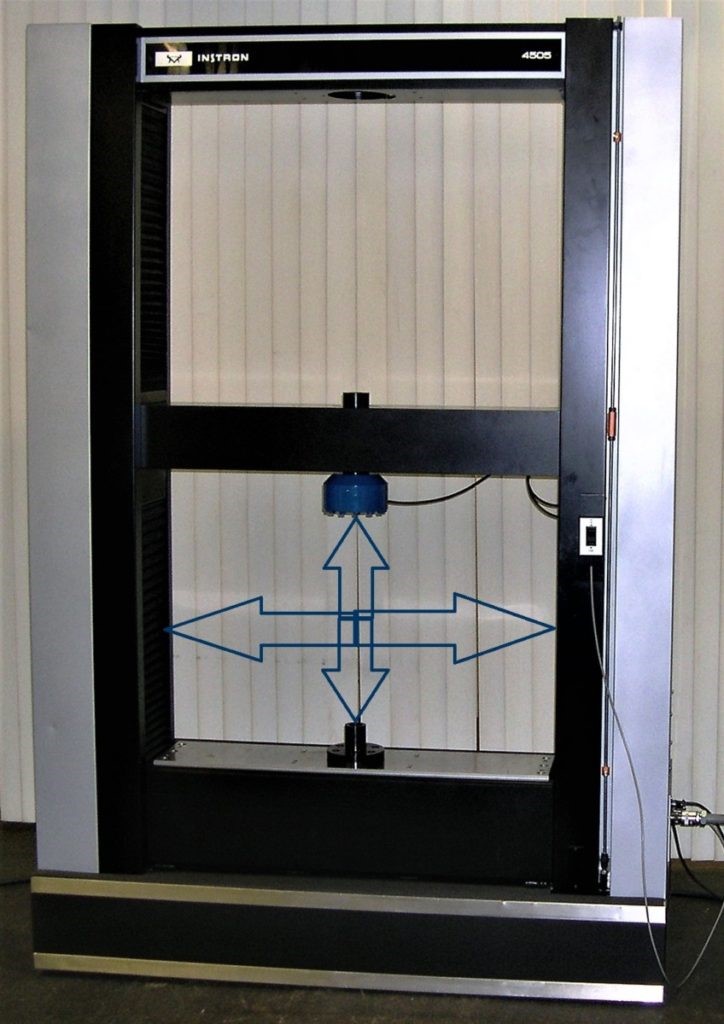
Structure of a tensile testing machine
Depending on the machine type and testing requirements, the machine structure can be customized accordingly. However, a typical tensile strength testing system generally consists of the following main components:
Machine frame
- The machine frame is the main load-bearing component, responsible for maintaining the stability of the entire system during the testing process.
- The frame must have sufficient rigidity to withstand the applied testing force and minimize unwanted vibration and deformation during force application. For machines designed for high testing forces, the frame structure is typically reinforced to ensure adequate load-bearing capacity and overall stability.
Load cell
- The load cell is responsible for measuring the force applied to the specimen during the testing process.
Specimen grips
- The grips are responsible for securely holding the test specimen in place during the force application process.
- Depending on the shape and material of the specimen, the machine can be equipped with different types of grips. Selecting the appropriate grips directly affects the stability and accuracy of the test.
Drive mechanism
- The drive mechanism generates relative movement between the two grips to apply tensile force to the specimen.
- Depending on the machine design, the drive mechanism can use an electromechanical system or a hydraulic system. The speed and stroke of the mechanism are selected based on the testing requirements.
Control system
- The control system allows operators to set testing parameters, control the tensile testing process, and monitor the machine's operating status.
- Parameters such as testing speed, stroke, and operating mode can be configured according to the equipment specifications.
Data acquisition and processing system
- Data from the load cell and other measuring devices are collected throughout the testing process.
- Software can be used to display test results, generate force–displacement graphs or related curves, and support data storage and export for further evaluation.
Operating principle of a tensile testing machine
The operating principle of the machine is relatively simple, but the testing parameters need to be precisely controlled throughout the testing process. The basic procedure consists of the following steps:
Step 1: Prepare the test specimen
The specimen is prepared according to the dimensions and shape required by the applicable testing method.
Step 2: Install the specimen in the machine
Both ends of the specimen are securely fixed in the grips. The specimen must be properly positioned and aligned to ensure that the applied force follows the required direction.
Step 3: Set the testing parameters
The operator sets the testing parameters, such as tensile speed, stroke, and other testing conditions, according to the specific requirements.
Step 4: Conduct the test
The drive mechanism begins to move and applies tensile force to the specimen. During this process, the load cell continuously records the applied force.
Step 5: Collect data
The control system records force, displacement, and other measured parameters throughout the testing process.
Step 6: Analyze the results
When the specimen reaches the required testing condition or fails, the test is completed. The collected data is then used to evaluate the mechanical properties of the specimen.
Tensile strength evaluation parameters
Depending on the machine configuration, testing method, and measurement system, a tensile strength testing machine can be used to evaluate various parameters.
- Maximum tensile force: The maximum force that the specimen can withstand during the test before the force decreases or the specimen fails.
- Tensile strength: Indicates the material's ability to withstand tensile stress. This value is generally determined based on the applied force and the original cross-sectional area of the specimen according to the applicable testing method.
- Elongation: Indicates the change in the length of the specimen when subjected to tensile force.
- Deformation: Force and displacement data can be used to evaluate the deformation behavior of the material throughout the test.
- Force at break: For specimens that fail during testing, the system can record the force at the moment of fracture, depending on the measurement configuration and software.
Note: The measurable parameters and the methods used to calculate the results depend on the machine configuration, measuring equipment, grips, testing method, and applicable standards.
Applications of tensile testing machines in manufacturing and quality control
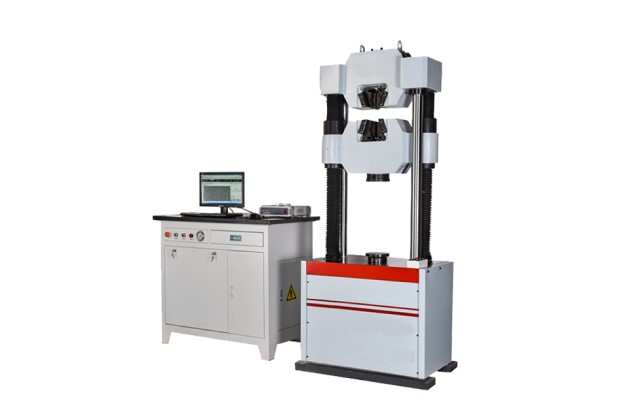
Tensile strength testing machines are used in various stages of the manufacturing and quality control processes.
For incoming raw material inspection, the equipment helps businesses evaluate the mechanical properties of materials before they are introduced into production.
For product quality control, the machine can be used to test samples from individual production batches, helping identify changes in product quality or consistency.
In product research and development, test data enables engineers and technicians to evaluate material properties, compare different design options, and select suitable materials for specific applications.
In addition, the equipment can be integrated into automated quality inspection processes according to the requirements of the production line.
Tensile testing machine plays an important role in evaluating the load-bearing capacity and mechanical properties of materials, providing businesses with more accurate data for quality control processes. Through a controlled force application process, the equipment can record and analyze parameters such as tensile force, elongation, deformation, and specimen failure conditions. Test results help businesses inspect the quality of incoming raw materials, evaluate products after processing, and identify abnormal changes between production batches. Depending on specific requirements, businesses can choose electromechanical or hydraulic testing machines with suitable force ranges, stroke lengths, testing speeds, and gripping fixtures. Selecting the right machine configuration not only improves the reliability of test results but also optimizes operational efficiency in QC departments, laboratories, and production lines. CNC VINA is capable of designing and manufacturing tensile strength testing machines according to specific requirements for materials, products, testing forces, test methods, and actual operating procedures. This solution is suitable for businesses looking for specialized testing equipment with high customization capabilities that can meet quality control requirements in manufacturing processes.
Customers who need a Tensile Testing Machine please contact:
VIETNAM CNC & TECHNOLOGY APPLICATION JOINT STOCK COMPANY
Factory: Song Cung Industrial Site, Dong Thap Commune, Dan Phuong District, City. Hanoi Vietnam
Phone: +84.916 63 9355 / +84.915 74 4664
Website: www.cncvina.com.vn ; www.cncvina.net
Email: Sales01@cncvina.com.vn / Sales03@cncvina.com.vn