 Tiếng
Việt
Tiếng
Việt
 Tiếng
Anh
Tiếng
Anh
 Tiếng
Nhật
Tiếng
Nhật




 Tiếng Anh

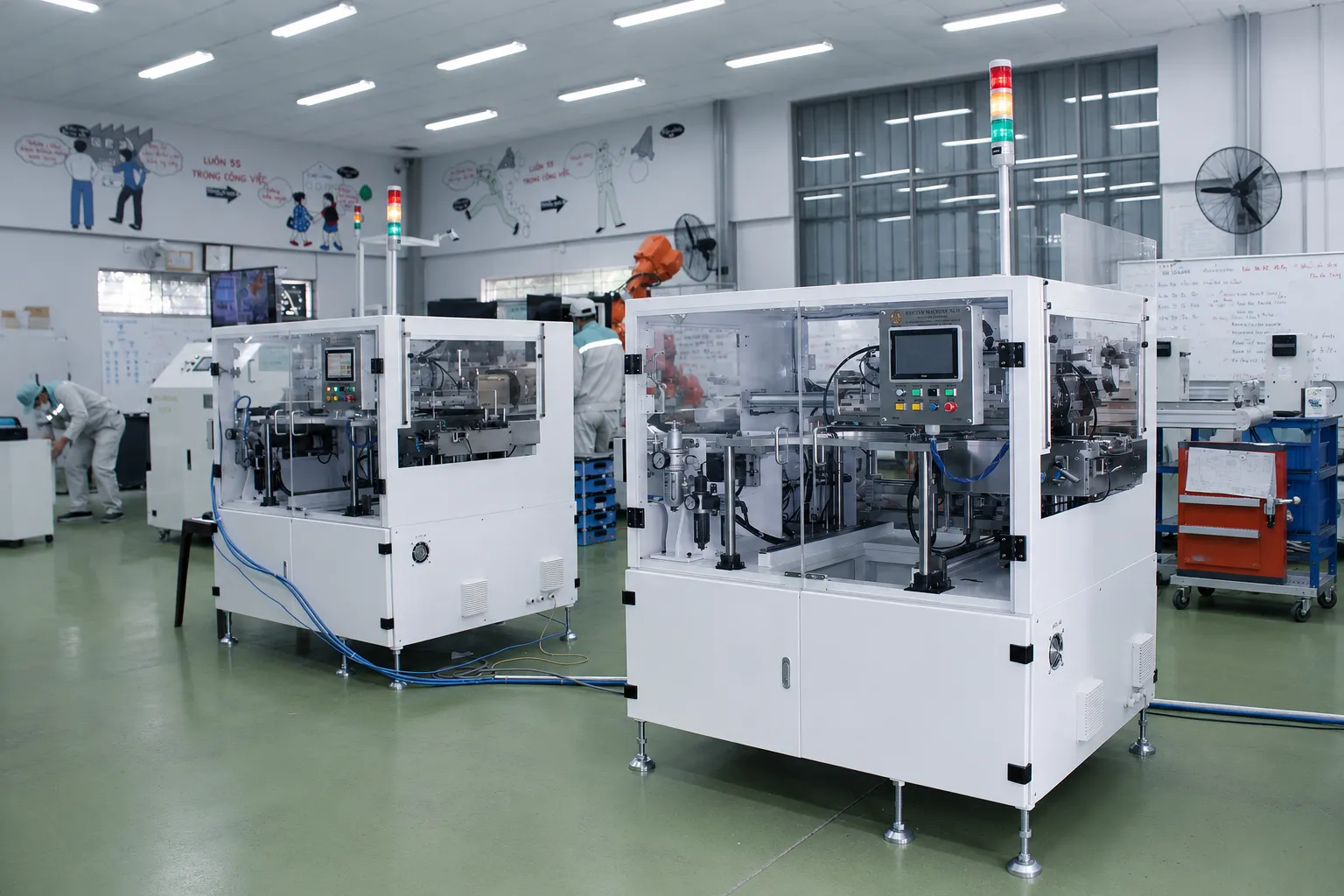
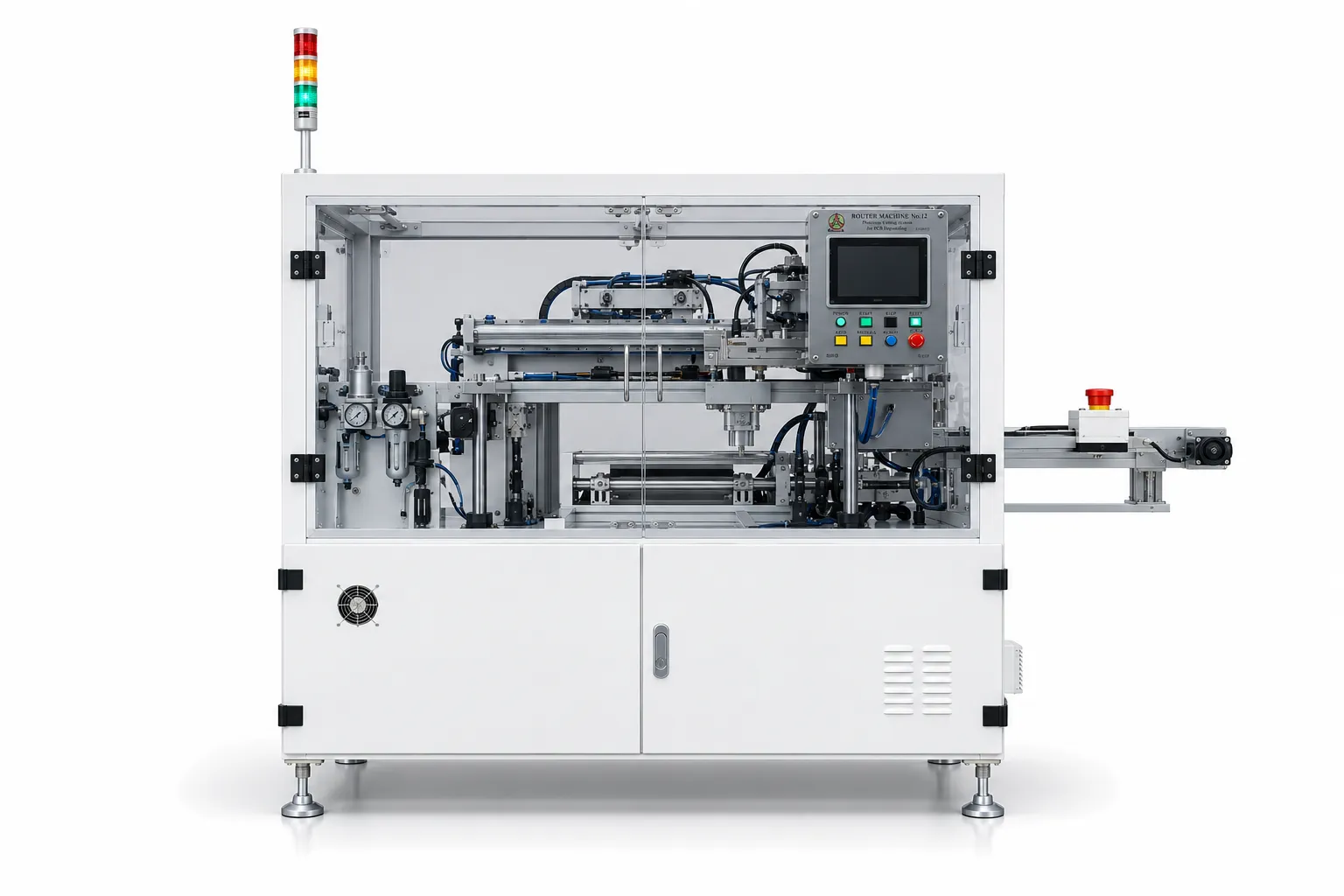
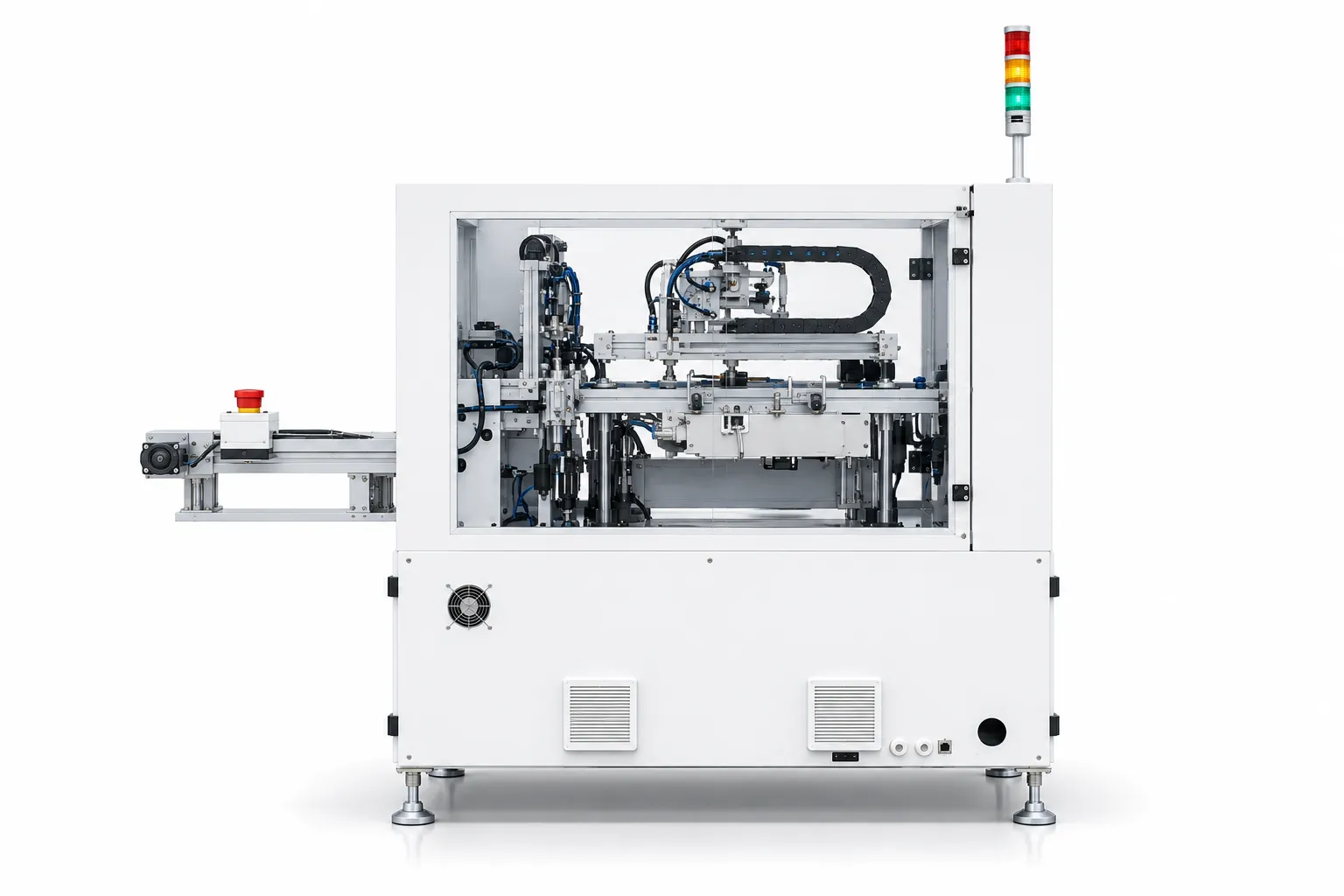
Circuit board cutting machine
VIETNAM CNC & TECHNOLOGY APPLICATION JOINT STOCK COMPANY
Hotline: +84.916 63 9355 / +84.915 74 4664
Email: Sales01@cncvina.com.vn / Sales03@cncvina.com.vn
Product description

Introduction to the Circuit Board Cutting Machine
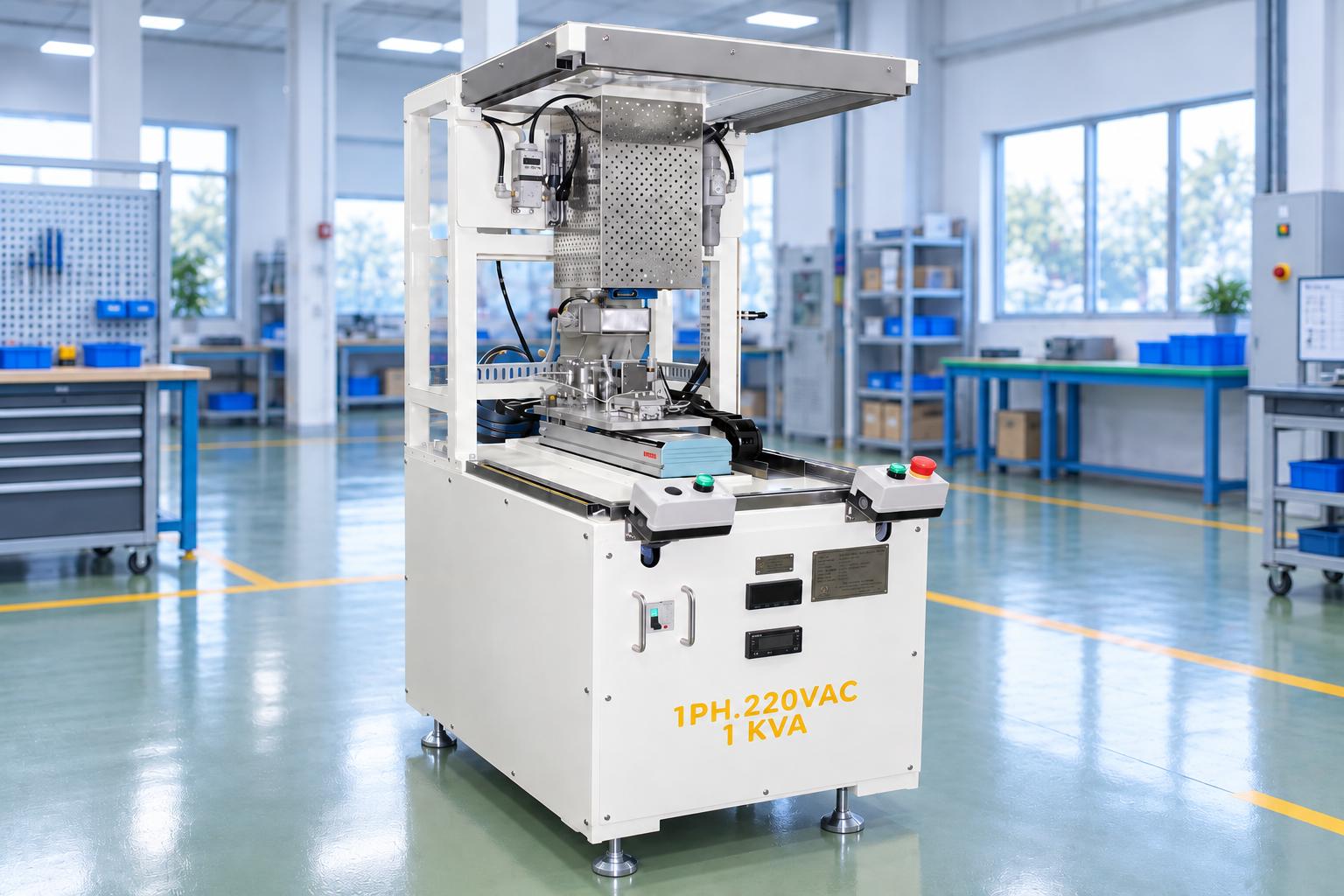
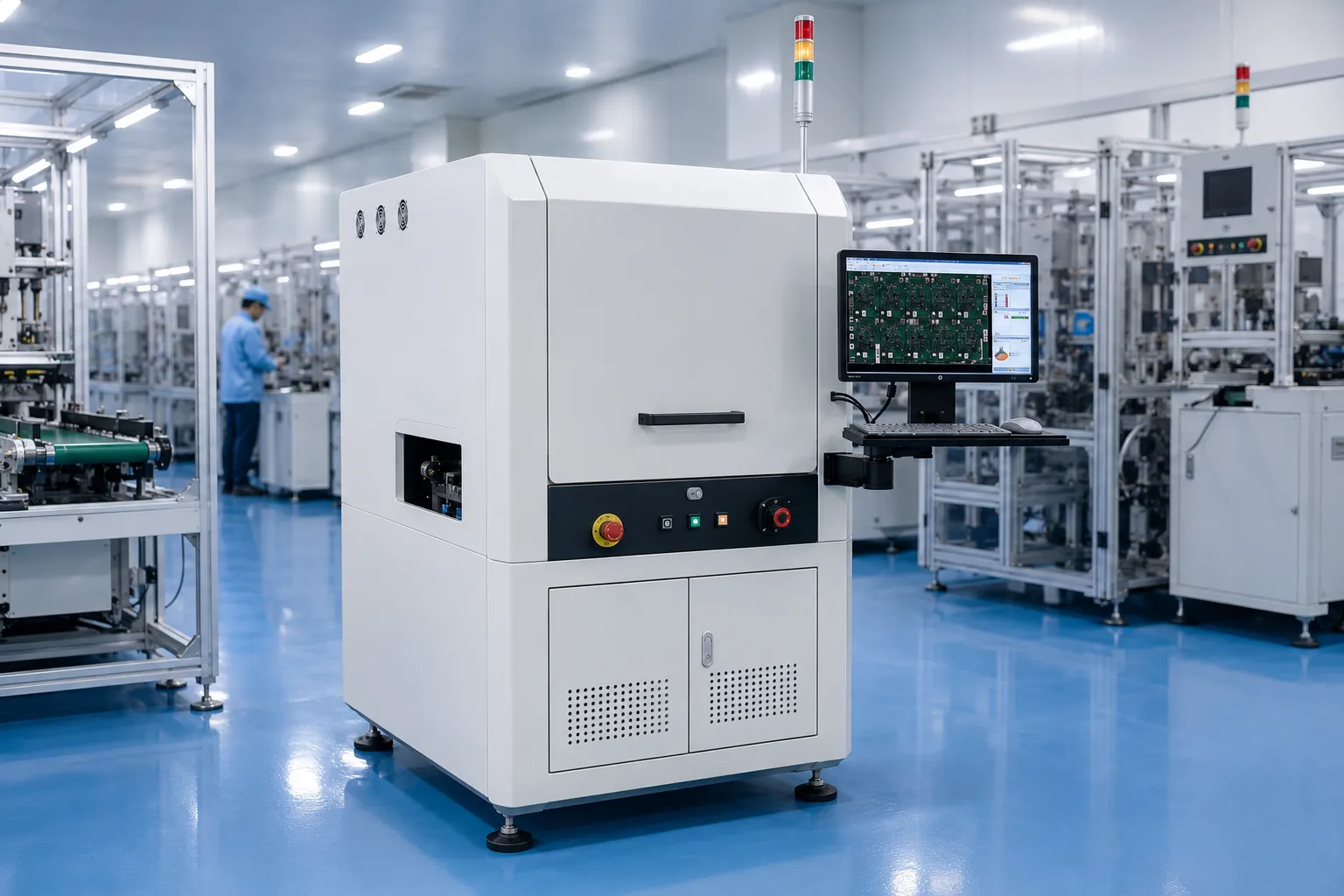
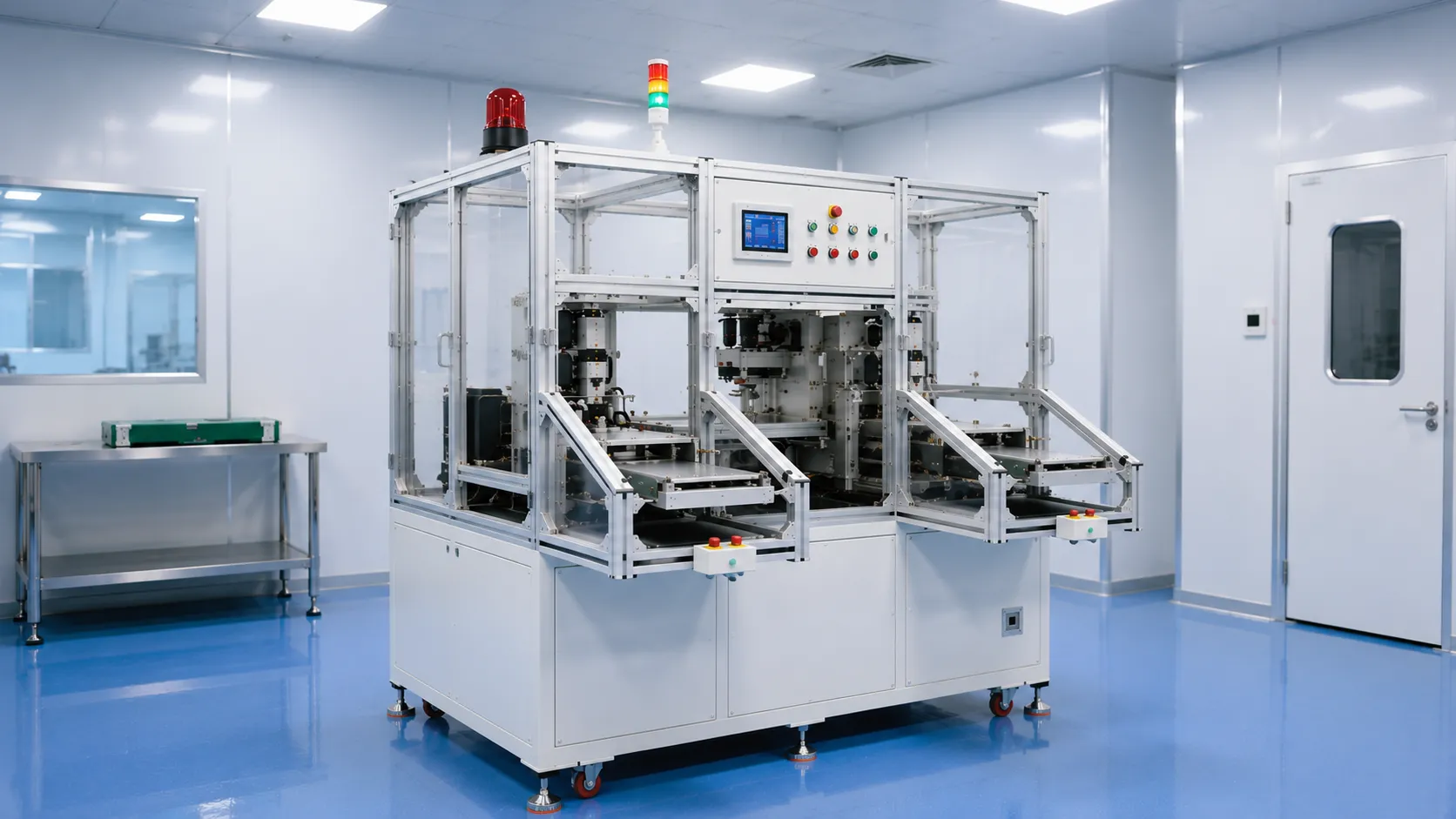
Circuit Board Cutting Machine is specialized equipment designed to cut and separate individual PCB boards from a panel after the machining, assembly, or soldering processes have been completed. Instead of relying on manual cutting operations, the machine uses an automatically controlled routing spindle that follows a pre-programmed cutting path, combined with a PCB positioning and clamping system to ensure stable and precise cutting.
In electronic manufacturing lines, the cutting and separation process requires a combination of precision, speed, and repeatability. The cutting path must accurately follow the designed profile while minimizing mechanical stress and potential impact on the PCB and assembled components. Therefore, automating this process enables manufacturers to achieve better control over product quality while reducing dependence on manual operator handling. The Circuit Board Cutting Machine designed and manufactured by CNC VINA is developed according to the specific requirements of each PCB model. The machine can be configured for Inline production lines and integrated with material loading units, transfer mechanisms, dedicated fixtures, cutting tools, dust extraction systems, and automatic control systems.
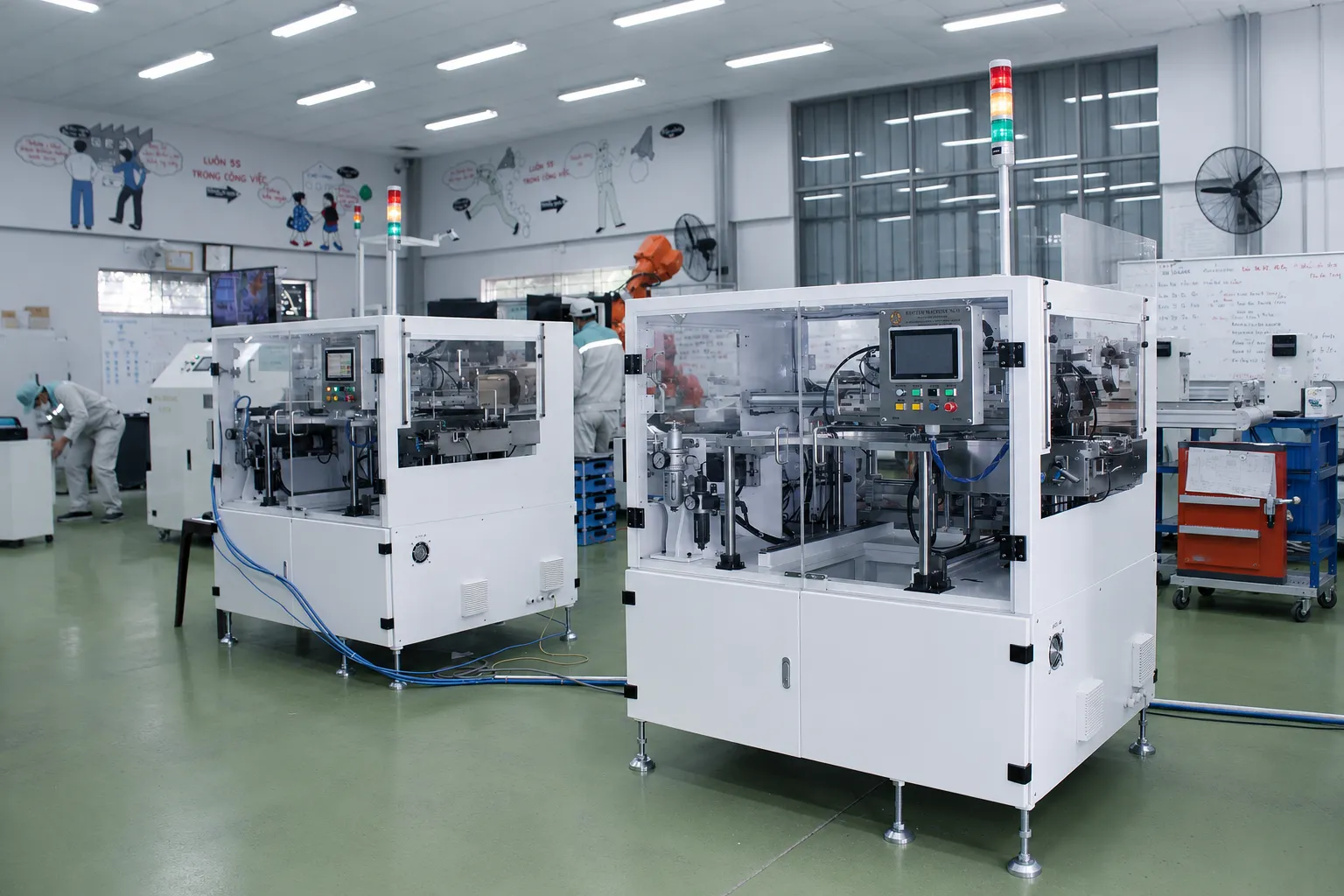
How does the Circuit Board Cutting Machine work?
During the PCB manufacturing process, multiple individual boards are often arranged in a panel and connected to each other. Once the required production processes have been completed, the individual boards need to be separated from the panel along predefined cutting paths.
The CNC VINA Circuit Board Cutting Machine performs this process using a cutting tool mounted on a spindle. The PCB is loaded into the machine, transferred to the fixture, and securely held in position before the cutting operation begins. The cutting tool then rotates at the preset speed and moves along the programmed cutting path to separate the individual PCB sections. For each product model, parameters such as spindle speed and tool path are preset in the control system. As a result, when switching to a specific product model, the machine can execute the corresponding program repeatedly with a higher level of consistency and stability compared with manual cutting operations.
Main components of the CNC VINA Circuit Board Cutting Machine
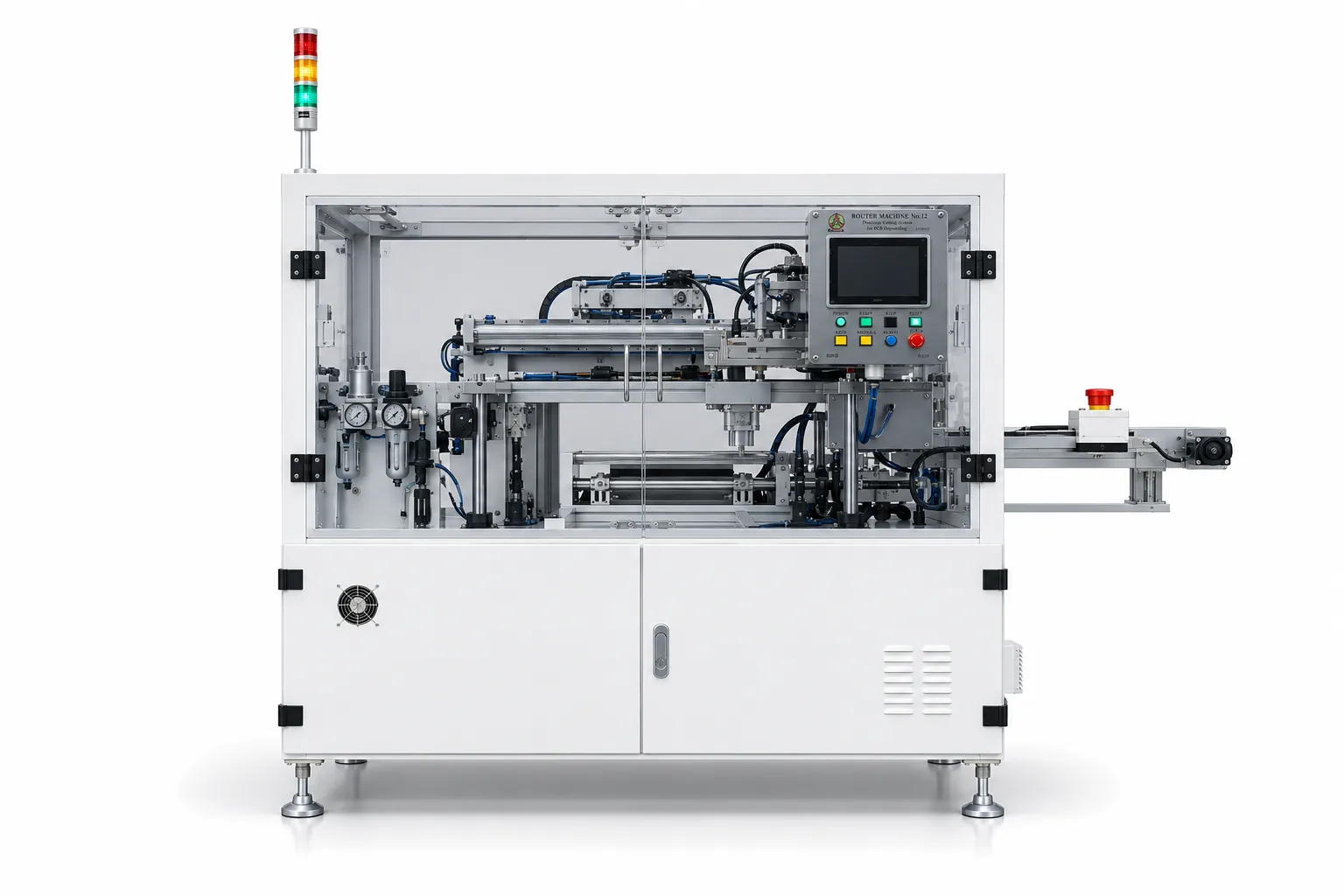
HMI and PLC Control System
The control system allows operators to select the product model, configure cutting parameters, and monitor the machine's operating status. Cutting programs can be configured separately for each PCB model, including the tool path and spindle speed. Saving and managing programs by product model minimizes the need for repeated manual setup during production and makes it more convenient to switch between different PCB models.
Input unit
The Input Unit is responsible for receiving PCBs before they are transferred to the machining area. Depending on the machine configuration, PCBs can be supplied in stacked form or through a conveyor system. Automating the input process reduces the need for operators to manually load individual PCBs and supports continuous operation of the cutting process within the production line.
Transfer unit
The Transfer Unit is responsible for picking up and moving PCBs from the Input area to the cutting JIG. The mechanism works in combination with a vacuum system to securely hold the PCB during transfer and accurately position it before the machining process begins.
PCB positioning JIG
The JIG directly supports and positions the PCB during the cutting process. A properly designed JIG keeps the board securely in place and minimizes movement when the cutting tool engages with the material.
The JIG is also designed according to the requirements of each product model. When changing to a different PCB type, the JIG can be replaced or adjusted to match the dimensions and cutting path of the new product.
Cutting tool and Spindle unit
The cutting unit uses a milling cutter combined with a spindle to perform the PCB separation process. The spindle provides rotational motion to the cutting tool, while the motion control system guides the tool along the programmed cutting path.
The CNC VINA Circuit Board Cutting Machine is designed with two spindle heads, positioned underneath the product area to perform the cutting process according to the machine configuration. The selection of cutting tools and cutting parameters should be determined based on the PCB material, board thickness, and actual cutting profile.
Dust Extraction System
The PCB routing process generates dust and material particles around the cutting area. The machine is equipped with a dust extraction unit to collect particles generated during machining. Effective dust control helps minimize dust accumulation inside the machine, maintain a cleaner machining environment, and improve working conditions for operators.
Automatic PCB cutting process
The CNC VINA Circuit Board Cutting Machine performs the cutting cycle automatically through three main stages.
First, the PCB is received by the Input Unit and picked up by the Transfer Unit before being placed into the JIG. The PCB is then accurately positioned and securely held in place by the vacuum mechanism before the cutting process begins.
Next, the spindles rotate while the cutting tools move along the programmed cutting paths. Depending on the panel design, the machine performs the required cutting paths to separate the individual PCBs from the panel. During this process, the dust extraction system operates simultaneously to collect the dust and particles generated during cutting.
After the cutting paths are completed, the PCB is picked up by the vacuum mechanism and transferred from the machining area to the Output system for the next production process. The entire loading, cutting, and unloading sequence is automated, minimizing direct operator intervention and supporting a stable, efficient production workflow.
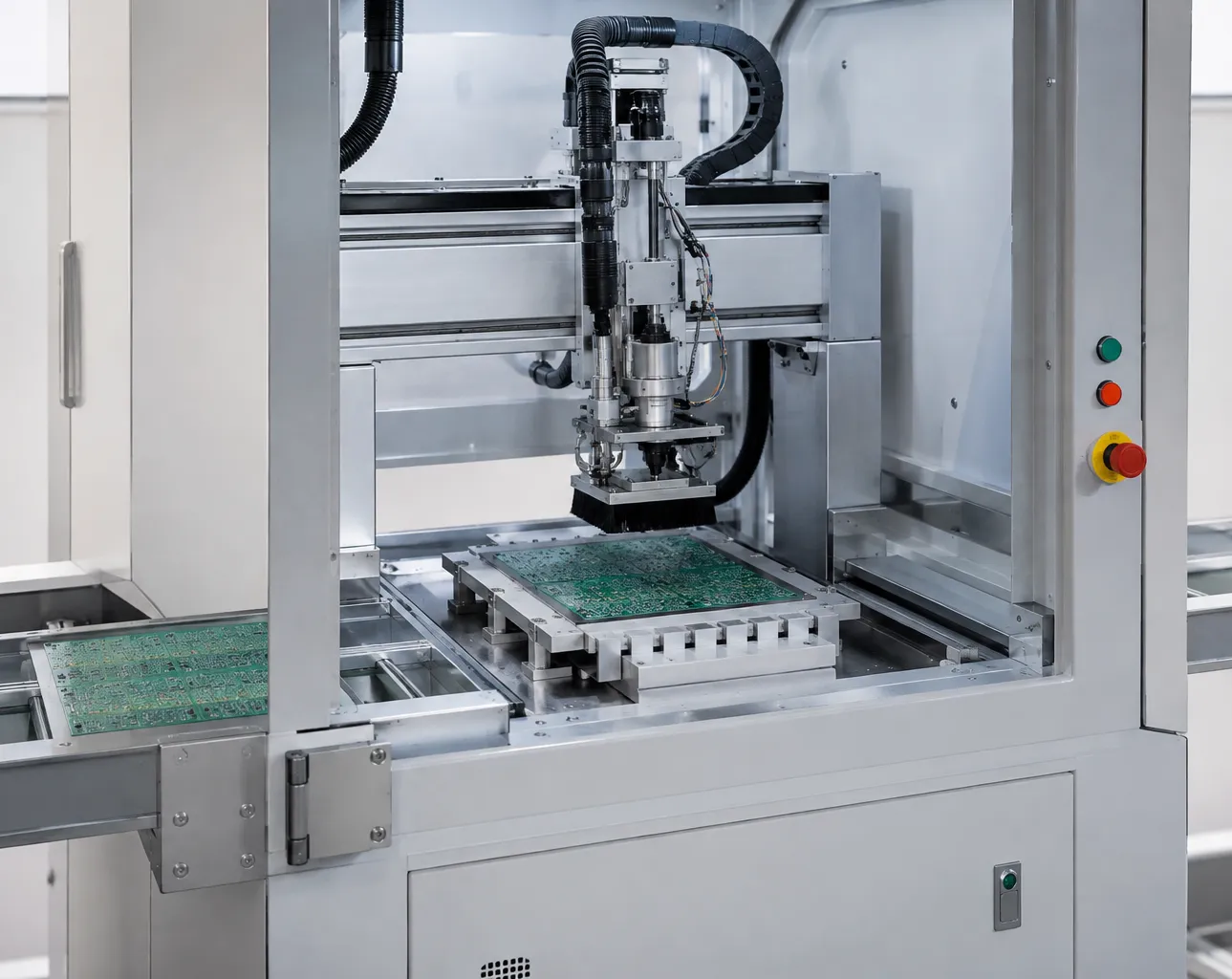
Key features of the CNC VINA Circuit Board Cutting Machine
Fully automated PCB cutting and separation
The machine can continuously perform PCB loading, positioning, cutting, and unloading. Operators primarily configure the cutting program, monitor machine operation, and respond to alarms when necessary.
This reduces repetitive manual operations and is particularly suitable for production lines with high PCB volumes and requirements for stable production cycles.
High-Precision programmed cutting
The cutting path is pre-programmed according to each PCB model, allowing the cutting unit to follow the required trajectory accurately. Based on the current design specifications, the machine can achieve a cutting accuracy of approximately ±0.1 mm. Actual cutting accuracy may vary depending on the PCB characteristics, JIG, cutting tool, and operating conditions.
Short cycle time
According to the reference configuration, the cutting cycle time is approximately 22 seconds per panel containing 6 products. This enables the machine to meet the requirements of continuous production. However, the actual cycle time may vary depending on PCB dimensions, the number of cutting paths, and the machining program.
Flexible PCB model changeover
One of the notable features of the machine is its ability to process multiple PCB models by changing the corresponding JIG and cutting program. When switching to a different product, manufacturers can use a suitable fixture instead of investing in an entirely new system. This is particularly beneficial for factories handling multiple PCB models and requiring flexibility in production planning.
Automatic PCB loading and unloading system
Two conveyor systems at the Input and Output areas automatically transfer PCBs into and out of the machine. The Transfer Unit, combined with a vacuum mechanism, moves PCBs to the cutting position and retrieves the products after the cutting process is completed. This enables the machine to connect with other processes in the production line while reducing intermediate handling time.
Dust extraction during machining
An integrated dust extraction system is designed to control dust generated during the PCB routing process. This is an essential feature for milling-type cutting machines, helping maintain a cleaner environment inside the machine while minimizing dust dispersion into the surrounding work area.
Benefits of Using an Automatic Circuit Board Cutting Machine
Integrating an automatic Circuit Board Cutting Machine into the production line significantly reduces manual operations during the PCB separation process. When PCBs are automatically loaded, positioned, and cut according to programmed parameters, the production process achieves higher repeatability and becomes less dependent on individual operator skills. The cutting accuracy and controlled tool path also help minimize deviations that may occur during manual cutting. For products requiring precise cutting positions, the combination of a dedicated JIG and programmed machining process provides better control over the cutting operation.
In addition, the automatic PCB loading and unloading systems reduce handling time between cycles, thereby improving overall production line productivity. The machine also shifts operators' responsibilities from direct cutting operations to equipment operation, monitoring, and quality inspection. Furthermore, the integrated dust extraction system collects dust generated during the routing process directly at the machining area, helping improve working conditions and reducing dust accumulation inside the machine.
Applications of the Circuit Board Cutting Machine
The CNC VINA Circuit Board Cutting Machine is used in electronic equipment manufacturing and assembly lines to separate individual PCBs from panels after machining and component assembly processes. This is an important process for products manufactured in panel form, where multiple circuit boards are connected together to facilitate solder paste printing, component placement, soldering, and inspection.
After these processes are completed, the individual PCBs need to be separated along their predefined cutting profiles without affecting the components, copper traces, or structural integrity of the boards.
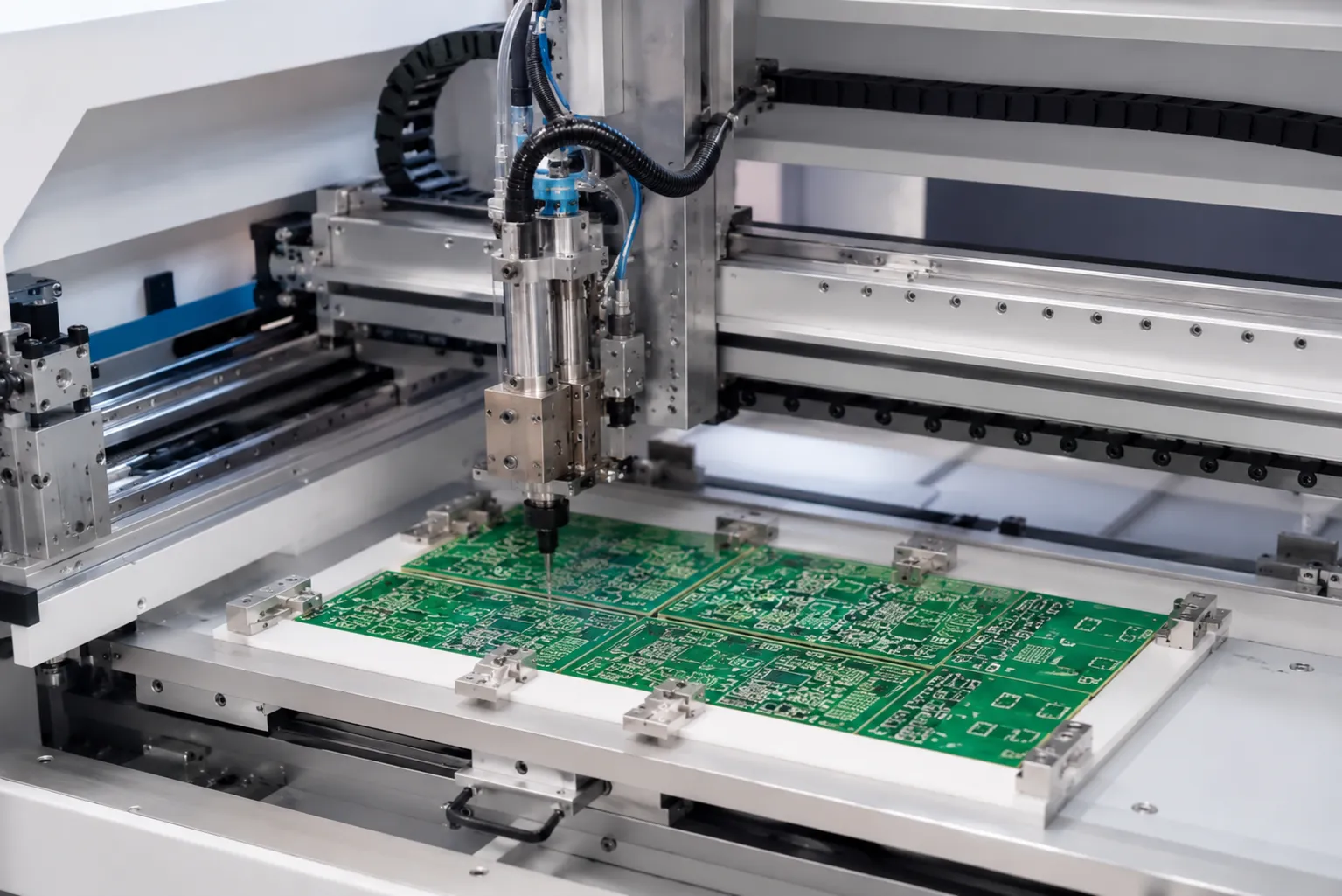
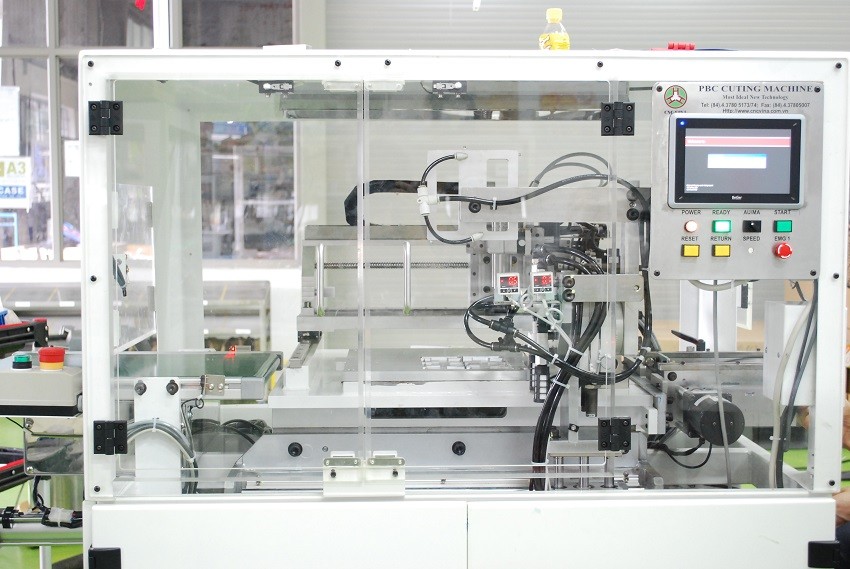
Automatic circuit board cutting machine specializes in designing and creating CNC VINA modes
Outstanding Features of CNC VINA Circuit Board Cutting Machine
Fully Automated PCB Depaneling Process
The Circuit Board Cutting Machine from CNC VINA automates the entire PCB depaneling process, including PCB feeding, positioning, cutting, and product transfer. The Input and Output conveyor systems work together with the Transfer mechanism to move PCBs through the machine with minimal manual intervention. Once the cutting program is selected, the machine performs each cycle according to the preset parameters and cutting path. This automated process helps reduce repetitive manual operations and maintain a consistent production cycle, making the machine suitable for continuous and high-volume PCB manufacturing.
High-Precision cutting based on programmable tool Paths
The machine uses a spindle-driven milling cutter to separate individual PCBs from the panel according to a programmed cutting path. Cutting parameters such as spindle speed and tool movement can be configured for each PCB model through the control system. With the cutting path controlled by coordinates, the machine can follow the designed separation line more consistently than manual cutting methods. According to the current machine configuration, cutting accuracy can reach approximately ±0.1 mm, while actual accuracy depends on the PCB structure, JIG, cutting tool and operating conditions.
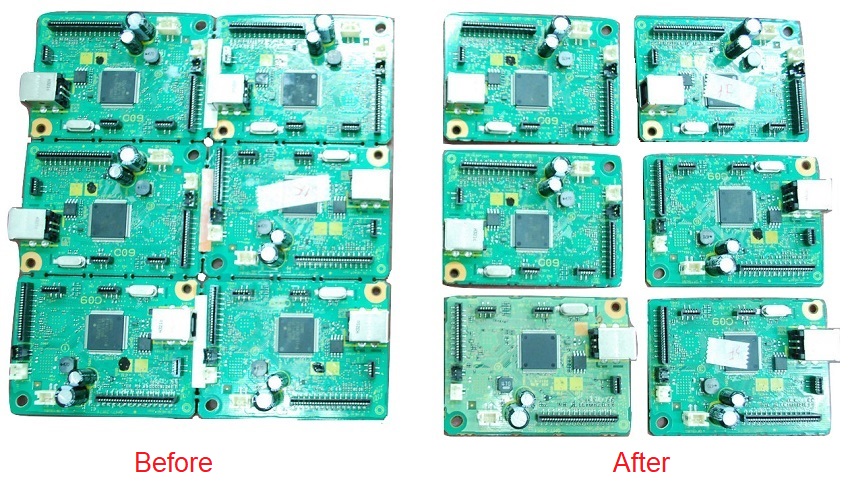
Dual-Spindle cutting configuration
CNC VINA's machine is equipped with two spindle heads, with the cutting tools positioned below the product area according to the machine configuration. The spindle provides high-speed rotational movement for the milling cutters, while the motion system controls the cutting trajectory based on the programmed coordinates. This configuration enables the machine to perform PCB depaneling according to the specific cutting requirements of each product and supports stable processing in automated production environments.
Short and stable cycle time
With the reference configuration, the machine can complete one cutting cycle in approximately 22 seconds for a panel containing six products. The actual cycle time may vary depending on PCB dimensions, the number and length of cutting paths, product configuration and processing parameters. By automating PCB loading, cutting and unloading, the machine minimizes unnecessary handling time between cycles and supports a stable production rhythm for high-volume manufacturing.
Flexible for Different PCB Models
PCB products can vary significantly in size, shape, panel configuration and cutting path. CNC VINA therefore designs the cutting system according to the requirements of each PCB model. The cutting program can be configured for different products, while the JIG can be replaced or customized to match the dimensions and positioning requirements of each PCB. This allows manufacturers to use the same machine platform for multiple PCB models without requiring a completely separate system for every product.
Automatic PCB Loading and Unloading
The machine integrates automatic Input and Output conveyor systems to transfer PCBs into and out of the cutting area. The Transfer mechanism uses a vacuum gripping system to pick up and position the PCB accurately before processing and transfer the finished product after cutting. This configuration reduces direct operator handling and makes it easier to connect the machine with upstream and downstream equipment in an automated PCB production line.
Integrated dust collection system
PCB milling generates dust and fine particles during the cutting process. CNC VINA integrates a dust collection system into the cutting area to capture particles generated during machining. By collecting dust directly at the processing area, the system helps reduce dust accumulation inside the equipment, maintain a cleaner working environment and support more convenient machine maintenance.
Designed for Inline Production Integration
The Circuit Board Cutting Machine can be configured as part of an Inline production system rather than operating as a standalone machine. Its Input, Transfer and Output mechanisms can be designed according to the layout and requirements of the customer's existing production line. Depending on the production process, the machine can be integrated with conveyors and other automated equipment to create a continuous PCB handling and depaneling process. This makes the system suitable for manufacturers looking to increase automation while maintaining compatibility with their existing production infrastructure.
The Automatic PCB Circuit Board Cutting Machine manufactured by CNC VINA provides an automated solution for the PCB separation process, integrating positioning mechanisms, spindle-driven milling cutters, automatic loading and unloading systems, and dust extraction into a unified process. Programmed tool-path control for each PCB model enables the machine to meet requirements for cutting accuracy, repeatability, and production efficiency in electronic manufacturing. The key value of the equipment lies not only in cutting speed, but also in its ability to configure the JIG, machining program, and overall machine architecture according to each PCB type. This allows manufacturers to implement a solution that is properly matched to their actual products and production lines. CNC VINA provides customized design and manufacturing of automatic Circuit Board Cutting Machines, covering PCB loading, positioning, cutting, dust extraction, and production-line integration. Companies looking to automate their PCB cutting and separation processes can contact CNC VINA for product assessment and a machine configuration tailored to their specific production requirements.
Please contact us to visit Made in Vietnam automatic machines at the factory:
VIETNAM CNC & TECHNOLOGY APPLICATION JOINT STOCK COMPANY
Factory: Song Cung Industrial Park, Dan Phuong Commune, Hanoi City.
Northern Office: Rox Center Ho Tung Mau building (Rox Tower Goldmark City), 136 Ho Tung Mau Street, Bac Tu Liem District, Hanoi.
Southern Office: Lot H9, Tran Quoc Toan Street, Phu Chanh Ward, Thu Dau Mot City, Binh Duong.
Phone:+84.916 63 9355 / +84.915 74 4664
Email: Sales01@cncvina.com.vn / Sales03@cncvina.com.vn
Website: www.cncvina.com.vn ; www.cncvina.net