 Tiếng
Việt
Tiếng
Việt
 Tiếng
Anh
Tiếng
Anh
 Tiếng
Nhật
Tiếng
Nhật




 Tiếng Anh

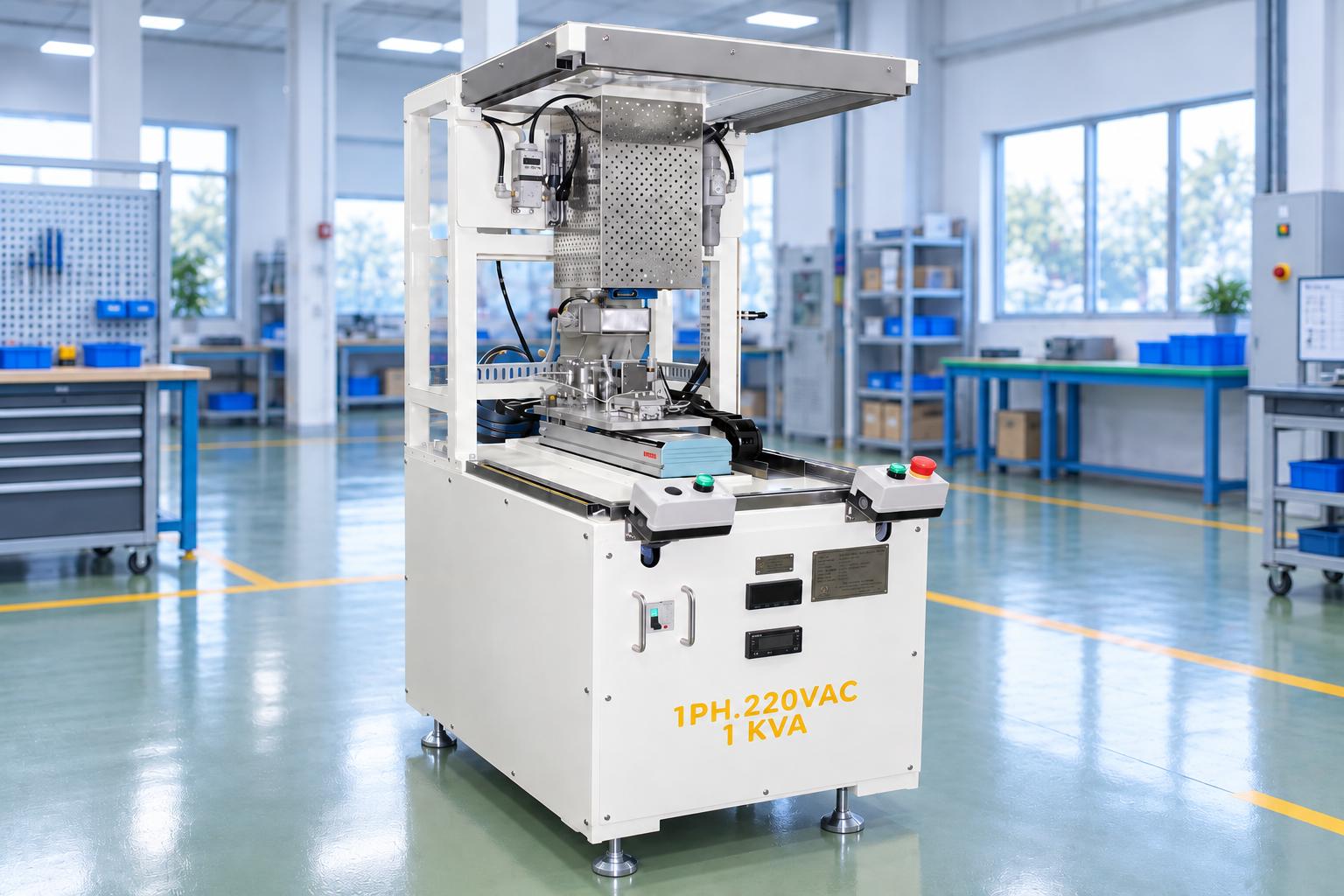
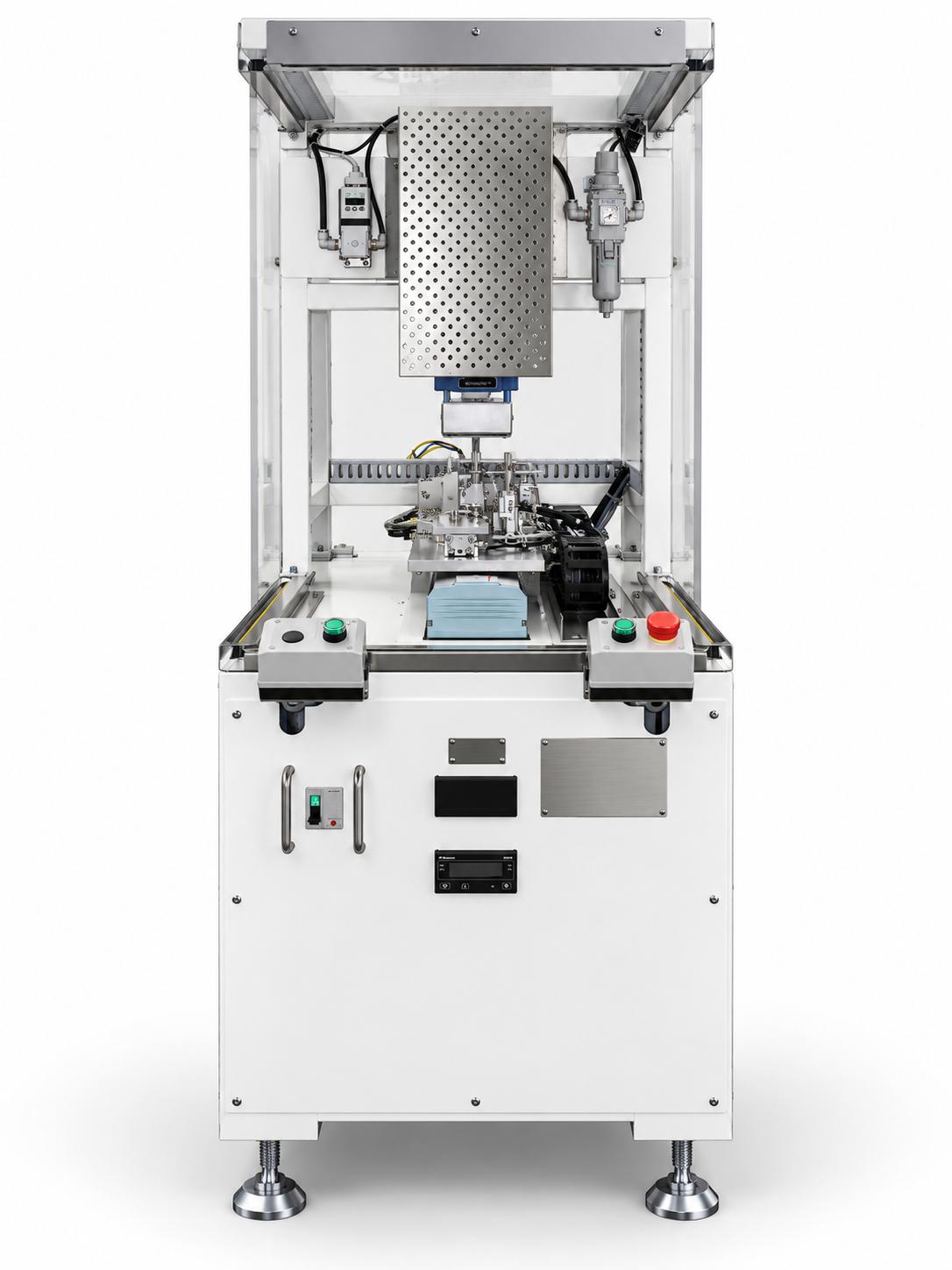
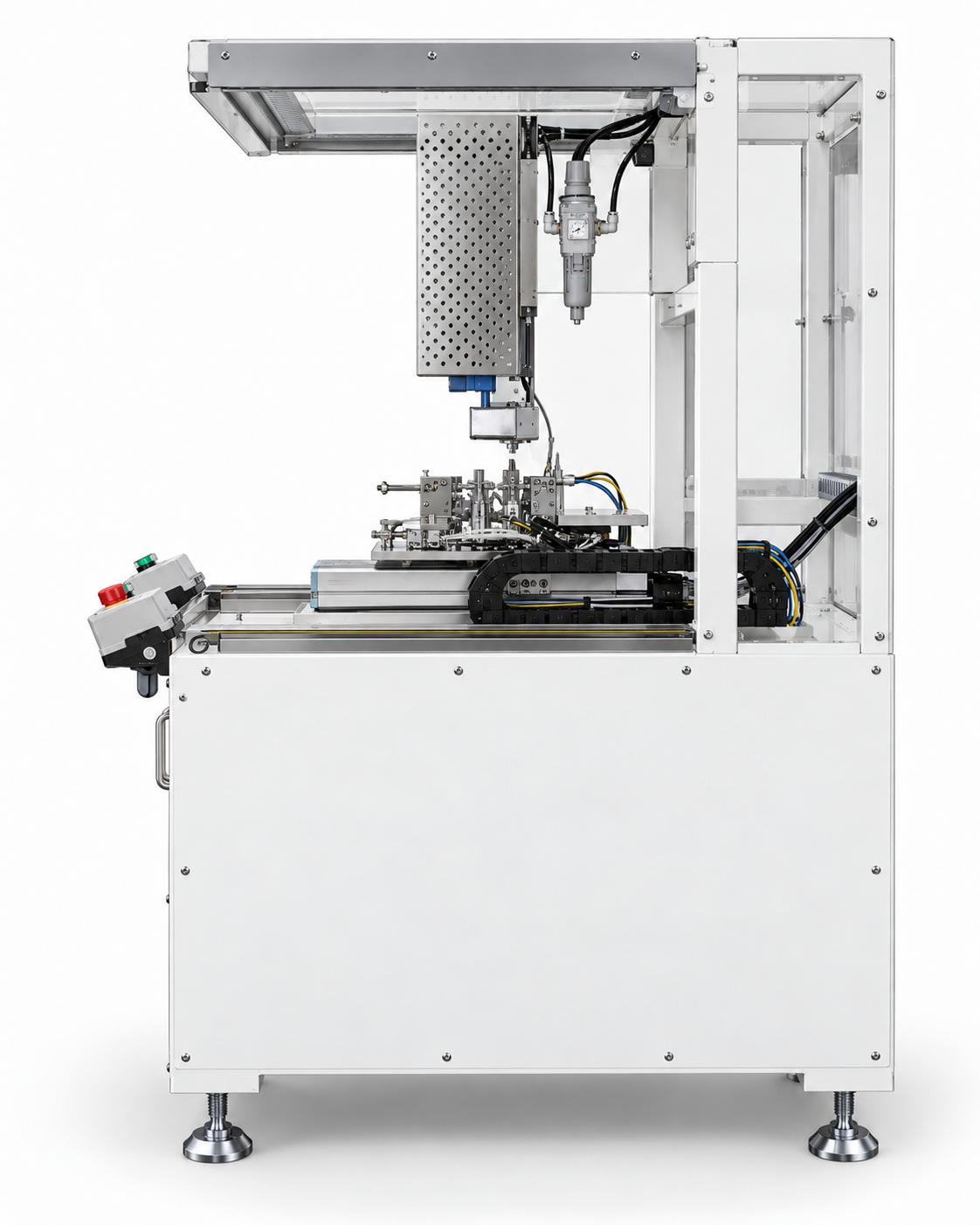
Hot melt adhesive dispensing machine
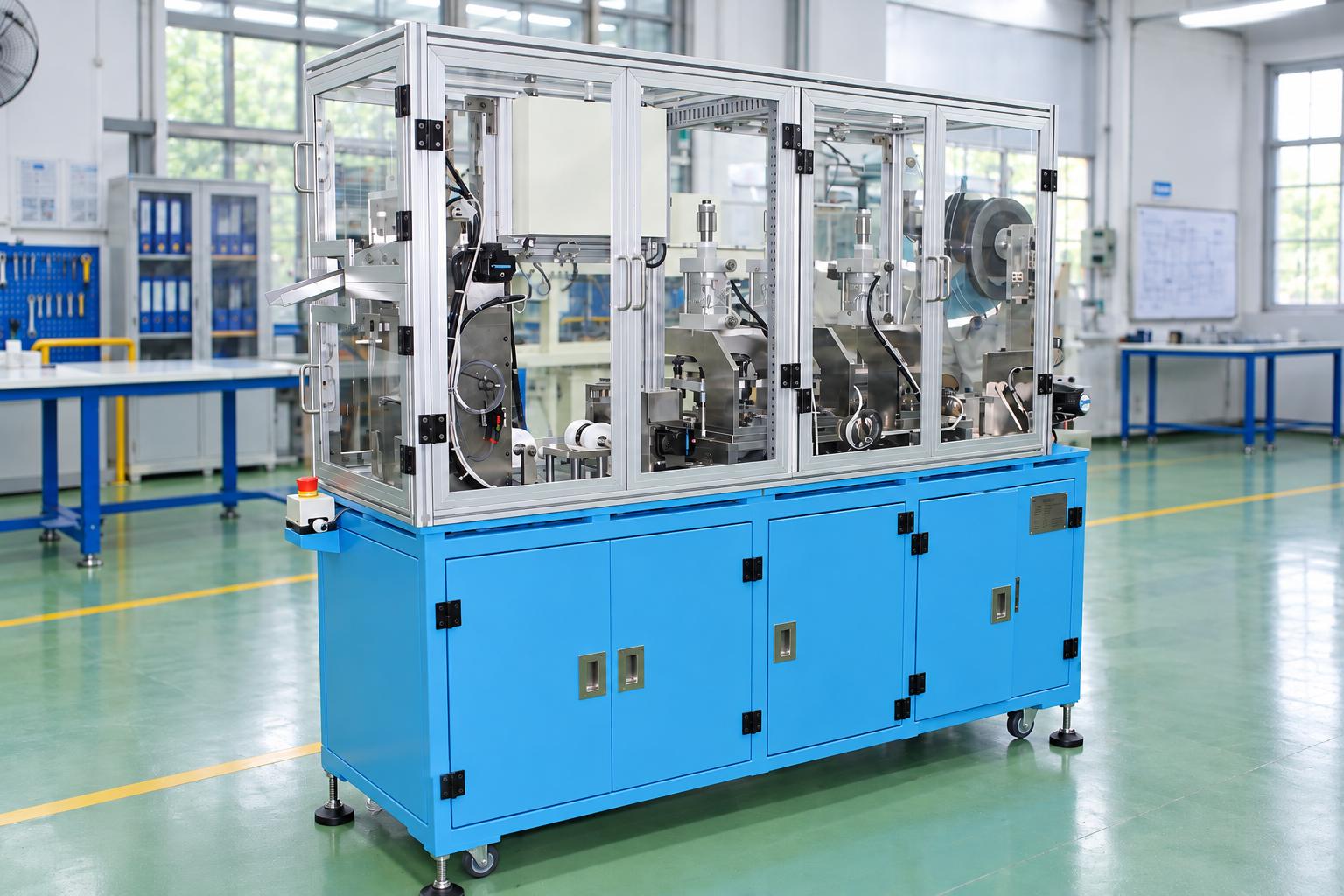
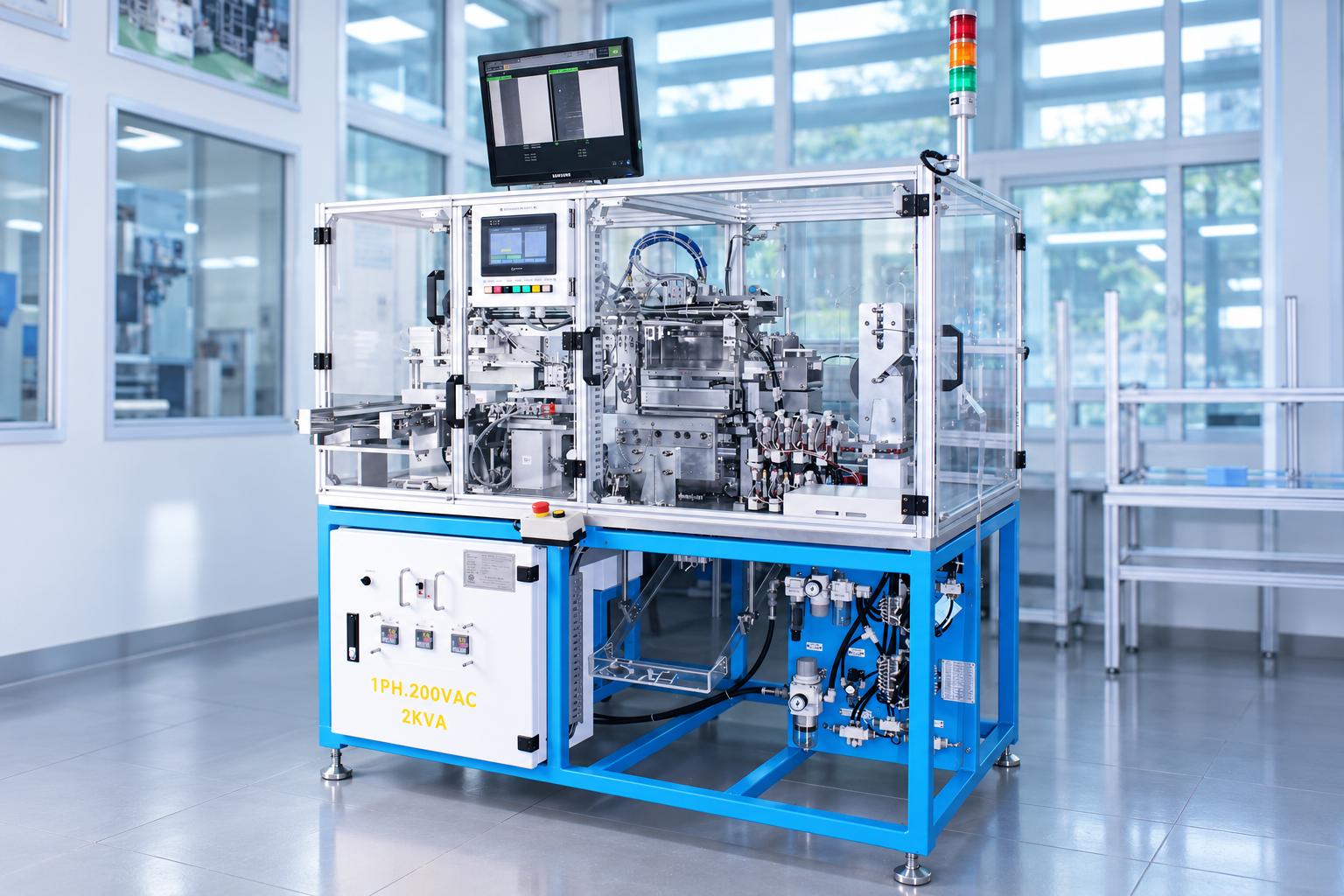
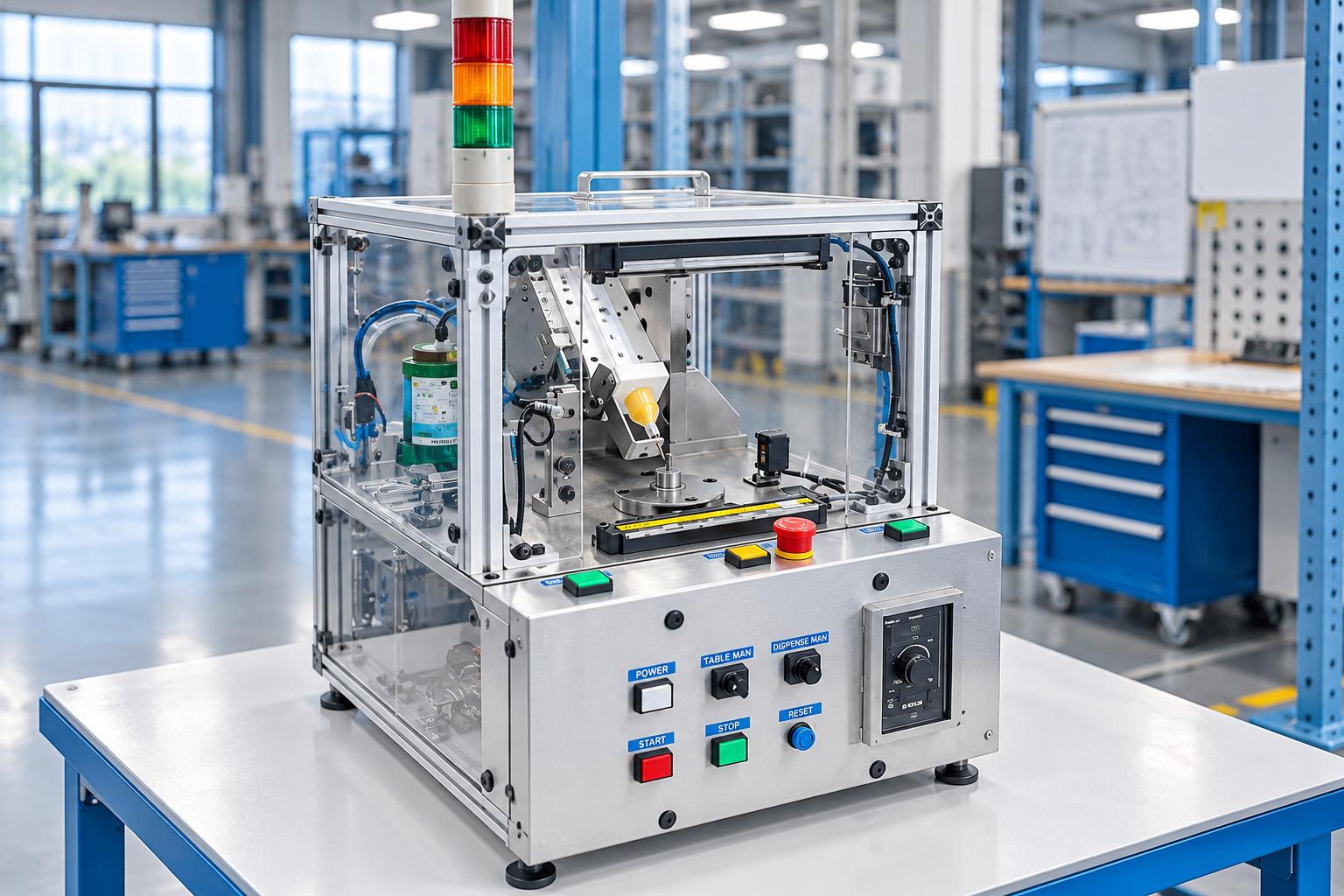
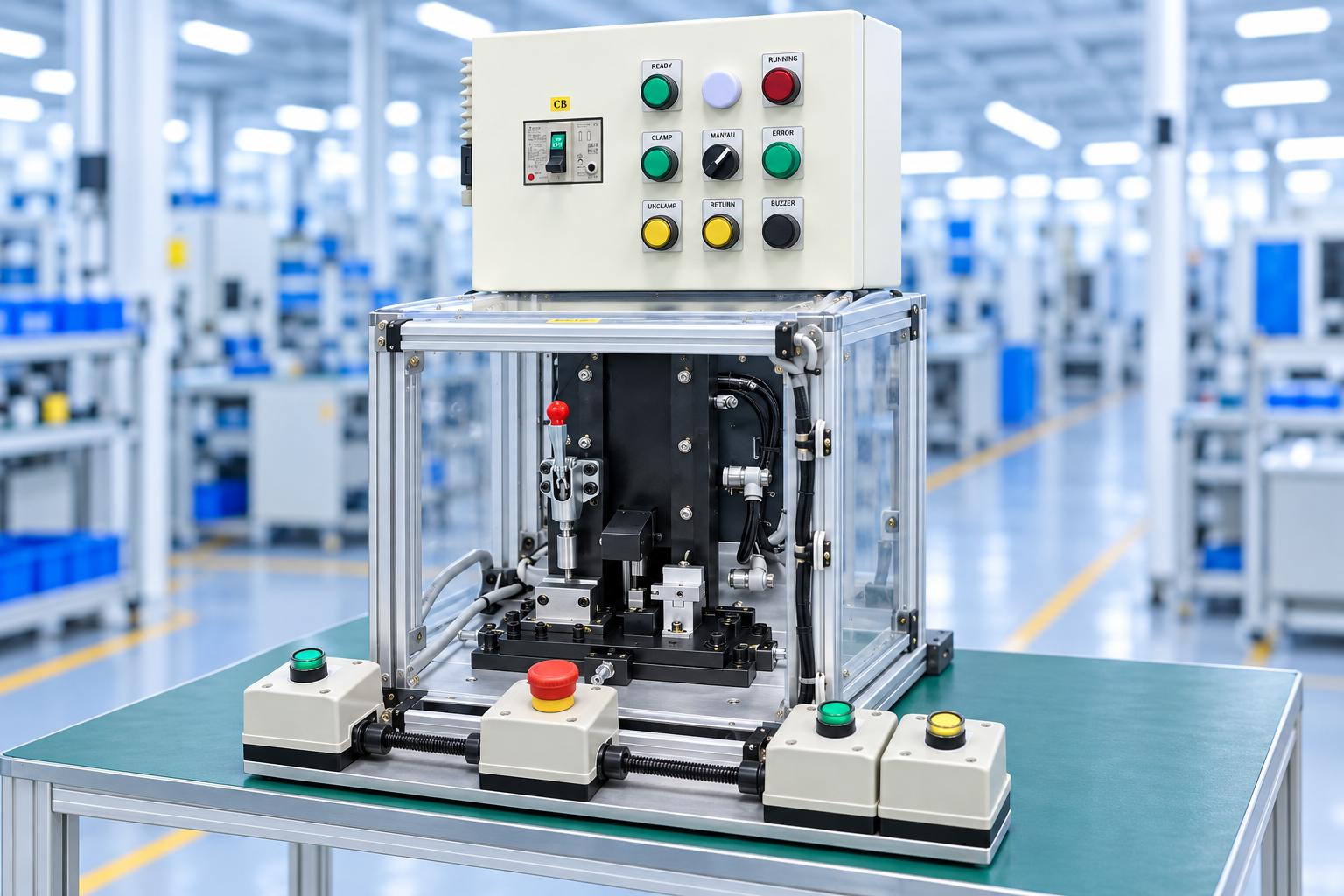
CNC VINA hot melt adhesive dispensing machine automatically applies adhesive to predefined positions on a workpiece according to a preset operating cycle. The machine integrates a fixture, workpiece transfer mechanism, adhesive dispensing unit, and control system to perform repetitive adhesive application during assembly production. In the configuration introduced here, the machine dispenses adhesive sequentially at two positions on the same workpiece. The dispensing process is fully automated, while the operator loads and unloads the workpiece from the fixture. CNC VINA designs and manufactures adhesive dispensing machines according to each customer's product and production process. The dispensing positions, required adhesive volume, fixture, workpiece transfer method, and operating conditions are determined together with the selected adhesive type.
VIETNAM CNC & TECHNOLOGY APPLICATION JOINT STOCK COMPANY
Hotline: +84.916 63 9355 / +84.915 74 4664
Email: Sales01@cncvina.com.vn / Sales03@cncvina.com.vn
Product description

CNC VINA hot melt adhesive dispensing machine automatically applies adhesive to predefined positions on a workpiece according to a preset operating cycle. The machine integrates a fixture, workpiece transfer mechanism, adhesive dispensing unit, and control system to perform repetitive adhesive application during assembly production. In the configuration introduced here, the machine dispenses adhesive sequentially at two positions on the same workpiece. The dispensing process is fully automated, while the operator loads and unloads the workpiece from the fixture. CNC VINA designs and manufactures adhesive dispensing machines according to each customer's product and production process. The dispensing positions, required adhesive volume, fixture, workpiece transfer method, and operating conditions are determined together with the selected adhesive type.
What is hot melt adhesive and what does an adhesive dispensing machine do?
Hot melt adhesive is a material that is heated to make it suitable for application to the required surface. With conventional hot melt adhesives, the adhesive forms an initial bond as it cools. The operating temperature, assembly time, and bonding characteristics depend on the adhesive formulation and the materials of the workpieces.
An adhesive dispensing machine applies the material to predefined positions and follows a preset sequence. The fixture holds the workpiece in the required orientation, the transfer mechanism moves the application area to the dispensing head, and the dispensing head applies adhesive at the specified points. For a two-point configuration, the application quality should be checked separately at each position. An application that is correctly positioned but has insufficient adhesive, or has sufficient adhesive but is applied outside the required area, may still fail to meet the requirements of the assembly process.
The role of an adhesive dispensing machine in industrial production
In repetitive production, manual adhesive application depends on the operator's ability to identify the correct position and dispense the required amount of material. A machine combines fixture-based positioning, controlled workpiece transfer, and adhesive dispensing within a predefined cycle. The operator loads and unloads the workpiece, checks the results, and monitors the equipment. The fixture and controlled movement provide a basis for maintaining consistent dispensing positions from one workpiece to another. However, the results still depend on fixture condition, workpiece positioning accuracy, adhesive supply stability, and proper operating conditions.
The machine can be installed as a workstation within an assembly area, before the component joining process, or before a subsequent processing step. The workstation layout should take into account handling time and the characteristics of the adhesive, particularly the time available for joining the surfaces after application. When evaluating the effectiveness of the process, manufacturers should consider the number of acceptable products produced per shift, workpiece loading and unloading time, rework rate, and adhesive consumption. The speed of the transfer mechanism alone does not represent the productivity of the entire process.

Operating principle of a hot melt adhesive dispensing machine
The workpiece is placed in the fixture at the correct position according to the designed positioning method. Once the machine reaches the ready condition and receives the start command, the transfer mechanism moves the workpiece to the first dispensing position. The dispensing head moves down to the application area, dispenses the adhesive, and then retracts. The transfer mechanism then moves the workpiece to the second position to repeat the same operation. After the dispensing cycle is completed, the machine returns the workpiece to its initial position for the operator to remove. The distance between the dispensing head and the workpiece, accessibility to the application area, and adhesive dispensing timing must be suitable for the product geometry. The adhesive supply must meet the operating requirements of both the material and the dispensing unit. The appropriate operating parameters should be confirmed through testing on sample workpieces.
The machine configuration also includes a mechanism that brings a cleaning box to the dispensing head to remove residual adhesive. This function helps maintain the dispensing head, but it should still be combined with regular inspection and cleaning according to the adhesive dispensing unit manufacturer's instructions.
Main components of the CNC VINA adhesive dispensing machine
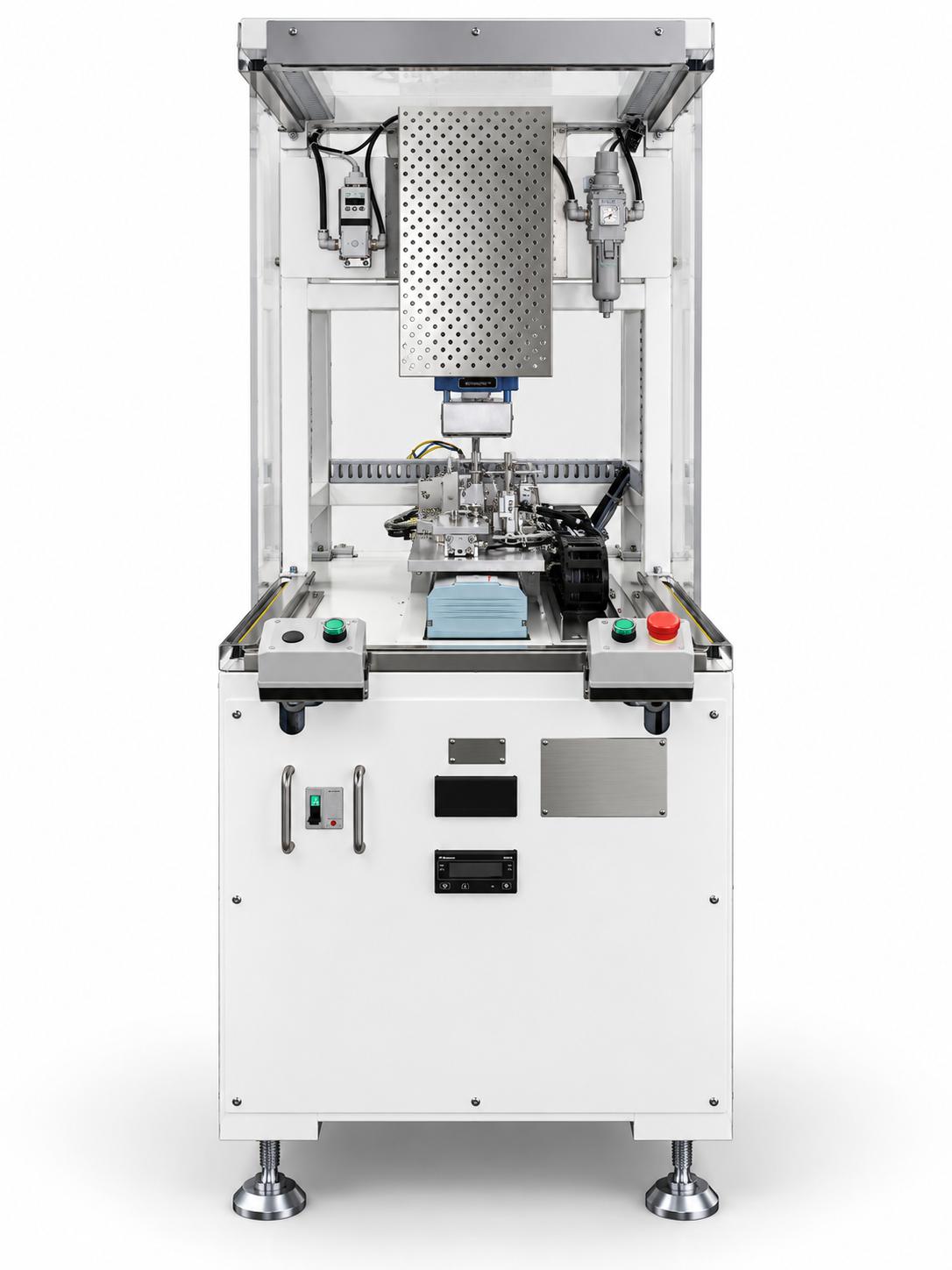
Positioning and workpiece holding fixture
The fixture determines the workpiece orientation before the dispensing process begins. This configuration uses locating points, spring-loaded pins, and clamping mechanisms to accommodate the product geometry. Contact points must hold the workpiece securely without damaging its surface or causing deformation. When changing to another product type, the operator replaces the corresponding fixture and checks the installation position. The fixture replacement procedure uses locating pins to return the fixture to the correct position on the transfer mechanism. For workpieces with different geometric tolerances or degrees of flexibility, fixture design should consider both positional repeatability and how the workpiece is supported. This is an important part of the machine design, particularly when the dispensing area is small or located close to a surface that must remain clean.
Workpiece transfer mechanism
The electrically driven transfer mechanism moves the fixture and workpiece to the dispensing positions and then returns them to the initial position. This movement is coordinated with the adhesive dispensing head according to the sequence programmed in the control system. The current configuration transfers the workpiece between two dispensing positions on the same product. If the product requires multiple dispensing points, multiple surfaces, or a continuous adhesive bead, the required number of axes and movement arrangement should be evaluated during the machine design stage.
Adhesive dispensing head and lifting mechanism
The dispensing head delivers hot melt adhesive to the required application area. A pneumatic mechanism raises and lowers the dispensing head during each step of the cycle. The design must provide suitable access clearance while preventing collision with the workpiece or fixture. The dispensing head type and dispensing conditions should be selected according to the adhesive material, required adhesive volume, and geometry of the application point. The actual adhesive volume must be verified on the product; the fact that the valve has received an opening command alone should not be used to determine whether the dispensing point meets the requirements.
Adhesive wiping mechanism
A dedicated mechanism moves a wiping box to the dispensing head to remove residual adhesive. Checking the condition of the dispensing head and wiping component helps identify adhesive buildup or other signs that could affect the next dispensing point. The machine should include a suitable method for collecting the removed adhesive, cleaning the contact area, and replacing wear parts according to the equipment manufacturer's instructions. The wiping mechanism should not be considered a substitute for regular maintenance of the entire adhesive dispensing system.
Control system and operator control panel
The machine uses a PLC controller to coordinate the transfer mechanism, cylinders, and adhesive dispensing commands. The operator selects manual or automatic mode, selects the product type, and returns the machine to its home position using the buttons and switches on the control panel. Manual mode is used to check individual mechanisms according to the operating instructions. Automatic mode executes the dispensing cycle when the required start conditions are met. A signal tower and buzzer help indicate the machine's operating status and fault conditions.
Sensors and work area protection
The machine configuration includes product detection sensors, area sensors, two start buttons, and an emergency stop button. These components must be checked together with the operating sequence and the protection system of the machine station. The machine generates an error and does not start when the product placed on the fixture does not correspond to the selection made on the switch. This function helps detect incorrect product selection; the quality of the adhesive application must still be evaluated separately.
Reference specifications of the machine configuration
The table below describes a hot melt adhesive dispensing machine configured for two dispensing positions. For a customized machine, the specifications are determined according to the product, adhesive dispensing unit, and specific installation conditions.
| Item | Reference specification |
|---|---|
| Dispensing method | Hot melt adhesive dispensing at predefined positions |
| Number of dispensing positions per cycle | Two positions on one workpiece |
| Workpiece loading and unloading | Performed by the operator at the fixture |
| Reference machine dimensions | Approximately 730 × 960 × 2,080 mm (W × D × H) |
| Operating height | 1,000 ± 50 mm |
| Machine power supply | Single-phase, AC 220 V, 50–60 Hz |
| Control voltage | DC 24 V |
| Rated power supply specification | 1 kVA |
| Air supply pressure | 0.4–0.6 MPa |
| Operating modes | Manual and automatic |
The overall dimensions must be confirmed according to the layout drawing and the scope of equipment assemblies in the final design. When preparing the installation area, additional space should be provided for operation, fixture replacement, and maintenance. The 1 kVA specification should be checked together with the power supply requirements of the machine and adhesive dispensing unit. kVA is a unit of apparent power and does not represent the fixed electrical energy consumption of the entire dispensing process. Temperature, adhesive volume per point, and cycle time are determined according to the adhesive type, workpiece, and trial-run results. These parameters should be agreed upon when selecting the machine configuration and evaluating the equipment.
Adhesive dispensing process
Production preparation
The operator checks the fixture, work area, power supply, air supply, and condition of the adhesive dispensing unit. The machine is returned to its home position, the correct product type is selected, and the ready conditions are checked according to the operating instructions. The adhesive and dispensing unit must be prepared according to the material and equipment instructions. For products that require assembly after adhesive application, the subsequent process should be prepared in advance to meet the adhesive's working time.
Workpiece loading and cycle start
The workpiece is placed correctly on the locating points of the fixture. After checking the product orientation, the operator presses the two start buttons simultaneously according to the machine operating procedure. Hands and tools must be kept out of moving areas in accordance with the operating instructions and the status of the machine's safety devices. The required protective functions must remain active during operation.
Sequential dispensing at two positions
The transfer mechanism moves the workpiece to the first dispensing point. The dispensing head moves down, dispenses the adhesive, and moves back up. The machine then transfers the workpiece to the second point to continue the cycle. The operator monitors the machine status and checks the dispensing result according to the quality control plan. If stringing, dripping, insufficient adhesive, or misalignment occurs, the cause should be identified before production continues.
Workpiece removal and subsequent process
After the transfer mechanism returns to the initial position and the machine reaches the permitted state, the operator removes the workpiece. The product is then transferred to the joining, cooling, or inspection process according to the company's production procedure. The post-dispensing operation must be compatible with the adhesive's working time. If the workpiece needs to be held while the adhesive cools or while the bond is inspected, these requirements should be defined during process development.
Useful features for production
Repeatable dispensing positions and sequence
The fixture and transfer mechanism bring the required dispensing area to the dispensing head according to a predefined sequence. The operator does not need to manually move the dispensing head to each point on every workpiece. When the dispensing position needs to be changed, the configuration should be re-evaluated together with the fixture and motion program. Repeatability should be assessed using actual workpieces under the agreed operating conditions.
Changeover between product types
The configuration allows the operator to select the product type and corresponding fixture. Product changeover should include fixture replacement, correct mode selection, and a test run before dispensing begins for the next production batch. The ability to handle multiple products depends on their geometry, dispensing areas, and positioning method. Products with similar dimensions may still require different fixtures or dispensing access arrangements.
Machine status monitoring and troubleshooting support
The signal tower, buzzer, and manual operation functions help operators identify the machine status, check individual mechanisms, and return the machine to the appropriate operating condition. Operation should only be restored after the cause of the fault has been identified and addressed.
Dispensing head care during the cycle
The adhesive wiping mechanism helps remove material buildup from the dispensing head. Combining this function with regular inspection helps maintain the condition of the dispensing unit and identify issues that may affect adhesive volume or bead shape.
Industrial applications of hot melt adhesive dispensing machines
Hot melt adhesive dispensing machines are suitable for processes that require repetitive adhesive application at predefined positions on assembly components. Their suitability should be evaluated based on the surface material, adhesive formulation, bonding requirements, and accessibility of the dispensing head.

For the assembly of plastic component subassemblies, the machine can be evaluated for adhesive application at joining or component-retaining positions. Adhesive selection should take into account adhesion to the specific type of plastic, temperature resistance, and the risk of deformation when the plastic comes into contact with hot material. The fixture and dispensing head approach direction must also be compatible with the geometry of the product assembly.
For equipment and components, the machine can support adhesive application at points that require fixation within an assembly. The solution should be evaluated together with the surface material, permitted adhesive application areas, and the operating requirements of the assembly after installation. Areas that must remain clean or where adhesive spreading must be avoided should be identified before designing the fixture and selecting the dispensing conditions.
For small workpieces produced repeatedly, a dispensing station equipped with a fixture can replace the manual operation of moving the dispensing head to each individual point. Its effectiveness depends on the ability to position the workpiece correctly, maintain its position on the fixture, and coordinate the loading and unloading rhythm with the machine cycle. A two-point configuration should be tested using the actual workpiece to confirm its suitability for this application. During new product development, manufacturers can test the adhesive dispensing and positioning method before organizing mass production. Actual samples help verify dispensing head accessibility, adhesive bead or dot shape, and the results of the subsequent assembly process. The adhesive type and post-dispensing inspection criteria should be agreed upon to provide a basis for selecting the appropriate machine configuration. For components requiring load resistance, vibration resistance, or operation under different temperature conditions, the bond should be tested under the expected operating conditions. Correct adhesive placement is only one part of the evaluation; product performance also depends on the materials and assembly process.
Technologies related to adhesive dispensing machines
Dot dispensing and bead dispensing
Dot dispensing applies material to a number of individual positions. Typical criteria include dispensing position, adhesive volume, dot shape, and the allowable spread area. Bead dispensing applies a continuous line of material along a defined path. This process requires evaluation of the bead width, continuity, and the start and end positions of the dispensing path. The machine configuration described in this article applies adhesive at two positions. If a continuous bead is required, the motion mechanism and adhesive dispensing control must be designed accordingly.
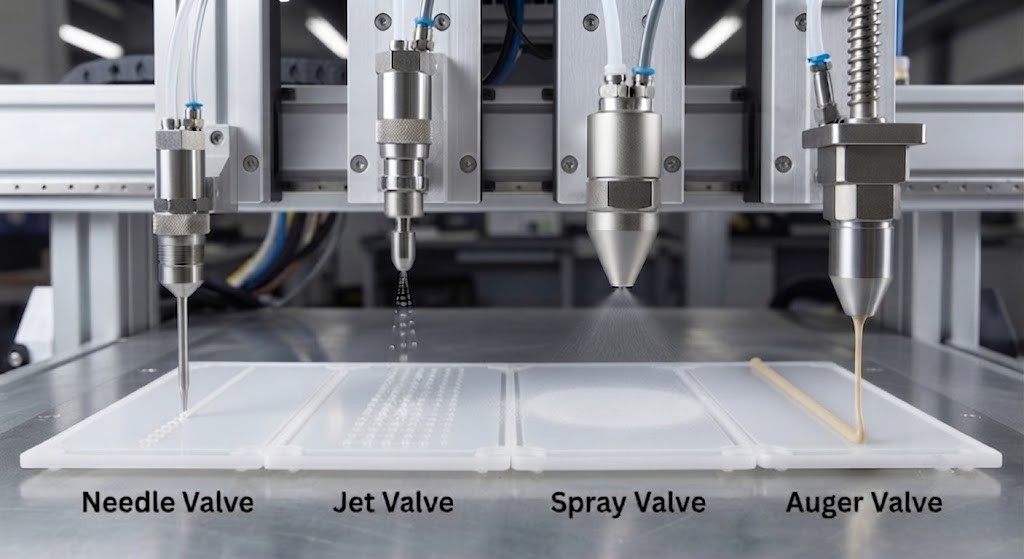
Hot melt adhesive dispensing and other adhesive application methods
When selecting a hot melt adhesive dispensing system, manufacturers should consider viscosity at the operating temperature, adhesion to the target surface, and the available assembly time after application. Other adhesive formulations may form a bond through evaporation, chemical reactions, or a separate curing process. The dispensing equipment and process must therefore be selected according to the specific adhesive type. The ability to dispense hot melt adhesive does not mean that the machine is suitable for every type of adhesive.
Dispensing volume control and application point inspection
The actual adhesive output depends on the dispensing unit, dispensing head, material condition, and operating parameters. If the manufacturer requires tight control of dispensing volume, the measurement method and sampling procedure should be agreed upon to evaluate whether the system can meet the requirements. Product position inspection before dispensing and adhesive application inspection after dispensing serve different purposes. If additional weighing, camera inspection, or bond testing is required, these inspection systems should be considered as part of the machine design.
What should buyers consider when selecting an adhesive dispensing machine?
Workpiece and dispensing area
The workpiece material, dimensions, geometric tolerances, and adhesive application surfaces should be clearly identified. The drawing should specify the dispensing points, allowable adhesive spread areas, and surfaces that must remain clean. The fixture design should take into account how the operator loads the product, which surfaces can be contacted, and whether the dispensing head can access each required position. For products with multiple variants, fixture changeover work and preparation time after product change should also be evaluated.
Adhesive type and assembly conditions
The adhesive should be selected according to the surface material and the function of the bond. Key information includes the operating temperature range, viscosity, available assembly time, and operating conditions after assembly. Both the dispensing quality and the performance of the resulting bond should be tested. Contaminated surfaces, incorrect assembly timing, or unsuitable materials can affect the result even when the machine dispenses the preset amount of adhesive correctly.
Productivity and level of automation
Productivity should include workpiece loading, machine cycle time, product unloading, and subsequent handling operations. With the current configuration, an operator is still required to load and unload the workpiece at the fixture. If the machine needs to be integrated into a production line or equipped with automatic workpiece loading and unloading, the transfer method, signal exchange, and response when one piece of equipment stops must be evaluated. These requirements are determined according to the actual factory layout and production needs.
Materials and maintenance
Operating costs include adhesive, energy, consumable parts, cleaning labor, and equipment downtime for maintenance. Adhesive consumption should account for the amount used on the product as well as adhesive used for testing, wiping, and handling during product changeover. The accessibility of the dispensing head, fixture, transfer mechanism, and dispensing unit affects maintenance efficiency. The machine design should facilitate cleaning, inspection, and replacement of consumable parts according to the instructions for each equipment assembly.
Sample testing and machine acceptance
Testing with the actual workpiece and adhesive helps verify the dispensing solution before production. The following criteria should be agreed upon during evaluation:
- Dispensing position relative to the required area specified in the drawing.
- Adhesive volume at each point according to the agreed measurement method.
- Dispensing shape, spread area, stringing, or dripping condition.
- Workpiece surface condition after contact with hot adhesive.
- Joining result and bond quality when required by the process.
- Ability to load, position, transfer, and unload the workpiece.
- Actual processing cycle, including operator handling time and machine cycle time.
- Ability to change product types, inspect the dispensing head, and clean the wiping mechanism.
The results should be evaluated together with the test conditions, including adhesive type, workpiece material, dispensing parameters, and assembly sequence. Multiple consecutive cycles should be evaluated to verify that the results can be maintained under the expected production conditions.
Operation and maintenance of a hot melt adhesive dispensing machine
The operator should use the correct fixture, select the correct product type, and return the machine to its home position before operation according to the instructions. When an error occurs, the cause should be addressed before the cycle is restored. Cleaning procedures should cover both moving mechanisms and components that come into contact with hot material. Before maintenance or intervention, the machine should be stopped and power, pressure, and temperature should be isolated or brought to a safe condition according to the instructions for the machine and adhesive dispensing unit.
Key maintenance tasks include:
- Cleaning and inspecting the dispensing head, wiping box, and accumulated adhesive according to the dispensing unit manufacturer's instructions.
- Inspecting the fixture, locating pins, clamping mechanism, and contact points with the workpiece.
- Monitoring the transfer mechanism for abnormal noise, irregular movement, and lubrication condition.
- Inspecting cylinders, air lines, and locations where leakage or travel obstruction may occur.
- Inspecting product sensors, area sensors, signal indicators, control buttons, and emergency stop functions.
- Inspecting the electrical cabinet and connections, and checking for abnormal heat generation according to the maintenance schedule.
The maintenance frequency should be appropriate for the adhesive type, production load, and instructions for each equipment assembly. When the dispensing point changes, the material, dispensing head, fixture, and movement should be checked together to identify the cause of any change in dispensing performance.
CNC VINA designs and manufactures customized adhesive dispensing machines
CNC VINA designs and manufactures hot melt adhesive dispensing machines according to the workpiece and production requirements. The solution is developed based on the dispensing area, adhesive type, output quality requirements, productivity, and installation conditions at the customer's facility. The design can include the fixture, number of dispensing positions, workpiece transfer method, dispensing head, dispensing head maintenance mechanism, and inspection method. When the requirements differ from the two-point configuration, multi-point dispensing, continuous bead dispensing, or production line integration can be evaluated separately. Sample testing and agreed acceptance criteria help select a configuration that closely matches the actual application and provide a basis for evaluating the machine before handover. Manufacturers can provide information about the workpiece and production requirements to CNC VINA for consultation on a suitable solution.
Customers looking for automated equipment are welcome to contact:
CNC VIETNAM TECHNOLOGY APPLICATION & CNC JOINT STOCK COMPANY
Factory: Song Cung Industrial Cluster, Dong Thap Commune, Dan Phuong District, Hanoi, Vietnam
Office: Rox Center Ho Tung Mau Building (Rox Tower Goldmark City), 136 Ho Tung Mau Street, Bac Tu Liem District, Hanoi, Vietnam
Tel: +84 916 639 355 / +84 915 744 664
Website: https://cncvina.com.vn; https://cncvina.net; https://cncviname.com.vn