 Tiếng
Việt
Tiếng
Việt
 Tiếng
Anh
Tiếng
Anh
 Tiếng
Nhật
Tiếng
Nhật




 Tiếng Anh


Brake oil pump
Application of brake fluid pump
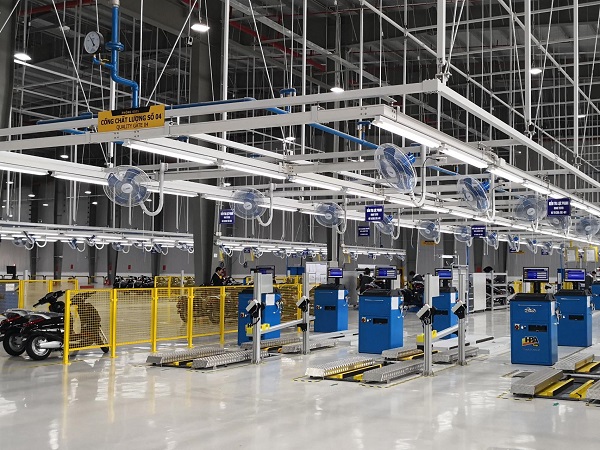
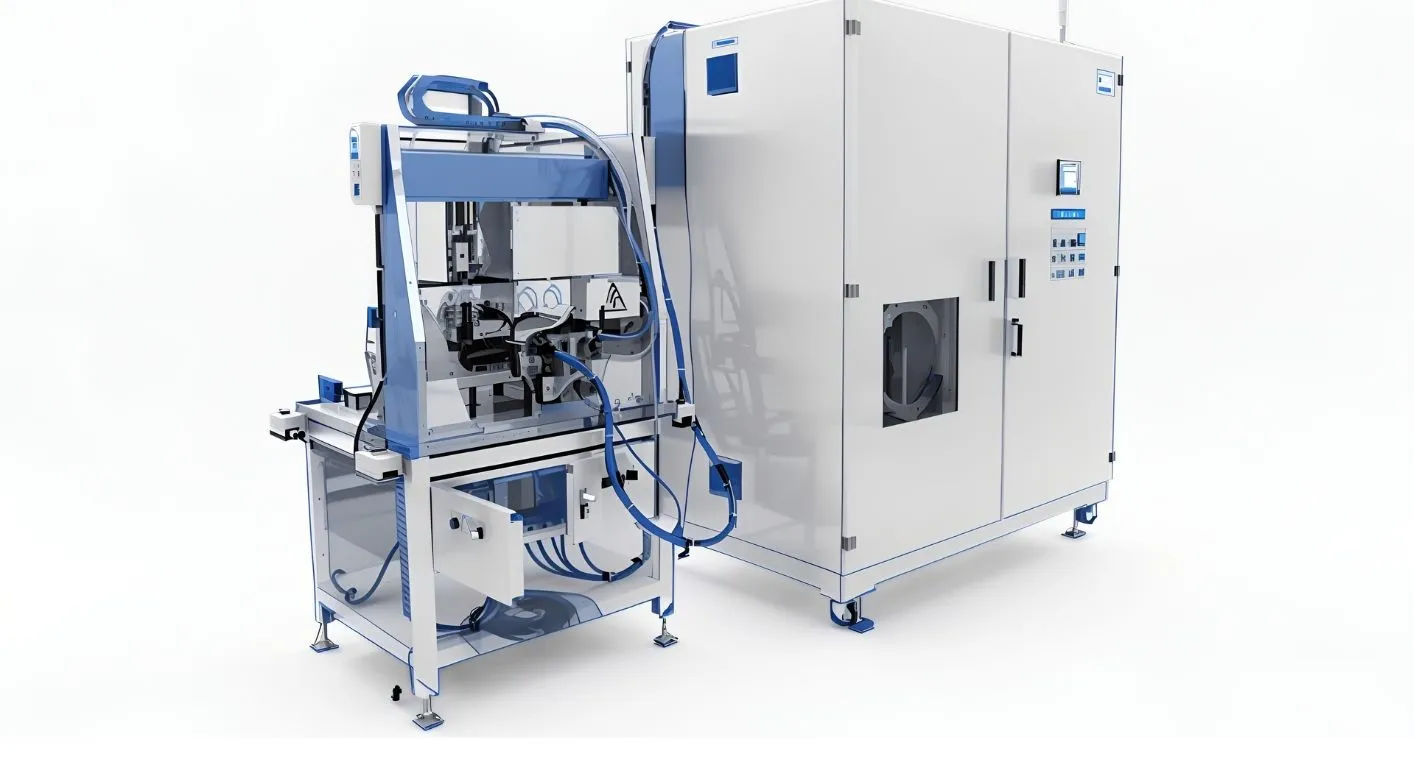
Brake oil pumps for motorcycles are very popular automatic assembly machines for assembly lines. Especially widely used in the automobile and motorbike assembly industry. The machine is designed and manufactured by CNC VINA with optimal parameters and design. Makes operation simple and easy, ensuring productivity for the assembly line.
Brake oil pumps for motorbikes help the process of pumping oil for vehicle brakes quickly. During the pumping process, parameters are always controlled to ensure minimal errors.
For each model of brake assembly, specialized fixtures designed by CNCVina will be changed appropriately and flexibly to help the production process not be interrupted.
VIETNAM CNC & TECHNOLOGY APPLICATION JOINT STOCK COMPANY
Hotline: +84.916 63 9355 / +84.915 74 4664
Email: Sales01@cncvina.com.vn / Sales03@cncvina.com.vn
Product description

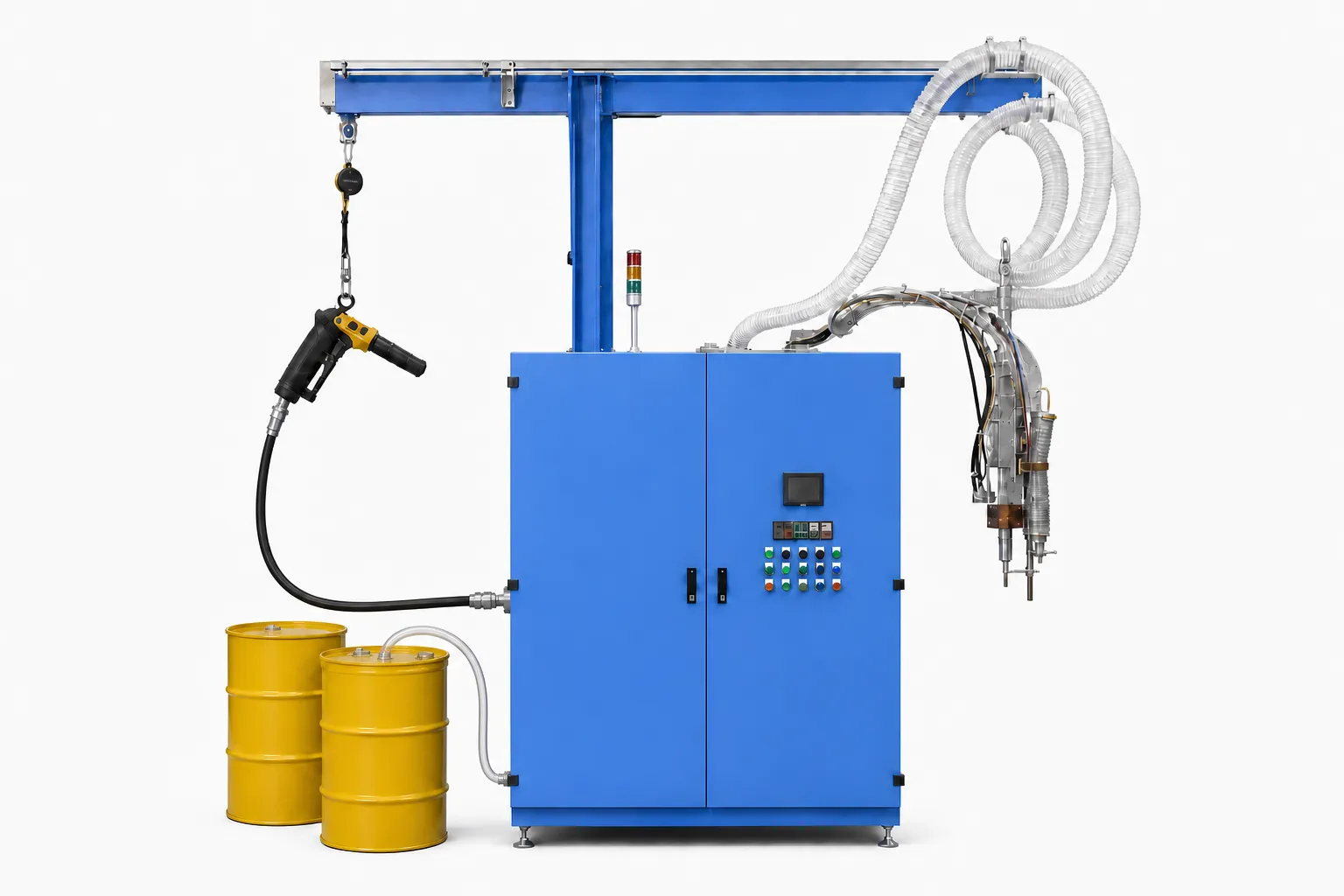
The brake fluid filling machine is an automation solution designed to improve the efficiency and stability of the brake fluid filling process for cars and motorcycles. By combining vacuum technology, automatic fluid pumping, and an intelligent control system, the machine enables fast and accurate brake fluid filling. Its ability to control operating parameters helps minimize errors caused by manual operations while maintaining consistent quality across products. The system can be customized to suit different vehicle models and integrated into automated production lines. With stable and flexible operation, as well as the ability to meet continuous production requirements, the brake fluid filling machine is a suitable solution for automotive and motorcycle manufacturers, assembly plants, and professional maintenance facilities. So, how does the brake fluid filling machine designed by CNC VINA operate, and what advantages does it offer compared with the traditional manual filling method?
Technical specifications of the brake oil pump
| Machine dimensions | D810 × W1600 × H2310 mm |
| Power supply | AC 380 V - 50 Hz, 3 phase |
| Control voltage | DC 24 V |
| Power consumption | 3 kW |
| Weight | 1300 kg |
| Cycle time | ~20 sec./filling cycle |
| Accuracy | 0.5% for filling volume < 1 ml |
| Color | Optional |
The importance of efficient and accurate brake fluid filling
Brake fluid is a hydraulic fluid that transfers pressure from the brake pedal to the braking mechanisms at the wheels, allowing the vehicle to slow down or stop when the driver applies the brakes. Therefore, brake fluid plays an important role in the braking system and must be maintained at the correct level, use the correct type, and remain in good condition.
During use, brake fluid can absorb moisture from the surrounding environment. As the water content increases or the fluid becomes contaminated, its properties may change, affecting pressure transmission and the stable operation of the braking system. In particular, water lowers the boiling point of brake fluid, increasing the risk of vapor and air bubbles forming when the braking system operates at high temperatures. Air can be compressed, whereas brake fluid is nearly incompressible, which can reduce the effectiveness of hydraulic pressure transmission.
When brake fluid is insufficient, contaminated with moisture, or degraded, it should be inspected and topped up or replaced according to the manufacturer's recommendations. If these issues are not addressed in time, the following problems may occur:
- Reduced braking performance: Brake fluid that is degraded or contains air or moisture may reduce the system's ability to transmit hydraulic pressure. The brake pedal may feel abnormal, and braking distance may increase, affecting vehicle control and operational safety.
- Increased risk of corrosion in braking system components: Brake fluid can absorb moisture. As water accumulates in the fluid, metal components inside the braking system may oxidize and corrode. Brake fluid that has been used for a long period may also deteriorate, reducing its ability to protect system components.
- Reduced performance at high braking temperatures: Water lowers the boiling point of brake fluid. During continuous braking or operation under high loads and temperatures, the fluid may generate vapor and air bubbles, reducing pressure transmission and braking effectiveness.
Therefore, when filling or replacing brake fluid, it is important to use the correct fluid type specified by the manufacturer, ensure that the fluid is clean and free from moisture or contaminants, and fill it to the required level. The condition of the brake fluid and braking system should also be inspected regularly to ensure stable and safe operation.
Benefits of the brake oil pump
The brake oil pump is designed to automate the process of filling brake fluid into the braking system while combining vacuum evacuation with precise fluid volume control. The key benefits of the brake fluid filling machine include:
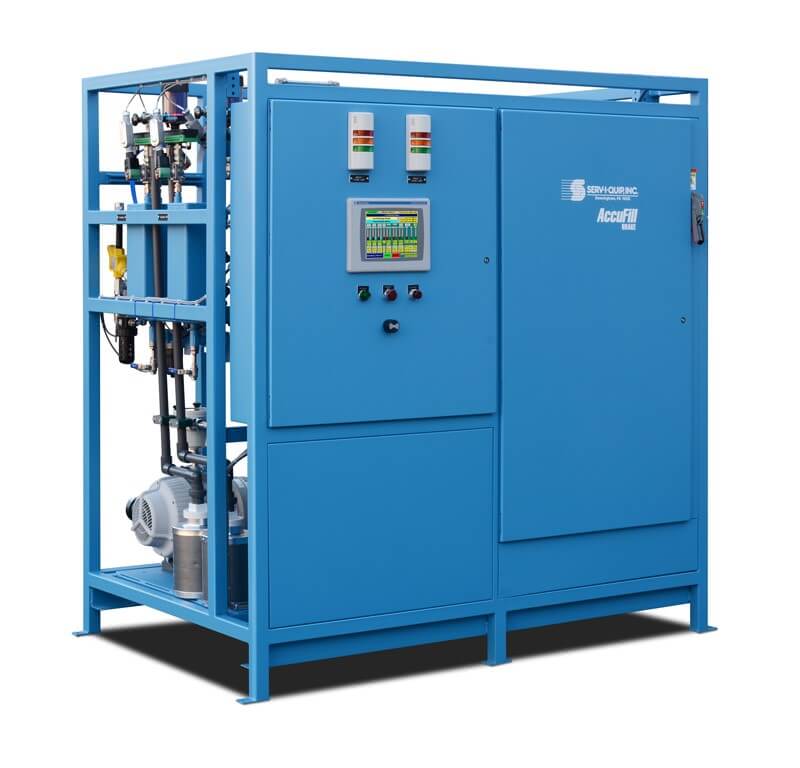
- Automated brake fluid filling: Shortens cycle time and reduces waiting time on the production line.
- Precise control of fluid volume, pressure, and pumping speed: Sensors and the control system help minimize overfilling or underfilling.
- Reduced manual operations: Minimizes human errors and reduces manpower requirements during production.
- Consistent operating parameters: Configured and controlled uniformly to maintain stable filling quality across products.
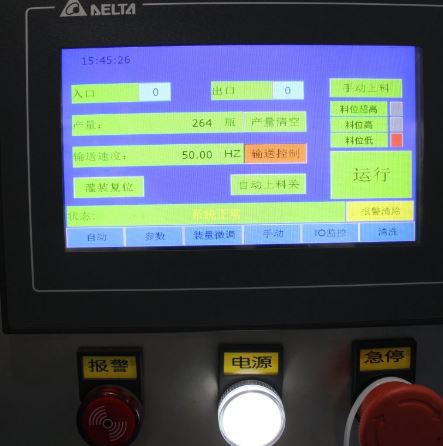
- Intuitive HMI interface: Simplifies operation and makes it convenient to monitor the process and respond to warnings.
- Production line integration: Can be integrated into assembly lines to support continuous and high-volume production.
Key features of the automatic brake fluid filling system
The automatic brake fluid filling system stands out with vacuum technology, dedicated fixtures, and PLC-based automatic control. Its key features include:
- Vacuum technology: The system uses vacuum evacuation before filling to remove most of the air from the brake reservoir and fluid lines. This helps minimize the amount of residual air after filling, contributing to the quality and stability of the brake assembly. Reducing trapped air in the system also helps minimize its potential impact on brake fluid pressure transmission, thereby supporting the braking performance during operation.
- Automatic fluid distribution and control system: The machine allows operators to set filling parameters according to the type of brake fluid, including fluid volume, pressure, and pumping speed. These parameters can be stored and adjusted through the HMI, making it easy to configure programs for different product models. The entire process, from vacuum evacuation and inspection to fluid filling and cycle completion, is automatically controlled by the PLC. Sensors continuously monitor operating parameters and send signals to the controller for processing when abnormalities occur.
- Fluid volume measurement and control: The fluid volume is controlled according to the preset value to minimize underfilling or overfilling. Once the required conditions are met, the system automatically stops the filling process and moves to the next step. Depending on the configuration, the system can also be equipped with additional inspection or fluid-level monitoring mechanisms, making it easier for operators to monitor the filling process.
- Model-specific fixture design: The system is equipped with dedicated fixtures (jigs) designed and manufactured for each product model and can be customized according to customer requirements. This design ensures accurate positioning of components during vacuum evacuation and fluid filling. When switching to another model, the fixture can be replaced or adjusted according to the product configuration. This makes dandory (setup change when switching models) and fixture installation more convenient, helping reduce changeover time on the production line.
- PLC-based control system: The entire brake fluid filling process is programmed and automatically controlled by the PLC, from vacuum evacuation and inspection to fluid filling and cycle completion. Operating parameters are controlled according to the preset program, helping maintain stable operation and minimize errors caused by manual operations. With a cycle time of approximately 20 seconds per filling cycle, the system meets the requirements of continuous, high-volume production and is suitable for integration into motorcycle brake assembly lines.
Operating guide for the motorcycle brake fluid filling machine
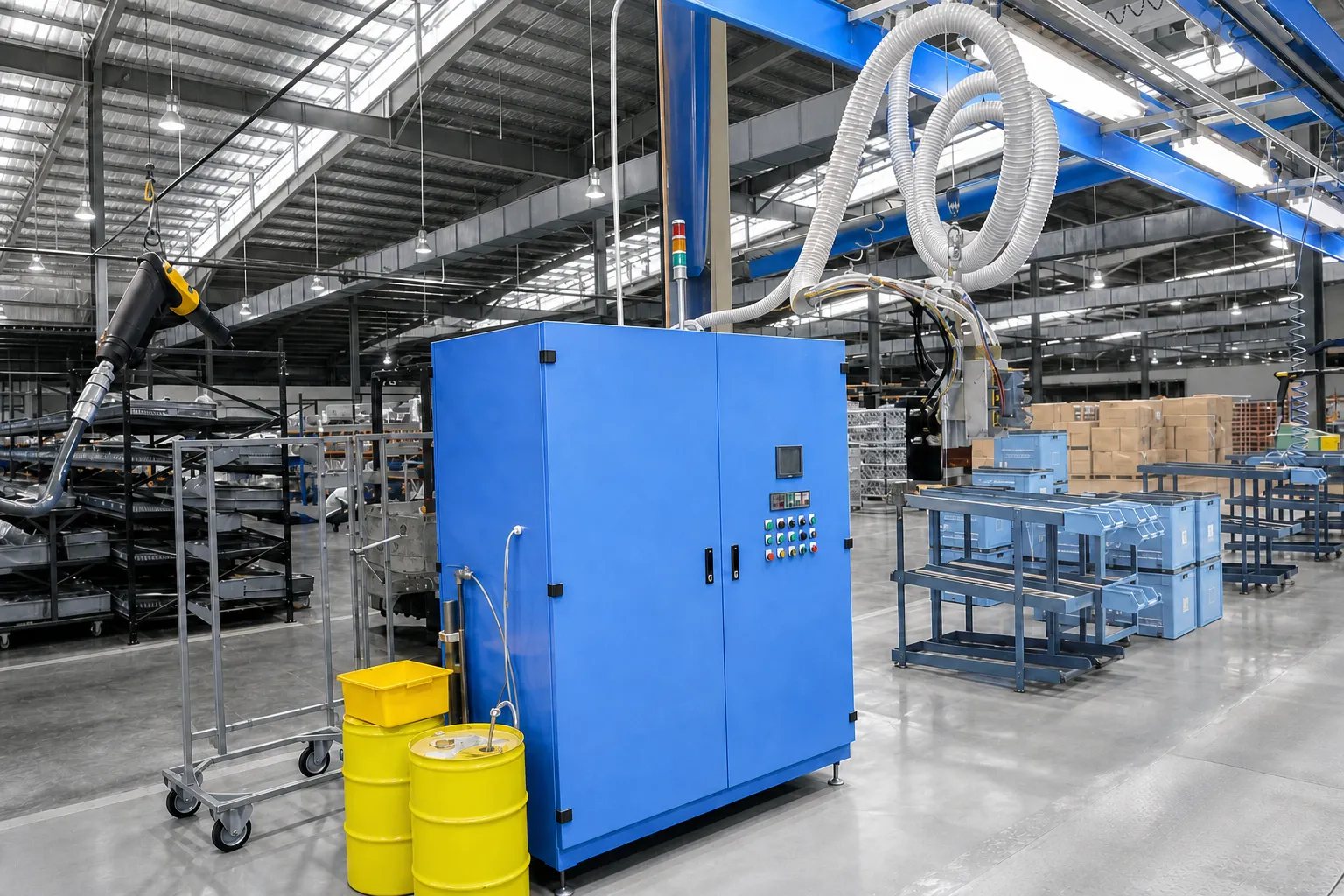
The motorcycle brake fluid filling machine uses vacuum technology combined with automatic fluid filling to make the brake fluid filling process faster, more stable, and less dependent on manual operations. The machine can operate directly on the assembly line while the motorcycle moves through each stage of the production process.
How does the brake fluid filling machine work?
The machine's fixture is designed with an integrated vacuum connection head and fluid filling head. When the motorcycle reaches the working position, the fixture clamps onto and connects to the brake reservoir already installed on the vehicle, then performs the following steps:
- Vacuum evacuation: The system creates a vacuum inside the brake reservoir and fluid lines to remove air before filling.
- Vacuum tightness check: Once the required vacuum level is reached, the system checks whether the vacuum can be maintained to detect leaks or improper connections.
- Brake fluid filling: When the inspection result meets the required conditions, the machine automatically supplies brake fluid to the reservoir according to the preset fluid volume and process parameters.
- Excess fluid recovery: Excess fluid remaining after the filling process is collected to minimize residual fluid around the brake reservoir and working area.
- Pressure balancing: After the filling process is completed, the system adjusts the pressure to an appropriate level, ensuring stable operating conditions for the braking system.
Brake fluid filling process using the machine
The brake fluid filling process is carried out automatically according to the parameters preset in the control system. The operator mainly performs connection and parameter-setting tasks while monitoring the process, reducing manual operations and ensuring that the required amount of brake fluid is supplied.
Step 1: Connect the machine to the braking system
The machine's connection head is attached to the fluid filling port of the braking system and securely fixed to ensure a tight connection during operation. A secure connection helps minimize fluid leakage and maintain the required pressure conditions during the filling process.
Step 2: Select the brake fluid and set the filling parameters
The operator selects the appropriate program according to the brake fluid type and product model, then sets the required parameters, such as filling pressure, fluid supply speed, and filling volume, through the HMI. The parameters can be configured according to the requirements of each product.
Step 3: Vacuum evacuation and tightness check
Before filling, the system creates a vacuum inside the brake reservoir and fluid lines to remove any remaining air. The machine then checks whether the vacuum can be maintained to detect leaks or improper connections. The filling process proceeds only when the inspection result meets the required conditions.
Step 4: Automatic brake fluid filling
After the inspection is completed, the machine automatically supplies brake fluid according to the preset parameters. The system controls the filling process based on sensor signals to ensure that the required amount of fluid is supplied to the product.
Step 5: Monitor and supervise the process
During operation, the operator can monitor the machine status, filling parameters, and process results on the HMI. The actual fluid level can also be observed through a sight glass or inspection mechanism equipped on the braking system. If any abnormal condition is detected, the system can issue an alert so that the operator can take timely action.
Step 6: Complete the process and disconnect
Once the filling volume reaches the preset value and all inspection conditions are satisfied, the system automatically stops the fluid supply. The operator then disconnects the filling head from the fluid filling port of the braking system and transfers the product to the next process.
Note: The entire process, including vacuum evacuation, tightness checking, fluid filling, excess fluid recovery, and pressure balancing, is monitored and controlled by the sensor system according to the preset parameters. The results of each stage are transmitted to the control system and displayed on the screen, allowing the operator to easily monitor the machine status and confirm the results. If abnormalities occur, such as insufficient vacuum, leakage, an incorrect filling volume, or operating parameters outside the preset limits, the system can detect the issue and issue an alert for timely intervention. This helps the machine effectively control the quality of the brake fluid filling process, reduce dependence on manual operations, and contribute to stable and accurate operation of the motorcycle assembly line.
Advantages of the brake oil pump compared with manual filling
Compared with manual brake fluid filling methods, the brake fluid filling machine automates many stages of the process, maintains consistent operating parameters, and reduces dependence on operator input. Its key advantages include:
- Automated vacuum evacuation and fluid filling: The process is performed automatically according to the preset program, helping shorten operating time and improve productivity compared with manual methods.
- Consistent control of fluid volume, pressure, and pumping speed: These parameters are controlled according to preset values, helping minimize variations between products caused by differences in operator handling.
- Reduced manual errors: The machine automatically performs each step according to the programmed sequence and uses sensors to monitor the process and issue warnings when parameters do not meet the required conditions. This helps minimize common errors associated with manual operations.
- Improved efficiency for continuous production: Automation reduces the number of manual operations and shortens the time required for each cycle, making the machine suitable for continuous production. With regular maintenance according to technical requirements, the equipment can maintain stable operation over the long term.
Industrial applications of the bake fluid filling machine
The automatic brake fluid filling machine is suitable for a wide range of applications, from repair garages and maintenance facilities to manufacturing plants and transportation companies that need to service a large number of vehicles.
- Automotive repair shops and garages: At garages and repair facilities, the machine helps automate the brake fluid replacement and filling process, reducing maintenance time compared with manual operations. The vacuum evacuation and fluid filling processes are controlled according to preset parameters, contributing to more stable operation and consistent brake system maintenance quality.
- Automotive manufacturing plants: In automotive production lines, the machine can be integrated into the assembly process to automatically perform vacuum evacuation, inspection, and brake fluid filling. Automation helps reduce manual operations, improve productivity, and maintain consistent process parameters across products.
- Maintenance facilities and transportation companies: Transportation companies often need to perform periodic maintenance on a large number of vehicles. The automatic brake fluid filling machine helps reduce the time required for each vehicle, minimize dependence on manual operations, and optimize manpower. As a result, businesses can organize their maintenance processes more efficiently, especially when managing large vehicle fleets.
The brake fluid filling machine is an effective solution for automating the brake fluid filling process, making the operation faster, more stable, and more accurate. By combining vacuum technology, an automatic pumping system, and intelligent control, the machine reduces dependence on manual operations while helping maintain consistent quality during production and maintenance. The equipment can be flexibly designed according to specific requirements and integrated into automotive and motorcycle production and assembly lines. In addition to improving operational efficiency, the machine helps optimize manpower and meet the demands of continuous production. With a high level of automation and flexible applications, the brake fluid filling machine is a suitable choice for businesses looking to improve productivity and modernize their production processes. If you are interested in the brake fluid filling machine or other products for the automotive and motorcycle industry, contact CNC VINA for professional consultation and a quotation.
VIETNAM CNC & TECHNOLOGY APPLICATION JOINT STOCK COMPANY
Factory: Song Cung Industrial Site, Dong Thap Commune, Dan Phuong District, City. Hanoi Vietnam
Phone: +84.916 63 9355 / +84.915 74 4664
Website: https://cncvina.com.vn; https://cncvina.net; https://cncviname.com.vn
Email: Sales01@cncvina.com.vn | Sales03@cncvina.com.vn