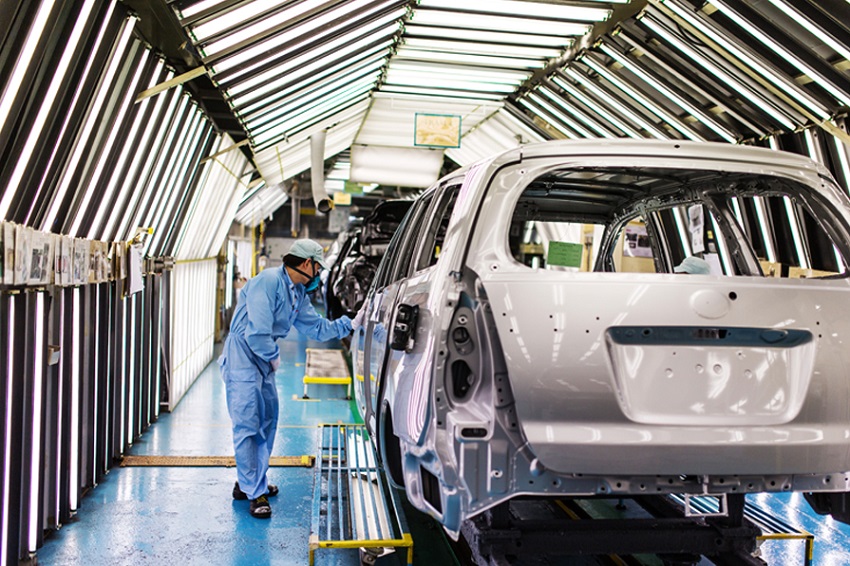
General overview of the drying oven in a painting line
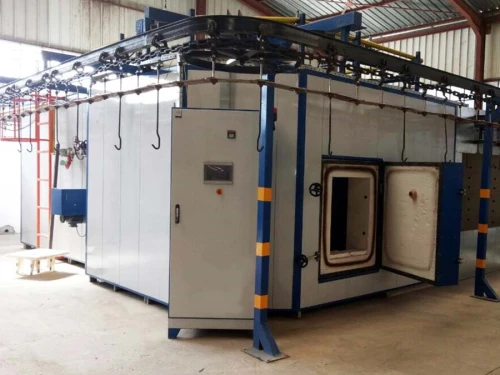
A drying oven in a painting line is equipment used to heat, dry, or cure the paint coating on products after surface treatment and painting processes. Depending on the painting technology, product material, and technical requirements, the drying oven can be designed with different temperature levels, residence times, and hot-air circulation methods to meet the specific requirements of each production line. The hot-air circulation and distribution system helps maintain a relatively uniform temperature throughout the drying zone, thereby supporting consistent coating treatment across the entire product surface.
In automated industrial painting lines, the drying oven is typically integrated with a conveyor or material handling system to transport products through the heating zone according to a predetermined residence time. The oven configuration may include a drying chamber, heating system, circulation fans, air distribution ducts, insulation layers, and temperature control system. The selection and design of a drying oven in a painting line should be coordinated with the paint type, product dimensions, production capacity, conveying method, and required processing temperature to ensure efficient and stable operation of the entire painting line.
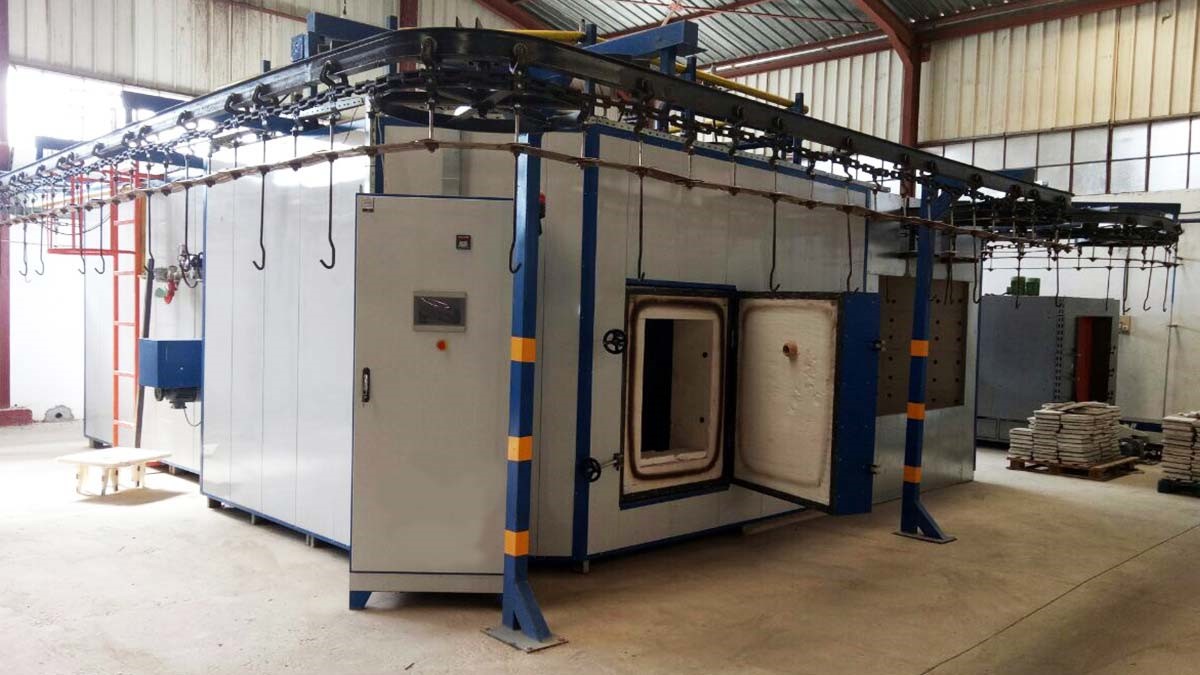
Advantages of a drying oven in a painting line
A drying oven in a painting line is designed to control the temperature and processing time according to the specific type of paint, product material, and technical requirements. The heating system, combined with circulation fans and hot-air distribution mechanisms, helps maintain stable thermal conditions within the drying zone, supporting more uniform drying or curing of the coating across the product surface. This is particularly important for production lines where consistent coating quality is required from one product to another and between production cycles. When integrated with a conveyor or automated material handling system, the drying oven can operate continuously at a preset speed while controlling the residence time of products within the treatment zone. Proper coordination of oven length, processing temperature, conveyor speed, and production capacity helps optimize the drying cycle without unnecessarily extending the treatment time. For high-capacity production lines, continuous operation helps maintain productivity and minimizes the impact of the drying process on the overall production cycle.
In addition to thermal control, the oven's insulation structure helps reduce heat loss to the surrounding environment and improve energy efficiency. The system can also be equipped with temperature sensors, controllers, monitoring devices, alarm functions, and emergency stop functions to support process control and safe operation. Depending on the requirements of each project, the drying oven can be designed and integrated with painting, drying, cooling, and conveying processes to form a synchronized production line.
Drying oven for powder coating lines
Characteristics of a drying oven for powder coating lines
A drying oven for powder coating lines is used to heat and cure the powder coating after the product has undergone cleaning, pretreatment, and powder application. When the product enters the curing zone, it is heated to the appropriate conditions so that the powder melts, flows evenly over the surface, and undergoes the curing process required by the coating system. For thermosetting powder coatings, the curing process depends on the actual temperature of the product and the time it remains under appropriate thermal conditions. Therefore, the oven must provide adequate control of temperature, hot-air distribution, and residence time to minimize the risk of insufficient curing or excessive heat treatment. The oven configuration may include the oven chamber, insulation layers, heating system, circulation fans, air distribution system, and temperature controller. When integrated with a conveyor, products can be continuously transported through the curing zone at a preset speed, matching the production capacity and operating cycle of the coating line.
Powder coating and the curing process
Industrial powder coatings can generally be classified into thermosetting and thermoplastic powder coatings. In powder coating lines that require heat curing, thermosetting coating systems commonly use base resins such as epoxy, polyester, epoxy-polyester, or other suitable resin systems combined with curing agents and additives to form a powder mixture. After being applied to the product surface, the powder coating enters the curing oven for heating. Under the influence of heat, the powder melts and forms a continuous coating film on the surface. A curing reaction then takes place, forming a coating with the required mechanical and physical properties according to the coating system.
The oven's thermal conditions should be established based on the technical specifications provided by the coating manufacturer. During the design of the production line, the process should not be determined solely by the air temperature inside the oven. The product's heating rate and the time it remains at the required temperature conditions should also be taken into consideration.
Advantages of a drying oven in a painting line
A drying oven in a painting line is designed to control the temperature and processing time according to the type of coating, product material, and technical requirements. The heating system, combined with circulation fans and hot-air distribution mechanisms, helps maintain stable thermal conditions within the drying zone, supporting more uniform drying or curing of the coating across the product surface. When integrated with a conveyor or automated material handling system, products can pass continuously through the oven according to a preset operating cycle and conveying speed. Proper calculation of the drying zone length, processing temperature, conveyor speed, and residence time helps optimize the production cycle, particularly for high-volume production lines.
In addition to temperature control, appropriate insulation helps minimize heat loss to the surrounding environment and improve energy efficiency. The oven can also be integrated with temperature sensors, controllers, monitoring systems, alarm functions, and emergency stop functions to support stable and safe operation.
Components and functions of a drying oven in a painting line
A drying oven in a painting line consists of multiple components that work together to create and maintain suitable thermal conditions for drying or curing the coating. Depending on the coating type, product dimensions, production capacity, conveying method, and available factory space, the oven can be designed in various configurations.
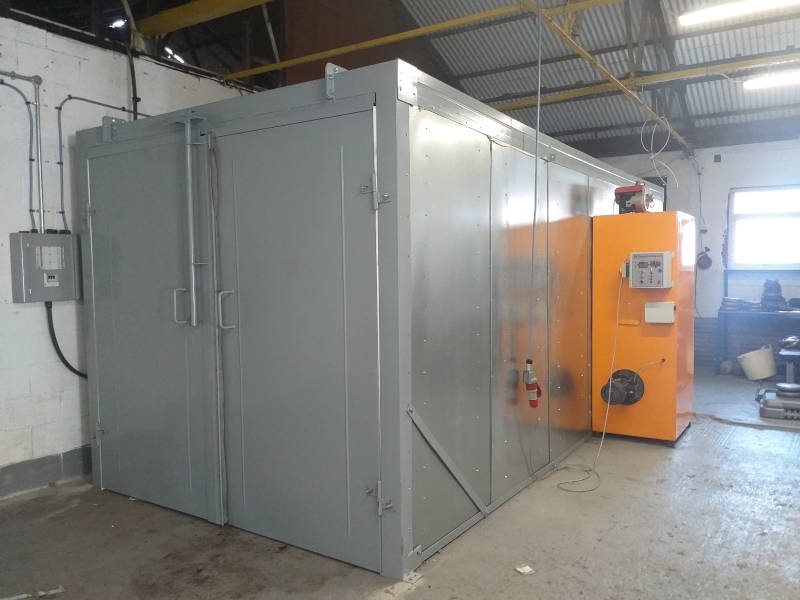
Oven walls and insulation materials
The oven walls generally use a multilayer structure with suitable insulation materials to minimize heat transfer from the inside to the surrounding environment. The thermal insulation performance of the oven walls directly affects temperature stability, heat loss, and energy efficiency during operation. The type and thickness of insulation material should be selected based on the operating temperature, oven structure, and specific requirements of each project.
Heating system
The heating system supplies the heat required to bring the air inside the oven to the specified processing temperature. Depending on the oven scale and operating conditions, the heat source may be electric, gas-fired, or another suitable heating method. Heating capacity should be calculated based on the drying zone dimensions, product weight, production capacity, required temperature, heating time, and heat losses of the system.
Hot-air circulation and distribution system
Circulation fans move hot air through the treatment areas and create an appropriate airflow inside the oven. Ducts, air distribution outlets, and return-air paths are arranged to control airflow direction and volume while minimizing temperature differences between different areas of the drying zone. For large or complex-shaped products, airflow calculations require particular attention to ensure adequate heat transfer.
Conveyor and material handling system
In automated painting lines, products are typically transported through the oven by conveyors, overhead hanging systems, or other suitable handling mechanisms. The conveying speed must be coordinated with the oven length and required processing time. The conveyor structure, hanging hooks, and fixtures must also be suitable for the product load, operating temperature, and product geometry to ensure stable transportation.
Inlet and outlet doors and heat-loss reduction solutions
The inlet and outlet areas are designed according to the method used to load products into and unload them from the oven. Depending on the configuration, the system may use doors, air curtains, thermal curtains, or other structural solutions to minimize heat exchange between the oven interior and the surrounding environment. Proper control of these areas also helps maintain stable thermal conditions within the treatment zone.
Control and safety system
The drying oven can be equipped with temperature sensors, controllers, monitoring devices, and alarm functions to control the heating process. Safety systems may include emergency stop functions, abnormal-temperature alarms, and protective mechanisms associated with the heating system. The specific configuration should be designed according to the heat source, operating method, and safety requirements of each production line.
Operating principle of a drying oven in a painting line
A drying oven in a painting line operates based on the transfer of heat from the heating system to the air inside the oven and subsequently from the air to the product and coating on its surface. Depending on the design, heat can be transferred to the product through convection, radiation, or a combination of different heat-transfer methods. In industrial drying ovens, forced convection is commonly used to actively circulate and distribute hot air throughout the treatment zone.
As the product enters the oven, its temperature gradually increases until it reaches the conditions required for drying or curing. For thermosetting powder coatings, heating causes the powder to melt and flow evenly over the surface, followed by a curing reaction that forms the finished coating film. Actual processing conditions must comply with the specifications of the coating system and should be evaluated based on the product temperature and the time it remains under the required thermal conditions. If the product does not reach the required temperature or receive sufficient processing time, the coating may not cure completely, which can affect adhesion and the mechanical properties of the coating. Conversely, treatment at temperatures or for durations beyond the recommended range may also affect coating color and quality. Therefore, oven design should focus on temperature uniformity, temperature control, and residence time rather than only the temperature set point on the controller. For automated production lines, conveyor speed, drying-zone length, and operating temperature must be calculated together to ensure that products receive sufficient treatment before moving to the next process. These parameters provide an important basis for determining oven dimensions, heating capacity, and hot-air circulation system configuration.
Types of drying ovens in painting lines
Convection drying oven
A convection drying oven uses hot air to transfer heat to the product. In industrial systems, convection can be achieved through natural or forced convection, with circulation fans used to actively deliver hot air to different areas inside the oven. In a forced-convection drying oven, heated air is moved by fans through the air distribution system into the treatment zone and then collected and recirculated. Controlling airflow volume, direction, and the location of air outlets helps improve heat distribution within the oven, particularly when processing products with different sizes or shapes. Convection drying ovens are widely used in industrial painting lines because they can process products continuously and can be readily integrated with conveyors. However, heat-transfer performance depends on various factors, including temperature, airflow volume, air-duct design, residence time, and product characteristics. Therefore, the system should be engineered according to actual operating conditions rather than applying a fixed configuration to every production line.
Infrared drying oven
An infrared drying oven uses infrared radiation to transfer thermal energy directly to the product surface and coating. Unlike convection, this method does not rely entirely on heating the entire volume of air inside the oven and can therefore be used for rapid heating in suitable areas or process stages. In painting lines, infrared systems can be used as the primary heating method or combined with convection, depending on product characteristics and processing requirements. The effectiveness of this method depends on the distance between the radiation source and product, the radiation absorption characteristics of the surface, product geometry, and the arrangement of the heating elements. For products with complex geometries or applications requiring deep and uniform heat transfer, the arrangement of infrared sources should be carefully evaluated. Therefore, the selection of an infrared oven should be based on testing and specific process requirements rather than assuming that infrared heating is always faster or more energy-efficient than convection.
Combined convection and infrared drying oven
A combined drying oven uses convection and infrared radiation simultaneously or sequentially. This configuration makes it possible to take advantage of the characteristics of both heat-transfer methods, such as using infrared radiation for rapid heating and convection to maintain stable thermal conditions within the treatment zone. The combined approach can be suitable for production lines requiring multi-stage heating-cycle control or for products with complex heat-transfer characteristics. However, the equipment configuration is generally more complex and requires coordinated calculations for heating capacity, airflow, radiation-source positioning, temperature, and processing time. Therefore, the selection between convection, infrared, or a combined system should be based on the coating type, substrate material, product dimensions, production capacity, coating-quality requirements, and operating conditions of the production line.
Drying oven for powder coating lines
Characteristics of a drying oven for powder coating lines
A drying oven for powder coating lines is used to heat and cure the powder coating after the product has undergone surface treatment and powder application. When entering the drying zone, the product is heated so that the powder melts, flows evenly over the surface, and undergoes the curing process required by the coating system. For thermosetting powder coatings, the coating generally consists of a base resin, curing agent, pigments, and suitable additives. Once the required thermal conditions are reached, the components in the coating undergo a cross-linking reaction, forming a coating film with the mechanical and chemical properties designed for the coating system. Curing conditions should be determined based on the technical specifications provided by the coating manufacturer. The air temperature inside the oven is not the only factor that needs to be controlled; the actual product temperature and the time the product remains under the required thermal conditions also play important roles.
Benefits of a drying oven in a powder coating line
Using a properly configured drying oven helps provide more consistent control over the powder coating curing process, particularly in continuous production lines. When integrated with a conveyor system, products can be transported through the treatment zone according to a calculated residence time, reducing reliance on manual handling and supporting production-line productivity. An appropriate hot-air circulation and temperature-control system helps minimize temperature differences between different areas of the oven. This is important for reducing the risk of uneven treatment while supporting consistent color, gloss, and coating properties according to the requirements of the coating system. In addition, suitable insulation and an appropriate air recovery and recirculation system can help reduce heat loss during operation. Actual performance depends on the oven design, heating source, production capacity, and operating conditions of each production line.
Drying oven for water-based painting lines
Characteristics of a drying oven for water-based painting lines
A drying oven in a water-based painting line is used to remove residual moisture or solvent from the coating after the painting process, depending on the characteristics of the coating system and process technology. Unlike a curing oven for powder coatings, the temperature and processing time for a water-based paint drying oven should be determined based on the coating composition, film thickness, product material, and required quality after drying.
The oven can be designed with multilayer walls and suitable insulation materials to minimize heat loss. Inside the oven, circulation fans distribute hot air throughout the treatment area and help maintain more stable thermal conditions. In automated lines, products can be transported through the oven by conveyor or hanging systems according to the calculated residence time. Depending on the type of water-based paint and process requirements, the system may require appropriate fresh-air supply and exhaust solutions to control moisture, solvent vapors, or other volatile substances generated during drying. The specific configuration should be determined based on the coating material specifications and project safety requirements.
Benefits of a water-based paint drying oven in a painting line
A properly designed drying oven helps control the thermal conditions and processing time of water-based coatings, thereby supporting stable drying before products move to the next stage. An appropriate air circulation and heat distribution system also helps minimize differences in drying conditions across different areas of the product.
When integrated with a conveyor, the drying oven can operate continuously according to the production cycle, reducing waiting time between processes and supporting higher productivity. Control of temperature, airflow volume, and residence time also gives manufacturers greater control over maintaining consistent coating quality between batches or production cycles.
Factors to consider when calculating drying oven dimensions
Product dimensions and geometry
Product dimensions are the first basis for determining the effective dimensions of the drying oven. In addition to product length, width, and height, the required clearance between the product and oven walls, air distribution system, and other products within the same cycle should be considered. For products with complex geometries, the hanging arrangement and product orientation can also affect airflow and heat transfer.
Product weight and line load
Product weight affects the amount of heat required to bring the product to the required processing conditions. At the same time, the total load on conveyors, hanging systems, or fixtures must be calculated to select an appropriate material handling mechanism. Heavy products generally require more detailed evaluation of load capacity, heating capacity, and conveying speed.
Production capacity and residence time
Required production capacity is one of the key parameters for determining oven length and configuration. For continuous lines, the number of products to be processed per hour, spacing between products, and conveyor speed must be determined. These parameters can then be used to calculate the required residence time and corresponding drying-zone length.
Coating type and process requirements
Each coating system has different drying or curing conditions. Therefore, oven design requires clear identification of the coating type, application method, coating thickness, and processing specifications provided by the coating manufacturer. These parameters provide the basis for selecting operating temperature, residence time, heat-transfer method, and heating capacity.
Temperature range and temperature uniformity
The design temperature must meet the processing requirements of the product and coating system. In addition to the set temperature, temperature uniformity at different locations within the drying zone should be evaluated to minimize uneven heat treatment. For large ovens, the arrangement of fans, air outlets, return-air ducts, and heat sources requires careful calculation.
Product conveying method
The conveying method directly affects oven dimensions and structure. Products may be transported by chain conveyors, overhead conveyors, roller conveyors, or dedicated handling mechanisms depending on product characteristics. Conveying speed must be synchronized with the residence time inside the oven to ensure that products reach the required processing conditions before leaving the drying zone.
Fresh-air supply and exhaust requirements
Depending on the coating type and process technology, the oven may require fresh-air supply, exhaust, or air recirculation systems. Airflow design must meet process requirements while minimizing the influence of the external environment on thermal conditions inside the oven. For coating systems that generate vapors or volatile substances during drying, ventilation and safety requirements should be considered from the design stage.
Design of a drying oven for a painting line
Insulation materials and oven structure
The oven structure must provide adequate heat resistance, relative airtightness, and the ability to minimize heat loss under operating conditions. Insulation materials should be selected based on the operating temperature and project requirements. In addition to thermal performance, the design should facilitate equipment installation, inspection, cleaning, and maintenance.
Heating system selection
The heating source may be electric, gas-fired, or another method suitable for the factory conditions. Selection should not be based solely on heating capacity but should also consider energy costs, utility availability, installation conditions, temperature-control requirements, and production characteristics. Heating capacity must be calculated based on the actual thermal load rather than simply the oven dimensions.
Hot-air circulation system design
The hot-air circulation system directly affects heat distribution within the oven. Fans, ducts, air outlets, and return-air paths should be arranged appropriately to create stable airflow through the product area. For products with complex geometries, airflow analysis helps minimize areas with excessively low or high temperatures.
Temperature control system
The control system should maintain the temperature at the set value and allow operators to monitor the oven status. Depending on the level of automation, the system may integrate temperature sensors, controllers, operator interfaces, alarms, and data-recording functions. For continuous lines, temperature control should be coordinated with residence-time monitoring and conveyor speed.
Material handling and production-line integration
A drying oven does not operate independently but is normally integrated with upstream and downstream processes such as pretreatment, painting, cooling, and conveying. Therefore, the design should coordinate the inlet and outlet positions, conveyor height, conveying speed, load capacity, and maintenance space. An appropriate configuration helps minimize stoppages between processes and maintain a continuous production cycle.
Operational safety and maintenance
Safety measures should be considered from the design stage, including heating-system protection, abnormal-temperature alarms, emergency stop functions, and protective mechanisms appropriate for the selected heat source. In addition, the oven should provide convenient access for inspecting fans, heating elements, sensors, air ducts, and insulation. A maintenance-friendly design helps reduce downtime and supports long-term operating performance.
Drying oven capacity, energy efficiency, and maintenance
Drying oven capacity
Oven capacity should be determined based on production volume, product weight, processing temperature, and required residence time. Selecting an oven with insufficient capacity may prevent the system from meeting the production cycle, while excessive capacity can increase investment and operating costs. Therefore, heating capacity and drying-zone dimensions should be calculated together with the actual production requirements of the line.
Energy efficiency
The oven's energy consumption depends on the heating source, insulation structure, air recirculation capability, frequency of door opening, and product load. Optimizing insulation, controlling airflow, and minimizing heat loss at the inlet and outlet can help improve energy efficiency. For continuously operating production lines, energy costs should be considered from the equipment-configuration selection stage.
Drying oven maintenance
The drying oven should be inspected periodically to maintain heating, air circulation, and temperature-control performance. Components such as fans, motors, sensors, heating elements, ducts, and insulation should be inspected according to an appropriate maintenance schedule. Regular cleaning and inspection also help identify abnormal conditions at an early stage, minimize failures, and maintain stable production-line operation.
Criteria for selecting a drying oven for a painting line
When selecting a drying oven for a painting line, manufacturers should simultaneously consider product type, product dimensions and weight, coating type, processing temperature and time, required production capacity, and conveying method. These parameters directly determine the dimensions of the drying zone, heating capacity, hot-air circulation configuration, and conveyor speed.
In addition to technical specifications, energy efficiency, maintainability, automation level, and integration with the existing production line should also be evaluated. A suitable system should not only meet the product's processing requirements but also provide stable operation under actual production conditions.
Design and manufacturing features of CNC-VINA drying ovens for painting lines
CNC-VINA designs and manufactures drying ovens for painting lines according to the actual requirements of each project, taking into consideration the product type, painting technology, production capacity, processing temperature, and conveying method. The system can be configured with an insulated oven chamber, heating system, circulation fans, air distribution ducts, conveyor, and control system according to the required level of automation.
During the design process, factors such as product dimensions, residence time, temperature uniformity, conveying load, maintenance accessibility, and available installation space are considered as an integrated system. The drying oven can be integrated with pretreatment, painting, drying, cooling, and conveying processes to form a complete painting line according to production requirements.
A drying oven in a painting line is one of the key pieces of equipment determining the drying and curing performance of coatings in an industrial painting line. Oven selection and design should be based on multiple factors, including coating type, product material, dimensions, production capacity, processing temperature, residence time, conveying method, and temperature-uniformity requirements. When these parameters are properly coordinated, the drying oven can operate stably and meet the requirements of the production line.
With experience in designing, manufacturing, and integrating industrial automation systems and production lines, CNC-VINA can provide consulting and implement drying ovens for painting lines according to product requirements, production capacity, and actual factory conditions. From the heating and hot-air circulation systems to insulation, conveyors, and controls, the relevant components are considered as an integrated solution to meet the production process of each manufacturer.
VIETNAM TECHNOLOGY APPLICATION & CNC JOINT STOCK COMPANY
Factory: Song Cung Industrial Cluster, Dong Thap Commune, Dan Phuong District, Hanoi, Vietnam.
Office: Rox Tower Goldmark City, 136 Ho Tung Mau Street, Phu Dien Ward, Hanoi, Vietnam.
Tel: +84 916 639 355 / +84 915 744 664
Website: https://cncvina.com.vn/ | https://cncviname.com.vn/
Email: Sales01@cncvina.com.vn | Sales04@cncvina.com.vn

 Tiếng
Việt
Tiếng
Việt
 Tiếng
Anh
Tiếng
Anh
 Tiếng
Nhật
Tiếng
Nhật




 Tiếng Anh