 Tiếng
Việt
Tiếng
Việt
 Tiếng
Anh
Tiếng
Anh
 Tiếng
Nhật
Tiếng
Nhật



 Tiếng Anh

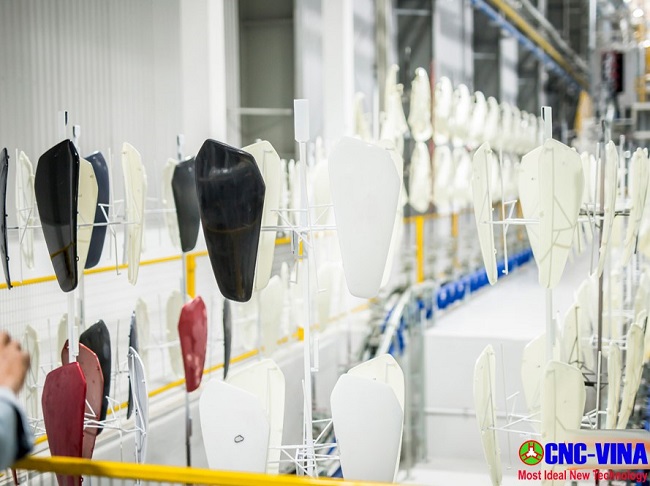
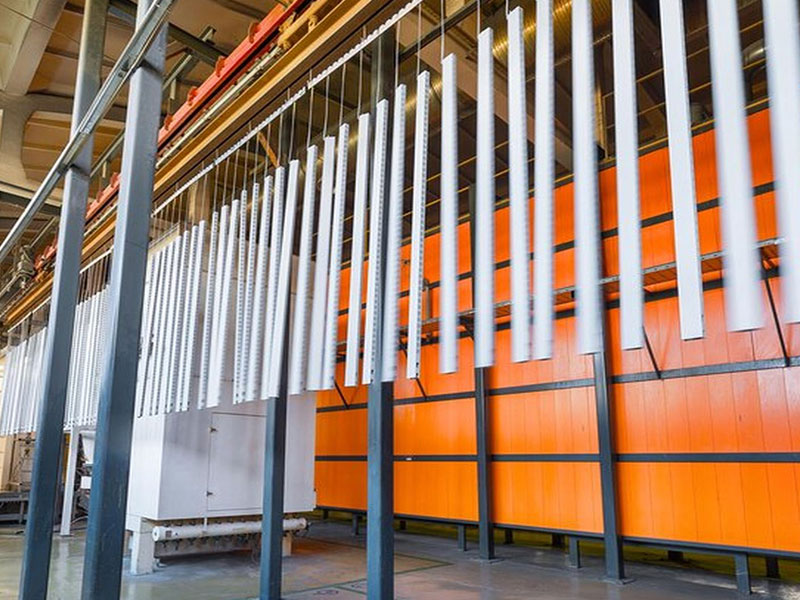
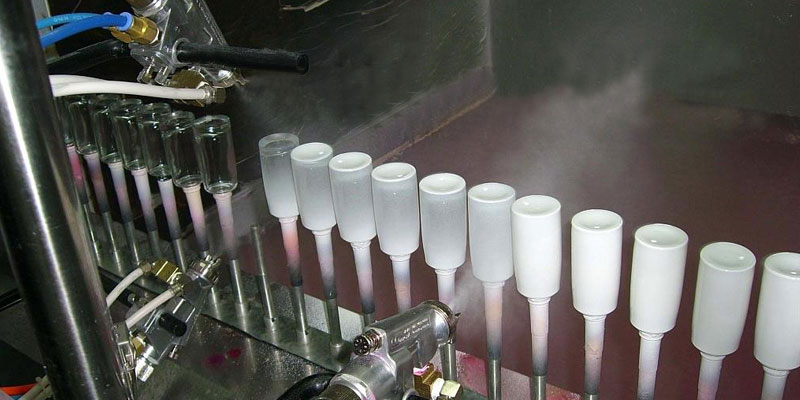
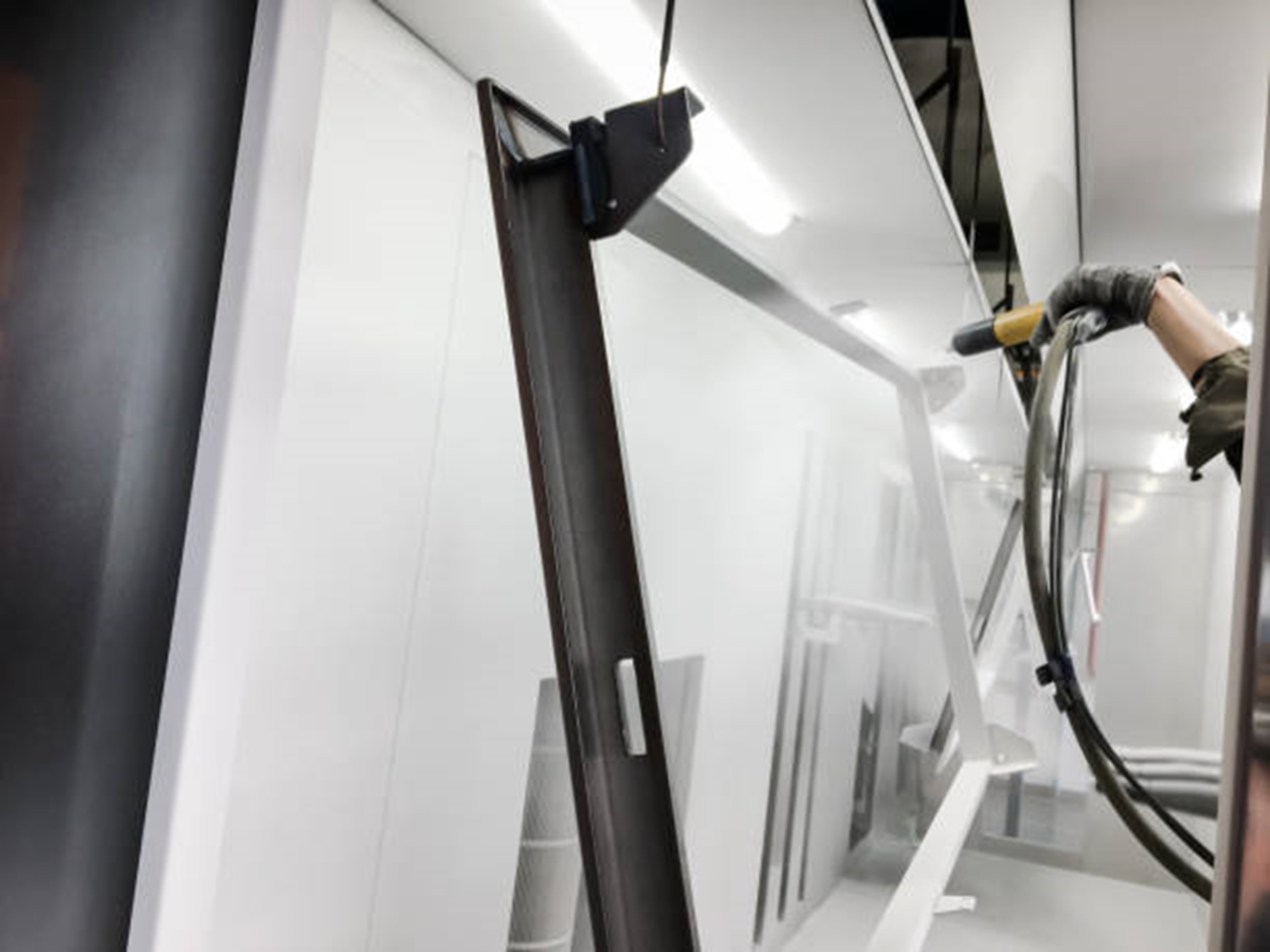
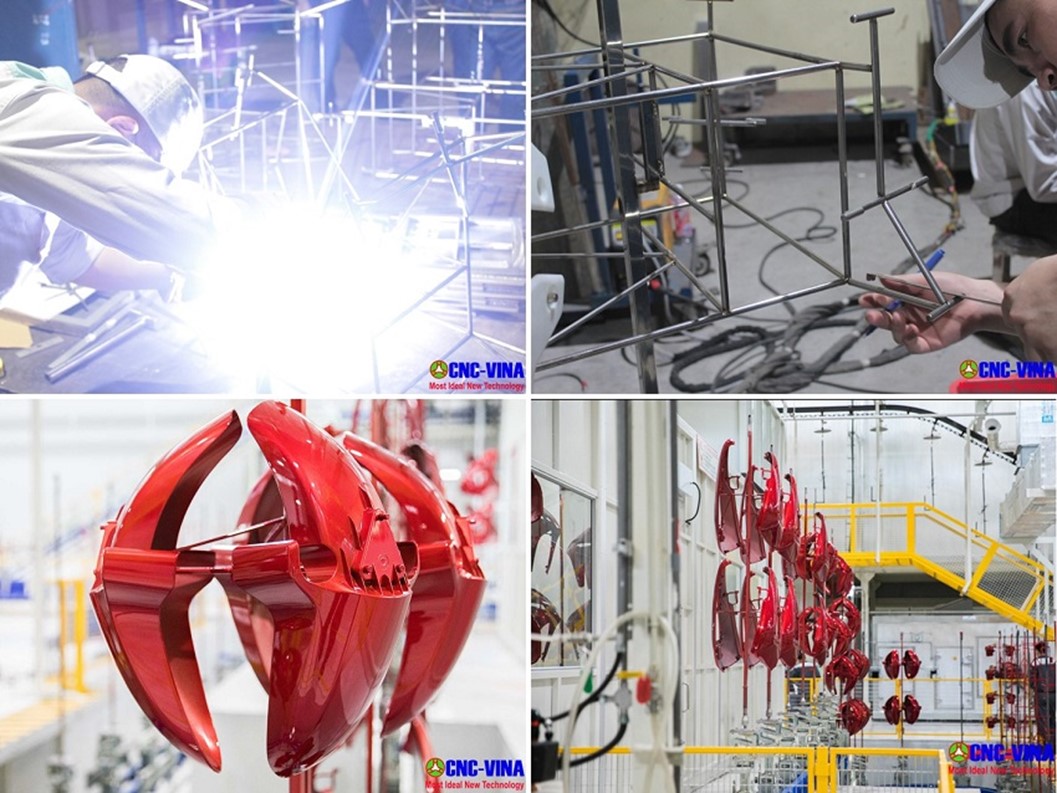
Painting product hanging jig
Painting product hanging jig is a fixture used to secure and maintain the position of products as they are transported through different stages of a painting line. The jig is typically connected to a conveyor, chain conveyor, hoist, or lifting mechanism to move products through pretreatment, painting, curing, and finishing processes. Depending on the product’s shape, dimensions, weight, and painting requirements, the jig is designed with an appropriate structure and clamping arrangement to keep the product stable throughout the conveying process.
In automated painting lines, particularly those equipped with robotic spray-painting systems, jig design directly affects the accessibility of product surfaces and the stability of the painting process. The mounting position, hanging orientation, spacing between workpieces, and overall jig dimensions must be carefully considered to suit the robot’s operating path, painting equipment, conveyor, and other processing areas. The jig must also ensure that the product does not shift or change its orientation excessively while moving through different stages of the line.
VIETNAM CNC & TECHNOLOGY APPLICATION JOINT STOCK COMPANY
Hotline: +84.916 63 9355 / +84.915 74 4664
Email: Sales01@cncvina.com.vn / Sales03@cncvina.com.vn
Product description

Overview of painting product hanging jigs
Painting product hanging jig is a fixture used to secure and maintain the position of products as they are transported through different stages of a painting line. The jig is typically connected to a conveyor, chain conveyor, hoist, or lifting mechanism to move products through pretreatment, painting, curing, and finishing processes. Depending on the product’s shape, dimensions, weight, and painting requirements, the jig is designed with an appropriate structure and clamping arrangement to keep the product stable throughout the conveying process.
In automated painting lines, particularly those equipped with robotic spray-painting systems, jig design directly affects the accessibility of product surfaces and the stability of the painting process. The mounting position, hanging orientation, spacing between workpieces, and overall jig dimensions must be carefully considered to suit the robot’s operating path, painting equipment, conveyor, and other processing areas. The jig must also ensure that the product does not shift or change its orientation excessively while moving through different stages of the line.
Requirements for Painting Product Hanging Jigs
The design and fabrication of a painting product hanging jig should be based on the actual characteristics of the product and the configuration of the production line. Factors such as dimensions, weight, shape, mounting position, load capacity, hanging method, conveyor speed, and spacing between products should be determined before the jig structure is designed. For automated robotic painting lines, the jig should hold the product in a relatively stable position with sufficient repeatability between production cycles. This allows the robot to consistently operate within the programmed working area while minimizing areas of the product that are difficult to access or may be obstructed during spray painting.
The jig structure must also be compatible with the line’s conveying method. For conveyor or chain conveyor systems, the jig dimensions and connection points must be compatible with the suspension mechanism and the allowable load capacity of the system. For dipping processes, the jig should ensure that the product enters and exits the treatment tank in the required orientation while minimizing the retention of process solution on the product surface as it moves to the next stage.
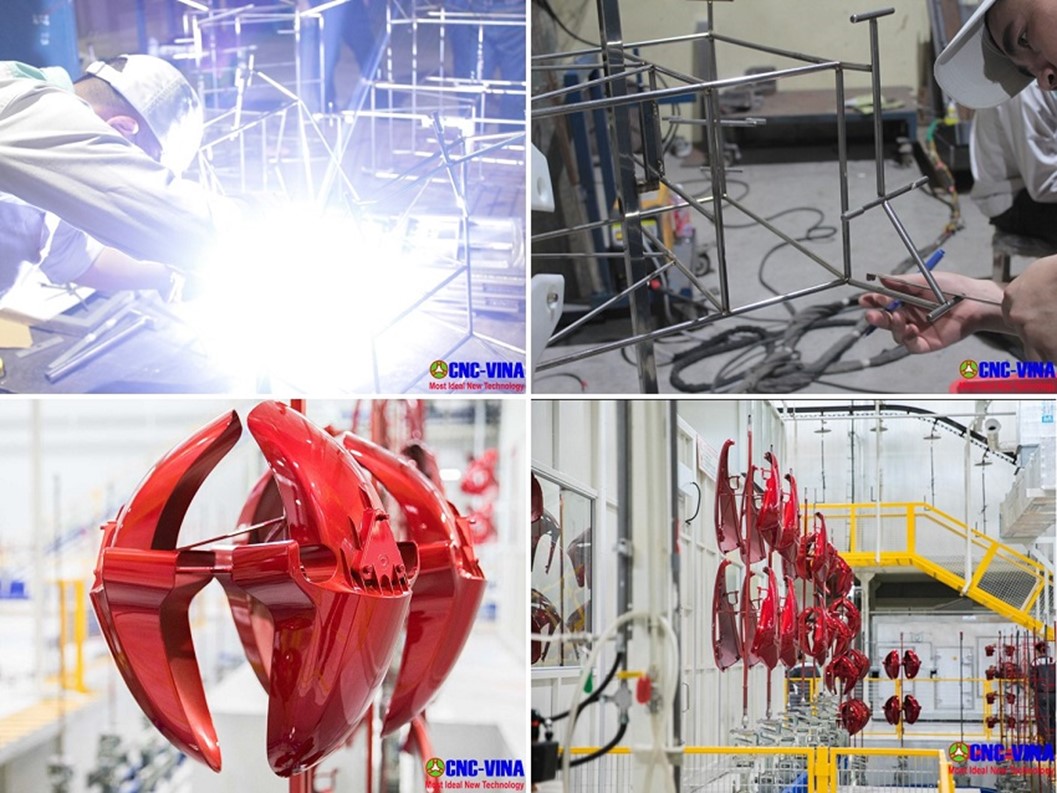
CNC-VINA can design and manufacture painting product hanging jigs based on the characteristics of each product and the configuration of the production line. The design can be developed in coordination with conveyors, hoists, lifting mechanisms, and painting equipment to ensure reliable product fixturing, smooth transportation, and adequate surface accessibility throughout the entire process.
Technical requirements for painting product hanging jigs
Painting product hanging jigs must be designed to suit the characteristics of the product, the conveying method, and the operating conditions of each production line. In addition to securely holding the product in position, the jig must meet requirements for mechanical strength, mounting-position accuracy, heat resistance, drainage, and compatibility with conveyors, hoists, or lifting mechanisms. For production lines that include high-temperature curing processes, the jig material and structure should be selected and designed to minimize deformation during heating. The connection points between the jig and conveyor should also be machined according to the specified tolerances to ensure proper installation, stable transportation, and repeatable product positioning.
The shape and location of the mounting points should be determined based on the product’s dimensions, weight, and geometry. Sufficient spacing between products mounted on the same jig should be maintained to allow the painting equipment to access the required surfaces while minimizing mutual obstruction between parts and interference with airflow inside the spray booth. For products that pass through spray-washing or immersion-based surface treatment processes, the jig should support the product in an appropriate orientation to minimize the retention of process solution on its surfaces. Proper positioning of mounting points and hanging orientation can also help reduce the risk of water, treatment solution, or paint accumulating in unwanted areas.
For automated painting lines, particularly systems equipped with robots, the jig must maintain the product in a relatively stable position throughout the conveying process. This stability is important for ensuring the repeatability of the robot’s spray trajectory and the accessible working area of the spray gun. For projects requiring tight control of jig dimensions or mounting positions, CNC-VINA can use inspection gauges to check critical dimensions and positions during jig fabrication and acceptance testing.
Specific parameters such as operating temperature, conveyor speed, load capacity, tolerances at connection points, spray-washing conditions, and product stability requirements should be determined according to the actual configuration of each production line. A fixed set of parameters should not be applied to all types of jigs, as each product and painting process has different fixturing requirements.
Types of painting product hanging jigs
Single-part hanging jig
A single-part hanging jig is used when the product is large, has a complex shape, or requires relatively tight control of its mounting position. The product is secured at one or more mounting points on the jig and connected to the conveyor system for transportation through the different stages of the production line.
This configuration allows the mounting points to be arranged according to the specific geometry of each product while providing sufficient clearance for the painting equipment to access the required surfaces. During the design process, the product weight, center of gravity, conveyor load capacity, and safe clearance from surrounding equipment should be considered together.
Multi-part hanging jig
For small or medium-sized components, a single jig can be designed to hold multiple products within the same conveying cycle. The number of products mounted on each jig should be determined based on the allowable load, component dimensions, spacing between products, and the accessibility requirements of the painting equipment. Increasing the number of products per jig can improve throughput per conveying cycle. However, excessive product density may increase surface obstruction or negatively affect painting quality. Therefore, the hanging density should be determined in conjunction with the robot or spray-gun trajectory, product orientation, and spray-booth configuration.
Jig for special-shaped products
For products with asymmetrical shapes, multiple recessed areas, or specific mounting requirements, the jig should be designed according to the actual geometry of the component rather than using a standard structure. Contact points should be positioned appropriately to secure the product while minimizing obstruction of the surfaces that need to be painted. If the product passes through multiple processing stages, the fixturing arrangement should also be checked to ensure that the product does not interfere with treatment tanks, spray booths, curing ovens, or other mechanisms along the production line.
Jig integrated with conveyor system
Painting product hanging jigs are typically designed in coordination with the conveyor, chain conveyor, hoist, or lifting mechanisms of the production line. The connection points, overall dimensions, and load capacity of the jig must be compatible with the conveying mechanism to ensure stable product transportation throughout the entire process. For automated production lines, coordination between the jig and conveyor also involves conveying speed, product spacing, stopping positions, and compatibility with robots or other processing equipment. Therefore, the jig should not be designed independently of the conveying system but should be considered as part of the overall line design from the initial engineering stage.
Jig for Robotic Painting Lines
For production lines equipped with robotic spray-painting systems, jig design must place particular emphasis on product surface accessibility. The mounting position, hanging orientation, jig frame dimensions, and spacing between components should be checked together with the robot’s working envelope and programmed trajectory. A suitable jig not only keeps the product stable but also minimizes surface obstruction, allowing the spray gun to access the required areas and maintain the specified spray distance. During the design process, the jig, product, and robot trajectory may need to be evaluated together to minimize the risk of collision and the occurrence of areas that are difficult to paint.
CNC-VINA can design and manufacture hanging jigs based on the characteristics of each product, conveying method, and painting-line configuration. The jig solution can be developed in coordination with conveyors, hoists, robots, spray booths, and surface-treatment processes to ensure reliable fixturing, stable transportation, and adequate product accessibility throughout the entire process.
Rotating jig
Description and function
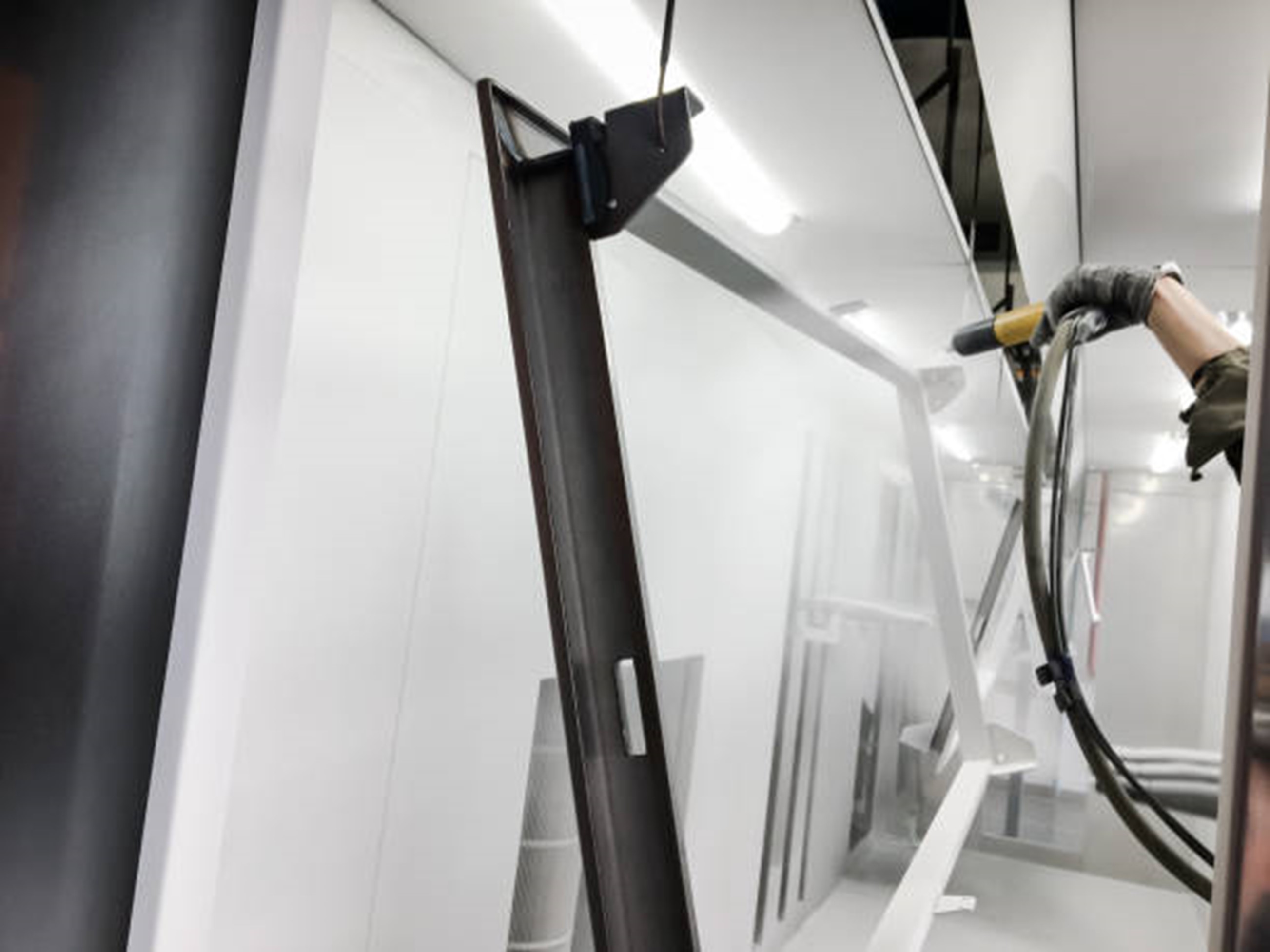
Basically, rotating jigs for paint products are similar to hanging jigs. They are also designed in many shapes, fixed or movable, etc. The main difference is that these types of jigs are equipped with additional rotating shafts, usually driven by motors or compressed air.
Benefits and disadvantages
The rotating jig basically solves the disadvantages of the hanging jig, it helps to coat many surfaces of the product without having to reset the jig or arrange or move too many nozzles, it helps save time. and increase the flexibility of the coating process. However, due to the additional degrees of freedom, the structure becomes more complex and comes with a price tag. There are additional issues that need to be calculated such as rotation direction, rotation angle, rotation speed and other factors such as control, stuck errors, risk of entanglement in moving mechanisms, etc.
Jig conveyor
Description and function
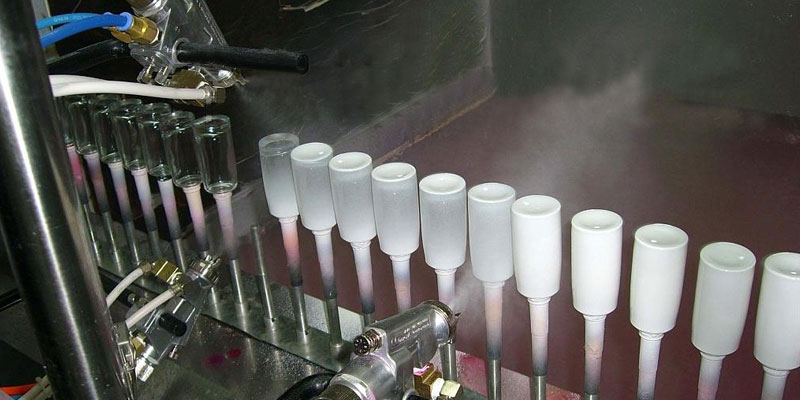
The jig conveyor is a conveyor system designed with a special surface with mechanisms to attach a series of paint product jigs that can be hanging or rotating. They are often found in highly automated coating lines. They come in two common forms: the bottom moving conveyor attached to the floor, the attachments facing up or the hanging conveyor moving overhead with the attachments facing down.
Benefits and advantages
The jig conveyor can hold a series of products at once. Its cyclic movement combined with automatic paint booths helps to maximize the time spent on coating operations as well as promote automation and reduce receiving costs. process and increase the quality of product surface coating. What needs to be considered is that the cost of investing in such a fixture conveyor system is very large because of the complexity in design, number of details, fixtures, control systems, etc., not every business can afford it. can invest.
Advantages of painting product hanging jigs in painting lines
Maintaining stable product position
One of the key functions of a painting product hanging jig is to maintain the product’s position and orientation relatively stable throughout the conveying and painting processes. When the mounting points are appropriately positioned according to the shape and weight of the component, the product can move through each process with the required level of stability.
For automated painting lines, product positioning is directly related to the working envelope of the robot and spray gun. A properly designed jig helps minimize product movement, changes in orientation, and obstruction of surfaces that need to be treated, thereby supporting a more consistent spray-painting process.
Supporting higher line productivity
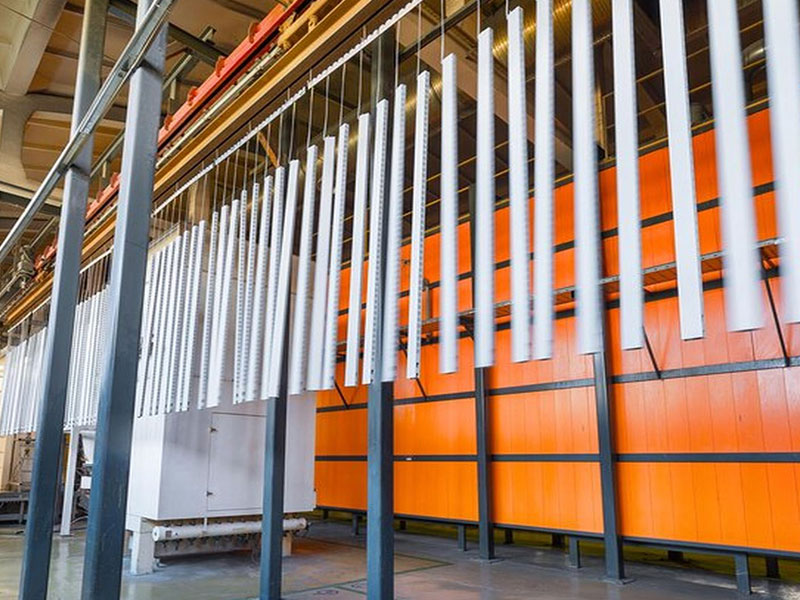
Jigs allow products to be mounted in advance on the conveying mechanism and continuously transported through the different stages of the production line. For components of suitable dimensions, a single jig can be designed to hold multiple products, increasing the number of components processed during each conveying cycle.
Actual performance depends on the conveyor load capacity, product dimensions, spacing between components, line speed, and jig arrangement. Therefore, the number of products mounted on each jig should be calculated based on the capacity of the entire system rather than simply maximizing the number of mounting points.
Supporting robot and painting equipment accessibility
The mounting position directly affects the accessibility of product surfaces during the painting process. The jig should be designed to minimize obstruction of the surfaces to be painted while providing sufficient clearance for the spray gun or robot to move along the programmed trajectory.
For products with complex geometries, appropriately positioned mounting points can also help reduce difficult-to-reach areas and minimize the need for significant changes to the painting equipment or spray-painting method. This is an important factor that should be considered during the jig design stage rather than addressed after the production line has been commissioned.
Convenient product loading and unloading
A properly designed jig should not only hold the product securely during transportation but also facilitate product loading and unloading. The mounting-point locations, locking mechanism, product orientation, and operator access space should be determined based on the actual operating procedures at the factory.
For high-volume production lines, the time required to load and unload products can affect the production cycle. Therefore, jig design needs to balance product retention, transportation stability, and operator handling time.
Customizable for different products and production Lines
There is no single jig structure suitable for every type of product. Product dimensions, weight, shape, center of gravity, surfaces to be painted, and conveying method can all affect the jig design.
For existing production lines, the jig must also be compatible with the conveyors, chain conveyors, hoists, and other equipment already in operation. For new production lines, the jig solution can be designed in coordination with the conveying system, robots, spray booth, and surface-treatment processes from the initial project stage.
Limitations and requirements when using painting product hanging jigs
Design and fabrication costs
The cost of a jig depends on factors such as material, dimensions, load capacity, number of mounting points, structural configuration, accuracy requirements, and integration method with the production line. Jigs with complex mechanisms or those specifically designed for specialized products generally require more extensive fabrication and inspection than jigs with simple structures. Therefore, instead of considering only the initial fabrication cost, manufacturers should evaluate the jig’s long-term usability, adaptability to product changes, and compatibility with the existing production line.
Technical requirements and design accuracy
As a component directly involved in product transportation, a jig requires accurate determination of parameters such as load capacity, mounting positions, structural rigidity, overall dimensions, and connection points to the conveyor. For automated painting lines, the requirements are more stringent because the product position must correspond to the working envelope of the robot and painting equipment. If the jig structure is not properly designed, the product may vibrate, change orientation, or create obstructed areas during the painting process. Therefore, jig design should be based on product drawings, operating conditions, and the actual production-line configuration rather than using a fixed structure for different types of components.
Factors to consider when installing and using painting product hanging Jigs
Installation space and production-line layout
When calculating the space required for a jig, it is necessary to consider not only the dimensions of the jig itself but also the dimensions of the product after mounting, the spacing between products, and the movement envelope of the entire system. For conveyor-based production lines, the conveying path, turning radius, working height, and clearance between the jig and equipment such as treatment tanks, spray booths, curing ovens, and factory structures should be checked. Proper layout planning helps minimize collision risks and facilitates operation and maintenance. Particularly in painting areas, the facility layout should be planned in coordination with the ventilation system, air supply and treatment systems, operator work areas, and factory safety requirements. The jig is only one component of the overall production line and should not be designed independently of the process layout.
Compatibility with existing production lines
For operating factories, jig design should take into account compatibility with existing conveyors, chain conveyors, hoists, and conveying mechanisms. Parameters such as allowable load, hanging-point dimensions, conveying speed, and spacing between jigs should be verified before fabrication. If the new jig can be used with the existing system, the manufacturer can limit the scope of modifications and reduce the number of components that need to be changed. Conversely, if product changes or increased production volume exceed the capacity of the existing system, the conveyor, hanging mechanism, and related equipment should be evaluated together as part of the upgrade plan.
Adaptability to product changes
During production, manufacturers may change product models, dimensions, or product types. Therefore, from the design stage, it is important to determine whether the jig can be adjusted or used for multiple product variants. For production lines handling multiple product models, manufacturers may consider jigs with adjustable mounting points, replaceable structures, or dedicated mounting components for specific product groups. This approach provides greater flexibility when products change without requiring the entire system to be redesigned.
Operational safety
Jig safety should be considered in terms of both product retention and movement throughout the production line. The structure must be suitable for the designed load capacity, while connection points should be inspected to minimize the risk of products becoming detached or falling. Adequate clearance from surrounding equipment must also be maintained. For jigs used on conveyors or lifting mechanisms, potential conditions such as product misalignment, jig obstruction, loss of connection, or foreign objects within the movement area should be considered. Depending on the line configuration, sensors, locking mechanisms, travel-limit devices, and interlocking functions can be incorporated to help control abnormal conditions.
In addition to equipment design, operators should be properly instructed on product loading and unloading procedures, jig pre-use inspections, and applicable factory safety requirements. Personal protective equipment should also be selected according to the characteristics of each production area and work process.
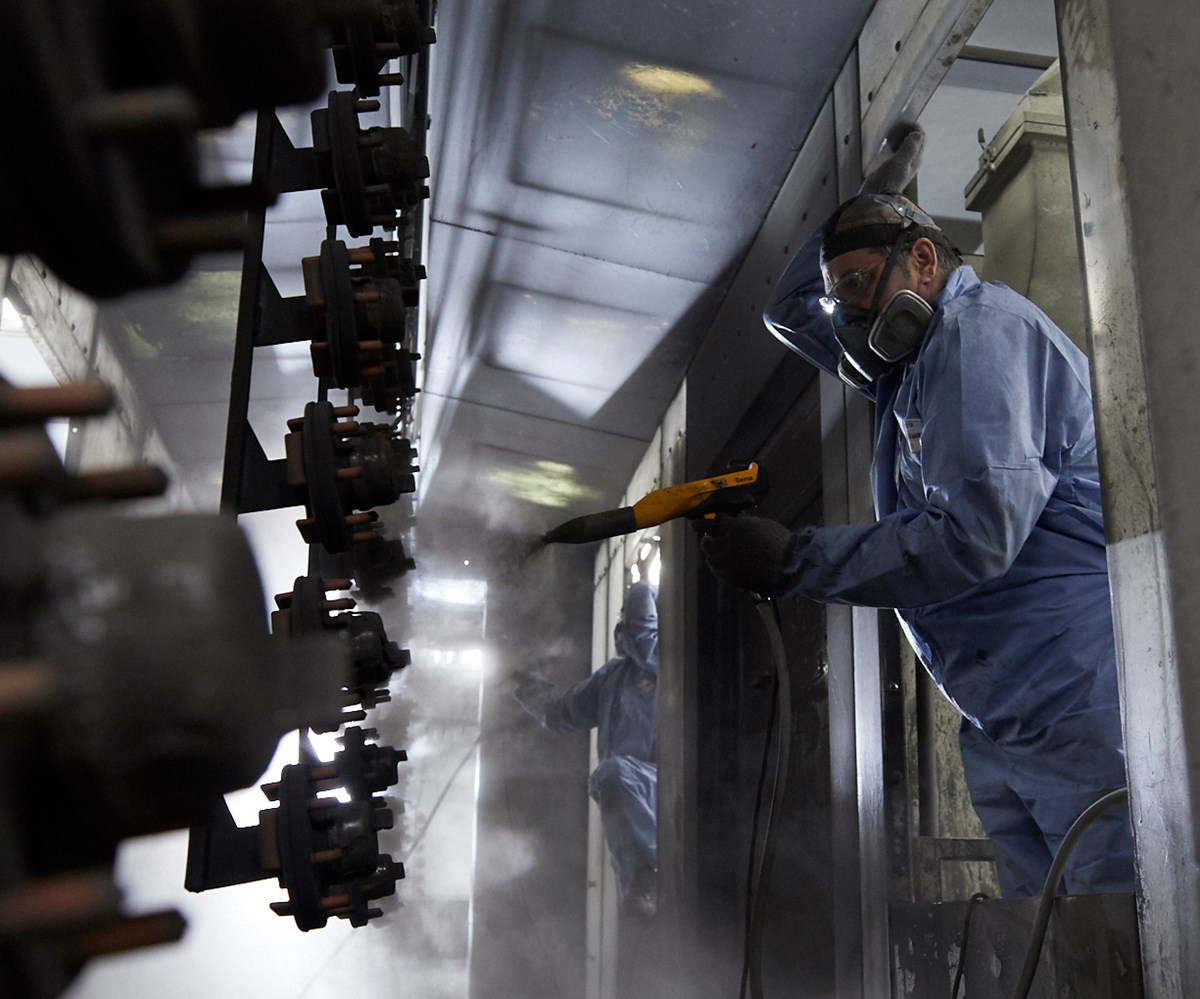
The design and use of painting product hanging jigs should be considered in relation to the technical requirements and applicable standards for the entire production line. Depending on the product type, painting technology, equipment used, and regulations applicable in each market, a project may involve requirements related to machine safety, electrical equipment, control systems, ventilation, fire prevention and protection, environmental protection, and occupational safety.
For the jig itself, key considerations include load capacity, structural stability, accuracy at connection points, the ability to securely hold the product during transportation, and safe clearance from surrounding equipment. If the jig is integrated with a conveyor, hoist, robot, or rotating mechanism, requirements related to movement, interlocking, and operator protection should also be considered as part of the overall system design. In addition to technical standards, manufacturers need to identify the mandatory legal and safety requirements applicable to the factory, production area, and specific types of equipment. Specific requirements may vary depending on the country, manufacturing sector, technology used, and project scope. Therefore, applicable standards should be identified from the design stage to avoid structural or equipment modifications after the production line has already been fabricated and installed.
For retrofit projects or the addition of jigs to an operating production line, the actual conditions of the existing system should also be assessed, including conveyor load capacity, hanging-point dimensions, conveying speed, movement clearance, and related equipment. A comprehensive assessment helps ensure that the new jig can be integrated into the production line without unnecessarily affecting ongoing production.
CNC-VINA can provide consulting and implement painting product hanging jigs based on product characteristics, conveying methods, and the technical requirements of each production line. The scope of work may include site surveys, jig structural design, material selection, fabrication, dimensional inspection, and integration with conveyors or related equipment. For projects with specific requirements for load capacity, tolerances, operating temperature, fixturing method, or operating conditions, technical specifications can be determined according to the requirements of each individual project. If your company needs painting product hanging jigs for a new production line or plans to retrofit or add jigs to an existing system, CNC-VINA can review product information, drawings, load requirements, conveyor configuration, and process requirements to evaluate an appropriate jig design solution.
CNC VIETNAM TECHNOLOGY & CNC APPLICATION JOINT STOCK COMPANY
Factory: Song Cung Industrial Point, Dong Thap Commune, Dan Phuong District, Hanoi, Vietnam
Office: Rox Tower (Rox Center Goldmark City), 136 Ho Tung Mau Street, Bac Tu Liem District, Hanoi, Vietnam
Phone: +84.916 63 9355 / +84.915 74 4664
Website: https://www.cncvina.com.vn/ ; https://www.cncviname.com.vn/