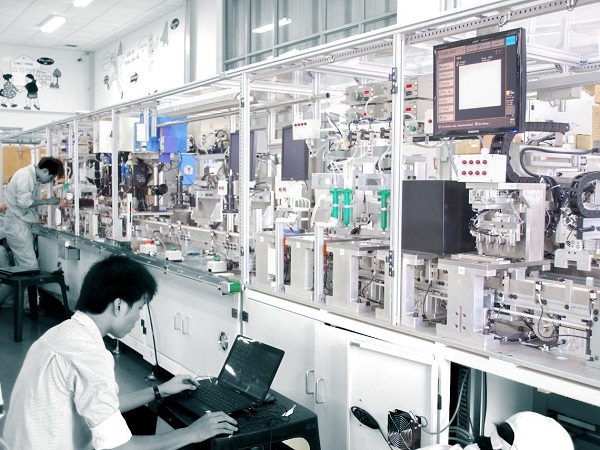
Overview of production management systems
Production management system is a solution that enables businesses to monitor, coordinate, and control production activities, from production planning and material management to monitoring production progress, output, and product quality. Depending on the scale and level of automation of a factory, the system can be implemented in various forms, such as production monitoring boards, Andon systems, Poka-Yoke solutions, management software, or integrated platforms such as MES. In modern manufacturing environments, data from machinery, production processes, and inspection results can be collected and updated in real time, helping managers monitor the operating status of production lines. The system can also be integrated with equipment such as production display boards, push buttons, signal lights, sensors, barcode scanners, PLCs, and other automation devices according to the specific requirements of each factory.
CNC VINA develops and integrates production management solutions tailored to the requirements of individual production lines, including barcode-based quality management systems, production monitoring boards, production display boards, process inspection fixtures and Jigs, Andon systems, Poka-Yoke solutions, production management software, and MES solutions. These systems can be designed for various industries, including mechanical manufacturing, electronics assembly, automotive, motorcycle, and other industrial production lines.
What is a production management system?
A production management system is a combination of methods, processes, software, and equipment used to monitor and coordinate production activities within a factory. The system can support businesses in controlling production plans, implementation progress, machine status, output, quality, and data generated at each production stage.
Depending on management requirements, the system can be implemented at different levels. For relatively simple production lines, businesses can use production monitoring boards, push buttons, signal lights, or production display boards to update operating conditions. For production lines requiring more comprehensive data collection and connectivity, the system can be integrated with management software, barcode systems, PLCs, inspection equipment, or MES platforms.
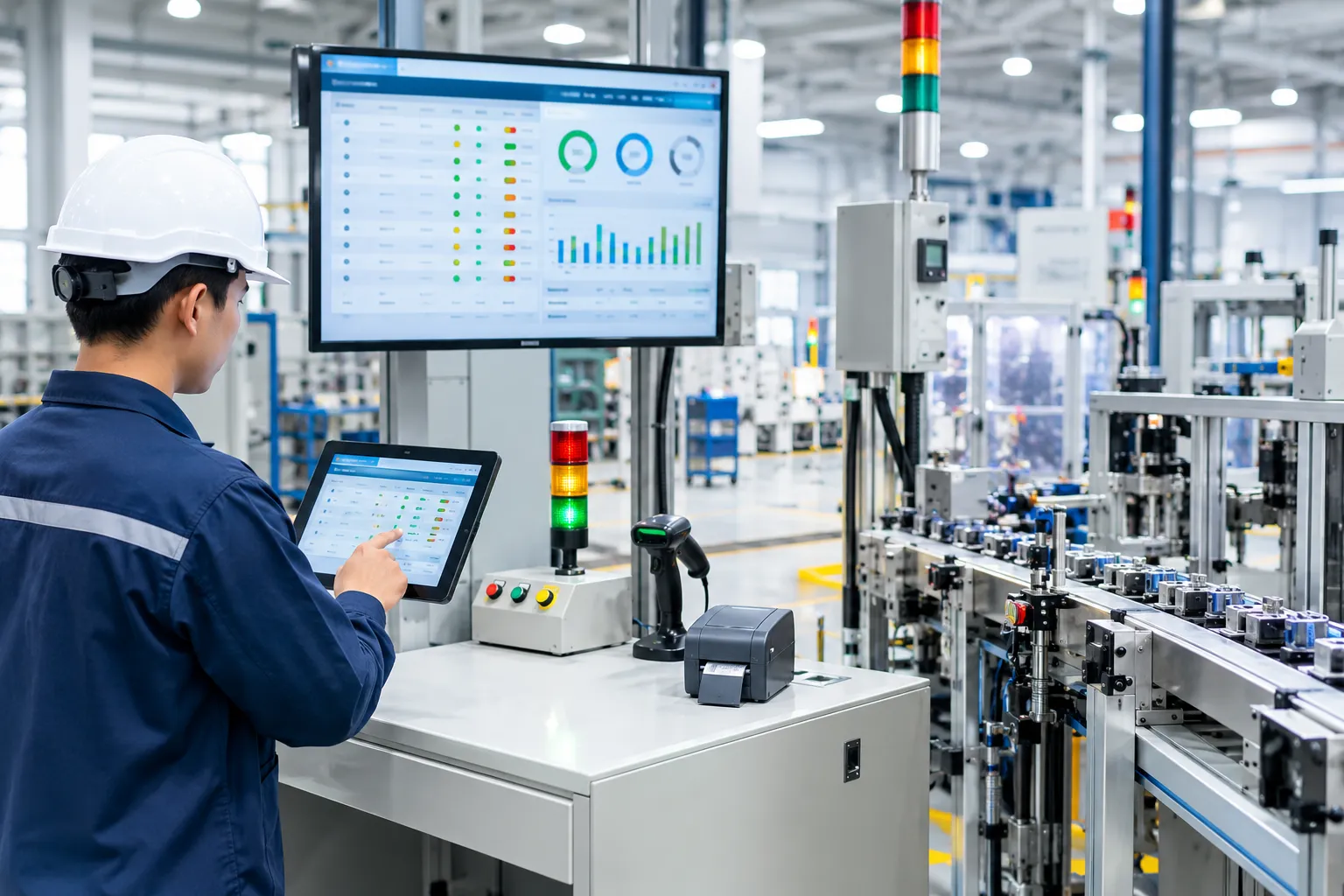
Key activities in production management
In general, production management activities can include the following key areas:
Production capacity assessment: determining the capacity of machinery, personnel, production lines, and other relevant resources in relation to production requirements.
Material planning: determining material requirements and delivery schedules to ensure that materials are available according to the production plan.
Production process management: monitoring production progress, output, process status, and issues arising during production.
Product quality management: recording and controlling inspection results to ensure that products meet established quality requirements.
In traditional production management models, much of the production information is recorded and communicated through personnel at each production stage. This approach can be suitable for small-scale production lines or operations with relatively low data management requirements. However, as the number of production stages and the volume of data increase, manual monitoring can make it more difficult to update, consolidate, and manage information.
The development of automation and information technology has enabled factories to gradually incorporate data collection equipment, software, and control systems into production management processes. Information from individual production stages can be recorded, displayed, or transmitted to management systems, supporting operators and management teams in monitoring production conditions.
Common production management systems
Depending on the factory scale, data requirements, and level of automation, production management can be implemented using various solutions. Common configurations include production monitoring boards, Andon systems, Poka-Yoke systems, and MES software.
Production monitoring board
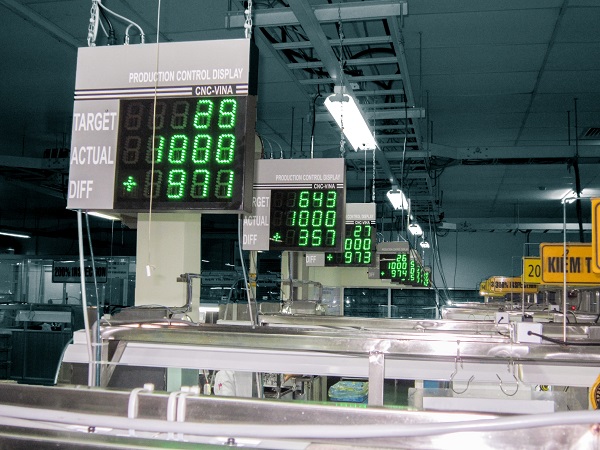
A production monitoring board is a visual solution used to display information related to the operation of a production line or individual production stages. Displayed information may include production plans, actual output, progress, process status, and other operational data, depending on specific requirements. The board can be integrated with push buttons, signal lights, sensors, or data collection devices to update production status. In some systems, data from equipment at individual production stages can be transmitted to a controller or software system for processing before being displayed on the board. This solution is suitable for production lines that require visual monitoring of production information at the shop floor level without the need to implement a complex data management system.
Production management system with andon
Andon is a visual display and alert system used to communicate the status of a production line or individual production process. The system typically uses signal lights, display boards, buzzers, or other signaling devices to help operators and responsible personnel quickly identify the current operating condition. When an issue occurs at a production stage, signals from push buttons, sensors, or control devices can be transmitted to the Andon system. The information is then displayed at an appropriate location, allowing responsible personnel to identify the area requiring attention.
Role of andon systems in production
Andon systems can support manufacturers by:
- Displaying the operating status of individual production stages or production areas.
- Providing alerts when faults or abnormal conditions occur.
- Helping responsible personnel quickly identify the location requiring inspection or intervention.
- Supporting more visual monitoring of production progress and line status.
- Integrating with control and data collection devices within an automation system.
The configuration of an Andon system should be selected based on the number of production stages, the type of information to be displayed, the signal collection method, and the required connection with the factory's control system.
Production management system with Poka-Yoke
Poka-Yoke is a method and mechanism for preventing errors during production by designing processes, fixtures, or control systems to minimize the possibility of incorrect assembly, improper operations, or unsuitable products being transferred to the next production stage. In practice, Poka-Yoke can be implemented using mechanical mechanisms, sensors, switches, inspection fixtures, or a combination of PLCs and other control devices. Depending on the requirements of each production stage, the system can verify predefined conditions before allowing the next operation to proceed.
Examples of Poka-Yoke Applications
In an assembly process, a fixture can be designed to allow a component to be positioned only in the required location and orientation. Sensors can be used to verify the presence or position of the component before the machine proceeds to the next operation. For systems that require multiple conditions to be verified, signals from sensors can be transmitted to a PLC for processing. If the required conditions are not met, the system can generate an alert or prevent the production cycle from continuing, depending on the system design.
Role of Poka-Yoke Systems in Production
Poka-Yoke focuses on controlling conditions that could lead to errors directly at the production stage. Detecting and addressing deviations at an early stage can help reduce the risk of non-conforming products proceeding to subsequent processes. The effectiveness of a Poka-Yoke solution depends on product characteristics, the manufacturing process, and the design of the control mechanism. Therefore, Poka-Yoke should be developed according to the requirements of each production stage rather than applying a fixed configuration to every production line.
MES production management system
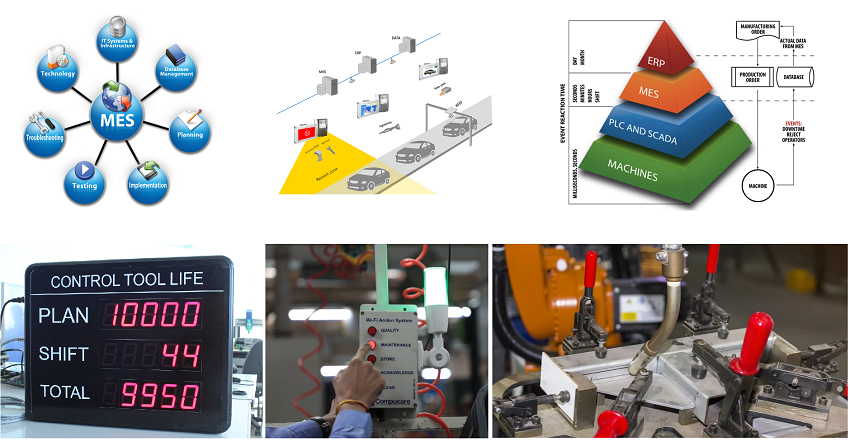
MES (Manufacturing Execution System) is software used to manage and monitor production activities at the execution level. Depending on its configuration, an MES can collect data from production stages, monitor production progress, manage product status, record inspection results, and provide data for production management.
MES can connect to various data sources within a factory, such as machinery, PLCs, barcode readers, inspection systems, or management software. The collected data can then be stored and associated with individual products, production processes, or production batches, depending on the system architecture. When properly implemented, MES provides manufacturers with a more comprehensive data foundation for monitoring production processes instead of relying solely on manually recorded information. However, the MES configuration should be determined based on the factory's scale, number of production stages, types of data to be managed, and integration requirements with existing systems.
Modern production management systems
A modern production management system combines management software, data collection equipment, control systems, and monitoring solutions to track and coordinate production activities at individual stages or across an entire production line. Depending on the scale and characteristics of the manufacturing operation, businesses can implement solutions ranging from production display boards, Andon systems, and Poka-Yoke to production management software and Manufacturing Execution Systems (MES).
Depending on the production model, the system can support various manufacturing approaches, including Make to Order (MTO), Assemble to Order (ATO), Engineer to Order (ETO), and Make to Stock (MTS). At the planning level, the system can be integrated with MRP (Material Requirements Planning) to support material requirements planning. In addition to managing production plans and data, the system can incorporate solutions that directly support shop-floor operations, such as Andon for detecting and reporting abnormalities, Poka-Yoke for preventing errors, and MES for monitoring and recording production execution, along with data management and product lifecycle management tools according to business requirements.
For production lines requiring visual monitoring, production data can be updated in real time on electronic display boards or management screens. Information such as target output, actual output, NG quantity, process status, and production progress can be displayed, allowing managers to monitor production conditions and determine appropriate actions when necessary.
Common production management solutions
Depending on factory scale, production methods, and level of automation, businesses can implement production management systems at different levels. Some solutions focus primarily on displaying and monitoring production output, while more advanced systems can collect data, provide abnormal-condition alerts, prevent errors, or manage production execution processes. In manufacturing and assembly lines, commonly used solutions include production monitoring boards, Andon systems, Poka-Yoke systems, and MES.
Production monitoring board
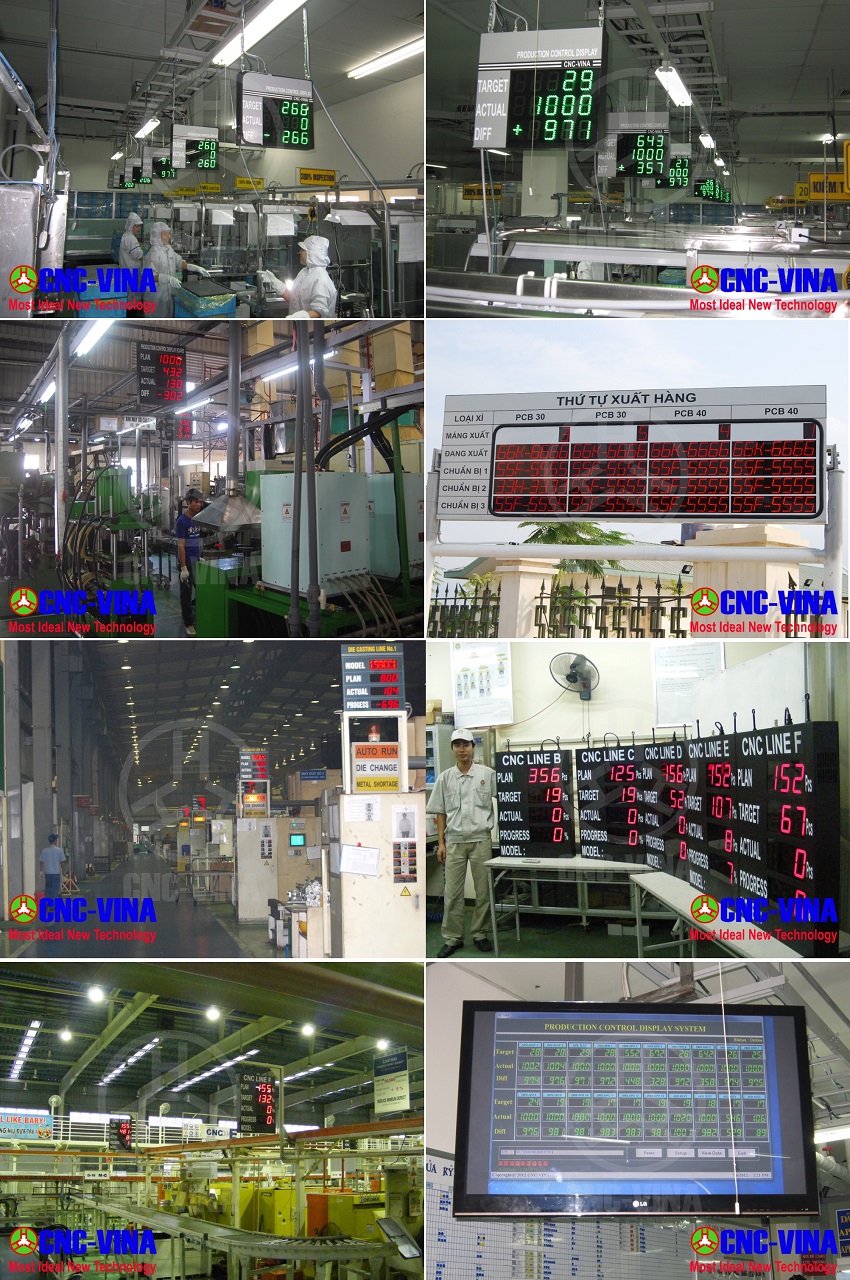
A production monitoring board is a visual display device used to present information related to production output, progress, and the status of a production line or individual production stages. The board can be installed in the production area, allowing operators and managers to monitor key performance indicators directly at the workplace. Depending on the configuration, the board can display information such as target output, actual output, productivity, NG quantity, production time, or the status of individual production stages. Data can be updated manually or received automatically from software, PLCs, sensors, and other data collection devices within the production line.
When connected to a production management system, the display board can update data in real time, helping managers monitor production conditions and identify processes that are falling behind the required schedule so that appropriate actions can be taken. For production lines requiring remote monitoring, production data can be transmitted through the internal network or other suitable connectivity infrastructure and displayed on computers or management devices. Depending on the operating environment and display requirements, businesses can select LED boards, LCD screens, or other display devices.
Warehouse inbound and outbound monitoring board
A warehouse inbound and outbound monitoring board can be used to visually display information supporting the processes of receiving, coordinating, and dispatching goods. Depending on the company's workflow, the board can display priority order, vehicle ID, receiving status, loading or unloading area, or other information associated with individual orders.
Data displayed on the board can be updated through computers, management software, or suitable control devices. When connected to a database, the system can store information and support the generation of daily, weekly, or monthly reports. For systems requiring continuous updates, data can be transmitted to the display board in real time, allowing managers and warehouse personnel to monitor the processing status. Depending on environmental conditions and display requirements, the board can use LED, LCD, or industrial display screens. The system can be configured with a controller, computer, or data processing device appropriate to the scale of deployment. Depending on requirements, the display board can connect to production management software, PLCs, or databases to receive and update information for each production or handling stage.
Production management system with Andon
An Andon system is a visual solution designed to quickly detect, communicate, and respond to abnormalities occurring during the production process. When an issue occurs, operators or equipment can activate an Andon signal through push buttons, switches, sensors, or an interface on a display. The signal is transmitted to the responsible area and presented through devices such as signal lights, buzzers, bells, Andon boards, or production screens, enabling responsible personnel to quickly identify the situation and determine an appropriate response.
In practice, an Andon signal can be activated directly by an operator when an error is detected or assistance is required, or it can be generated automatically by equipment or control systems when an abnormal condition is detected. Depending on production line requirements, signals can be classified into different types, such as technical support requests, material replenishment requests, equipment alerts, quality alerts, or other issues requiring attention. When an Andon signal is received, production personnel can identify the location and type of the issue and coordinate the appropriate personnel to address it. This helps shorten response times, reduce waiting time, and support continuous production line operation.
Andon systems can be implemented at different scales. At a basic level, the system may only require signal lights and a buzzer to provide alerts at a single machine or production stage. For production lines with more advanced management requirements, Andon can be integrated with production display boards, monitoring screens, management software, or databases to monitor the status of multiple production stages within a single system. A key characteristic of Andon is its ability to visualize production status in real time, allowing information about abnormalities to be communicated quickly to the appropriate area and responsible department for timely action.
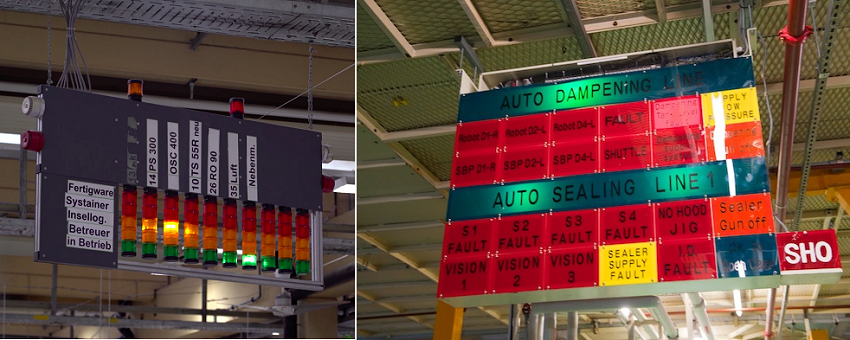
Role of Andon systems in production
- Timely abnormality alerts: Provides immediate notification when issues related to equipment, quality, materials, or assistance requests arise at a production stage.
- Improved coordination between departments: Establishes a unified mechanism for communicating information among operators, production managers, engineering, maintenance, quality, and other relevant departments.
- Shorter response times: Support personnel can quickly identify the location, type of alert, and level of response required instead of checking individual areas across the production line.
- Support for quality control: When abnormalities are detected and addressed at an early stage, businesses can reduce the risk of continuing production or transferring products before the cause of the issue has been identified.
- Production line status monitoring: Alert data can be stored for statistical analysis, including downtime, frequency of incidents, and production performance.
- Operator support: Machine operators can proactively request assistance without having to leave their workstations or locate the responsible personnel directly.
Depending on its configuration, an Andon system can be connected to PLCs, sensors, control devices, display screens, or production management software. In this configuration, alert information is not only displayed at the production area but can also be recorded and transmitted to the management system for monitoring and analysis. However, Andon is primarily a tool for detecting, communicating, and visualizing abnormalities, rather than a mechanism for automatically resolving issues. After an alert is received, the relevant department, such as production, maintenance, engineering, quality, or material supply, needs to carry out the appropriate response procedures. Combining Andon with standardized response procedures can help businesses reduce response time and minimize the risk of recurring issues.
Production management system with Poka-Yoke
Poka-Yoke is an error-proofing method used in manufacturing to prevent errors from occurring or detect them directly at the production stage where they arise. Instead of relying solely on inspection after a product has been completed, Poka-Yoke focuses on controlling process conditions to reduce the possibility of incorrect assembly, operation, or execution by the operator.
Poka-Yoke can be implemented in various forms, ranging from simple mechanical mechanisms incorporated into fixtures and sensors for detecting operating conditions to interlocking mechanisms and inspection and alert functions integrated into control systems. When the required conditions have not been met, the system can alert the operator or prevent the process from continuing, depending on the design of the application.
The Poka-Yoke method became widely recognized through the production improvement activities of Shigeo Shingo and the Toyota Production System. Its core objective is to reduce dependence on operator memory and manual inspection by designing processes and equipment in ways that make errors less likely to occur.
Examples of Poka-Yoke Applications
A familiar example of Poka-Yoke is the interlock mechanism used in automobiles. In vehicles equipped with manual transmissions, certain designs require the driver to depress the clutch pedal before the engine can be started. Similarly, many vehicles with automatic transmissions require the gear selector to be in the P or N position before the engine can be started. In these cases, the system establishes a mandatory condition before allowing the next operation to take place. If the condition has not been met, the starting operation cannot be performed. This illustrates a common Poka-Yoke principle: preventing an error at the point where it could occur rather than detecting it only after the product or process has been completed.
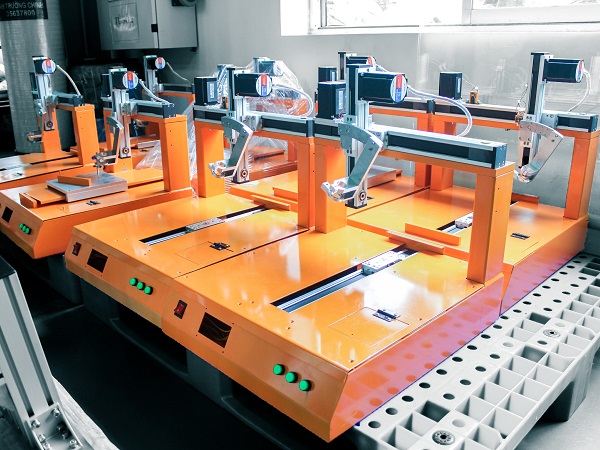
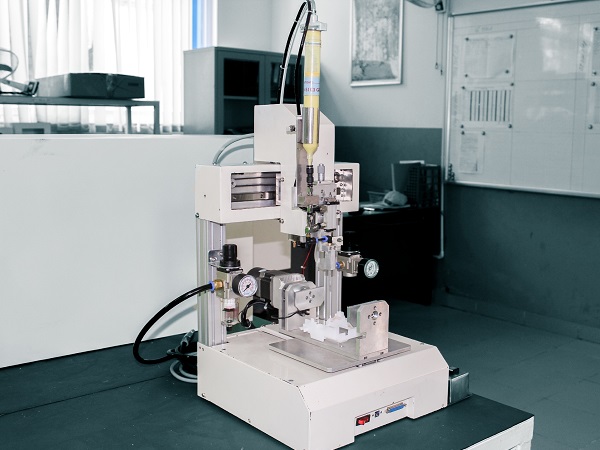
In industrial manufacturing, this principle can be directly applied to fixtures and equipment. For example, a fixture can be designed so that a product can only be positioned correctly. Sensors can verify the presence or orientation of a component before the machine proceeds to the next operation. If the required conditions are not met, the system can generate an alert or prevent the machine cycle from continuing. Poka-Yoke can also be integrated with control systems and production management software to record the status of individual production stages. In this configuration, the solution not only supports error prevention but also generates data for traceability, root-cause analysis, and process improvement. An important point is that Poka-Yoke does not necessarily have to be implemented as an independent system. It is an error-proofing method that can be incorporated into machinery, fixtures, automated production lines, sensors, PLCs, or software, depending on the characteristics and requirements of each production process.
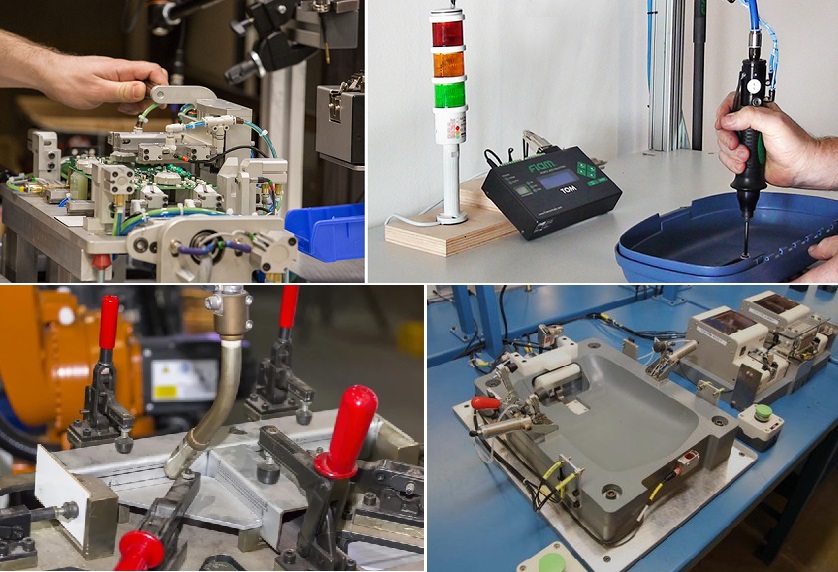
Role of Poka-Yoke systems in production
A Poka-Yoke production management system can be applied wherever errors may occur or something may be done incorrectly—in other words, virtually anywhere. It can be effectively applied to a wide range of processes in manufacturing, assembly, and service operations to prevent various types of errors, including:
- Processing errors: A process step is skipped or not performed according to the standard operating procedure.
- Setup errors: The wrong tool is used or machine settings and adjustments are configured incorrectly.
- Missing components: Not all required parts or accessories are included during assembly, welding, or other processes.
- Incorrect parts or items: An incorrect component or item is used in the process.
- Operational errors: An operation is performed incorrectly, or an incorrect version of the required specification is used.
- Measurement errors: Errors occur during machine adjustment, inspection measurements, or due to incorrect dimensions of components supplied by vendors.
Poka-Yoke is relatively straightforward to implement because of its broad applicability and logical approach. In manufacturing processes, technical errors and human mistakes that result in defective products cannot always be completely eliminated, while operators cannot manually control every potential source of error. In such cases, error-proofing mechanisms can be implemented to detect deviations promptly and notify responsible personnel so that corrective actions can be taken as quickly as possible.
When an error is detected, a Poka-Yoke mechanism can be designed to stop the operation automatically and notify the relevant personnel. Early detection of errors and abnormal conditions can help prevent defective products from progressing through subsequent processes while also reducing costs associated with defects, rework, and warranty claims.
MES production management system
A Manufacturing Execution System (MES) is a computer-based system consisting of specialized software and equipment used in manufacturing and assembly plants to monitor and record the transformation of raw materials and semi-finished products into finished products. MES provides information that helps production line and factory decision-makers understand current shop-floor conditions and identify opportunities to improve production output. MES operates in real time, enabling manufacturers to monitor and control multiple aspects of the production process, such as materials, personnel, machinery, and supporting services.
MES can support a wide range of functions, including product definition and product lifecycle management, resource planning, order execution and dispatching, production analysis, downtime management for Overall Equipment Effectiveness (OEE), product quality management, and material tracking and traceability. MES creates records of the data collected, processes performed, and results generated throughout production. This capability can be particularly important in regulated industries such as electronics assembly, food and beverage, and pharmaceuticals, where documentation and evidence of production processes, events, and actions may be required.
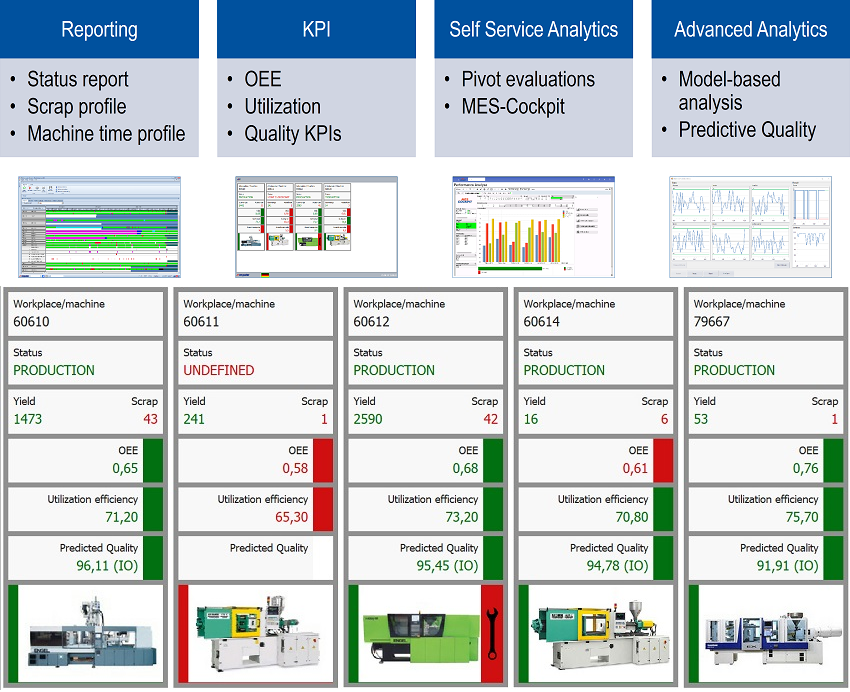
Benefits of implementing an MES system
Implementing an MES system that is appropriately configured for the production process can help businesses improve their ability to control and utilize operational data. Potential benefits include:
- Centralized production data monitoring: Information on production output, process status, materials, machinery, and other relevant data can be recorded within a single system, making monitoring and management more convenient.
- Production data traceability: The system can retain information and history for each production stage, supporting data retrieval when it is necessary to determine the status or origin of a product.
- Machine downtime monitoring: Operating and downtime data can be recorded to support root-cause analysis and evaluation of production line performance.
- Quality management support: Inspection results and quality data can be associated with the corresponding product or production stage, facilitating quality control and traceability.
- Reduced manual data recording: Integrating MES with machinery and automation equipment allows part of the production data to be collected directly from the manufacturing process, reducing manual recording and data entry.
- Production analysis and management support: Real-time data updates can help managers monitor production line conditions and determine appropriate adjustments in accordance with the production plan.
Depending on the requirements of each factory, MES can be implemented independently or integrated with other systems such as ERP, MRP, WMS, barcode systems, Andon, Poka-Yoke, and automation equipment on the production line. The system configuration should be selected based on the production process, types of data to be managed, number of production stages, and the required level of connectivity with existing machinery and equipment.
Production management systems play an important role in organizing, monitoring, and controlling production line operations. Depending on actual requirements, businesses can implement solutions such as production monitoring boards, Andon systems, Poka-Yoke, MES, and other management software or supporting equipment. These solutions can also be integrated to create a production management system suited to the specific processes and scale of each factory. For production lines that require output and progress monitoring, production management boards can provide visual, real-time production information. Andon systems support the detection and communication of abnormalities during operation, while Poka-Yoke focuses on preventing and detecting errors directly at the production stage. For more advanced production data management requirements, MES can be used to collect, integrate, and manage data from multiple production stages across the production line.
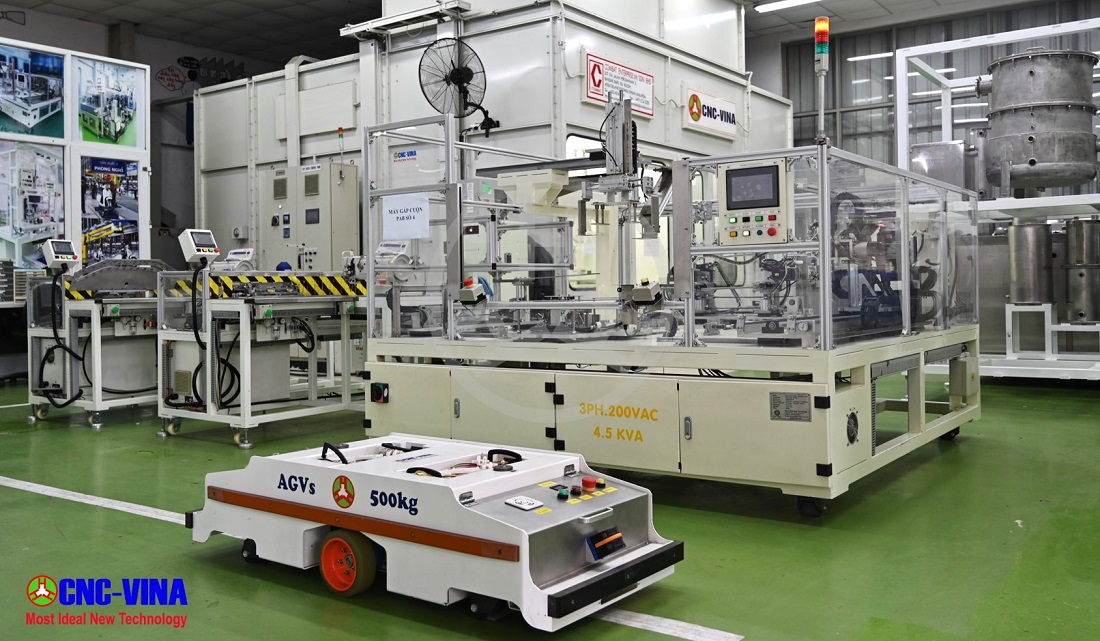
CNC VINA provides production management and automation solutions tailored to the actual requirements of each factory, including production management systems, production monitoring boards, Andon systems, Poka-Yoke, MES, barcode-based management systems, and related automation equipment. System configurations are selected based on product characteristics, manufacturing processes, required production capacity, installation space, and the level of integration with existing equipment.
VIETNAM TECHNOLOGY APPLICATION & CNC JOINT STOCK COMPANY
Factory: Song Cung Industrial Cluster, Dong Thap Commune, Dan Phuong District, Hanoi, Vietnam
Office: Rox Tower (Rox Center Goldmark City), No. 136 Ho Tung Mau Street, Bac Tu Liem District, Hanoi, Vietnam
Tel: +84 916 63 9355 / +84 915 74 4664
Website: https://cncvina.com.vn | https://cncvina.net | https://cncviname.com.vn
Email: Sales01@cncvina.com.vn | Sales03@cncvina.com.vn

 Tiếng
Việt
Tiếng
Việt
 Tiếng
Anh
Tiếng
Anh
 Tiếng
Nhật
Tiếng
Nhật




 Tiếng Anh