What is an automatic painting line?
An automatic painting line is an integrated system designed to automate surface treatment, product conveying, paint application, drying, and finishing according to a predefined production process. Depending on the material, product dimensions, coating type, production capacity, and quality requirements, the line can be configured with surface treatment equipment, conveyors, paint booths, automatic painting equipment, painting robots, curing ovens, and control and monitoring systems.
Unlike manual painting methods, an automatic painting line provides more consistent control over parameters that directly affect coating quality, such as product conveying speed, paint flow rate, spray position and trajectory, drying temperature, and processing time. When the equipment is properly synchronized with the required coating process, the system can maintain greater consistency between products while reducing dependence on manual operations. In industrial production, automatic painting lines are widely used in the automotive, motorcycle, metal components, electrical and electronic equipment, household appliance, mechanical engineering, and other manufacturing industries. Depending on the product requirements, the system can employ water-based coatings, powder coatings, electrostatic powder coating, or specialized coating technologies such as electrophoretic coating. Therefore, designing a painting line involves more than simply selecting paint application equipment; the entire process, from surface treatment to final finishing, must be engineered and integrated as a complete system.
Manual painting line vs automatic painting line
The level of automation is an important consideration when selecting an industrial painting system. Based on production volume, product characteristics, and coating quality requirements, manufacturers can implement manual, semi-automatic, or highly automated painting systems.
Manual painting line
A manual painting line is a system in which operators directly perform and control most stages of the painting process. Operators may be responsible for positioning products for painting, operating spray guns, adjusting paint flow, changing spraying angles, and inspecting the surface after painting. The main advantage of this approach is its relatively simple initial equipment configuration, making it suitable for low-volume production, products with a wide variety of models, or applications where product specifications change frequently. However, as production volume increases, manual painting may result in variations in coating thickness, paint consumption, and surface quality between products due to its high dependence on operator skill and working conditions.
For factories with high production volumes or stringent requirements for coating consistency, automating individual stages or the entire painting line can be considered to achieve better control over the production process.
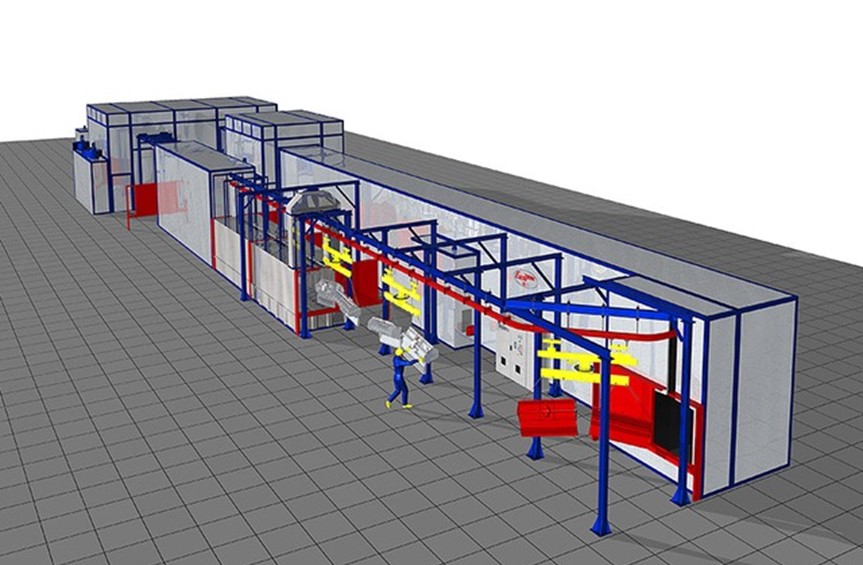
Automatic painting line
An automatic painting line uses mechanical equipment, control systems, and automated paint application equipment to perform some or all stages of the painting process with minimal manual intervention. Products can be conveyed continuously by a conveyor system, while painting, drying, and subsequent processing stages are configured according to the specific process parameters required for each product.
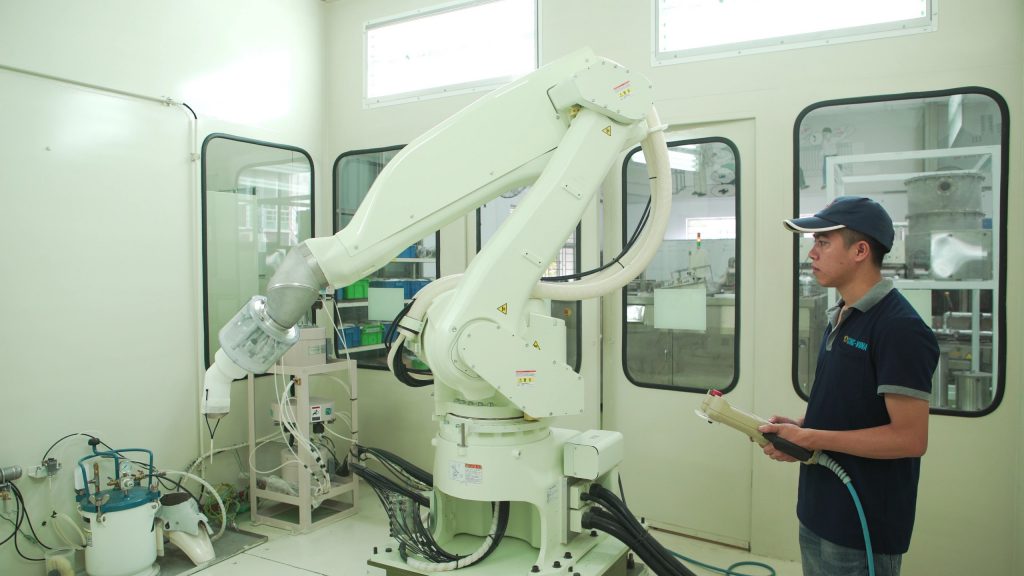
In highly automated systems, painting robots or automatic spray machines can be programmed to control spray trajectories, application speed, and spray distance. In addition, the control system coordinates the operation of conveyors, paint booths, spraying equipment, curing ovens, and auxiliary equipment to maintain a stable and consistent production cycle.
Compared with manual painting, automation enables manufacturers to achieve better control over coating uniformity, production throughput, and process repeatability. However, the overall performance of a painting line depends directly on selecting the appropriate coating technology, equipment layout, and system configuration for the actual products being manufactured. Even a highly automated line can result in unnecessary investment costs or fail to achieve the required coating quality if it is not properly designed for the application.
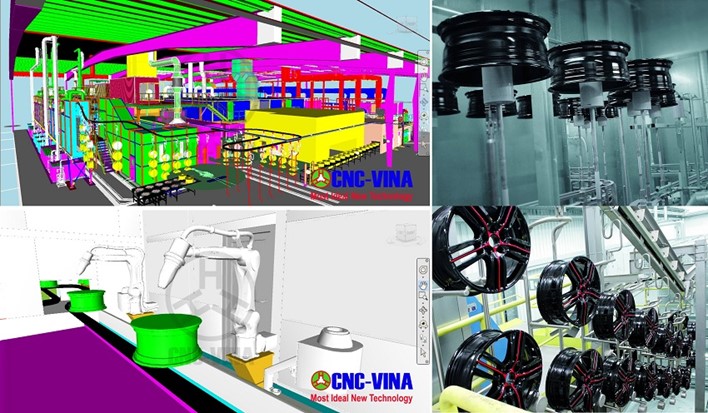
Powder coating line
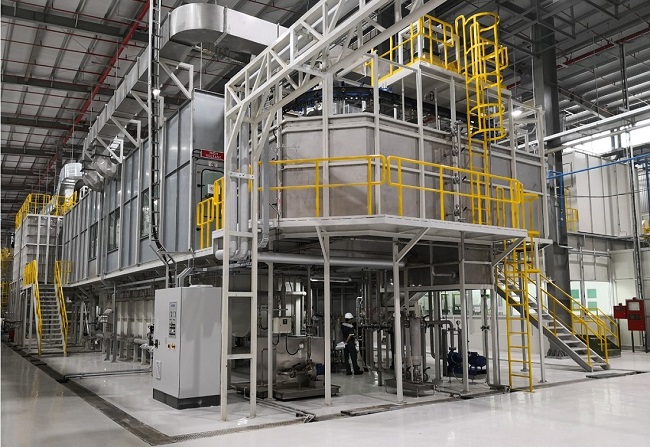
A powder coating line is a system designed to apply powder coating to product surfaces, most commonly using the electrostatic powder coating process. During the process, powder particles are electrically charged and sprayed onto a properly pretreated product. As the product is typically grounded, the charged powder particles are attracted to and adhere to its surface through electrostatic forces. The coated product is then transferred to a curing oven, where the powder melts, flows, forms a continuous film, and cures to create the finished coating. An automatic powder coating line typically includes a pretreatment system, drying chamber, conveying system, spray booth, powder spraying and recovery equipment, curing oven, and control system. The recovery of powder that does not adhere to the product also needs to be properly designed according to the spray booth configuration and the type of powder coating used. Powder coating technology is commonly selected for metal products such as frames, equipment enclosures, mechanical components, automotive and motorcycle parts, household appliances, and various other industrial products. A high level of automation, stable spraying performance, and efficient powder recovery are important factors to consider when designing a powder coating line for high-volume production.
Water-based painting line
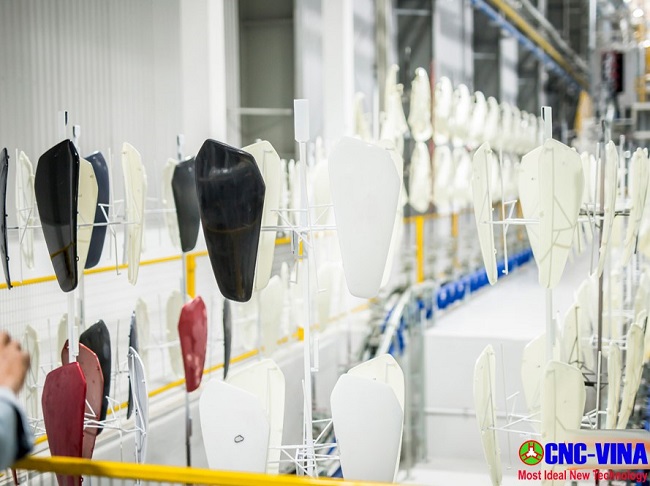
A water-based painting line is a system used to apply liquid coatings to product surfaces through a spraying process. In many water-based coating systems, water serves as the primary medium for dispersing or dissolving the coating components. After application, water and other volatile components are removed during the drying process, while the coating film continues to form and cure according to the characteristics of the specific coating system. Depending on product requirements, a water-based painting line can use automatic spray guns, painting robots, or specialized spraying systems. These systems are typically installed inside a paint booth equipped with appropriate air supply, ventilation, filtration, and exhaust treatment systems to control the spraying environment and minimize the dispersion of overspray into the surrounding working area. A complete water-based painting line generally includes surface treatment, drying, coating application, drying or curing, and product inspection. For multi-coat systems, the line can be configured with additional primer, intermediate coat, and topcoat stages to meet requirements for color, gloss, adhesion, and surface protection.
Compared with powder coating, water-based coatings can be applied to a wider range of materials and product geometries. However, when designing a water-based painting line, particular attention should be given to ventilation, spray-environment control, exhaust treatment, drying conditions, and the specific properties of the coating system being used.
Key processes in an automatic painting line
A complete automatic painting line is typically designed as a continuous sequence of interconnected processes. The actual configuration may vary depending on the product and coating technology, but an industrial painting system generally includes the following key stages:
Surface treatment → Drying → Paint application → Drying or curing → Inspection and finishing
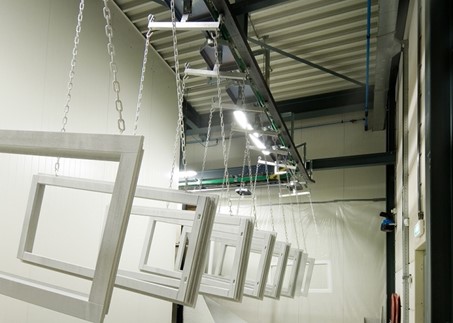
The conveying system serves as the link between these stages, ensuring that products move at the correct speed and in the proper position throughout the process.
1. Surface treatment and cleaning
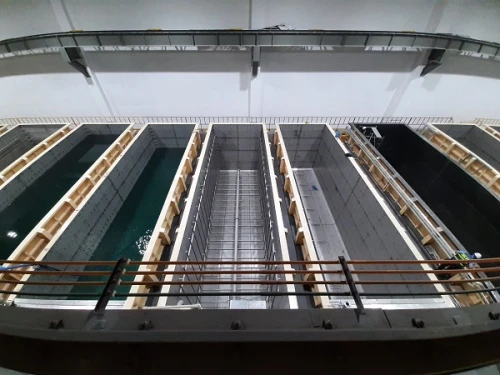
Surface treatment is a critical pre-painting process used to remove oil, grease, dust, oxides, and other contaminants that may affect coating adhesion. Depending on the substrate material and product requirements, this stage may involve mechanical or chemical cleaning processes, including degreasing, water rinsing, surface treatment, and final rinsing. For metal painting lines, selecting and designing an appropriate surface treatment system has a direct impact on coating adhesion, corrosion resistance, and the service life of the finished coating.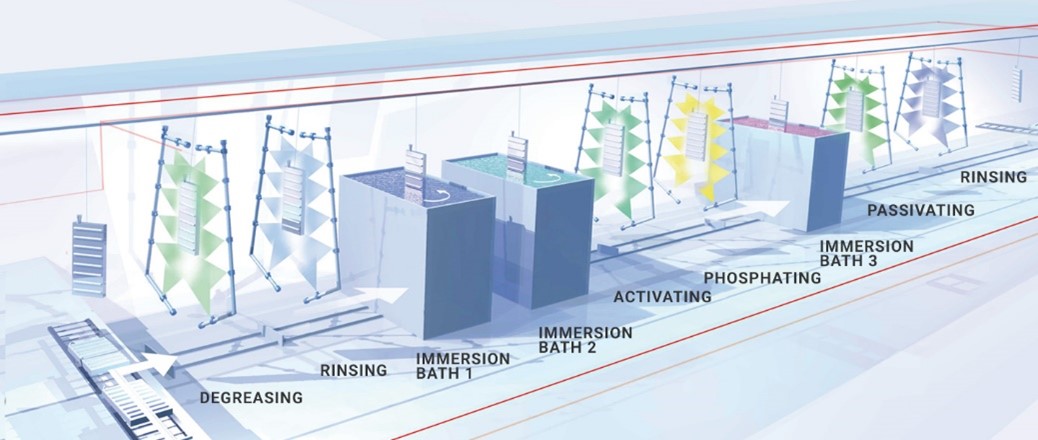
2. Product drying
After surface treatment and rinsing, products need to be dried to remove residual moisture from the surface before proceeding to the painting stage. Depending on the line configuration and product characteristics, the drying oven can use different heating methods. Temperature, residence time, and airflow within the drying oven must be properly calculated and controlled to ensure that products are sufficiently dried while preventing excessive heating that could affect the substrate or subsequent coating process.
3. Automatic paint application
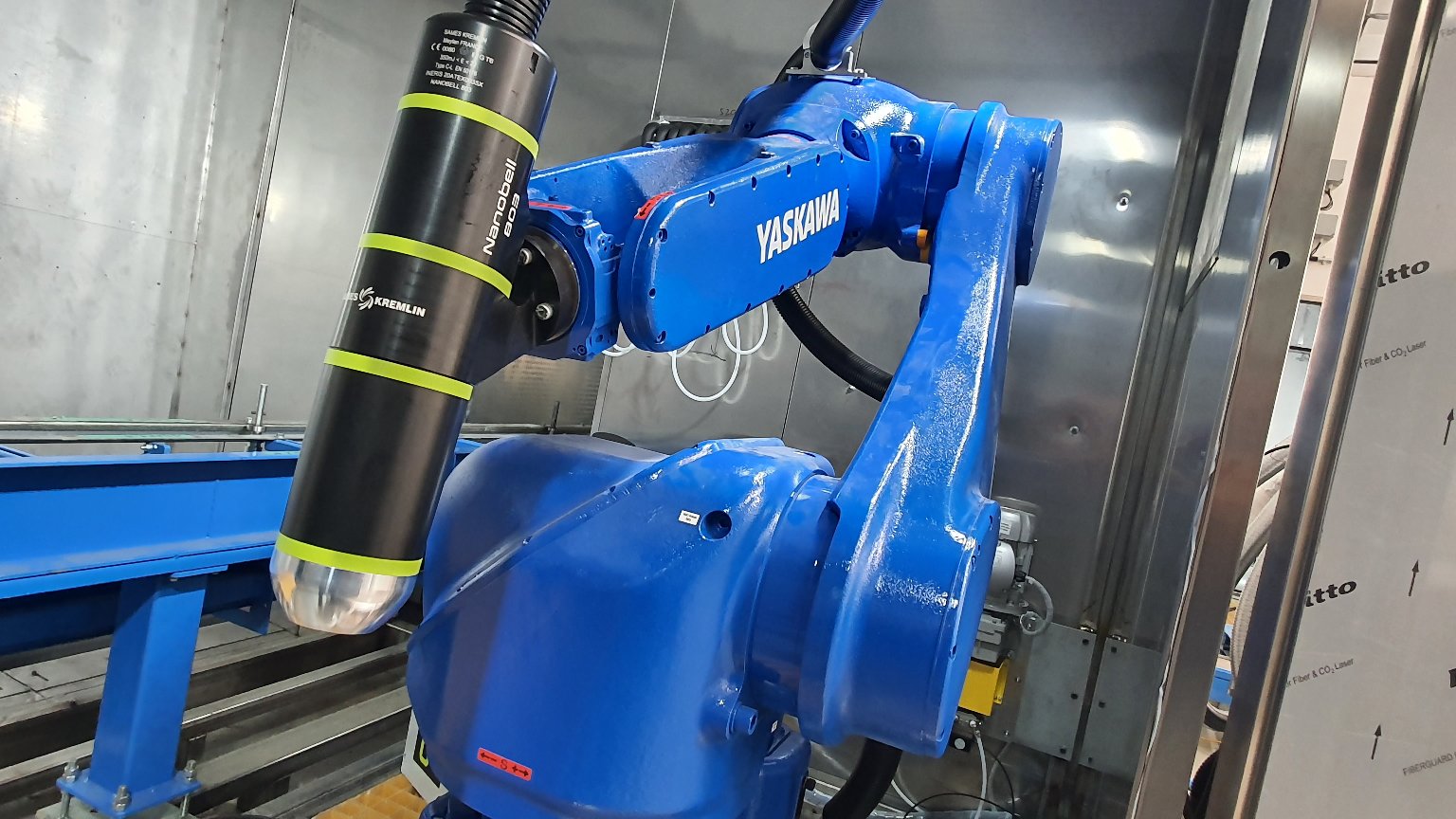
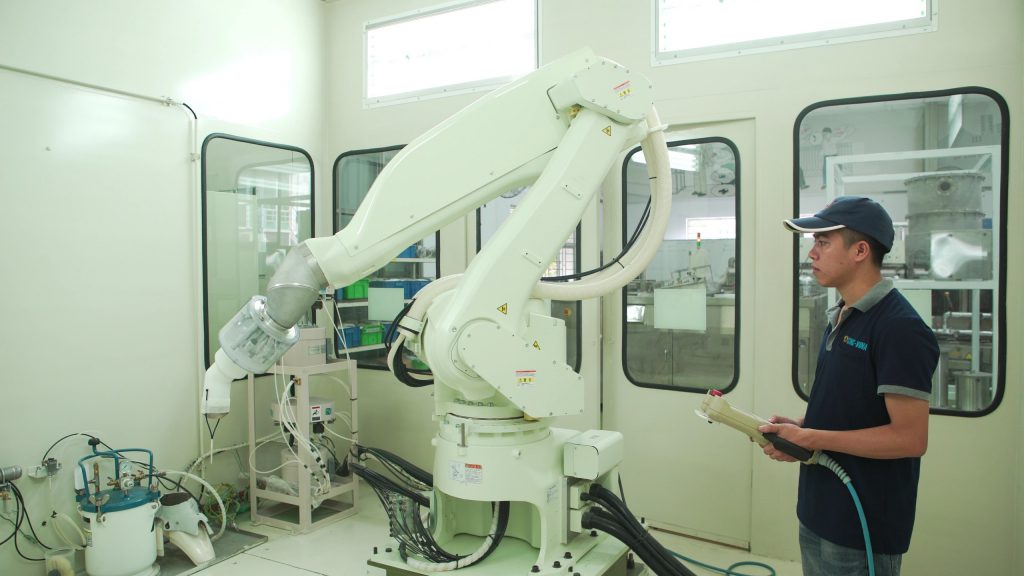
This is the central stage of the painting line. Depending on the coating technology, the system can use automatic spray guns, automatic spray machines, or painting robots to apply the coating material to the product surface. For products with complex geometries, robots can be programmed with spray trajectories based on the actual product shape while controlling movement speed, spray distance, and spray angle. This provides greater process repeatability and reduces dependence on manual operator techniques.
4. Coating drying and curing
After paint application, products are transferred to a drying or curing area depending on the type of coating used. This stage enables the coating to achieve the required properties, including adhesion, hardness, gloss, and surface protection. Temperature and processing time cannot be standardized across all coating systems. Therefore, the drying or curing oven must be designed based on the characteristics of the coating material, substrate, and specific technical requirements of the product.
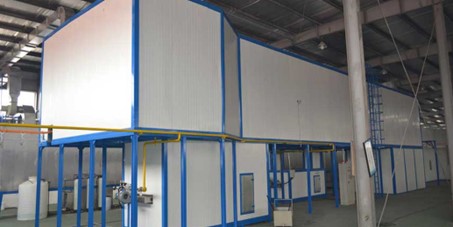
5. Inspection and finishing
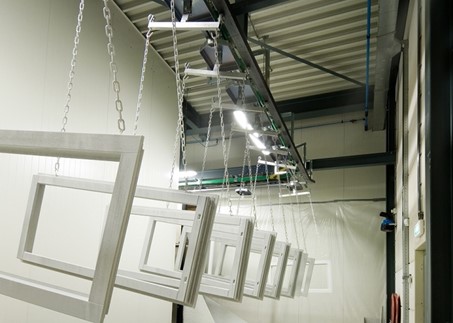
Applications of automatic painting lines
With the ability to automate product conveying, paint application, and drying processes, automatic painting lines are widely used in factories that require high productivity, consistent coating quality, and continuous production. Depending on the coating technology, substrate material, and product characteristics, the system can be designed with different configurations to meet the specific requirements of each industry.
Automotive and motorcycle manufacturing
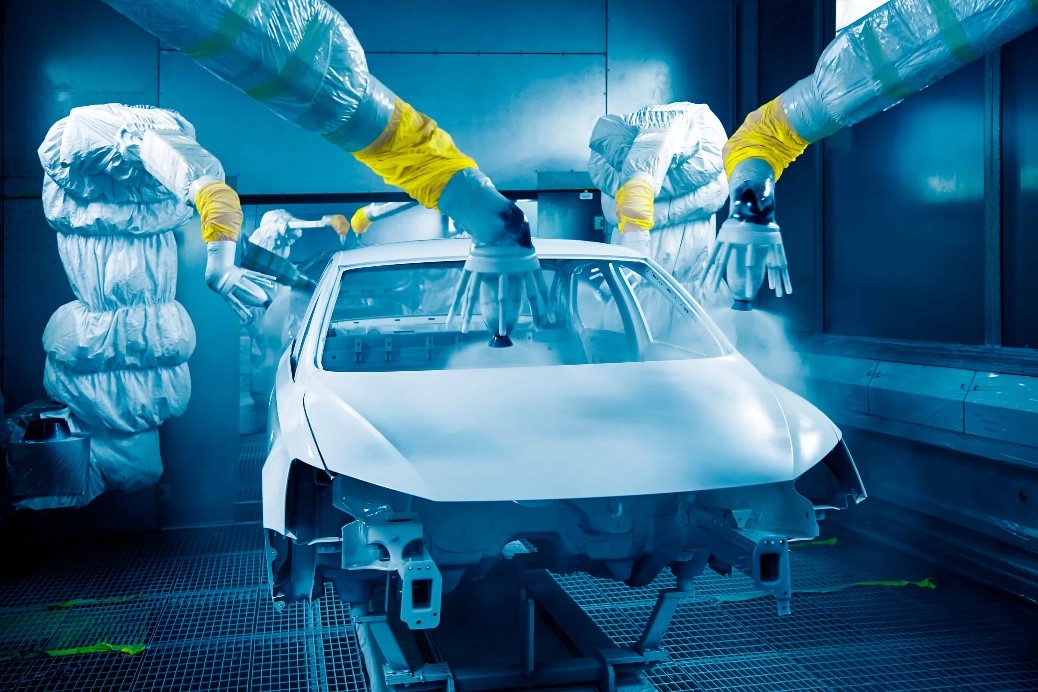
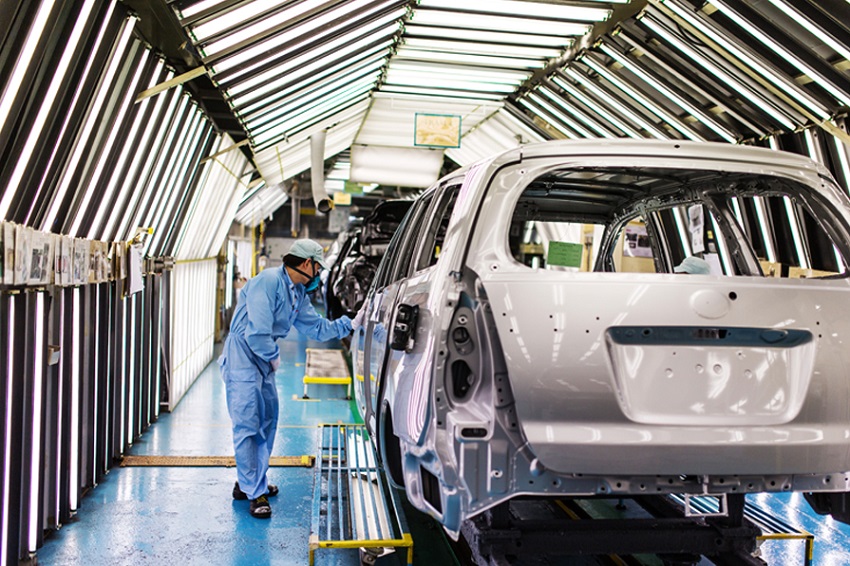
In the automotive and motorcycle industries, painting lines are used to process and finish a wide range of products, including vehicle bodies, frames, metal components, parts, and auxiliary components. These industries are characterized by high production volumes and strict requirements for color consistency, coating thickness, corrosion resistance, and stability between production batches. Depending on product requirements, the line can integrate surface treatment systems, conveyors, paint booths, painting robots, drying ovens, and multi-coat painting processes.
Metal components and products manufacturing
Automatic painting lines are widely used for coating metal products such as machine housings, frames, brackets, electrical enclosures, mechanical components, stamped parts, and machinery components. For these products, electrostatic powder coating is one of the commonly selected technologies due to its ability to provide durable and uniform coatings for a wide range of industrial applications. Continuous conveying systems and automatic painting equipment help manufacturers maintain a stable production cycle, particularly when products have relatively consistent dimensions and specifications.
Electrical and electronic equipment manufacturing
In the production of electrical cabinets, equipment housings, components, and electrical and electronic products, coating serves not only aesthetic and color requirements but also helps protect product surfaces from environmental exposure. Depending on the material and technical requirements, the painting line can be configured with pretreatment systems, powder coating, or water-based painting systems.
For products that require frequent color or model changes, the design of the paint booth, paint supply system, and color changeover process should be carefully considered to minimize production downtime.
Household appliance manufacturing
Products such as metal frames, equipment housings, brackets, accessories, and various components used in household appliances can be finished using automatic painting lines. Automation helps maintain consistent coating performance across large production volumes while meeting requirements for color, gloss, and surface quality.
Depending on the material and finishing technology, the line can be designed for powder coating, water-based painting, or a combination of multiple surface treatment and finishing processes.
Steel structure and mechanical product manufacturing
For steel structures, mechanical equipment, and large-sized products, the painting system must be designed based on product dimensions, weight, and conveying methods. Surface treatment, paint application, and drying processes can be arranged as separate work areas or integrated into a continuous line, depending on the production scale.
For products requiring a high level of surface protection, the coating system, surface treatment method, and application conditions should be considered as an integrated process to meet actual operating requirements.
Other industrial products
In addition to the applications mentioned above, automatic painting lines can also be designed for a wide range of other products, including mechanical equipment, industrial machinery, spare parts, metal components, and products requiring high-volume surface finishing.
The line configuration does not necessarily have to be the same across different industries. The selection of coating technology, conveying method, painting equipment, paint booth, and drying oven should be based on the product characteristics, production volume, and quality standards of each factory.
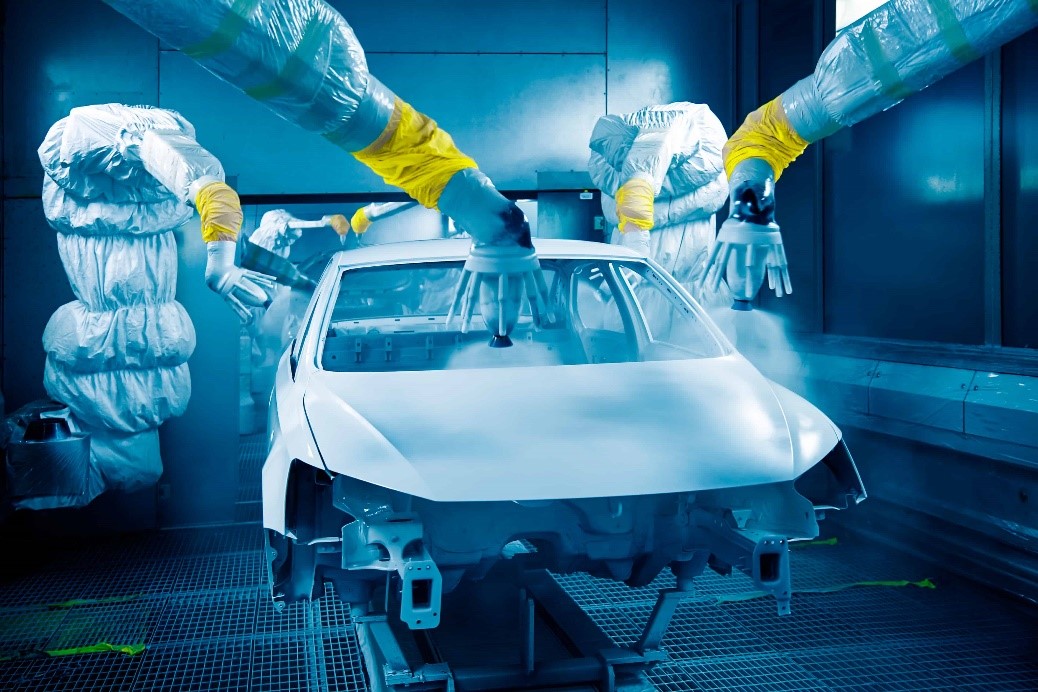
Painting line in automobile production
Control system
The control system is the central component responsible for monitoring, coordinating, and synchronizing the operation of equipment throughout an automatic painting line. Through the control system, processes such as product conveying, surface treatment, paint application, drying, and auxiliary equipment operation can be performed according to predefined sequences and process parameters. Depending on the level of automation and specific requirements of each line, the control system may include PLC, HMI, sensors, inverters, electrical control cabinets, measuring instruments, and communication modules. The PLC processes signals and controls equipment according to programmed logic, while the HMI enables operators to monitor system status, set operating parameters, and identify alarms during operation.
For lines with multiple interconnected processes, the control system must be designed to coordinate conveyor speed, processing time, drying oven temperature, painting equipment operation, and safety mechanisms. Accurate control of these parameters helps maintain stable line operation, minimize variations between production cycles, and facilitate system monitoring and maintenance.
Advantages and disadvantages of investing in an automatic painting line
Automating the painting process provides significant benefits in terms of productivity and production control, but it also places higher demands on system design, investment, and operation. Therefore, manufacturers should evaluate both the expected benefits and the requirements that need to be prepared before selecting a line configuration.
Advantages
Stable control of the painting process: Parameters such as conveying speed, paint flow rate, spray trajectory, temperature, and drying time can be set according to process requirements. This helps improve the stability and repeatability of the painting process.
Increased production productivity: Continuous conveying systems and automatic painting equipment enable a stable production cycle, making them particularly suitable for high-volume manufacturing plants.
Reduced dependence on manual operations: Repetitive processes can be automated, reducing the amount of direct manual work required and minimizing variations between production shifts.
Better control of paint consumption: Controlling spraying parameters enables manufacturers to manage coating material consumption more effectively while potentially reducing excess paint and costs resulting from inconsistent application.
Improved working conditions: Integrating painting processes into an automated system, together with properly designed paint booths, ventilation, and air treatment systems, can reduce workers' direct exposure to the painting environment.
Disadvantages
High initial investment cost: An automatic painting line may include multiple systems such as surface treatment, conveyors, paint booths, painting equipment, drying ovens, and control systems. Therefore, the total investment depends significantly on the project scale and process requirements.
High requirements for design and integration: Equipment must be properly coordinated in terms of capacity, conveying speed, processing time, and operating sequence. If the configuration is not properly matched, one process may become a bottleneck that limits the productivity of the entire line.
Technical personnel requirements: Operating and maintaining an automatic painting line requires personnel capable of monitoring mechanical and electrical equipment, control systems, and process parameters. When a malfunction occurs, identifying the root cause may also be more complex than with a simpler painting system.
Product changes need to be considered from the beginning: When product dimensions, shapes, materials, or painting requirements change significantly, components such as fixtures, conveyors, robot programs, painting equipment, or process parameters may need to be adjusted. Therefore, future product changes and expansion requirements should be incorporated into the design criteria from the initial stage.
CNC-VINA – Industrial Painting Line Design and Integration Provider
With experience in automation and industrial system design, CNC-VINA provides automatic painting line solutions developed according to the product characteristics, production capacity, and process requirements of each factory. Depending on the project, the system can integrate surface treatment, conveying, paint application, drying, inspection, and control processes into a synchronized production system. The line configuration is calculated based on various factors, including product material, component dimensions and weight, coating type, required production volume, quality standards, factory layout, and level of automation. In particular, determining conveyor speed, processing time, drying oven capacity, painting equipment capacity, and control system requirements from the initial design stage helps minimize the risk of equipment mismatch during operation.
CNC-VINA can implement painting line solutions for a wide range of products and coating technologies, including:
From production requirement assessment and process consulting to system design, integration, and line completion, CNC-VINA focuses on providing solutions that are suitable for the actual operating conditions of each manufacturer.
VIETNAM TECHNOLOGY APPLICATION & CNC JOINT STOCK COMPANY
Factory: Song Cung Industrial Cluster, Dong Thap Commune, Dan Phuong District, Hanoi, Vietnam.
Office: Rox Tower Goldmark City, 136 Ho Tung Mau Street, Phu Dien Ward, Hanoi, Vietnam.
Phone: +84 916 639 355 / +84 915 744 664
Website: cncvina.com.vn | cncvina.net | cncviname.com.vn
Email: Sales01@cncvina.com.vn | Sales04@cncvina.com.vn

 Tiếng
Việt
Tiếng
Việt
 Tiếng
Anh
Tiếng
Anh
 Tiếng
Nhật
Tiếng
Nhật




 Tiếng Anh