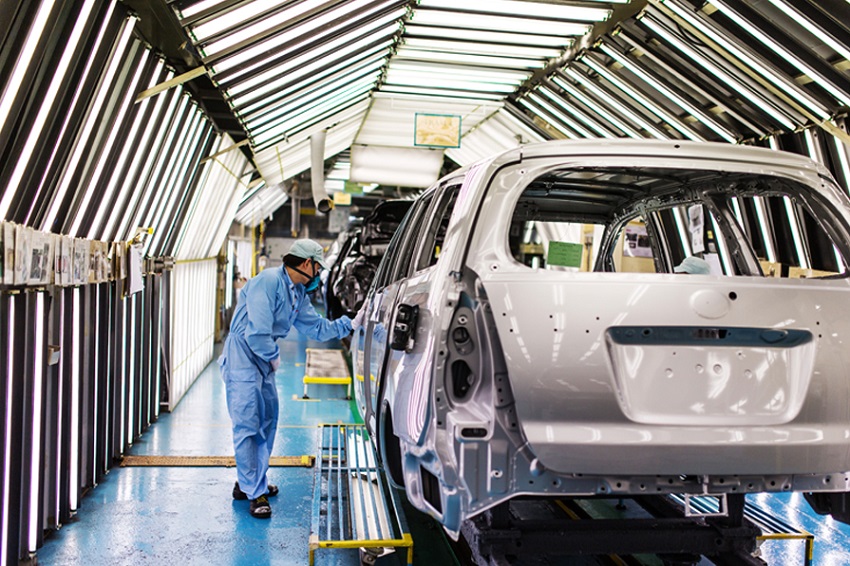
Introduction to plastic product painting line
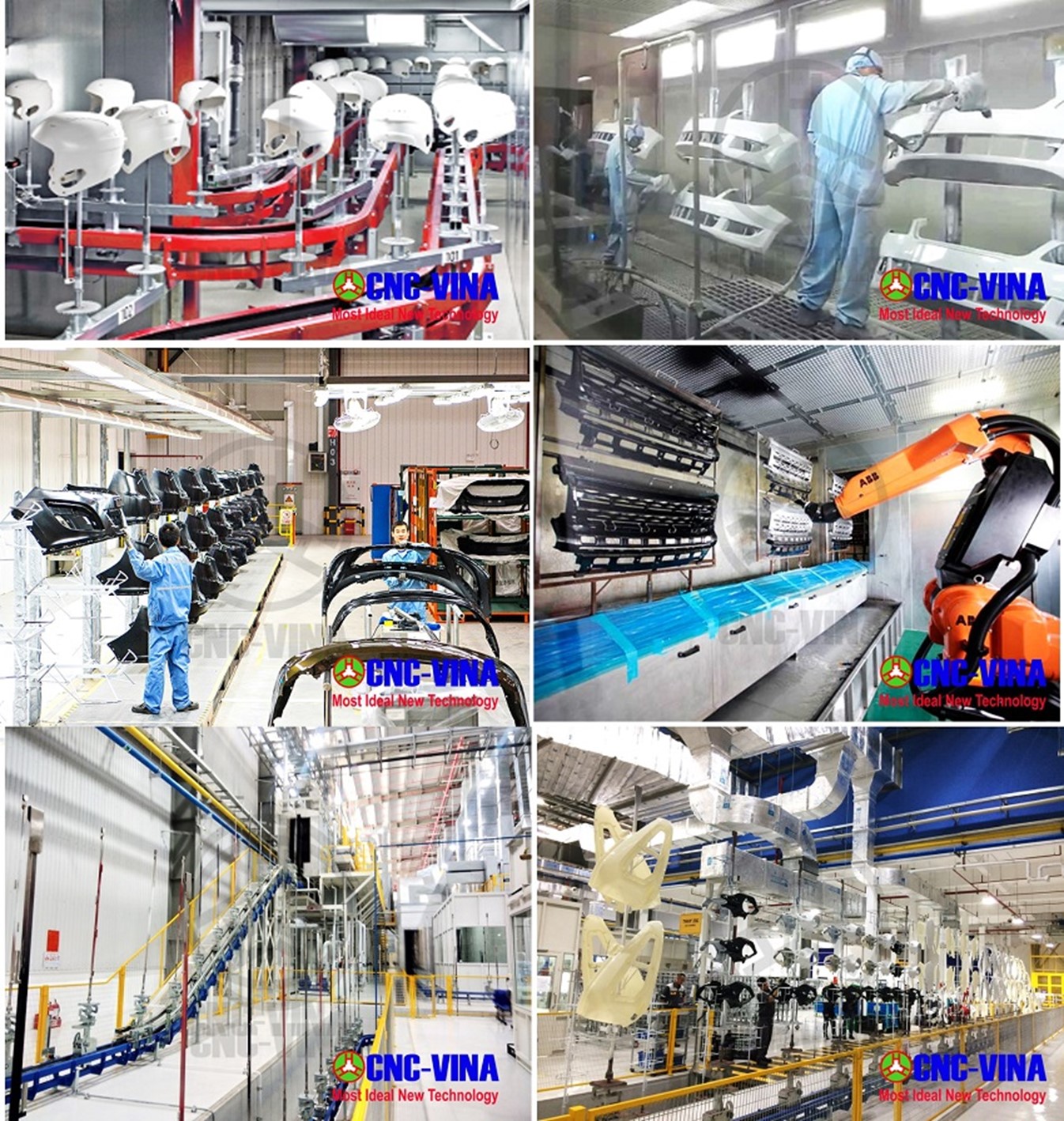
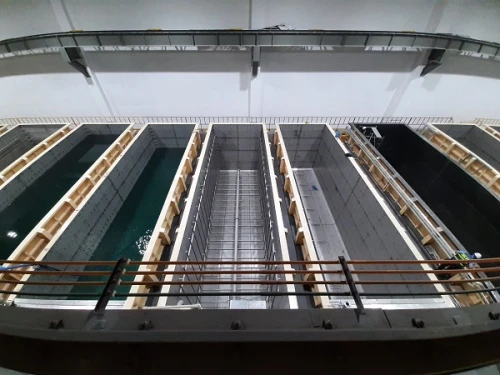
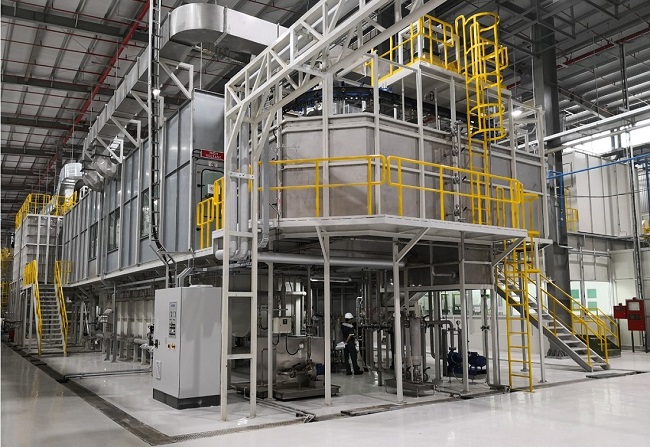
The automatic plastic painting line is specially designed for applying surface coatings to plastic products. Plastic is one of the most widely used materials in the manufacture of consumer and industrial products. Applying a protective and decorative coating can improve both the appearance and surface performance of plastic products. Therefore, automatic plastic painting lines are developed and implemented to improve painting efficiency and process consistency. A plastic painting line typically consists of a chain conveyor system, pretreatment chambers equipped with high-pressure spray nozzles, a controlled spray painting booth, an automatic paint mixing system, drying and curing systems, integrated process equipment, temperature control systems, a centralized control system, and exhaust air treatment equipment configured according to the project requirements.
Features of the CNC VINA Plastic Product Painting Line
Material compatibility
One of the key considerations in a plastic product painting line is material compatibility. Not all coating systems are suitable for every type of plastic. For example, polyethylene (PE) and polypropylene (PP) have relatively low surface energy and therefore generally require specialized coating systems or additional surface treatment to achieve adequate adhesion. Other plastics, such as high-density polyethylene (HDPE) and polystyrene (PS), may require different coating formulations and surface preparation depending on the specific material and coating system. Therefore, selecting a coating system compatible with the plastic substrate is essential for achieving the required adhesion and finish quality.
Surface preparation
Proper surface preparation is critical to achieving the required smoothness, appearance, and durability of the coating on plastic products. Unlike steel, many plastic substrates have relatively low surface energy, which can make coating adhesion more challenging. Depending on the type of plastic and coating system, the pretreatment process may include cleaning, degreasing, surface activation, or other suitable surface-conditioning methods to improve coating adhesion. This step plays an important role in ensuring proper adhesion and reducing the risk of coating peeling, flaking, or chipping during use.
Cleaning
The first step in surface preparation is to remove contaminants from the plastic surface. Dust, dirt, mold-release agents, oil, and other residues can adversely affect coating adhesion and surface appearance. Therefore, the product surface should be thoroughly cleaned using a suitable cleaning solution, solvent, or other cleaning method compatible with the plastic substrate and coating process.
Degreasing
Plastic surfaces may contain oil, grease, mold-release agents, or other contaminants that can interfere with coating adhesion. To remove these contaminants, plastic products may undergo a degreasing process using suitable chemical cleaning agents or other cleaning methods, including controlled high-pressure water washing where applicable. The specific method depends on the plastic material, contaminant type, coating system, and process requirements.
Surface conditioning
Surface conditioning may be required for certain plastic substrates to improve coating adhesion. Depending on the material and coating system, the surface can be treated using suitable chemical or physical methods to modify its surface characteristics and improve interaction between the substrate and coating. The selected treatment method must be compatible with the plastic material and should be determined based on the technical requirements of the coating system rather than being universally applied to all plastic products.
Painting methods
The coating application method is another important consideration in a plastic product painting line. Depending on the product geometry, plastic material, coating formulation, production volume, and required surface finish, different application methods may be used, including dip coating, electrostatic spraying, or other specialized coating technologies.
Dip coating
Dip coating is one of the coating application methods that can be used for certain plastic products. During the process, the plastic product is immersed in a tank containing the coating material and then withdrawn at a controlled speed. Excess coating drains from the surface, leaving a coating layer on the product. This method can be suitable for products with appropriate geometry and coating requirements, particularly small- to medium-sized components.
Electrostatic spraying
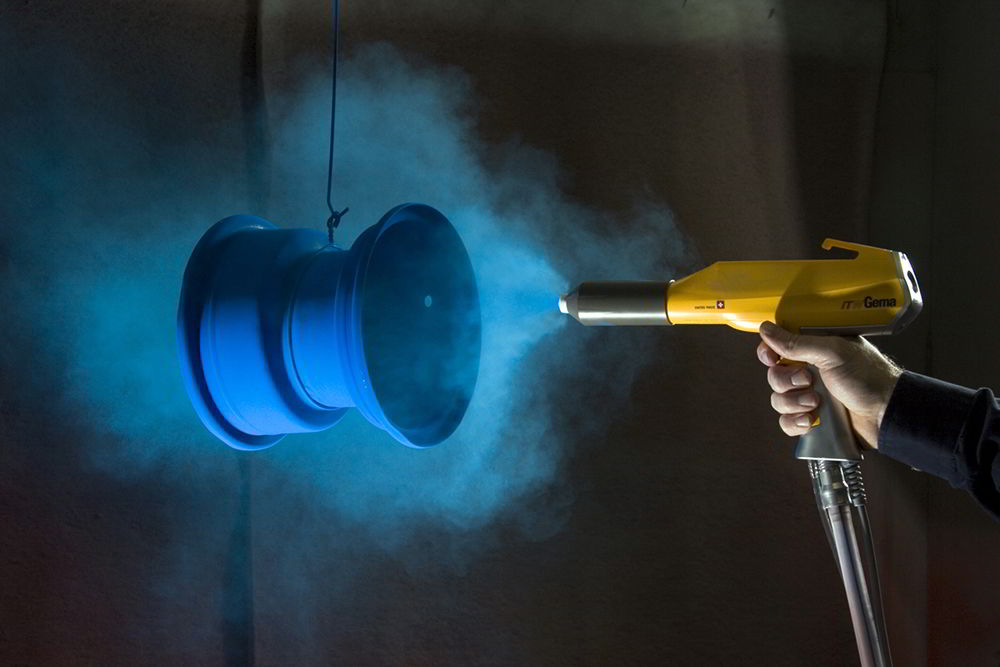
Electrostatic spraying uses electrical charges to improve the transfer of coating particles onto the product surface. The coating is atomized through an electrostatic spray gun, while the plastic product is positioned on a conveyor or fixture under controlled process conditions. Depending on the electrical properties of the plastic and the coating system, the substrate may require appropriate surface treatment or conductive preparation to achieve effective electrostatic attraction. When properly configured, electrostatic spraying can provide good coating transfer efficiency and consistent coverage, particularly for products with suitable geometries.
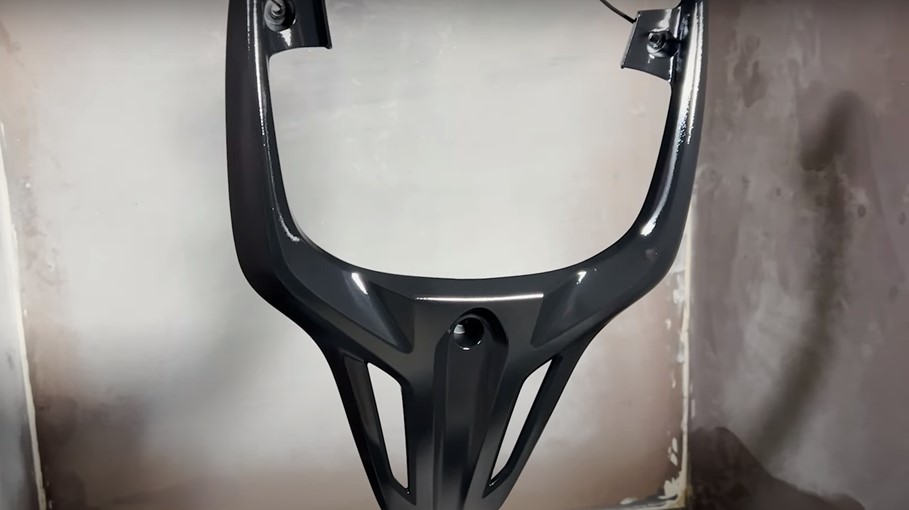
Fluidized bed coating
Fluidized bed coating is a coating process in which plastic particles or powder are suspended in an air stream and brought into contact with a coating material. The coating particles adhere to the surface of the suspended material to form a relatively uniform coating layer. This method can be suitable for coating small plastic components with irregular shapes, depending on the material properties and coating requirements.
Curing
Curing is the final stage of the coating process, during which painted plastic products are exposed to a specified curing temperature to allow the coating to dry and develop the required physical properties. The curing process helps the coating achieve the required hardness, adhesion, and durability. Curing temperature and time vary depending on the coating formulation, plastic substrate, product dimensions, and technical requirements of the coating system.
Applications of plastic product painting lines
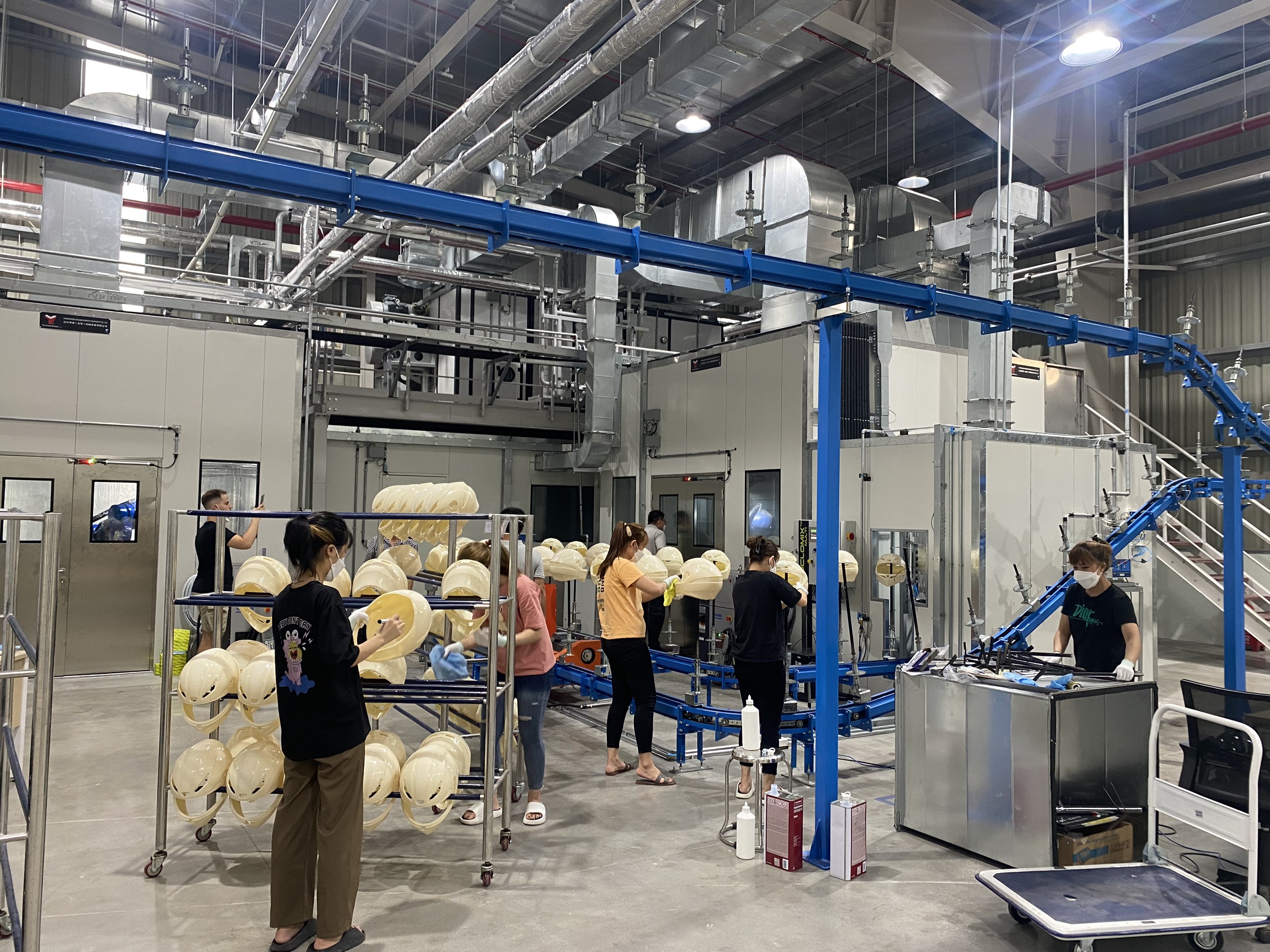
Plastic products are widely used across industrial and consumer applications due to their lightweight characteristics, design flexibility, ease of manufacturing, and relatively low production cost. As a result, plastic product painting lines are applied to a wide range of components and finished products. Plastic painting technologies are particularly common in the automotive and motorcycle industries, as well as in household appliances, electrical and electronic equipment, and other technology-related products. Typical applications include automotive bumpers such as front and rear bumpers, motorcycle fairings and body panels, household appliance housings such as water heaters, washing machines, and refrigerators, as well as helmets and other molded plastic components.
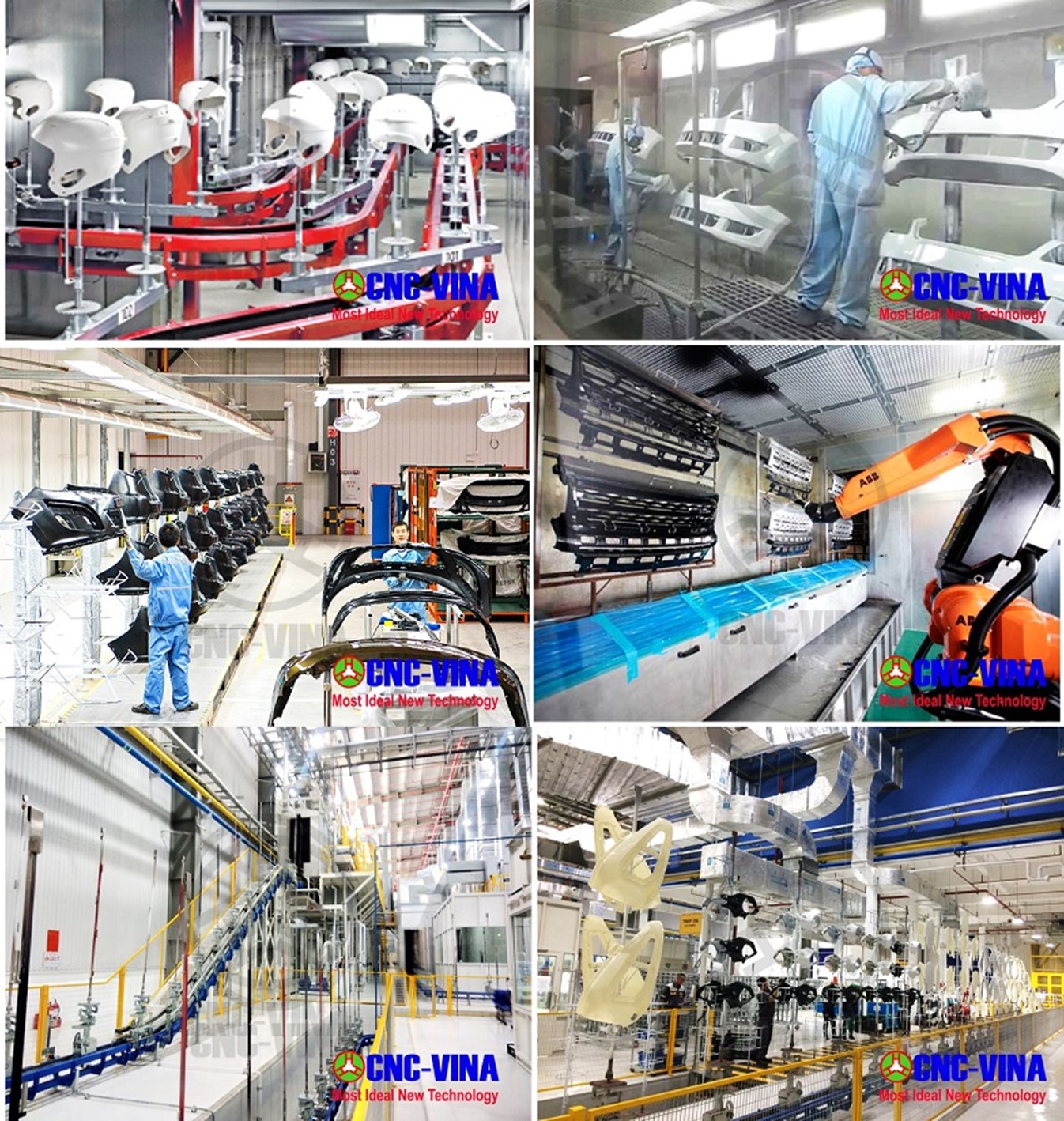
Plastic product painting process
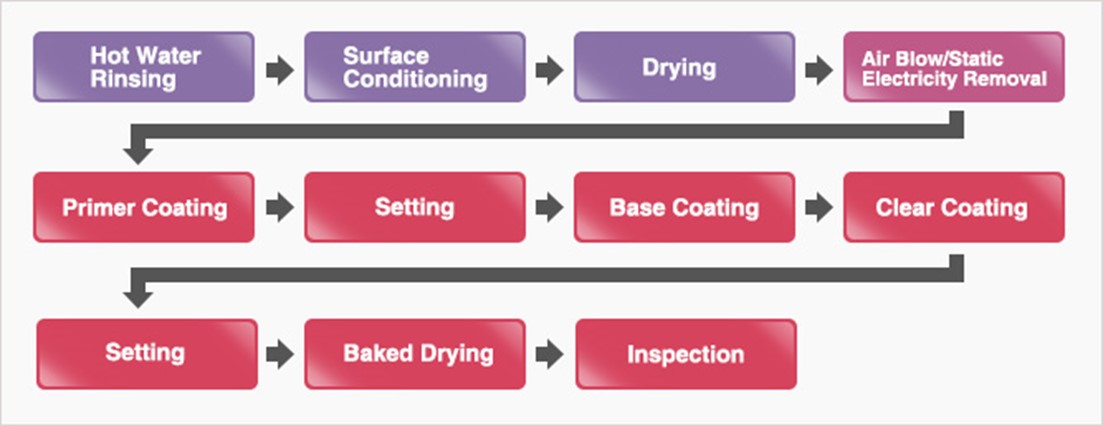
The plastic product painting process typically includes product loading onto painting jigs, surface preparation, drying, paint application, coating drying or curing, and cooling before the products are transferred to the next process. Depending on the type of plastic, product geometry, coating system, production volume, and quality requirements, the equipment configuration and process parameters can be adjusted to suit the specific production line.
Loading plastic components and products onto painting jigs
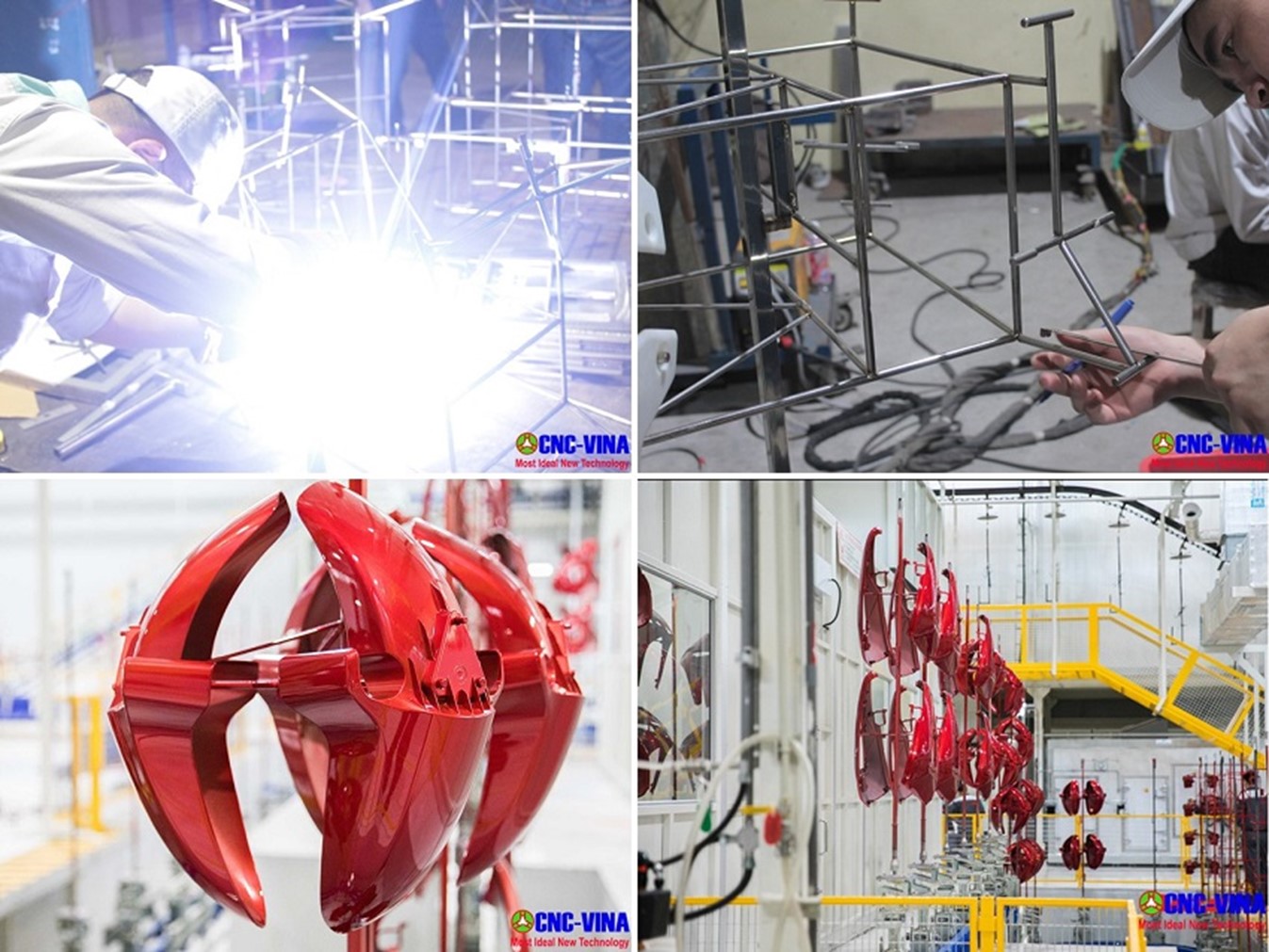
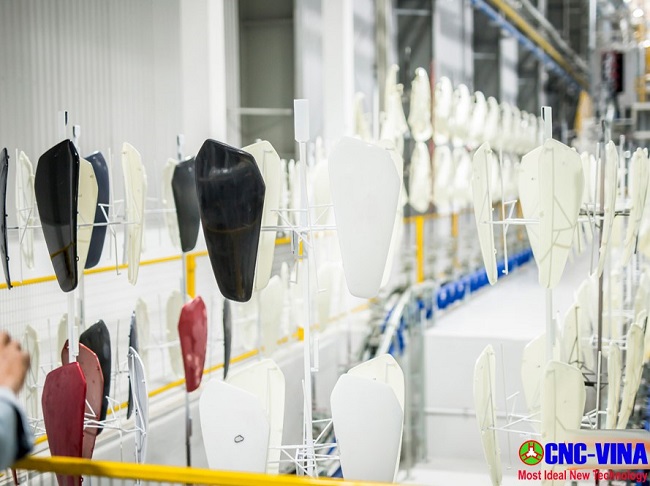
Depending on the product dimensions, geometry, and process requirements, plastic products are mounted on hanging jigs, clamping jigs, or other dedicated fixtures to secure them throughout the conveying and painting processes. The painting jigs transport the products through the different stages of the production line using a conveyor system suitable for the factory layout and equipment arrangement, such as an overhead chain conveyor or floor-mounted conveying system. Conveyor speed is adjusted according to the required processing time for each stage and the designed production capacity of the line.
Depending on the product size and fixture capacity, each jig can hold one or multiple products within the same production cycle. Small products such as phone housings and push buttons can be arranged in multiple positions on a single jig, while larger products such as motorcycle fairings, front and rear bumpers, automotive bumpers, helmets, and household appliance housings typically require dedicated fixtures to maintain appropriate spacing and ensure adequate spray coverage. For configurations requiring improved access to different surface areas, the jig can be designed with a rotation mechanism or additional movement during conveying and painting.
Surface preparation using a pretreatment line
Surface quality before painting has a direct impact on coating adhesion and overall coating consistency. Depending on the plastic material, surface characteristics, and coating system, products may undergo appropriate cleaning and surface preparation processes before painting. A pretreatment system can include spray washing, solution-based cleaning, hot-water washing, or other surface preparation methods according to the process requirements. Where high-purity water is required, deionized (DI) water can be incorporated into the final rinsing stage to minimize residual contaminants on the product surface.
For certain plastic materials or coating systems with specific adhesion requirements, additional surface treatment methods may be incorporated into the pretreatment process. The selection of chemicals, treatment methods, and number of process stages should be based on the plastic material, coating system, and technical requirements of the product rather than applying a fixed configuration to every painting line.
Pre-paint drying
After cleaning and removal of water from the surface, the products are transferred through a drying system before paint application. This stage is intended to minimize residual water and moisture on the surface while bringing the products to conditions suitable for the painting process. Drying temperature and time should be determined based on the type of plastic, product dimensions, wall thickness, thermal resistance of the material, and coating system requirements. For plastics such as ABS, drying parameters should be established according to the specific material and actual line configuration rather than applying a fixed temperature to all products.
Paint application
Before painting, areas that do not require coating can be protected using suitable masking materials or dedicated masking fixtures to control the coating coverage and prevent paint from reaching unwanted areas. Depending on the coating system and required surface finish, the process may include layers such as primer, base coat, and protective top coat. The paint supply and mixing system can be configured to prepare the coating material at the required mixing ratio before delivering it to the spray guns through the appropriate piping and control equipment.
Paint application can be performed manually by operators or automated using motion equipment, painting robots, and product rotation mechanisms. In an automated system, the robot can be programmed according to the appropriate trajectory, speed, spray distance, and spray angle for the product geometry. Depending on the line requirements, multi-axis motion systems or six-axis industrial robots can be used to improve access to complex areas of the product surface.
During painting, ventilation and paint mist collection systems are provided to control airflow within the spray booth. In a water-curtain spray booth, paint mist is carried by the airflow toward the water curtain and captured by the circulating water system. The collected residue is then removed and treated according to the configuration of the system. Ventilation, filtration, and paint mist treatment systems should be selected according to the coating material, spray volume, and safety requirements of the production line.
Product drying and curing
After each painting stage, the products may be transferred to a drying oven or curing area suitable for the coating system. The drying system can use heated air generated by an appropriate heat source according to the line design, while certain specialized coating systems may use UV or infrared curing methods. For UV curing, the coating material must have curing characteristics compatible with the UV source being used.
Drying temperature, residence time, and heating method are determined based on the coating type, coating thickness, product dimensions, and substrate material. Controlling these parameters helps maintain stable curing conditions and minimize defects caused by inappropriate drying or curing conditions.
Product cooling and jig maintenance
After drying or curing, the products are cooled with air to an appropriate condition before being removed from the jigs or transferred to inspection, assembly, or packaging processes. Cooling time and method depend on the product temperature after drying, coating type, and requirements of the subsequent process.
During operation, paint can accumulate on the surface of the jigs after repeated production cycles. If not maintained periodically, excessive paint buildup may affect fixture positioning, contact points, or painting performance. Therefore, plastic painting jigs should be cleaned and stripped according to the maintenance schedule of the production line. Depending on the jig material, type of accumulated coating, and process requirements, cleaning methods may include chemical stripping, abrasive blasting, thermal paint removal, or other specialized cleaning methods. The appropriate method should be selected based on the jig material, coating buildup, environmental requirements, and operating costs.
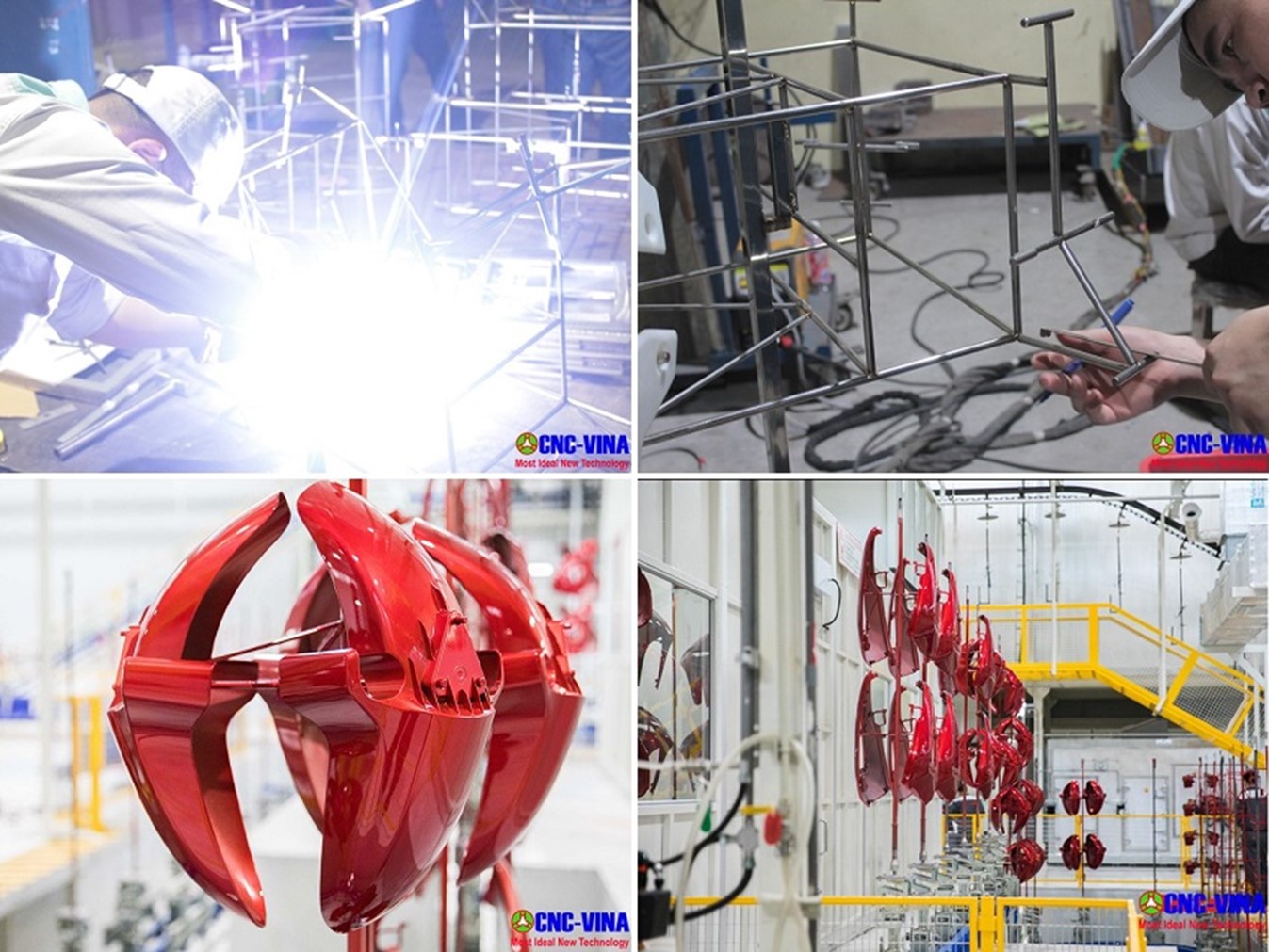
Advantages of plastic product painting lines
Plastic product painting lines are designed with interconnected and synchronized processes for product conveying, surface preparation, paint application, and drying. Depending on the product type, plastic material, coating system, and production requirements, the line can be configured with suitable automation equipment to maintain stable control of key process parameters.
Stable product conveying: Conveyor systems combined with hanging jigs and dedicated fixtures enable products to move continuously through each process stage. Conveyor speed can be adjusted according to the required processing time and process conditions of each production line.
Reduction of dust and static electricity: Ionizing air guns and ionizing fans can be used to neutralize electrical charges on the product surface, thereby reducing the tendency of the surface to attract dust before painting.
Stable surface conditions before painting: Surface treatment or preheating processes can be installed before the spray painting area to control surface conditions and help minimize the effects of moisture and other unstable factors during painting.
Paint mist control in the spray area: A circulating water-curtain system combined with a centrifugal exhaust fan helps capture paint mist generated during spraying and reduce its dispersion within the working area. Collected paint residue is removed and treated according to the system configuration and applicable environmental requirements of the project.
Support for uniform coating coverage: Product rotation equipment helps maintain stable product movement during spraying, allowing the coating to reach a wider range of surface areas. Spray gun configurations are arranged according to the product geometry and required coating coverage to provide appropriate control of the spraying process.
Process parameter control: Temperature, humidity, residence time, and other relevant parameters can be monitored and adjusted according to the requirements of each process stage and the coating system being used.
Environmental control in the painting area: Ventilation, air supply and exhaust, and air filtration systems are configured according to the spray booth design to control airflow, reduce dust, and maintain stable working conditions.
Establishing an effective plastic product painting line
Painting line layout and product flow design
Reviewing the process and product handling sequence
Plastic products can vary significantly in terms of geometry, dimensions, plastic material, and surface quality requirements. Because of these differences, a plastic painting line needs to be designed according to the specific product characteristics and painting requirements.
The first step is to evaluate the surface characteristics to be painted and the required final coating quality, such as gloss level, color consistency, and overall appearance, in order to select an appropriate coating method. For example, dip coating may be considered for products with deep or narrow recesses that are difficult to reach using conventional spray application. Plastic surfaces can also present greater coating adhesion challenges than some metal substrates. Therefore, to improve coating adhesion and achieve the required final coating quality, appropriate surface preparation processes may be required, such as cleaning, drying, surface activation, or the application of adhesion-promoting treatments.
The pretreatment process should be designed according to the requirements of the selected coating technology and the characteristics of the plastic substrate. After painting, additional processes such as drying or curing may be incorporated to develop the required coating properties. Therefore, an effective painting line should be designed with an appropriate sequence of pretreatment, painting, drying or curing, and post-treatment processes where necessary, based on the specific plastic product and its technical requirements.
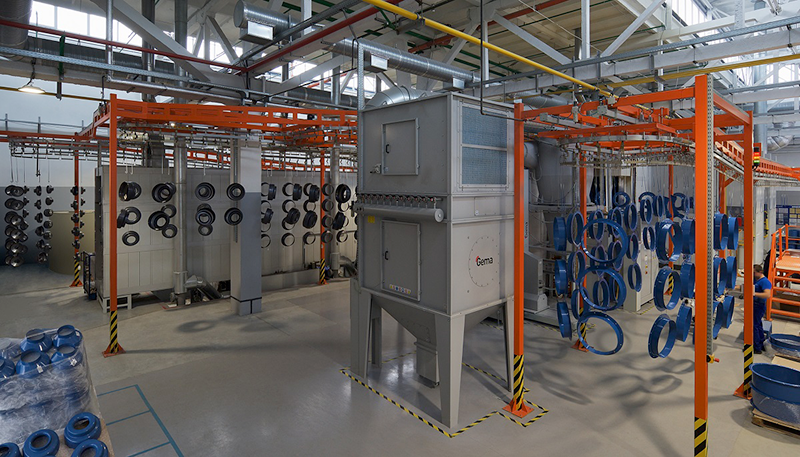
Install necessary equipment (e.g. conveyor belt, paint booth)
Each task or even each operation has many types of equipment that can meet it. The equipment can be manual, semi-automatic or automatic with a variety of designs, sizes, specifications, features, etc. For example, paint spraying can be done manually or automatically. Manually using people and spray guns. Each type and type of device has its own advantages and disadvantages. To compare and choose, we can consider a number of criteria such as: Ability to complete job requirements, labor costs, space occupied, operating time, flexibility, special features, etc
After selecting the appropriate equipment, it is necessary to assemble and install them in a sequence appropriate to the workshop space and technological process of the paint line. This can help optimize space, ensure a safe working environment and save the length of the transfer system as well as the time to transport semi-finished products between stages.
Workshop ventilation and safety measures
Implement a ventilation system to ensure safety for workers
Paint in general is very toxic to humans, so deploying ventilation systems in paint workshops in general and plastic product painting workshops in particular to reduce the concentration of toxic substances in the air and temperature. , etc. Ensuring the safety of workers working directly or indirectly around is extremely necessary.
Use of personal protective equipment (PPE) by workers
In addition to ventilation systems, personal protective equipment also contributes to protecting workers. Some common labor protection equipment used in plastic product painting workshops include gloves, protective clothing to help prevent paint splashes from sticking to the body, oxygen and anti-splash masks, and protective shoes. household.
Painting process for plastic products
Step-by-step instructions for painting plastic products on the production line
Prepare paint and equipment
After the surface preparation stage, the workpiece begins to enter the painting process using transportation systems such as conveyors, hanging conveyors, manual transportation, etc. Prepare the paint according to the correct technological process, check to make sure the paint quality is still good, there is no dryness, residue, or loss of quality due to time. Check the spraying equipment to see if it is working properly or not. You should conduct a test spray to check the actual operating status.
Paint evenly and smoothly
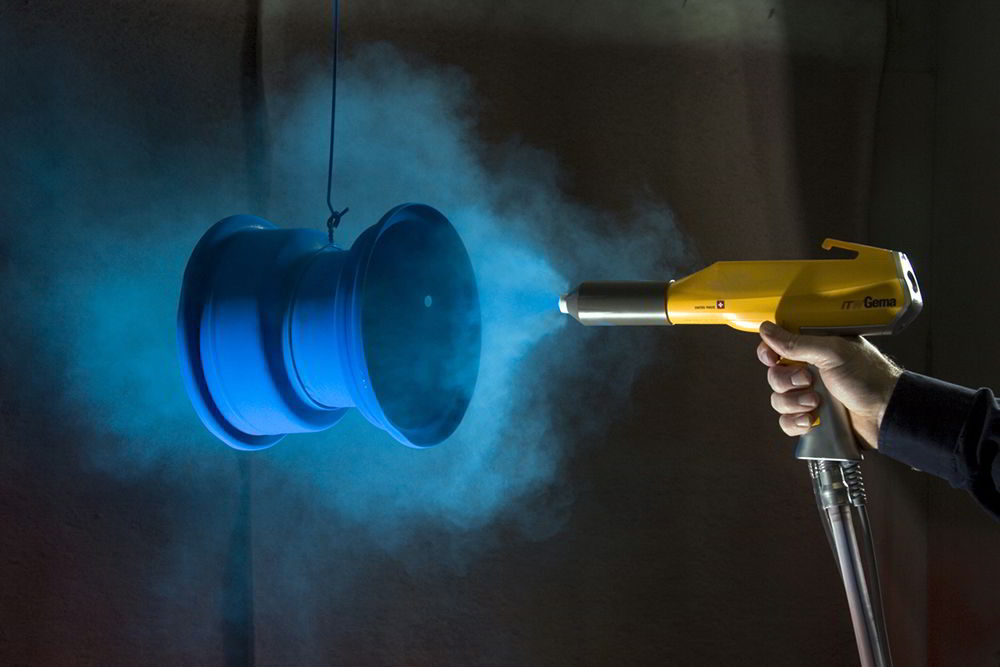
The spraying process needs to take place continuously and the paint path must be at an even, stable speed to avoid repeating the same place many times, causing the paint layer to be unevenly distributed, with different thickness and thinness.
Drying and Curing Process for Coating Adhesion and Durability
After painting, the products can be naturally air-dried or processed in a drying system, depending on the coating requirements. Once the coating has dried or cured, additional protective layers or protective materials, such as plastic film or nylon, may be applied where required to help protect the painted surface and maintain its appearance.
Troubleshooting Common Painting Issues on Plastic Products
Addressing Paint Runs and Drips: Paint runs or drips may result from changes in coating properties, inappropriate coating viscosity, or improper spray conditions. They can also be caused by a clogged or malfunctioning spray gun, unstable spraying equipment, or insufficient air pressure. Identifying the cause requires checking the coating material, spray equipment, and process parameters. Repair and adjustment should be performed by personnel with appropriate technical expertise and an understanding of the equipment configuration. Where necessary, defective components can be replaced to restore the painting line to normal operation.
Resolving Coating Adhesion Issues: Poor coating adhesion may be associated with the condition of the coating material, inadequate surface preparation, or pretreatment conditions that are not compatible with the selected coating system. Therefore, when adhesion defects occur, the coating material and the pretreatment process should be checked to identify the underlying cause and determine appropriate corrective measures.
Quality inspection and control
Importance of quality control in plastic product painting lines
Quality control in a plastic product painting line plays an important role in maintaining consistent coating quality through process monitoring and adjustment. Products that do not meet the specified acceptance criteria can be identified and either reworked or rejected according to the quality control procedure. Effective quality control helps maintain the required coating performance and finished-product quality while supporting stable production and long-term manufacturing performance.
Methods and techniques for inspecting plastic product coatings
Coating inspection is an essential step for evaluating surface quality and comparing inspection results with technical requirements before products are transferred to the next process or released for shipment. Depending on the coating type, substrate material, coating structure, appearance requirements, and product acceptance criteria, inspection may combine visual examination, specialized measuring instruments, and functional tests of the coating. Inspection methods should be selected according to the product characteristics and the quality control requirements of each production line.
Visual inspection
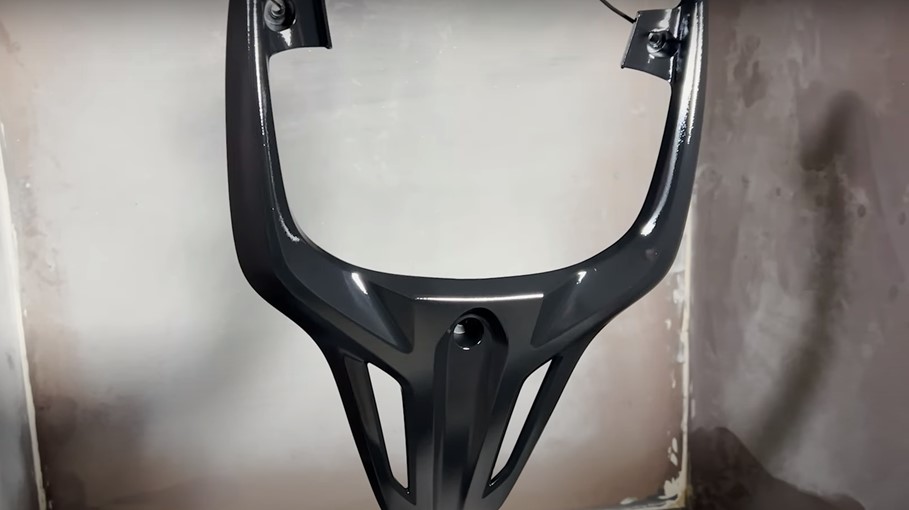
Visual inspection is generally performed after the coating has completed the required drying or curing process in order to identify visible surface defects. Inspectors use appropriate lighting conditions and viewing angles to evaluate defects such as scratches, dents, pinholes, blistering, insufficient coating, incomplete coverage, paint runs, drips, and uneven surface appearance. Color, visual uniformity, and other abnormal surface conditions can also be evaluated according to the product's acceptance criteria. Surface inspection lamps, specialized inspection lighting, or magnification equipment can be used to support inspection of difficult-to-observe areas or components with demanding surface quality requirements.
Measurement and evaluation of coating properties
In addition to visual inspection, certain coating properties can be evaluated using specialized measuring instruments to obtain quantitative results. Depending on the technical requirements, inspection items may include coating thickness, gloss, color, and other surface characteristics. For plastic products, the coating thickness measurement method and instrument should be selected according to the substrate material, coating structure, and required measurement range. Measurement results can be compared with the specified parameter range and used to support process control and consistency during painting and drying.
Gloss can be measured using a gloss meter to quantify the reflective characteristics of the surface under defined measurement conditions. Depending on the product requirements, a colorimeter or other color measurement device can be used to evaluate color and color differences rather than relying entirely on visual inspection. Surface appearance uniformity should still be assessed through a combination of measurement results and visual inspection, as a single measurement parameter cannot fully represent overall coating quality.
Coating defect and performance testing
For products with demanding surface quality requirements, microscopes, magnification equipment, or specialized inspection systems can be used to identify small defects that may be difficult to detect with the naked eye. Depending on the coating type, substrate material, and intended application, additional tests may be performed to evaluate whether the coating meets the specified technical requirements. These tests may include adhesion, hardness, impact resistance, chemical resistance, and other durability-related properties. The test method, test conditions, and acceptance criteria should be selected according to the coating system and applicable technical standards for each product.
Automation of the inspection process
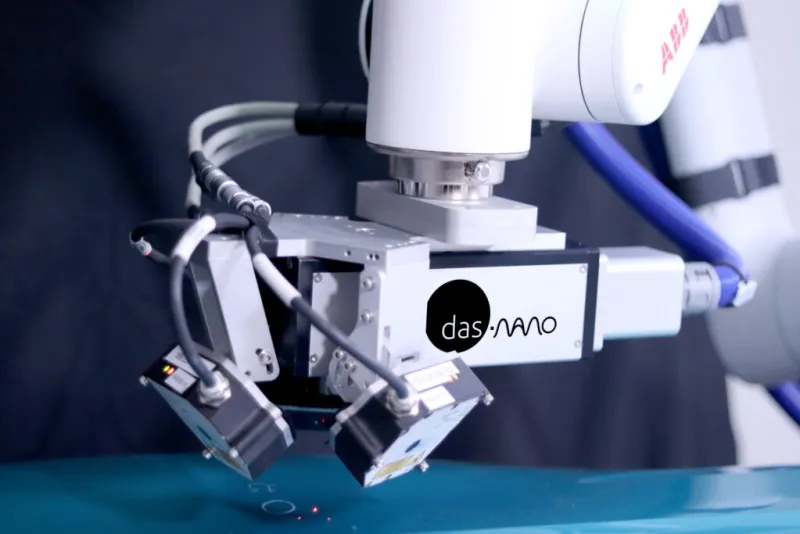
For production lines with high output or stringent requirements for consistent quality control, measuring instruments and inspection systems can be integrated into the overall automation system. Industrial cameras and machine vision systems can be used for visual inspection, detection of abnormal features, or identification of specific areas requiring inspection. Specialized measuring devices can also be integrated with positioning mechanisms, industrial robots, and control software to perform inspections at predefined locations.
Depending on the requirements of each project, the system can automatically collect measurement results, compare them with specified technical limits, and classify products according to defined acceptance criteria. The level of inspection automation should be determined based on product geometry and dimensions, production volume, inspection method, required accuracy, and the acceptance criteria of the production line.
CNC VINA provides customers with comprehensive painting line solutions, incorporating modern painting technologies and project-specific configurations. The company also develops painting lines for a wide range of products according to individual technical requirements, with a focus on appropriate technology selection and optimized investment costs. Customers interested in painting lines are welcome to contact CNC VINA for consultation and technical support:
CNC VINA TECHNOLOGY APPLICATION & CNC VIETNAM JOINT STOCK COMPANY
Factory: Song Cung Industrial Cluster, Dong Thap Commune, Dan Phuong District, Hanoi, Vietnam.
Office: Rox Tower Building (Rox Tower Goldmark City), No. 136 Ho Tung Mau Street, Phu Dien Ward, Hanoi, Vietnam.
Hotline: +84 916 639 355 / +84 915 744 664
Website: www.cncvina.com.vn | www.cncvina.net
Email: Sales01@cncvina.com.vn | Sales04@cncvina.com.vn

 Tiếng
Việt
Tiếng
Việt
 Tiếng
Anh
Tiếng
Anh
 Tiếng
Nhật
Tiếng
Nhật




 Tiếng Anh