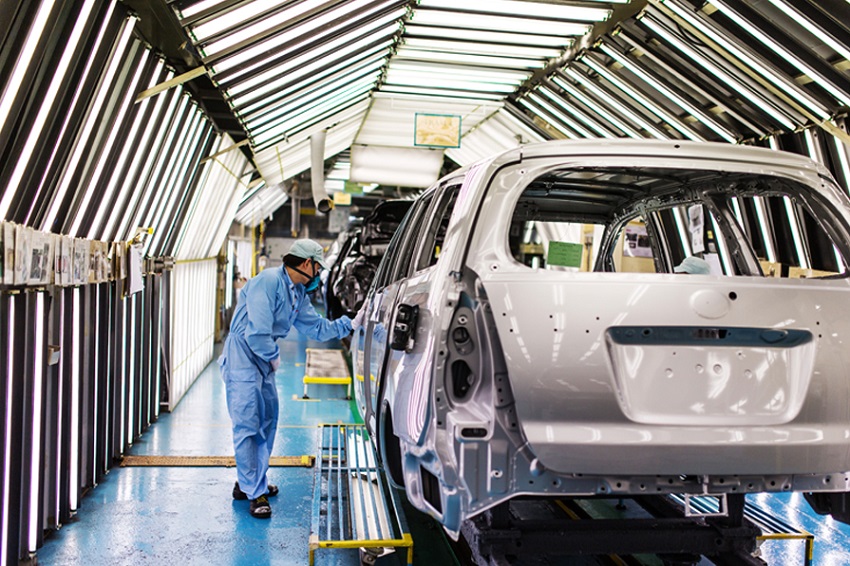
Overview of metal product painting lines
A metal product painting line is an integrated system of equipment designed to continuously perform surface treatment, coating, curing, and quality inspection for mechanical components, parts, and metal products. Depending on the material, product geometry, coating type, and required production capacity, the line can be configured with various technologies, including spray painting, powder coating, dip coating, and electrophoretic deposition (ED) coating. Among these technologies, ED coating is commonly applied to products requiring high levels of surface protection and corrosion resistance, such as vehicle bodies and frames, while spray painting and powder coating are widely used for components, spare parts, mechanical parts, and industrial metal products. The scale and configuration of the painting line are determined based on production volume, product characteristics, quality requirements, available factory space, and the required level of automation.
Features and process of a metal painting line
A complete metal painting line consists of more than just painting equipment. It is an integrated system combining surface treatment, coating, curing, material handling, and quality inspection. Synchronizing these processes helps maintain coating consistency, minimize defects, and achieve the required production capacity.
Surface treatment and preparation
The product surface must be free from oil, grease, dust, and other contaminants before coating. Depending on the material and coating system, the pretreatment process may include degreasing, rinsing, chemical treatment, phosphating, or other suitable surface treatment methods. For certain products, mechanical surface preparation such as sanding, grinding, or cleaning may also be required before primer application. Proper surface preparation directly affects coating adhesion, corrosion resistance, and the overall durability of the coating system.
Coating process
Depending on the product characteristics and finishing requirements, the line may use spray painting, powder coating, dip coating, or electrophoretic deposition. Spray painting is suitable for a wide range of components and provides relatively flexible control over color, coating thickness, and coverage areas. Powder coating is commonly used for metal products requiring high mechanical durability and good corrosion resistance. For automated painting lines, painting robots can be integrated to follow programmed spray paths, together with paint mixing and supply systems, paint booths, air supply and exhaust systems, and overspray treatment systems. Equipment configuration is selected based on product dimensions, surface geometry, line speed, and required coating quality.
Drying and coating curing
After coating, products are transferred to a drying area or curing oven to dry and cure the coating according to the requirements of the coating material. Depending on the paint system and process technology, the system may use hot-air circulation ovens or other heating methods. Temperature, dwell time, and air circulation conditions must be determined according to the coating type, product material, and curing requirements. Stable control of these parameters helps the coating achieve the required adhesion, hardness, and appearance.
Post-painting quality inspection
After the painting and curing processes are completed, products are inspected to evaluate appearance and coating quality. Depending on the product, inspection criteria may include color uniformity, coating thickness, gloss, adhesion, surface defects, and corrosion resistance in accordance with applicable standards. Products that do not meet the specified requirements can be transferred to a repair area for rework or further finishing before proceeding to the next production stage.
Applications of metal product painting lines
Metal painting lines can be designed for a wide range of products, including mechanical components, automotive and motorcycle parts, wheels, engine covers, electrical cabinet enclosures, cable trays, structural frames, industrial equipment, and other metal products. The line configuration is customized for each product group to meet requirements for production capacity, coating quality, automation level, and available factory space. For products with different shapes and dimensions, conveyors, painting jigs, paint booths, robots, and curing ovens are selected or designed accordingly. CNC VINA provides design, manufacturing, and installation solutions for metal product painting lines, ranging from semi-automatic painting systems to fully integrated automated lines. The solution can include surface treatment systems, paint booths, paint mixing and supply systems, painting robots, curing ovens, conveyors, jigs, and auxiliary systems. All components are engineered and synchronized according to the product, required capacity, and actual factory layout of each project.
Metal painting lines for automotive and motorcycle wheels
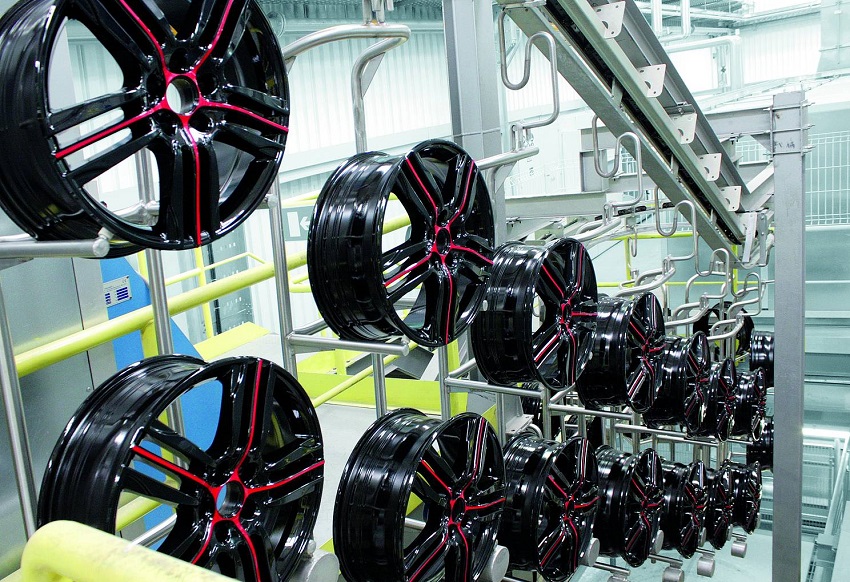
Metal painting lines in automotive and motorcycle manufacturing plants are primarily used for painting vehicle bodies and frames. However, automotive wheels are also important components that require protective and decorative coatings before assembly. For these products, wheel manufacturing and coating processes are carried out by a number of domestic component manufacturers using high-capacity, modern painting lines. CNC VINA designs, manufactures, and installs automotive and motorcycle wheel painting lines capable of coating various wheel types and sizes. The systems can accommodate wheels for underbone motorcycles, scooters, sedans, SUVs, buses, trucks, and coaches, including both aluminum and steel wheels. Our metal painting lines incorporate advanced painting technologies from Europe, imported equipment, and locally manufactured structures, helping customers optimize investment costs while achieving high operational efficiency.
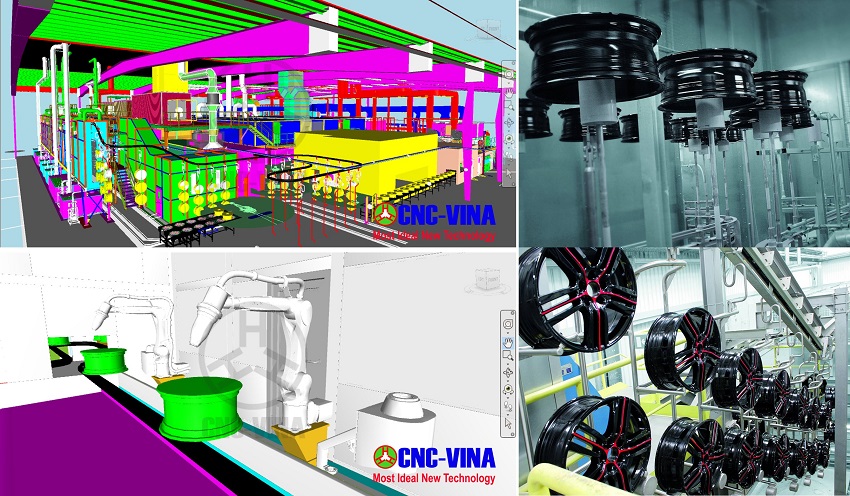
Car rim painting process
Pre-treatment – drying – robotic coating – Drying – Cooling
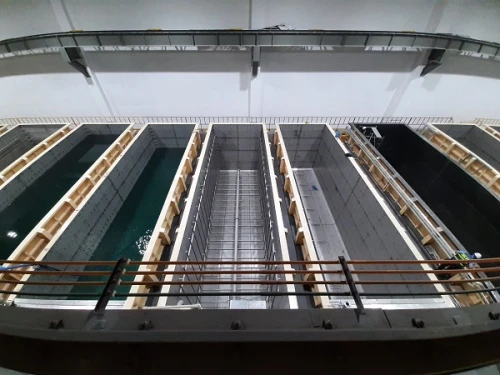
Car rims are hung on a conveyor belt that moves through the cleaning and surface treatment stages in chambers with high-pressure spray nozzles of the pre-treatment line (PT line). Here, the rims are washed with hot water, degreased, surface treated with chemicals and acids, then dried and brought to the waiting industrial robot arm area.
The industrial robot arm picks up the rim from the hanger conveyor to the industrial floor conveyor and places it in the paint jig on the conveyor to transport it inside the paint booths. Painting robot arms inside the paint booth, thanks to the automatic paint mixing and paint supply system, paint the finished product. Paint dust suppression system with water pump and circulating ventilation helps the painting process take place in a closed, independent and environmentally friendly manner. The painting process requires drying in an oven between different coats of paint. The parameters are controlled in the control room and displayed on the production management system of the line.
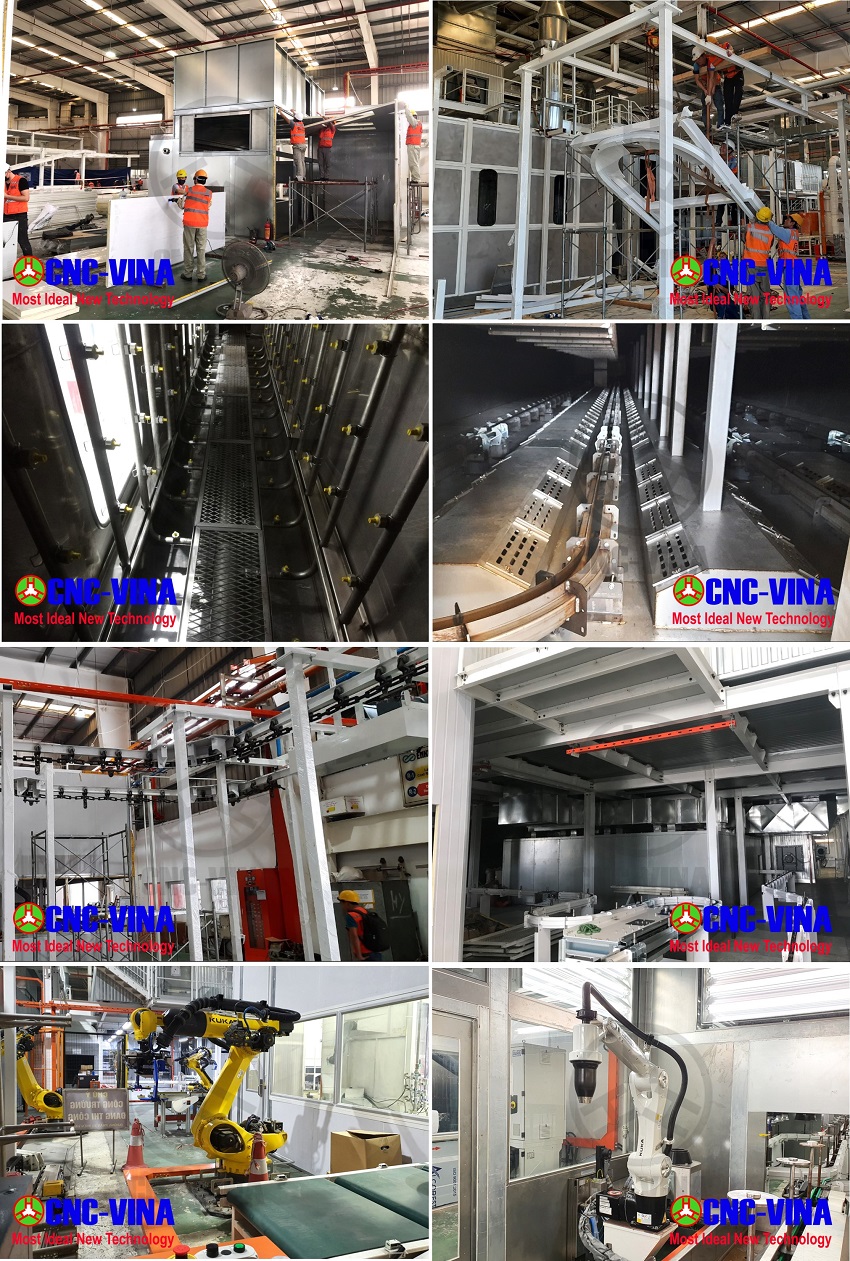
After being painted, the rim will move into a high-temperature drying chamber and then cool back to normal temperature. Drying chamber with heat supply and monitoring system from gas or oil burner.
The rim paint metal painting line applies automatic wet paint with a paint mixing room as well as circulation and spraying equipment. The paint line is capable of handling both solvent paint and water paint at a rate of "0 ÷ 100%", meeting modern requirements as requested by customers. In the rim painting line, rims are transferred in a system of independent synchronized industrial conveyor belts by manipulator robots provided with special grippers. To keep the production process running smoothly, the system is equipped with monitoring software. Its use makes the production process safe, easy to manage and allows remote troubleshooting and modifications throughout the entire lifecycle of the paint line.
A standard painting line for aluminum wheels includes three drying ovens for drying after pretreatment and various coating processes. An Oven may be required if the customer uses anti-corrosion, polyester and acrylic-power coatings.
The quality of the finished paint is high gloss, the paint thickness and coating surface are uniform, helping to protect the product in harsh usage conditions and ensure aesthetics.
Metal painting and auto rim painting lines make an important contribution to the supporting industry of assembling cars and motorbikes.
Painting line for mechanical details, auto and motorbike parts
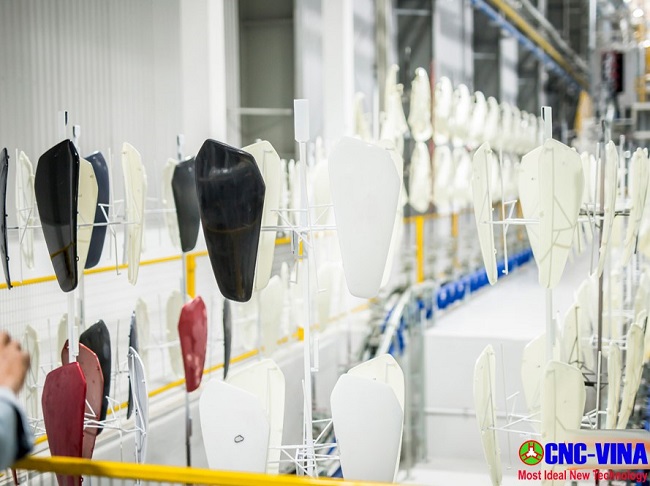
Enterprises manufacturing mechanical equipment and spare parts for the auto and motorbike supporting industry have been applying modern painting technologies to their detailed painting processes. With the requirement to ensure paint quality, increase productivity and more automation to minimize human participation in hazardous, risky and boring work.
CNC VINA provides automatic painting solutions with a closed, environmentally friendly and automated process with the help of painting robots.
Let's learn about our metal painting line products with painting systems, drying mechanical parts, and auto and motorbike parts below.
Structure of painting and drying line for metal parts:
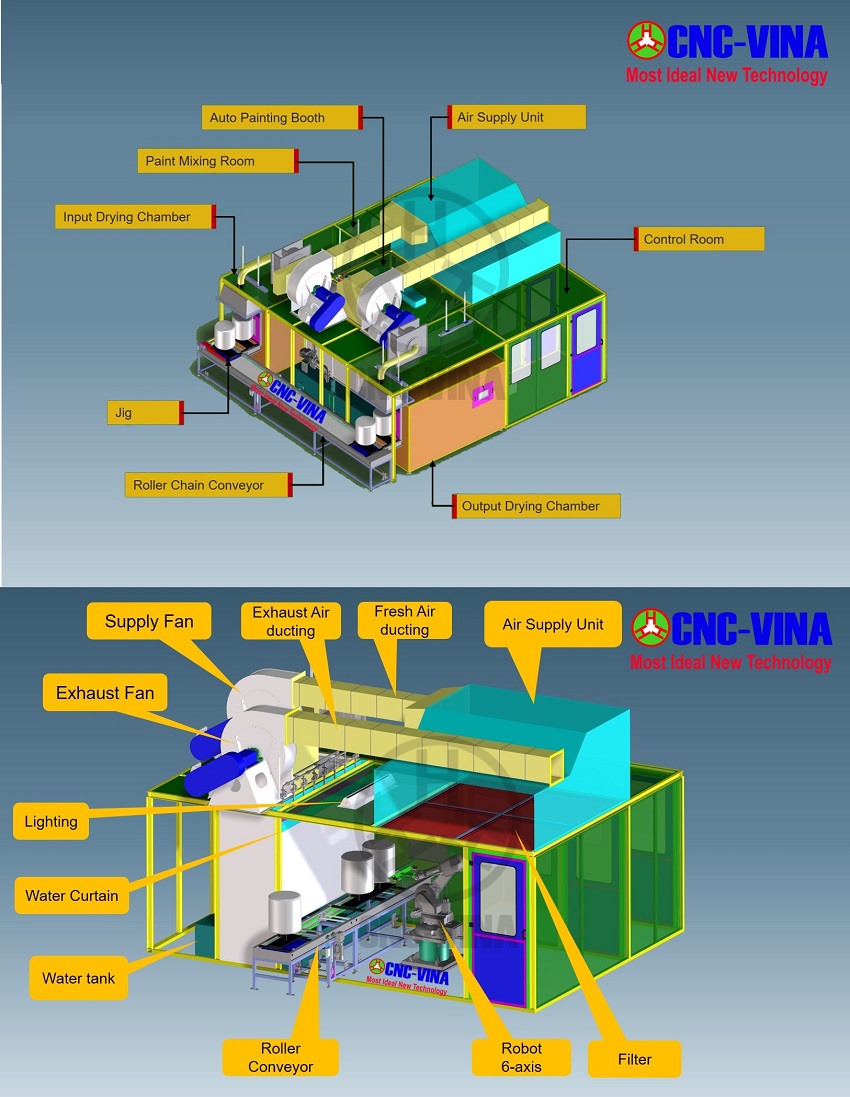
Metal painting line, painting mechanical details of automobile and motorbike parts
Equipment systems for metal component painting and drying lines
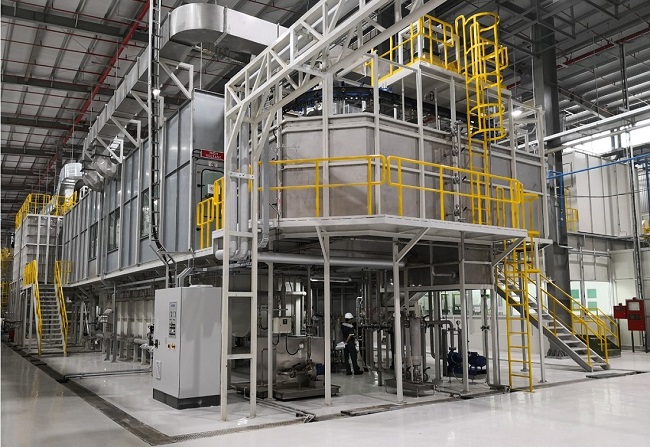
A metal component painting and drying line consists of integrated systems for surface treatment, painting, drying, and material handling, which work together to maintain a stable production cycle. Depending on product requirements and line capacity, the system may include an automatic painting booth, paint mixing room, drying ovens, air supply unit, conveyors, painting jigs, and control room.
The automatic painting booth is the area where the spray painting process is carried out. It is designed with a structure suitable for product dimensions and integrates air supply and exhaust systems, as well as paint mist filtration and treatment equipment. The overspray treatment system may use pumps and a circulating water curtain to collect excess paint, combined with lighting and compressed air systems to support the spraying process. In an automated configuration, a 6-axis painting robot controls the movement of the spray gun according to a programmed sequence, helping maintain consistent spray trajectories and painting cycles. The paint mixing room is arranged for preparing and supplying paint to the spraying process. It is designed according to the requirements for storing, mixing, and supplying coating materials for the line. The layout of the paint mixing room must be coordinated with the painting booth and spraying equipment to ensure an adequate paint flow rate throughout the production cycle.
After painting, products are transported through the input drying chamber and output drying chamber according to the process requirements of the line. The drying chambers are equipped with heating and air circulation systems to maintain suitable thermal conditions during the product's residence time inside the oven. Actual drying temperature and dwell time must be determined according to the paint type, product material, and curing requirements of each process. The air supply unit supplies and distributes air to areas where environmental conditions need to be controlled. This system can be integrated with filtration, air conditioning, and air distribution equipment to maintain appropriate airflow, temperature, and air conditions for the painting process.
The material handling system uses roller conveyors to transport products through each process according to the preset cycle. Painting fixtures and jigs are designed according to the product shape, dimensions, and required coating areas, ensuring that products remain securely positioned during transportation and spraying. The entire line is monitored and controlled through the control room, where the system's control equipment and operator interfaces are centralized. Depending on the configuration, the control system can manage equipment such as conveyors, robots, painting booths, drying ovens, and auxiliary systems, while also monitoring operating status and generating alarms when abnormalities occur.
Reference technical specifications of the metal component painting and drying line
A metal component painting and drying line can be designed with the following reference specifications:
| Item |
Reference specification |
| System power supply |
3-phase, 200 V, 50 Hz |
| Compressed air pressure |
0.4–0.6 MPa |
| Input drying oven temperature |
Approximately 120°C |
| Output drying oven temperature |
Approximately 85°C |
| Painting booth dimensions |
7,100 × 780 × 2,340 mm |
| Operating height |
Approximately 800 mm |
| Painting cycle |
Approximately 75 seconds |
| Painting robot |
01 6-axis robot |
| Spray guns |
02 units |
The specifications above are reference specifications for a specific line configuration. During actual design and manufacturing, the painting booth dimensions, drying temperature, production cycle, number of robots and spray guns, electrical capacity, and compressed air requirements must be calculated according to product dimensions and characteristics, paint type, target production volume, quality requirements, and available factory space.
Operating principle of the painting and drying line for metal parts:
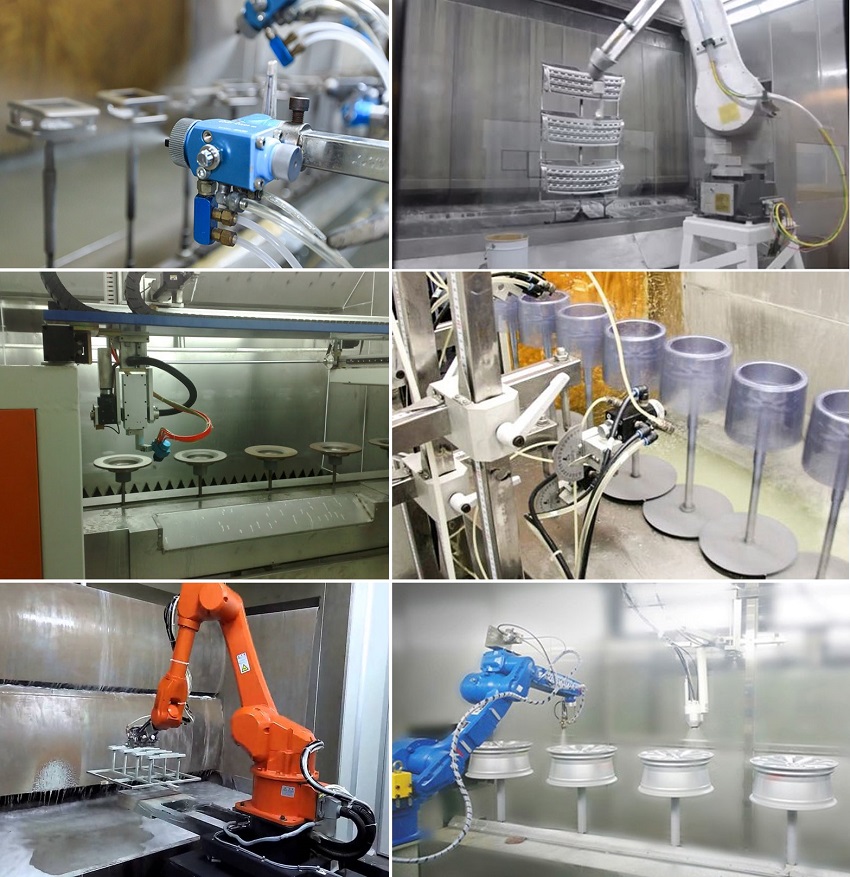
Products are mechanical parts and spare parts for assembling cars and motorbikes that are processed and cleaned from the previous stage and brought to the painting line by a roller conveyor system, chain conveyor with hanging fixtures. drying/painting process.
The product is passed through the input drying chamber with a drying temperature of 120ᵒC. The product moves along a chain conveyor into the paint booth and is coated by a 6-axis industrial robot arm with an optimal calculated and programmed motion trajectory. The robot arm moves flexibly with 3-4-5-6 degrees of freedom combined with the rotating motion of the jig to help paint evenly every corner of the product in a short time, providing a high quality paint surface and Saves paint compared to hand spray paint. During the painting process, the paint dust suppression system with circulating water screen and exhaust/fresh air fan operates continuously to help collect paint dust and treat wastewater quickly and safely for humans and the environment.
After painting, the product is moved into the output drying chamber with a drying temperature of 85°C and cooled before moving to the next stage. The total paint-drying time in the line is 75s. The jig is capable of fixing and hanging 1-2-4 products at the same time (depending on the model, the painting robot will identify the product and paint according to the programmed trajectory for that model) to help improve productivity and save time. time. Painting lines for metal, mechanical details, and auto and motorbike parts with robot arms help reduce the number of workers involved in the painting process, which is a heavy and risky job for humans.
Fire extinguisher painting line
CNC VINA provides metal painting solutions for most products according to customer requirements. Painting processes are developed by leading paint experts with many years of experience in the paint technology industry in Vietnam.
Fire extinguisher painting process
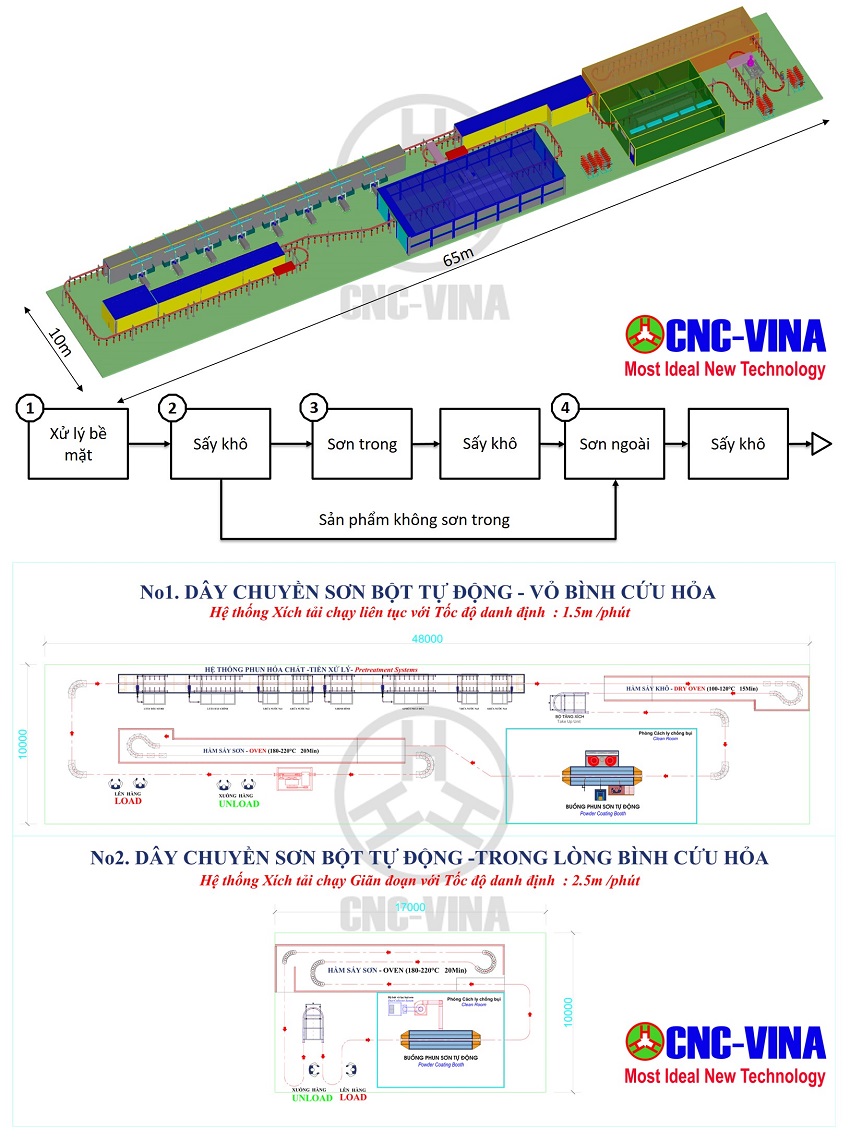
The process of painting fire extinguishers goes through the following stages: pre-treatment - drying - interior/exterior painting and finishing drying, which take place sequentially on roller conveyor systems, chain conveyors, hanging with conveyor speed. : 1.5m/min.
Surface treatment (pre-treatment) is carried out through cleaning and surface treatment stations before painting. The product is hung on a chain conveyor that moves through each cleaning chamber
Station 1: Preventive oil removal
Station 2: Main oil removal
Station 3: Wash water 1
Station 4: Wash water 2
Station 5: Surface adjustment
Station 6: Phosphate
Station 7: Wash water 3
Station 8: Wash water 4
After cleaning, the product is dried at 100-120°C. Dry before and after painting (exterior paint or both interior and exterior paint) at a temperature of 180-220°C with an oven system providing heat from gas or oil burners.
The paint booth uses epoxy powder paint, is designed with a dustproof isolation room, exhaust fan and paint dust filter. The metal painting and fire extinguisher shell painting line is designed to be flexible, used for 6 different extinguisher shell models, helping customers be proactive in production and save investment costs. CNC VINA provides customers with car and motorbike painting lines and metal painting lines with products upon request with modern painting technology and optimal investment. Customers interested in paint line products please contact for advice and support:
VIETNAM CNC & TECHNOLOGY APPLICATION JOINT STOCK COMPANY
Factory: Song Cung Industrial Site, Dong Thap Ward, Dan Phuong District, Hanoi City, Vietnam.
Văn phòng: Rox Tower, Rox Center Goldmark City, số 136 Hồ Tùng Mậu, Hà Nội.
Phone: +84.24.37805173 (74) Fax: +84.24.37805007
Hotline: +84.916 63 9355 / +84.915 74 4664
Website: www.cncvina.com.vn | www.cncvina.net
Email: Sales01@cncvina.com.vn | Sales04@cncvina.com.vn

 Tiếng
Việt
Tiếng
Việt
 Tiếng
Anh
Tiếng
Anh
 Tiếng
Nhật
Tiếng
Nhật




 Tiếng Anh