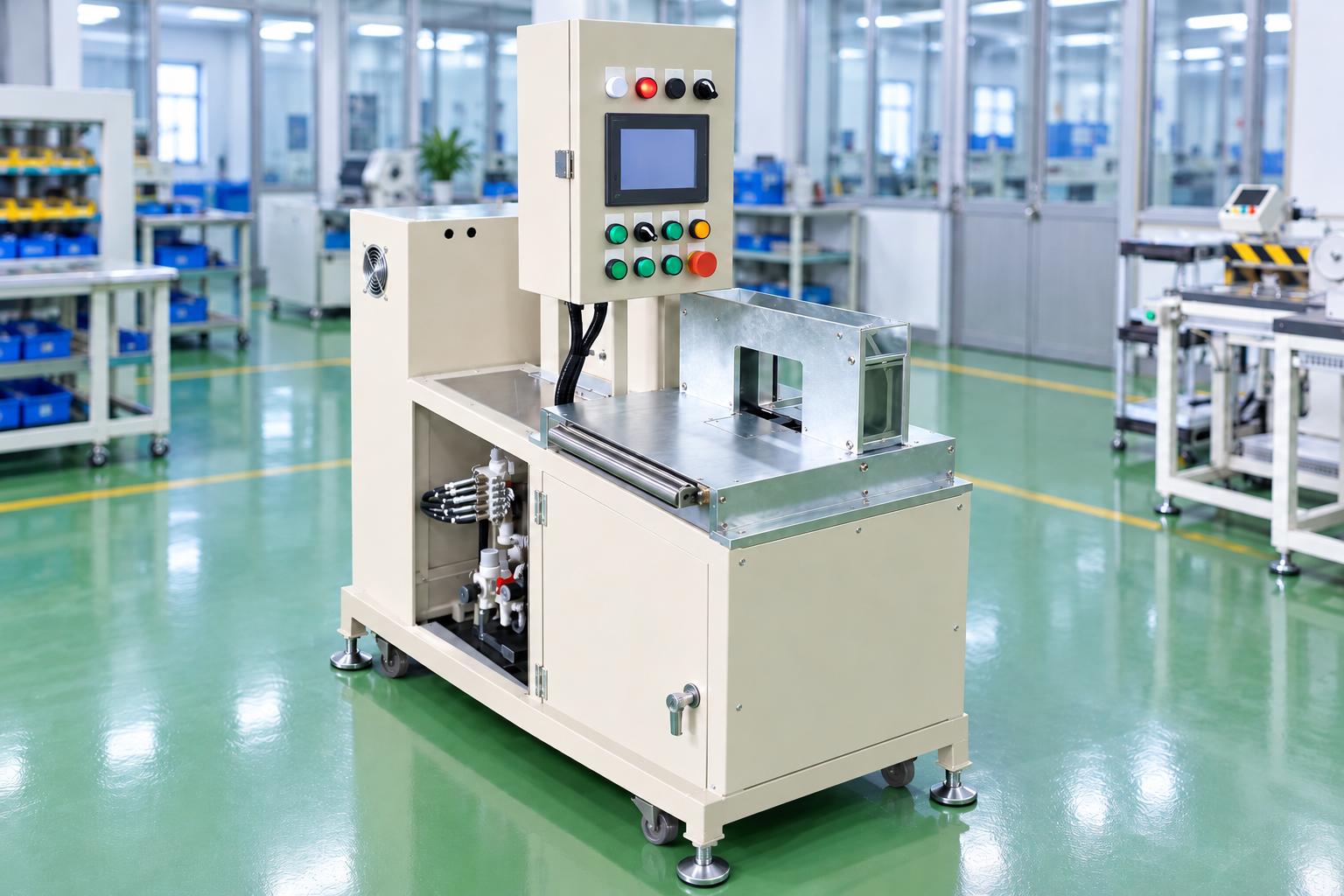
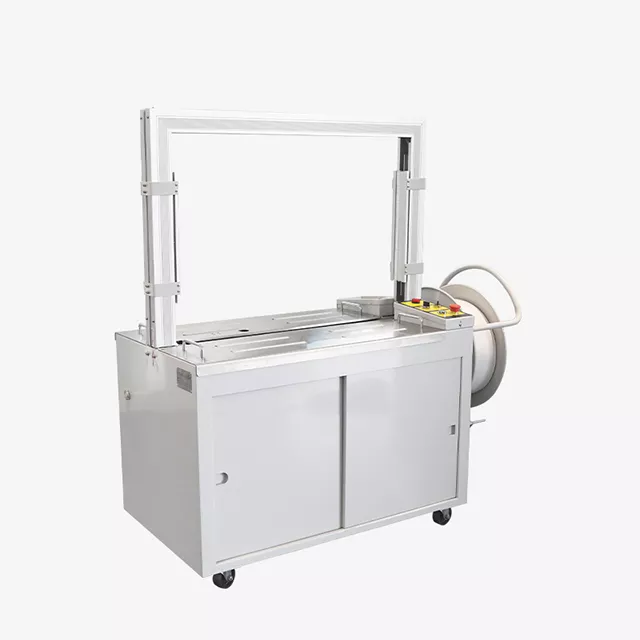
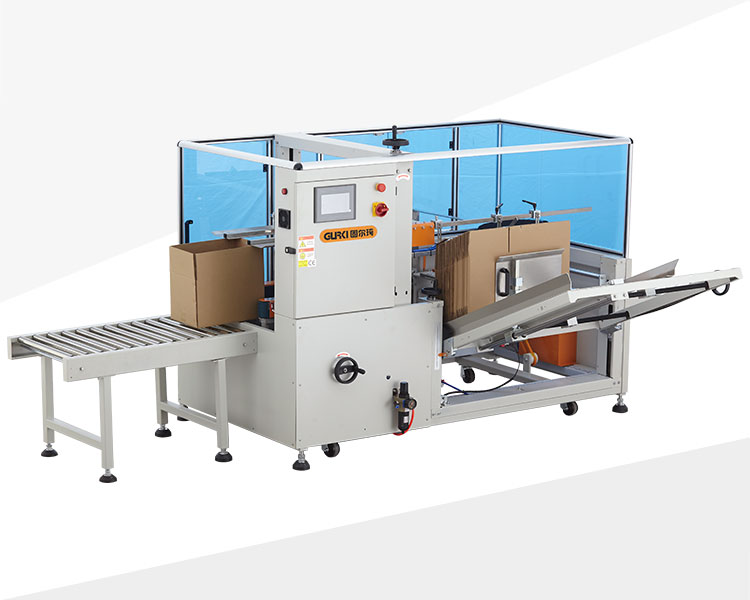
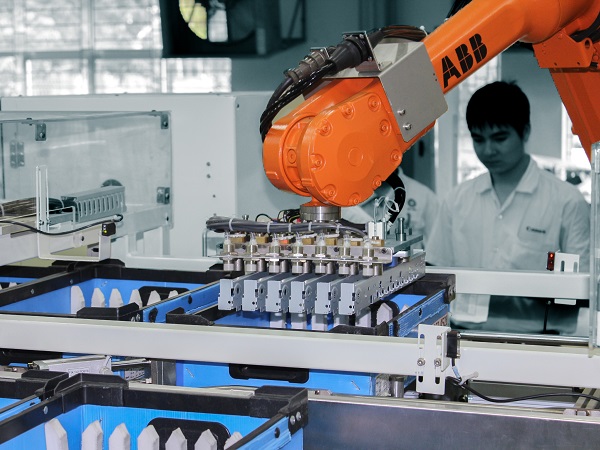
Product sorting line (sorting line) is an automated system used in sorting and packaging lines, processing operations, and the handling of goods and parcels in warehousing and logistics. Products are automatically sorted according to one or more criteria, such as size, height, weight, color, and other characteristics, using advanced vision technology and industrial inspection cameras. The sorting process helps ensure product consistency in terms of appearance and weight before packaging, while also allowing products to be classified according to specific information, production requirements, or intended applications defined by manufacturers and service providers. So, which industries can product sorting lines be applied to? Let’s explore the key features and applications of this automated solution with CNC VINA in the following article.
Technical specifications of the automatic product sorting line
![]()
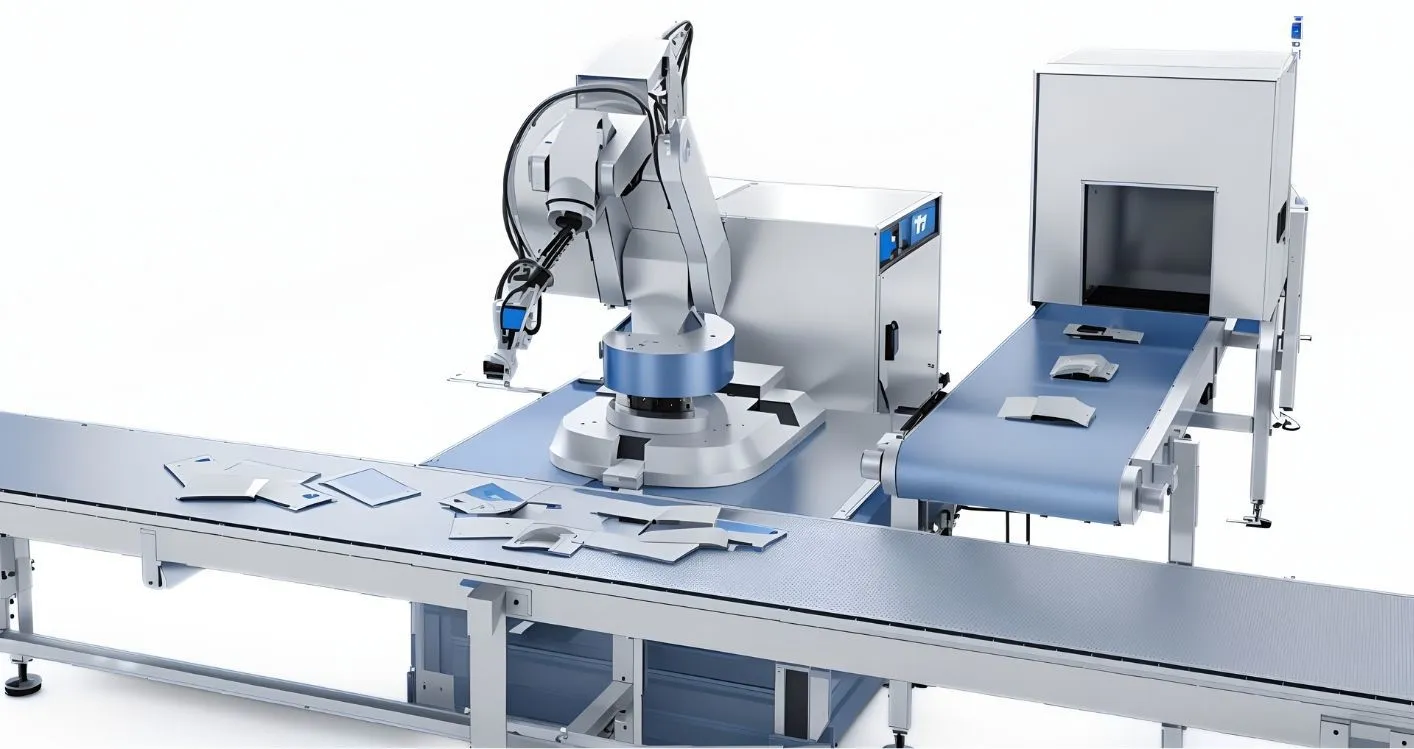
| Specification |
Details |
| Power Supply |
AC 220–240V / 50–60 Hz |
| Power Consumption |
1 kW |
| Number of Sorting Exits |
4 exits |
| Capacity |
48,000 boxes/day |
| Applicable Box Size |
L300–500 × W200–300 × H200–300 mm |
| Applicable Product Weight |
1–20 kg |
| Weighing Accuracy |
±30 g |
| Barcode Reader |
Cognex |
Advantages of the automatic product sorting line
Traditional product sorting methods typically require a larger working area and a considerable number of operators, while also taking more time and being more susceptible to human error. By contrast, an automatic product sorting line equipped with product inspection cameras can significantly reduce manual labor requirements, by up to 80%, while increasing productivity by 3–5 times and improving control over sorting errors and misclassification. Automated sorting systems are increasingly being adopted by manufacturers, e-commerce businesses, and logistics service providers as they seek to improve operational efficiency and meet the growing demands of digitalized production and logistics.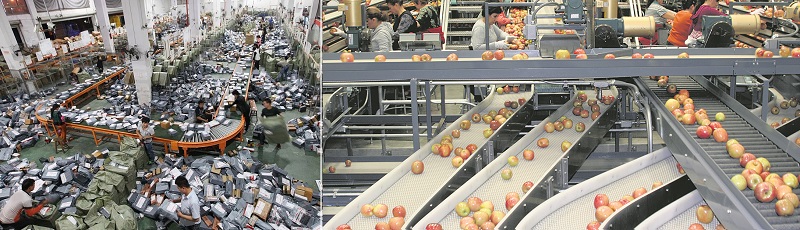
Product sorting and sorting line with sorting machine, product identification sensor, product appearance inspection camera, electronic scale, measuring system, picking mechanism, transportation (conveyor belt, conveyor belt, traps, levers, dividing mechanisms, corner conveyors, scrapers...) herringbone conveyor system, hub and central control system for remote data connection. Sorting lines are used in many industries: agricultural product processing, fruit and vegetable processing, electronic and mechanical component factories, logistics, postal and commercial express delivery warehouses. Electronics in classifying packages, parcels...
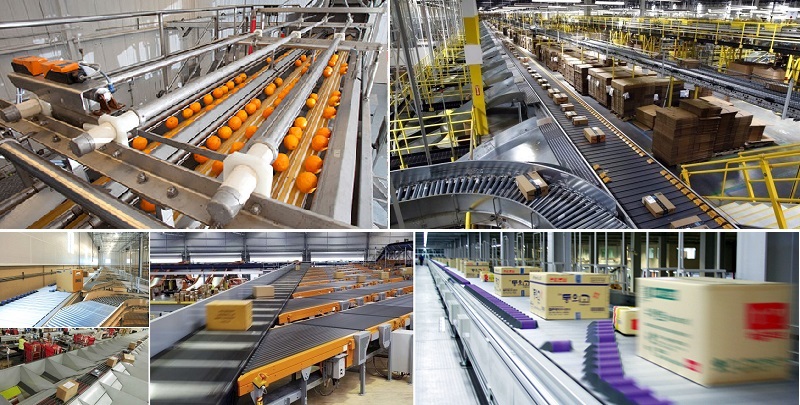
One-side, two-side sorting-selection line is applied to the food industry, agricultural products, electronic components production, logistics, and e-commerce today.
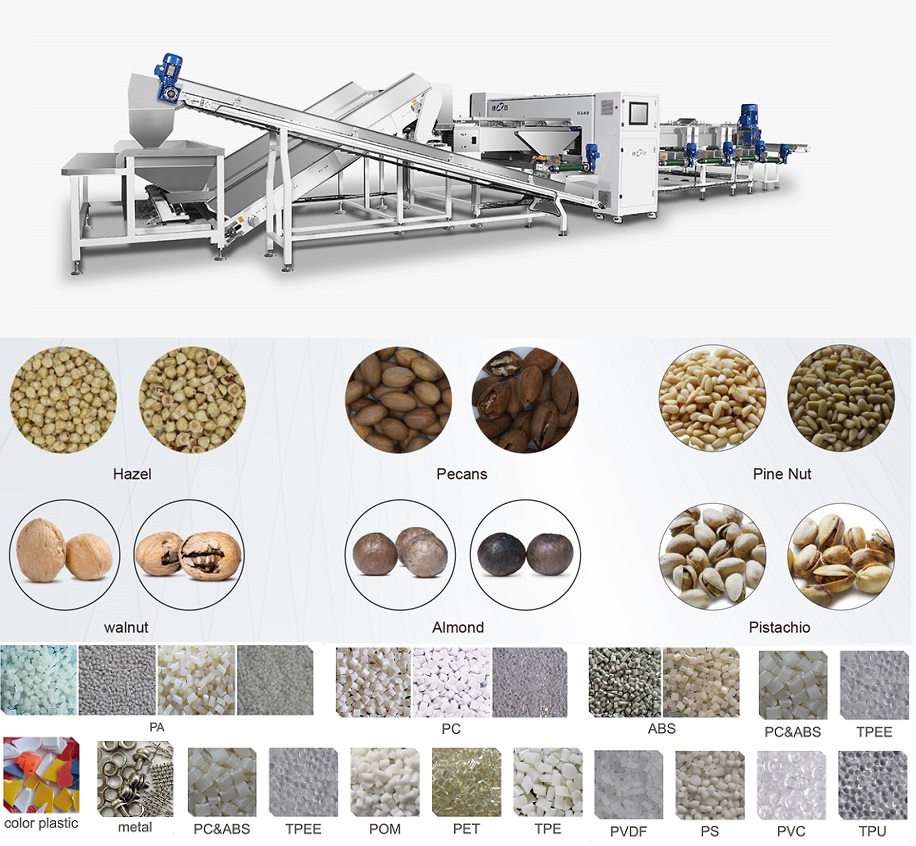
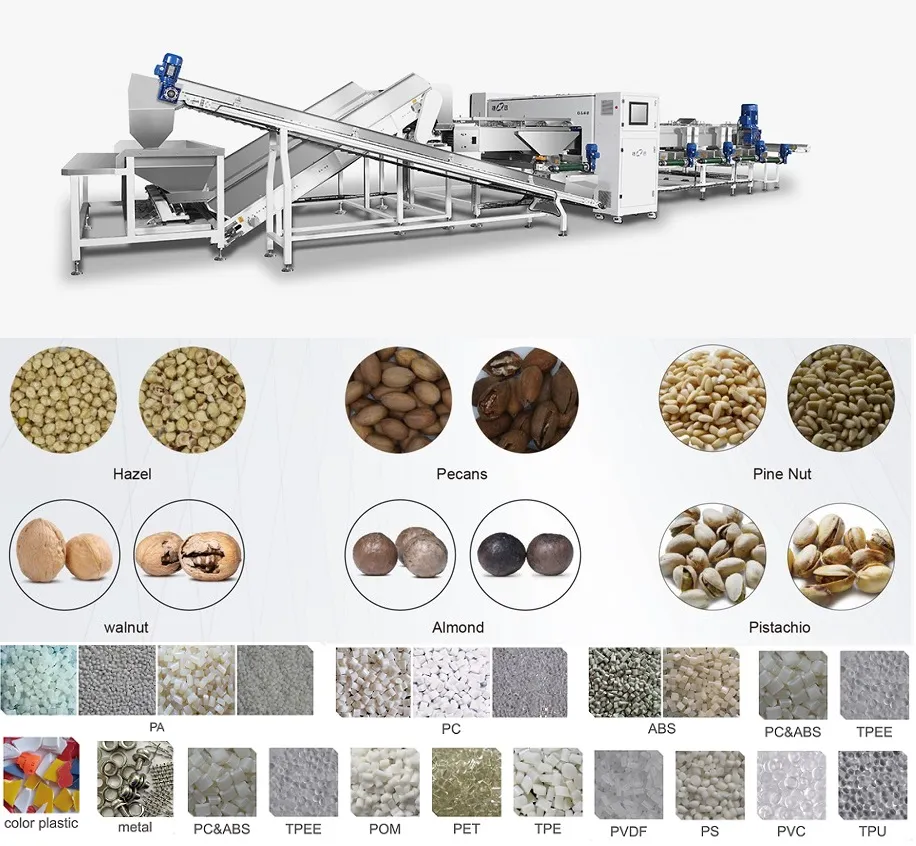
With a number of sorting lines for agricultural products, plastics, granular parts, fibers, the sorting machine is compact in structure and performs all functions of sorting and selecting products using product inspection cameras and structure. Trap and scrape before transferring by belt conveyor and hopper. The main application of this line is for the food industry.
Components of the product sorting line
Conveyor system
The conveyor system is an essential component of the product sorting line. Conveyor systems can be customized to suit the specific needs of the sorting process, such as speed, size and weight of the product being sorted. There are 2 types of conveyors commonly used in product sorting lines:
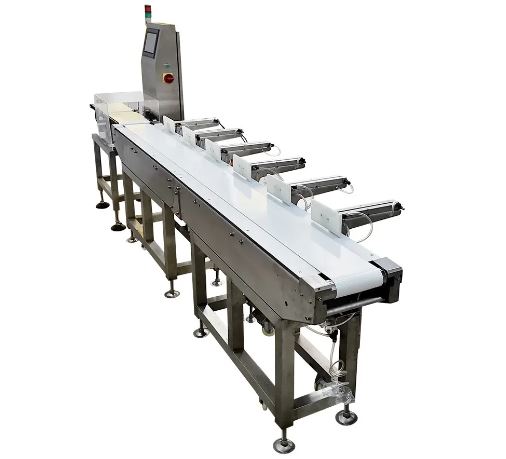
Belt conveyor : This is the most commonly used conveyor system in sorting lines. They consist of a belt that continuously moves products along a sorting line.
Roller conveyors : Roller conveyors use rows of rollers to move products along a sorting line. They are often used for heavier or larger products.
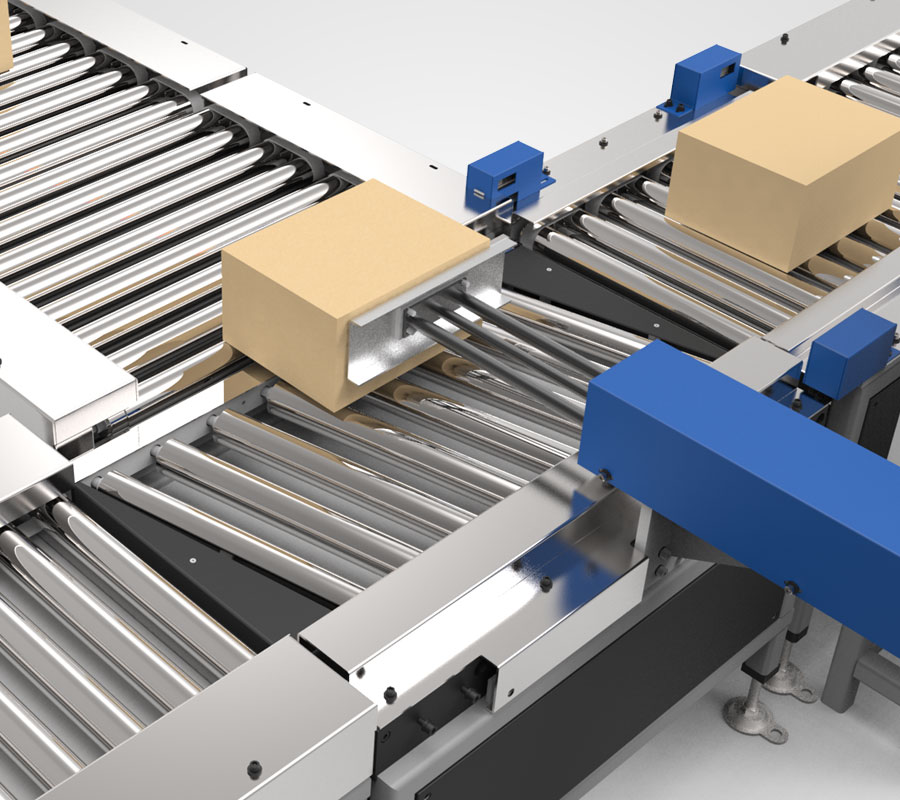
Conveyor systems play an important role in the product sorting chain by continuously transporting products through the location for sorting. They ensure automated and continuous product flow, reducing manual handling and increasing overall productivity. Conveyor systems also enable synchronization of processes, such as scanning, sorting and packaging, by controlling the speed and time of product movement.
Sensors and detection devices
Product sorting lines use many different types of sensors to collect information about the products being sorted. Below are some common types of sensors used in product sorting lines:
Barcode scanner : Barcode scanners use laser or imaging technology to read barcodes printed on product labels. It quickly captures barcode information, which can be used to identify the product and determine its sorting destination.
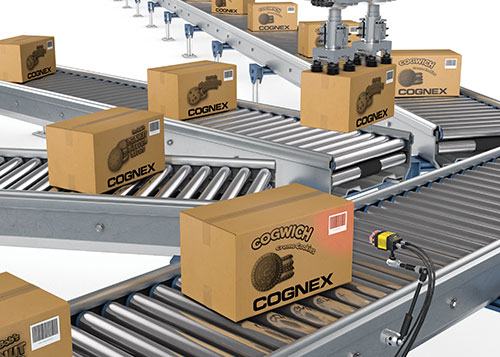
Computer vision systems: Vision systems use cameras and image processing algorithms to analyze visual information about products. They can identify product characteristics such as shape, color, size, and text on the label. The vision system is very flexible and can be used for many different classification applications.
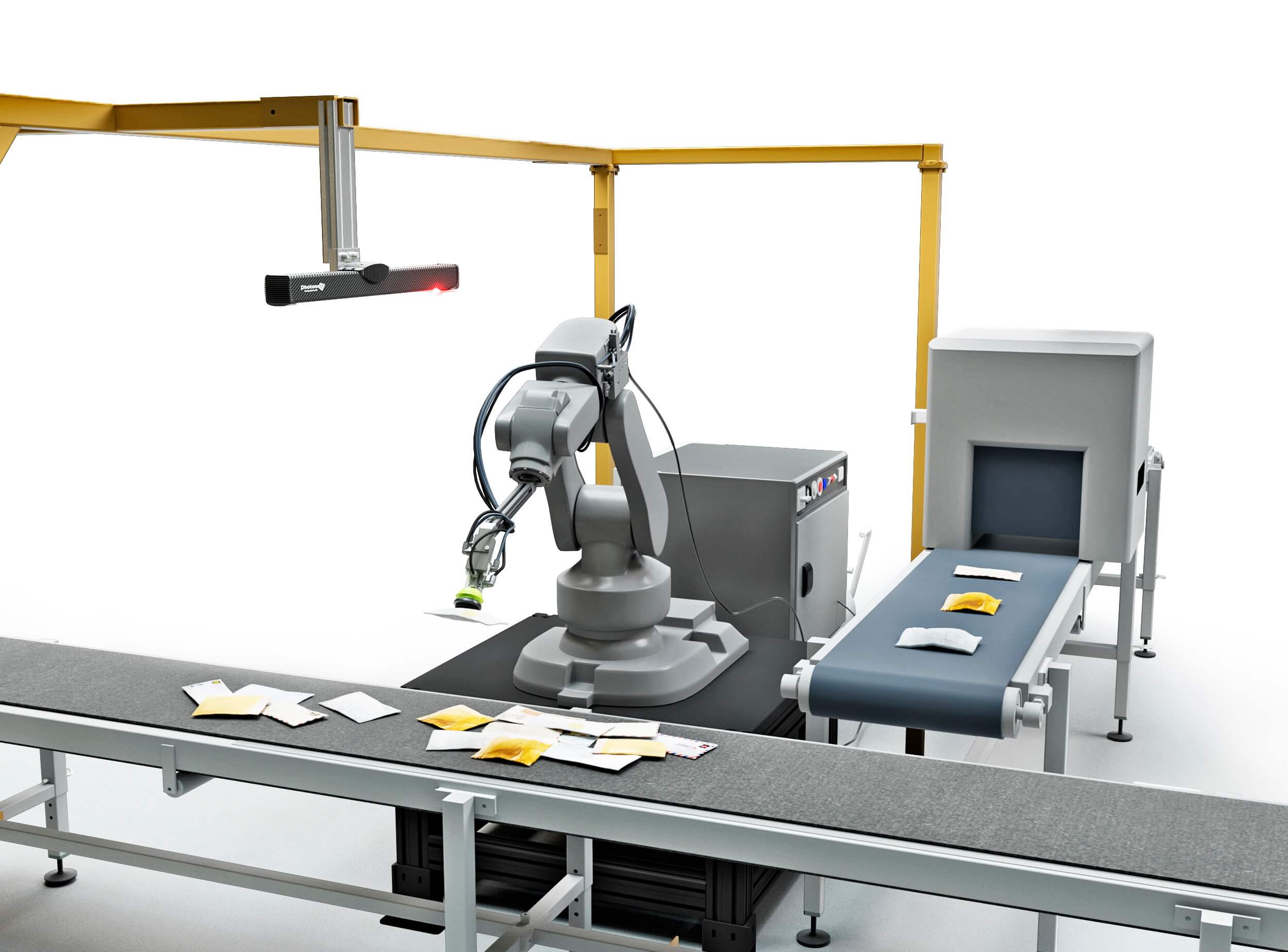
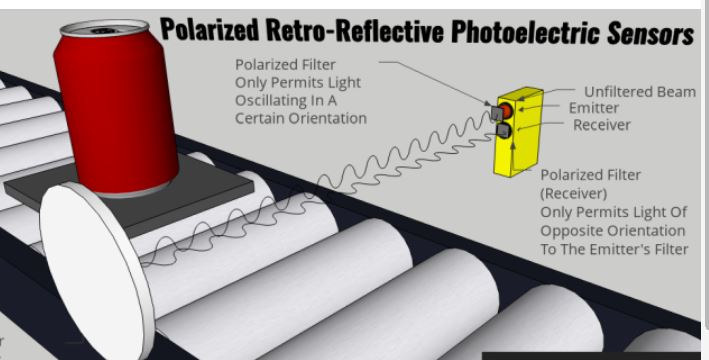
Proximity sensor : Proximity sensor detects the presence or absence of objects in the vicinity without physical contact. They emit electromagnetic fields or use ultrasonic or infrared technology to sense objects.
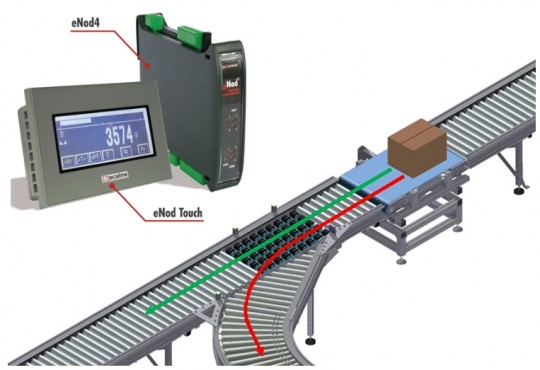
Weight sensor : Weight sensor measures the mass of the product. They can be integrated into conveyor systems to determine the weight of each product as it passes through. Weight sensors are useful for grading applications where weight is an important grading criterion.
In general, the accuracy of sensor technology directly affects the accuracy, speed, error detection, data accuracy and overall integration of the product sorting line. Precision sensors enable precise identification, rapid sorting, effective error detection and data-driven decision making, resulting in efficient and optimal sorting operations.
Sorting mechanism
Sorting arm
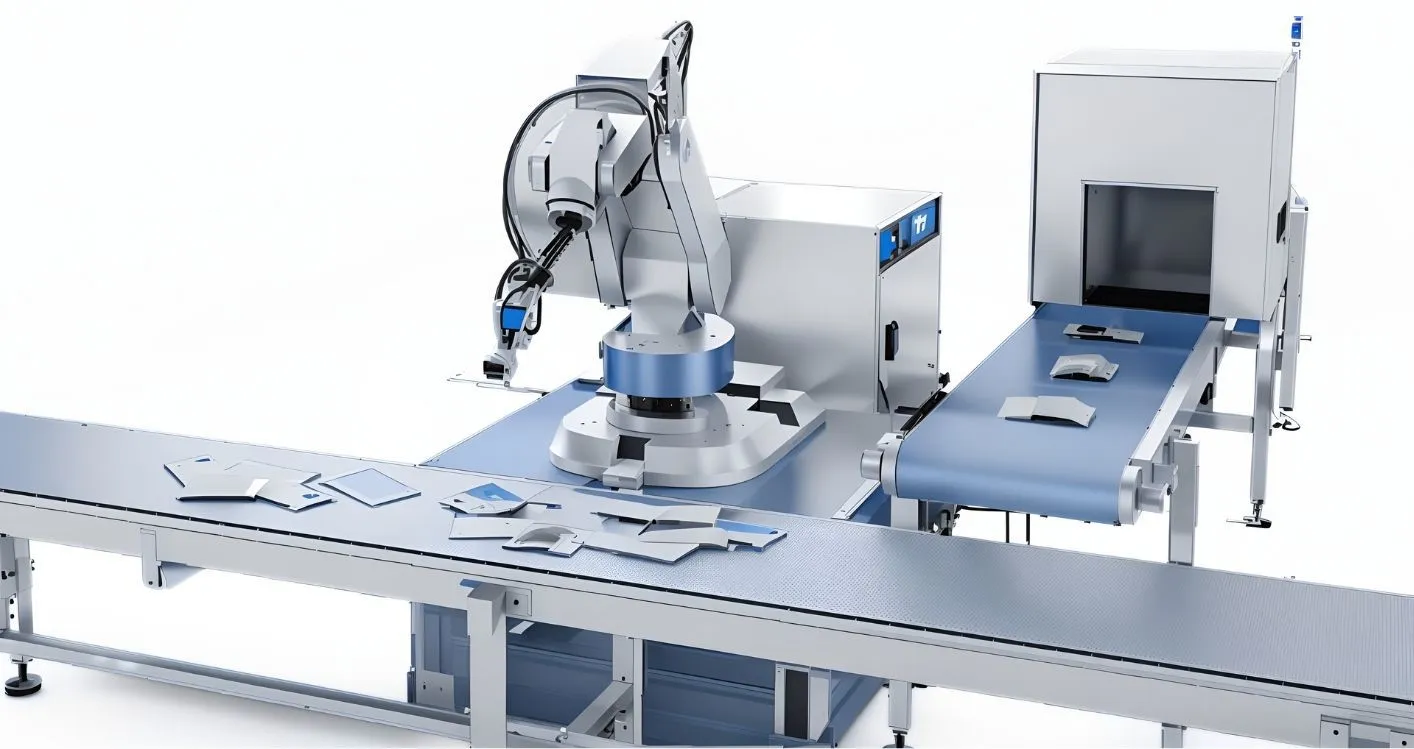
The sorting arm is a mechanism used in the process of sorting goods. This mechanism has an arm mounted on the path of the conveyor belt. When the goods move, the mechanical hand will move across the path and push or push into the appropriate position to place the goods.
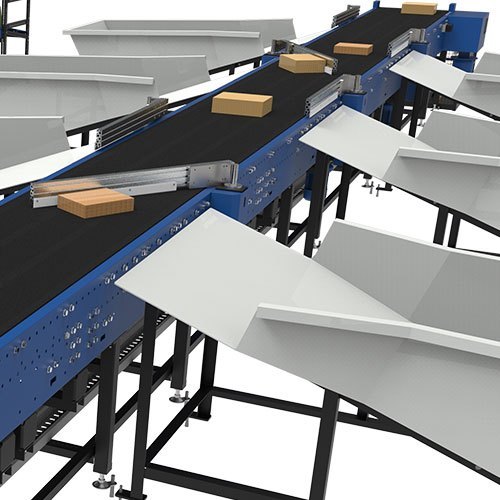
Cross belt sorting machine
The system consists of a network of conveyors mounted on a continuous chain. As goods move through the system, the conveyors above will operate and move products into classification positions.
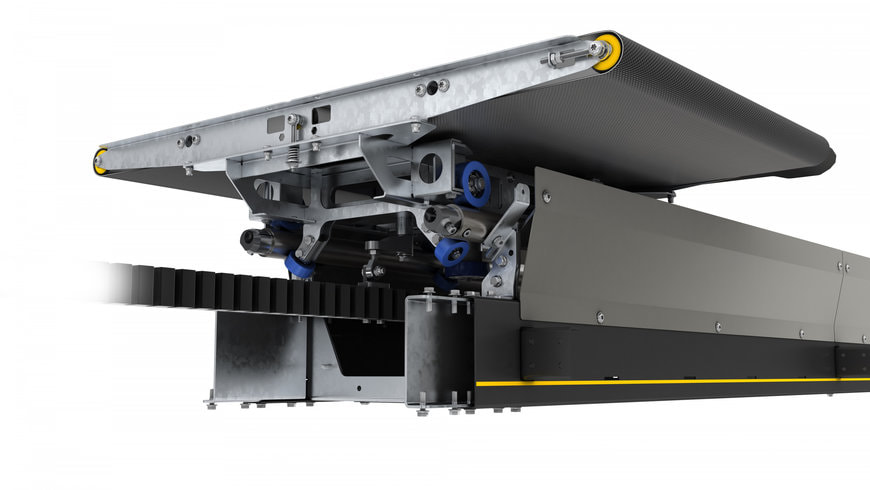
Rotating wheel sorter
The system consists of a conveyor network with rotating wheels mounted on the moving path at the intersection between the conveyor and the sorting points. As goods move through the system, the swivel wheels can rotate 360 degrees to put the goods in the right position. The goods are then transferred to their respective destination locations on the conveyor network.
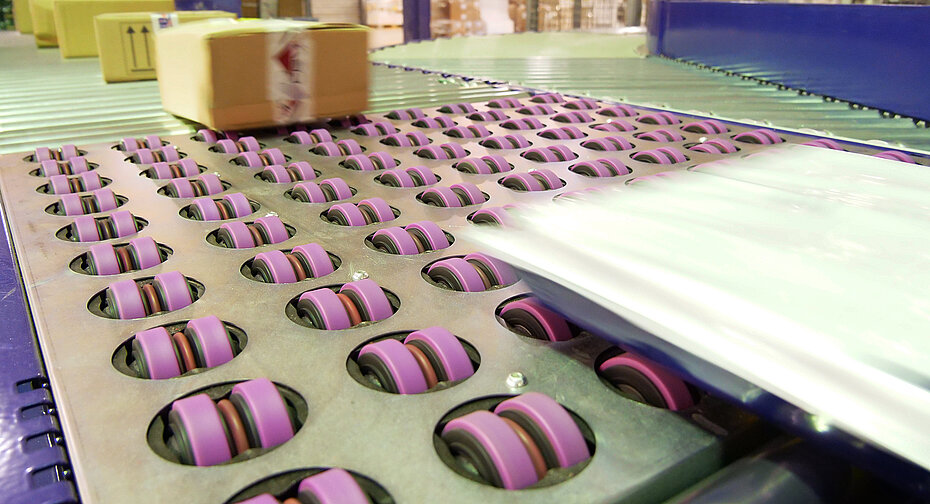
Raised roller sorter
The system consists of a network of thin belts with push bars mounted below and between the belts. As goods move through the system, push bars can rise and push goods to each destination position on the conveyor network. This system is commonly used in distribution centers, logistics facilities, and other industries to sort goods by address, size, or other criteria.
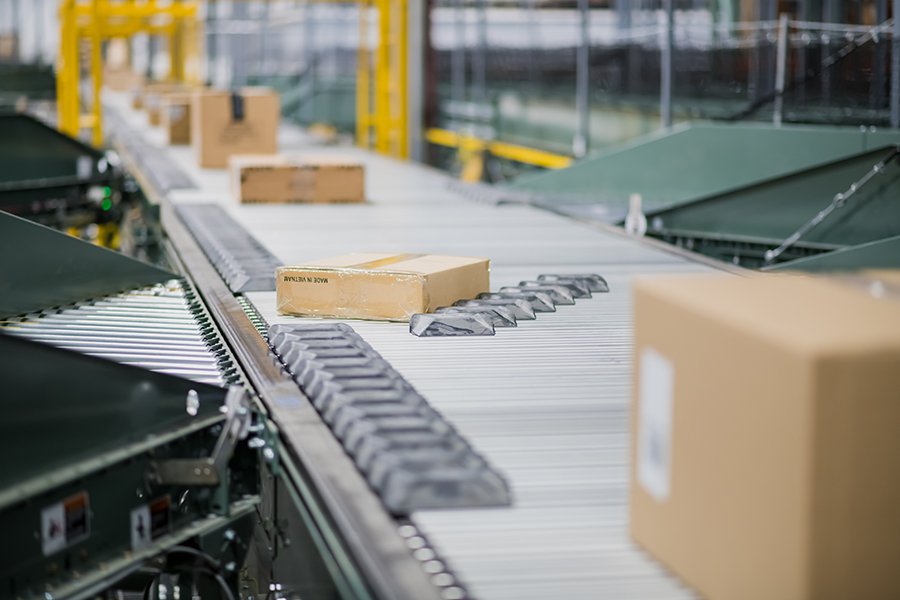
Skate sorting machine
This is a type of sorting machine that uses skates to position and push goods to their destination location. As the goods move through, the skates move across the conveyor belt and push the goods into suitable positions on the conveyor belt. Skate sorters are commonly used in applications that sort goods of varying sizes and weights.
System and control software
Control systems and software play an important role in managing and controlling the product classification line. These systems are responsible for ensuring efficient and accurate product classification based on predefined criteria.
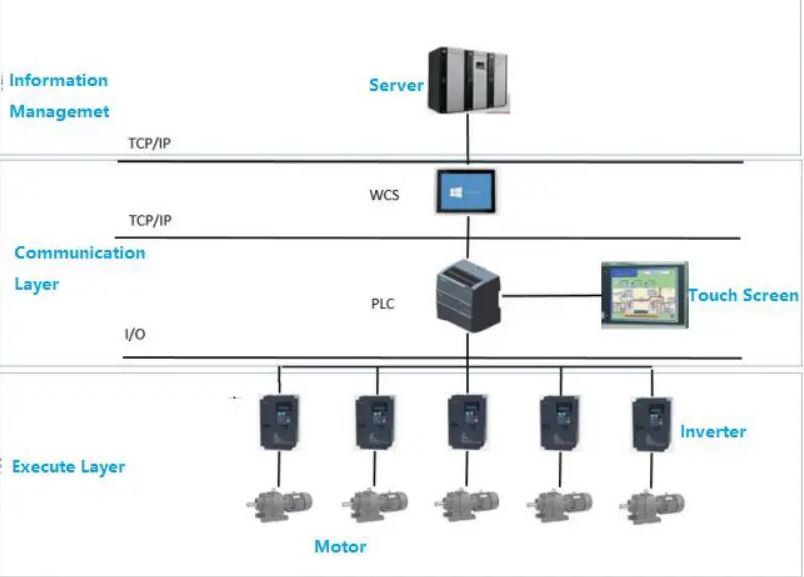
Automatic sorting : They receive input from various sensors, such as barcode scanners or vision systems, to identify and classify products. Based on predefined rules and algorithms, the control system directs products to designated sorting points.
Conveyor control : Sorting lines often use belts to transport products. The control system manages the speed, acceleration and direction of the conveyor belt to optimize product flow. It ensures that products are transported smoothly and at the right speed for efficient sorting.
Sort algorithm : These algorithms consider factors such as product type, size, weight, destination or any other relevant criteria. The control software executes these algorithms in real time to make flexible decisions in arranging products to the right location.
Error detection and recovery : It can detect missorted products, jams, or other problems that could disrupt the sorting line. Once an error is detected, the control software can trigger corrective actions, such as redirecting the product back to the correct path or alerting the operator to intervene.
Integration with Enterprise Systems : Control systems often integrate with higher-level enterprise systems, such as warehouse management systems (WMS) or enterprise resource planning (ERP) systems.
In general, the system and control software help the automation system effectively manage and control product classification lines. They ensure accurate classification, optimize throughput, detect and recover from errors, and provide valuable data to continuously improve the classification process.
Some popular product classification lines today
Product sorting line by barcode
Barcode product classification lines are very commonly used today. This sorting line is used to sort packages, parcels, and finished products that have been boxed, bagged, and labeled with barcodes and QR codes. With information stored on barcodes pasted on products, the system can easily screen, select, and collect products into hubs according to set requirements such as:
For electronic and technology products: classified according to the same production lot, production date, model...
For parcels and express delivery orders: classified by order date, packaging method, delivery location, express delivery - standard...
For packaged agricultural products: classify by expiration date, processing batch number, product grade...
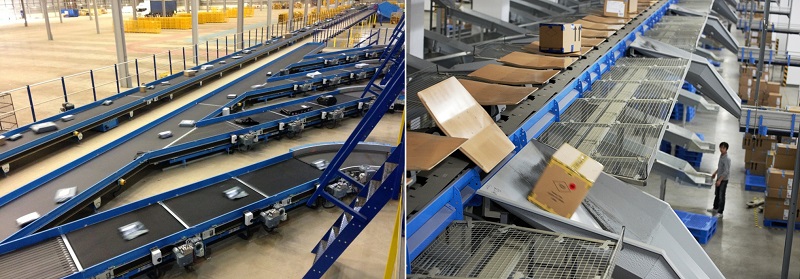
Boxes and crates are placed on sorting conveyors by workers or collaborative robot arms , robots palletize goods from level conveyors or AGV self-propelled vehicles in smart factories. The product sorting system can reach a capacity of up to 10,000 products/hour. Productivity is 3-5 times higher than barcode scanning and classification by traditional workers.
Product sorting line by weight
It is a product sizing system that applies a variety of product types/styles according to the principle of online weight checking, then divides into each weight size as required.
- Classification range: 10g~5000g
- Speed: 110 – 200 products/minute.
- Speed: 60m/min
- Number of sizes: 12 sizes
- Material: SS304 stainless steel ensures food hygiene and safety
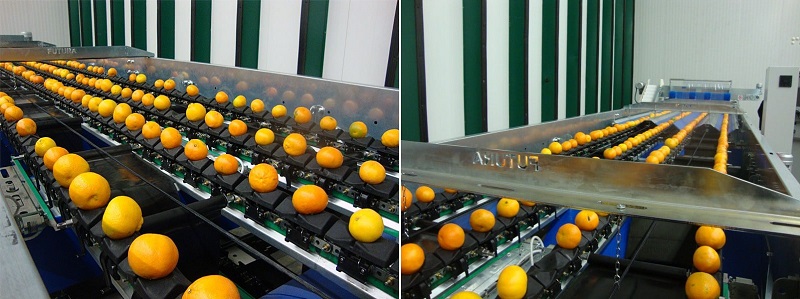
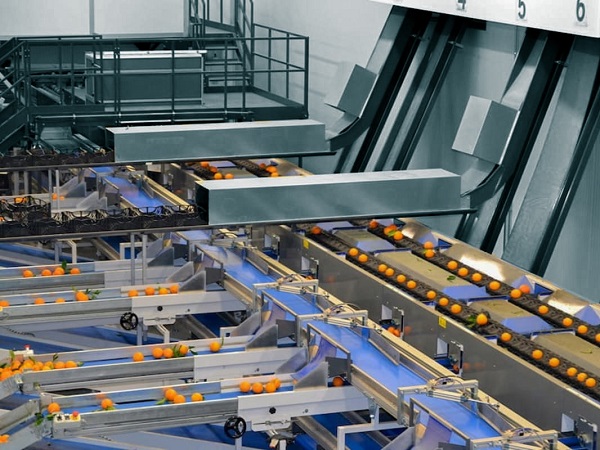
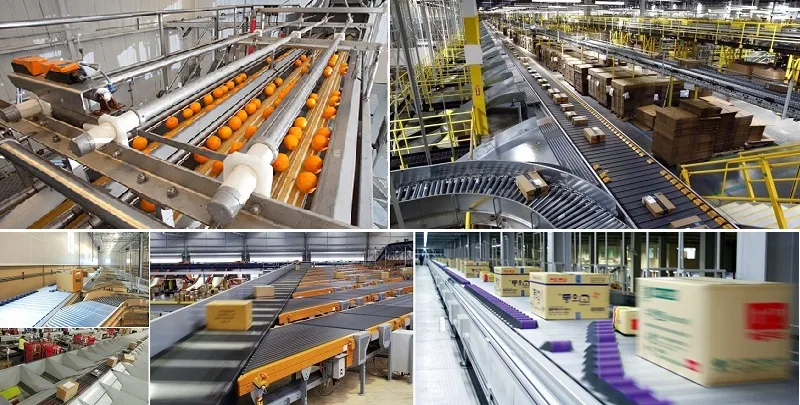
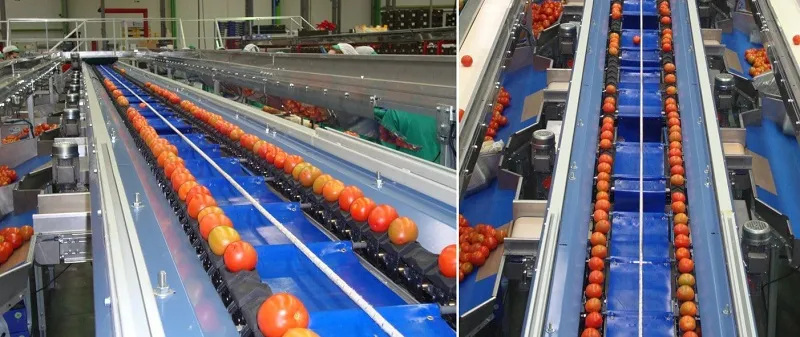
Agricultural product sorting line: oranges, apples, potatoes, tomatoes, vegetables
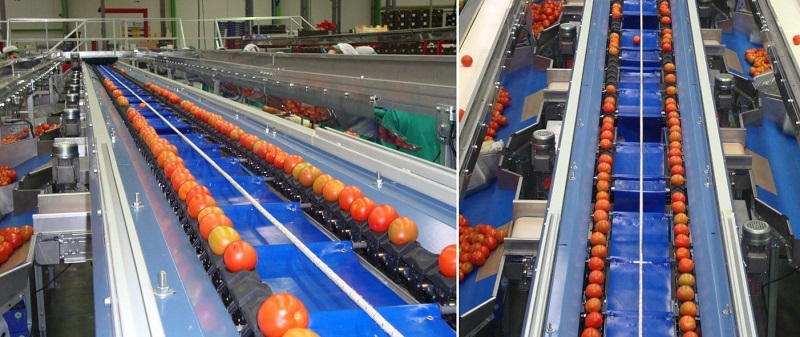
Application of product classification by volume for the food industry, seafood, agricultural products,...
Product sorting line by color
Product sorting machine by color can classify products such as chili, tomatoes, coffee, colored plastic, rice, tea buds, nuts... thanks to the product inspection camera, vision technology for automatic image processing. dynamic.
- Productivity: 0.8-15 tons/hour (depending on each model)
- Accurate classification rate: >99%
- Application of product classification by color in agriculture, food, oil, chemical, pharmaceutical industry, electronic components, medical equipment...
The line classifies products by size
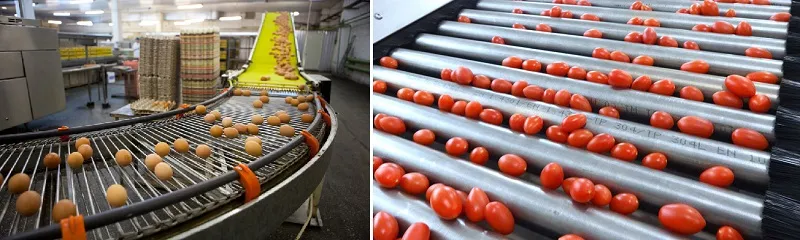
An automatic sorting system for commodity products, fruits and vegetables on the basis of size including feeding, sorting, stocking and retrieval of products. The machine sorts products by size with automatic control, high accuracy, stable operation, suitable for many different types of products.
Productivity: 3-5 tons/hour ~ 1000-1100 products/minute
Classification level: 4-10 levels
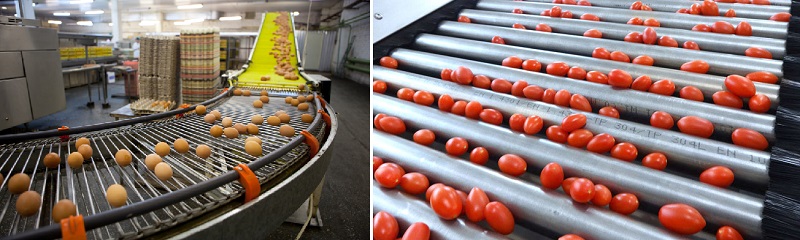
A production line for sorting eggs and tomatoes by size
Application of product classification by volume for the food industry, agricultural products, fruit... In the logistics and e-commerce industry, packages packed in boxes with different weights, colors, and sizes are easily classified thanks to a sorting system with cameras and smart classification algorithms. Goods are classified on the main conveyor according to herringbone conveyors moving to gathering locations.
Automatic product classification helps reduce human effort and time for the boring classification process but still ensures accuracy at high speed with outstanding productivity.
For the processing and confectionery and food industries, products after processing running on conveyor belts can be selected/discarded by the system according to criteria of shape and color, helping the packaging process. takes place seamlessly and product quality is controlled more evenly.
The identification and classification system is becoming increasingly smarter with the application of AI to classify and select products according to pre-desired scenarios. The supply and picking conveyor system with speeds up to 150m/min is resistant to abrasion, high temperature, humidity and special production conditions.
Applications of product sorting lines
Product sorting lines can be applied across a wide range of industries, including food processing, agricultural products, fruit processing, and manufacturing sectors that require sorting by weight, size, color, or shape. Automated systems can inspect and sort products according to predefined criteria, making them suitable for production lines with high throughput and stringent requirements for operational stability.
In logistics and e-commerce, automated sorting systems can handle parcels with different dimensions, weights, and characteristics. Goods are transported along the main conveyor, where they are identified and directed to the appropriate conveyor branches for delivery to designated sorting or collection points. Depending on system requirements, the solution can integrate cameras, sensors, and processing algorithms to determine the specified sorting criteria.
In food processing, confectionery, and agricultural product processing, the system can inspect products on the conveyor based on criteria such as color, shape, size, or surface condition. Products that meet the required specifications continue to the next processing stage, while non-conforming products can be separated from the production flow. Automating this process helps reduce manual handling, maintain consistent processing speeds, and support quality control before packaging. Modern sorting systems can be integrated with vision cameras, sensors, and control software to handle multiple sorting criteria. Depending on product characteristics and production requirements, conveyor systems can be designed with suitable speeds, load capacities, and materials to meet actual operating conditions. For environments with specific requirements regarding temperature, humidity, or wear resistance, the materials and equipment configuration should be selected accordingly.
Key factors to consider when implementing a product sorting line
When investing in a product sorting line, businesses should evaluate product characteristics, throughput requirements, available installation space, and compatibility with existing processes at the same time. Clearly defining these factors at the initial stage helps ensure an appropriate equipment configuration and minimizes issues during implementation.
Product characteristics and sorting requirements: Each product has different characteristics in terms of dimensions, weight, shape, color, and fragility. Businesses should determine the required sorting criteria, applicable size or weight range, input throughput, and required level of accuracy. These factors provide the basis for selecting the appropriate identification method, sorting mechanism, and conveyor configuration.
Integration with the existing layout and production line: The factory layout, installation space, product infeed position, and product collection areas should be considered before the system is designed. The sorting line should also be capable of connecting with upstream and downstream equipment, such as feeding systems, packaging machines, robots, and other material handling systems. For businesses planning to expand production capacity, the possibility of adding modules or increasing system capacity should also be considered during the initial design stage.
Investment cost and operational efficiency: The implementation of a sorting line should be evaluated based on the total investment cost, including equipment, installation, integration, and operating expenses. Businesses should also consider potential benefits such as reduced manual labor requirements, increased throughput, lower sorting error rates, and improved process stability. Based on these factors, businesses can estimate the expected payback period and select an automation solution that matches their production scale and operational requirements.
Product sorting line is an automation solution suitable for businesses looking to increase throughput, reduce manual handling, and maintain consistent sorting operations. Depending on product characteristics and specific requirements, the system can be designed to sort products by weight, size, color, shape, barcode, or a combination of multiple criteria within the same line. Selecting the appropriate identification method, sorting mechanism, conveyor system, and control system helps ensure stable operation while facilitating integration with feeding, packaging, warehousing, logistics, and other automated processes. With experience in automation system design and integration, CNC VINA can provide suitable solutions based on each customer's product characteristics, throughput requirements, and available facility layout. When properly designed to meet actual operating requirements, a product sorting line can provide a reliable foundation for automated sorting operations and further process integration.
VIETNAM TECHNOLOGY & CNC APPLICATION JOINT STOCK COMPANY
Factory: Song Cung Industrial Cluster, Dong Thap Commune, Dan Phuong District, Hanoi, Vietnam
Office: Rox Tower (Rox Center Goldmark City), 136 Ho Tung Mau Street, Bac Tu Liem District, Hanoi, Vietnam
Phone: +84.916 63 9355 / +84.915 74 4664
Website: www.cncvina.com.vn; www.cncvina.net
Email: Sales01@cncvina.com.vn | Sales03@cncvina.com.vn

 Tiếng
Việt
Tiếng
Việt
 Tiếng
Anh
Tiếng
Anh
 Tiếng
Nhật
Tiếng
Nhật



 Tiếng Anh