 Tiếng
Việt
Tiếng
Việt
 Tiếng
Anh
Tiếng
Anh
 Tiếng
Nhật
Tiếng
Nhật




 Tiếng Anh

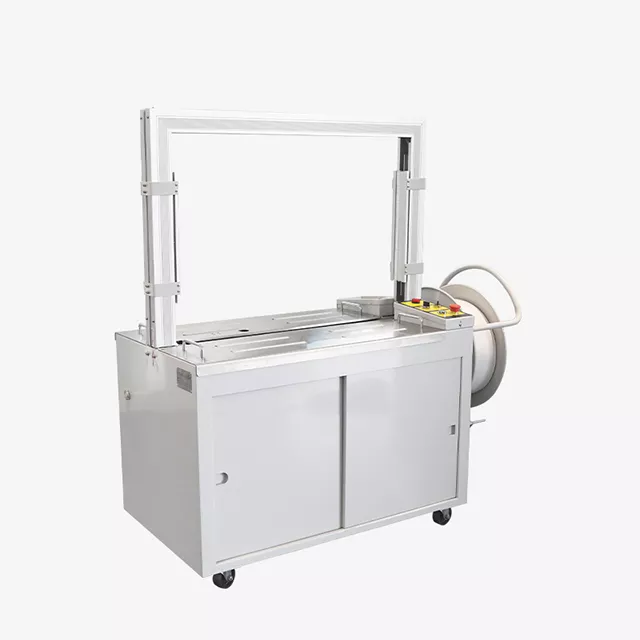
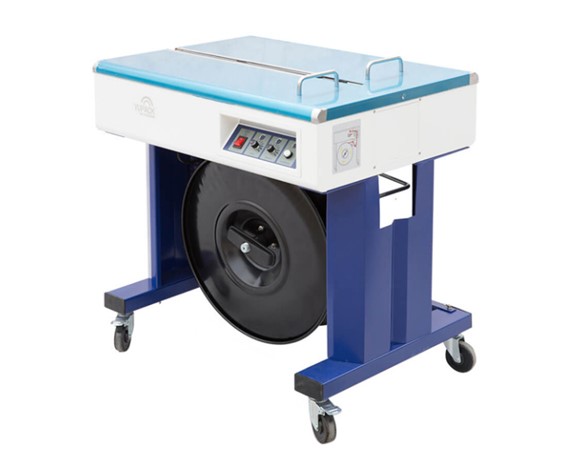
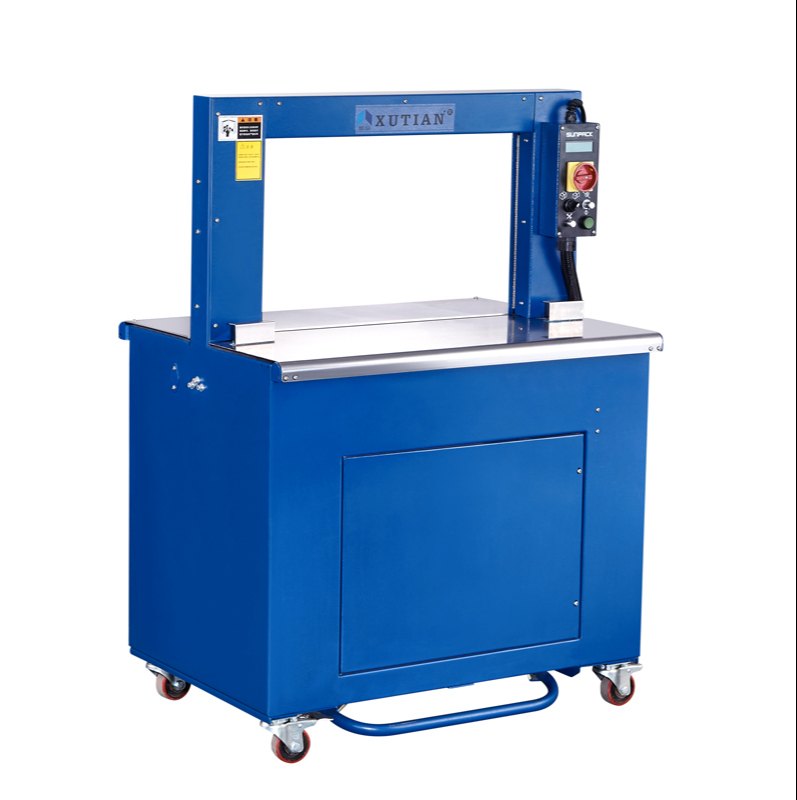
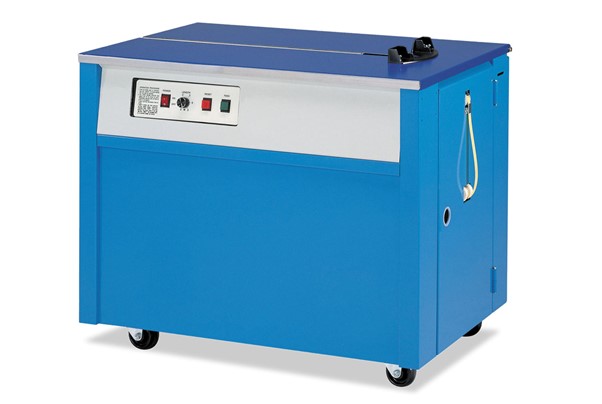
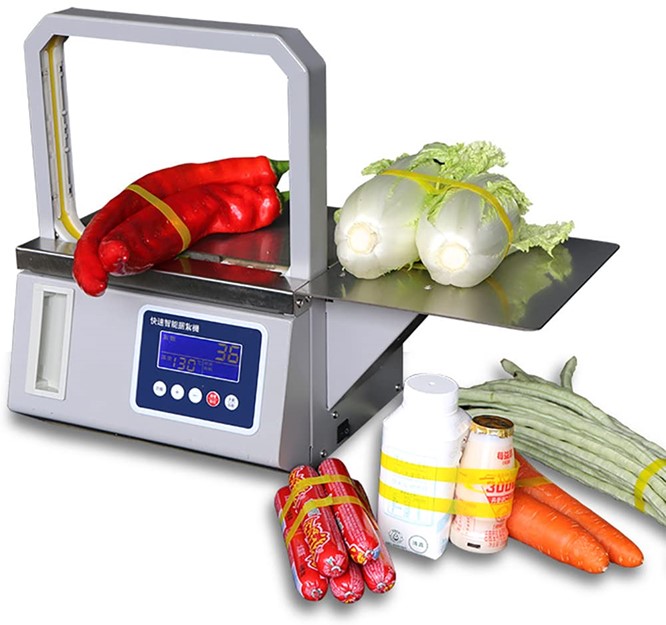
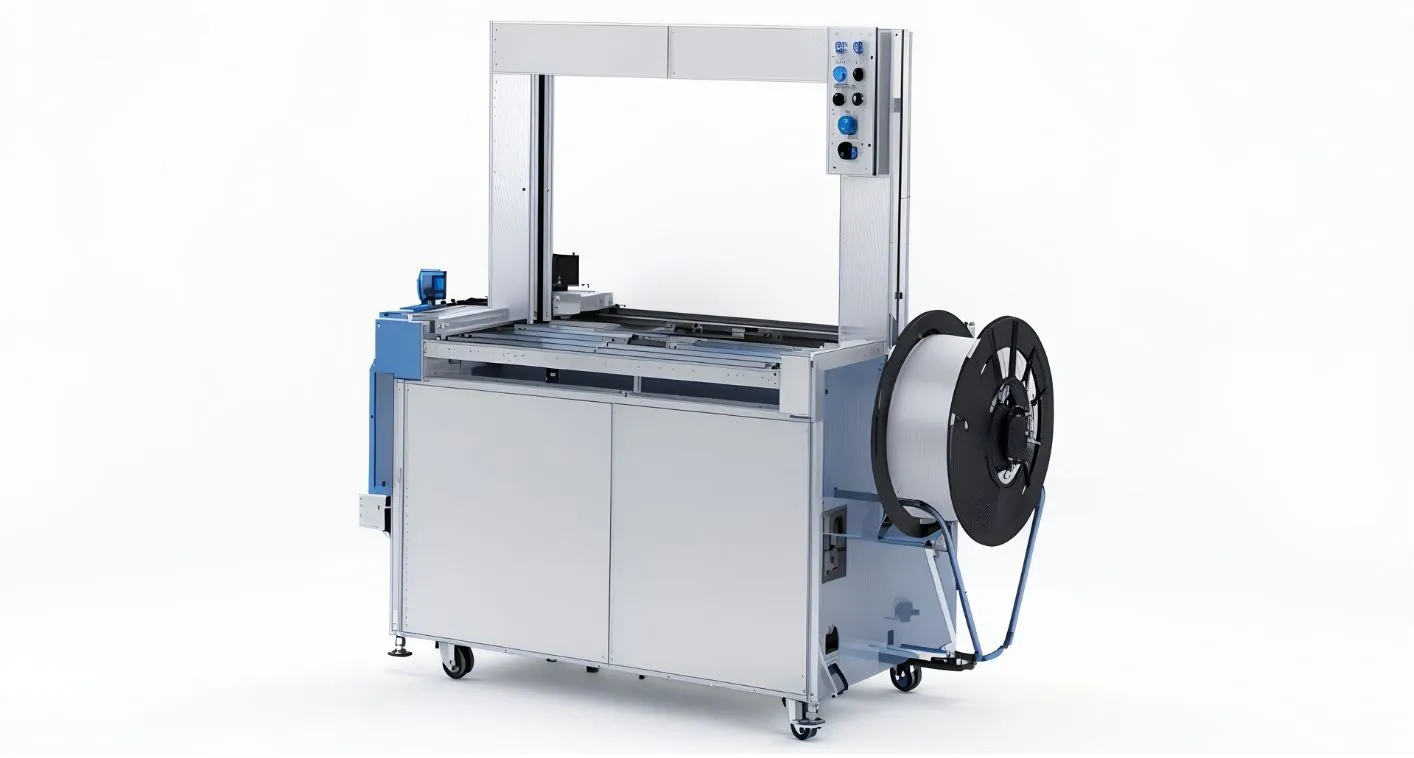
Strapping machines
Strapping machine is equipment designed to apply a strap around a product or package, then tension the strap, secure the joint, and cut off the excess material. Depending on the machine configuration, these operations can be performed partially manually or fully automatically. Strapping is commonly carried out after processes such as carton forming, carton sealing, or product bundling. For carton boxes, strapping helps prevent the box from opening, deforming, or shifting during handling and transportation. For palletized goods, strapping can be used in combination with stretch film or other securing methods to keep cartons and products stable on the pallet.
Unlike carton sealing with adhesive tape alone, strapping applies a mechanical holding force around the package. The strap tension needs to be adjusted according to the characteristics of the product and package. If the tension is too low, the package may not be adequately secured; if it is too high, the strap may deform the carton or damage the surface of the packaged product.
VIETNAM CNC & TECHNOLOGY APPLICATION JOINT STOCK COMPANY
Hotline: +84.916 63 9355 / +84.915 74 4664
Email: Sales01@cncvina.com.vn / Sales03@cncvina.com.vn
Product description

Introduction to strapping machines
Strapping machine is equipment designed to apply a strap around a product or package, then tension the strap, secure the joint, and cut off the excess material. Depending on the machine configuration, these operations can be performed partially manually or fully automatically. Strapping is commonly carried out after processes such as carton forming, carton sealing, or product bundling. For carton boxes, strapping helps prevent the box from opening, deforming, or shifting during handling and transportation. For palletized goods, strapping can be used in combination with stretch film or other securing methods to keep cartons and products stable on the pallet.
Unlike carton sealing with adhesive tape alone, strapping applies a mechanical holding force around the package. The strap tension needs to be adjusted according to the characteristics of the product and package. If the tension is too low, the package may not be adequately secured; if it is too high, the strap may deform the carton or damage the surface of the packaged product.
In high-volume production environments, using a strapping machine helps standardize strap tension, cycle time, and strap positioning across packages. This improves the consistency of the packaging process while reducing reliance on manual operations. So, where are strapping machines used across different industries? CNC VINA as we explore their applications and technical characteristics in the following sections.
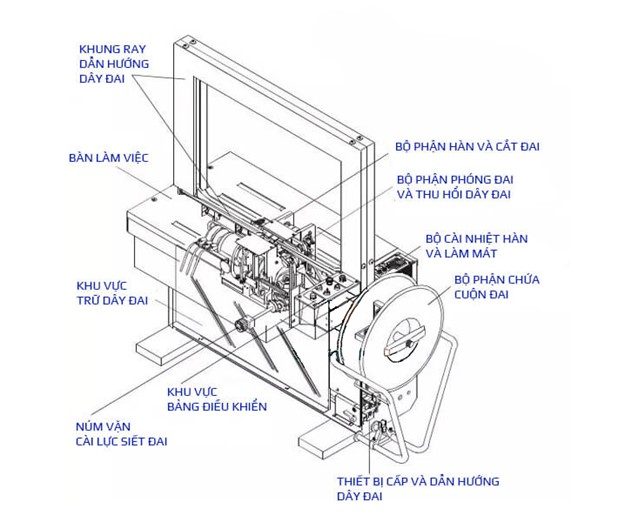
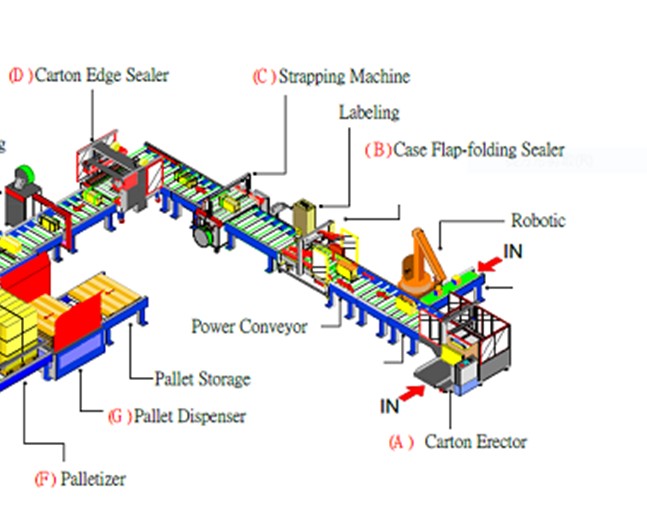
Structure of an automatic strapping machine
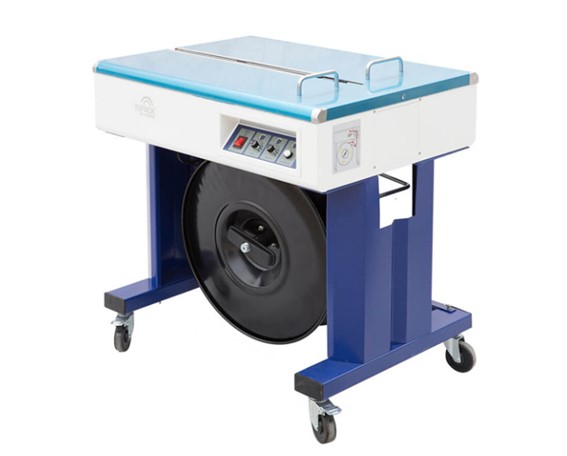
Strapping machines – A modern packaging solution
After products are packed in cartons or other box-shaped packaging, handling, storage, and transportation can cause cartons to open, deform, or allow the products inside to shift. To improve load stability, businesses commonly use suitable strapping materials such as PP straps, PET straps, or steel straps, depending on the characteristics of the products and transportation requirements. The strap is wrapped around the package and tensioned to a specified level, helping secure the packaging, minimize product movement, and reduce the risk of cartons opening during handling and transportation. In the past, strapping was primarily performed manually. Operators had to wrap the strap around the package, pull and tension it, secure the joint, and cut off the excess strap. For large packages or high-volume packaging operations, this method requires considerable manual effort, involves relatively long processing times, and makes it difficult to maintain consistent strap tension from one package to another. The development of strapping machines has helped mechanize these operations, reducing manual workload, shortening packaging cycle times, and improving the consistency of the strapping process. Depending on the level of automation, the equipment can operate as a standalone unit or be integrated with conveyors and other packaging machines to support continuous production.
Technical specifications of the strapping machine
| Specification | Reference Value |
|---|---|
| Power supply | AC 220–380 V / 50–60 Hz |
| Power consumption | 850 W |
| Machine weight | 250 kg |
| Strapping time | Approx. 2 seconds/cycle |
| Strapping area | L800 × W600 mm |
| Strap width | 8–12 mm |
| Strap tension | 40–600 N |
| Operators required | 1 person |
Note: The specifications above are provided for reference and may vary depending on the machine model and configuration. Parameters such as power supply, strapping area, cycle time, strap tension, and compatible strap specifications should be confirmed based on the actual machine configuration and production requirements.
How does a strapping machine work?
Depending on the machine configuration, the strapping process may vary, but it generally consists of several basic steps: positioning the package, feeding the strap, wrapping the strap around the package, tensioning the strap, securing the joint, and cutting the excess strap. For an automatic strapping machine integrated into a production line, the package can be transferred to the strapping position by a conveyor. Sensors detect the presence and position of the package, after which the control system activates the strapping cycle. The strap feeding unit supplies the strap to the strapping mechanism, where it is guided around the package and then tensioned to the preset value.
Once the required strap tension is reached, the machine secures the joint using a method suitable for the strap material and machine configuration, then cuts off the excess strap. The package is subsequently transferred to the next process by a conveyor or other transfer mechanism. For applications requiring multiple straps on the same package, the machine can be configured to perform multiple strapping cycles or combined with a positioning mechanism to move the package to the correct position before each cycle. This configuration is particularly useful when the strapping machine forms part of an automated packaging line. In addition to securing individual packages, straps can also be applied directly around products to bundle multiple units together into a single lot. This helps keep products grouped and organized, making them easier to handle, store, transport, and distribute.
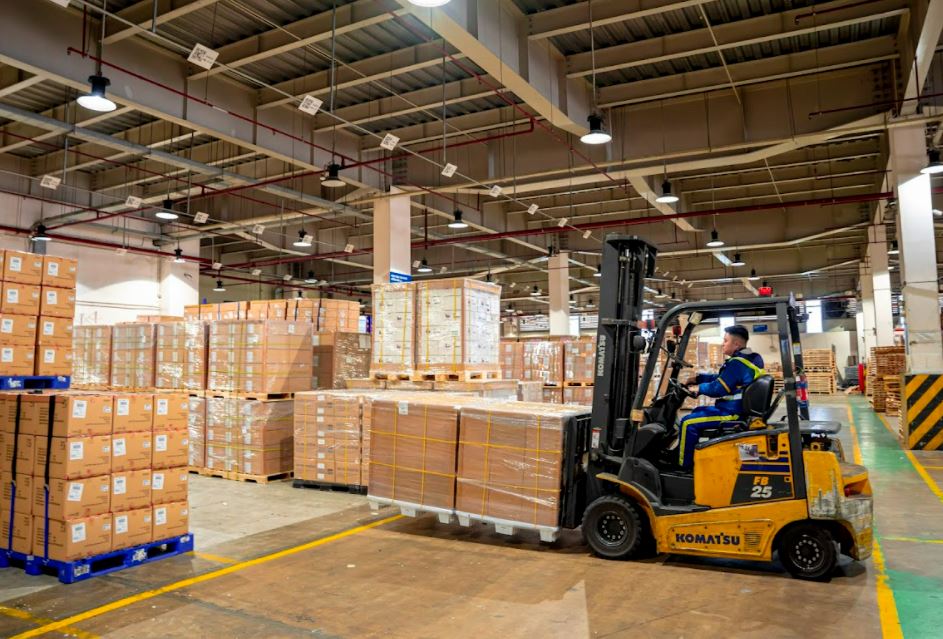
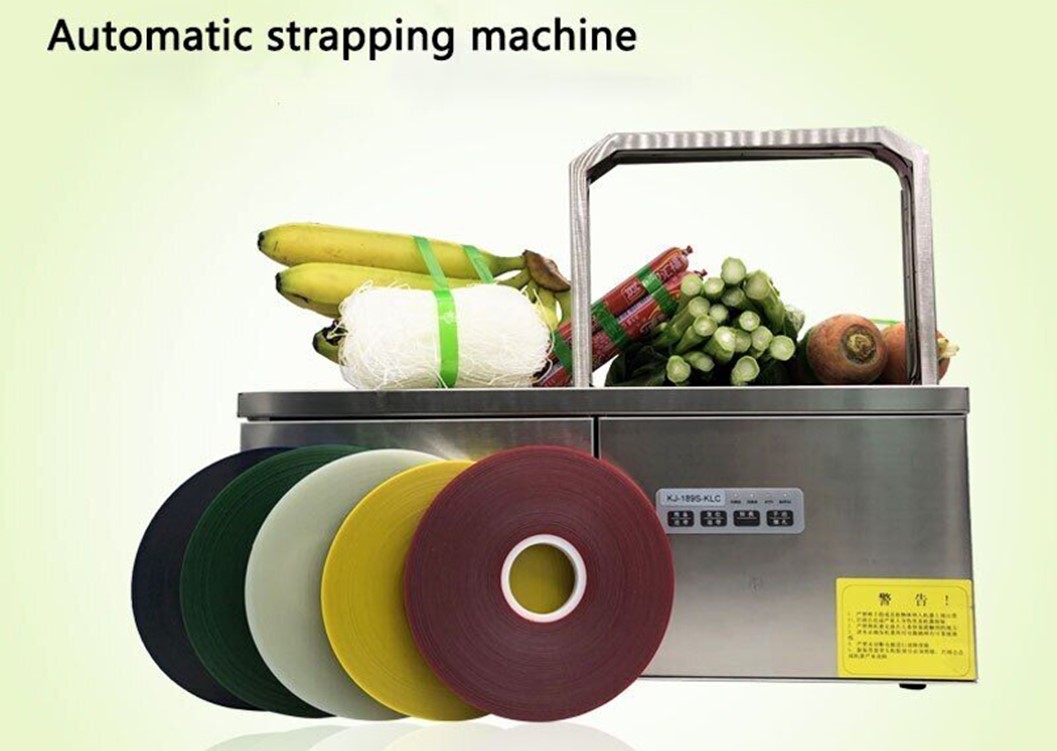
The main function of strapping machines is to apply straps around packages or products and secure them in place. Depending on the application, the machine may use flat steel straps or plastic straps that are wrapped around the package and tightened to hold the products securely together. The appropriate strapping method depends on the type of product, package dimensions, required holding force, and production volume.
Types of strapping machines
Automatic strapping machines
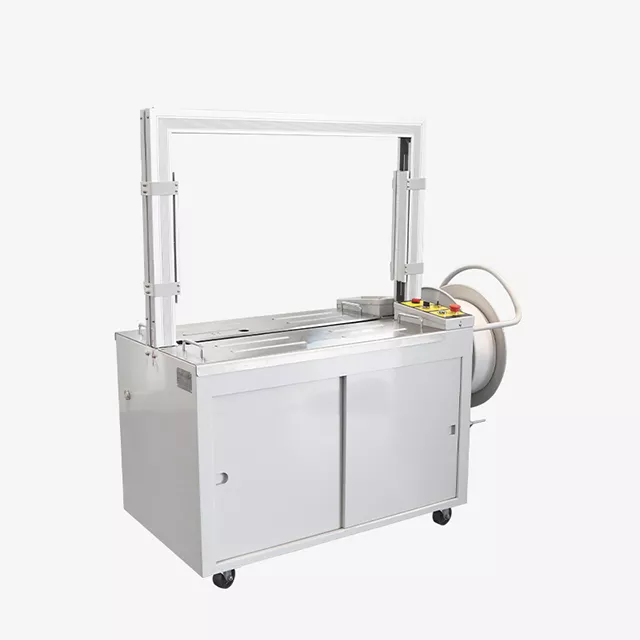
Automatic strapping machines are designed to minimize direct operator intervention during the strapping process. Packages can be fed into the machine by a conveyor or another transfer mechanism. When the package reaches the designated position, sensors and the control system activate the strapping cycle. A complete automatic system can perform strap feeding, wrapping, tensioning, joint securing, and strap cutting without requiring the operator to carry out each step manually. The machine can also be integrated with other equipment in the packaging line, such as carton erectors, carton sealers, conveyors, sorting machines, and palletizing systems.
An automatic configuration is suitable for businesses with high production volumes, requirements for consistent cycle times, or the need to synchronize multiple packaging processes.
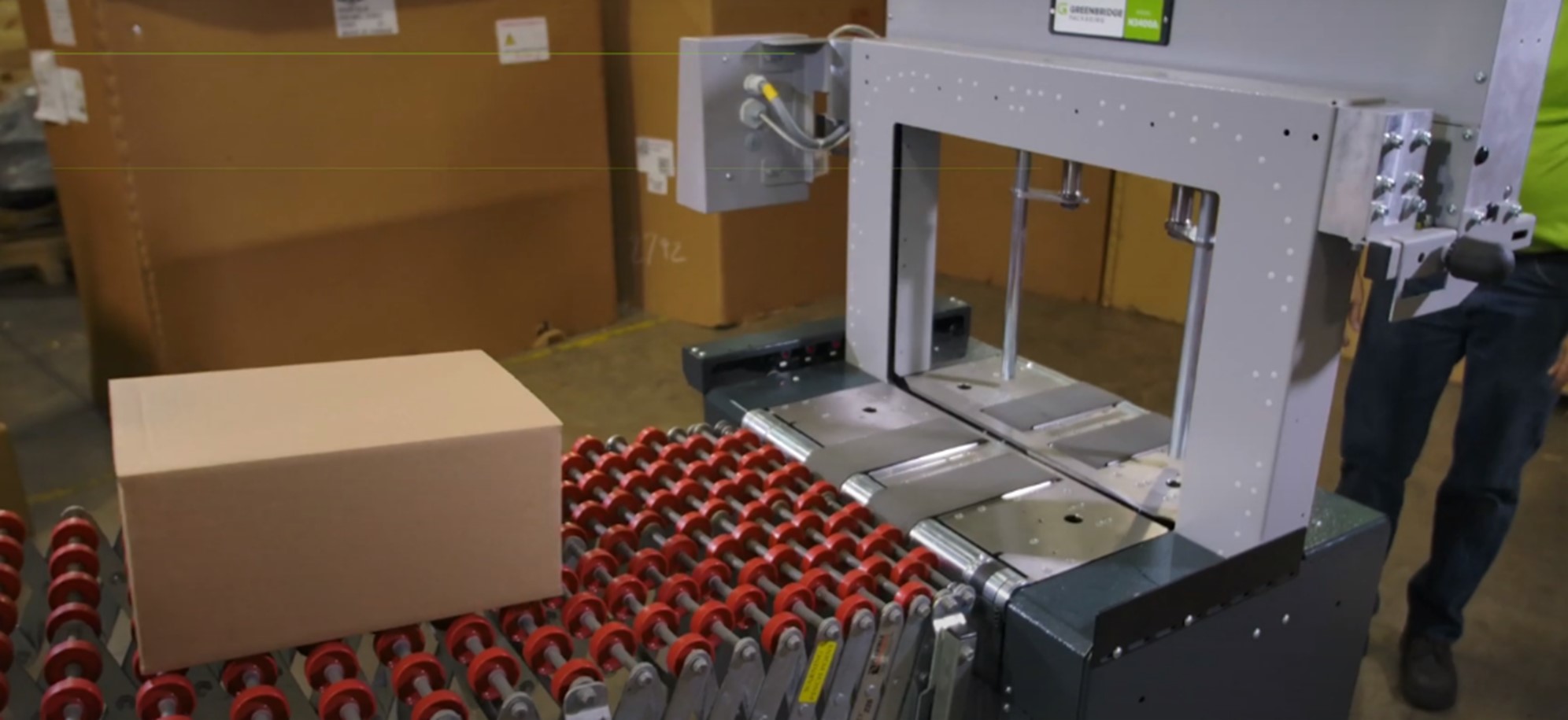
Semi-automatic strapping machines
Semi-automatic strapping machines still require the operator to position the package and perform some initial handling steps. Once the strap is correctly positioned around the package, the machine can automatically perform the tensioning, joint securing, and strap cut
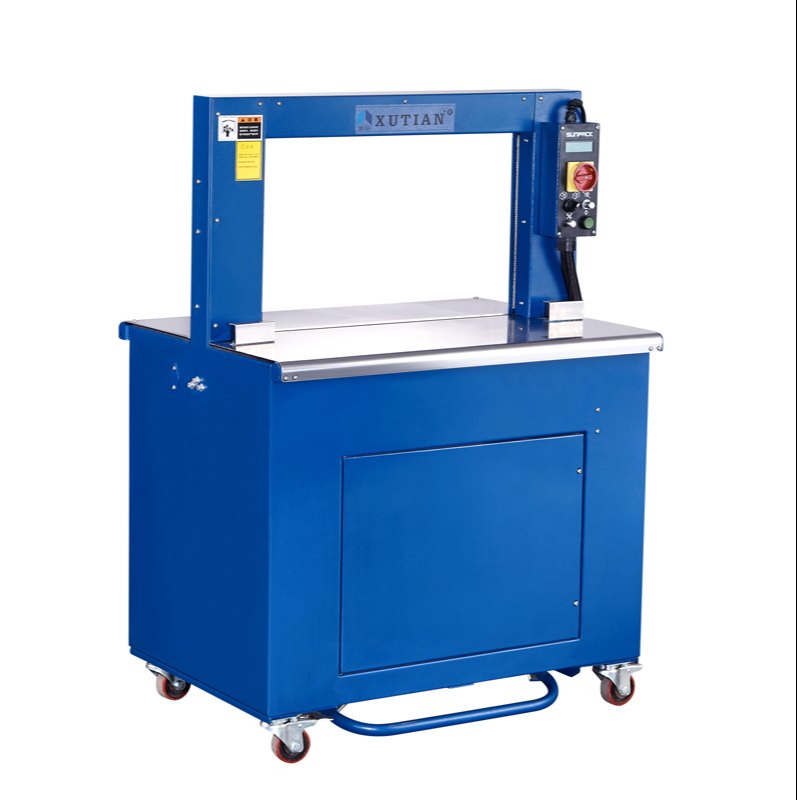
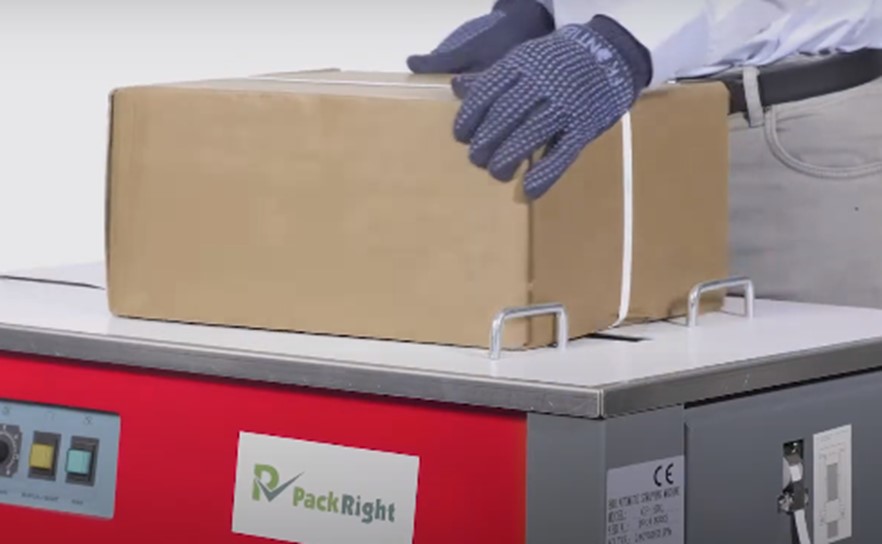
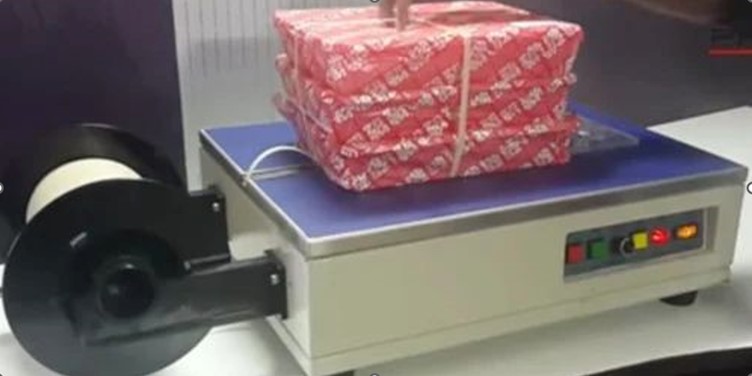
The main advantages of this configuration are its lower investment cost and simpler integration requirements compared with a fully automatic system. It is suitable for packaging stations with moderate production volumes or applications where product dimensions and shapes vary frequently. Tabletop strapping machines are a common configuration within this category. For packages with different dimensions, the operator can manually position each product on the machine table before initiating the strapping cycle. This provides greater flexibility when handling a wide range of package sizes without requiring a fully automated positioning system.
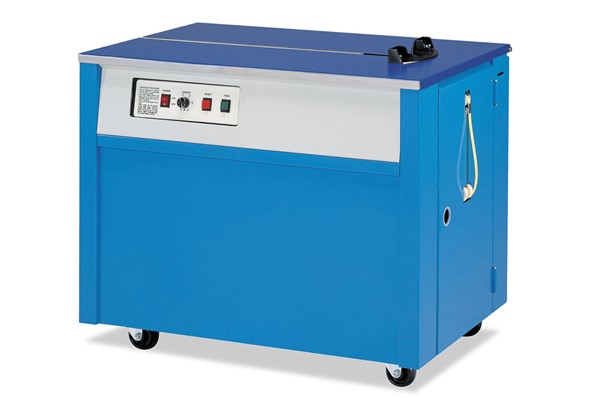
Operating steps (tabletop machine):
Belt level
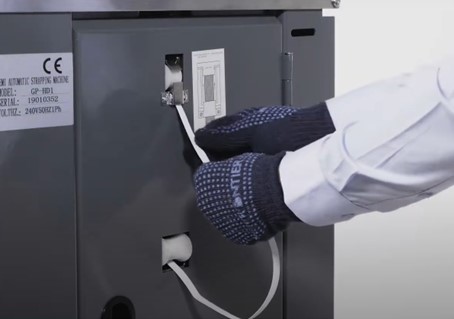
Arrange parcels
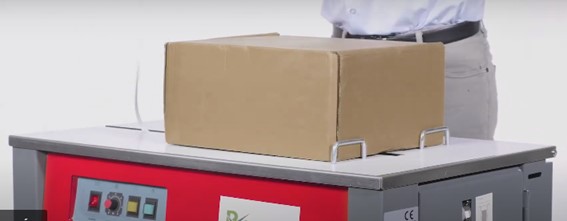
Belt around the package.
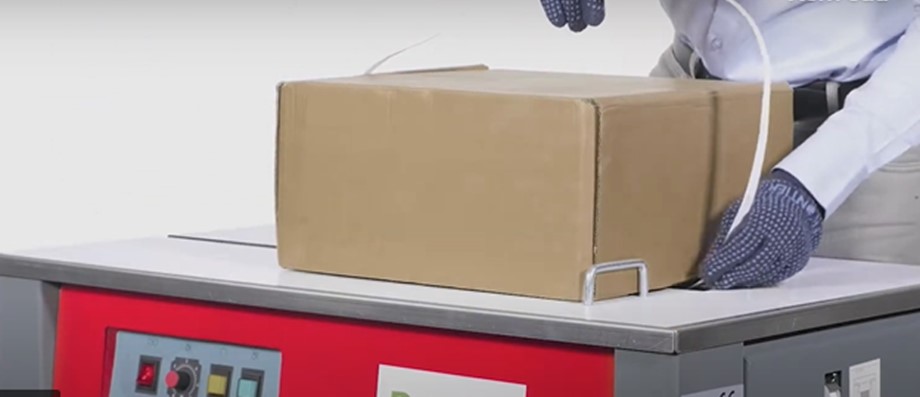
Tighten the belt, glue (staple) and cut the belt automatically
Manual strapping machine:
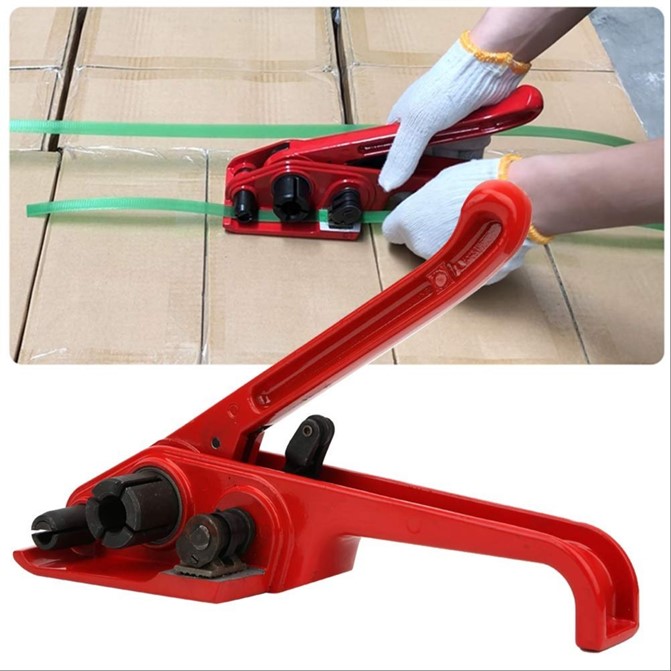
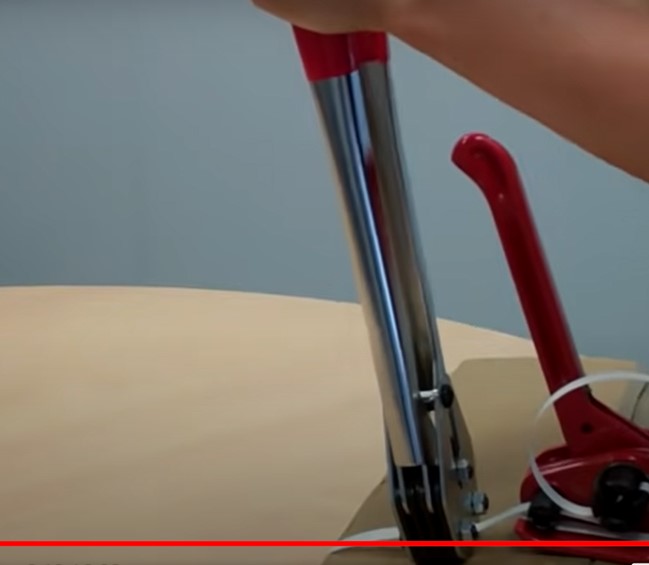
This is simply a belt tensioning machine, the other operations are completely done by humans. If using the belt pinning method, workers need to use an additional belt pinning tool.
Benefits of using strapping machines
Strapping is an important step in the packaging process, particularly for products transported as individual packages, cartons, bundled goods, or palletized loads. The strap provides a holding force that helps limit product movement during handling, storage, and transportation. However, when the entire process is performed manually, businesses may face difficulties in maintaining consistent strap tension, controlling processing time, and allocating labor as production volumes increase. Strapping machines help mechanize part or all of this process, depending on the level of automation, thereby improving productivity, process consistency, and packaging quality control.
Improving packaging efficiency and productivity
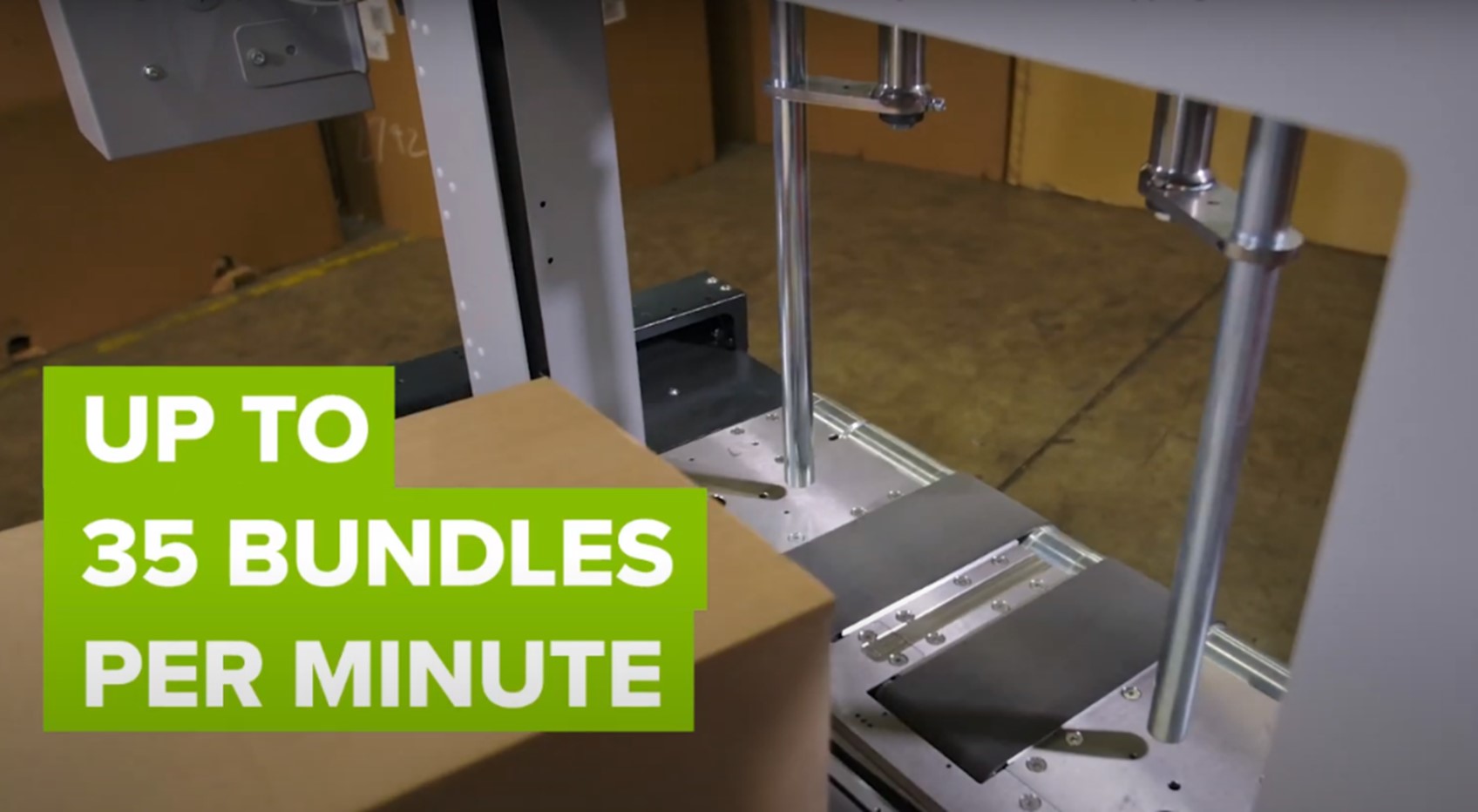
One of the most noticeable benefits of using a strapping machine is the reduction in time required for the strapping process compared with manual methods. Depending on the machine configuration, the equipment can assist with or automatically perform operations such as strap feeding, wrapping the strap around the package, tensioning, securing the joint, and cutting the strap. With automatic systems, the strapping cycle can also be carried out according to predefined parameters without requiring the operator to intervene at each step.
The actual productivity improvement depends on factors such as machine type, package dimensions, the number of straps required per package, and the overall line configuration. Semi-automatic strapping machines are suitable for operations where the operator still needs to feed and position the package, while automatic machines can be integrated with conveyors and upstream or downstream equipment to establish a continuous packaging process. For businesses with high production volumes, automating the strapping process can reduce waiting time between operations and minimize the need for operators to repeatedly perform the same manual tasks. When integrated with conveyors, carton sealers, carton erectors, sorting systems, or palletizing equipment, a strapping machine can become part of a complete packaging line rather than operating as a standalone unit.
In addition to productivity, the machine also helps maintain greater control over the sequence of operations. When parameters such as strap tension, sealing time, or the selected strapping method are properly configured for the specific machine and strap material, the process can achieve greater consistency and become less dependent on the individual operator's experience.
Reducing manual workload
Manual strapping typically requires operators to continuously pull the strap, position it around the package, apply tension, secure the joint, and cut the strap. For large packages or applications requiring multiple straps, these operations may need to be repeated hundreds of times during a shift. In particular, applying the required strap tension can require significant manual force and prolonged working postures. As production volume increases, the physical workload also increases, which can lead to operator fatigue and affect the consistency of manual operations toward the end of a shift.
Strapping machines help transfer most of these mechanical operations into a controlled process. Depending on the level of automation, operators may only need to perform tasks such as positioning the package, initiating the strapping cycle, or checking the result after strapping. This is particularly valuable for production lines with stable output and continuous strapping requirements. Instead of allocating labor primarily to repetitive mechanical tasks, businesses can assign operators to higher-value activities such as quality inspection, line operation, material replenishment, or equipment monitoring.
Improving safety for packaging operators
Risks of manual strapping
Strapping materials can include metal or rigid plastic straps, some of which may have sharp edges. Strap coils can also become tangled or disorganized if they are not properly handled and stored, creating potential hazards for operators. Manual strapping often requires workers to handle and tension the strap directly, while cutting tools such as knives or scissors may also be used to remove excess material. Without appropriate handling and workplace organization, these operations can increase the risk of cuts, hand injuries, and other workplace incidents.
When a packaging area requires multiple operators to maintain production output, unmanaged straps, tools, and packages can also make the working area more congested. This can affect operator movement and increase the potential for accidents.
Safety advantages of strapping machines
Strapping machines incorporate the strap feeding, tensioning, securing, and cutting mechanisms into a defined operating area, reducing the need for operators to handle these operations manually. Strap coils can be positioned in a dedicated holder or feeding mechanism, helping keep the material organized and reducing the risk of loose or tangled straps around the workstation.
For high-volume packaging operations requiring multiple machines or operators, the equipment can also be arranged according to the production flow to maintain a more organized working area. Proper machine layout, guarding, access clearance, and operator procedures remain important factors in ensuring safe operation.
Reducing operating costs and labor requirements
Investment in a strapping machine should not be evaluated solely based on the equipment purchase price. Businesses should consider the overall operating cost throughout the system's service life. As packaging volume increases, relying entirely on manual labor may create additional requirements for personnel, workspace, and production management.
Mechanizing the strapping process can reduce repetitive manual work and allow businesses to use their workforce more efficiently. Depending on the level of automation, one operator may be able to operate a machine or coordinate strapping with other processes in the production line rather than being assigned exclusively to manual strapping.
Key cost factors to consider include:
-
Direct labor costs for the strapping operation.
-
Material costs, including straps and joint-securing components.
-
Floor space required for the equipment and operating area.
-
Electricity and compressed-air costs, where applicable.
-
Maintenance costs, spare parts, and consumable components.
-
Machine downtime and its impact on the overall production line.
-
Potential for future expansion or integration with additional equipment.
Therefore, for applications with relatively low production volumes and frequently changing products, manual tools or semi-automatic equipment may be more appropriate. In contrast, when production volume is high, package dimensions are relatively consistent, and continuous operation is required, an automatic strapping machine can provide greater efficiency by reducing repetitive manual tasks and facilitating integration into an automated packaging line.
Improving product protection during transportation and storage
To achieve effective load securing, the strap tension and strap positioning need to be selected according to the characteristics of the product and package. When strapping is performed manually, maintaining the same tension and positioning from one package to another can be difficult. Machine-assisted or automated strapping provides greater control over these parameters, helping improve consistency across packages.
Properly applied strapping can also help prevent cartons or bundled products from shifting, opening, or separating during handling, storage, and transportation. For certain applications, secure strapping may additionally help reduce the risk of products falling out or becoming separated from the intended load during handling.
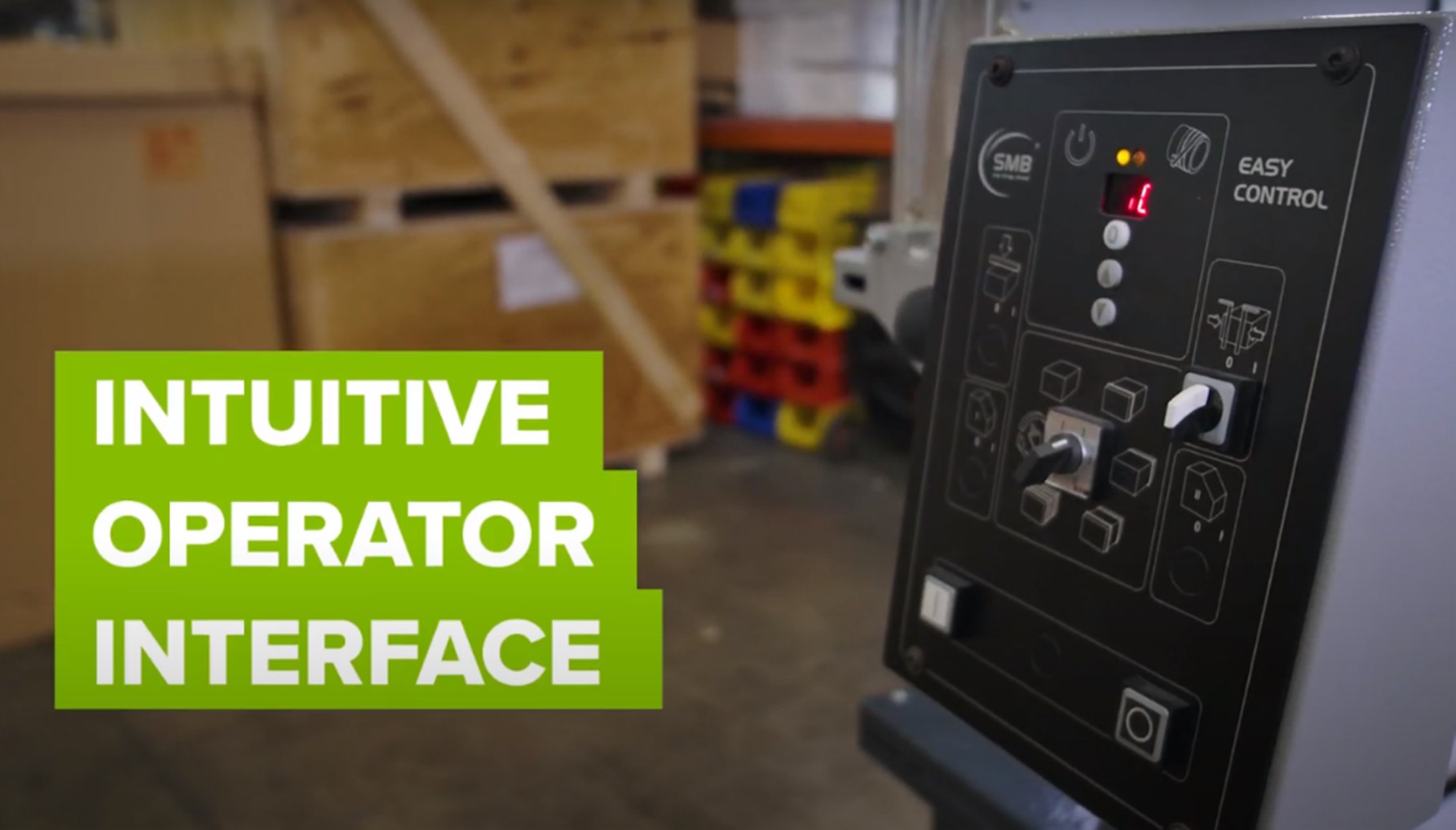
Simple and intuitive controls
Compared with manual strapping, which involves multiple steps such as pulling and positioning the strap, tensioning, securing the joint, and cutting the excess material, machine-assisted strapping requires fewer direct operator actions. Depending on the machine configuration, routine operation may involve simple controls such as pressing a button, operating a lever, or adjusting a rotary knob.
Controls are typically labeled with clear and recognizable symbols, allowing operators to identify their functions more easily. A straightforward control layout can also reduce unnecessary operator interaction and make routine machine operation easier to learn and monitor.
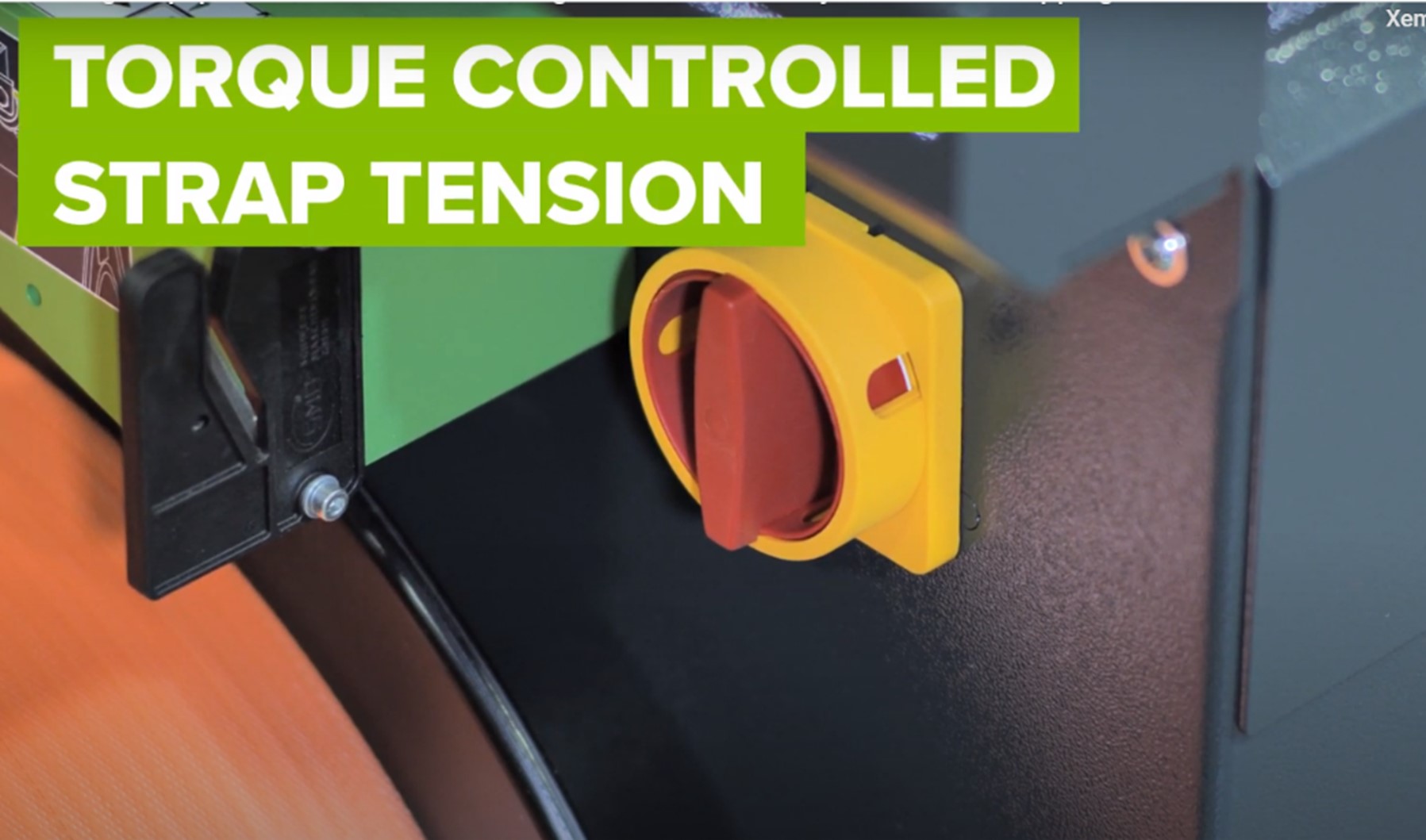
Adjustable belt tension and tightening force
The machine has a mechanism and button to control the tightening force to ensure it is not too light or too tight, making the strapping ineffective. In addition, this ability of the machine also ensures that the tightening force is always stable throughout the working process and consistent between packages.
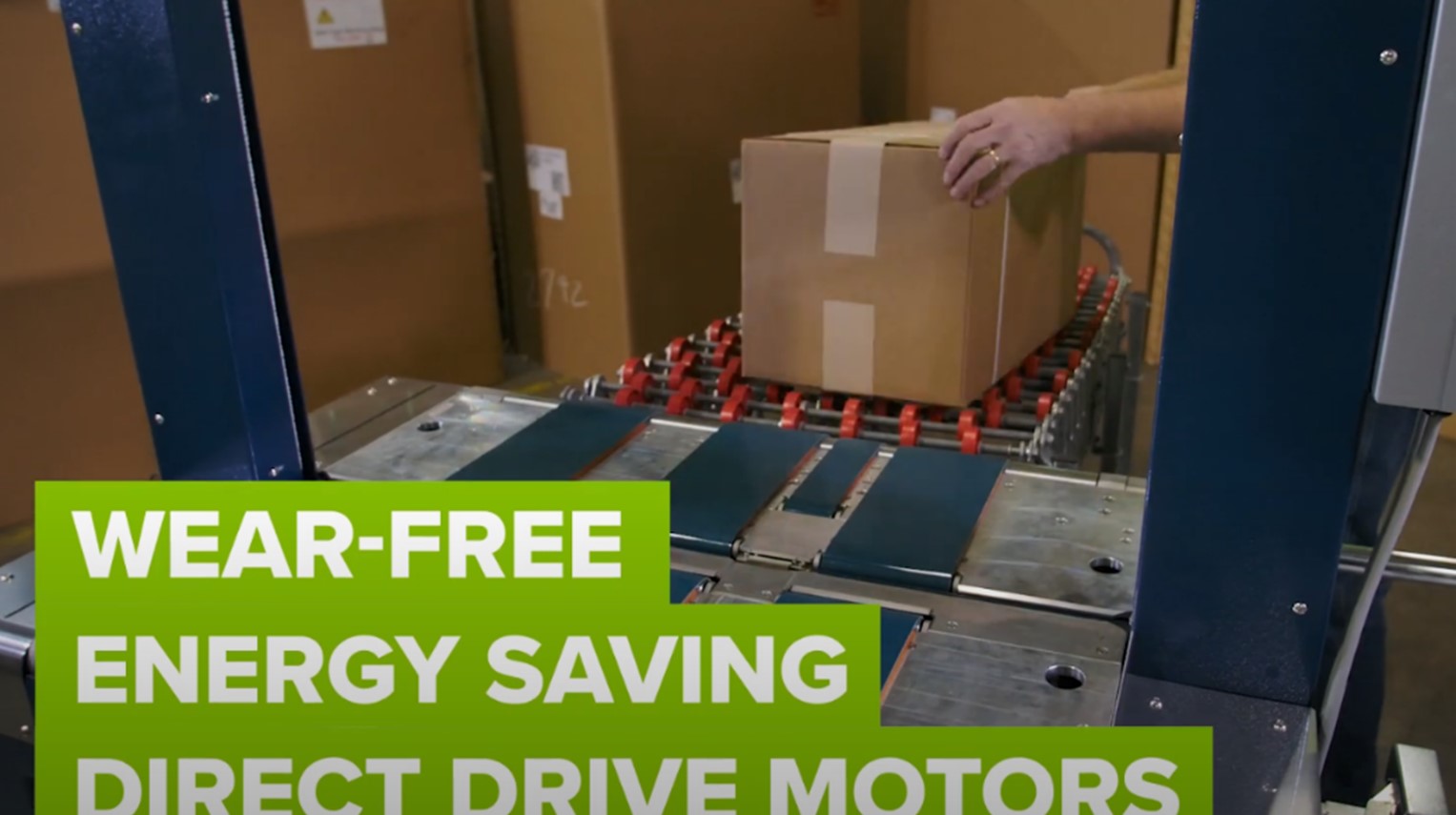
Direct drive motor saves energy
Direct drive helps improve transmission efficiency because there is no loss in intermediate transmission stages and there is less wear on the machine's structure.
Features and technology of automatic strapping machine
Introducing the types of belt materials of strapping machines
Polypropylene (PP plastic)
A very economical option, polypropylene (PP) tape is the preferred choice for strapping relatively light packages or pallets (up to 350 kg). Its main advantage is versatility and therefore ease of use. They are also resistant to rust and corrosion to very high temperatures. They can be used to secure fragile products, prevent theft of valuable products, or store goods but only for a short period of time.
Extruded polyester (PE plastic)
Polyester (PET) tape is perfect for fastening relatively heavy loads (up to 550 kg or even 1,000 kg depending on the model) or loads that require compression such as wood, cardboard and some most construction materials. determined. Thanks to its very high durability and flexibility, this material effectively protects packaged goods from impacts on the road. They are resistant to moisture, UV rays and can withstand temperatures up to 80°C and will not rust or deform. They can also be used for long-term storage of goods. Finally, polyester strapping can be applied to all types of machines.
Metal
Metal strapping is one of the most durable types of strapping and is ideal for heavy and rigid objects with sharp or rough edges such as iron or concrete, which are not subject to compression. Unlike other types of straps, metal straps are not flexible. These sturdy straps are suitable for very heavy loads of up to 2,000 kg.
Polyester yarn
Polyester fiber is the most durable strapping material. They are ideal for securing delicate, fragile products. With a lightweight weave, they are easy to work with and won't rust or leave marks on the surface. It is best to use fiber polyester strapping by hand machine. They are extremely durable for loads up to 950 kg and are tear resistant making them ideal for heavy loads.
Features of automatic strapping machine
- Automatic tension control.
- Custom speed settings.
- Integrates with other packaging equipment.
- Advanced safety mechanism.
Structure of automatic strapping machine
Includes several parts as shown:
Applications of strapping machines in many industries
E-commerce with logistics and storage
Due to the fact that packages have very different sizes and not all packages require strapping, manual strapping machines are often used.
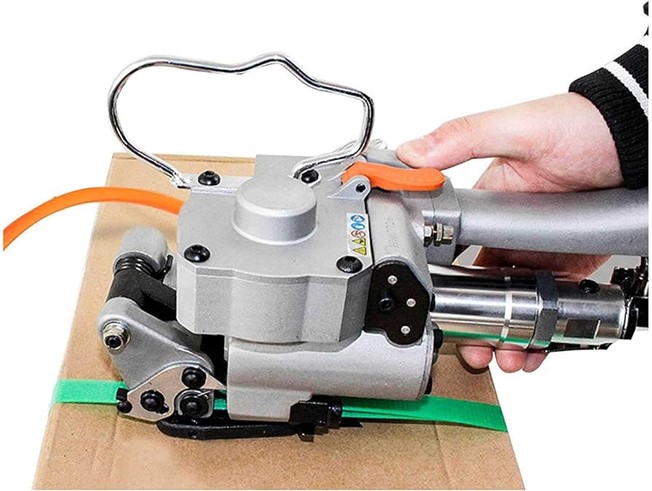
Production and distribution i
Automatic production and packaging lines that require strapping often use automatic strapping machines to ensure productivity and efficiency of the entire line.
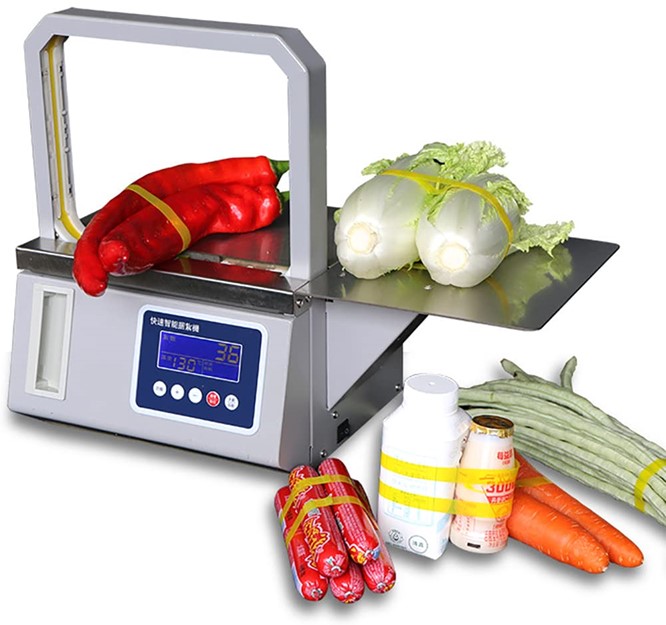
Food and beverage industry
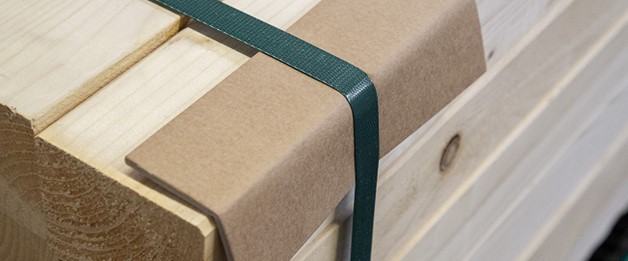
Field of architecture and construction materials
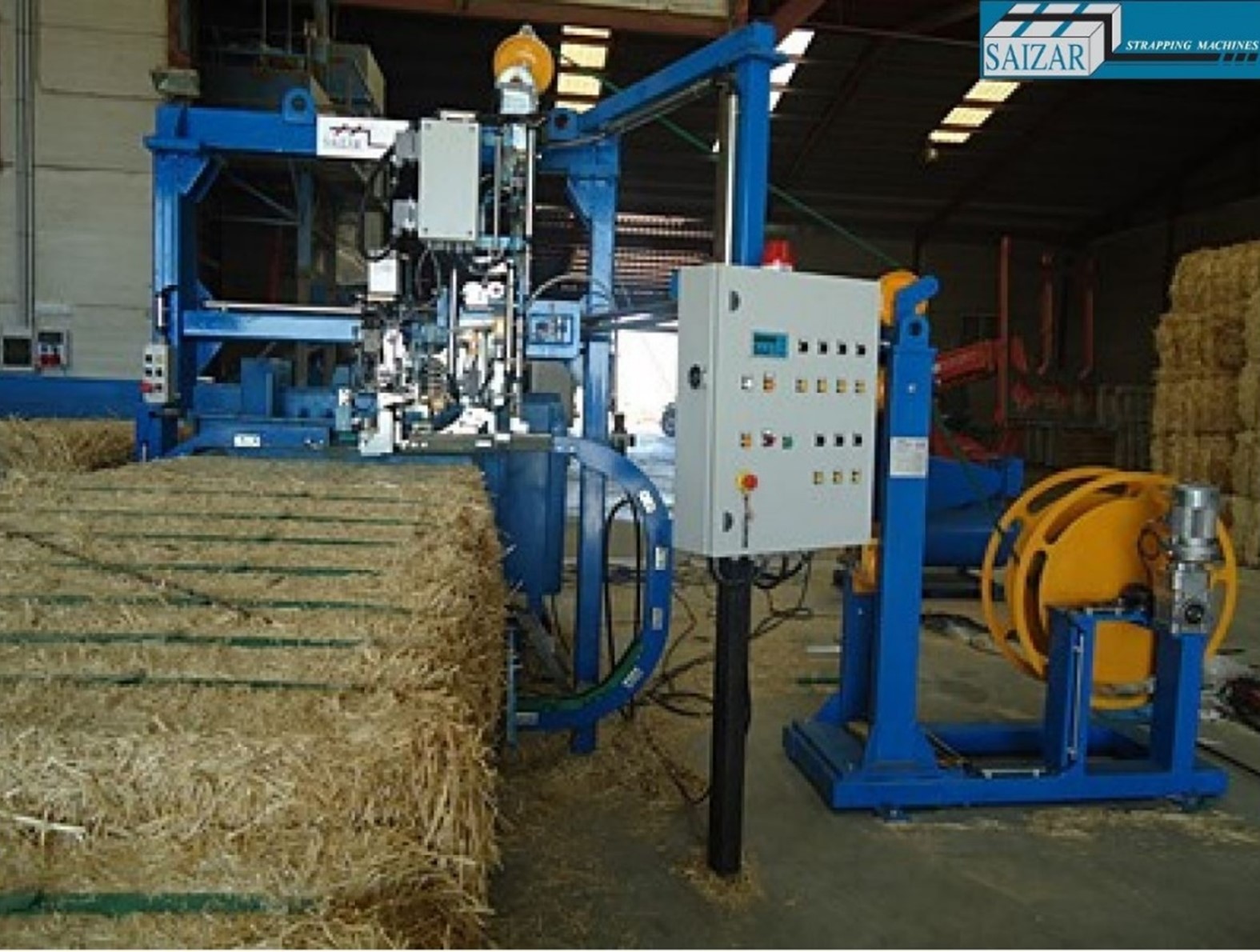
Agriculture and horticulture industry
Postal and logistics services
Factors to consider when selecting a strapping machine
Selecting a strapping machine should not be based solely on the equipment price. Businesses need to consider package characteristics, strap type, production volume, strap tension requirements, product feeding method, and compatibility with the existing production line. A suitable machine should meet both the technical requirements of the products and the actual operating conditions at the factory. For industrial packaging systems in particular, machine selection should also take into account future scalability and the ability to connect with equipment installed before and after the strapping process.
Determining the level of automation and investment efficiency
The required level of automation is one of the first factors to determine when selecting a strapping machine. Depending on production volume, packaging frequency, available workspace, and line configuration, businesses can choose manual, semi-automatic, or fully automatic equipment.
An automatic machine should not be considered the best option in every situation. For low production volumes, frequently changing products, or applications where the strapping position is not fixed, manual or semi-automatic equipment may provide greater flexibility without requiring a complex system investment. In contrast, when package volumes are high, product dimensions are relatively consistent, and continuous packaging is required, an automatic machine may be more suitable because it reduces manual operations and can be integrated into the production line.
Manual strapping machines
Manual strapping machines or tools are suitable for applications requiring high mobility, multiple operating locations, or relatively low production volumes. Operators can move the equipment to the required strapping position and work directly on the package instead of having to bring the product to a fixed machine station. This configuration is often suitable for products with varying dimensions, pallet strapping, or large packages that are difficult to pass through an arch-type machine. The initial investment is relatively low, and relocating the equipment between work areas is also straightforward.
However, manual strapping remains highly dependent on the operator. Strap tension, strap positioning, and processing time may vary from one operation to another. Therefore, this configuration should be evaluated carefully when the business has strict requirements for packaging consistency or high production volumes.
Semi-automatic strapping machines
Semi-automatic strapping machines provide an intermediate solution between manual operation and full automation. The operator still needs to position the strap around the package or place the package in the working position, after which the machine performs operations such as tensioning, sealing or securing the joint, and cutting the strap, depending on the machine configuration. These machines generally have a relatively compact design, making them suitable for standalone packaging stations and production lines with moderate output. They are also a practical option for businesses looking to reduce manual workload without investing in a fully automatic strapping system integrated with conveyors.
Automatic strapping machines
Automatic strapping machines are suitable for production lines with high volumes and continuous operating requirements. Depending on the configuration, sensors can detect the presence and position of the package, after which the control system activates the strapping cycle without requiring the operator to perform each individual operation.
The machine can be integrated with a conveyor so that packages are automatically transferred to the strapping position. Once the strapping cycle is completed, the product can continue to subsequent processes such as labeling, inspection, sorting, or palletizing.
Parameters such as cycles per minute, cycle time, and working or arch dimensions should be determined according to the specific model and configuration. A single fixed value should not be applied universally to all automatic strapping machines.
Considering packaging requirements and package dimensions
Package dimensions and characteristics directly affect the machine configuration. Before selecting the equipment, businesses should determine at minimum the length, width, height, weight, and shape of the products or packages to be strapped.
For arch-type strapping machines, particular attention should be paid to the working area of the arch to ensure that packages can pass through without contacting the machine mechanism. For equipment used to strap pallets or large loads, businesses should consider the operating height, strap positioning, and accessibility to different sides of the package.
In addition to the maximum package dimensions, the minimum package dimensions should also be identified. A wider working range allows the machine to accommodate a greater variety of product SKUs, but the mechanical design and sensor configuration must also be selected appropriately to ensure stable operation across the entire dimensional range.
If the business handles multiple product sizes, it is recommended to provide the system designer with the maximum, minimum, and most common package dimensions so that the machine configuration can be determined accurately from the beginning.
Selecting the strap type and required tension
The type of strap is one of the most important parameters when selecting a strapping machine. Common applications may use PP or PET straps, while applications requiring higher load-holding strength may use other types of strapping materials depending on the characteristics of the products. Each strap material has different requirements for the feeding mechanism, tensioning system, and joint-securing method. Therefore, the machine must be compatible with the material, width, thickness, and mechanical properties of the strap used by the business.
In addition to strap material, the required tension should be determined based on the weight and characteristics of the package. Lightweight products, cartons, and products that are susceptible to deformation have different requirements from heavy loads, pallets, or packages exposed to vibration during transportation. The machine should not be selected solely based on its maximum specified tension. More importantly, it should be capable of generating and maintaining a suitable tension level for the actual strap and product without deforming the packaging or damaging the goods inside.
Evaluating packaging throughput and strapping speed
Actual production volume is the basis for determining the required machine capacity and level of automation. Businesses should identify the number of packages to be processed per hour or shift, the average number of straps required per package, and the expected operating time of the equipment.
For example, the same number of packages may require significantly more strapping cycles and strap material if each package needs two or three straps at different positions. Therefore, machine selection should not rely solely on the maximum strapping speed. The overall process should also account for package feeding, positioning, strapping, product discharge, and waiting time between cycles.
For automatic production lines, the capacity of the strapping machine should also be compatible with the conveyor speed and the capacity of upstream and downstream equipment. If the machine operates more slowly than the preceding process, packages may accumulate or waiting time may occur. Conversely, if the machine has significantly higher capacity than the rest of the line, the unused capacity will not necessarily translate into higher overall productivity.
For high-volume production lines, businesses should consider not only speed but also the durability of the drive mechanism, strap feeding system, sensors, control system, and the machine's ability to operate reliably over extended periods.
Considering installation conditions and integration capability
Installation space is often overlooked when selecting a strapping machine. In addition to the overall machine dimensions, sufficient clearance should be provided for product feeding and discharge, strap coil replacement, maintenance, and access to components requiring periodic inspection.
If the machine is integrated with a conveyor, the conveyor height, product travel direction, package dimensions, and sensor positions need to be accurately determined. In an automated production line, the strapping machine may also need to exchange signals with the central PLC or other equipment to synchronize the operating cycle.
Therefore, businesses should evaluate integration requirements during the machine selection stage rather than purchasing a standalone machine and determining how to connect it afterward. Equipment designed with the overall line configuration in mind from the beginning will generally be easier to expand and adapt to future production changes.
Evaluating durability, maintenance, and operating onditions
Operating frequency and factory conditions directly affect the machine's structural and component requirements. Equipment operating continuously across multiple shifts has different requirements from a machine used for only a few hours per day.
Businesses should evaluate the machine frame material, the quality of electrical and pneumatic components where applicable, accessibility of wear parts, and replacement procedures when equipment faults occur. For automatic strapping machines, components such as cutting blades, strap feeding mechanisms, tensioning units, and sealing mechanisms should be inspected, cleaned, or replaced according to their actual operating condition. It is also important to determine the preventive maintenance schedule, expected troubleshooting response time, and availability of replacement parts. These factors directly affect machine downtime and long-term operating efficiency.
Evaluating the supplier's engineering, installation, and technical service capabilities
For standard strapping machines, businesses can focus primarily on technical specifications, operating stability, and after-sales service. However, for systems that need to be integrated into an existing production line, the supplier's capabilities in mechanical design, PLC control, sensors, conveyors, and automation integration become more important.
For businesses in Vietnam, working with a supplier that has an on-site technical team and local support capabilities can help shorten response times when equipment requires maintenance, troubleshooting, or adjustment. In addition to the initial investment, businesses should evaluate the total cost of ownership and operation, including maintenance, spare parts, downtime, and the potential for future system expansion.
Defining the overall solution before investment
The most suitable strapping machine is not necessarily the one with the highest speed or the highest level of automation. An effective solution is one that matches the business's actual production volume, package dimensions, strap type, tension requirements, and operating method.
Before placing an order, businesses should prepare key information including package dimensions and weight, hourly or shift production volume, number of straps per package, strap material and specifications, required tension, product feeding method, and equipment to be connected. This information provides the basis for the system designer to determine the machine configuration, working area, drive system, sensors, and control method. For highly automated production lines, conducting an on-site assessment of the actual products and existing processes can also help prevent equipment from being selected that is incompatible with the available floor space or poorly synchronized with other processes. A solution designed and calculated from the outset allows businesses to better control both the immediate investment efficiency and the system's potential for future expansion.
Strapping machines help businesses mechanize the process of securing and bundling products, reducing manual operations, improving process consistency, and creating better working conditions for operators. Depending on the level of automation, the equipment can assist with or automatically perform operations such as strap feeding, tensioning, joint securing, and strap cutting, providing better control over strap tension and positioning across packages. When properly selected according to the strap type, package dimensions, and product weight, the machine can also help minimize product shifting, package opening, and package deformation during storage and transportation.
With experience in designing and integrating industrial automation systems, CNC VINA can provide strapping machine configurations based on product characteristics, required throughput, and the actual operating process of each business. Conducting an assessment from the beginning helps determine the appropriate level of automation, feeding method, technical specifications, and system scalability instead of selecting equipment solely based on purchase price or published speed. This allows businesses to develop a packaging solution that meets current requirements while providing room for future production expansion.
CNC VIETNAM TECHNOLOGY & APPLICATION JOINT STOCK COMPANY
Factory: Song Cung Industrial Cluster, Dong Thap Commune, Dan Phuong District, Hanoi, Vietnam
Office: Rox Tower (Rox Center Goldmark City), 136 Ho Tung Mau Street, Bac Tu Liem District, Hanoi, Vietnam
Phone: +84.916 63 9355 / +84.915 74 4664
Website: www.cncvina.com.vn ; www.cncvina.net