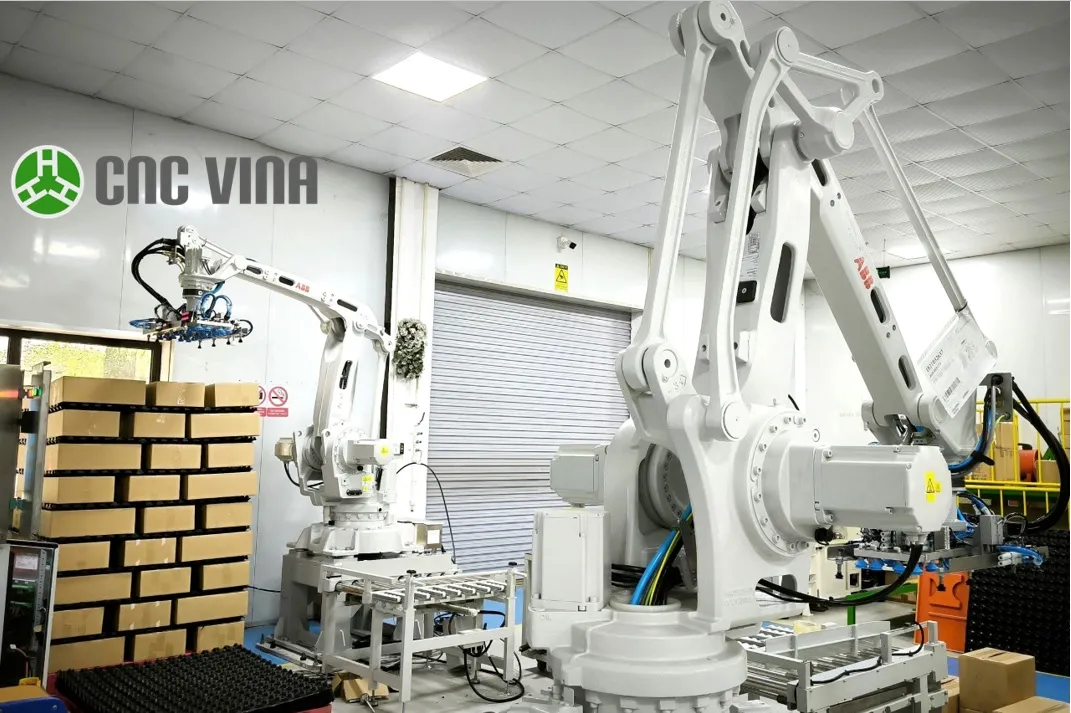
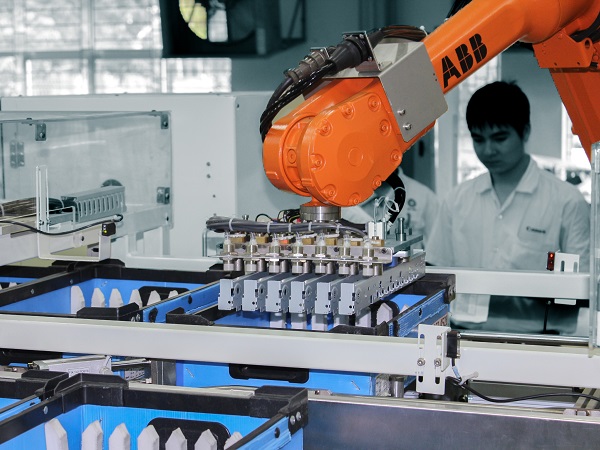
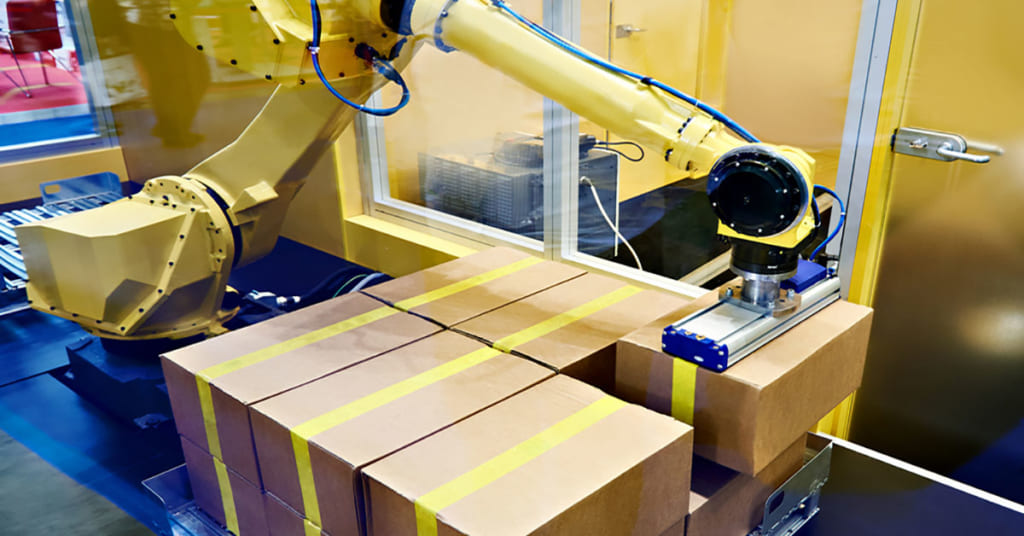
Robotic palletizing is a general term for an automation application in smart factory 4.0 environments. It uses industrial robotic arms to handle and transfer products, stack goods onto plastic or wooden pallets, and load products into cartons, plastic containers, or plastic boxes. Robotic palletizing provides effective support for product packaging operations as well as inbound and outbound warehouse activities. It is one of the most common pick & place applications of industrial robotic arms in modern smart manufacturing facilities, and represents a key automation trend driven by the ongoing development of Industry 4.0 worldwide.
In the era of Industry 4.0, the continuous development of technology has made the adoption of automation solutions an essential part of modern manufacturing. One of the typical applications is robotic palletizing, an advanced technology designed to optimize production processes and deliver a range of operational benefits for manufacturers. In this article, CNC VINA introduces the operating principle, technical specifications, system structure, applications, key benefits, and important considerations when implementing robotic palletizing systems in production lines.

Technical specifications of the robotic palletizing system
| Specification |
Details |
| Dimensions |
L8100 × W5400 × H3200 mm |
| Power Supply |
3-phase, 380 V, 50 Hz |
| Air Supply |
0.4–0.5 MPa |
| Number of Axes |
5–6 axes |
| Capacity |
10 pallets/hour (60 boxes/pallet) |
| Applicable Pallet Dimensions |
L1050–1200 × W800–1050 × H115–130 mm |
| Maximum Reach |
3195 mm |
| Maximum Payload |
180–240 kg |
Operating Principle of the Robotic Palletizing System
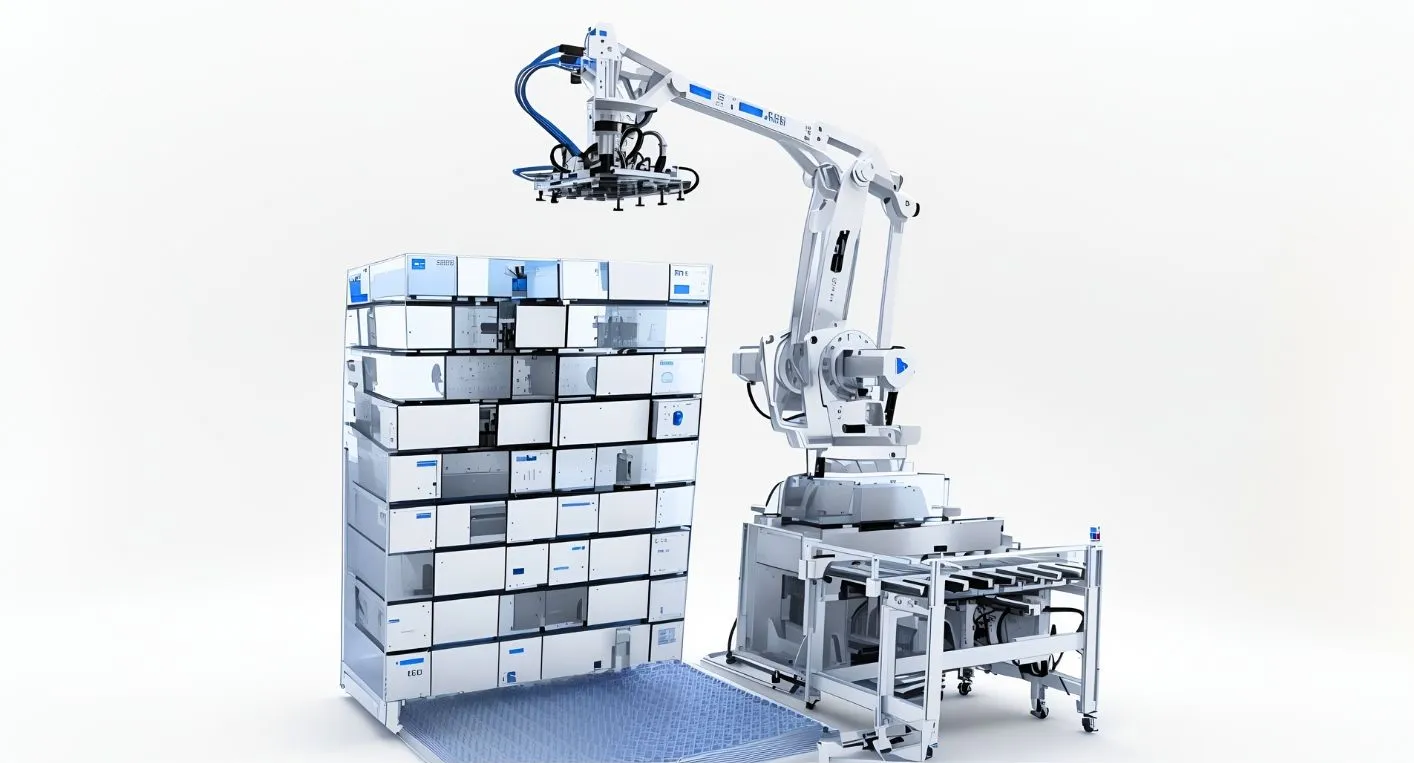
A robotic palletizing system is an automated solution that uses an industrial robotic arm to pick and arrange products such as cartons, bags, sacks, trays, bottle blocks, or components on pallets according to a pre-programmed palletizing pattern. It is typically installed as one of the final stages of a production or packaging line before products are transferred to the storage or shipping area. In an automated palletizing system, products that have completed the manufacturing or packaging processes are transferred to the product infeed position by a conveyor or transfer device. Sensors and the control system detect the presence, position, or status of the products. The robot then receives the corresponding signal, moves to the pick position, grips the product using a suitable gripper, and places it on the pallet according to the programmed sequence.
The palletizing pattern can be configured in different ways depending on the product dimensions, weight, characteristics, and the required stability of the finished pallet. Products can be arranged in different patterns layer by layer to maximize pallet utilization, minimize product displacement, and meet transportation requirements.
Depending on the system configuration, the robot can be integrated with conveyors, sensors, pallet dispensers, product alignment devices, stretch wrapping machines, and other automation equipment to create a complete palletizing process.
A robotic palletizing system can perform functions such as:
- Picking and palletizing finished products in the form of bags, sacks, cartons, trays, bottle blocks, or components.
- Receiving signals from sensors to detect when a product reaches the pick position.
- Detecting the position and status of products according to the system configuration.
- Placing products on pallets according to a pre-programmed palletizing pattern.
- Switching programs or palletizing positions when handling multiple product SKUs, depending on the system design.
- Communicating with PLCs, HMIs, conveyors, and peripheral equipment to synchronize the entire production line.
- Integrating industrial cameras or machine vision systems when product identification, inspection, or position detection is required.
Technical Features of the Robotic Palletizing System
The robotic palletizing system uses an industrial robotic arm capable of performing repetitive movements with consistent speed and positioning. Compared with manual palletizing, robotic automation reduces dependence on manual labor in operations involving heavy loads, repetitive handling, or high-frequency production.
Key technical features of the system include:
Flexible configuration: The robot can be selected according to the required number of axes, payload, reach, product characteristics, and available installation space. Depending on the required throughput, the system can be configured with one or multiple robots.
Stable operating speed: The required cycle time is calculated based on factors such as product weight and dimensions, robot reach, gripper configuration, the number of products picked per cycle, and the palletizing pattern. This allows manufacturers to determine a suitable palletizing capacity in accordance with the overall production line.
Consistent positioning and repeatability: The robot follows a programmed motion path, allowing products to be placed consistently from one operating cycle to another.
Capability to handle different product types: Depending on the gripper design and robot payload, the system can be configured to palletize cartons, bags, sacks, trays, bottles, or products with different shapes and weights.
Payload capacity matched to the application: The robot payload is selected based on the product weight and the weight of the end-of-arm tooling (EOAT). For heavier products, high-payload industrial robots and dedicated gripping systems can be used.
Designed for high-frequency operation: Industrial robots are designed for automated manufacturing applications requiring frequent and repetitive operation. Regular maintenance and inspection help maintain system stability and operating performance.
Integration with sensors and control equipment: The system can use photoelectric sensors, proximity sensors, encoders, PLCs, and HMIs to control product infeed, picking, and palletizing operations.
Integration with machine vision: Industrial cameras can be incorporated when the application requires product identification, position detection, orientation inspection, or handling conditions that cannot be reliably detected by conventional sensors alone.
Safety features for operation: The robot cell can be equipped with protective fencing, safety doors, safety sensors, emergency stop devices, and other appropriate safety functions to help restrict access to the robot's operating area and reduce potential risks.
Program flexibility: With an appropriately designed control system, operators can select the corresponding program for each product SKU, layer configuration, and palletizing pattern through the operator interface.
Applications of robotic palletizing systems
Robotic palletizing solutions can be applied to a wide range of end-of-line operations, particularly in high-volume or repetitive production environments. They can be used to palletize cartons after packaging, arrange bags and sacks on pallets, and stack bottle blocks, trays, or other packaged products layer by layer. Robotic palletizing is also suitable for handling heavy products that are difficult or labor-intensive to palletize manually. Depending on the production process, the system can be integrated with filling, packaging, carton forming, and internal material handling lines to create a continuous automated workflow. Palletizing operations can also be connected with downstream processes such as stretch wrapping, warehousing, and shipment preparation.
Main components of a robotic palletizing system
Robot arm
Type of robot arm
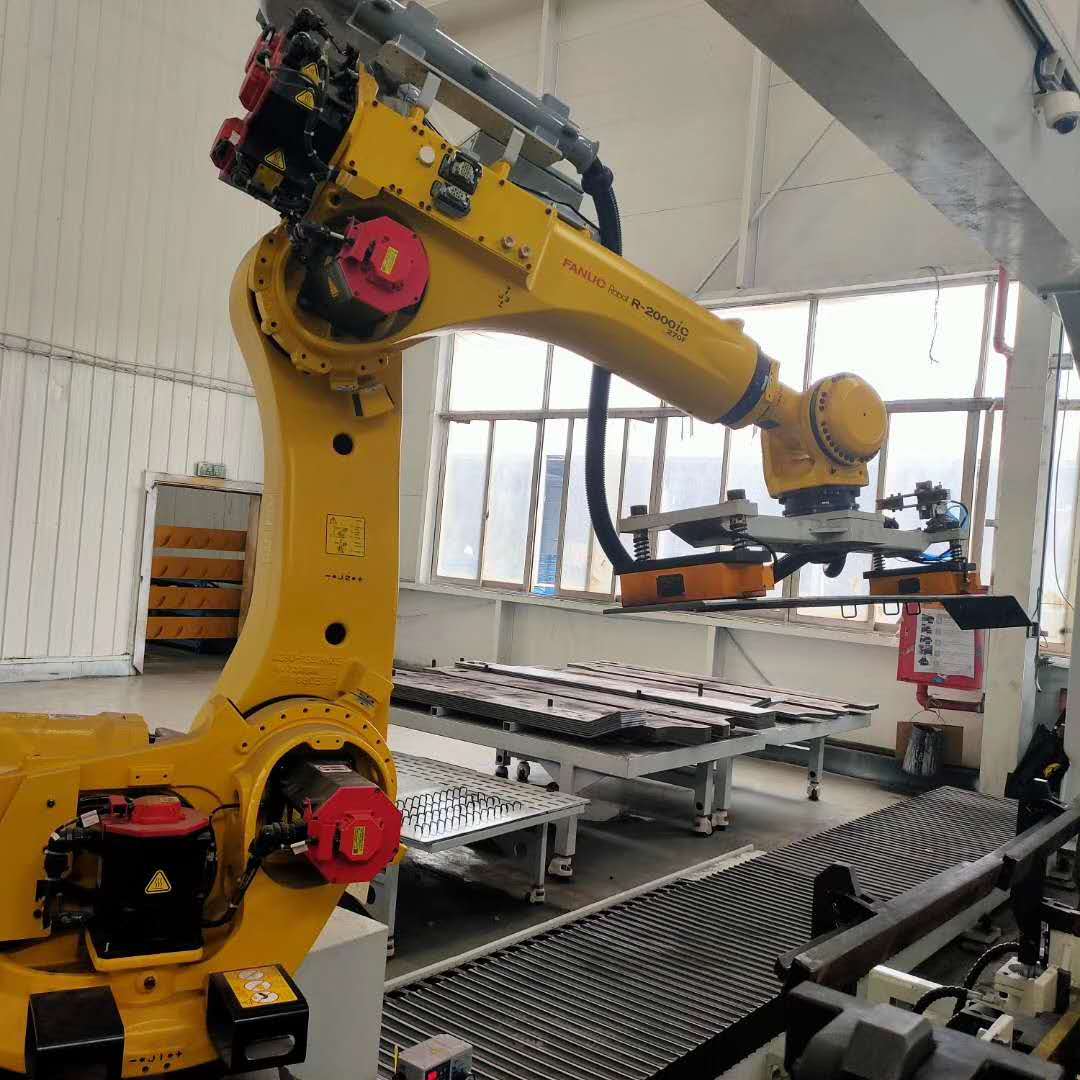
Robotic palletizing systems are commonly designed using serial-link or serial-chain robot structures. A serial-chain robot consists of an open kinematic chain with a fixed base or frame as the reference link, followed by a series of interconnected moving links. Each moving link is connected to the adjacent link through a mechanical joint. Depending on the robot structure, these joints can be either revolute joints, which provide rotational motion, or prismatic joints, which provide linear translational motion. This serial-link structure allows the robot arm to perform coordinated multi-axis movements within its designated working envelope, enabling it to pick products from the infeed position and accurately place them according to the programmed palletizing pattern.

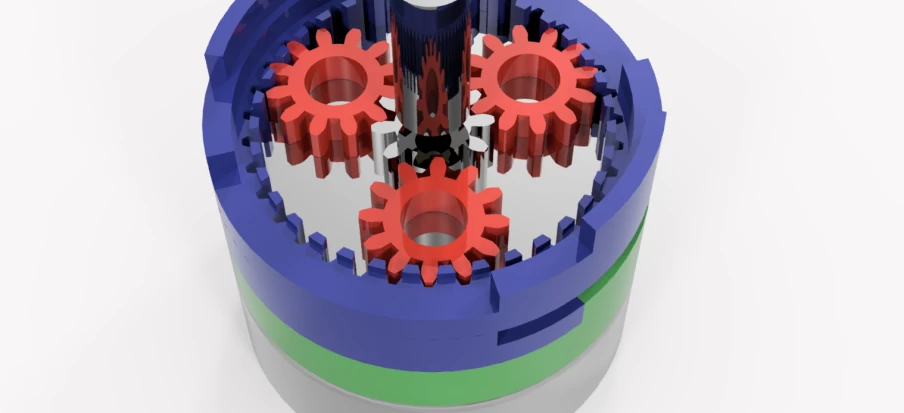
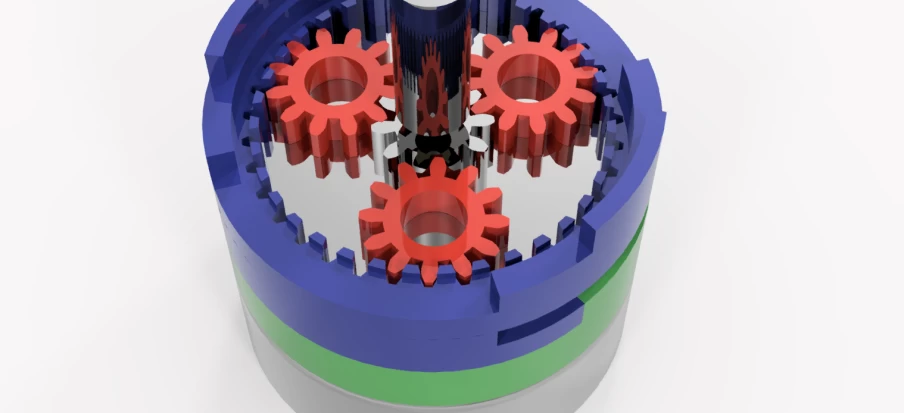
The type of motor used in joints is usually a servo motor with position feedback and combined with special gear reduction boxes such as planetary gear reduction boxes and harmonic reduction boxes.
Robot arm features and capabilities
Industrial robots used for palletizing applications are commonly designed with six degrees of freedom corresponding to six joints. This configuration provides the robot with the flexibility required to perform complex movements within its working envelope. Of the six degrees of freedom, three are used to determine the position of the end point in Cartesian coordinates, while the remaining three determine the orientation of the robot's end effector. With six degrees of freedom, the robot can flexibly lift and handle products while adjusting its movement to avoid obstacles within its working space.
Grippers and end-of-arm tooling
Types of grippers and end-of-arm tooling
In robotics, an end effector refers to any tool or device mounted at the end of a robotic arm to interact with or manipulate objects. Its structure and configuration depend on the specific task performed by the robot and the characteristics of the products being handled.
For robotic palletizing applications, the robot typically needs to pick up, lift, move, and place products onto pallets. Therefore, grippers are among the most commonly used types of end-of-arm tooling (EOAT). The gripper is designed according to the product's shape, dimensions, weight, and surface characteristics, allowing the robot to securely handle products throughout the palletizing cycle.
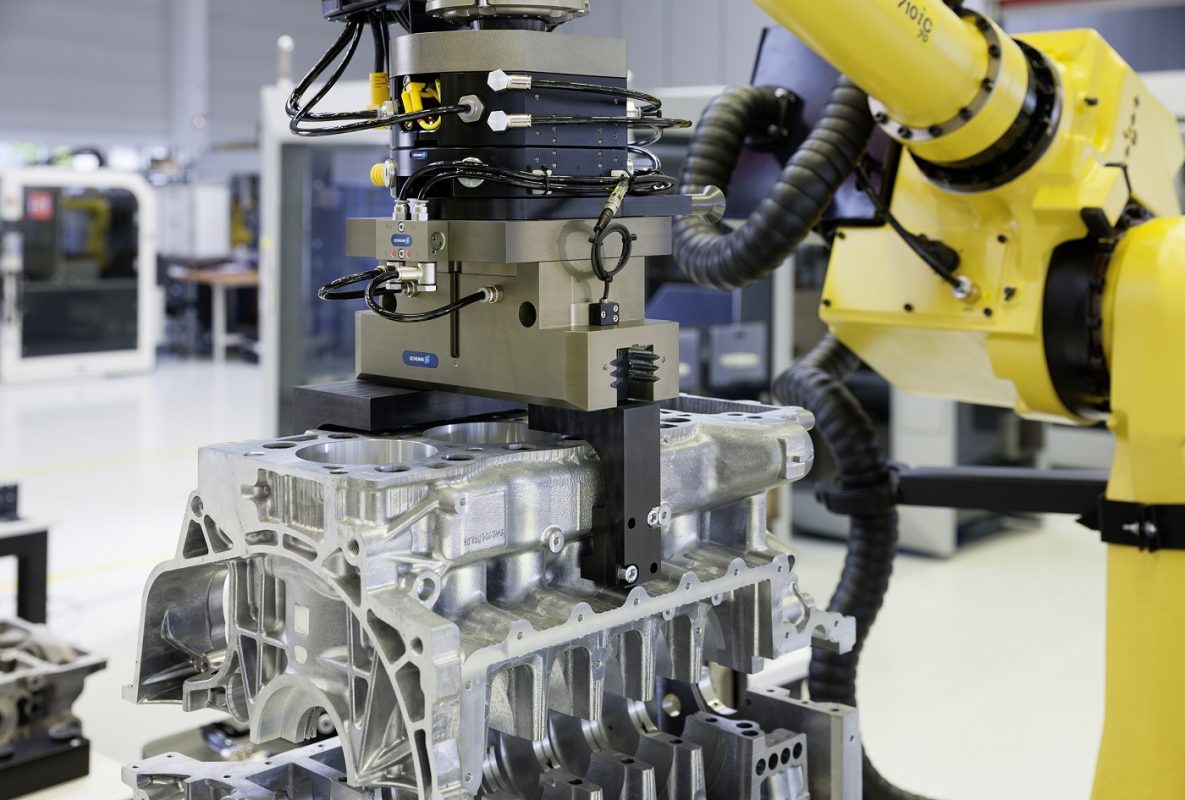
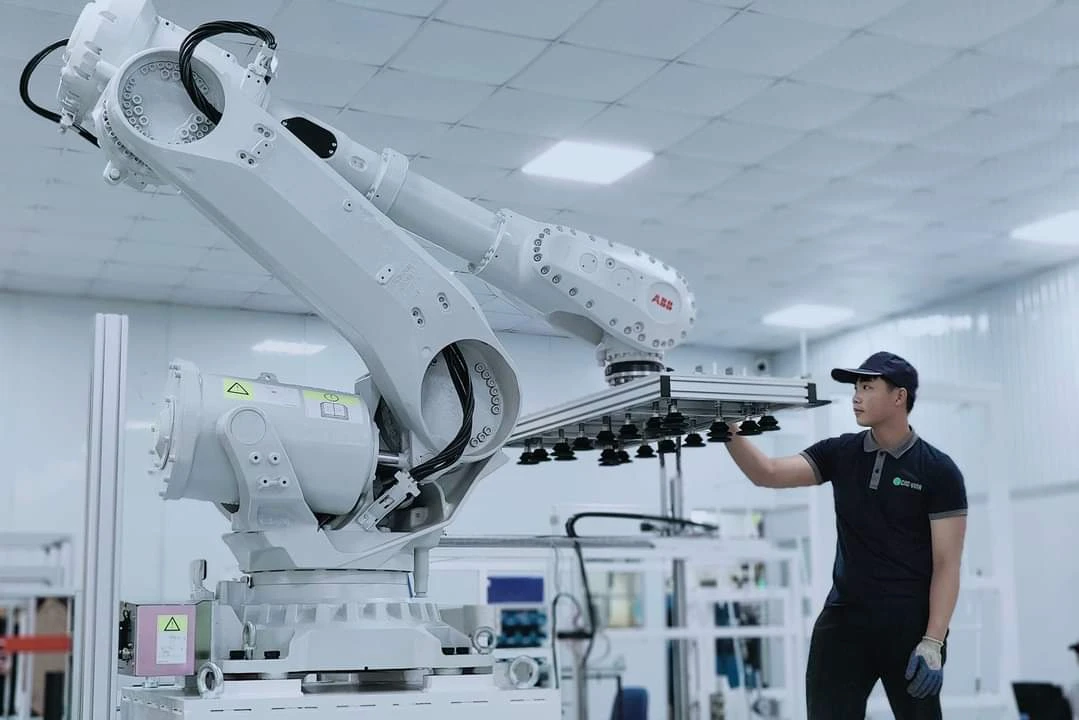
End-action clamps come in many different sizes and can be used to clamp and lift goods of many different shapes and sizes within the limits of the clamping unit . Grippers can also be classified based on the source and type of energy they use . For example, electric grippers, pneumatic grippers, magnetic, electrostatic grippers, etc. Some other end impact parts can be used to lift goods like electromagnets, vacuum suction, etc.
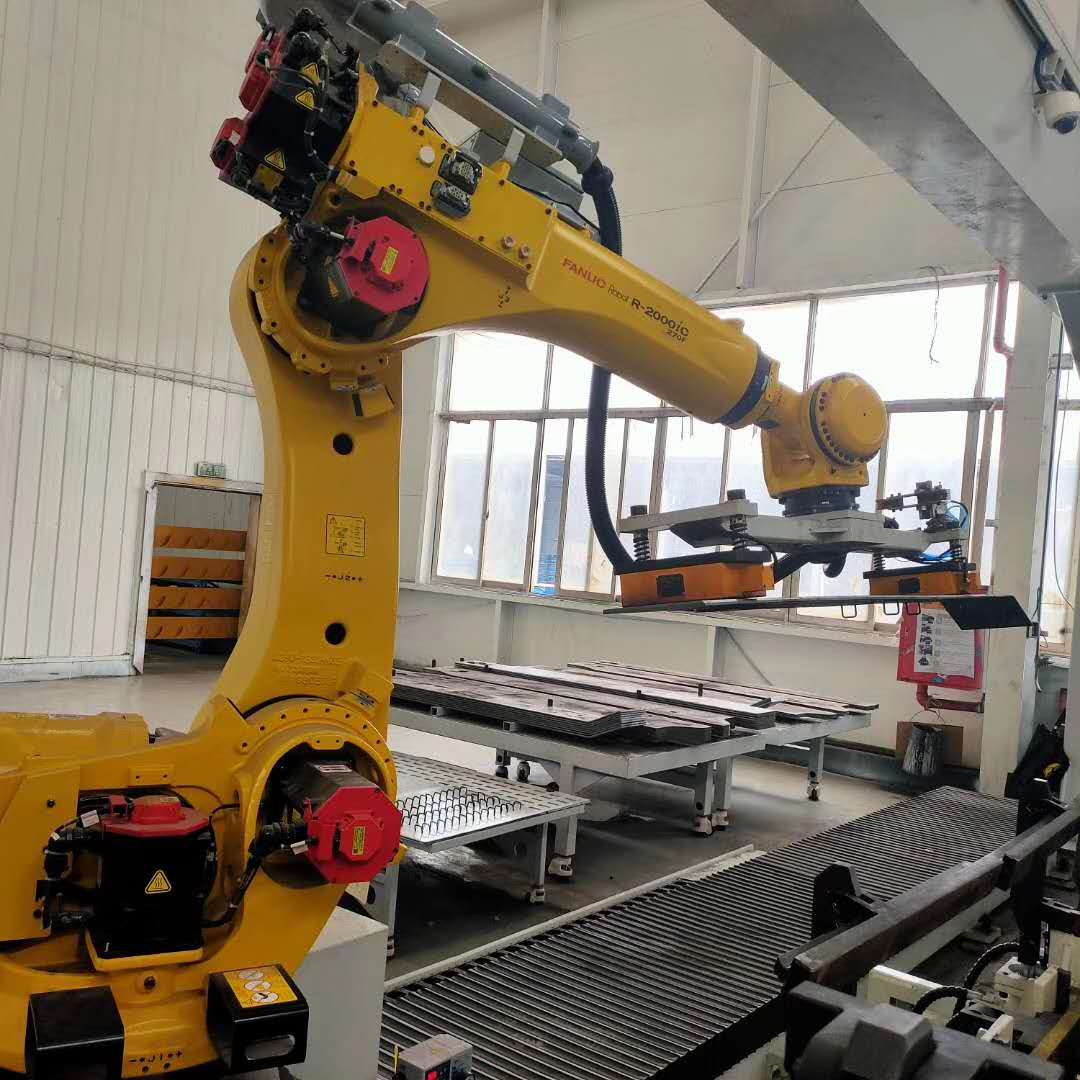
Functions and features of grippers and end-effectors
For robot palletizing applications, the function of the final part is to grip the goods, lift it, move to avoid obstacles by rotating and translating orbits, and finally stack it on the pallet in place. definite position and direction.
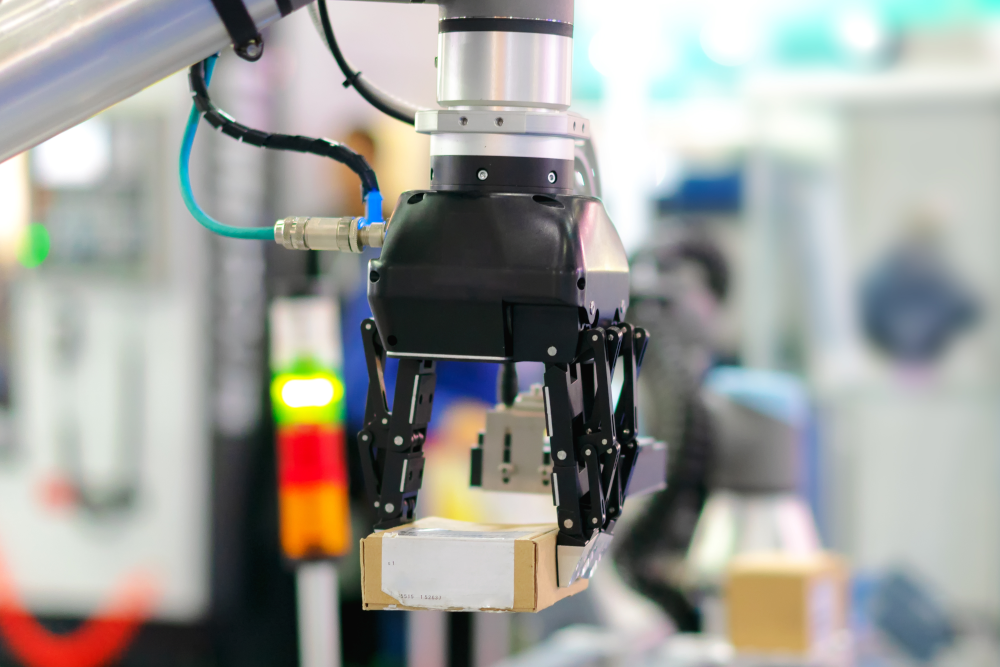
Gripper feature: Gripper arms can pick up goods of various shapes and sizes but only within their smallest and largest limits. Some shapes, even within the limited size of the gripper, cannot be grasped tightly due to lack of friction between the target surface and the gripper surface. At this time, the contact area needs to be improved in friction or designed. special shape.
Electromagnet: This type of end-effector can be designed in the form of a gripper or simply in the form of a magnet plate, used to attract and move goods made from attracted metal materials. by magnet. The load they can lift depends on the nature of the metal material of the goods and the capacity of the electromagnet ; different metals have different levels of adhesion.
Suction cup or vacuum cup: Used to suck and lift goods with flat surfaces. The load they can lift depends on the plane's flatness and the suction cup's negative pneumatic capacity .
Integration and programming capabilities of palletizing robots
Integrated with conveyor system
Integration with the conveyor system of palletizing robots depends only on the robot's workspace, workshop space and floor area . The pallet loading robot is a high-tech , flexible and programmable device . Requires only a fairly small floor area to house the robot and reasonable workshop space to accommodate the robot's workspace so that their programmable cargo delivery trajectories are not too entangled with Workshop space is possible to integrate them with production lines or conveyor systems.
Programming and customization
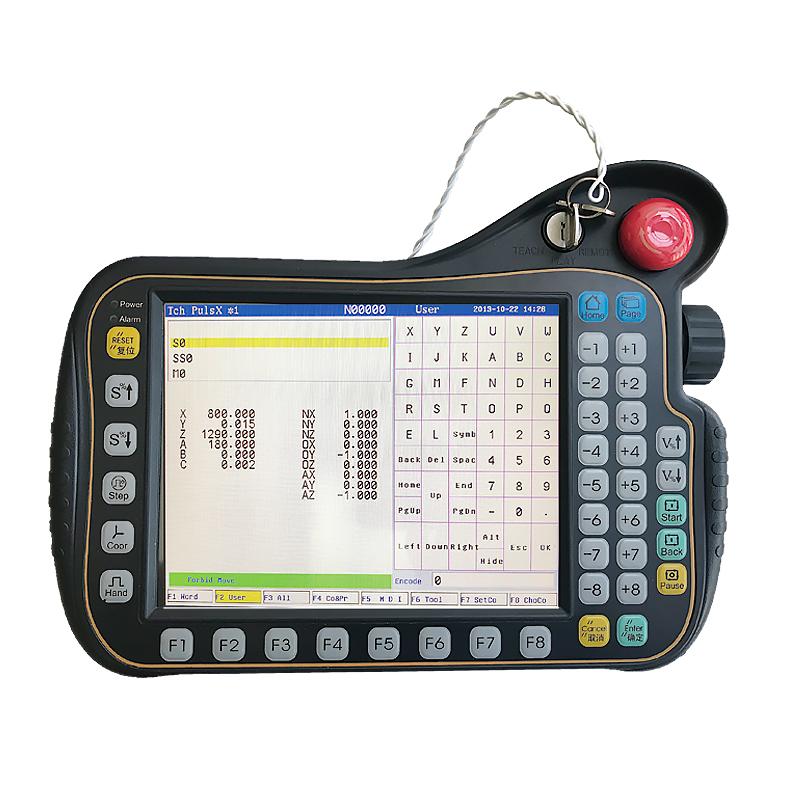
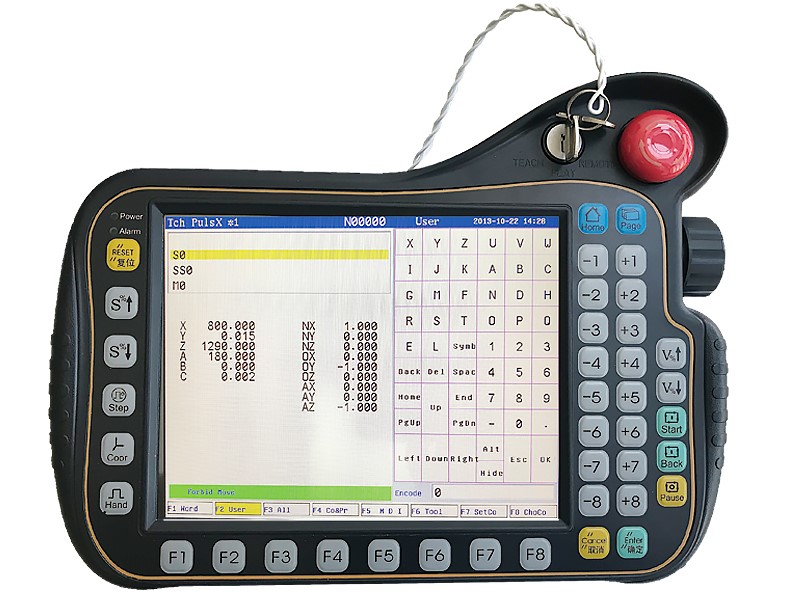
Usually the manufacturer can provide users with several programming methods: Programming robots with controllers: This is the most popular programming method today, used to program 90% of industrial robots used in production. This form of programming uses controllers to steer robots and other devices to desired positions. Some types of robots can be programmed using this controller, but the robot may have to be stopped.
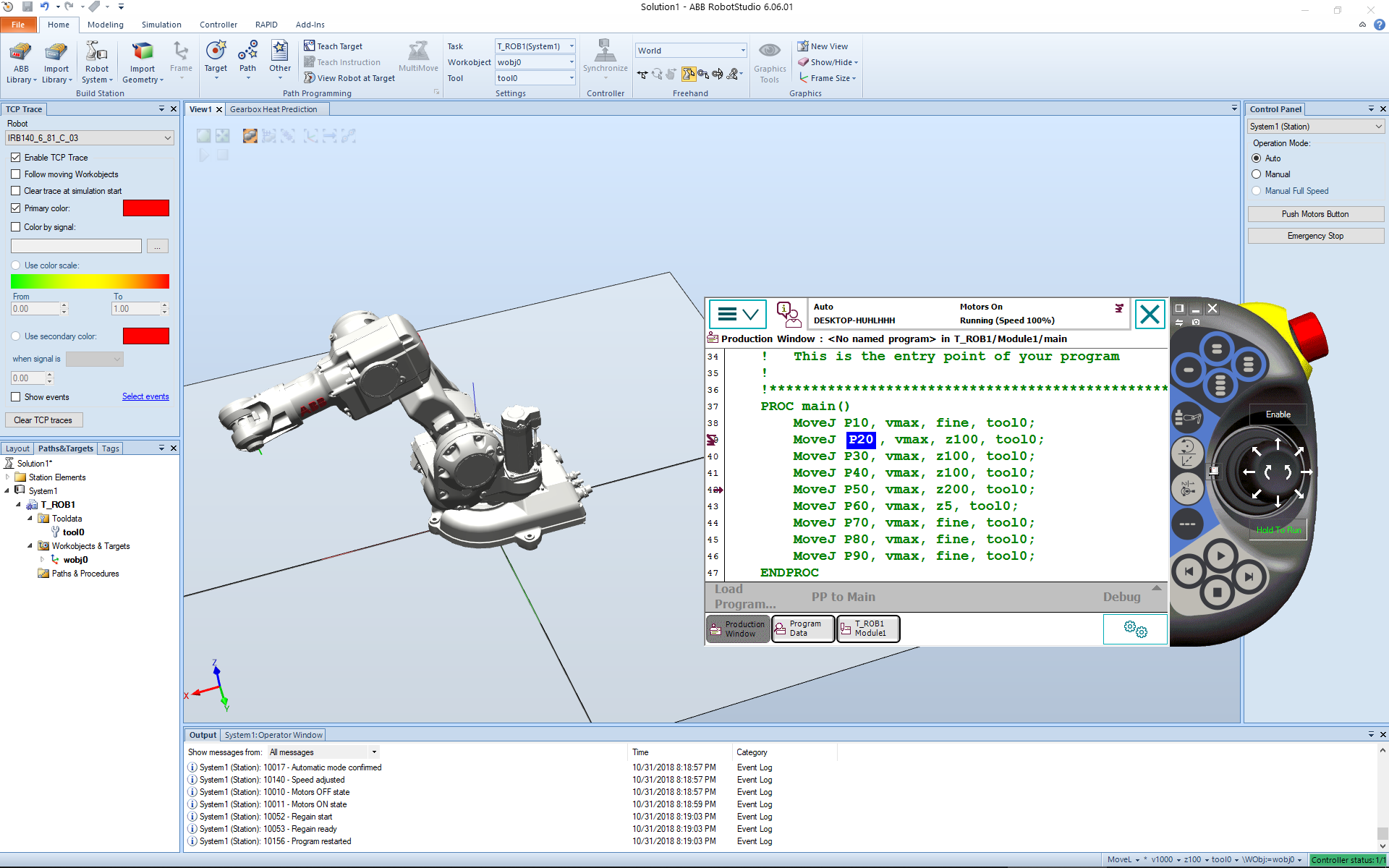
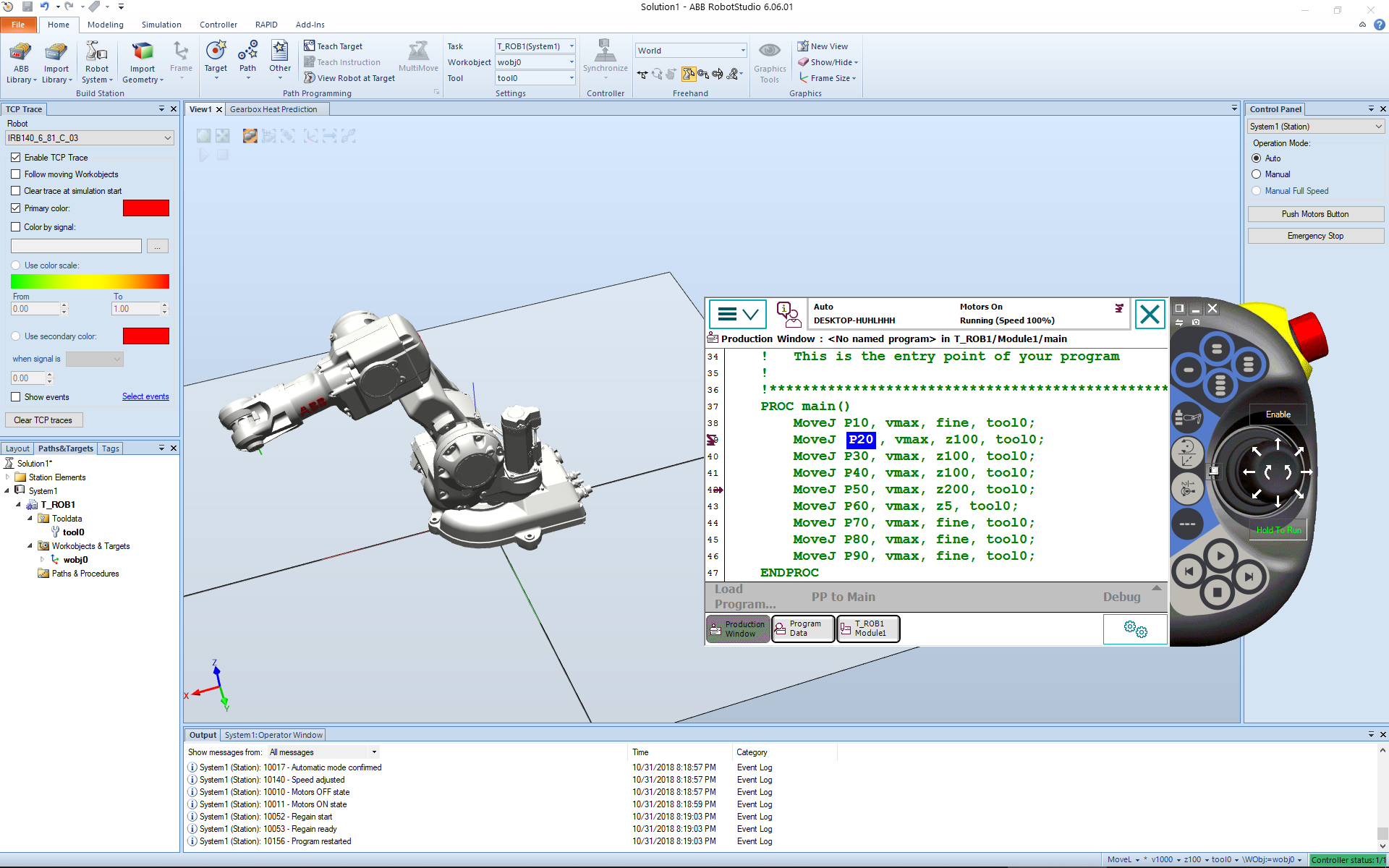
Programming with specialized software from the company or the community: On the software, program the control programs and then load them into the robot's memory without having to stop their operations, which can be stopped to ensure safety. . This method requires specialized skills. For example, use Robot Studio to program and simulate ABB robots.
Teach programming
Manual teach programming is a programming method in which an operator directly interacts with the robot hardware to move the robot through the required positions and record these positions in the robot's teach pendant. For smaller robots, this can be achieved by releasing the joint brakes, as the robot links and joints are lightweight enough to be moved manually. For larger and heavier robots, force sensors and force-control algorithms may be required to assist the operator during manual teaching. Other programming methods, including more advanced approaches, are also being researched and developed, involving technologies such as machine vision, artificial intelligence, and automatic program generation.
Through these programming methods, parameters such as position, gripping force, speed, acceleration, and motion trajectory can be configured according to user requirements. Certain hardware components can also be customized, particularly the end effector, to suit the characteristics of the products and the specific application.
User interface and monitoring system
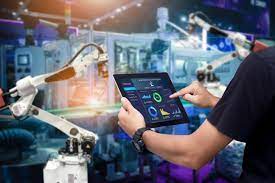
Industrial robots, particularly robotic palletizing systems, are generally not equipped with a user interface or monitoring system directly on the robot arm because its joints and links are constantly moving during operation. In addition, robots may operate in demanding industrial environments, making it impractical to integrate user interfaces and monitoring equipment directly onto the robot body. Instead, the user interface and monitoring parameters are typically integrated into the robot controller. Operators can also use external computers or other control systems to interact with, configure, and monitor the robot during operation.
Applications of robotic palletizing systems in manufacturing
Robotic palletizing systems are widely used across various industries, including mechanical engineering, electronics, logistics, food processing, and other manufacturing sectors. In modern smart factories, robotic palletizing helps automate material handling operations, improve productivity, and reduce manual handling in repetitive or physically demanding tasks. The primary functions of these robots include handling and transferring products, palletizing goods according to predefined patterns, and, depending on the system configuration, supporting packaging and internal material handling processes.
Specific applications of robotic palletizing systems include:
- Robotic handling and transfer of cartons and packages.
- Picking products and placing them into cartons.
- Picking products and loading them into containers for packaging operations.
- Machine tending for workpiece loading and unloading, as well as component feeding for assembly processes.
- Palletizing bags, cartons, and agricultural or animal feed products such as feed, rice, flour, cashew nuts, coffee, pepper, dragon fruit, shrimp, and fish fillets, and transferring them onto conveyors.
- Automated loading and unloading of goods from shipping containers.
Applying palletizing robots to production
Palletizing robots are applied in many fields: mechanical, electronics, logistics, food processing... Especially in modern smart factories, which are gradually replacing humans with high productivity and autonomy. automation and safety. The robot's main job is to load and unload goods, put them on pallets and arrange them in the desired order, and can also pack and transport products during the production process .
Specifically, palletizing robots can be applied in the following areas:
- Robots pack and move boxes.
- Robot picks up products and packs them.
- The robot picks up products and puts them into boxes for packaging.
- Robots supply workpieces and assembly components.
- Robots arrange bags, crates, boxes of agricultural products, animal and poultry feed: bran, rice, flour, cashew nuts, coffee, pepper, dragon fruit, shrimp, filtlet fish... onto the conveyor belt.
- Robots load and unload goods from containers.
Automatic robotic palletizing: Benefits and automation solutions
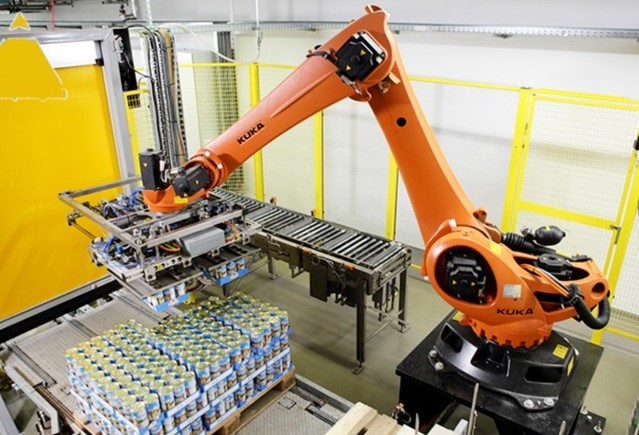
A robotic palletizing system is an automation solution used at the end of many production lines, particularly for manufacturers with high production volumes and a need to reduce manual handling. Instead of relying on manual labor for palletizing, the robot performs product picking, transferring, and placement according to a pre-programmed sequence. Depending on product characteristics and production requirements, the system can be configured with a suitable payload, reach, gripper, and palletizing pattern. The robot can also be integrated with conveyors, sensors, identification systems, packaging machines, and automated material handling equipment to create a continuous production process. In this article, CNC VINA explores the benefits and applications of robotic palletizing systems in modern production lines.
Benefits of robotic palletizing in production lines
Increased productivity and consistent cycle times
A robotic palletizing system can continuously perform product picking, transferring, and placement according to a programmed cycle. For high-volume production lines where palletizing is repetitive and performed at a high frequency, robots reduce dependence on manual labor while maintaining a consistent operating speed throughout the production process. Once the program and operating parameters have been properly configured, the robot can perform repetitive movements with a high level of consistency. This makes robotic palletizing particularly suitable for applications requiring products to be arranged according to a fixed pattern, with consistent cycle times and minimal variation between finished pallets.
System throughput depends on various parameters, including robot payload, reach, gripper configuration, the distance between the pick and place positions, the number of products per pallet, and cycle time. Considering these factors together allows manufacturers to select a robot configuration that matches the actual production requirements of the line.
Reduced manual handling in palletizing operations
Palletizing is a highly repetitive operation that often requires workers to continuously lift, move, and place products layer by layer. As production volume increases, the number of manual handling operations also increases, creating a need for personnel to be regularly stationed at the end of the production line. A robotic palletizing system can perform product picking and palletizing according to a programmed sequence, thereby reducing the amount of manual work required at this stage. Personnel can then focus on tasks such as system monitoring, quality inspection, material feeding, or other operations requiring direct human intervention. Automating the palletizing process also helps standardize production operations, reducing variations in handling methods between shifts and improving the consistency of finished pallets.
Better control of production capacity and planning
An important advantage of robotic palletizing is the ability to determine throughput based on predefined operating parameters. Cycle time, the number of products per pallet, and operating time can be used to calculate production capacity per hour or per shift. For example, if the robot has a cycle time of 3 seconds for one pick-transfer-place cycle, the theoretical throughput can be calculated as:
3,600 / 3 = 1,200 products/hour.
If each pallet contains 10 products, the corresponding theoretical pallet output can be calculated from the product throughput. However, when determining the actual capacity of the complete system, additional factors must be taken into account, including product infeed time, pallet supply, full-pallet replacement, pattern changes, and downtime during operation. Calculating throughput based on technical parameters allows manufacturers to plan production capacity more effectively, allocate personnel, and develop production schedules. It also provides a basis for determining the required number of robots or palletizing stations when expanding production capacity.
Flexibility for different products and palletizing patterns
A robotic palletizing system can be designed to handle different products within the specified payload and dimensional range. Depending on the application, different gripper configurations can be used to handle cartons, bags, sacks, trays, cans, bottles, or other packaged products.
For production lines handling multiple SKUs, the robot can be programmed with different palletizing programs corresponding to each product. When integrated with sensors or a vision system, the robot can identify the product type and select the appropriate operating program. Palletizing patterns can also be configured for individual products, including the number of products per layer, the number of layers, and the placement position of each product. This allows a single system to accommodate multiple packaging configurations without requiring a complete equipment changeover when switching between products.
Improved consistency of finished pallets
During manual palletizing, product placement may vary from one operation to another, particularly when large quantities of products are handled continuously over extended periods. A robot follows programmed coordinates and motion sequences, allowing products to be placed according to a consistent palletizing pattern. Maintaining a consistent pattern helps improve the structural stability and uniformity of finished pallets, making them more suitable for subsequent processes such as stretch wrapping, transportation, warehousing, and shipment. For products requiring multiple layers on a pallet, the robot program can define the placement position of each product on each layer, ensuring that the palletizing sequence remains consistent throughout operation.
Easy integration with automated production lines
Robotic palletizing systems are typically installed at the end of a packaging line to receive products from a conveyor and place them onto pallets. The system can be integrated with product conveyors, pallet conveyors, pallet dispensers, and equipment for transporting finished pallets. Depending on the factory's level of automation, the robot can also be connected to AGVs, AMRs, or other automated material handling systems to transport finished pallets to storage or shipping areas. When these devices are synchronized through a central control system, manufacturers can establish an automated workflow covering packaging, palletizing, material handling, and warehousing.
The robot cell can also be designed with a suitable footprint to optimize factory floor space. The robot operating area can be configured as a dedicated palletizing cell with protective fencing and appropriate safety equipment.
Applications of robotic palletizing in manufacturing
Robotic palletizing systems can be used in a wide range of end-of-line operations where products have completed their manufacturing or packaging processes and need to be consolidated for transportation or storage. For carton products, the robot can receive cartons from a conveyor and arrange them on pallets according to a predefined pattern. For bags or sacks, the gripper can be designed to suit the shape and characteristics of the packaging. Other applications, such as palletizing trays, cartons, cans, or grouped packaged products, can also be configured according to the payload requirements and production conditions.
For production lines handling multiple product types, the robot can be programmed with different palletizing sequences. The control system can select the appropriate program based on signals from the production line or an integrated identification system. With programmable palletizing patterns and flexible program selection, robotic palletizing is suitable for production lines that require high throughput while also handling multiple SKUs or packaging configurations.
Factors to consider when selecting a robotic palletizing system
Payload and reach
The robot payload should be calculated based on the total weight of the product and the gripper or end-of-arm tooling used during each operation. Selecting an appropriate payload allows the robot to operate reliably and meet the required motion performance throughout its working envelope. In addition to payload, reach is another important parameter. The robot must be capable of reaching the product pick position as well as all required placement positions on the pallet according to the designed palletizing pattern.
Cycle time and required throughput
Cycle time is a key factor in determining robot throughput. Manufacturers need to define the required production volume per hour or per shift, the number of products per pallet, and the distance between the pick and place positions. Based on these parameters, the system integrator can calculate the required robot motion speed, trajectory, and equipment layout. Optimizing the robot path and the positioning of product feeding equipment can also help reduce cycle time and improve the overall system throughput.
Product gripping system
The gripper should be selected based on the product dimensions, weight, packaging material, and surface characteristics. Depending on the application, the robot can use mechanical grippers, vacuum grippers, or other specialized gripping systems. For systems handling multiple product types, the gripper should be designed to accommodate variations in product dimensions and weight within the specified operating range. This is one of the key factors directly affecting the stability and reliability of a robotic palletizing system.
Palletizing pattern and pallet configuration
The palletizing pattern determines how products are arranged on the pallet, the number of products per layer, and the total number of layers. A suitable pattern should maximize pallet space utilization while maintaining product stability during transportation. If the production line handles multiple SKUs, the required patterns and the method for switching between programs should be defined in advance. Programming multiple palletizing patterns allows the robot to respond flexibly to different production requirements.
Safety system
Safety should be considered from the initial design stage of the robotic cell. Depending on the system configuration, safety equipment may include protective fencing, interlocked doors, safety scanners, light curtains, safety sensors, and emergency stop devices. These safety devices help control access to the robot operating area and reduce the risk of personnel entering the robot's motion zone while the system is operating. Visual or audible warning devices can also be integrated to indicate the operating status of the system and alert operators to abnormal conditions.
Integration with existing production lines
The robot should be designed to integrate with existing equipment such as conveyors, packaging machines, carton forming machines, carton sealing machines, pallet supply systems, and material handling equipment. For factories gradually increasing their level of automation, the robotic system can be designed with an open architecture to facilitate future integration with AGVs, AMRs, warehouse management systems, and other automated equipment.
CNC VINA – Automatic robotic palletizing solutions
An effective robotic palletizing system depends not only on the robot arm but also on the coordinated integration of the gripper, conveyors, sensors, control system, safety equipment, and pallet layout. With nearly 20 years of experience in industrial automation, CNC VINA provides robotic palletizing solutions designed according to the actual requirements of each production line.
From product characteristics, production volume, cycle time, and payload to palletizing patterns and installation space, key parameters can be evaluated to determine a suitable robot configuration and operating solution. The system can be integrated with conveyors, grippers, sensors, identification systems, and other automation equipment to create a synchronized palletizing process. Appropriate system design and programming from the initial stage help optimize robot movements, improve productivity, and ensure reliable operation in actual production environments. If your business is looking for a robotic palletizing system for a production line, CNC VINA can provide consultation based on your products, production volume, and specific automation requirements.
CNC VIETNAM TECHNOLOGY APPLICATION & CNC JOINT STOCK COMPANY
Factory: Song Cung Industrial Cluster, Dong Thap Commune, Dan Phuong District, Hanoi, Vietnam
Office: Rox Tower (Rox Center Goldmark City), 136 Ho Tung Mau Street, Bac Tu Liem District, Hanoi, Vietnam
Phone: +84 916 63 9355 / +84 915 74 4664
Website: https://cncvina.com.vn | https://cncvina.net | https://cncviname.com.vn
Email: Sales01@cncvina.com.vn | Sales03@cncvina.com.vn

 Tiếng
Việt
Tiếng
Việt
 Tiếng
Anh
Tiếng
Anh
 Tiếng
Nhật
Tiếng
Nhật




 Tiếng Anh