 Tiếng
Việt
Tiếng
Việt
 Tiếng
Anh
Tiếng
Anh
 Tiếng
Nhật
Tiếng
Nhật




 Tiếng Anh


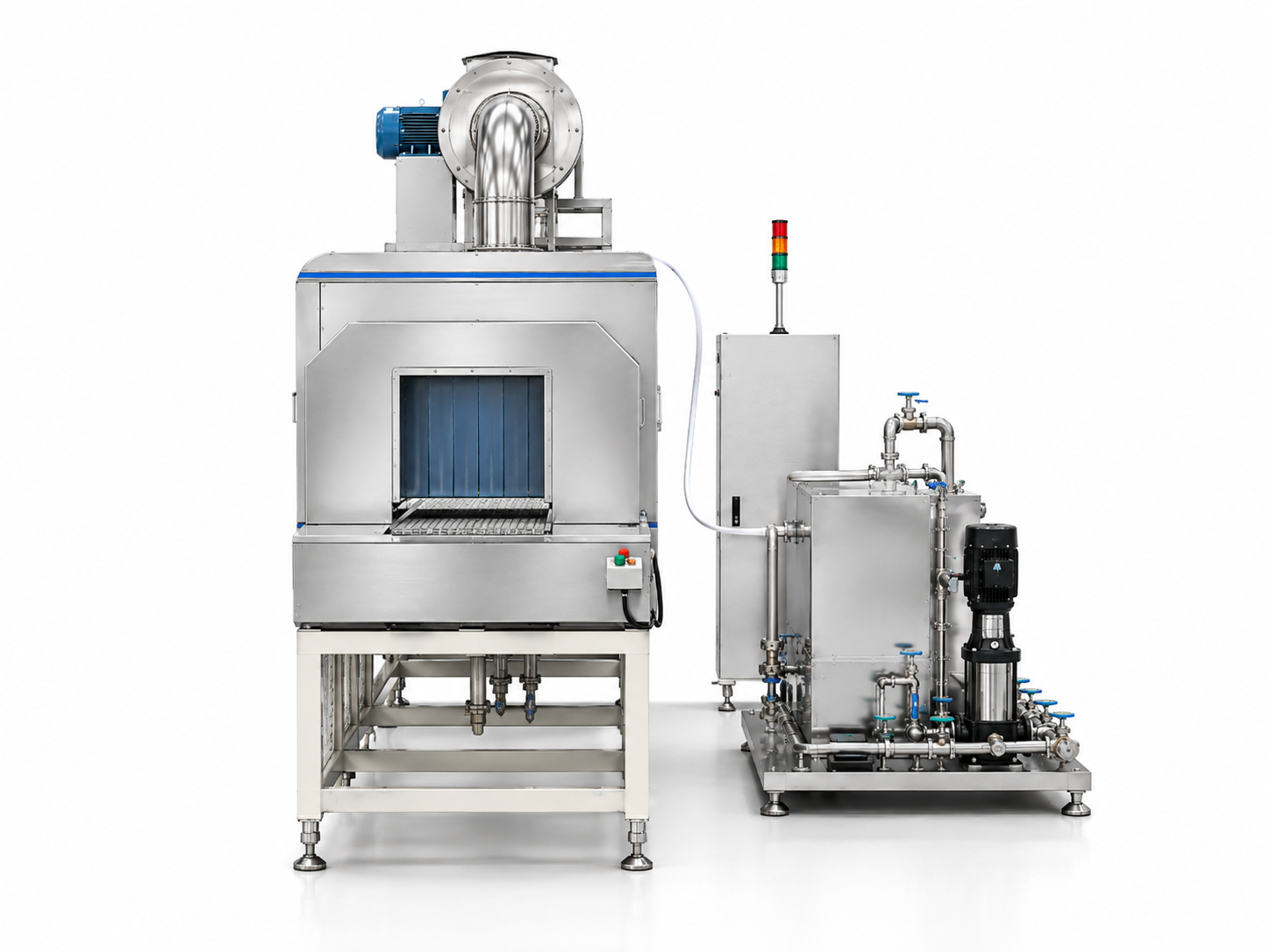
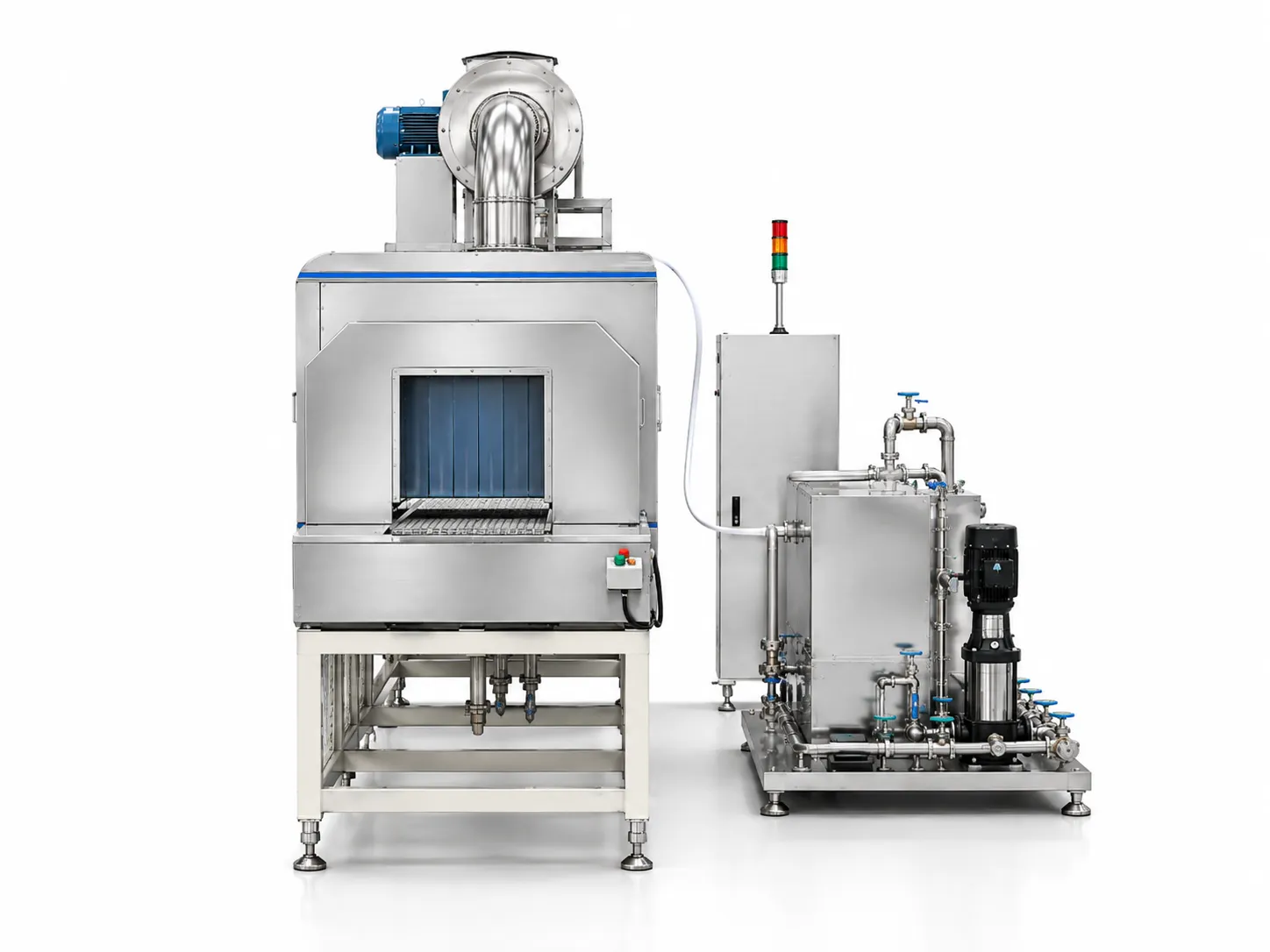
Plastic box and barrel washing machine (Model: PBWM-02)
Plastic box and barrel washing machine is an industrial cleaning machine designed to remove dirt, dust, grease, and oil from plastic crates and boxes using high-pressure spray nozzles. Equipped with a rotary table or product conveyor, the machine can effectively clean every corner, crevice, and groove, even on products with complex geometries. At the final stage, the products are air-dried directly inside the washing chamber before the plastic trays are conveyed out, allowing workers to proceed with the next operation. So, can this machine provide greater profitability for businesses compared with manual labor? Let’s explore the details of CNC VINA plastic box and plastic tray washing machine in the article below!
VIETNAM CNC & TECHNOLOGY APPLICATION JOINT STOCK COMPANY
Hotline: +84.916 63 9355 / +84.915 74 4664
Email: Sales01@cncvina.com.vn / Sales03@cncvina.com.vn
Product description

Role of plastic box washing machines in industrial production
Clean plastic containers help reduce the transfer of oil and residues back onto machined or cleaned parts. For containers circulating through multiple production processes, establishing a centralized washing area also helps the factory control the condition of containers before reuse.
The conveyor washing machine is suitable for organizing the product flow from the dirty-container receiving area to the washed-container collection area. Washing and drying are performed inside the machine, while the operator prepares production, loads and unloads products, checks the results, monitors the equipment, and handles alarms.
When evaluating investment efficiency, businesses should consider the number of clean containers that meet requirements per shift, the waiting time for container replenishment, and the amount of remaining manual work. Conveyor speed should be calculated together with the time required to load and unload containers, clean the machine, and replace the washing solution.
Cleaning principle using solution spraying
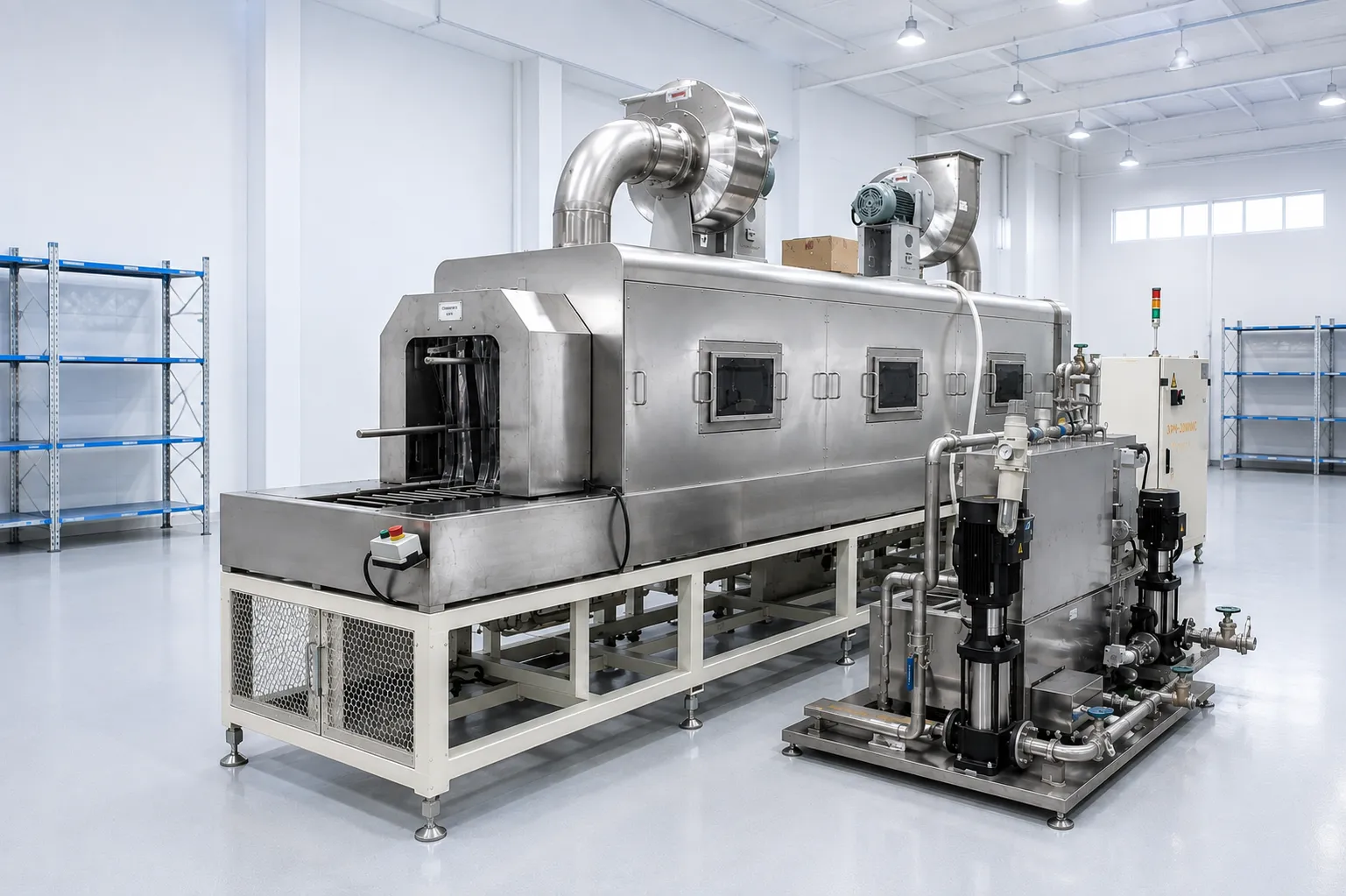
The washing pump supplies the cleaning solution to the spray nozzles inside the processing chamber. The spray jets act on the container surfaces to help remove oil and adhered residues. The solution and heating conditions are selected according to the type of contamination and the plastic’s resistance to heat and chemicals.
The conveyor maintains the product flow through the processing zones according to the designed direction. Cleaning effectiveness depends on the way the box is positioned, the ability of the spray jets to reach the surfaces, pressure, contact time, and solution condition. For containers with ribbed bottoms, handles, narrow gaps, or hidden corners, sample testing is required to evaluate difficult-to-clean areas.
After spraying, the machine uses air to remove excess solution from the surface before continuing with hot-air drying. The amount of remaining water in recesses and areas where water is difficult to drain should be evaluated instead of only checking the easily dried external surfaces.
The solution is collected back into a tank system with dirty and clean compartments, combined with residue filtration and floating-oil removal to support circulation. Recirculation should still be accompanied by solution quality checks, tank cleaning, and solution replacement when it no longer meets cleaning requirements.
Main structure of the CNC VINA plastic box washing machine
Conveyor and guide mechanism
The conveyor moves plastic boxes, trays, or crates through the washing, air blowing, and hot-air drying areas. The guide mechanism is adjusted to keep the products in the correct position and prevent collisions during movement.
The ability to process each type of container needs to take into account its dimensions, bottom shape, stability on the conveyor, and any protruding features. When changing products, the operator should check the guides, clearances, and box orientation before operation.
Washing chamber and solution supply system
The washing chamber is equipped with spray nozzles, piping, and a washing pump. The solution is supplied to the processing area to act on the surfaces that need cleaning. The system includes a pressure gauge for monitoring washing pressure and valves for adjusting the return line.
The spray nozzle design should match the shape of the container. Simply increasing pressure is not sufficient to clean a concealed area; the design must also ensure that the spray jet can reach the surface and that contaminants have a way to escape.
Tank and heating system
The tank supplies the cleaning solution for the washing process and is equipped with a heating system and level sensors. The solution level signal is used for water supply, pump control, and heating-element protection according to the machine sequence.
The operating temperature should be determined through testing with the actual type of plastic, contaminants, and intended cleaning solution. For containers that are reused many times, deformation, surface condition, and container functionality should also be checked after repeated washing cycles.
Residue filtration and oil skimming system
The filter pump, filter tank, and filter bag help retain solid residues in the circulating solution. The oil skimming mechanism removes floating oil from the surface of the tank. These are two different functions, and both need to be checked during operation.
The system includes a filter-clogging sensor to help identify when the filter bag needs to be inspected. The residue filter bag and floating-oil skimmer do not guarantee the removal of all dissolved contaminants or oil dispersed in the solution. Solution condition must be evaluated together with washing results; cleaning the filter does not replace the need to replace the solution when necessary.
Air blowing and hot-air drying unit
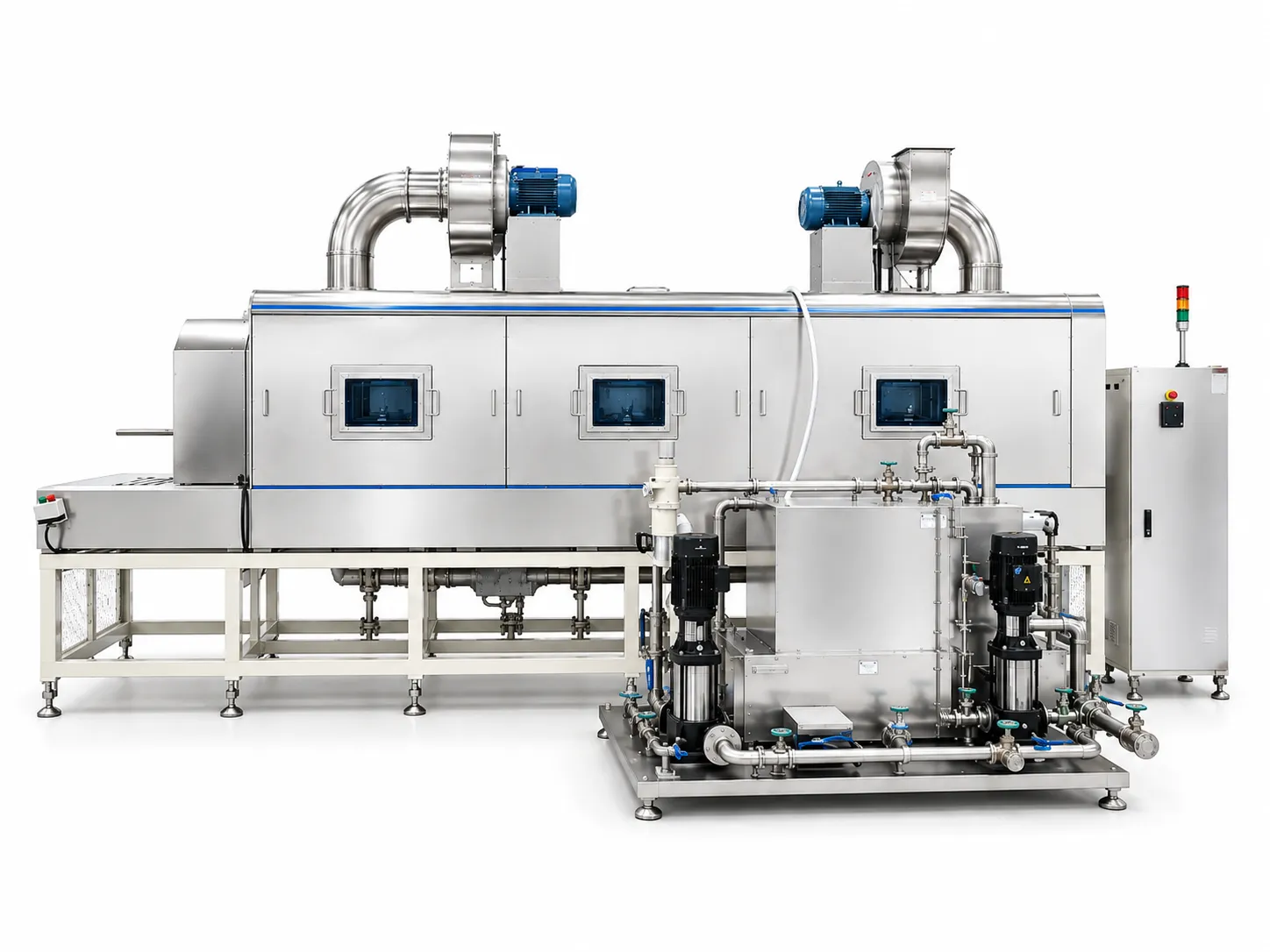
The air blowing unit helps remove excess solution from the product surface. The hot-air drying unit continues the drying process before the containers exit the machine. Air direction, water drainage, processing time, and temperature all affect the results.
Shallow trays and deep crates may have different drying requirements. The required dryness level should be defined according to the next production process, such as whether water droplets are allowed to remain in bottom ribs or handle recesses.
Fume extraction system
The machine is equipped with fume extraction units in the processing areas. The extraction ducts, filter trays, and ventilation connections should be arranged according to the factory layout to limit vapor dispersion into the working area.
Extraction performance depends on the condition of the filters and the actual ventilation system. If vapor is released toward the loading area, these components should be inspected according to the maintenance instructions.
Control system and operating screen
The machine has manual and automatic operating modes. The HMI supports equipment operation, running-status monitoring, input and output signal checking, and the display of errors and alarm history.
In manual mode, the operator can operate the units required for machine inspection and preparation according to the instructions. In automatic mode, the conveyor, washing, and drying processes are coordinated once the required operating conditions have been met.
Reference machine configuration specifications
The following specifications describe a configuration of a CNC VINA conveyor washing machine. For customized machines, dimensions, power supply, and processing capacity are determined according to the specific design.
| Item | Reference specification |
| Processing technology | Solution spraying, air blowing, and hot-air drying |
| Reference layout dimensions | Approximately 5,500 × 2,500 mm in length and width |
| Operating height | Approximately 1,000 mm from floor level |
| Power supply | AC 200 V, 3-phase, 50 Hz |
| Control voltage | DC 24 V |
| Rated power for the machine configuration | 65 kW |
| Washing line pressure | 0.4 - 0.5 MPa |
| Air supply pressure | 0.4 - 0.6 MPa |
| Operating modes | Manual and automatic |
The 65 kW rating is a specification of the machine configuration and does not represent a fixed amount of electricity consumed per hour of operation. Actual energy consumption depends on heating and drying modes, production load, and idle time.
The overall dimensions should be confirmed according to the layout drawing and the scope of equipment included in the final design. Processable container dimensions, washing temperature, and capacity are determined based on the actual products. When arranging the factory layout, additional space should be provided for loading and unloading containers, opening maintenance doors, cleaning tanks, and connecting supply lines.
Plastic box washing process
Machine preparation and container loading
Before starting, the operator checks the power supply, air supply, solution level, valve status, and condition of the equipment units. The machine must reach the ready state; heating units must reach the required condition before products are processed.
Containers are placed on the conveyor according to the specified orientation. For containers with a large amount of chips or loose residues, a pre-cleaning method should be determined to prevent excessive residue from entering the circulation system.
Solution spraying and washing
The conveyor moves the products into the spraying area. The solution acts on the surfaces to help loosen and remove contaminants. The contact time must be sufficient for the actual type of contamination and the accessibility of the spray jets.
If a separate water-rinsing stage is required to meet residue requirements, this stage must be included in the machine design and evaluated together with the water supply and recovery systems.
Air blowing after washing
The products pass through the air-blowing area to reduce the amount of solution remaining on the surface. The container orientation should facilitate water drainage, especially around ribs, recesses, and concave surfaces.
Hot-air drying and container collection
Hot air helps dry the containers before the conveyor moves them out of the machine. The operator collects and inspects the containers according to the agreed criteria, then transfers them to the clean-container storage area or the next production process.
Product loading and unloading should be organized according to the conveyor cycle. If the factory requires these operations to be automated, CNC VINA can conduct a survey and develop a dedicated solution.
Features that are meaningful to users
Continuous washing flow
The conveyor moves containers through the same processing sequence one after another. After confirming the appropriate operating mode, the factory can organize a repetitive washing process with fewer direct handling operations for each container.
Combined cleaning and drying
Solution spraying, air blowing, and hot-air drying are integrated into the same system. This arrangement reduces the need to transfer wet containers between different machines while allowing inspection of the washing results at a single output location.
Support for circulating solution management
Residue filtration, floating-oil removal, and level monitoring help operators manage the cleaning solution system. Benefits in terms of water and chemical consumption should be measured under actual production conditions, including replenishment volume, losses carried out with products, and solution replacement intervals.
Status monitoring and alarms
The operating screen and indicator lights help identify ready, running, and fault conditions. Alarm history helps identify conditions that require inspection, supporting appropriate troubleshooting and maintenance planning.
Applications of plastic box washing machines in factories
Applications should be selected according to the actual containers and contaminants. Some requirements that can be evaluated include:
In mechanical machining, the machine can be evaluated for cleaning boxes and trays used to hold machined parts. Oil, chips, and residues in bottom ribs should be assessed together with the accessibility of the spray nozzles to determine a suitable washing solution.
For automotive and motorcycle component production, the requirement may be to clean containers circulating between machining, inspection, and assembly processes. The number of containers per shift, required cleanliness, and required dryness before reuse are important criteria when selecting the machine.
In industrial equipment assembly, trays and crates used for component assemblies or materials should be evaluated for compatibility with the cleaning solution and temperature conditions. The washing solution should also consider residual solution after processing and clean-container management.
In internal warehouses and transportation routes between processes, businesses can organize the cleaning of reusable containers. The type of contamination, container shape, and return-flow arrangement should be determined so that the washing process can be coordinated with the factory’s material flow.
For ESD containers, high-cleanliness requirements, or materials with special coatings, it is necessary to check whether the cleaning solution and temperature conditions affect their functional properties. These requirements should be included in sample testing before selecting the machine.
Plastic trays, shallow boxes, and deep crates can use the same basic spray-washing technology, but the ability of each type to pass through the machine, drain water, and dry properly must still be evaluated. Similar external dimensions alone are not sufficient to conclude that two products can use the same washing conditions.
Related cleaning technologies
In addition to heated solution spraying, businesses may require other cleaning methods depending on the cleaning objective. Selection should begin with the type of contamination, container shape, and required condition after washing.
| Method | Role in the cleaning process | Conditions to consider |
| Solution spraying | Spray jets combined with the cleaning solution act on the surface | Spray direction, accessibility, pressure, and contact time |
| Immersion | Allows the solution to remain in contact with the surface for a certain period | Processing time, plastic compatibility, and product transfer method |
| Ultrasonic cleaning | Supports cleaning in a tank through ultrasonic action | Material, contaminants, tank size, and sample-test results |
| Brush scrubbing | Applies direct physical action to contaminants | Type of contamination and potentially higher container wear |
Information buyers should consider when selecting a machine
Containers and contaminants
The type of plastic, dimensions, weight, usage condition, and difficult-to-clean areas should be identified. Adhered oil, machining residues, dust, and long-dried contaminants may require different processing conditions.
Labels, attached components, or coatings on the containers should also be checked. Samples used for testing should represent the actual dirty containers in production, including difficult cases, rather than only new containers or lightly contaminated containers.
Required cleanliness and dryness
The business should determine how to inspect remaining oil, residues in hidden corners, and water droplets after drying. If there are requirements for solution residues or surface characteristics, an appropriate evaluation method should be agreed upon according to the process in which the containers will be used.
Cleanliness and dryness should be evaluated after the complete cycle. Simply confirming that the container has passed through the machine is not sufficient to verify that it meets production requirements.
Capacity and operating costs
Useful capacity is the number of containers that meet the required standards and are delivered within a given period. Results depend on the spacing between containers, transfer speed, washing and drying time, and the ability to load and unload products.
Operating costs should include electricity for heating and drying, water, compressed air, cleaning solution, filter bags, cleaning labor, and maintenance time. When sample-test or trial-run data are available, the business can evaluate the cost per clean container to compare investment options.
Installation conditions and factory layout
The layout must provide sufficient space for the machine, production operations, and maintenance. Power, water, compressed air, drainage, and ventilation requirements must be determined according to the configuration. If the factory power supply differs from the machine requirements, the connection method should be clarified during the design stage.
The dirty-container receiving area and clean-container storage area should be arranged according to the material flow. A handling method should also be established for discharged cleaning solution and collected residues.
Sample testing and evaluation before delivery
Testing with the actual containers and contaminants helps verify the proposed solution before the machine is put into production. The following evaluation criteria should be agreed upon:
- Cleanliness on internal and external surfaces, bottoms, ribs, and difficult-to-reach areas.
- Remaining oil, residues, and cleaning-solution residue according to the selected inspection method.
- Dryness after air blowing and drying, especially in recesses or areas where water is difficult to drain.
- Condition of the plastic, labels, and attached components after washing, including repeated use.
- Ability to transfer products through the machine without jamming while maintaining the correct orientation.
- Processing cycle when loading and unloading operations and the number of operators are included.
- Consumption of electricity, water, air, and cleaning solution under the agreed testing conditions.
- Accessibility for cleaning filters and tanks and performing maintenance operations.
The results should be associated with the test conditions, including container type, contamination level, cleaning solution, and operating conditions. Testing should also be performed after the solution has been used through multiple cycles to evaluate the ability to maintain consistent cleaning results. This provides a basis for determining the appropriate application scope and final machine specifications.
Operation and maintenance of the plastic box washing machine
Before operation, the operator checks the solution level, air supply, and condition of the equipment units. When the washing pump is running, the washing line pressure should be checked on the system pressure gauge. Washing line pressure and air supply pressure are two separate parameters and should be monitored at the appropriate gauges.
When an alarm occurs, the cause should be identified and resolved according to the instructions before operation is resumed. Maintenance operations must be performed after stopping the machine and appropriately isolating the relevant energy sources to avoid contact with moving parts, hot cleaning solution, or energized electrical equipment.
VIETNAM CNC & TECHNOLOGY APPLICATION JOINT STOCK COMPANY
Factory: Song Cung Industrial Site, Dong Thap Commune, Dan Phuong District, City. Hanoi Vietnam
Phone: +84.916 63 9355 / +84.915 74 4664
Website: https://cncvina.com.vn; https://cncvina.net; https://cncviname.com.vn
Email: Sales01@cncvina.com.vn | Sales03@cncvina.com.vn