 Tiếng
Việt
Tiếng
Việt
 Tiếng
Anh
Tiếng
Anh
 Tiếng
Nhật
Tiếng
Nhật




 Tiếng Anh


Automatic programming sewing machine
Application of automatic programming sewing machines in the garment industry
The growth of Vietnam's export industry is associated with Free Trade Agreements, especially the market share of the Textile and Garment industry has grown strongly in the international market.
Therefore, focusing on investing in perfecting automatic sewing lines to contribute to increasing output as well as product quality is an urgent requirement for Vietnamese businesses.
Automatic electronic programming sewing machines designed and manufactured by CNC-VINA have become indispensable equipment in the garment line, helping to reduce labor, increase productivity, and improve efficiency for businesses.
VIETNAM CNC & TECHNOLOGY APPLICATION JOINT STOCK COMPANY
Hotline: +84.916 63 9355 / +84.915 74 4664
Email: Sales01@cncvina.com.vn / Sales03@cncvina.com.vn
Product description

Introduction to Automatic Programmable Sewing Machines
The automatic programmable sewing machine designed and manufactured by CNC VINA is an automation solution developed for sewing processes that require precise control over sewing positions, stitch lengths, and the number of stitches. Instead of requiring operators to manually control the sewing machine and align the sewing path for each product, sewing parameters and sequences are preset through the machine’s control system. Once the workpiece is correctly positioned on the Jig, the machine automatically performs the sewing operation according to the programmed pattern for each product model.
This solution is particularly suitable for repetitive sewing processes with high production volumes, where the position and dimensions of the sewing pattern must remain consistent from one product to another. The integration of an industrial sewing machine, positioning Jig, fabric lifting mechanism, and control system helps reduce dependence on manual operations while providing better control over product quality and cycle time.
The automatic programmable sewing machine also enables manufacturers to improve production competitiveness while maintaining consistent product quality before products reach end customers. In this article, let's explore the key features and outstanding capabilities of the machine with CNC VINA.
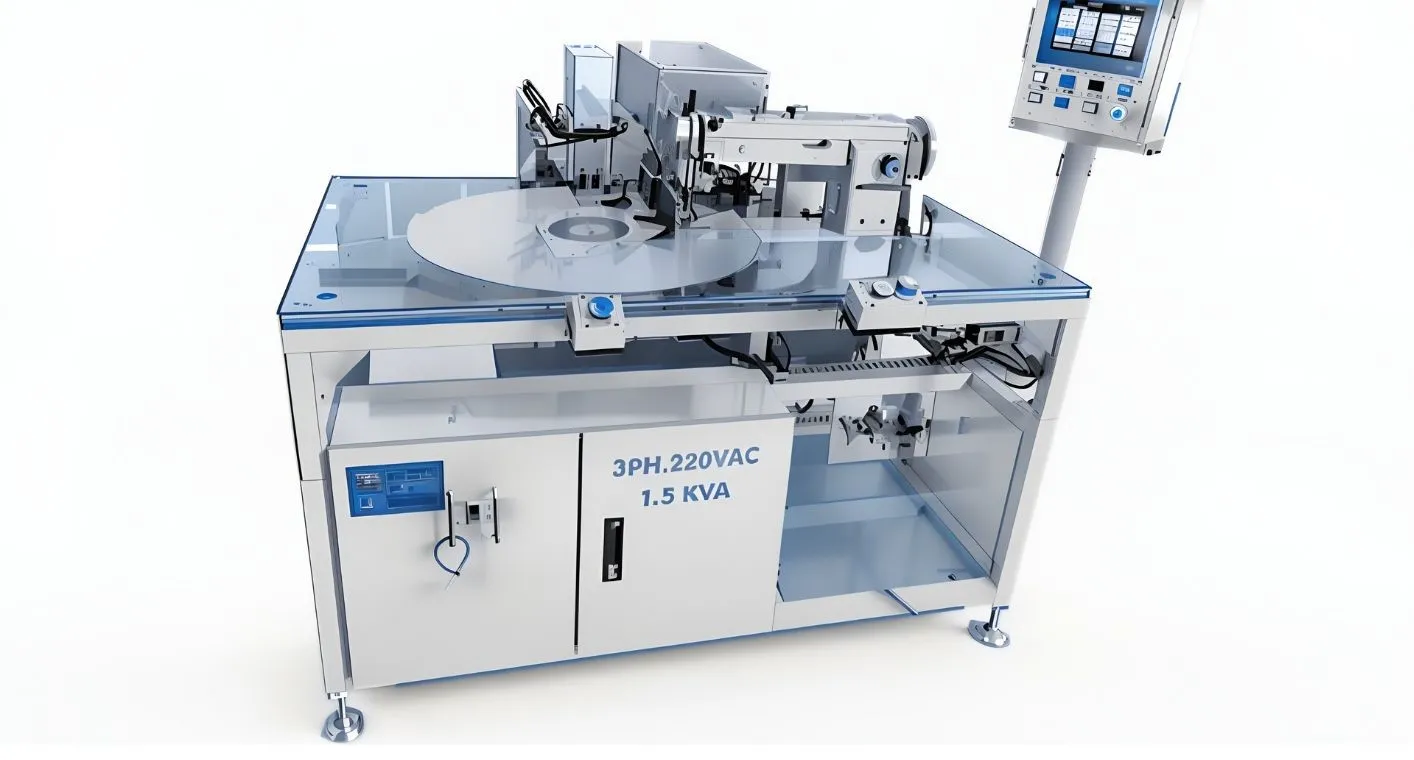
Machine frame assembly
The machine frame is the main load-bearing structure used to mount the sewing machine units, Jig, lifting mechanism, and control system. The machine structure must ensure stability during operation and minimize vibrations that could affect the positioning of the mechanisms and workpieces.
Sewing machine assembly
The sewing machine assembly directly performs the stitching process on the product. The sewing machine is integrated with the mechanical and control systems to execute sewing patterns according to the programmed instructions. Depending on product requirements, the sewing machine type, installation method, and relevant parameters can be selected and configured to suit the required sewing process.
Jig assembly
The Jig is the component that directly contacts the product during the loading and sewing processes. Its primary functions are to position and secure the product while defining the relative position between the product and the sewing machine. For an automatic sewing machine, the accuracy and suitability of the Jig directly affect the machine's ability to maintain consistent sewing positions. Therefore, the Jig is typically custom-designed based on the shape, dimensions, and specific characteristics of each product.
Fabric lifting assembly
The fabric lifting assembly raises and holds the fabric layers according to the sequence specified in the sewing program. This mechanism is particularly important for products requiring multiple sewing patterns or involving multiple layers of fabric, as it helps separate and position each section of the product correctly before the next sewing operation is performed.
Control system
The control system serves as the central unit for managing the entire machine operating cycle. Operators use the HMI (Human-Machine Interface) to select the product model and control the machine. The control program coordinates signals between the various mechanisms, sewing machine, and associated equipment to ensure that the entire cycle is executed according to the predefined sequence.
Technical specifications of the Automatic Programmable Sewing Machine
| Specification | Details |
|---|---|
| Machine Dimensions | L1600 × W1150 × H1500 mm* |
| Power Supply | AC 220 V - 50 Hz, 1 Phase |
| Control Voltage | DC 24 V |
| Machine Operating Height | 850 mm from floor level |
| Air Supply Requirement | 0.4 - 0.6 MPa |
| Models | 2 types (2-line sewing and 3-line sewing) |
| Number of Operators | 1 operator |
| Color | Customizable |
The above specifications are based on the current machine configuration. If the customer has different product dimensions, sewing requirements, or production processes, the machine configuration can be studied and customized to meet specific production requirements.
How does an automatic programmable sewing machine work?
The machine operates by converting manual sewing operations into a programmed and automatically controlled process. The operator primarily loads the product into the machine and removes the finished product after the sewing cycle is completed, while the machine performs the sewing operations according to the programmed instructions.
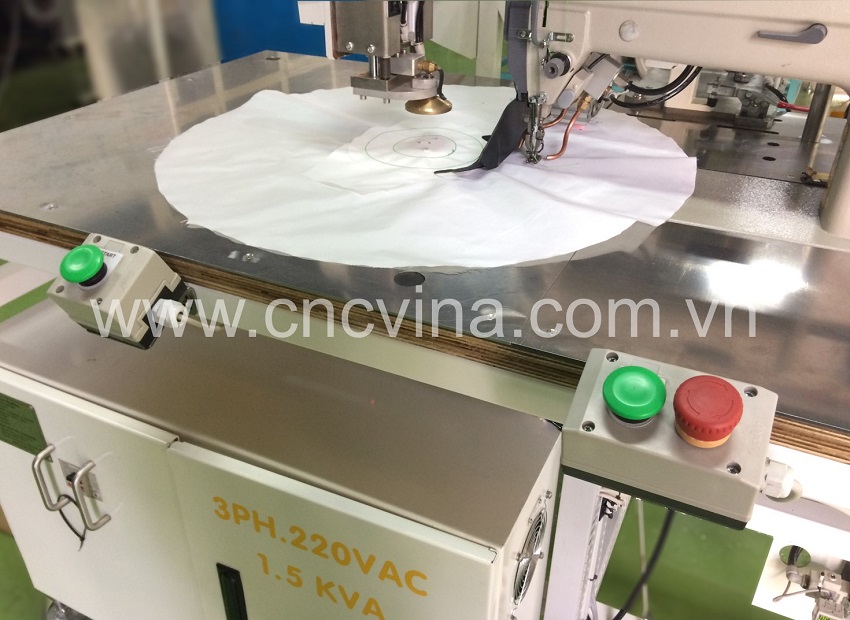
Step 1: Select the Sewing Model
The operator selects the required product model on the HMI. Each model has a predefined program specifying the position, length, and sequence of the sewing patterns. The ability to store multiple programs in the control system makes it more convenient for production lines handling different product models.
Step 2: Place the Product on the Jig
The operator places the product onto the Jig according to the specified positioning instructions. The Jig is responsible for positioning and securely holding the product during the sewing process. This is an important factor in maintaining consistent sewing positions across products. Once the product is correctly positioned, the machine mechanisms can perform movements according to the coordinates programmed for the selected model.
Step 3: Start the Sewing Cycle
Once the product has been correctly positioned, the operator presses the button. The machine automatically executes the sewing sequence according to the program assigned to the selected model. For configurations involving multiple sewing patterns, the fabric lifting and holding mechanisms work in coordination with the sewing machine to position each fabric layer correctly before performing the next sewing operation.
Step 4: Complete the cycle and remove the product
After completing the entire programmed sequence, the machine finishes the cycle and returns to standby mode. The operator removes the finished product from the Jig and loads the next product. This process allows operators to focus primarily on loading and unloading products instead of continuously controlling, aligning, and monitoring the sewing process manually.
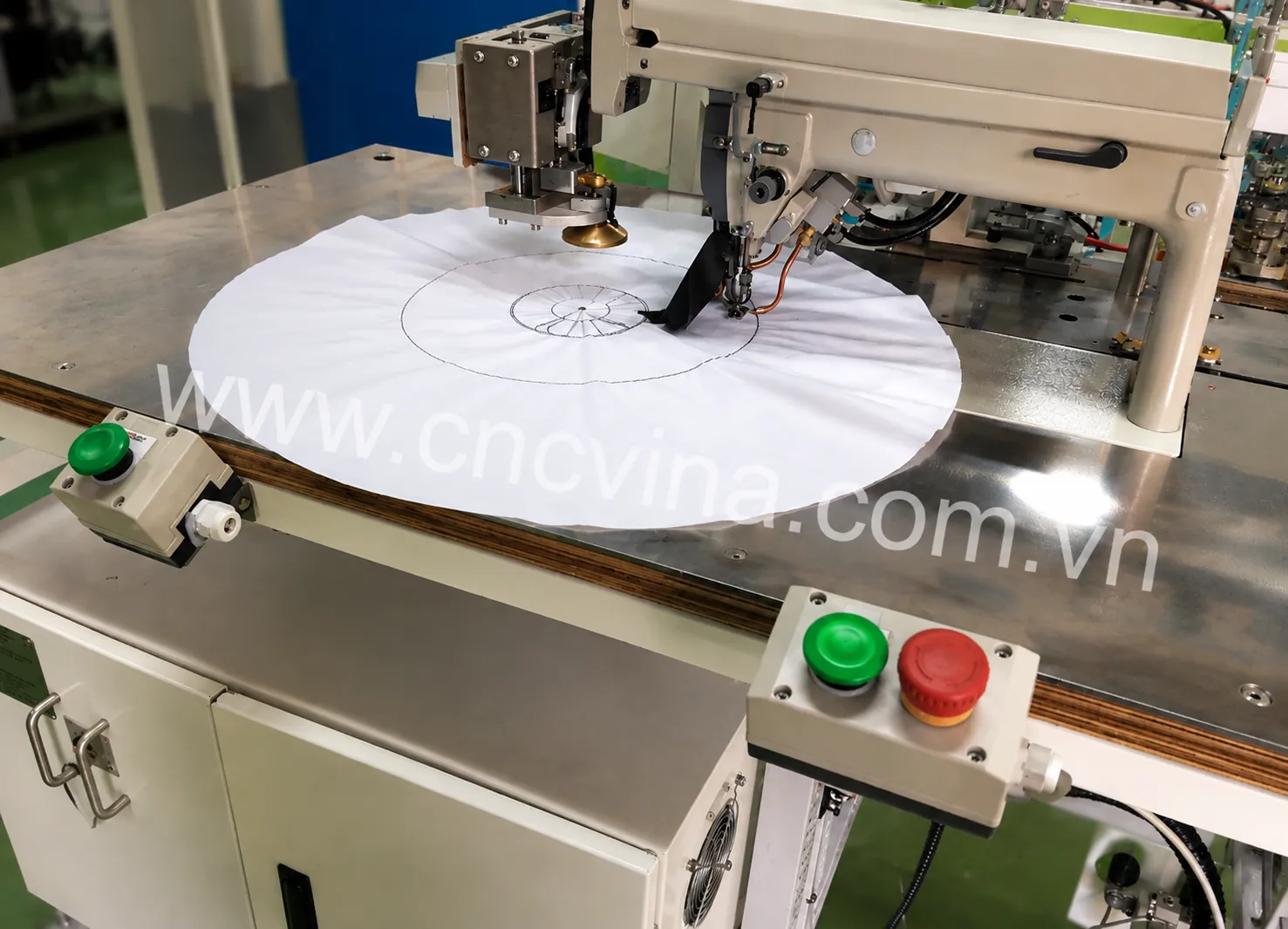
2-Line and 3-Line Sewing Programs
2-Line Sewing Program
For the D11D-805A-770Dom-770EU program, the machine performs the following sequence:
-
Lifts one PC2 panel and sews the PC1 panel with a sewing length of 170 mm.
-
The machine then sews the PC2 panel with a sewing length of 85 mm.
The fabric lifting and holding mechanisms are controlled according to a predefined sequence to position each section of the product correctly before the machine performs the sewing operation.
3-Line Sewing Program
For the 3-line sewing program, the sequence is extended to process an additional product layer:
-
Lifts two PC2 and PC3 panels to sew the PC1 panel with a sewing length of 170 mm.
-
Sews the PC2 panel with a sewing length of 85 mm.
-
Sews the PC3 panel with a sewing length of 160 mm.
After completing the cycle, the machine can perform a product counting function. Under the current configuration, the operator replaces the bobbin thread after approximately 15–20 products, according to the operating requirements.
Separate programming for each sewing configuration enables the machine to follow the specified sewing sequence accurately, particularly for products involving multiple fabric layers or requiring operations to be performed in a fixed sequence.
Advantages of using an Automatic Programmable Sewing Machine
Precise control of sewing position and length
In manual sewing operations, the sewing position may vary depending on the operator's technique. With a programmable sewing machine, the sewing position and length are predefined in the program.
Combined with the positioning Jig, the product is placed in the same position before each cycle, helping maintain consistent sewing patterns across products.
Reduced dependence on operator skill
The operator does not need to manually perform the entire sewing operation. After loading the product onto the Jig and starting the cycle, the machine automatically executes the programmed sequence.
This is particularly beneficial for highly repetitive processes that require operators to perform the same operations continuously over extended periods.
Consistent product quality
Products are processed using the same program, movement sequence, and positioning method. As a result, manufacturers can achieve better consistency in sewing patterns during mass production. This is an important advantage for products that require stable sewing positions and minimal variation between individual products.
Cycle time control
With a predefined operating sequence, manufacturers can determine and monitor the Cycle Time of the process based on actual operating conditions. The ability to control cycle time enables manufacturers to plan production capacity more effectively, allocate labor, and balance individual processes within the production line.
Suitable for high-volume production
The machine is particularly suitable for products with repetitive sewing processes, high production volumes, and consistent quality requirements.
As production volumes increase, automating the sewing process can help reduce labor pressure while maintaining more stable production capacity.
The application of automatic programmable sewing machines in the garment industry not only meets the demand for higher productivity and product quality but also enables Vietnamese manufacturers to strengthen their competitiveness in the international market. As the textile and garment industry continues to benefit from various free trade agreements, investing in advanced technologies such as automatic programmable sewing machines can be an effective strategy for improving production efficiency and competitiveness.
Advanced equipment, particularly solutions designed and manufactured by CNC VINA, plays an important role in the development of automated production lines. By automating repetitive sewing operations, manufacturers can reduce labor costs while maintaining consistent production quality and meeting increasingly stringent requirements in global markets.
Customers interested in our solutions are welcome to contact:
VIETNAM CNC & TECHNOLOGY APPLICATION JOINT STOCK COMPANY
Factory: Song Cung Industrial Cluster, Dong Thap Commune, Dan Phuong District, Hanoi, Vietnam
Office: Rox Tower Building (Rox Tower Goldmark City), No. 136 Ho Tung Mau Street, Bac Tu Liem District, Hanoi, Vietnam
Tel: +84.916 63 9355 / +84.915 74 4664
Website: https://cncvina.com.vn; https://cncvina.net; https://cncviname.com.vn