 Tiếng
Việt
Tiếng
Việt
 Tiếng
Anh
Tiếng
Anh
 Tiếng
Nhật
Tiếng
Nhật




 Tiếng Anh

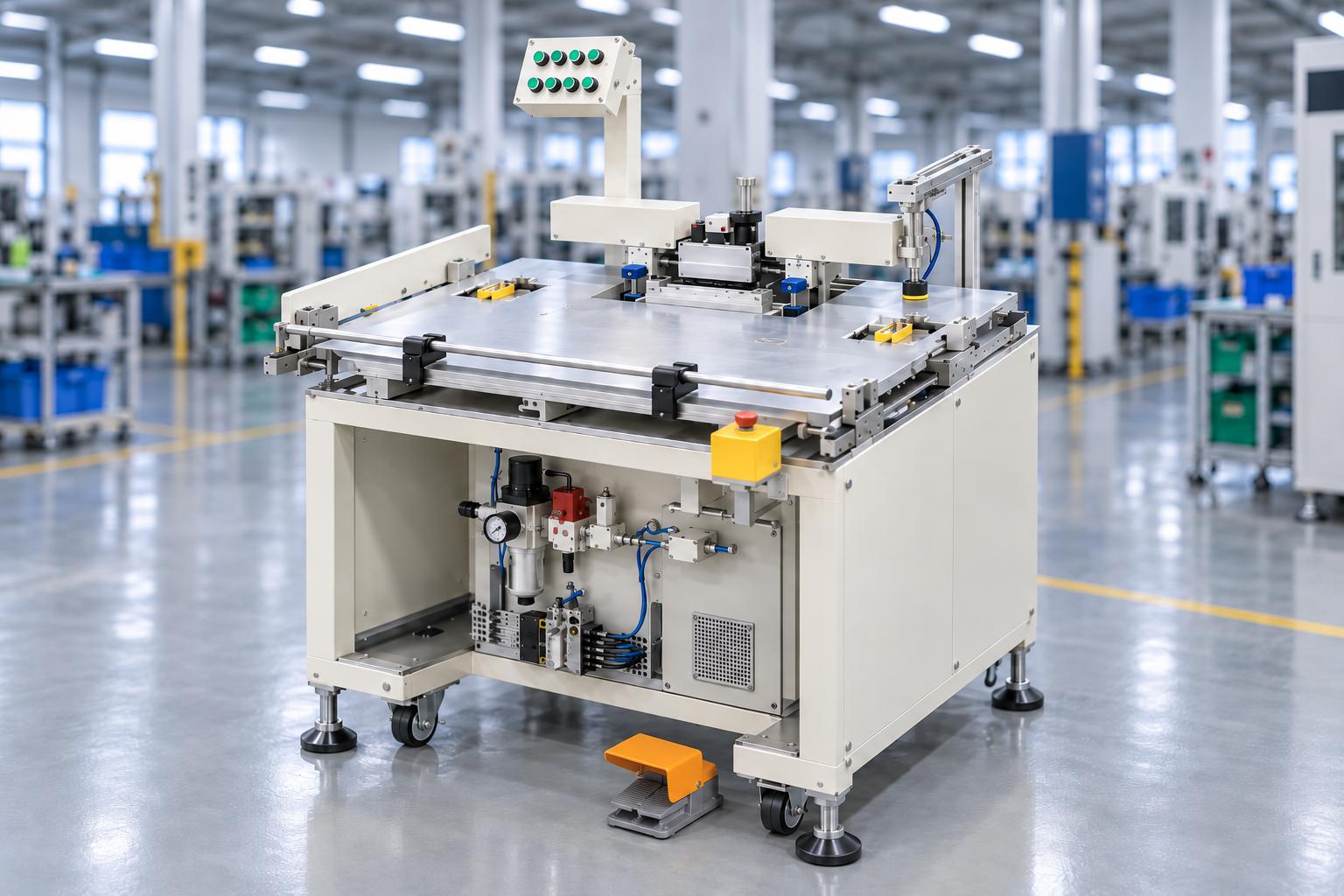
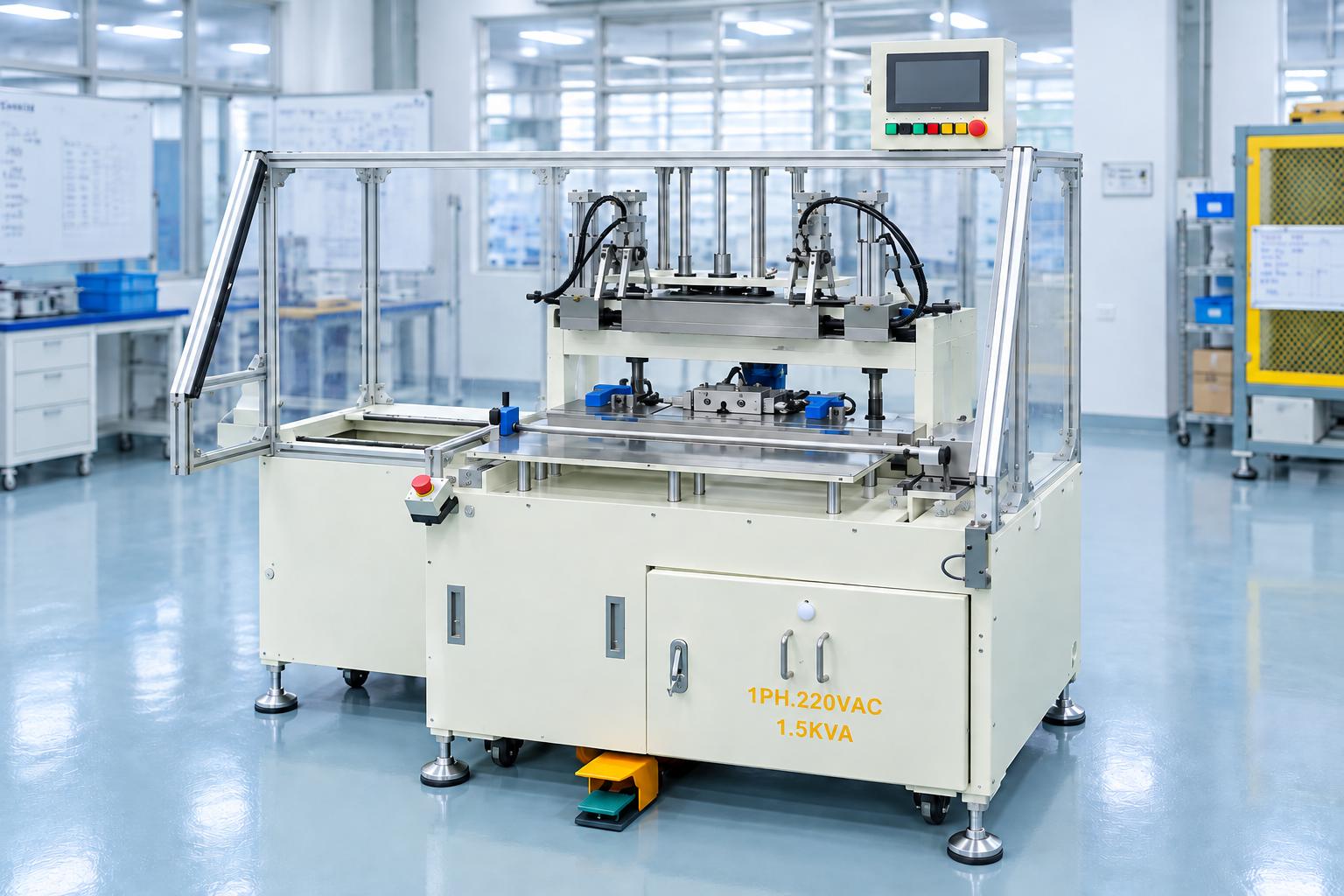
Semi-automatic product folding and rolling machine
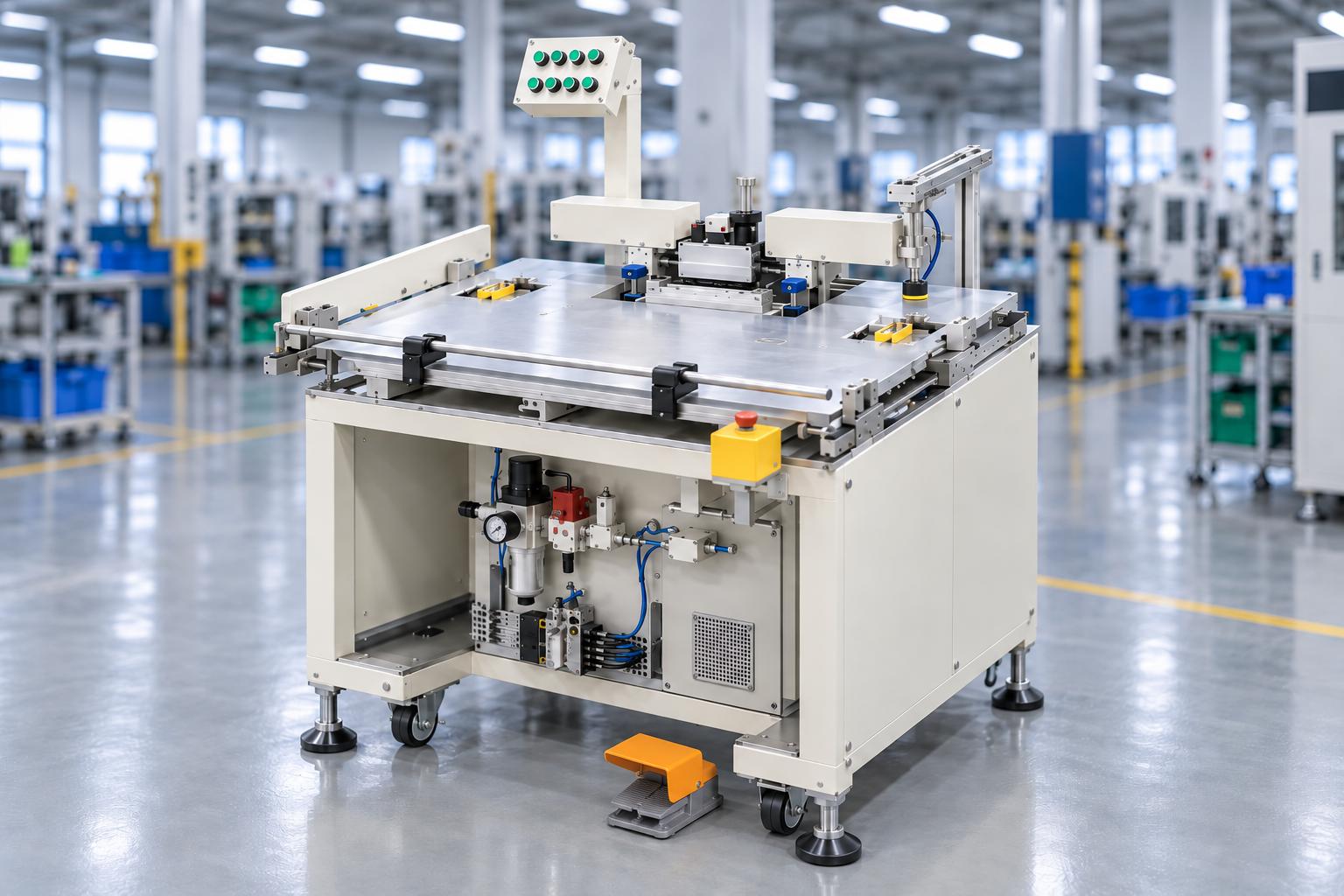
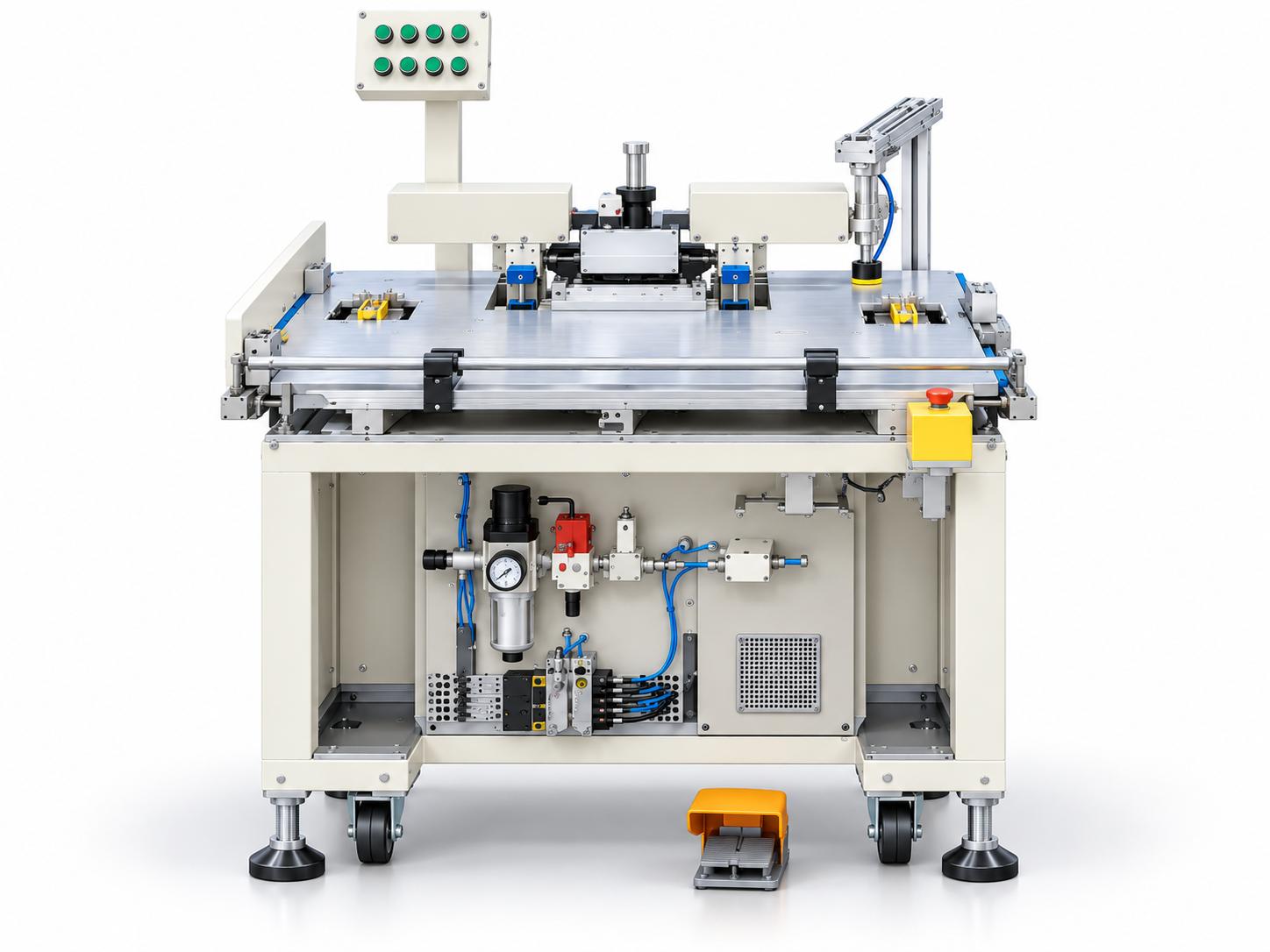
Semi-automatic product folding and rolling machine is equipment used for folding and rolling sewn products and soft sheet materials. The operator places the product on the jig, after which the machine automatically clamps, positions, and performs the folding steps according to the preset program. This process reduces manual folding operations while improving the consistency of folding positions and sequences across production cycles. The machine is designed according to the shape of the product and its required folding method. The jig, locating pins, clamping mechanism, folding bars, stroke, and control program can be customized to suit the product dimensions, material, and finishing requirements. For repetitive production processes, the machine is suitable for semi-automating the folding operation while retaining manual product loading and unloading.
VIETNAM CNC & TECHNOLOGY APPLICATION JOINT STOCK COMPANY
Hotline: +84.916 63 9355 / +84.915 74 4664
Email: Sales01@cncvina.com.vn / Sales03@cncvina.com.vn
Product description

Semi-automatic product folding and rolling machine is equipment used for folding and rolling sewn products and soft sheet materials. The operator places the product on the jig, after which the machine automatically clamps, positions, and performs the folding steps according to the preset program. This process reduces manual folding operations while improving the consistency of folding positions and sequences across production cycles. The machine is designed according to the shape of the product and its required folding method. The jig, locating pins, clamping mechanism, folding bars, stroke, and control program can be customized to suit the product dimensions, material, and finishing requirements. For repetitive production processes, the machine is suitable for semi-automating the folding operation while retaining manual product loading and unloading.
Main components and functional units of a semi-automatic product folding and rolling machine
Machine table and product loading area
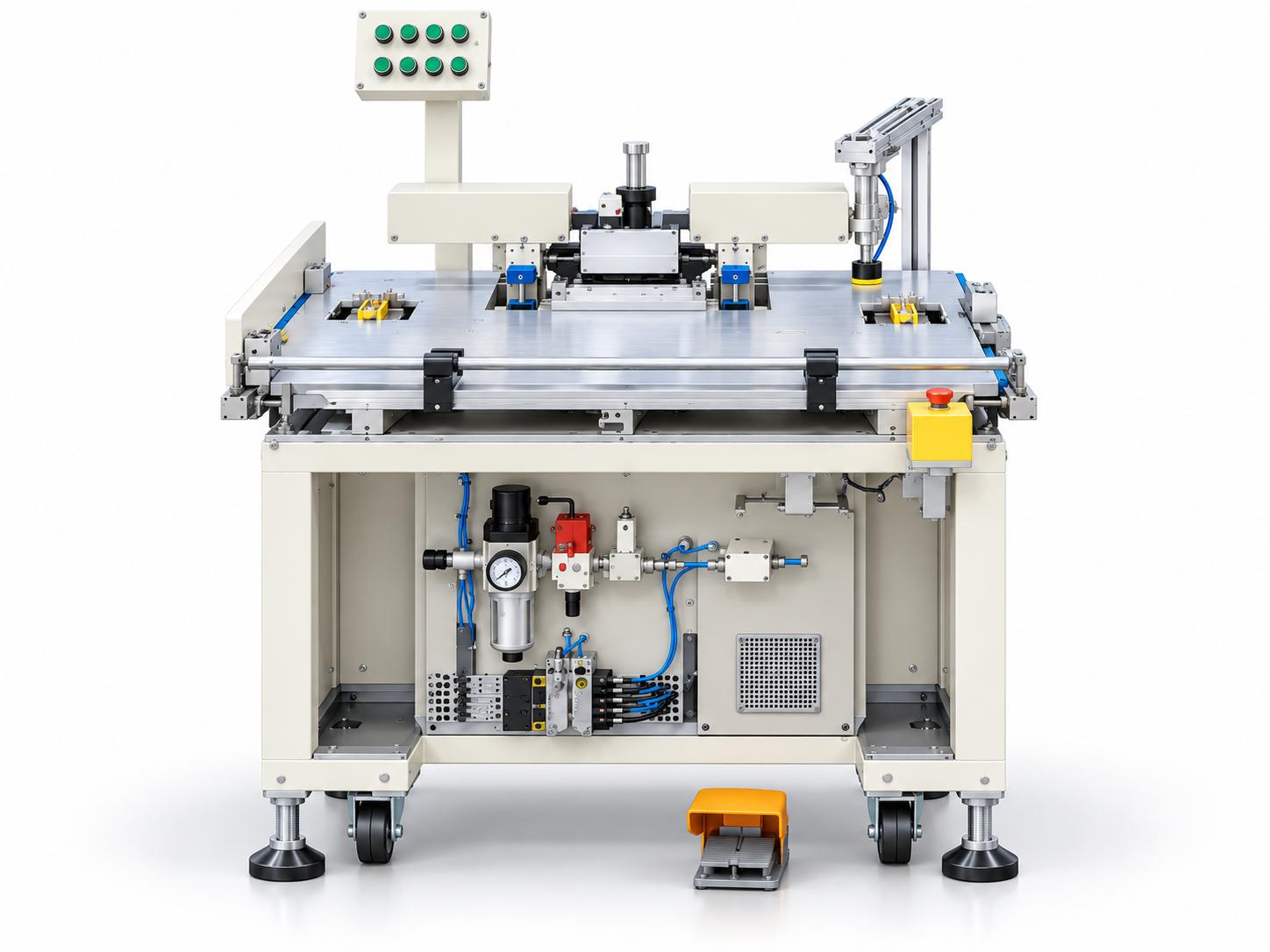
The machine table provides the main surface for placing and positioning products. The fixture mounting points are arranged according to the product shape to establish reference surfaces for clamping and folding. The table structure can be adjusted to suit product dimensions and the required operating direction.
Fixture and locating pins
The fixture holds the product in the correct position before the cycle starts. Depending on the product, the system can use locating pins, quick-release pins, and positioning stops. These components can be changed to accommodate different product models without replacing the entire machine.
Product clamping unit
Once the sensor detects the presence of a product, the clamping mechanisms secure it in the required position. The clamping unit is pneumatically actuated and can be equipped with stroke sensors to confirm the clamped and released states.
Lifting mechanism and side locating pins
The lifting mechanism and side locating pins work together to shape the product and hold its edges during folding. Their movements follow the programmed sequence to ensure that each folding step is performed in the correct order.
Folding bar and stroke stop mechanism
The folding bar directly forms the folds or rolls the product. The folding bar stop can be adjusted for different product models to control the end position of the mechanism and the final product dimensions.
Product detection sensors
Sensors detect the presence of a product and monitor key states during the operating cycle. The machine proceeds to the next step only after the required conditions have been confirmed.
Pneumatic system
The pneumatic system drives the clamping, lifting, and locating mechanisms. The air preparation unit includes a filter, pressure regulator, control valves, and related components to maintain stable operating pressure.
Control panel and electrical system
The control panel allows the operator to initialize the machine, clear faults, return the system to its home position, and select an operating program. The PLC works with sensors and solenoid valves to control the folding sequence. Depending on project requirements, Keyence, Mitsubishi, Siemens, or equivalent PLCs can be used.
Features and benefits of the semi-automatic bag folding machine
Reduced manual folding operations
The operator only needs to load and unload the product manually. Clamping, positioning, and folding are performed by the machine according to the programmed sequence, reducing manual work during each cycle.
Consistent folding positions and sequences
The fixture, stops, and control program are configured for the product. The machine follows the same operating sequence for each cycle, helping reduce variations between products.
Support for multiple product models
The machine can store multiple programs, and selected fixture components can be changed for different product models. With a suitable configuration, manufacturers do not need to replace the entire system when switching to another product.
Condition monitoring before each step
Product detection sensors and stroke sensors check the machine status before the next operation begins. If a mechanism has not reached the required position, the cycle can stop for inspection and corrective action.
Suitable for repetitive production processes
The machine is suitable for folding operations that must be repeated frequently, particularly when manufacturers want to reduce reliance on manual folding without fully automating product loading and unloading.
Operating principle of the semi-automatic product folding and rolling machine
The machine operates in a semi-automatic cycle. The operator places the product on the fixture, after which the machine checks the product, clamps it, and performs the folding steps according to the selected program.
- The operator manually places the product in the correct position on the fixture.
- The sensor detects the product, and the clamping mechanism secures it.
- The side locating pins or mechanisms move into their working positions.
- The folding bar moves according to the programmed sequence to fold or roll the product.
- Sensors check the post-folding status and confirm completion of the current step.
- The mechanisms release the product and return to their home positions.
- The operator removes the finished product and loads the next one onto the fixture.
For products requiring multiple folds, successive movements can be programmed according to the actual folding method required for each product.
Program selection and product changeover
The machine can store multiple operating programs for different product models. In the reference configuration, the control panel provides four product program selections. When changing products, the operator adjusts the locating pins or folding bar stops as required, then selects the corresponding program on the control panel. This approach allows the main machine frame, pneumatic system, and control system to remain in place while only the components directly related to the product shape are changed.
Control and safety
The machine includes start-up, fault reset, and homing functions to support operation. The system monitors the emergency stop, air pressure, cylinder travel, and product detection sensors during operation. If a mechanism fails to reach the required position within the permitted time, the air pressure is insufficient, or the emergency stop is activated, the machine stops the cycle and requires the issue to be checked before operation resumes.
Technical specifications of the semi-automatic product folding and rolling machine
| Item | Reference specifications |
|---|---|
| Machine type | Semi-automatic product folding and rolling machine |
| Main application | Manual product loading; automatic clamping, folding, and rolling according to the programmed sequence |
| Overall dimensions | Approx. 700 × 760 × 1,050 mm |
| Main power supply | Single-phase, AC 220 V, 50 Hz |
| Power capacity | Approx. 0.3 kVA |
| Control voltage | DC 24 V |
| Pneumatic pressure | Approx. 0.4–0.6 MPa |
| Actuation mechanism | Pneumatic cylinders |
| Product positioning | Product-specific fixture, locating pins, and positioning stops |
| Status monitoring | Product detection sensors and stroke sensors |
| Product programs | Multiple programs can be configured; the reference configuration provides 4 selections |
| Control system | Keyence, Mitsubishi, Siemens PLC, or equivalent |
| Safety features | Emergency stop, pneumatic pressure monitoring, and status sensors |
| Machine structure | Designed according to product dimensions and folding method |
The specifications above are for reference only. For a specific product, the machine dimensions, fixture, folding mechanism, and control program can be adjusted to meet actual production requirements.
Applications of the semi-automatic product folding and rolling machine
The semi-automatic product folding and rolling machine is suitable for finishing processes in the garment industry and the production of soft goods, particularly products that require folding or rolling to defined dimensions, positions, and sequences. The machine reduces manual folding operations while keeping the product securely positioned on the fixture throughout the cycle.
Typical applications include:
- Folding and rolling fabric bags and technical bags: The semi-automatic bag folding machine can clamp and position the product, then perform the required folding or rolling steps before packaging.
- Folding garment components and semi-finished products: The machine is suitable for fabric components that require folds at predefined positions and dimensions.
- Folding soft sheet materials: For products requiring multiple folding steps, the clamping mechanism, locating pins, and folding bars work together according to the programmed sequence.
- Standardizing product shape before packaging: The machine helps maintain more consistent product dimensions and fold positions, facilitating subsequent packaging or assembly.
- Semi-automating repetitive folding operations: The semi-automatic fabric folding machine is suitable for production lines with recurring workloads, where operators continue to load and unload products manually without performing every folding step by hand.
Depending on the factory layout and production process, the machine can be installed as a standalone workstation or integrated with worktables, conveyors, and upstream or downstream equipment. When changing product models, the fixture, locating pins, and folding mechanism can be redesigned or adjusted as required, without necessarily replacing the entire machine.
CNC VINA semi-automatic product folding and rolling machine
The CNC VINA semi-automatic product folding and rolling machine is designed for repetitive folding and rolling operations in the garment industry and soft goods manufacturing. The fixture, clamping mechanism, folding bars, sensors, and control program are configured according to the actual product to meet its dimensional and folding requirements.
Manufacturers looking to automate folding operations while retaining manual product loading and unloading can contact CNC VINA for advice on a suitable machine configuration based on the product, production volume, and available installation space. Explore solutions for the garment industry.
CNC VIETNAM TECHNOLOGY APPLICATION & CNC JOINT STOCK COMPANY
Factory: Song Cung Industrial Point, Dong Thap Commune, Dan Phuong District, Hanoi, Vietnam.
Office: Rox Tower Goldmark City, 136 Ho Tung Mau Street, Phu Dien Ward, Hanoi, Vietnam.
Phone: +84 916 639 355 / +84 915 744 664.
Website: www.cncvina.com.vn | www.cncvina.net