 Tiếng
Việt
Tiếng
Việt
 Tiếng
Anh
Tiếng
Anh
 Tiếng
Nhật
Tiếng
Nhật




 Tiếng Anh

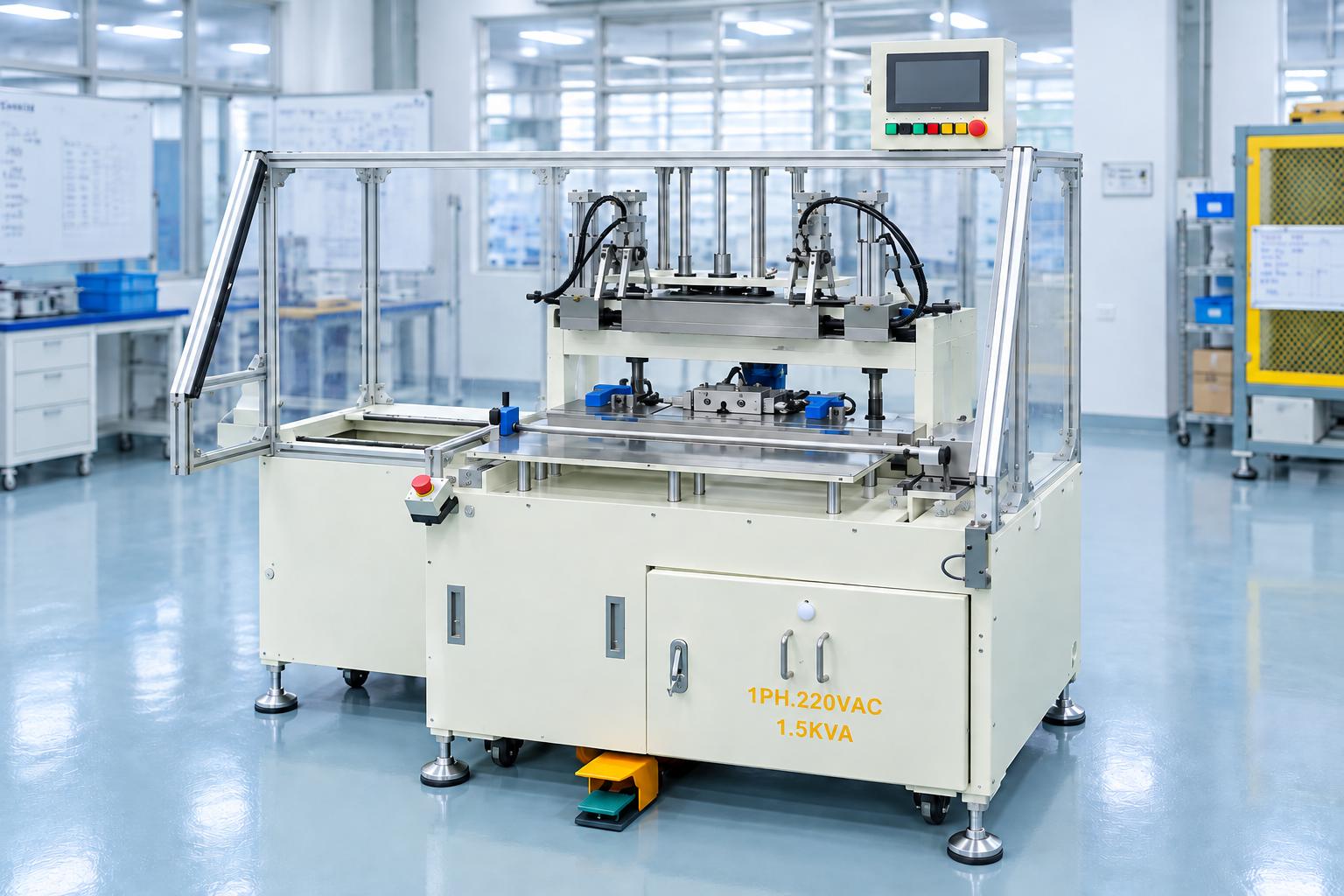
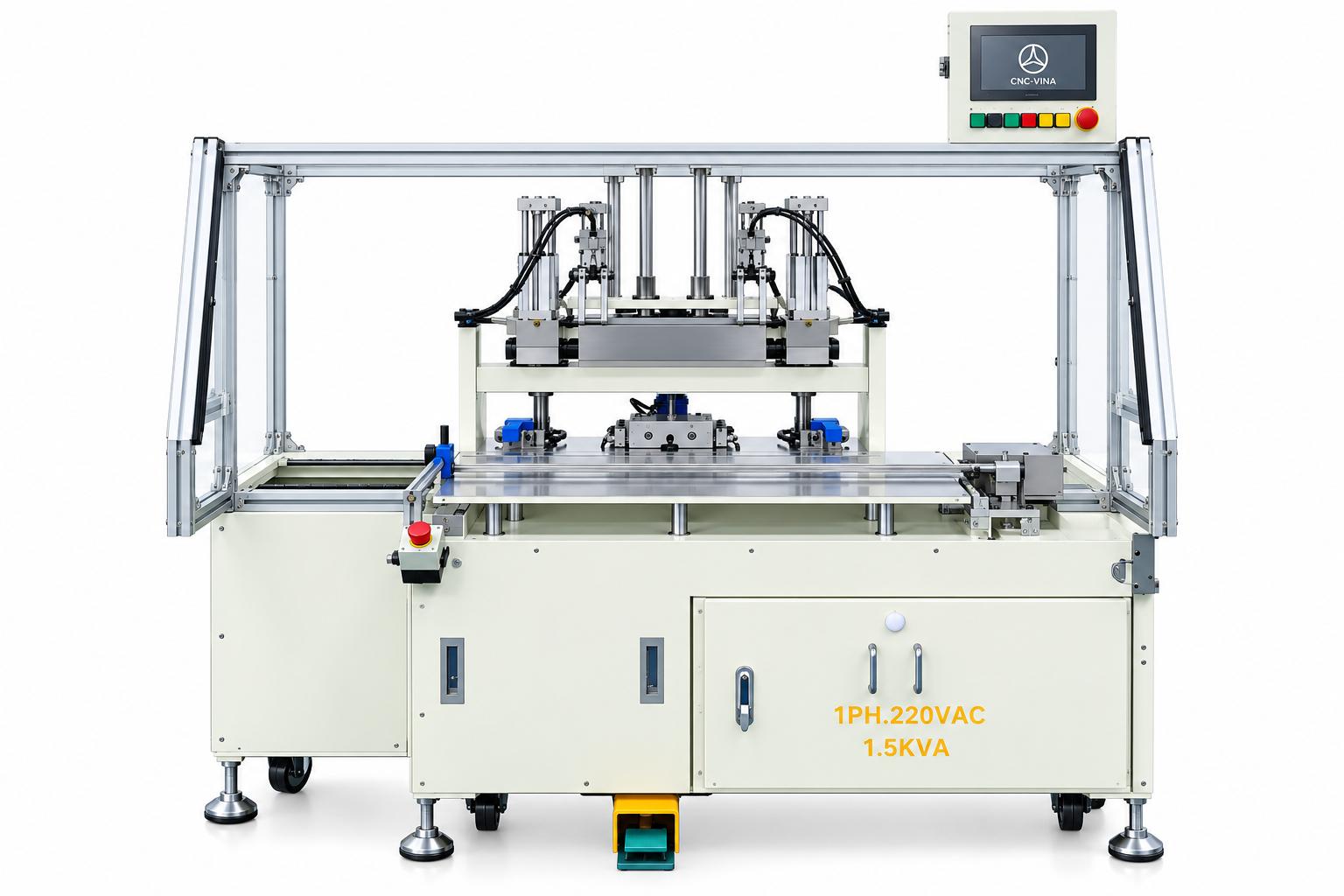
Semi-automatic two-station airbag press machine
Semi-automatic two-station airbag press machine uses pneumatic cylinders to press and hold products for a preset duration, making it suitable for forming and assembly processes in automotive component manufacturing. The machine features two pressing stations on a single frame, each equipped with its own positioning jig, pressing mechanism, and safety sensors. Operators manually load and unload the products, while the pressing, holding, and return movements are controlled automatically. With its two-station design, the machine provides two working positions within a single unit, helping reduce waiting time between production cycles. The pressing stroke, holding time, jig, and control system can be configured to suit product dimensions and specific process requirements. This solution is suitable for applications that require consistent pressing force without the need for full automation.
VIETNAM CNC & TECHNOLOGY APPLICATION JOINT STOCK COMPANY
Hotline: +84.916 63 9355 / +84.915 74 4664
Email: Sales01@cncvina.com.vn / Sales03@cncvina.com.vn
Product description

Semi-automatic two-station airbag press machine uses pneumatic cylinders to press and hold products for a preset duration, making it suitable for forming and assembly processes in automotive component manufacturing. The machine features two pressing stations on a single frame, each equipped with its own positioning jig, pressing mechanism, and safety sensors. Operators manually load and unload the products, while the pressing, holding, and return movements are controlled automatically. With its two-station design, the machine provides two working positions within a single unit, helping reduce waiting time between production cycles. The pressing stroke, holding time, jig, and control system can be configured to suit product dimensions and specific process requirements. This solution is suitable for applications that require consistent pressing force without the need for full automation.
What is a semi-automatic two-station airbag press machine?
Semi-automatic two-station airbag press machine uses two pneumatic pressing mechanisms to press and hold products on positioning jigs according to a preset stroke and holding time. Operators manually load the products into the jigs and remove them once the cycle is complete. The PLC controls the pneumatic cylinders throughout the pressing and return sequence. Each station is equipped with sensors and status signals to monitor operating conditions and support safe operation. Compared with a single-station press machine, the two-station configuration provides two production positions within the same unit. Depending on the control logic, the operating cycle can be configured to accommodate production volume, operator handling procedures, and the safety requirements of each process.
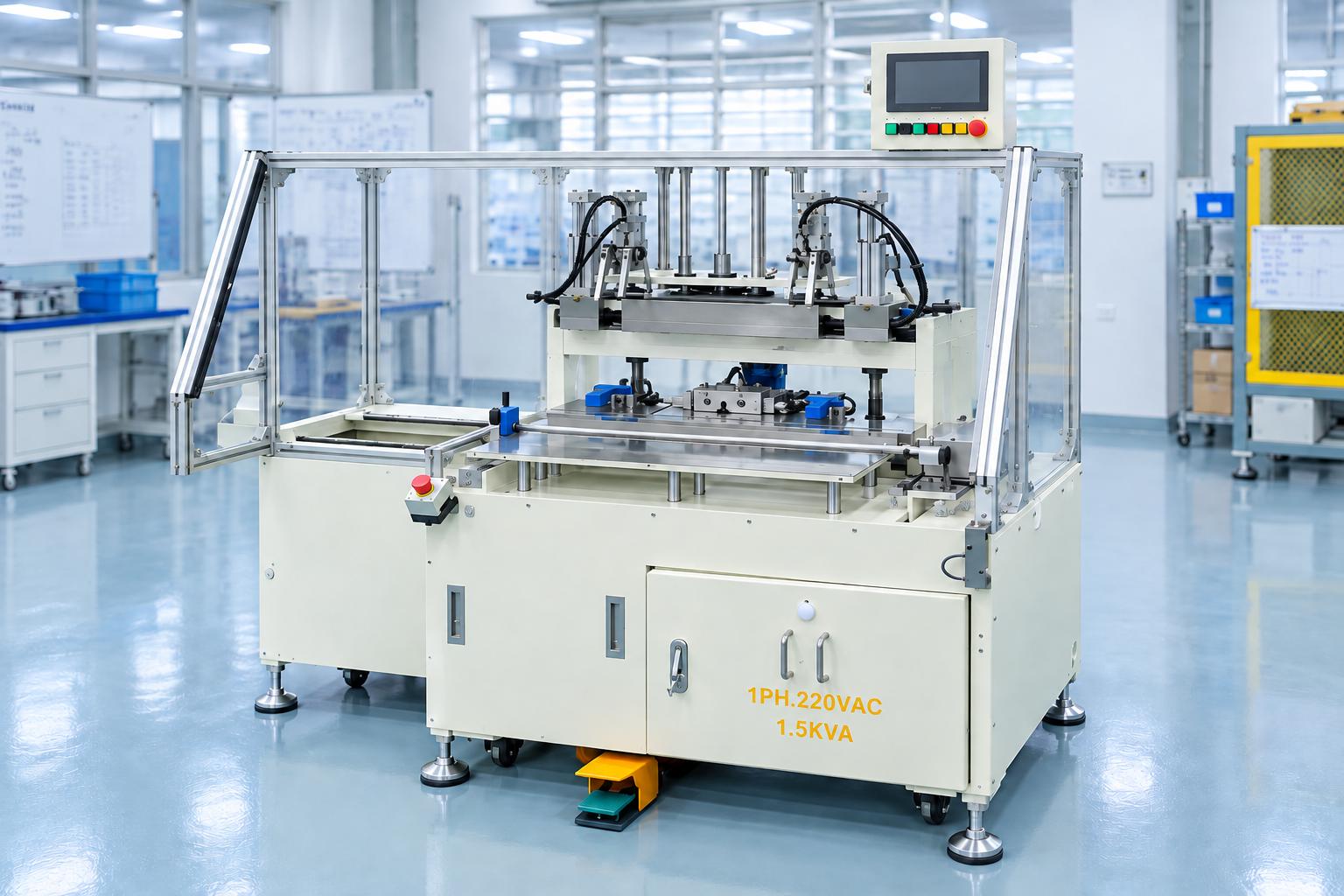
Structure of the semi-automatic two-station airbag press machine
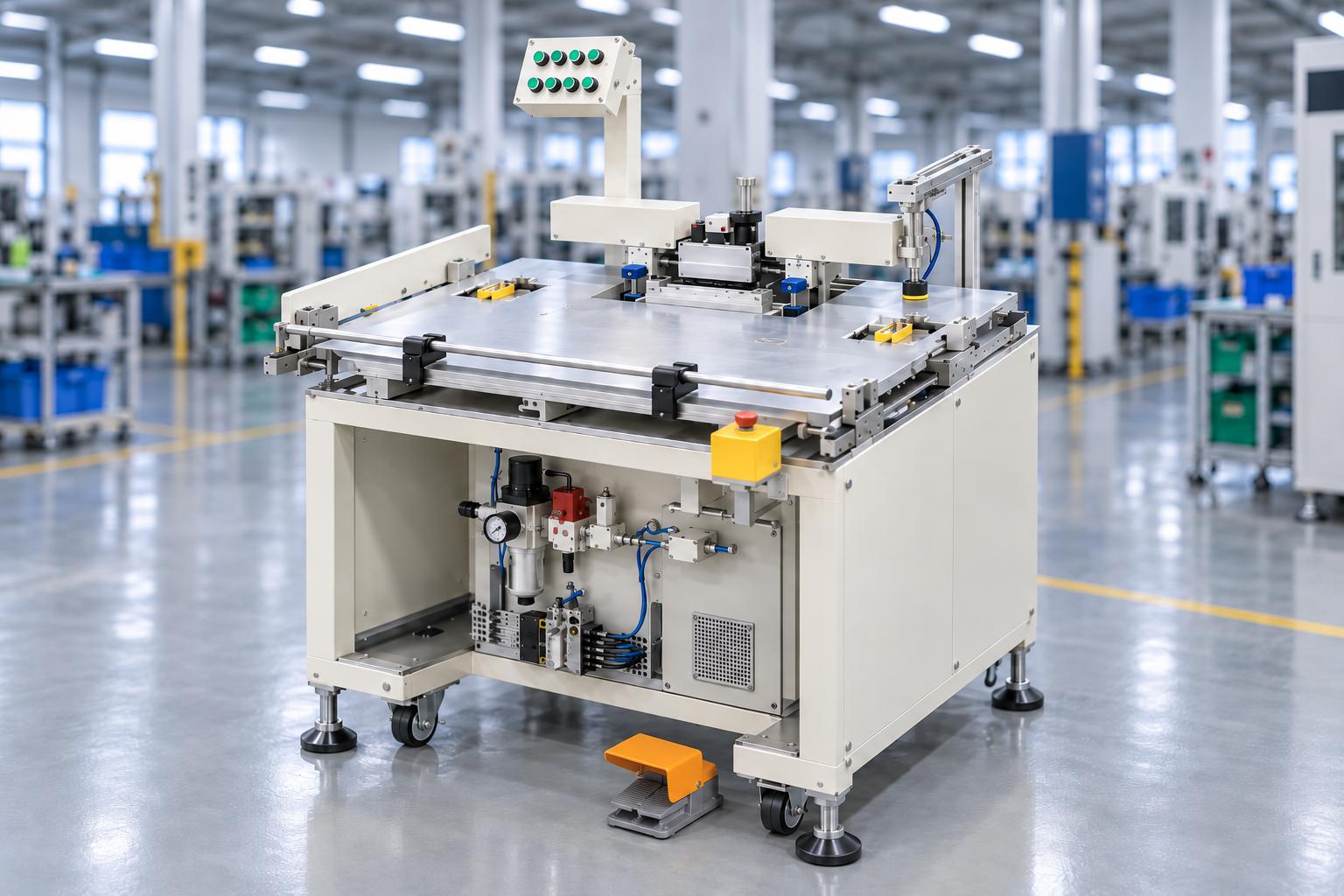
Two independent pressing stations
The machine features two pressing stations arranged side by side on a single frame. Each station has its own positioning jig, pressing cylinder, sensors, and status signals. This design allows the system to monitor each station individually rather than controlling the machine as a single unit. Depending on production requirements, the control logic can be configured to match the operating sequence and safety conditions of each station.
Product positioning jig
The positioning jig holds the product in the correct position while the cylinder performs the pressing operation. The contact surfaces are machined to match the actual product profile, helping prevent movement or positional deviations during pressing. CNC VINA can design custom jigs based on product dimensions, locating points, and required contact areas. When the product changes, the jig can be adjusted or replaced without necessarily modifying the entire machine structure.
Pneumatic pressing cylinder
Each station uses a pneumatic cylinder to move the pressing mechanism downward and return it to its initial position. The reference configuration uses a cylinder with a bore diameter of approximately 40 mm and a stroke of approximately 200 mm. The actual pressing force depends not only on the cylinder size but also on the air pressure, stroke, and product requirements. Therefore, these parameters must be recalculated when designing the machine for a specific product to ensure that the pressing force is appropriate.
Safety area sensor
The safety area sensor monitors the operator access area around the pressing mechanism. If the required safety conditions are not met, the system can prevent the cycle from starting or stop the cycle according to the configured control logic. This component is particularly important for machines that require manual loading and unloading. It helps reduce the risk of operators entering the pressing area while the cylinder is moving.
Control panel
The control panel integrates the functions required for machine operation and adjustment, including Manual/Auto, Reset, Return, Up/Down, and Emergency Stop. Indicator lights and a buzzer help operators identify the machine's operating status, fault alerts, and the status of each station. Manual mode is especially useful when adjusting the positioning jig, checking cylinder travel, or performing equipment maintenance.
Pneumatic system
The pneumatic system consists of an air preparation unit, control valves, flow control valves, and air lines supplying both cylinders. The reference operating pressure ranges from 0.4 to 0.6 MPa. Cylinder movement speed can be adjusted using the flow control system to suit the product and operating requirements.
Machine frame and mobility mechanism
The machine features an industrial workbench-style frame fitted with casters for convenient positioning and relocation within the factory. Once the machine has been moved to its working position, adjustable leveling feet are used to level and stabilize it. The electrical cabinet and pneumatic system are housed within the machine body, keeping the upper working area organized and convenient for operation.
Operating principle of the airbag press machine
The semi-automatic airbag press machine combines manual operator handling with an automated pneumatic pressing cycle. The operator is responsible for loading and unloading products, while the PLC controls the pressing, holding, and release sequence.
The basic operating process is as follows:
Step 1: The operator places the product in the correct position on the jig.
Step 2: The system checks the safety conditions in the pressing area.
Step 3: The operator activates the start switch for the corresponding station.
Step 4: The pneumatic cylinder moves downward and presses the product.
Step 5: The pressing mechanism holds the product for the preset duration. The reference configuration uses a holding time of approximately 20 seconds per cycle.
Step 6: Once the holding time has elapsed, the cylinder automatically returns to its initial position.
Step 7: The operator removes the product from the jig and proceeds to the next cycle.
During operation, the system also monitors cylinder position signals, safety area sensors, and fault conditions. If an abnormal condition is detected, the machine issues an alert and stops the cycle according to the configured safety logic.
Technical specifications of the airbag press machine
The specifications below represent a reference configuration. When designing a machine for a specific product, CNC VINA can adjust the machine dimensions, positioning jig, cylinder, stroke, and pressing time to meet the process requirements.
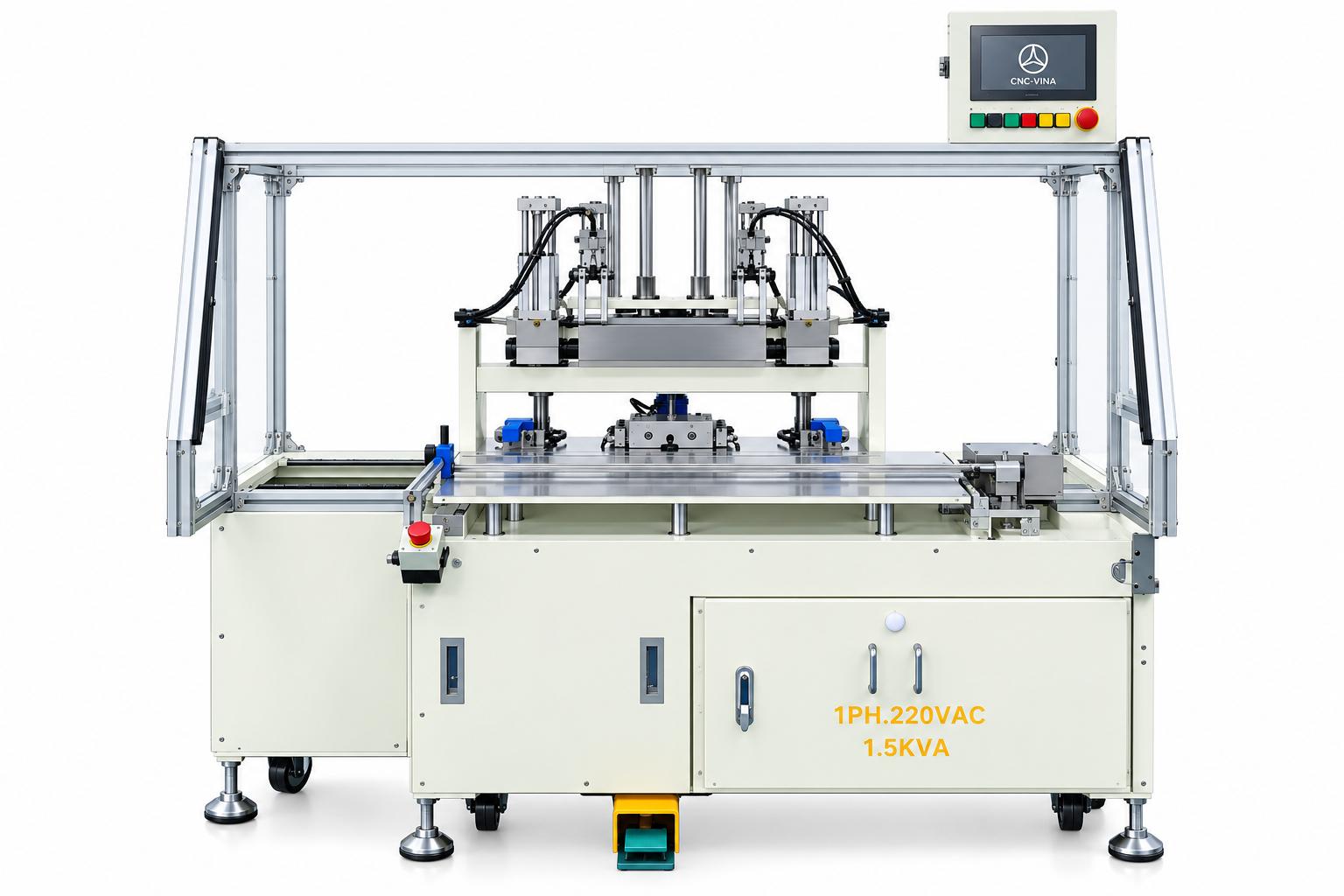
Technical specifications of the semi-automatic two-station airbag press machine
| Item | Reference Specifications |
|---|---|
| Machine Type | Semi-Automatic Two-Station Airbag Press Machine |
| Number of Pressing Stations | 2 stations |
| Overall Dimensions | Approximately 1120 × 900 × 1250 mm |
| Power Supply | Single-phase, AC 220 V, 50 Hz |
| Electrical Power Consumption | Approximately 100 VA |
| Control Voltage | DC 24 V |
| Compressed Air Pressure | Approximately 0.4–0.6 MPa |
| Pressing Mechanism | Pneumatic cylinders, 2 units |
| Reference Cylinder Specifications | Approximately 40 mm bore diameter, 200 mm stroke |
| Pressing Time | Approximately 20 seconds per cycle |
| Positioning Jigs | 2 dedicated jigs, customized for the product |
| Cycle Start | Separate operating switch for each station |
| Operating Modes | Manual / Auto |
| Safety Features | Safety area sensors, Emergency Stop, buzzer, and indicator lights |
| Control System | Keyence, Mitsubishi, Siemens PLC, or equivalent |
| Mobility and Leveling | Casters with adjustable leveling feet |
Advantages of the semi-automatic two-station airbag press machine
Two pressing positions in one machine
The two stations are arranged on a single machine frame, helping businesses make efficient use of floor space and organize production operations more conveniently. Each station retains its own signals and monitoring functions, allowing its operating status to be tracked independently.
Reduced manual work during pressing
Operators do not need to perform the entire pressing and holding process manually. Once the product has been positioned and the cycle started, the pneumatic cylinder automatically completes the programmed stroke.
Consistent pressing time control
The holding time is configured through the control system, allowing products to be pressed under consistent conditions rather than relying on each operator's manual timing.
Manual and automatic operating modes
Manual mode supports jig adjustment, cylinder checks, and equipment maintenance. During production, Auto mode allows the machine to execute the cycle according to the configured program.
Improved operational safety
Safety area sensors, an Emergency Stop, stroke monitoring, a buzzer, and indicator lights work together to monitor machine status during operation.
Customizable for different products
The positioning jigs, cylinder stroke, pressing time, sensor positions, and control logic can be adjusted to suit specific products. This makes the machine suitable for businesses with customized automation requirements rather than those seeking a fixed, one-size-fits-all configuration.
Applications of the airbag press machine in manufacturing
The machine is used in processes that require products to be pressed and held for a controlled period. It is particularly suitable for soft components, assemblies that require forming, and products that must be securely held in a jig before moving to the next production stage. Typical applications include:
- Pressing and holding airbag assemblies and safety-related components in automotive manufacturing.
- Forming products after folding or assembly operations.
- Pressing soft components according to a defined stroke and holding time.
- Holding products in jigs before inspection or packaging.
- Production lines that require two pressing positions within a single machine.
- Processes involving similar products that require different jigs and pressing parameters.

CNC VINA Semi-Automatic Airbag Press Machine
CNC VINA designs and manufactures custom presses, jigs, and automation equipment for industrial production. For each product, the positioning jig, cylinder stroke, pressing time, safety sensors, and control interface can be configured to meet actual process requirements, ensuring clear operation, repeatable performance, and easy integration into the production area.
CNC VIETNAM TECHNOLOGY APPLICATION AND CNC JOINT STOCK COMPANY
Factory: Song Cung Industrial Cluster, Dong Thap Commune, Dan Phuong District, Hanoi, Vietnam.
Office: Rox Tower Goldmark City, 136 Ho Tung Mau Street, Phu Dien Ward, Hanoi, Vietnam.
Tel: +84 916 639 355 / +84 915 744 664
Website: www.cncvina.com.vn | www.cncvina.net