Automatic marking machine
may_dong_dau_tu_dong2-large
ung_dung_cua_may_khac_dau_tu_dong-large

Automatic marking machine

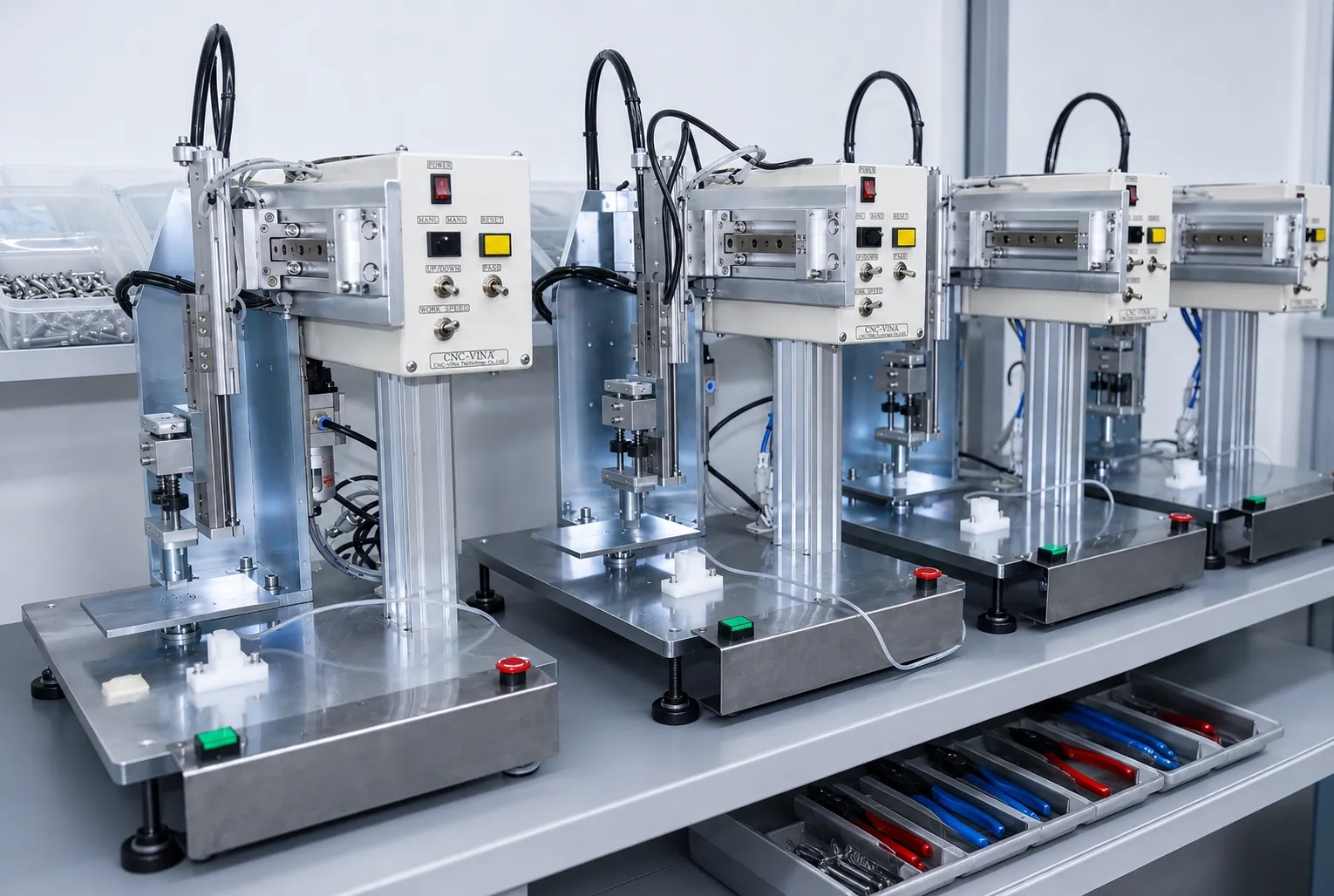
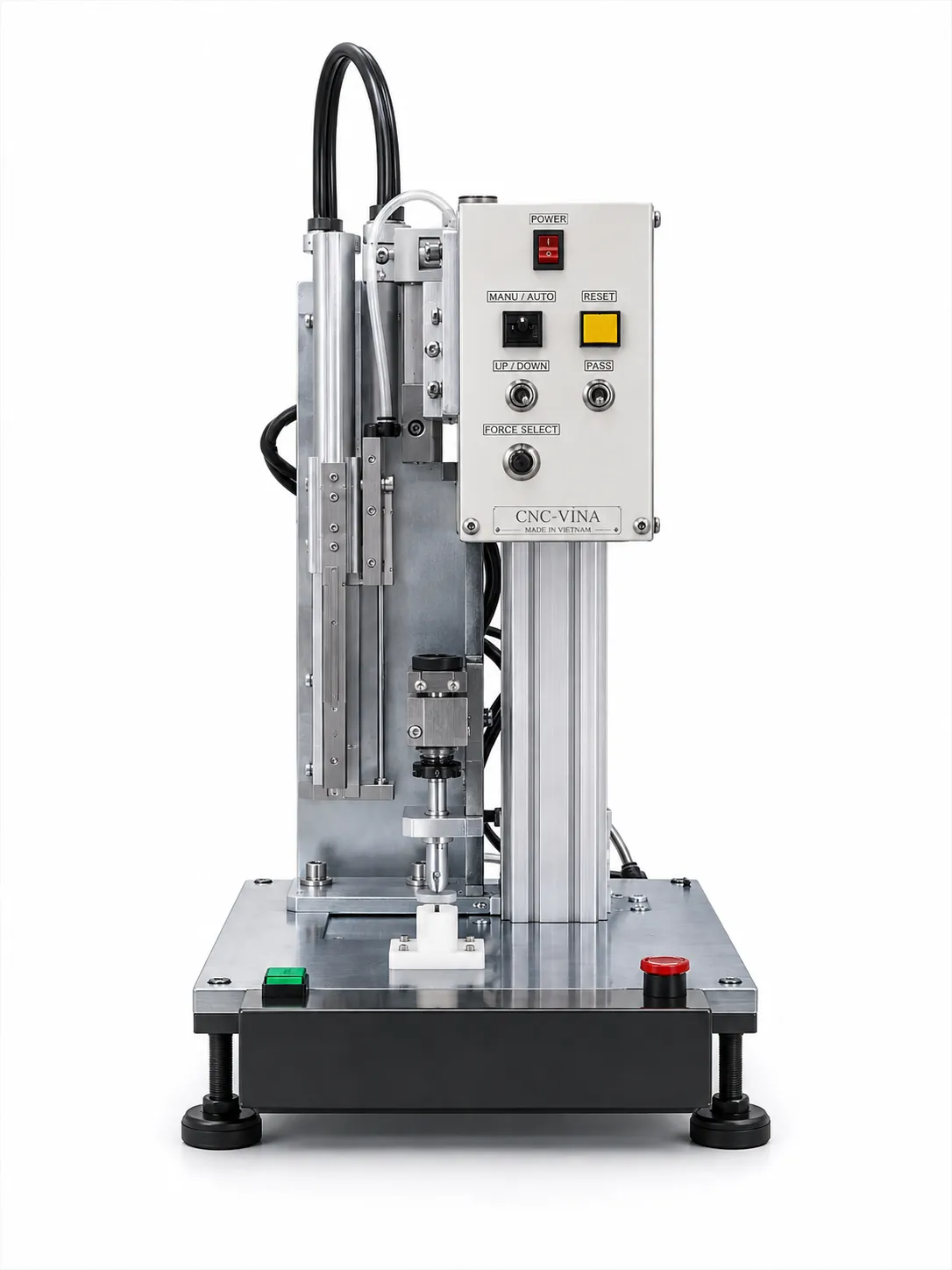
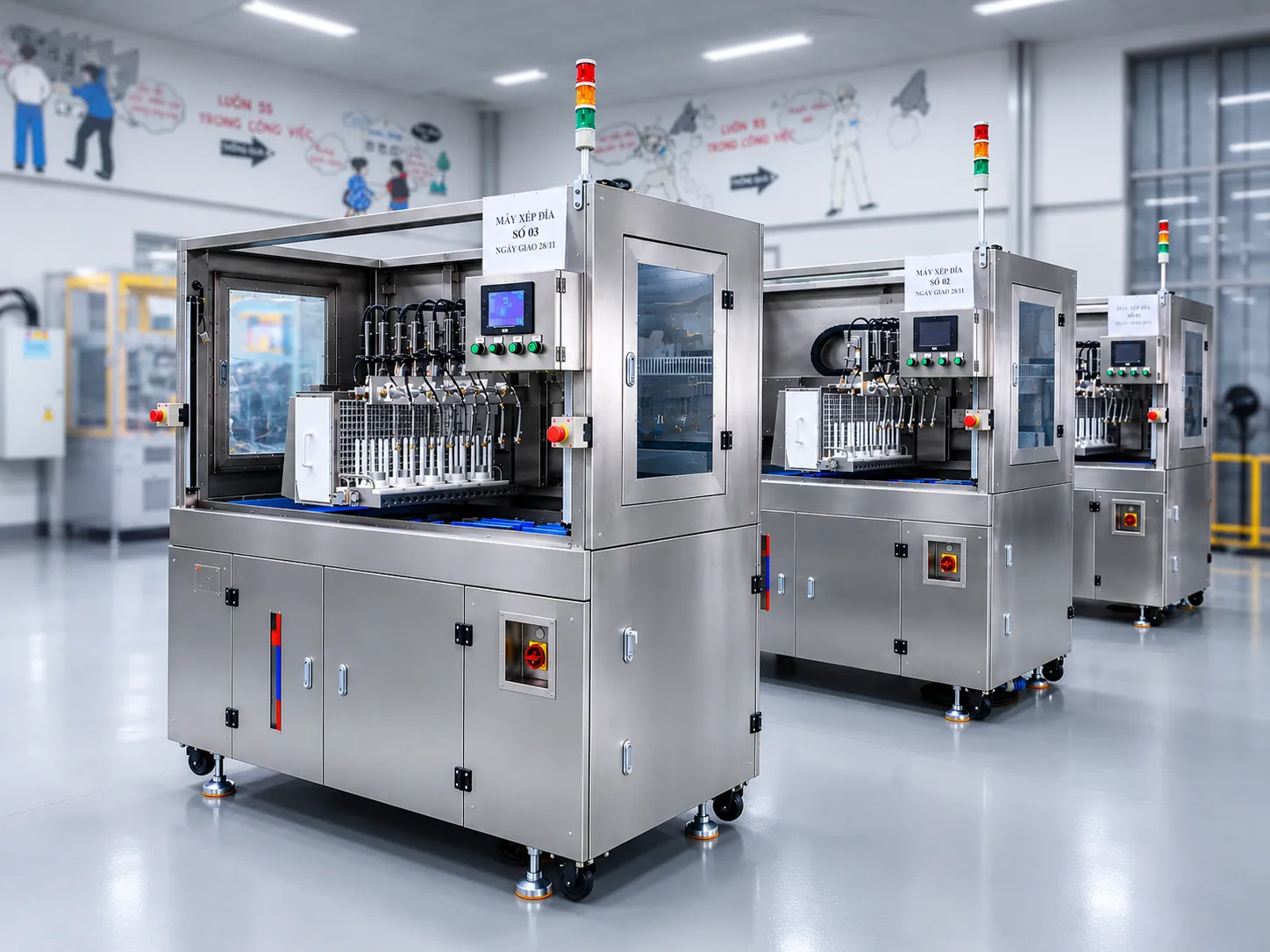
Automatic marking machine is a specialized piece of equipment designed to perform marking operations such as applying letters, numbers, symbols, identification codes, or other required information onto the surface of products. Instead of manually positioning each product, aligning the marking location, and carrying out the marking operation individually, the machine automates these processes through a product feeding system, positioning JIG, marking mechanism, and control system.

In industrial manufacturing, marking is often performed before products proceed to subsequent processes such as assembly, inspection, packaging, or shipment. When production volumes are high, manual marking can result in variations in marking position, applied force, and processing time between individual products. The automatic marking machines designed and manufactured by CNC VINA help manufacturers automate this process, improve operational consistency, and better meet the requirements of high-volume production. The machine is developed based on the actual characteristics and processing requirements of each product, covering the material feeding method, positioning system, marking mechanism, and control architecture. This enables the equipment to be customized for a wide range of components and integrated into existing production lines, providing a flexible solution for industrial marking automation.

VIETNAM CNC & TECHNOLOGY APPLICATION JOINT STOCK COMPANY

​Hotline: +84.916 63 9355 / +84.915 74 4664

Email: Sales01@cncvina.com.vn / Sales03@cncvina.com.vn

Product description

Introduction to Automatic Marking Machine

An automatic marking machine is a specialized piece of equipment designed to perform marking operations such as applying letters, numbers, symbols, identification codes, or other required information onto the surface of products. Instead of manually positioning each product, aligning the marking location, and carrying out the marking operation individually, the machine automates these processes through a product feeding system, positioning JIG, marking mechanism, and control system.

In industrial manufacturing, marking is often performed before products proceed to subsequent processes such as assembly, inspection, packaging, or shipment. When production volumes are high, manual marking can result in variations in marking position, applied force, and processing time between individual products. The automatic marking machines designed and manufactured by CNC VINA help manufacturers automate this process, improve operational consistency, and better meet the requirements of high-volume production. The machine is developed based on the actual characteristics and processing requirements of each product, covering the material feeding method, positioning system, marking mechanism, and control architecture. This enables the equipment to be customized for a wide range of components and integrated into existing production lines, providing a flexible solution for industrial marking automation.

Automatic Marking Machine
 

Features of an Automatic Marking Machine

An automatic marking machine consists of multiple coordinated mechanisms designed to ensure that products are accurately positioned and marked according to a consistent operating cycle. Depending on the product characteristics and process requirements, the machine can incorporate pneumatic cylinders, motors, transmission mechanisms, sensors, and a PLC control system to perform automated operations.

Among these components, the JIG or positioning mechanism plays an important role in securely holding the product in place before marking. Accurate product positioning allows the marking mechanism to apply the mark precisely to the designated area, minimizing variations in marking position between products. For components with complex or irregular shapes, the JIG can be custom-designed according to the actual product profile to ensure stable positioning throughout the marking process. Sensors are installed at necessary points to detect the product status and verify operating conditions before the machine proceeds with each cycle. The PLC control system coordinates the various mechanisms, controls the operating sequence, and enables operators to easily monitor the equipment during operation.

Structure of an Automatic Marking Machine

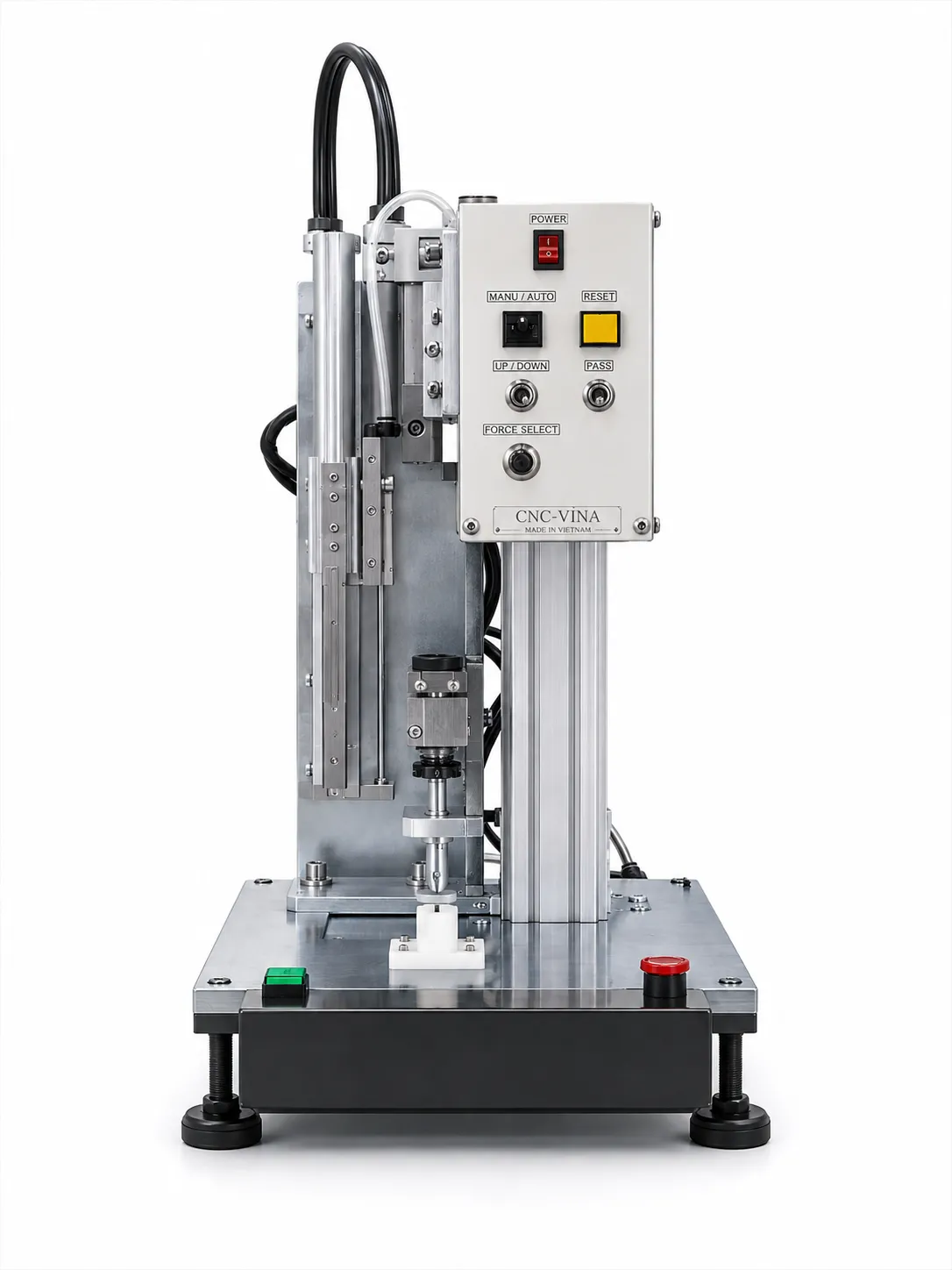
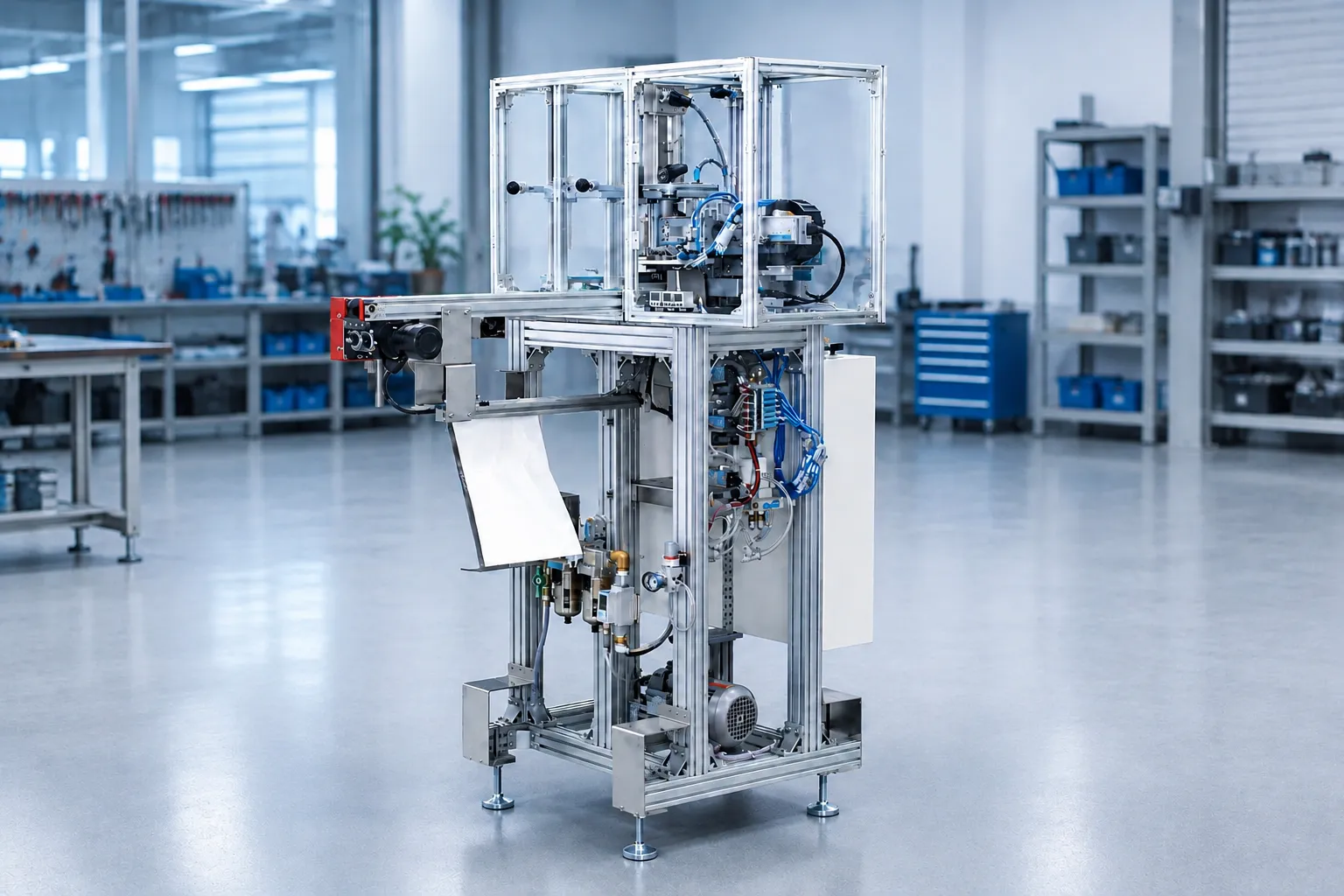
An automatic marking machine consists of multiple mechanical assemblies and control systems working together to ensure that products are fed, positioned, and marked according to the specified operating sequence. Depending on the product characteristics and production requirements, the machine configuration can be customized accordingly. However, a typical system generally includes a machine frame, product feeding and positioning mechanisms, JIG, marking mechanism, drive system, sensors, and PLC control system.

Structure of an Automatic Marking Machine

The machine frame serves as the structural foundation for securing all functional assemblies of the equipment. It is typically manufactured from aluminum profiles or a metal structure to ensure sufficient rigidity during machine operation. The working area, guide mechanisms, and equipment mounting positions are arranged on the frame according to the dimensions and characteristics of the product.

The product feeding and positioning mechanism is responsible for bringing the product to the correct position before the marking operation. Depending on the required level of automation, products can be loaded manually or supplied automatically via conveyors, trays, or feeding mechanisms. Once the product reaches the working position, the positioning mechanism securely holds it in place to minimize movement during marking.

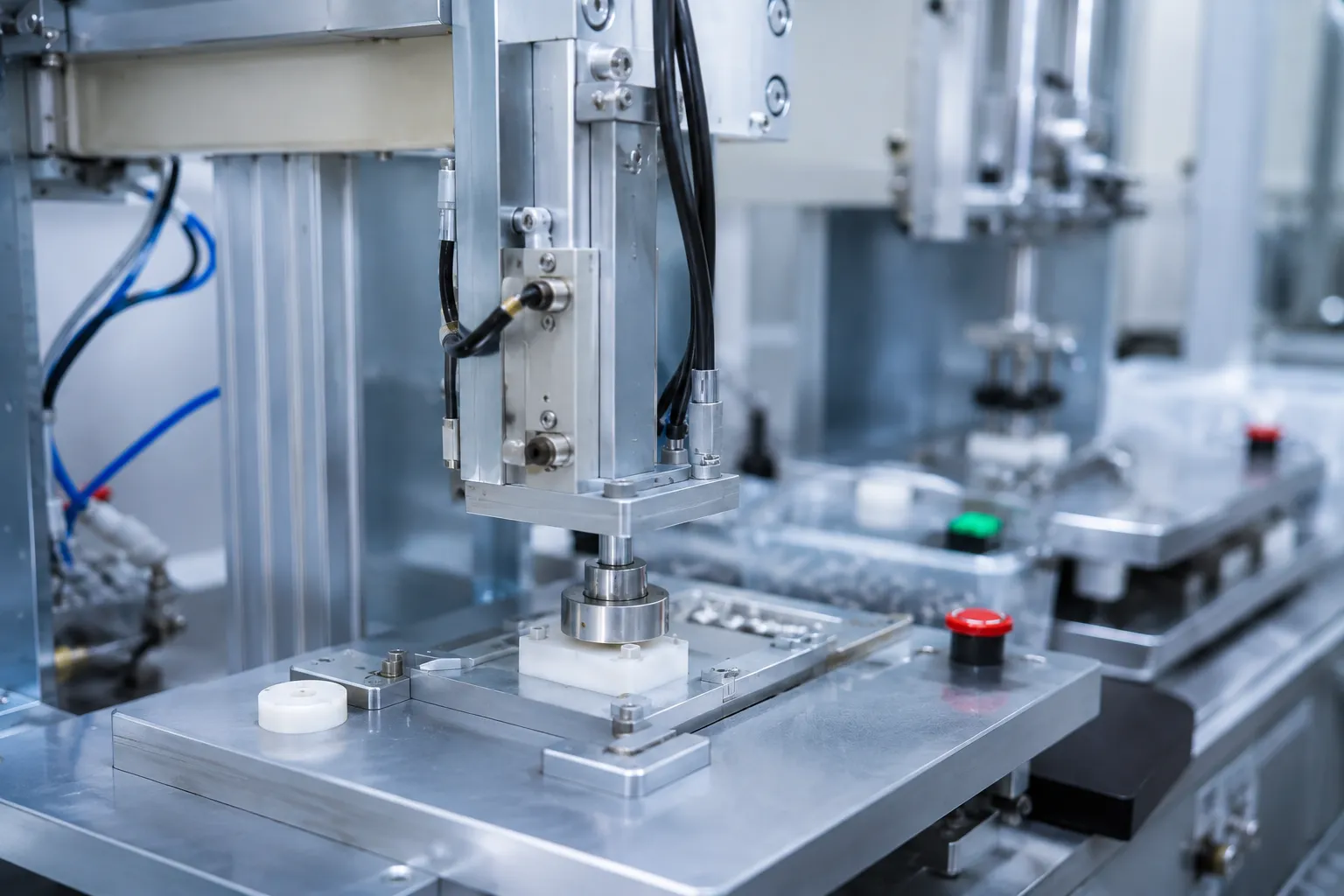
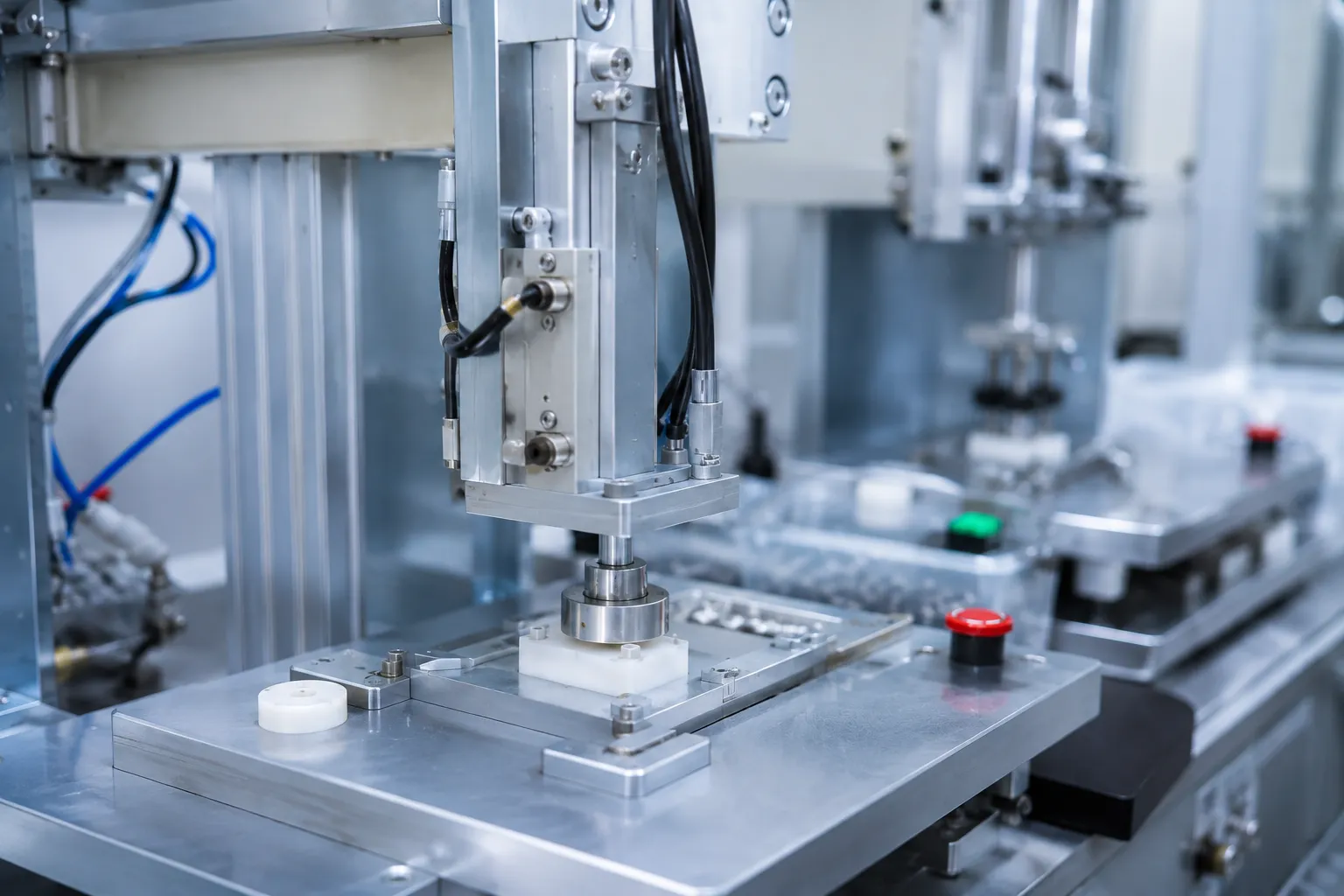
The JIG is designed according to the actual shape and dimensions of the product and is used to accurately define the loading position and marking area. For small components, products with complex profiles, or applications requiring a fixed marking position, a dedicated JIG helps achieve more stable positioning and minimize variations between products.

The marking mechanism is the component that directly performs the marking operation on the product surface. Depending on the process requirements, it may use a pneumatic cylinder, motor, or other suitable drive mechanism. The stroke, position, and applied force are configured according to the characteristics of the product to ensure that the mark is applied accurately and meets the required quality standards.

The sensor and control system is responsible for checking the product status, verifying the required conditions before the machine starts each cycle, and coordinating the operation of the various mechanisms. The PLC controller manages the operating sequence, while sensors provide signals regarding the product's position and status. This coordinated operation helps prevent the machine from performing the marking operation when the product has not been positioned correctly, while also facilitating equipment monitoring and adjustment during production.

Operating Principle of an Automatic Marking Machine

The operating process begins when the product is loaded into the machine's feeding position. Depending on the machine configuration, the product may be placed directly onto the JIG by an operator or supplied automatically through a conveyor, tray, or feeding mechanism. Once the product reaches the working position, the positioning mechanism securely holds it in place. Sensors then detect the presence and position of the product before allowing the machine to proceed with the marking operation. When all required conditions are confirmed, the marking mechanism operates according to the preset cycle to apply the specified mark to the product surface.

After the marking operation is completed, the marking mechanism returns to its initial position, and the product is either removed or transferred to the next production process. This cycle is continuously repeated according to the programmed control sequence, allowing marking operations to be performed more quickly and consistently than manual processing.

For production lines requiring high throughput, the product loading and unloading mechanisms can also be automated to further reduce operator intervention.

Advantages of an Automatic Marking Machine

Implementing an automatic marking machine significantly reduces manual operations in the marking process. Instead of requiring operators to continuously align products and perform each marking operation individually, the machine handles most repetitive tasks according to a predefined operating cycle.

Because the products are accurately positioned using a JIG and the marking mechanism operates in a controlled manner, the marking position and quality can be maintained with greater consistency between products. This is particularly important for components that require the mark to be placed at a specific location or applications where a uniform appearance must be maintained throughout an entire production batch. The machine also contributes to increased productivity by continuously executing the marking cycle with controlled processing times. As a result, manufacturers can utilize labor more efficiently while reducing dependence on the individual skill and operating speed of workers performing the marking process.

In addition, the automated control system provides a clear and organized operating process, making the equipment easier to monitor and allowing operating parameters to be adjusted more conveniently when product models or production requirements change.

Depending on the product, marking content, and feeding method, the machine configuration can be customized by CNC VINA to meet specific production requirements. A typical automatic marking system may include major functional assemblies such as the machine frame, product feeding and positioning mechanism, JIG, marking mechanism, drive system, sensors, and control system. The positioning JIG plays an important role in securing the product in the correct position before and during the marking process. For small components or products with complex shapes, the JIG should be designed according to the product profile to prevent movement while the machine is operating.

The marking mechanism performs the marking operation on the product surface according to the selected processing method. Its position, stroke, and operating sequence are determined based on the actual requirements of the product. In addition, sensors can be installed at necessary positions to confirm that the product has been correctly loaded and positioned before the machine begins its operating cycle. These signals are integrated with the control system to help prevent the machine from operating when the product has not been positioned accurately.

All mechanisms are integrated into the machine frame and controlled through a unified operating sequence, forming an automatic marking system tailored to the manufacturer's production process.

Benefits of using an Automatic Marking Machine

The use of an automatic marking machine enables manufacturers to achieve better control over the product marking process, particularly on production lines with high output and continuous processing requirements. Instead of requiring workers to manually load each product, align its position, and perform the marking operation, the machine can execute these operations according to a predefined cycle. This helps maintain more consistent processing times between products, contributing to higher productivity while reducing dependence on manual operations.

Another important benefit is the ability to maintain greater consistency across products. When products are securely held by a JIG and the marking mechanism operates according to predefined positions, strokes, and process parameters, the resulting marks can be produced more consistently than with manual methods. This is especially important for components requiring marks at fixed locations or a uniform appearance throughout an entire production batch. The machine also reduces repetitive tasks for operators. Depending on the configuration, operators may only need to load products, monitor machine status, and remove completed products. For systems with a higher level of automation, automatic product loading and unloading mechanisms can be integrated to further minimize direct operator intervention.

Furthermore, an automatic marking machine can be integrated with conveyors, feeding mechanisms, sensors, and other automated equipment within a production line. Coordinating these components allows product feeding, positioning, marking, and transfer to the next process to be performed according to a unified sequence, supporting the specific automation requirements of each manufacturer.

Applications of Automatic Marking Machines in Manufacturing

Automatic marking machines can be applied across a wide range of manufacturing industries where products need to be marked with identification or process-related information before being transferred to subsequent operations.

Applications of Automatic Marking Machines in Manufacturing

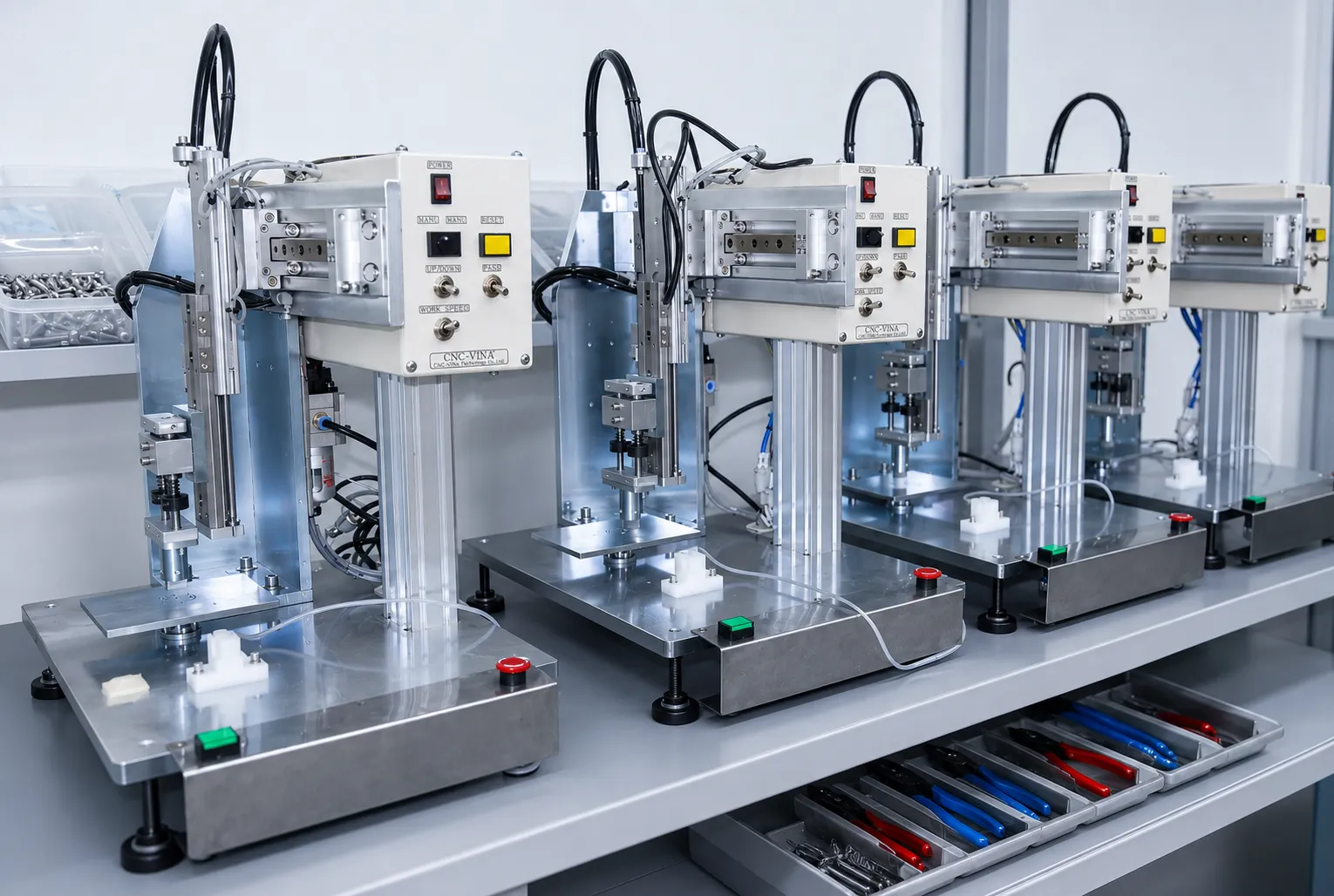
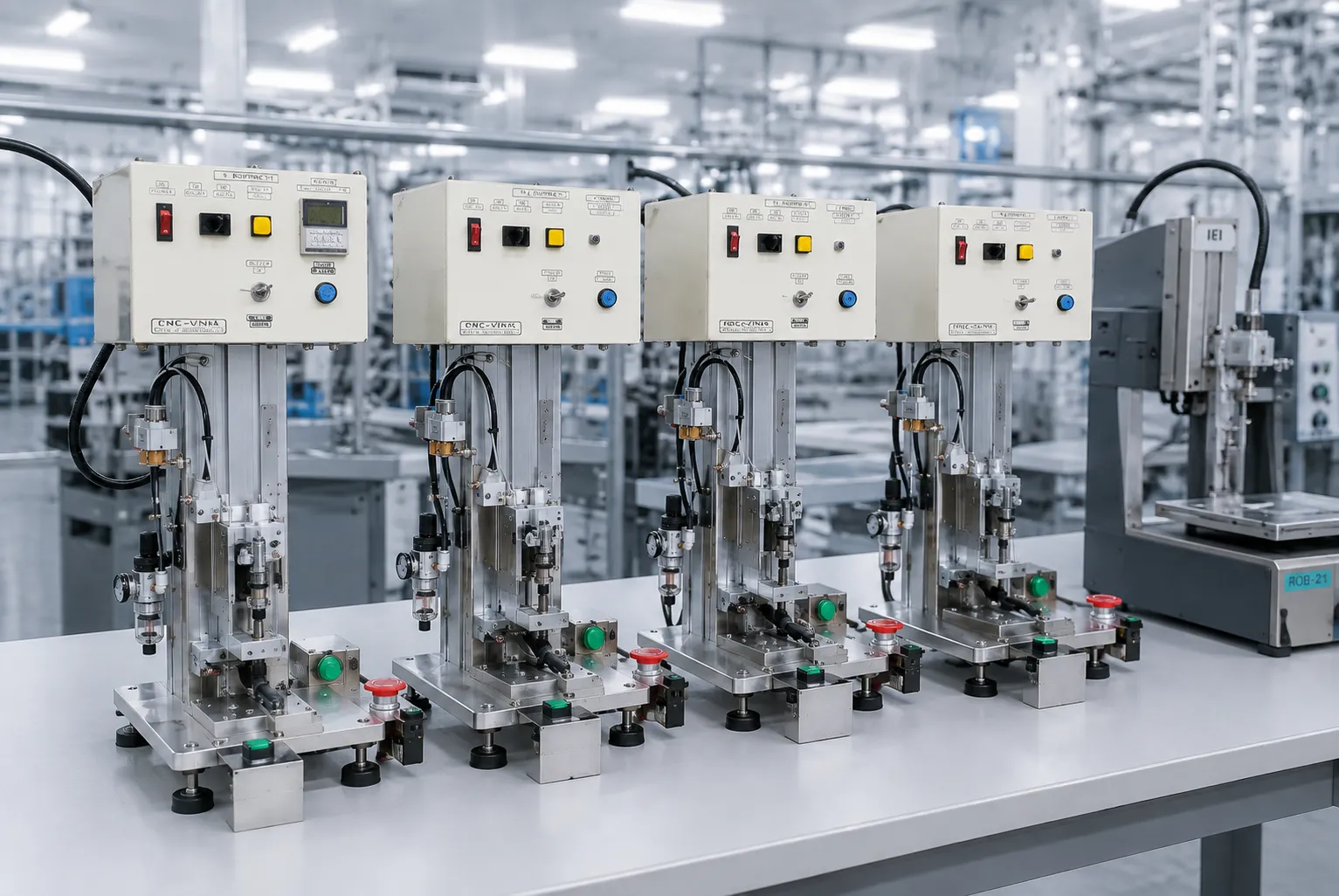
Automatic marking machines can be used across a wide range of manufacturing industries where products require marks, symbols, or identification information to be applied to their surfaces before being transferred to the next production process. The marking method and product fixturing mechanism can be customized according to the characteristics of each product.

In the mechanical manufacturing industry, the machine can be used to mark symbols, identification codes, technical information, or other specified markings onto components, parts, and mechanical assemblies. Performing this operation with an automated machine enables more consistent control of the marking position, particularly when products are manufactured in high volumes.

For the electrical and electronics industry, the equipment can be used to mark identification numbers, symbols, or other product information onto electronic components and parts. Since many electronic components are relatively small, the JIG and positioning mechanism can be specially designed to securely hold the product and prevent movement during the marking process. In the plastic and rubber industries, the machine can be used to mark information onto products after molding or forming processes. The product fixture and marking head can be customized according to the actual shape and surface characteristics of the product, ensuring that the mark is applied accurately and appropriately to the designated area.

In addition, automatic marking machines can also be developed for applications in consumer product manufacturing and various other industrial sectors where marking, identification, or traceability information needs to be applied to products.

Automatic Marking Machines designed and manufactured by CNC VINA

CNC VINA provides customized automatic marking machine design and manufacturing solutions based on the actual product characteristics and production processes of each manufacturer. Rather than being limited to a fixed machine configuration, the equipment can be developed according to product dimensions, marking locations, material feeding methods, and the desired level of automation.

Based on product samples, technical drawings, and the customer's process requirements, CNC VINA can develop suitable solutions for the JIG, product feeding mechanism, positioning mechanism, marking head, drive system, sensors, and control system. The functional assemblies are designed and coordinated as an integrated system to ensure that products are accurately positioned, securely held during the marking process, and reliably removed after the cycle is completed.

For production lines that already incorporate conveyors or automated systems upstream and downstream, the machine can also be designed for integration with the existing production line. In this configuration, the marking process can be performed continuously alongside product feeding and transfer operations, helping manufacturers further increase their level of automation and optimize the overall production workflow.

For more information, please refer to CNC VINA's solutions for automatic machines for the electronics industry and assembly and inspection automation systems, or contact us to discuss an automation solution tailored to your production requirements:

CÔNG TY CỔ PHẦN ỨNG DỤNG CÔNG NGHỆ & CNC VIỆT NAM

Factory: Song Cung Industrial Cluster, Dong Thap Commune, Dan Phuong District, Hanoi, Vietnam

Office: Rox Center Ho Tung Mau (Rox Center Goldmark City), No. 136 Ho Tung Mau Street, Bac Tu Liem District, Hanoi, Vietnam

Tel: +84.916 63 9355 / +84.915 74 4664

Website: https://cncvina.com.vn; https://cncvina.net; https://cncviname.com.vn
Email: Sales01@cncvina.com.vn | Sales03@cncvina.com.vn