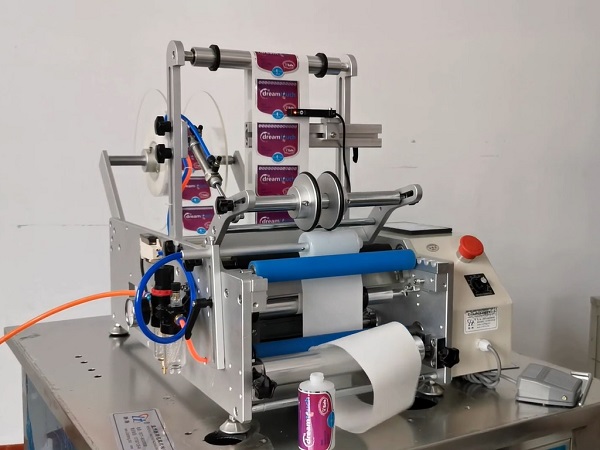
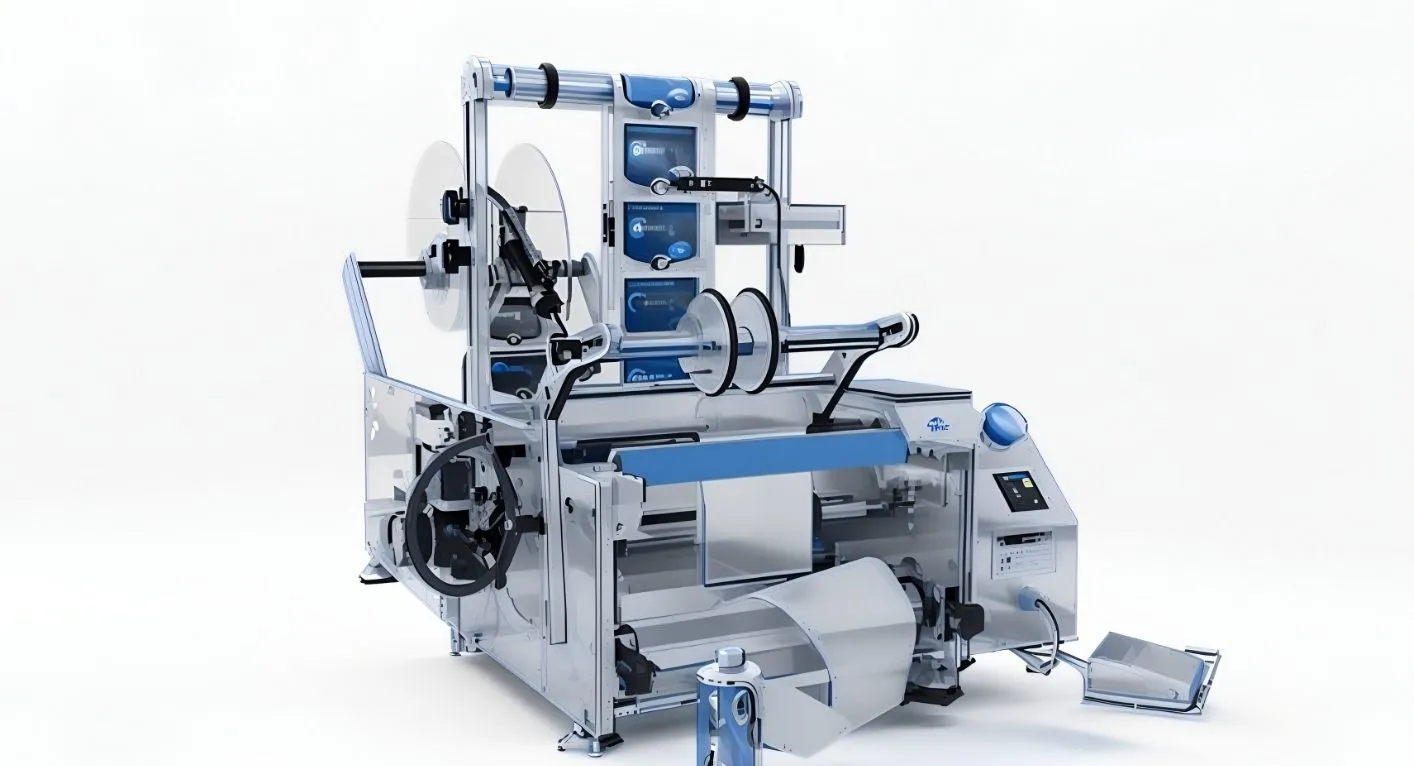
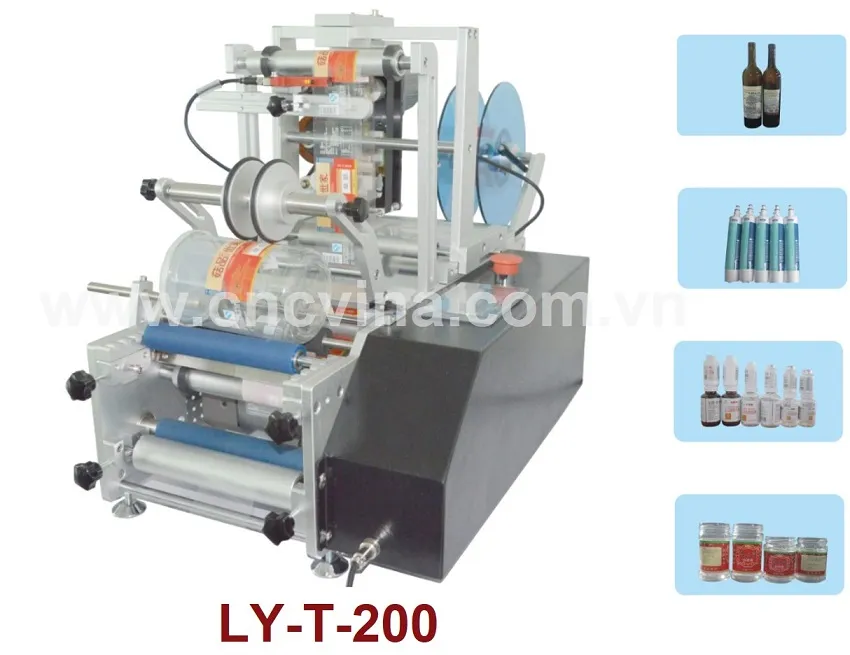
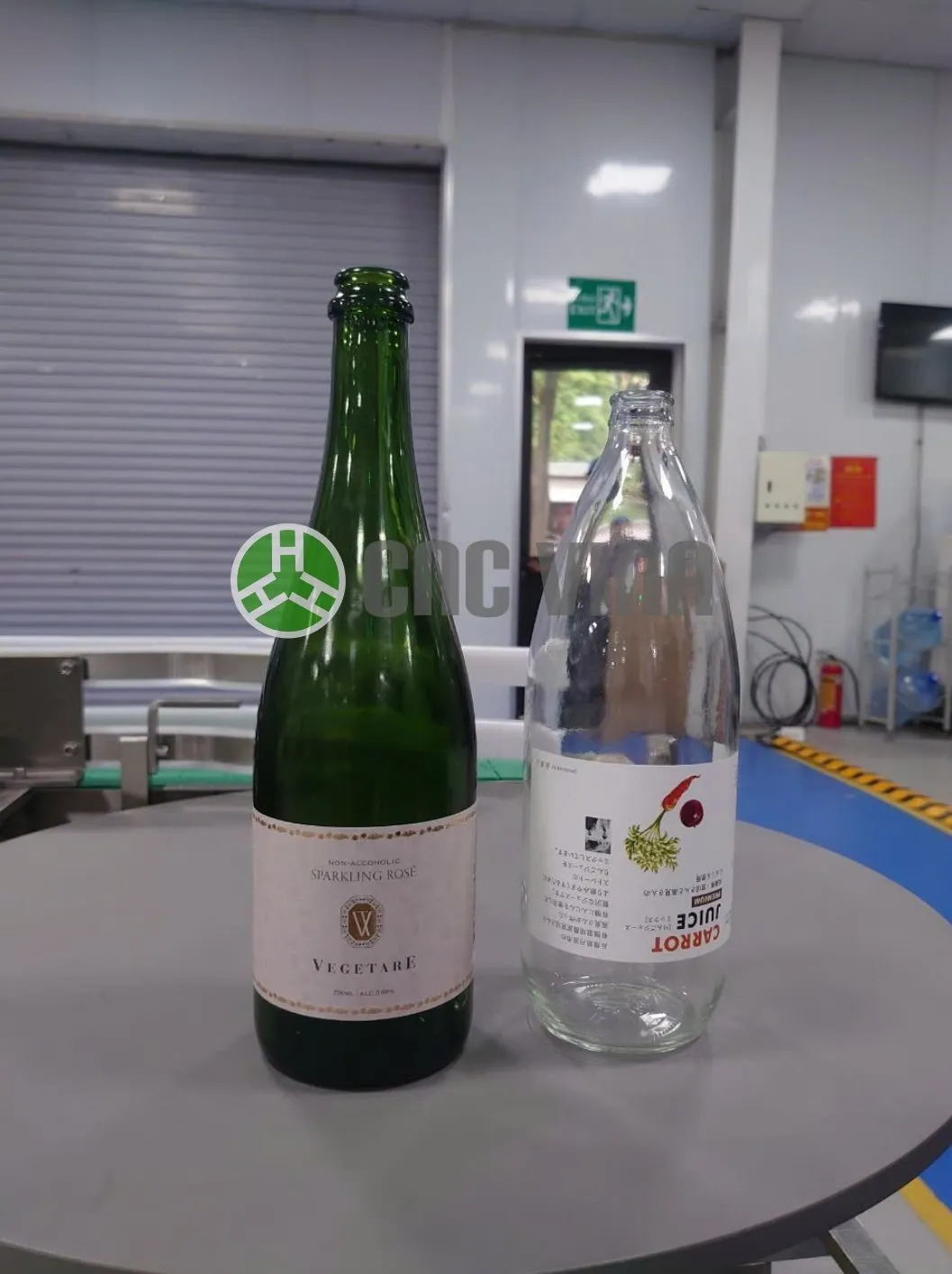
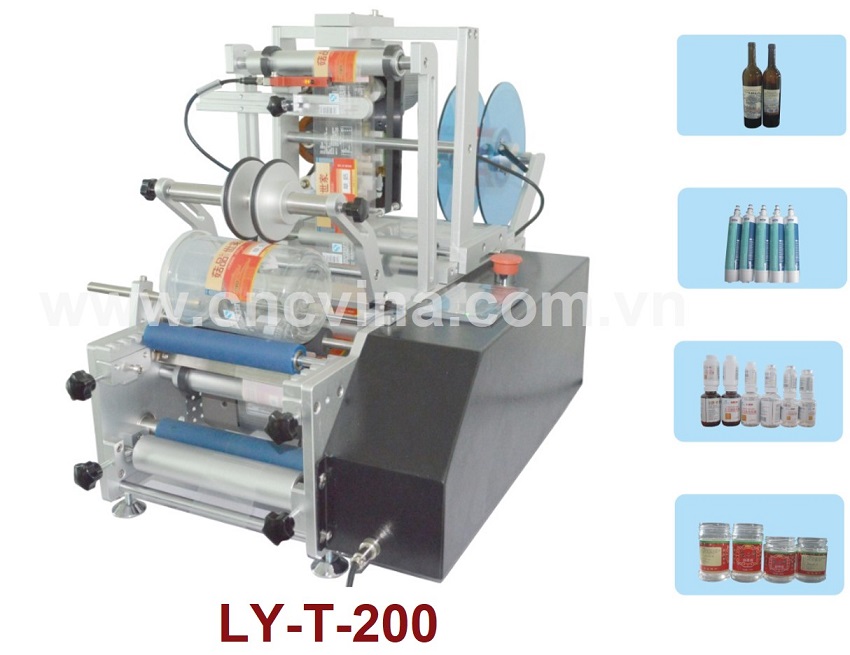
Semi-Automatic Labeling Machine LY-T-200
The LY-T-200 Semi-Automatic Labeling Machine is an ideal solution for manufacturers looking to upgrade their round bottle labeling process without immediately investing in a fully automated production line. The machine applies labels to cylindrical bottles at a stable speed, ensuring consistent label positioning while significantly reducing reliance on manual labeling operations.
With a product diameter range of Ø15–150 mm, label dimensions of L15–380 × W10–160 mm, a labeling speed of approximately 15–35 products per minute, and labeling accuracy of up to ±0.5 mm, the LY-T-200 is suitable for a wide range of packaging applications in the food and beverage, cosmetics, pharmaceutical, chemical, and consumer goods industries.
One of the key advantages of the LY-T-200 is its semi-automatic operating mechanism. The operator places the bottle into the positioning fixture, after which the machine automatically carries out the label dispensing and application process according to the preset cycle. Once labeling is completed, the operator removes the finished product and prepares the next one for processing.
This operating method enables manufacturers to improve labeling productivity and consistency while maintaining flexibility when switching between different bottle designs, label sizes, and product types. The LY-T-200 is therefore well suited to production environments that require greater efficiency and labeling accuracy while retaining the flexibility of manual product loading and unloading.
Technical specifications of the LY-T-200 Semi-Automatic Labeling Machine
| Specification |
Details |
| Machine Dimensions |
L920 × W420 × H500 mm |
| Applicable Label Dimensions |
L15–380 × W10–160 mm |
| Applicable Product Diameter |
Ø15–150 mm |
| Power Consumption |
Stepper Motor: 1020 W; Servo Motor: 1470 W |
| Labeling Speed |
15–35 products/minute |
| Power Supply |
AC 220V – 50 Hz |
| Weight |
35 kg |
| Labeling Accuracy |
±0.5 mm |
Operating principle of the LY-T-200 semi-automatic labeling machine
The basic operating process of the LY-T-200 Semi-Automatic Labeling Machine consists of the following steps:
- Product loading: The operator places the round bottle into the machine's positioning fixture or designated positioning area.
- Product detection: The sensor detects the presence of the product and triggers the labeling cycle.
- Bottle positioning and rotation: The holding and rotating mechanism secures the bottle and rotates it into a stable position for labeling.
- Label dispensing: The label is peeled from its backing liner and guided to the designated contact point on the bottle surface.
- Label application: The pressing or rolling mechanism applies pressure to ensure that the label adheres evenly and securely to the bottle.
- Product unloading: The operator removes the labeled bottle and places the next product into the machine for processing.
Depending on the machine configuration, the LY-T-200 can be set up to apply a single label or accommodate specific label positioning requirements. The actual labeling speed may vary depending on bottle dimensions, label length, label material, operator skill level, and the required spacing between products.
Key features of the LY-T-200 semi-automatic labeling machine
Higher productivity compared with manual labeling
With manual labeling, productivity often depends heavily on the operator's working speed and concentration. Changes in personnel or prolonged operation can result in inconsistent labeling speed and quality. The LY-T-200 performs the labeling process according to a consistent operating cycle, with a reference speed of 15–35 products per minute. The operator focuses on loading and unloading products, while the machine handles product positioning and label application. This helps reduce repetitive manual operations and creates a more consistent and controllable workflow.
Improved labeling consistency
Products with misaligned, wrinkled, lifted, or incorrectly positioned labels can directly affect brand presentation. This is particularly important for retail products, where inconsistent label positioning can make the packaging look less professional and increase the need for inspection or rework. The machine is designed to control label positioning throughout the operating process. Under suitable conditions for the bottle, label, and machine configuration, labeling accuracy can reach ±0.5 mm. Actual performance should still be evaluated using specific product samples before final acceptance.
Suitable for various round bottles
With an applicable product diameter range of Ø15–150 mm, the LY-T-200 can be used for various types of round bottles and containers. The machine is suitable for applications involving small bottles, liquid containers, cosmetic bottles, food packaging, and other cylindrical products. However, labeling performance depends on more than just bottle diameter. Products with very flexible surfaces, tapered shapes, raised ribs, pronounced shoulders, or uneven surfaces may require dedicated fixtures and labeling solutions. Therefore, manufacturers are recommended to provide actual product samples for evaluation before selecting the appropriate machine configuration.
Compatible with various label types
The LY-T-200 can accommodate labels ranging from L15–380 × W10–160 mm. Depending on the label material and transparency, the machine can be equipped with a suitable sensor to accurately detect the gap between labels. For transparent labels, highly glossy labels, or labels with very small gaps, proper sensor selection and parameter adjustment are important factors in achieving stable detection and labeling performance. For this reason, the machine configuration should be determined based on both the label sample and its specified dimensions.
Compact and Space-saving design
With dimensions of L920 × W420 × H500 mm and a weight of approximately 35 kg, the LY-T-200 is suitable for production areas with limited floor space. The machine can be installed on a packaging workstation, in a product finishing area, or integrated with other equipment within a production line. Its compact design also makes it easier to relocate the machine, change workstations, or rearrange the production layout compared with larger automated labeling systems.
A Balance Between Automation and Investment Cost
Not every manufacturer requires a fully automated production line. For businesses with relatively moderate production volumes or frequent product changes, a fully automated system may involve higher initial investment and offer less flexibility.
The LY-T-200 allows manufacturers to automate the labeling process while retaining manual bottle loading and unloading. This makes it a practical solution for businesses looking to:
-
Reduce initial investment costs.
-
Easily switch between different products and label specifications.
-
Minimize space requirements.
-
Upgrade or integrate additional equipment as production volume increases.
-
Simplify operator training.
Applications of the LY-T-200 Semi-Automatic Labeling Machine
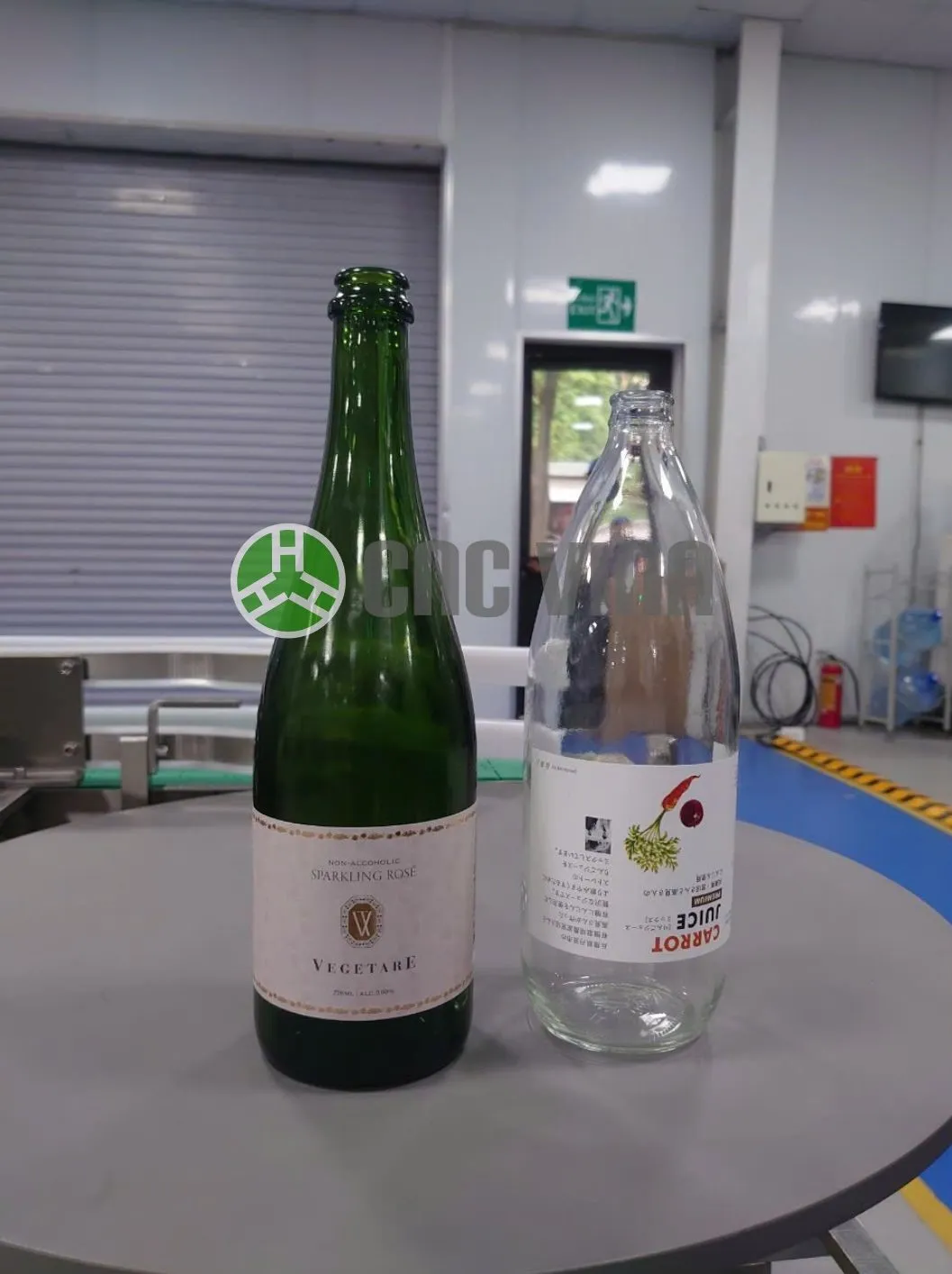
Applications of the LY-T-200 semi-automatic labeling machine
The LY-T-200 semi-automatic labeling machine is suitable for round bottle products that require labels to be applied to the bottle body. With an applicable product diameter range of Ø15–150 mm, the machine can be used across various manufacturing industries, depending on the bottle material, label dimensions, and specific labeling requirements.
Food and beverage industry
The machine can be used to apply labels to water bottles, honey bottles, cooking oil bottles, sauce bottles, condiment containers, beverage bottles, and other bottled products. In the food and beverage industry, labels typically contain important information such as the product name, ingredients, net weight, manufacturing date, expiration date, and traceability codes. Consistent label application helps ensure that product information is clearly displayed while enhancing the overall appearance of the packaging before products are released to the market.
Cosmetics industry
The LY-T-200 can meet labeling requirements for shampoo bottles, shower gel bottles, perfumes, skincare solutions, essential oils, serums, and other cosmetic products packaged in round bottles or containers. For cosmetic products, packaging appearance can have a significant impact on purchasing decisions. Straight, wrinkle-free, and accurately positioned labels help create a more professional product appearance, particularly for contract manufacturers, private-label brands, and products manufactured in small batches.
Pharmaceutical and healthcare products
Round bottles and containers used for pharmaceuticals, health supplements, disinfectant solutions, and personal care products can be processed using the machine when they meet the applicable size range and labeling conditions. For these product groups, manufacturers should pay particular attention to label positioning accuracy, information traceability, and quality control requirements for each production batch.
Chemical and cleaning products
The machine can support labeling applications for laundry detergent bottles, dishwashing liquid bottles, cleaning solutions, processing chemicals, and other round bottle products. For chemical containers, compatibility between the bottle material, label material, and adhesive should be carefully evaluated. Bottle surfaces may be affected by oil, solvents, or moisture, so actual product samples should be tested before mass production.
Small and medium-sized manufacturers
The LY-T-200 is a suitable option for small and medium-sized manufacturers, contract packaging facilities, emerging brands, and businesses looking to expand their production capacity. The machine allows manufacturers to begin automating a specific production process without having to invest in an entire automated production line. As production volume increases, the equipment can be integrated with filling machines, capping machines, printers, conveyors, or other packaging equipment to create a more complete production process.
Benefits of using the LY-T-200 semi-automatic labeling machine
Using the LY-T-200 Semi-Automatic Labeling Machine not only helps manufacturers reduce manual labeling operations but also contributes to standardizing the product finishing process. With a positioning and labeling mechanism operating according to a preset cycle, the machine provides better control over labeling speed, position, and consistency across individual products.
In particular, the semi-automatic design allows manufacturers to achieve a practical balance between automation level, investment cost, and flexibility when processing different types of round bottles.
Reduced dependence on manual labor
Manual labeling requires operators to repeatedly place bottles, align their position, peel labels, and press labels onto the product surface. As production volume increases, manufacturers may need to allocate additional labor or extend working hours to meet production schedules. Repetitive operations performed over long periods can also lead to variations in operating speed and labeling quality between products. The LY-T-200 automatically performs the positioning, label dispensing, and application processes after the operator places the bottle into the designated position. This allows operators to spend less time performing the labeling operation itself and simultaneously handle other tasks such as product loading, visual inspection, sorting, or packaging.
This approach helps reduce labor requirements at the labeling stage while enabling manufacturers to allocate personnel more efficiently as production volume increases.
Increased productivity and reduced product finishing time
One of the most noticeable benefits of using a labeling machine is its ability to maintain a more consistent operating speed compared with manual labeling. With a reference speed of approximately 15–35 products per minute, the LY-T-200 can help manufacturers process a higher number of bottles within the same period, depending on product dimensions, label length, and the operator's product loading speed. Once the labeling process has been standardized, the finishing time for each product also becomes more predictable. This is particularly beneficial for manufacturers operating on a batch or order-based production model, where production schedules and delivery deadlines need to be closely controlled. However, actual productivity should be evaluated using specific bottle and label samples rather than relying solely on the machine's maximum rated speed.
Reduced label misalignment, wrinkling, and rework
Manual labeling may result in various defects, including misaligned labels, wrinkles, lifted edges, or inconsistent spacing between labels. For products with high packaging quality requirements, these defects not only increase rework time but can also lead to additional label consumption and labor costs.
The LY-T-200 uses a positioning and labeling mechanism configured according to the product dimensions, helping maintain a more stable labeling process. When the bottle, label, and machine mechanism are properly aligned and adjusted, label positioning can be maintained more consistently across products, helping reduce packaging defects. This also helps manufacturers minimize the time required for inspection and rework of products that do not meet appearance requirements.
Consistent and professional product presentation
Product labels not only provide essential information but also contribute to the overall brand identity and packaging appearance. For retail products such as food, beverages, cosmetics, and personal care products, labels that are straight, accurately positioned, and consistent across bottles create a more professional appearance on the shelf. Using a labeling machine reduces the dependence on individual operators' visual judgment and manual skills during the labeling process. Once the machine parameters are properly configured, products can achieve greater consistency across different production batches. This is particularly valuable for brands that need to maintain consistent packaging standards or contract manufacturers processing multiple products for different customers.
Flexibility for different products and label specifications
Unlike large automated production lines that are often optimized for a specific product group, semi-automatic labeling machines offer greater adaptability for different production batches. With the LY-T-200, the positioning fixture, sensor, and operating parameters can be adjusted to accommodate different bottles and labels within the machine's designed operating range.
This feature is particularly suitable for manufacturers producing multiple SKUs, frequently changing bottle dimensions, or operating at production volumes that do not justify a dedicated labeling line for each product. Instead of investing in multiple machines, manufacturers can use a single machine for different product specifications after appropriate setup and testing. However, products with special shapes, oval or square bottles, or ribbed surfaces should be evaluated using actual samples to determine labeling compatibility.
Space-saving design and easy installation in packaging areas
With overall dimensions of approximately L920 × W420 × H500 mm, the LY-T-200 is suitable for production areas where floor space is limited. The machine can be installed on a packaging workstation, in a product finishing area, or integrated with other equipment without requiring the large footprint typically associated with fully automated labeling lines. Its compact design also makes it easier to relocate the machine when reorganizing the production layout. For small and medium-sized workshops, this is a significant advantage as it enables an additional level of automation without requiring major modifications to the existing production area.
Integration and scalability for future production requirements
Manufacturing requirements can change over time as production volume increases or packaging processes are upgraded. Equipment that can accommodate additional functions can therefore help manufacturers avoid replacing the entire system within a short period. Depending on production requirements, the LY-T-200 can be considered for integration with additional equipment such as barcode printers, ribbon printers, transparent-label sensors, product positioning sensors, or conveyor systems. When combined with filling, capping, and other packaging equipment, the machine can also become part of a higher-level automated production process. The integration solution should be designed based on the actual factory layout, product characteristics, and production workflow to ensure stable coordination between equipment.
Easy operation and operator training
Another advantage of a semi-automatic system is its relatively straightforward operating process. The operator primarily places the bottle into position, activates the labeling cycle, and removes the product after completion, while the machine performs the labeling process according to the preset parameters. This makes it easier for manufacturers to assign personnel to the packaging process and reduces training time compared with more complex automated systems. When changing products, operators can be trained on the appropriate product loading procedures and label positioning requirements based on the corresponding machine configuration.
Standardized operating procedures also help maintain consistent product quality across different production shifts.
Manufacturers can start with a basic labeling configuration and subsequently add printers, sensors, or conveyor connections as production requirements evolve. This phased investment approach helps optimize the budget while reducing the initial investment pressure.
CNC VINA – Automation machine design and manufacturing
The LY-T-200 Semi-Automatic Labeling Machine is a suitable solution for manufacturers looking to increase round bottle labeling productivity, improve packaging consistency, and gradually transition from manual operations to automation.
With a reference speed of 15–35 products per minute, labeling accuracy of up to ±0.5 mm, an applicable product diameter range of Ø15–150 mm, and a compact design, the machine can address a wide range of practical labeling requirements. However, final performance depends on the compatibility between the machine, bottle, label, and operating process. Therefore, sample-based evaluation is an important step before finalizing the machine configuration. CNC VINA provides customized automation machine design and manufacturing solutions, from standalone labeling machines to integrated systems combining filling machines, capping machines, printers, conveyors, and other packaging equipment. Manufacturers can provide bottle samples, label samples, and expected production volumes for consultation on product compatibility, machine configuration, integration options, sample testing, and implementation planning.
If your business is looking for the LY-T-200 Semi-Automatic Labeling Machine, contact CNC VINA for professional consultation on product compatibility, machine configuration, integration solutions, and production requirements.
CNC VIETNAM TECHNOLOGY & CNC APPLICATION JOINT STOCK COMPANY
Factory: Song Cung Industrial Cluster, Dong Thap Commune, Dan Phuong District, Hanoi, Vietnam
Office: Rox Tower Building (Rox Tower Goldmark City), No. 136 Ho Tung Mau Street, Bac Tu Liem District, Hanoi, Vietnam
Tel: +84.916 63 9355 / +84.915 74 4664
Website: https://cncvina.com.vn | https://cncvina.net | https://cncviname.com.vn
Email: Sales01@cncvina.com.vn | Sales03@cncvina.com.vn

 Tiếng
Việt
Tiếng
Việt
 Tiếng
Anh
Tiếng
Anh
 Tiếng
Nhật
Tiếng
Nhật



 Tiếng Anh