 Tiếng
Việt
Tiếng
Việt
 Tiếng
Anh
Tiếng
Anh
 Tiếng
Nhật
Tiếng
Nhật




 Tiếng Anh

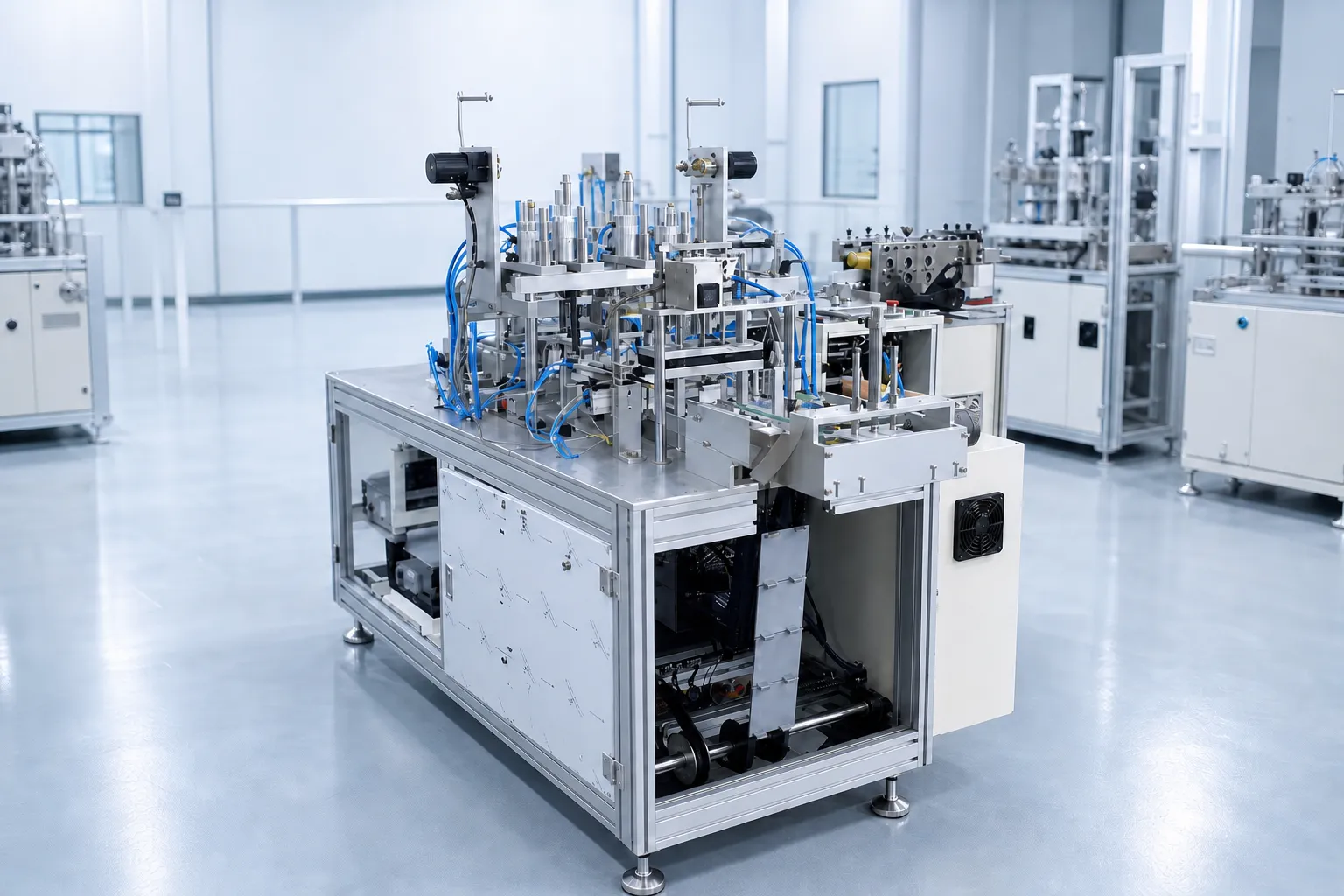
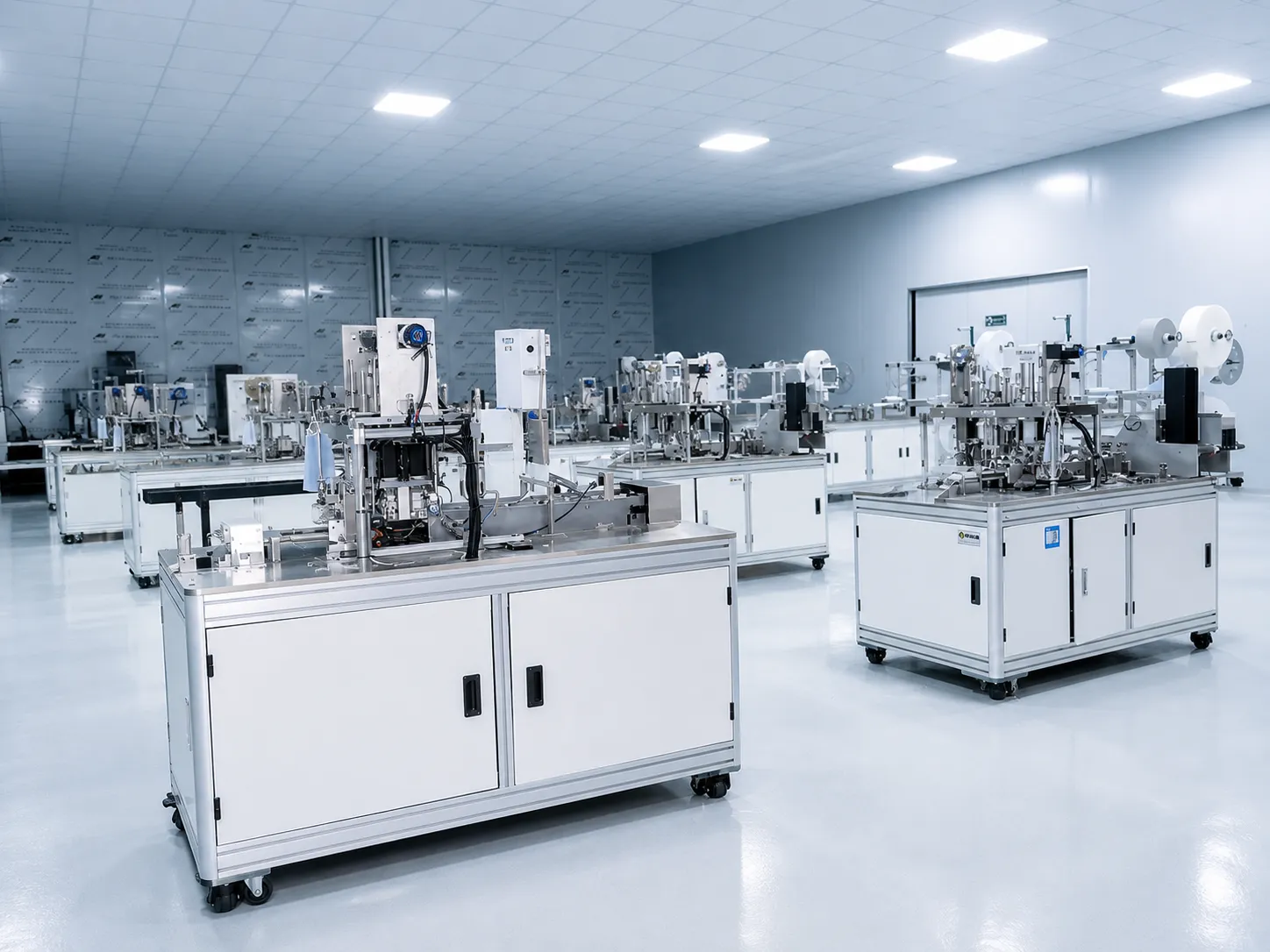
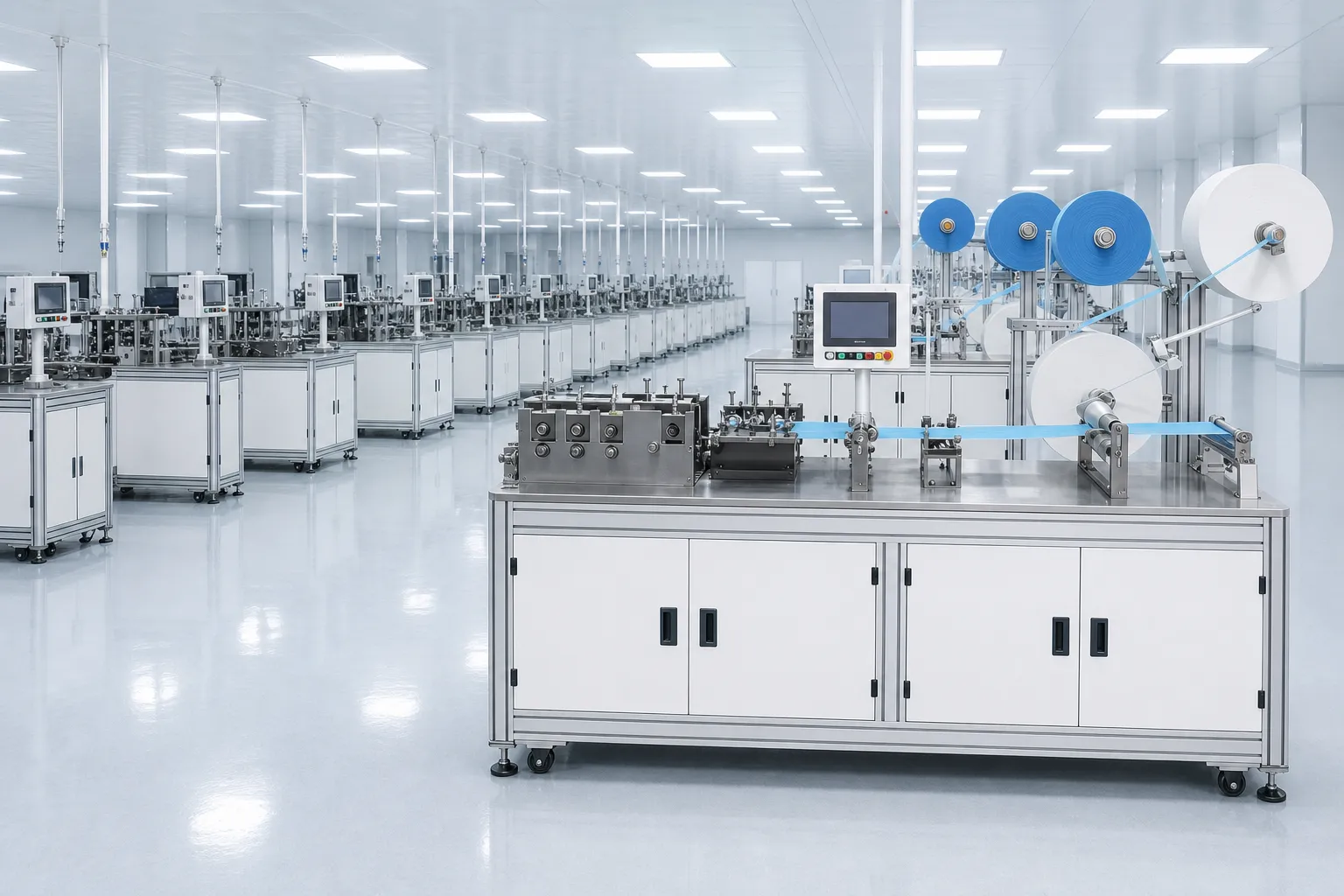
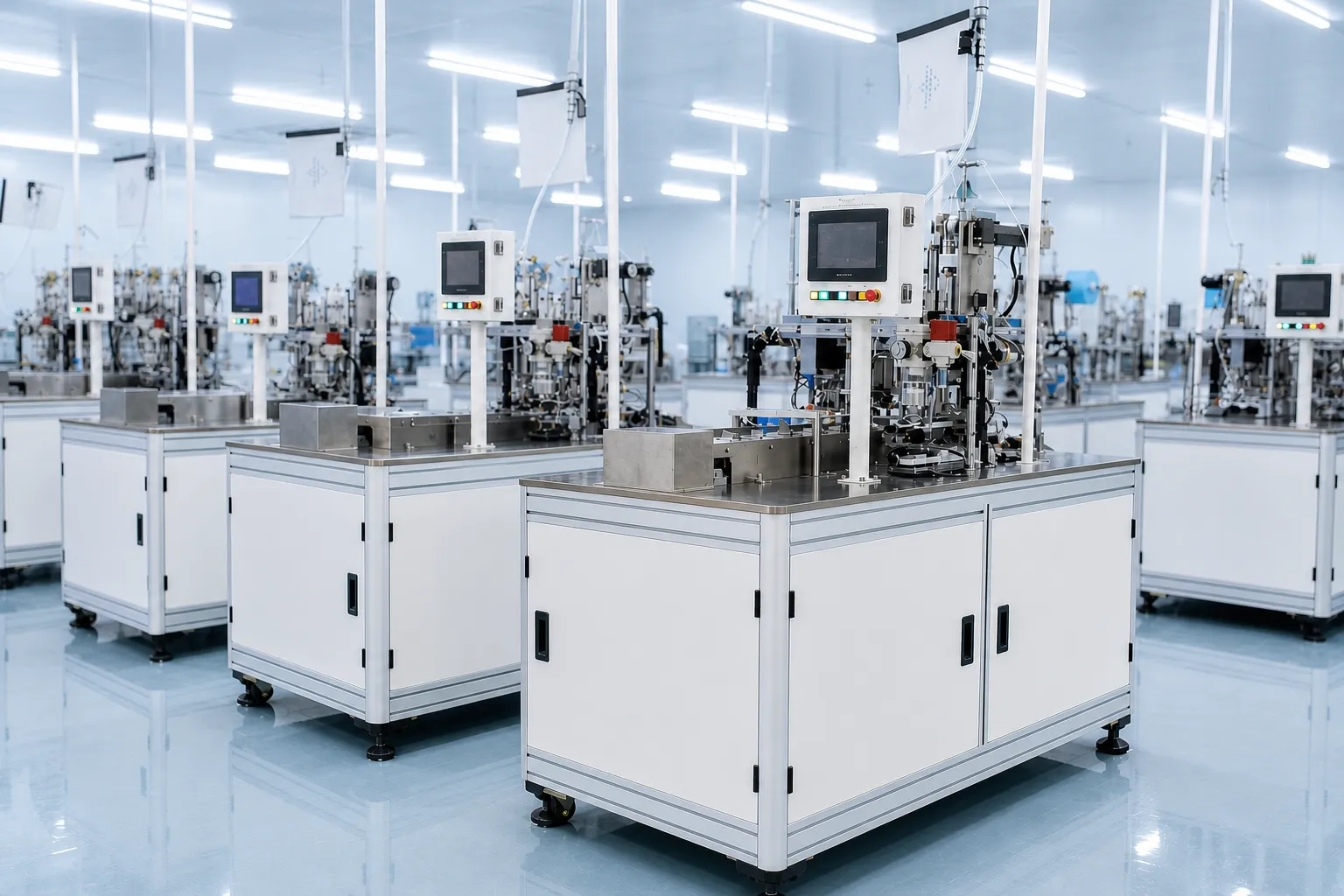
Automatic mask tape machine
Automatic tape sealing machine for Face mask – Automatic tape sealing machine for Face mask
Automatically feeds, cuts and glues tape to the two strap welding pins quickly and accurately.
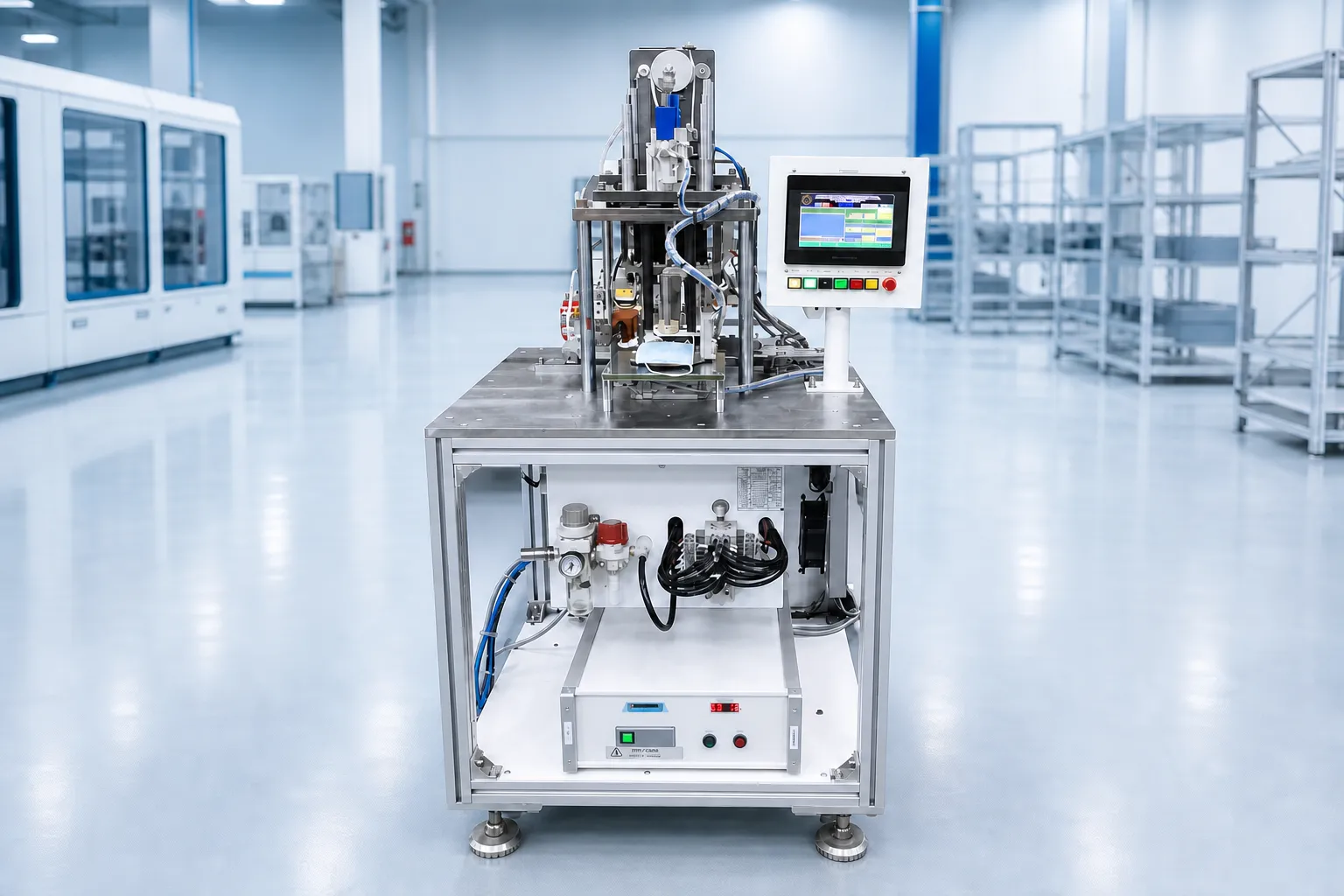
HMI control screen with friendly interface and many options. The machine is manufactured in Vietnam, installed and has a 12-month nationwide warranty.
Customers who have needs for automatic machines in the mechanical, electronic, medical industries and automation solutions, please contact us for advice and support:
VIETNAM CNC & TECHNOLOGY APPLICATION JOINT STOCK COMPANY
Hotline: +84.916 63 9355 / +84.915 74 4664
Email: Sales01@cncvina.com.vn / Sales03@cncvina.com.vn
Product description

Automatic mask tape sealing machine
The automatic mask tape sealing machine is a specialized automation system designed and manufactured by CNC-VINA to automate the tape application process at the ear-loop welding points of face masks. The machine was developed based on the actual requirements of a Japanese customer in the medical mask manufacturing industry, particularly for export production. It integrates tape feeding, cutting, picking, and application mechanisms into a single automated system. The tape is applied to four positions at the welded ear-loop points of the two mask ear loops, helping reinforce the attachment areas while improving the overall appearance of the ear-loop connection points. During operation, the operator only needs to place the mask in the designated position on the jig. The machine then automatically performs the tape feeding, product transfer, tape application, and product discharge processes.
The machine can operate in both automatic and manual modes, making it suitable for machine testing, inspection, and production operation. With the ability to customize the machine configuration according to the product and actual process requirements, CNC-VINA can develop an automatic mask tape sealing machine tailored to different mask types and production processes.
What is an automatic mask tape sealing machine?
An automatic mask tape sealing machine is a specialized machine used to automatically apply tape to predefined positions on face masks. In the configuration designed by CNC-VINA for the Japanese customer, the tape is applied around the ear-loop welding points to reinforce the connection area and meet the required product finishing standards. Unlike manual tape application, the machine integrates multiple automated mechanisms, including a tape feeding unit, tape cutting and picking mechanism, product positioning jig, conveyor, tape pressing mechanism, ear-loop pulling mechanism, and sensor system. These mechanisms work together according to a programmed sequence, allowing the mask to move through each tape application position in a controlled and consistent process.
The operator manually places the incoming product onto the positioning guide on the jig. Once the sensor detects the presence of the product, the conveyor transfers the mask to the tape application unit. The gripper picks up the pre-fed and pre-cut piece of tape and applies it sequentially to the designated positions. Once the cycle is completed, the conveyor transfers the finished product out of the machine, assisted by an air blow-off mechanism.
Structure of the automatic mask tape sealing machine
The machine consists of multiple mechanical and control units that work together to automate the tape application process. Depending on the product type, materials used, and customer requirements, the configuration of each unit can be customized by CNC-VINA during the machine design and manufacturing process.
Automatic tape feeding and cutting unit
The tape feeding system delivers the tape to the designated position and prepares tape pieces with the appropriate length for the application process. After the tape is fed and cut, the gripper mechanism picks up the tape piece and transfers it to the standby position. Integrating the tape feeding and cutting system into the machine reduces manual preparation operations and enables the tape application process to be carried out automatically according to a predefined cycle. The tape feeding unit can be configured based on the type of tape used and the specific requirements of the product.
Gripper mechanism and tape pressing unit
The gripper mechanism picks up the tape piece after it has been fed and cut, then moves it to the standby position for the application process. When the product reaches the designated position, a pneumatic cylinder drives the gripper downward to place the tape onto the required application area. The tape pressing unit presses the tape firmly onto the product. During the first tape application cycle, the pressing die moves downward and applies pressure to ensure that the tape adheres to the specified position on the mask. The pressing die then retracts, allowing the product to continue moving to the next tape application position.
Conveyor and product positioning jig
The operator places the incoming product onto the product-supporting jig and positions it against the guide according to the specified alignment. The jig holds and positions the mask while the conveyor transfers it through the tape application unit. The conveyor moves in programmed increments, transferring the product sequentially to each processing position. The combination of the positioning jig and indexed conveyor movement helps maintain accurate product positioning throughout each tape application cycle.
Sensor and control system
Sensors are used to detect the presence of the product before the machine proceeds with the operating cycle. Once the sensor confirms that a product is present, the conveyor and related mechanisms operate according to the predefined sequence. The machine is equipped with both automatic and manual operating modes, allowing users to conveniently perform machine trials, inspect individual mechanisms, and operate the equipment during production. An integrated alarm system also helps detect conditions such as tape depletion, product absence, or abnormal machine operation.
Operating principle and process of the Automatic Mask Tape Sealing Machine
The machine operates through the sequential coordination of the tape feeding mechanism, gripper, conveyor, positioning jig, tape pressing unit, ear-loop pulling mechanism, and sensor system. The operator is responsible for loading the incoming product, while the tape application processes are automatically performed by the machine according to the programmed sequence.
Note: The images shown in the video are from the machine trial run at the CNC-VINA factory. The masks shown in the video are used solely for machine testing and inspection purposes and are not intended for any other use.
Step 1: Loading the mask onto the jig
The operator places the mask with the ear loops already attached against the positioning guide on the product-supporting jig. Proper product positioning ensures that the mask remains within the operating range of the tape application mechanisms.
Step 2: Product detection and tape preparation
The sensor detects the presence of the product. Once the mask is confirmed to be correctly positioned, the conveyor transfers it to the tape application unit. At the same time, the gripper picks up the tape piece that has been fed and cut to the required length by the tape feeding unit, then moves it to the standby position in preparation for the application process.
Step 3: Lowering the tape gripper to the application position
When the product reaches the designated position, a pneumatic cylinder drives the tape gripper downward. The tape is positioned accurately over the required application area on the product, preparing it for the pressing operation.
Step 4: First tape application
At the first tape application position, the pneumatic cylinder of the pressing die moves downward and presses the tape onto the product to ensure proper adhesion. After the pressing operation is completed, the gripper mechanism releases the tape and returns to the tape pick-up position in preparation for the next cycle.
Step 5: Transferring the product to the next application position
The pressing die retracts, releasing the product so that the conveyor can continue moving. The mask is then transferred to the next position where the remaining tape application operation is performed.
Step 6: Ear-loop pulling and second tape application
At the second tape application position, the ear-loop pulling mechanism moves downward and pulls the mask ear loop into the required position. The pneumatic cylinder of the pressing die then moves downward and presses the tape firmly onto the product. The ear-loop pulling mechanism positions the ear loop correctly before the pressing operation, helping maintain a stable and consistent processing sequence.
Step 7: Completing the tape application process and transferring the product
Once all required tape application positions have been completed, the cylinders retract and release the product. The conveyor continues transferring the mask to the next position, where the lifting mechanism raises the product and removes it from the positioning guide on the jig.
Step 8: Discharging the product from the machine
The conveyor transfers the finished product to the discharge area. Combined with an air blow-off mechanism, the product is discharged from the machine's working area and transferred to the next production process or collected as a finished product.
Step 9: Repeating the operating cycle
After the product has been discharged, the system returns to its ready state for the next cycle. The operator then loads a new product onto the jig, and the machine repeats the entire process according to the programmed sequence.
Key features of the automatic mask tape sealing machine
The machine is designed to automate multiple operations within the tape application process, from tape feeding and cutting to picking, positioning, pressing, and product discharge. Coordinating these mechanisms within a single operating cycle reduces the number of manual operations required from the operator during production. One of the key features is the automatic tape feeding system. The tape is prepared according to the machine's operating cycle, after which the gripper transfers it to the standby position for the application process. The conveyor is also programmed to move in indexed steps, allowing the product to pass through each processing position in sequence. The machine supports both automatic and manual operating modes, meeting the requirements of both production operation and equipment inspection. The manual mode is particularly useful for checking individual mechanisms during machine installation, trial runs, troubleshooting, and maintenance.
In addition, an integrated alarm and safety system helps detect abnormal conditions such as tape depletion, product absence, or operating errors. Monitoring these conditions helps prevent the machine from continuing to operate when the required production conditions are not met.
Advantages of the Automatic Mask Tape Sealing Machine
Automating the tape application process reduces reliance on manual operations, particularly for applications involving repetitive tasks and consistent processing sequences. The operator mainly performs the product loading and discharge operations, while the machine handles tape feeding, picking, positioning, and pressing automatically. The use of a positioning jig and indexed conveyor movement also helps transfer the product to each processing position according to the predefined sequence. The pressing die and ear-loop pulling mechanism operate in coordination within the same cycle, helping maintain a stable and consistent tape application process. Another advantage of the machine is its flexibility in customization according to actual product requirements. Depending on factors such as mask dimensions, tape application positions, tape type, and production requirements, the machine mechanisms can be calculated, configured, and adjusted accordingly during the design and manufacturing process.
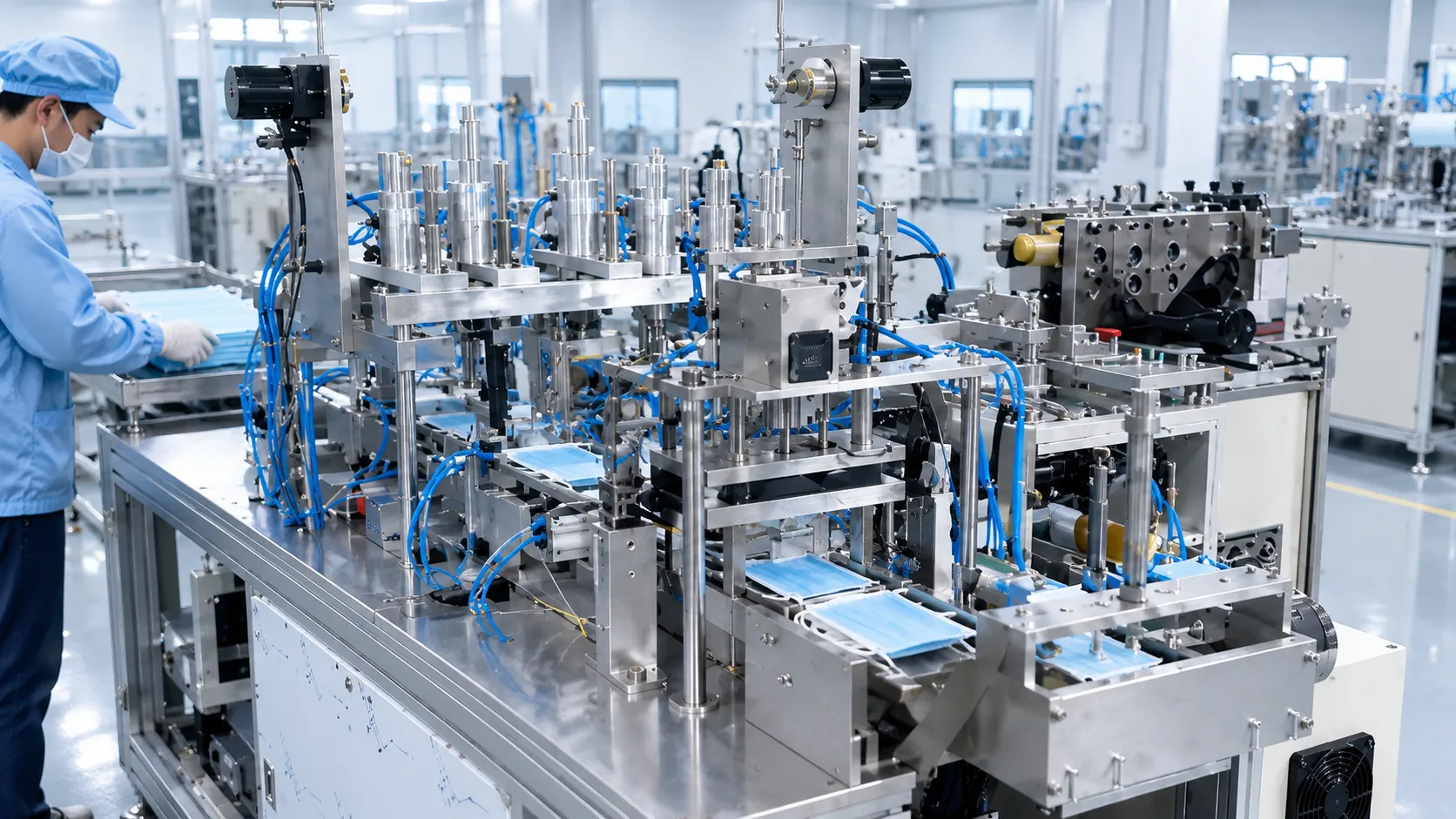
Applications in medical mask production
The automatic mask tape sealing machine is designed for reinforcing and finishing the ear-loop welding points on face masks. The equipment is particularly suitable for production lines that require automation of the tape application process while retaining manual product loading. In a mask production line, the machine can be installed after the mask body forming and ear-loop attachment processes. Depending on the production capacity of the upstream and downstream processes, manufacturers can choose either a standalone machine configuration or integrate the equipment into a comprehensive automated production system.
For manufacturers producing masks according to specific requirements for different markets, the machine can be designed based on the product characteristics and actual production process. This is particularly suitable for projects requiring modifications to the tape application positions, tape feeding mechanism, or product loading and unloading method.
CNC-VINA – Custom automation machine design and manufacturing
CNC-VINA provides specialized automation machine design and manufacturing solutions for the medical industry, including equipment for mask production and other specialized processing applications. With capabilities in mechanical design, machine manufacturing, and automation system integration, CNC-VINA can develop machines according to the requirements of individual products and production processes.
For custom machine projects, customers can discuss with CNC-VINA their product requirements, the processes to be automated, target production capacity, available installation space, and integration requirements with existing equipment. Based on these specifications, CNC-VINA develops a machine solution tailored to the actual operating conditions and production requirements.
The automatic mask tape sealing machine is a suitable solution for manufacturers looking to automate the tape application process at mask ear-loop welding points. The integration of the tape feeding system, gripper, conveyor, positioning jig, pressing mechanism, and sensors helps reduce manual operations and maintain a consistent processing sequence according to the programmed cycle. With its product-specific design capability, the machine can be customized to meet requirements related to tape application positions, tape types, and product loading methods. CNC-VINA has experience in designing and manufacturing specialized automation equipment for the medical industry, while also providing custom automation solutions tailored to the requirements of individual projects.
Customers interested in specialized automation solutions for the medical industry can learn more here or contact CNC-VINA directly for consultation on machine configuration and automation solutions.
VIETNAM CNC & TECHNOLOGY APPLICATION JOINT STOCK COMPANY
Factory: Song Cung Industrial Cluster, Dong Thap Commune, Dan Phuong District, Hanoi, Vietnam
Office: Rox Center Building (Rox Tower Goldmark City), No. 136 Ho Tung Mau Street, Bac Tu Liem District, Hanoi, Vietnam
Phone: +84.916 63 9355 / +84.915 74 4664
Website: https://cncvina.com.vn | https://cncvina.net | https://cncviname.com.vn