 Tiếng
Việt
Tiếng
Việt
 Tiếng
Anh
Tiếng
Anh
 Tiếng
Nhật
Tiếng
Nhật




 Tiếng Anh

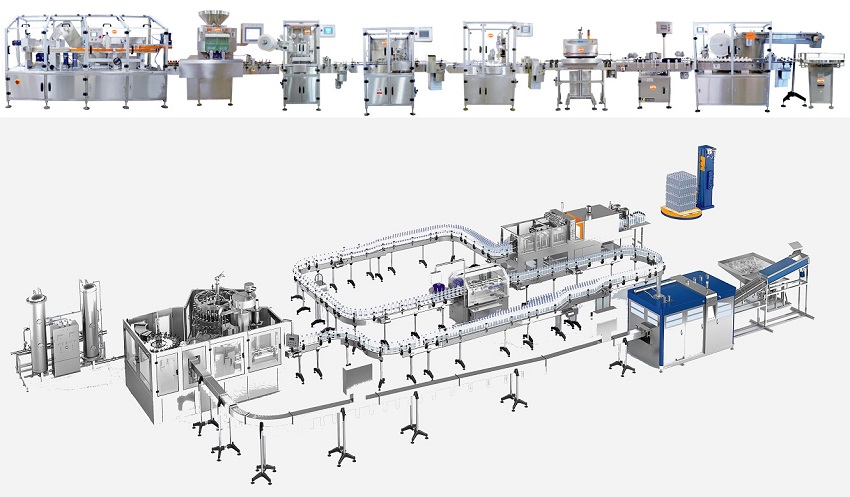
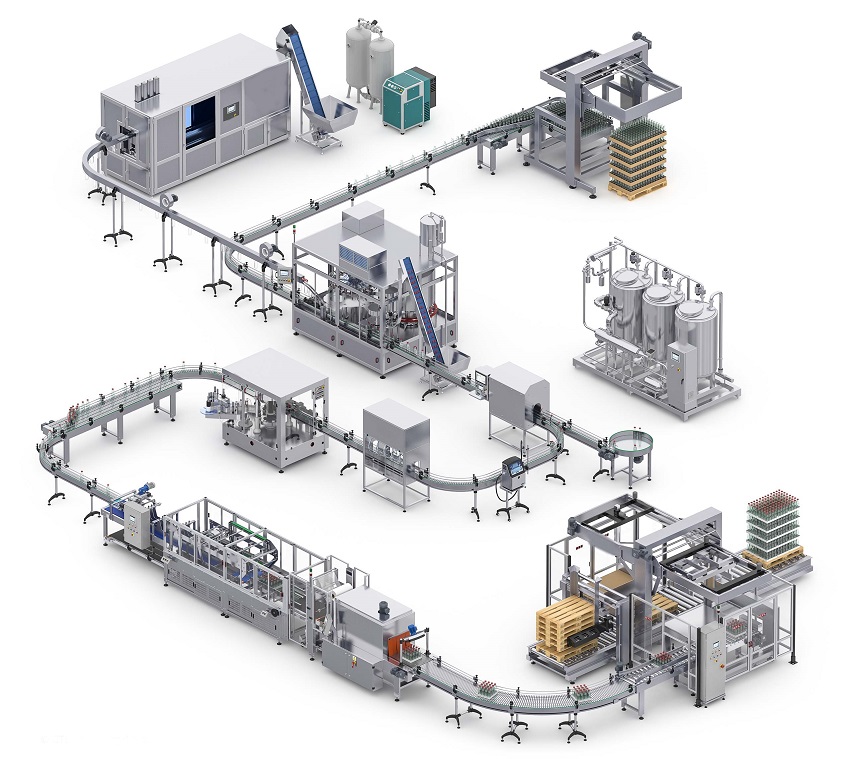
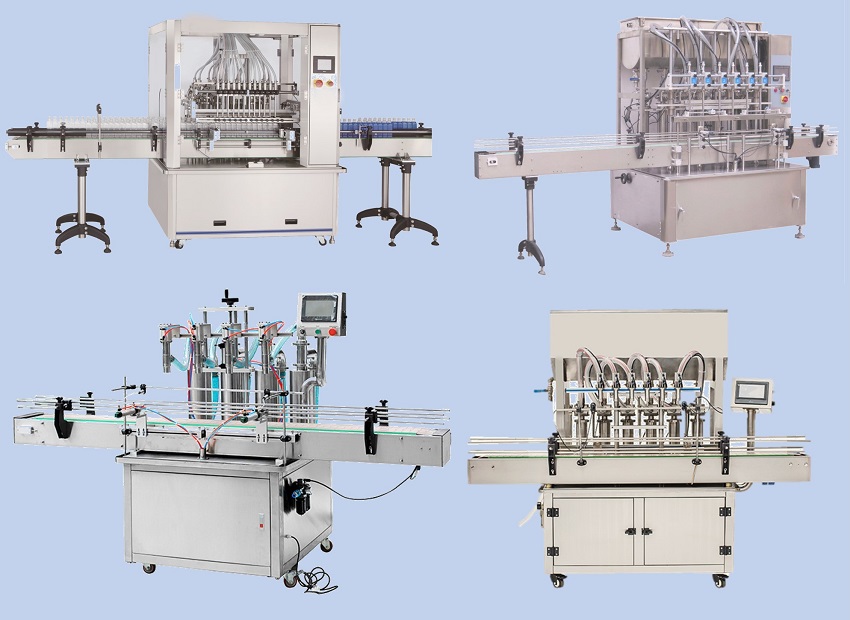
Automatic filling-labeling-packaging line
Automatic filling, labeling and packaging lines for plastic and glass bottles help increase productivity, improve product quality and reduce production and packaging costs. Automatic filling and bottling lines are applied to many types of products in the food, beverage, medical, pharmaceutical and chemical industries in Vietnam.
Customers who need packaging machinery and automatic solutions please contact us for support:
VIETNAM CNC & TECHNOLOGY APPLICATION JOINT STOCK COMPANY
Hotline: +84.916 63 9355 / +84.915 74 4664
Email: Sales01@cncvina.com.vn / Sales03@cncvina.com.vn
Product description

Introduction to CNC VINA's automatic bottle filling and packaging line
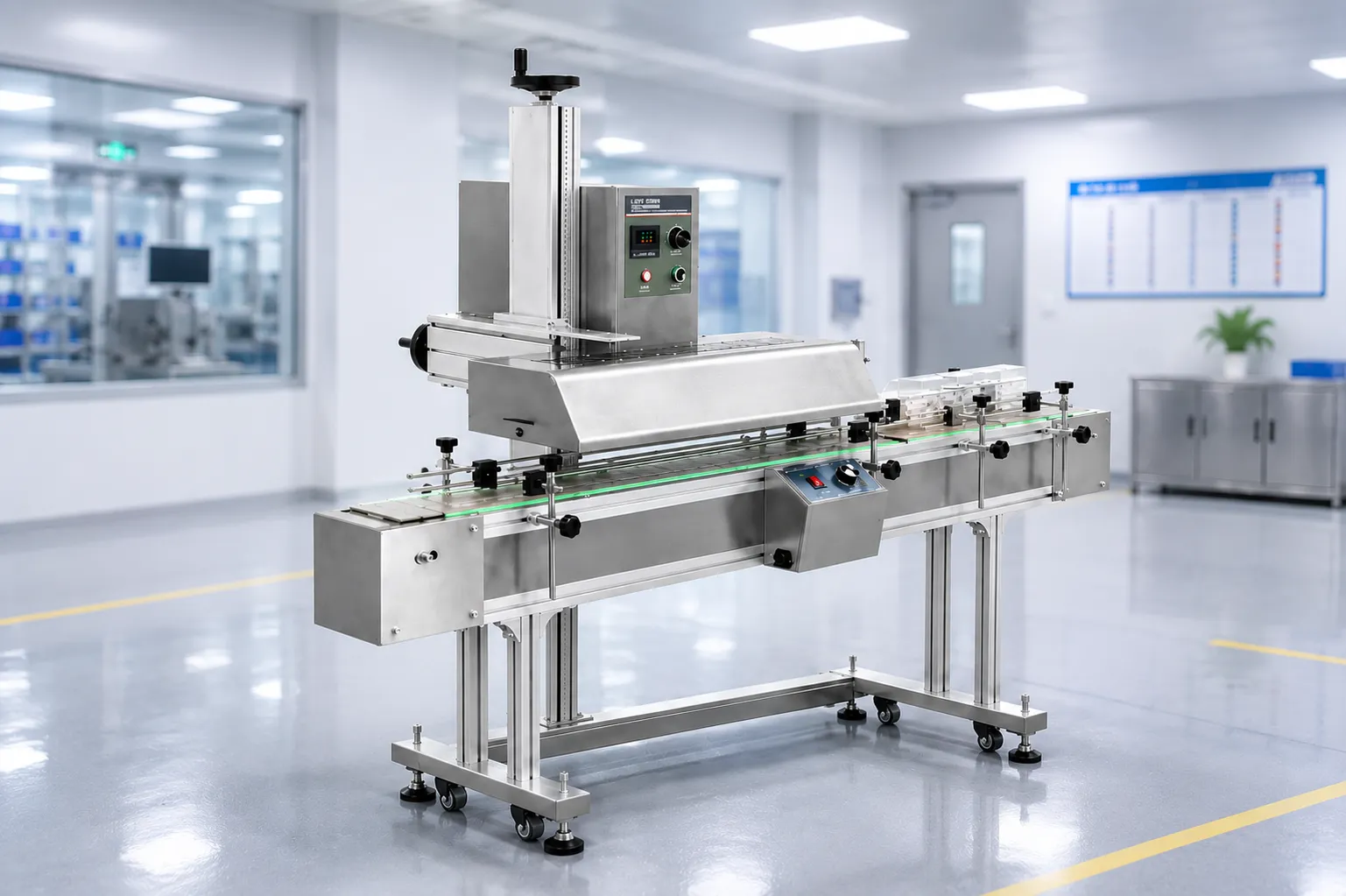
An automatic bottle filling and packaging line is a system consisting of multiple interconnected machines that perform a series of operations, from bottle feeding and bottle handling to filling, capping, labeling, and final product packaging. Depending on the product type, packaging material, bottle capacity, and required production output, manufacturers can choose a fully automated line or a configuration combining automated equipment with manual operations. The machines in the line are connected by a conveyor system to maintain a continuous flow of products between stages. Depending on the production requirements, the system can also integrate date coding machines, sensors, product inspection equipment, and end-of-line packaging machines. This allows manufacturers to develop a production process suited to their available floor space, production capacity, and actual packaging requirements.
At CNC VINA, the line can be configured with equipment such as filling machines, automatic labeling machines, automatic bottle capping machines, shrink wrapping machines, and carton sealing machines, together with strapping and pallet wrapping equipment. Not every production line requires all of these stages. The equipment configuration is selected based on the product characteristics, bottle type, bottle capacity, required production output, and packaging requirements of each manufacturer.
The line can be used with various types of packaging, including PET bottles, plastic bottles, and glass bottles. Suitable applications include purified water, soft drinks, alcoholic beverages, fruit juices, chemicals, and other liquid products. For high-capacity production lines, individual machines can be interconnected into a continuous system to reduce intermediate handling and maintain stable production speeds.
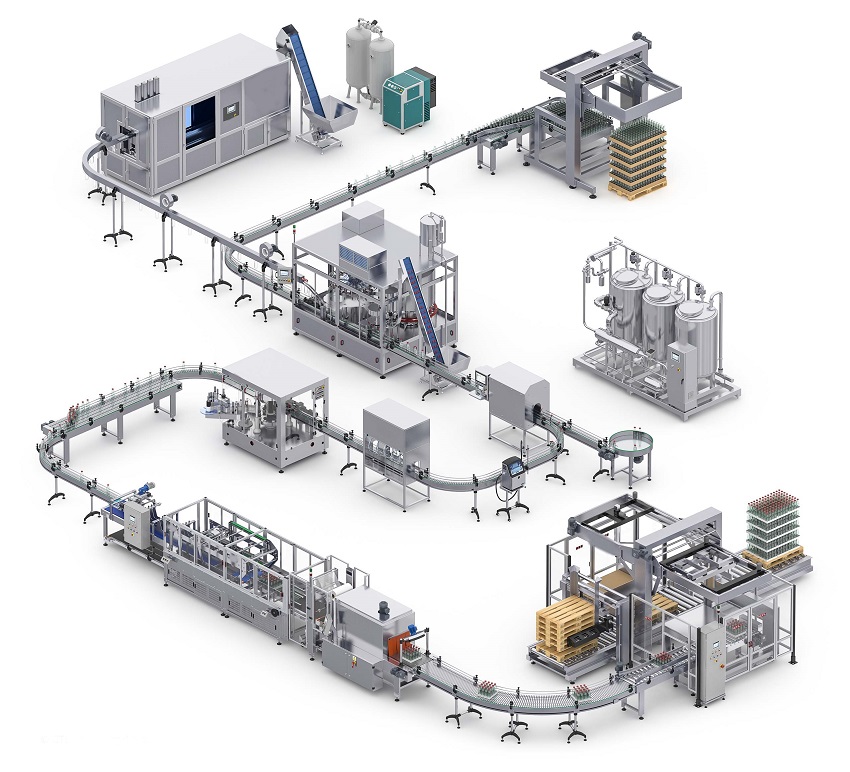
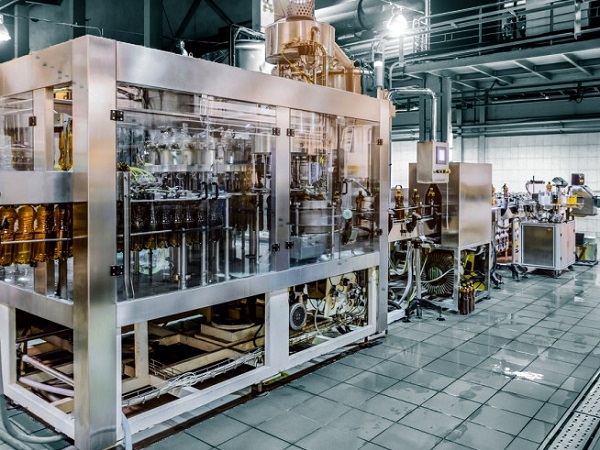
A modern filling and bottling line for glass bottle products
Technical specifications of CNC VINA's automatic bottle filling and packaging line
| Specification | Details |
|---|---|
| Machine frame material | SUS 304 stainless steel |
| Number of filling nozzles | 8 nozzles |
| Filling speed | 2,800–3,500 products/hour |
| Electrical power | 1 kW |
| Power supply | 3-phase, 380 V, 50 Hz |
| Machine weight | 800–1,000 kg |
| Air pressure | 3–8 kgf/cm² |
| Required operators | 1 operator |
Actual specifications may vary depending on the filling volume, product viscosity, foaming characteristics, packaging type, number of filling nozzles, and the level of automation required for the bottle filling and packaging line. CNC VINA will recommend and design a suitable machine configuration after evaluating the product characteristics, packaging samples, and required production capacity.
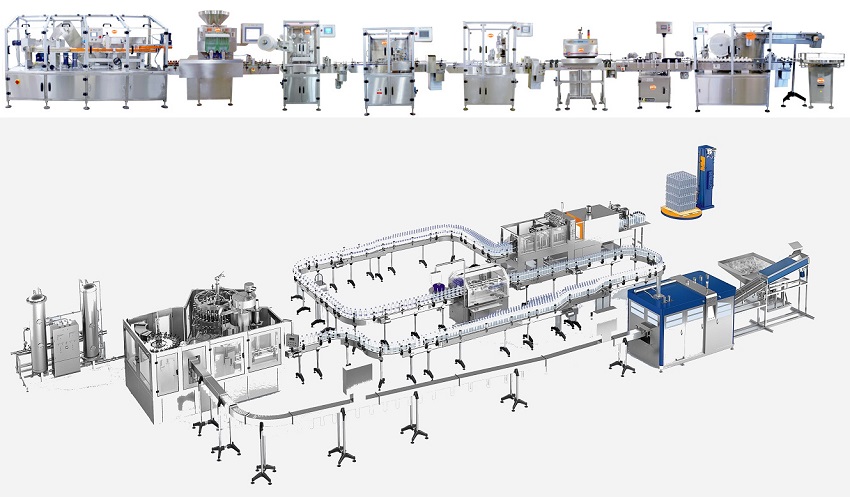
Popular filling-labeling-packaging line
What are the stages of an automatic bottle filling and packaging line?
An automatic bottle filling and packaging line can be designed with different configurations depending on the production requirements. For a fully automated system, the process typically includes:
Bottle feeding → Bottle washing or rinsing → Filling → Capping → Date coding → Labeling → Shrink wrapping or packaging → Carton packing → Strapping → Pallet wrapping.
Depending on the product, packaging type, and investment requirements, some stages may be omitted or modified. For example, single-use PET bottles may not require washing before filling if they are supplied under conditions that meet the production requirements. In contrast, production lines using bottles that require cleaning before filling can be equipped with bottle washing or rinsing machines.
For high-capacity production lines, the bottle washing machine, filling machine, and capping machine can be integrated into a 3-in-1 monoblock system. This configuration reduces the number of bottle transfers between individual machines, saves installation space, and improves synchronization throughout the production process.
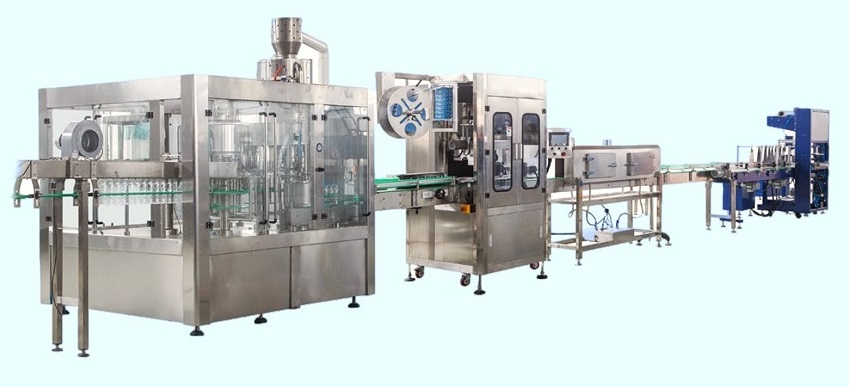
Automatic bottle feeding
Empty bottles are fed into the production line through the bottle feeding system and conveyor. Depending on the production scale, bottles can either be manually placed at the beginning of the conveyor or loaded into an automatic bottle unscrambler. The bottle feeding equipment is responsible for orienting and spacing the bottles correctly before transferring them to the next stage. The conveyor system connects the different machines in the line while maintaining appropriate spacing between bottles. For high-capacity production lines, the bottle feeding mechanism must be synchronized with the filling machine speed to minimize bottle accumulation, shortages, or interruptions in product flow.
The configuration of the bottle feeding system depends on the bottle shape, dimensions, material, and feeding method. PET bottles, plastic bottles, and glass bottles may require different feeding solutions to ensure stable bottle handling and minimize collisions during transportation.
Bottle washing and rinsing before filling
Depending on the packaging type and product hygiene requirements, bottles may be washed or rinsed before entering the filling machine. This stage is intended to remove dust, contaminants, and other factors that could affect product quality during the bottling process. The appropriate bottle treatment method is selected based on the packaging material, bottle condition, and production requirements. For single-use bottles, particularly PET bottles supplied under conditions suitable for the production line, the washing stage may be omitted or replaced with rinsing or air blowing, depending on the specific requirements. The appropriate treatment method should be determined based on the product's hygiene standards and quality control procedures.
For production lines that require bottles to be cleaned before filling, the equipment can use water, cleaning solutions, or clean air according to the designed configuration. After treatment, the bottles may be air-blown or dried before being transferred to the filling machine if required by the product and packaging specifications. For high-capacity production lines, a 3-in-1 monoblock system integrating bottle washing, filling, and capping can be used to combine these three stages into a single system. After treatment, the bottles are transferred directly to the filling and capping positions, reducing intermediate handling and enabling more continuous line operation.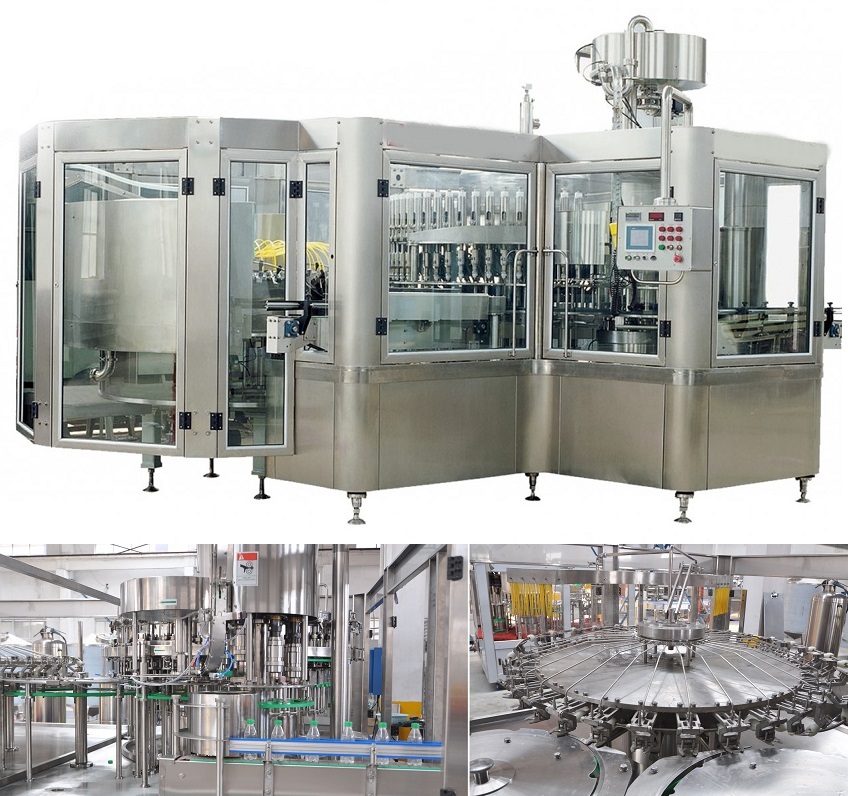
Product filling
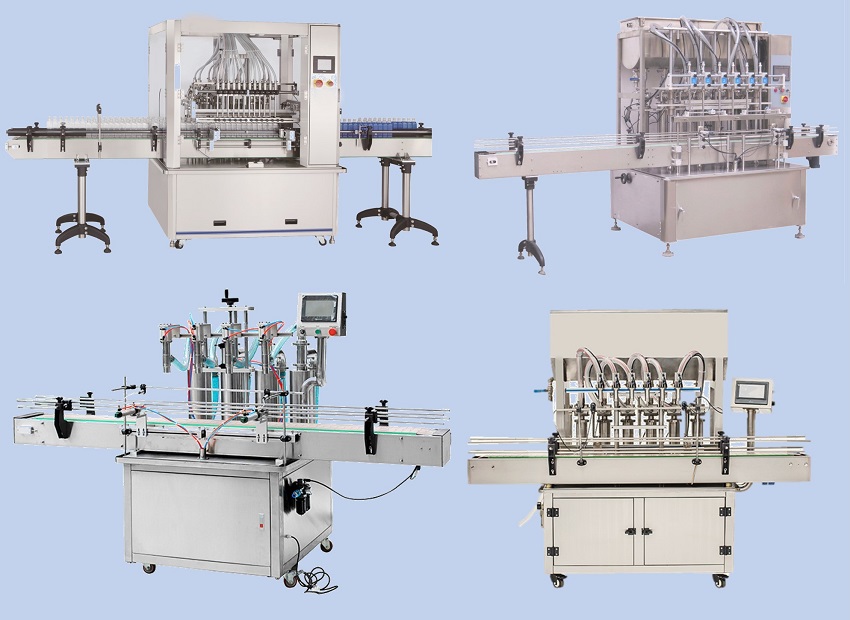
After being fed and treated, the bottles are transferred to the filling machine, where the product is filled according to the preset volume or weight. Depending on the product characteristics, the machine can use different filling methods, such as volumetric filling, gravimetric filling, isobaric filling, or pump filling. The appropriate filling method depends on factors such as viscosity, foaming tendency, temperature, composition, and required dosing accuracy. Water and other low-viscosity liquids are generally filled using methods suitable for high-speed operation. Viscous products, products containing particles, or products that tend to foam require suitable pumps, filling valves, and filling speeds to minimize splashing, overflow, and dosing errors.
Components that come into direct contact with the product are generally manufactured from materials suitable for the required hygiene standards and the product's chemical properties. For food, beverage, and chemical applications, materials, seals, and piping should be selected based on the product characteristics, cleaning procedures, and actual operating conditions.
The production capacity of a filling machine depends on the number of filling nozzles, bottle capacity, filling time, dosing method, and the operating speed of related equipment. When designing the production line, the filling machine must be synchronized with the bottle feeding system, capping machine, and conveyor to minimize waiting time between stages.
Bottle capping
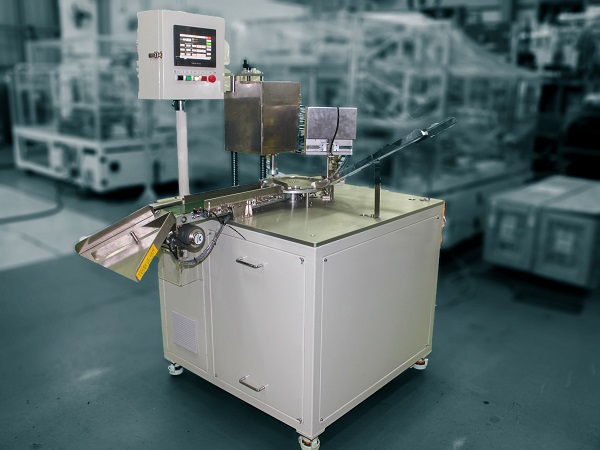
After filling, the bottles are transferred to the capping machine. The equipment is responsible for feeding the caps, positioning them onto the bottle necks, and tightening or pressing them using a method suitable for each type of packaging. Depending on the cap type, the production line can use screw capping machines, snap capping machines, aluminum cap sealing machines, or other specialized capping mechanisms.
The capping torque and operating speed must be adjusted appropriately to ensure a secure seal while minimizing the risk of damaging the bottle threads, deforming the caps, or affecting the appearance of the finished product. For automatic production lines, caps are fed from a hopper or automatic cap feeding system and transferred to the capping position through a guide chute, picking mechanism, or specialized cap delivery system. Sensors can be used to check the bottle and cap status, as well as the product position, before the capping operation is performed.
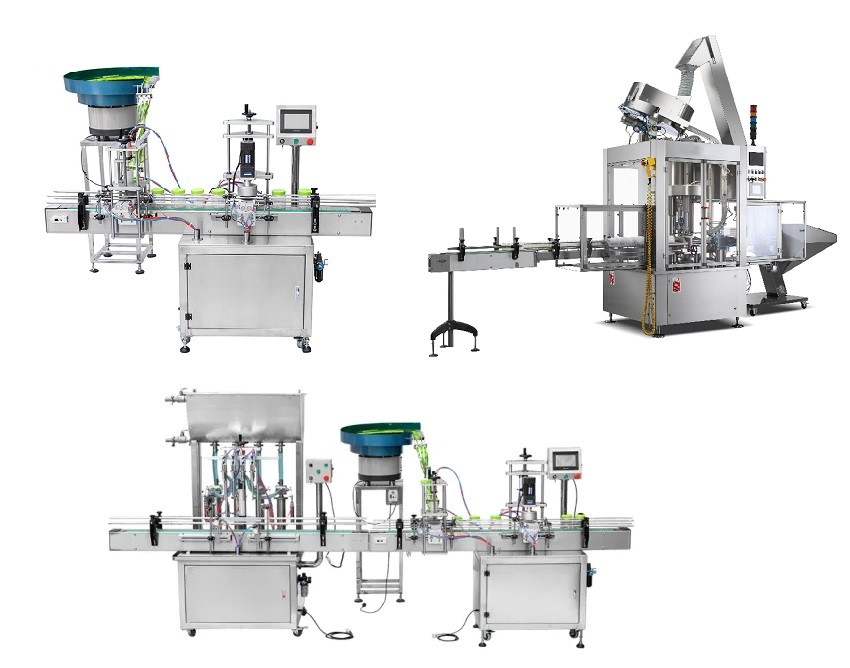
The process of supplying bottle caps can be done by workers to save costs. Bottle caps can also be supplied automatically by a bowl feeder-vibrating hopper system integrated with a capping machine.
There are 2 popular forms of labeling bottles: label expansion + plastic label shrinking and labeling bottles with paper labels, decal labels, and stickers.
Bottle capping
After filling, the bottles are transferred to the capping machine. The equipment is responsible for feeding the caps, positioning them onto the bottle necks, and tightening or pressing them using a method suitable for each type of packaging. Depending on the cap type, the production line can use screw capping machines, snap capping machines, aluminum cap sealing machines, or other specialized capping mechanisms. The capping torque and operating speed must be adjusted appropriately to ensure a secure seal while minimizing the risk of damaging the bottle threads, deforming the caps, or affecting the appearance of the finished product. For automatic production lines, caps are fed from a hopper or automatic cap feeding system and transferred to the capping position through a guide chute, picking mechanism, or specialized cap delivery system. Sensors can be used to check the bottle and cap status, as well as the product position, before the capping operation is performed.
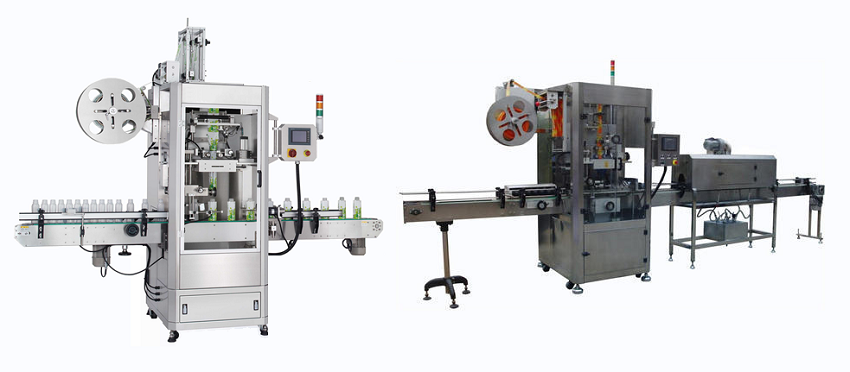
The bottle cap feeding stage can be performed manually by an operator to reduce investment costs. Alternatively, caps can be fed automatically using a bowl feeder (vibratory hopper) integrated with the capping machine. There are two common methods for bottle labeling: sleeve labeling with heat shrinking and labeling with paper labels, adhesive labels, or stickers.
Date coding and product inspection
After capping, the bottles can pass through a date coding machine to print the production date, expiration date, batch number, or other traceability information as required. The printing position can be on the bottle body, shoulder, bottom, cap, or outer packaging, depending on the product design. Depending on the ink type, packaging material, and line speed, manufacturers can select a suitable printing technology, such as inkjet printing, thermal printing, or laser marking. The coding equipment should be installed at a position that ensures the printed information is clear, unobstructed, and easy to inspect during operation.
If required, the production line can also integrate cameras or sensors to detect issues such as missing caps, misaligned caps, missing products, incorrect label positioning, or unacceptable printed information. Non-conforming products can then be removed from the production line before entering the packaging stage.
Bottle labeling
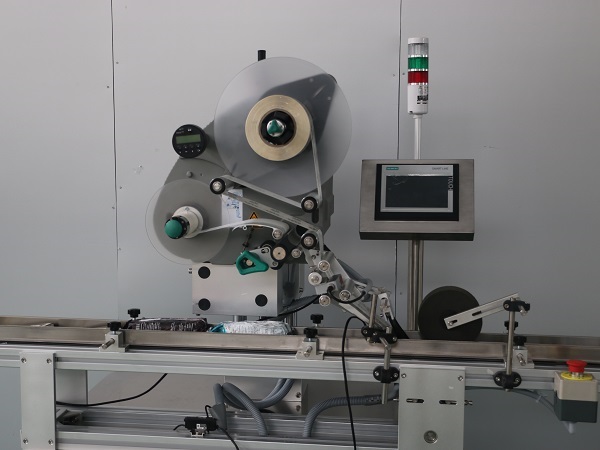
After capping and date coding, the bottles are transferred to the labeling machine. Depending on the label type and product identification requirements, the line can use adhesive labels, shrink sleeve labels, or other specialized labeling solutions.
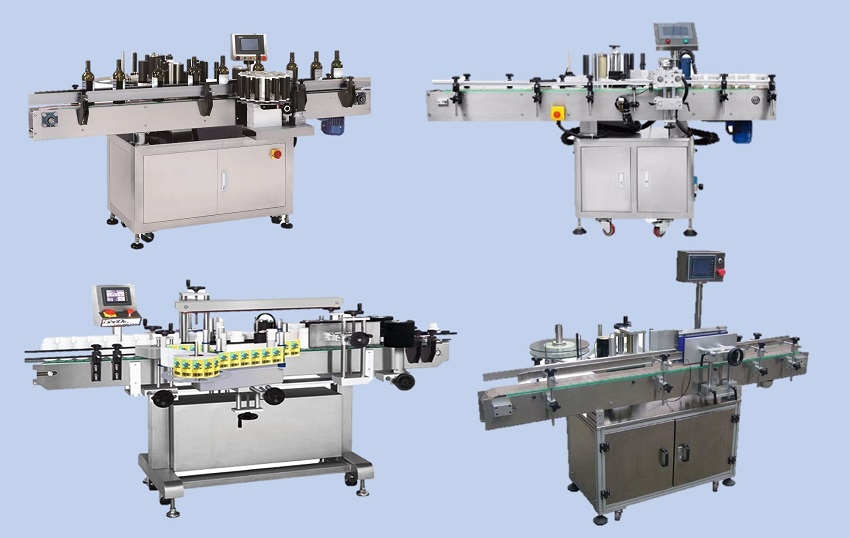
A pressure-sensitive labeling machine uses pre-glued labels supplied in rolls and applies them directly to the bottle surface. This method is suitable for various plastic, PET, and glass bottles. The machine must be adjusted according to the bottle diameter, label height, label application position, and product conveying speed.
For shrink sleeve labels, the label film is formed around the bottle body or neck before passing through a heat-shrinking tunnel. The temperature and shrinking time must be adjusted according to the film material and bottle shape to ensure that the label conforms evenly to the bottle surface without wrinkling or deformation.
Shrink wrapping and packaging
Depending on the sales and distribution method, bottles can be grouped into packs using shrink film or packed into cartons. A shrink wrapping machine typically consists of a film feeding unit, film cutting mechanism, and heat-shrinking tunnel. The number of bottles in each pack is preset according to the required packaging configuration. For products packed in cartons, bottles are arranged according to the specified quantity before being loaded into cartons. This stage can be performed using a bottle arranging machine, case packing machine, or a combination of automated equipment and manual operations.
Round bottle labeling with adhesive labels and stickers
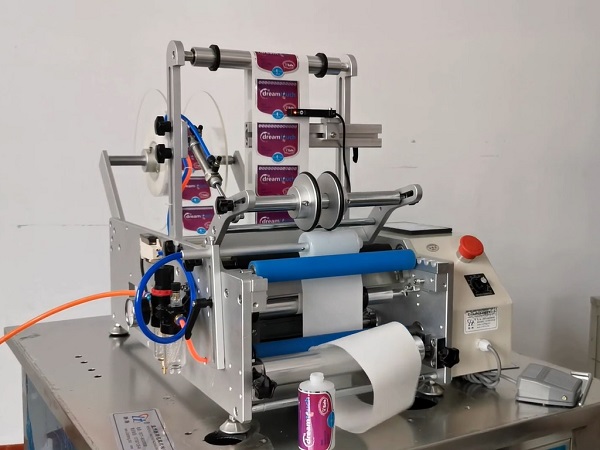
This labeling method uses paper adhesive labels or stickers and is suitable for PE, PET, and glass bottles with smooth surfaces and a consistent labeling area. With this configuration, bottles pass through the labeling system and are rotated by a roller mechanism while the label is applied accurately to the designated position on the bottle body. Unlike shrink sleeve labels or plastic film labels, adhesive paper labels and stickers do not require a heat-shrinking tunnel. A typical paper labeling machine consists of the following main components:
Bottle separation unit: When bottles enter the machine, they need to be spaced at a suitable distance from one another before reaching the labeling position. This ensures a consistent cycle time and allows the system to operate smoothly and continuously.
Bottle pressing and rotating unit: This unit consists of a rotating motor and pneumatic cylinder, which work together to hold and rotate the bottle during the labeling process. Automatic label feeding unit: The label feeding mechanism uses a stepper motor and sensors to detect label stop positions and incoming bottles, ensuring accurate label feeding and positioning. The control system coordinates the operating speed of each functional unit so that the round bottle labeling process is carried out sequentially and accurately.
Error detection and control system: Sensors are used to detect conditions such as missing bottles, exhausted label rolls, torn labels, or other abnormalities during operation. This helps minimize labeling errors and maintain stable production performance. The electrical control cabinet is compactly integrated into the machine. The PLC, servo motors, drives, inverters, sensors, and touchscreen HMI are sourced from brands such as Schneider, Panasonic, and Delta, with components originating from Taiwan, the EU, Japan, Australia, China, and other markets. These components help ensure stable operation while improving labeling quality and positioning accuracy.
The touchscreen HMI provides intuitive control with a user-friendly interface, making the machine easy to operate and adjust. The bottle mold adjustment system allows the labeling position to be changed according to different products and application areas. For certain square or flat bottles with more complex labeling requirements, the machine's labeling mechanisms can be customized to ensure that labels are applied accurately to the bottle surface without wrinkling and with reliable adhesion. Depending on the product configuration, CNC VINA can develop different labeling solutions, including flat labeling machines, square bottle labeling machines, flat bottle labeling machines, single-sided labeling machines, double-sided labeling machines, and horizontal labeling machines.
For most bottled water products, after labeling, capping, and cap shrink wrapping, the products can be transferred directly to the carton packing stage and then sealed using a carton sealing machine. Soft drinks and other beverages are often grouped into blocks before being packed into cartons. Grouping bottles into shrink-wrapped packs makes the products easier to handle, transport, and distribute.
Carton packing, strapping, and pallet wrapping
After packaging, bottle packs or individual products are loaded into cartons. The cartons can be sealed with adhesive tape or hot-melt adhesive, depending on the machine configuration. For production lines requiring greater stability during transportation and storage, cartons can also be strapped to increase package strength.
The finished cartons are then arranged on pallets. A pallet wrapping machine uses PE stretch film to secure the load, minimize shifting, and protect the products during handling and transportation. The number of wrapping cycles, film tension, and wrapping height can be adjusted according to the pallet dimensions and load characteristics.
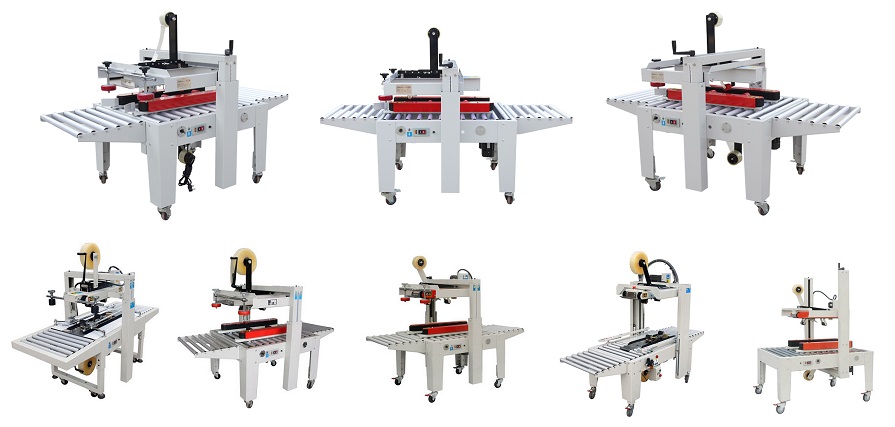
Automatic strapping – Strapping machine
The automatic strapping machine applies plastic straps around finished product cartons to improve load stability during storage and transportation. The machine supports a range of strap sizes and thicknesses, making it suitable for cartons with different dimensions and weights. Compatible plastic straps typically range from 9–15 mm in width and 0.5–1.1 mm in thickness. The machine can flexibly perform horizontal and vertical carton strapping, depending on the carton configuration and packaging requirements. Each strapping cycle is completed within a few seconds, with a strapping speed of approximately 20–30 straps/minute. This allows the machine to achieve high packaging throughput while maintaining consistent strapping performance.
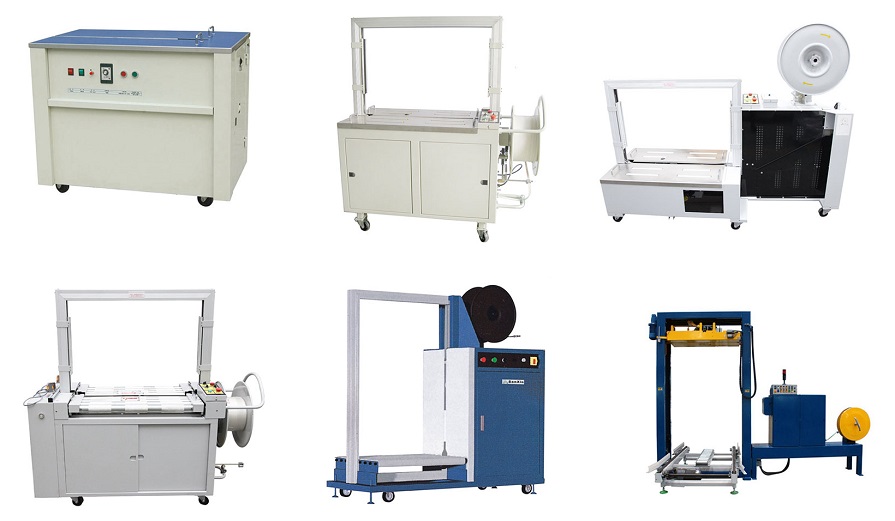
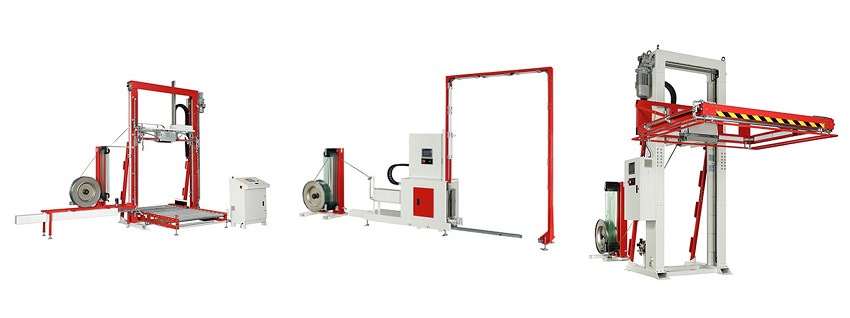
Small and medium strapping machines used for strapping single cartons. With the pallet packing option, a large strapping machine will secure the boxes to the pallet together.
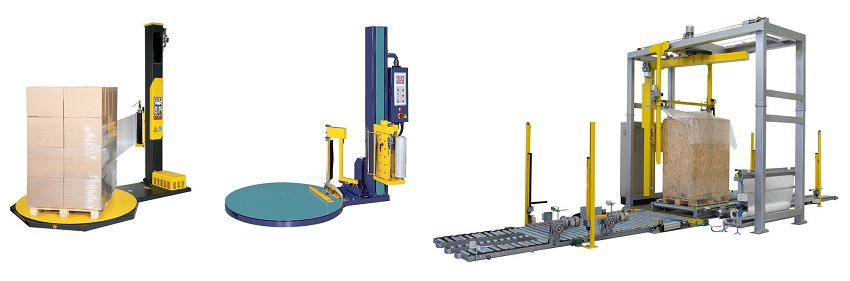
Pallet wrapping – Wrapping machine
After products are palletized, they can be secured with stretch film before being transferred to the warehouse or shipped to customers. An automatic pallet wrapping machine wraps the film around the palletized load to stabilize the products, minimize shifting, and protect the goods from dust and other external factors during storage and transportation. Depending on the pallet dimensions, load weight, and packaging requirements, the wrapping system can be configured with a rotating turntable or powered conveyor system. The wrapping speed, film tension, and number of wrapping cycles can also be adjusted to suit the characteristics of each palletized load.
Key factors to define when designing the production line
To select a suitable configuration, manufacturers need to define several basic requirements:
-
Product type and liquid characteristics.
-
Bottle capacity and allowable filling tolerance.
-
Bottle material, shape, and dimensions.
-
Cap type and capping method.
-
Label type and labeling position.
-
Required production output in bottles/hour or products/minute.
-
End-of-line packaging specifications.
-
Available installation space and product flow direction.
-
Required level of automation.
-
Requirements for electricity, compressed air, water, and cleaning systems.
These requirements help determine the number of filling nozzles, pump type, bottle feeding method, conveyor speed, capping machine capacity, and appropriate end-of-line packaging configuration. Designing and synchronizing the entire system from the beginning also helps prevent situations where one machine has a higher capacity but is limited by the equipment installed upstream or downstream.
CNC VINA designs customized bottle filling and packaging lines
CNC VINA provides customized design and integration solutions for automatic bottle filling and packaging lines based on the product characteristics, packaging type, and production capacity of each manufacturer. Depending on the requirements, the line can consist of a standalone filling machine or be expanded into an integrated system connected to a bottle feeding machine, bottle washing machine, capping machine, date coding machine, labeling machine, and end-of-line packaging equipment.
Before proposing a suitable configuration, it is important to clearly define the product type, bottle capacity, packaging material, required production output, packaging method, and installation conditions. These factors provide the basis for selecting the appropriate filling method, number of filling nozzles, pump type, bottle feeding mechanism, capping equipment, and conveyor speed.
Manufacturers can provide product information, bottle images, bottle capacity, desired production output, and packaging specifications so that CNC VINA can recommend a suitable system configuration.
Manufacturers interested in learning more about or ordering an automatic bottle filling and packaging line can contact our support team:
VIETNAM TECHNOLOGY & CNC APPLICATION JOINT STOCK COMPANY
Factory: Song Cung Industrial Cluster, Dong Thap Commune, Dan Phuong District, Hanoi, Vietnam
Office: Rox Tower (Rox Center Goldmark City), 136 Ho Tung Mau Street, Bac Tu Liem District, Hanoi, Vietnam
Phone: +84.916 63 9355 / +84.915 74 4664
Website: https://cncvina.com.vn; https://cncvina.net; https://cncviname.com.vn